REVIEW · POKHARA
Ghorepani Poonhill Sunrise trek
Book on Viator →Operated by Mount Face Nepal · Bookable on Viator
Sunrise at Poon Hill is the main event. This trek strings together heritage villages and big Annapurna-region panoramas, with a grind that’s famous for a reason: 3381 steps. I also like how the company bundles logistics (licensed guide, porter, permits, and full-board meals on trek) so you can spend your energy on the trail. One drawback to consider: the start time is early, and you’ll want moderate fitness for the steep sections.
You’ll start in Pokhara’s comfortable orbit, then work into the mid-hills through rhododendron, oaks, magnolia, and other forest cover. Expect views aimed at Annapurna South, Dhaulagiri, Manaslu, Machhapuchhre (the Fish Tail), and more—plus village life tied to Gurung and Pun communities and their traditions.
At $815 per person (private group, about 8 days), the value comes from what’s included: airport pickup/drop, Kathmandu and Pokhara hotels, full-board meals during the trekking days, a government-licensed guide, porter support, TIMS card, and the permits you need. If you’re the kind of traveler who hates last-minute hassles (or carrying everything yourself), this setup will feel like a win.
In This Review
- Key things to know before you go
- Pokhara Warm-Up: why this trek starts on Lake Phewa’s doorstep
- The Poon Hill sunrise plan (and why the early start is the point)
- Days on the trail: Tikhedhunga → Ghorepani → Tadapani → Nayapul
- Day 01–02: Kathmandu arrival, then drive to Pokhara
- Day 03: Nayapool to Tikhedhunga (1450m)
- Day 04: Tikhedhunga to Ghorepani (2874m), about 5 hours
- Day 05: early hike toward Poon Hill, then trek to Tadapani (2721m)
- Day 06: trek down to Nayapul and return to Pokhara
- Day 07–08: back to Kathmandu and onward departure
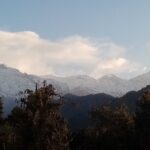
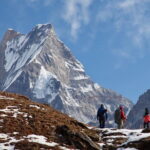
- Views you’re chasing: Annapurna South, Dhaulagiri, Manaslu, Machhapuchhre
- Heritage villages and mid-hills culture you’ll notice along the way
- Lodges, meals, and altitude pacing: what full-board really means
- Guides, permits, and safety details that reduce stress
- Price and value: what $815 covers (and what you’ll still pay)
- Should you book this Ghorepani Poon Hill sunrise trek?
- FAQ
- Where does the Ghorepani Poonhill sunrise trek start?
- What is the approximate duration of the trek?
- How much does the trek cost?
- What is included in the trekking period for meals?
- Is a guide and porter included?
- Are trekking permits and the TIMS card included?
- How is transportation handled between Kathmandu and Pokhara?
- What hotels are included before and after the trek?
- What should I bring or pay for that is not included?
- Is this a private tour?
Key things to know before you go
- Poon Hill sunrise is built into the schedule, not added on at the end
- Licensed guide + porter means less weight and fewer permit headaches
- Forest-to-panorama trekking: rhododendron woods up to big views
- Target peaks are specific (Annapurna South, Dhaulagiri, Manaslu, Machhapuchhre)
- You get full-board meals on trek, plus coffee/tea (per the included list)
- Fitness check matters: steep step climbs and early mornings are part of the deal
Pokhara Warm-Up: why this trek starts on Lake Phewa’s doorstep
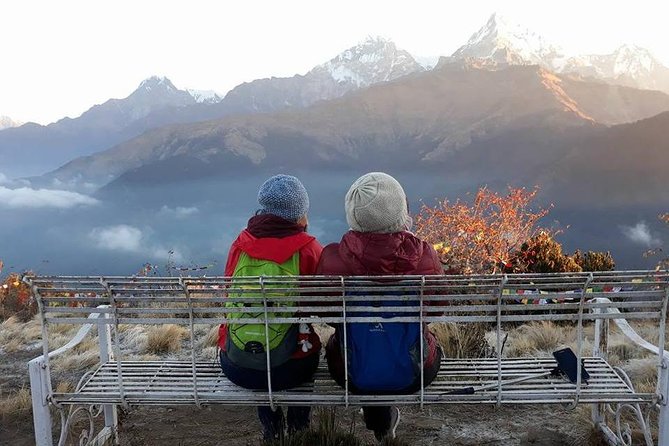
Pokhara is your launch pad, and you feel it right away. It’s listed as the starting point in the Gandaki Zone (Western Region), and the trek begins in the Pokhara area before you head toward the mid-hills. That matters because it lets you handle the first day without immediately fighting altitude.
Another practical bonus: Pokhara gives you a real pre-trek break. You’ll get hotel stays in Kathmandu and Pokhara, plus airport pickup and drop. That means fewer “find your own way” headaches, and it helps if you want to stay organized for a sunrise day later.
And yes, Lake Phewa is part of the vibe here. The trek description explicitly points to ending back in Pokhara after the walking, with lake views and scenic spots along the way. Even if you’re not chasing a photo every hour, having that decompression after the trail is a nice reset.
You can also read our reviews of more tours and experiences in Pokhara.
The Poon Hill sunrise plan (and why the early start is the point)
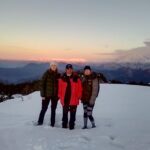
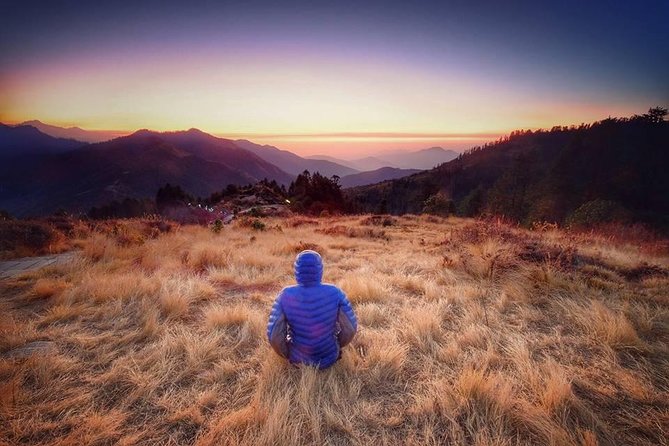
This is a sunrise trek, so you should expect one early push. The meeting point shows a start time of 12:15 am in Pokhara, which fits with the whole idea of getting to Poon Hill before the light show starts.
Here’s the real value of doing this sunrise-style rather than hiking at any random time: the Poon Hill concept is all about catching mountain outlines when the air is cold and visibility is more cooperative. The trek description also promises panoramic views of the Annapurna region and specific targets like Dhaulagiri and Manaslu, so the timing is not random.
One more thing I like about this setup: it doesn’t just promise views; it builds the trek so your body gets used to climbing before that sunrise moment. You rise into altitude over multiple days—Tikhedhunga, Ghorepani, Tadapani—then you’re ready for the big viewpoint day.
Days on the trail: Tikhedhunga → Ghorepani → Tadapani → Nayapul
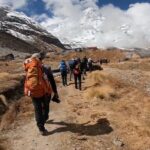
You’ll move through the classic Annapurna foothills rhythm: drive, short day-hike, longer uphill days, then a descent back to the river-level area.
Day 01–02: Kathmandu arrival, then drive to Pokhara
You arrive in Kathmandu and transfer to a hotel. Then you take a tourist bus (listed as about a 6-hour drive) to Pokhara. This is a sensible warm-up, especially if you want to avoid rushing altitude immediately.
Day 03: Nayapool to Tikhedhunga (1450m)
You drive to Nayapool, then trek to Tikhedhunga at 1450m. This day is your first real taste of the walking life—enough to get your legs working, without turning the trip into a misery contest on day three.
This is also the day where you’ll start noticing the mid-hill character: trails through trees and village-adjacent trekking. It’s a helpful ramp-up before higher sections.
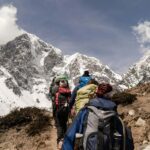
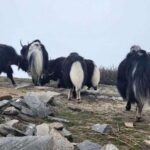
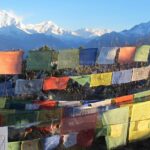
Day 04: Tikhedhunga to Ghorepani (2874m), about 5 hours
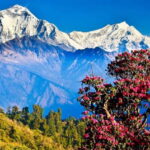
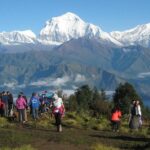
Ghorepani at 2874m is where the trek starts feeling more “alpine-adjacent.” The description highlights rhododendron and mixed forest like oaks and magnolia, which usually means the trail gets scenic quickly—not just later when the peaks finally show.
You’ll walk around roughly five hours on this segment. For me, that’s an ideal length: long enough to feel like you accomplished something, but short enough to keep fatigue from snowballing before sunrise.
Day 05: early hike toward Poon Hill, then trek to Tadapani (2721m)
This is the key day. You do an early-morning hike to Poon Hill, then continue to Tadapani at 2721m for around 5–6 hours total.
The Poon Hill portion is where the trek earns its fame. The description also connects the trip to iconic Annapurna-area peaks—so you’re not just climbing for the sake of climbing. And in the feedback for this company, people highlight that the mountain time can include added extras like yoga at dawn and dusk, which adds a calming rhythm to a typically breathless schedule.
Tadapani is also a good “sleep after sunrise” choice because it keeps you on the trekking route toward the descent.
Day 06: trek down to Nayapul and return to Pokhara
You head down to Nayapul, then drive back to Pokhara. This is the release day—legs tired, spirits usually higher, and your mind finally stops measuring every step.
Day 07–08: back to Kathmandu and onward departure
You drive back to Kathmandu, then depart on day eight.
Views you’re chasing: Annapurna South, Dhaulagiri, Manaslu, Machhapuchhre
This trek description is very clear about what you’re aiming to see. On a good day, you can expect a view set that includes:
- Annapurna South
- Dhaulagiri
- Manaslu
- Machhapuchhre (the Fish Tail Peak)
- Also mentioned: Barah Shikar, Gangapurna, Hiuchuli, and other Annapurna-region peaks
It also states that you’ll climb 3381 steps and be rewarded with panoramic views of Dhaulagiri. Step counts sound like marketing until you’re standing on them. The practical takeaway: you should treat that climb as the physical price for the viewpoint payoff.
Weather matters, though. The trek description promises big sights, but in the Himalaya, visibility can shift fast. Your best move is to dress for cold mornings, keep your eyes open as light changes, and accept that clouds can steal the view on some days.
Heritage villages and mid-hills culture you’ll notice along the way
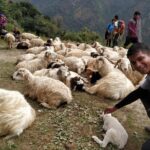
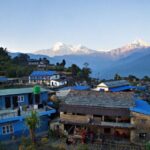
What makes this trek more than a photo walk is the village life in the mid hills. The description calls out Gurung and Pun communities and their customs and traditions. You’ll likely see their presence through everyday village scenes—homes, trails that thread through communities, and cultural context that feels close to daily life instead of staged performance.
One specific heritage stop is highlighted in the trip overview: Ghandruk, described as a heritage village with views of Annapurna South and Machhapuchhre. Even when the itinerary timing is tight, places like this help you understand the region beyond peak names.
And the forest route through rhododendron and other trees? That’s not just scenery. It’s also the lead-in to the cultural zones because it moves you from practical low-elevation trekking into villages where you can feel the mid-hills rhythm.
Lodges, meals, and altitude pacing: what full-board really means
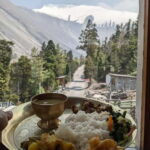
You’re covered for meals during the trekking period: breakfast, lunch, and dinner are included. That’s a big deal. You don’t have to make decisions every day about what to eat, how long it will take, or whether you’ll find a reliable option.
The included list also mentions coffee and/or tea. I appreciate that because on cold mornings, your motivation depends on getting something warm quickly.
Accommodation is listed as “best available accommodations during the trek,” and there are hotel stays in Kathmandu and Pokhara. The practical message: you shouldn’t expect luxury. But you should expect functioning rooms and predictable meals, which often matters more when your legs are doing most of the talking.
Fitness note: the trip specifically asks for moderate physical fitness. “Moderate” here doesn’t mean flat. You’re doing steep sections and a scheduled step-heavy segment tied to viewpoint rewards.
Guides, permits, and safety details that reduce stress
This company includes a government license holder guide and a porter to carry your baggage. That instantly changes the hike feel. You’re not wrestling a heavy pack up stairs at altitude while also trying to navigate.
Also included:
- TIMS card (Trekker’s Information Management System)
- Trekking permits needed for restricted area trekking
- First aid kit
- Insurance, salary, equipment, local taxes for guides and porters
I like that the administrative stuff is handled. In the Himalaya, permits aren’t optional paperwork. They’re part of doing the trekking route the right way.
The feedback for the guide experience is also strong in this package. People specifically thanked guides by name—like Sumir and Amir—and mentioned attentiveness and a friendly, grounded approach. One reviewer even credited Kisan Sir for making the trip special through the agency connection.
Price and value: what $815 covers (and what you’ll still pay)
The price is $815 per person for this 8-day trek experience in the Pokhara area.
What you get that adds real value:
- Airport pickup and drop
- Hotels in Kathmandu and Pokhara
- Full-board meals during trekking days (breakfast/lunch/dinner)
- Guide + porter
- TIMS card + trekking permits
- Ground transportation charges (Kathmandu–Pokhara round-trip by tourist bus/plane, plus Pokhara–Nayapul–Pokhara by private vehicle)
- Farewell dinner prior to departure
- Mobile ticket
- Coffee/tea
What’s not included (and can affect your budget):
- Travel insurance
- Nepal entry visa fee
- International airfare and airport departure tax
- Tips for trekking staff
- Drinks (hot/soft/cold) and liquors
- Personal shopping, laundry
- Personal trekking equipment and gifts/souvenirs
- Lunch/dinner in Kathmandu and Pokhara
If you already know you’ll pay for a guide and permits anyway, the package starts to look reasonable. The main reason it costs more than DIY is that you’re buying time and friction reduction: someone organizes the moves, meals are handled, and your pack is lighter.
Should you book this Ghorepani Poon Hill sunrise trek?
Book it if you want a famous trek without turning the trip into logistics homework. You’ll get a guided, step-focused route with scheduled early-morning access to Poon Hill, plus the comfort of full-board meals on trek and hotels on either end.
Skip or rethink if you know you struggle with very early starts or steep step climbs. Also, if you’re on a tight budget, remember that drinks, tips, visa/insurance, and personal gear are on you.
If you fall into the “I want the mountains and I want the run smoother” camp, this is a solid choice. The combination of sunrise timing, specific peak targets, and a well-supported trek (guide + porter + permits handled) makes it a package that’s easy to say yes to.
FAQ
Where does the Ghorepani Poonhill sunrise trek start?
It starts in Pokhara (meeting point listed as Pokhara, Gandaki Zone, Western Region).
What is the approximate duration of the trek?
The trek is listed as 8 days (approx.).
How much does the trek cost?
The price is $815.00 per person.
What is included in the trekking period for meals?
Full board meals are included during the trekking period: breakfast, lunch, and dinner.
Is a guide and porter included?
Yes. You get a government license holder guide and a porter to carry your baggage.
Are trekking permits and the TIMS card included?
Yes. TIMS card (Trekker’s information Management System) and trekking permits needed for restricted area trekking are included.
How is transportation handled between Kathmandu and Pokhara?
Ground transportation charges are included: Kathmandu–Pokhara–Kathmandu by tourist bus/plane, and Pokhara–Nayapul–Pokhara by private vehicle.
What hotels are included before and after the trek?
Hotel stays in Kathmandu and Pokhara are included.
What should I bring or pay for that is not included?
Travel insurance, Nepal entry visa fee, international airfare and airport departure tax, tips, drinks, personal shopping, laundry, and personal trekking equipment are not included.
Is this a private tour?
Yes. It’s private, and only your group will participate.