REVIEW · POKHARA
Kathmandu/Pokhara: 5-Day Annapurna Base Camp (ABC) Trek
Book on GetYourGuide →Operated by Cordial Trek Pvt. Ltd. · Bookable on GetYourGuide
Annapurna Base Camp gets surprisingly close. In five days you hike from the river-valley approach to ABC at 4,130 m, then watch the sunrise and soak at Jhinu Danda.
I like the mix of trail types here: dense forest, waterfalls, river crossings, terraced farmland, and the shift from greener valleys to colder, rockier terrain. I also love the payoff of Jhinu Danda hot springs on day 5. And I appreciate that you’re not winging it alone—this trek includes a licensed trekking guide (English and Hindi), and many departures also run with porters and strong lodge logistics.
One consideration: this is still a hard, long-days hike. Even with good support, you’ll feel the altitude jump and the cold nights, and tea houses often make you pay extra for hot showers and charging—so plan for a simple, camp-style routine.
In This Review
- Key things that make this ABC trek worth your time
- The Big Picture: Why a 5-Day ABC Trip Works
- Day 1: Pokhara or Kathmandu to Simrung, Then Sinuwa (First Altitude Hit)
- Day 2: Sinuwa to Deurali Through Forest and Waterfalls (3230 m Day)
- Day 3: Deurali to Annapurna Base Camp (ABC) via Machhapuchhre Base Camp
- Day 4: Sunrise at ABC, Then the Long Return to Bamboo/Sinuwa
- Day 5: Jhinu Danda Hot Springs to Simrung, Then Back to Pokhara
- Your Guide and the Safety Rhythm (What the Best ABC Teams Do)
- Tea Houses, Food, and the Real Comfort Level at Altitude
- Packing for ABC: What You Need vs. What You Can Borrow
- Weather and Temperatures by Season: What the Numbers Mean for Your Day
- Price and Value: Is $96 Realistic for ABC?
- Who Should (and Shouldn’t) Choose This Trek
- Should You Book This 5-Day Annapurna Base Camp Trek?
- FAQ
- What starting city options do I have?
- How high does the trek go?
- Is Annapurna Base Camp included on the route?
- Do I get to visit Jhinu Danda hot springs?
- Is a guide included?
- Are meals included?
- What equipment do I need to bring, and what can I borrow?
- What documents are required for permits?
Key things that make this ABC trek worth your time
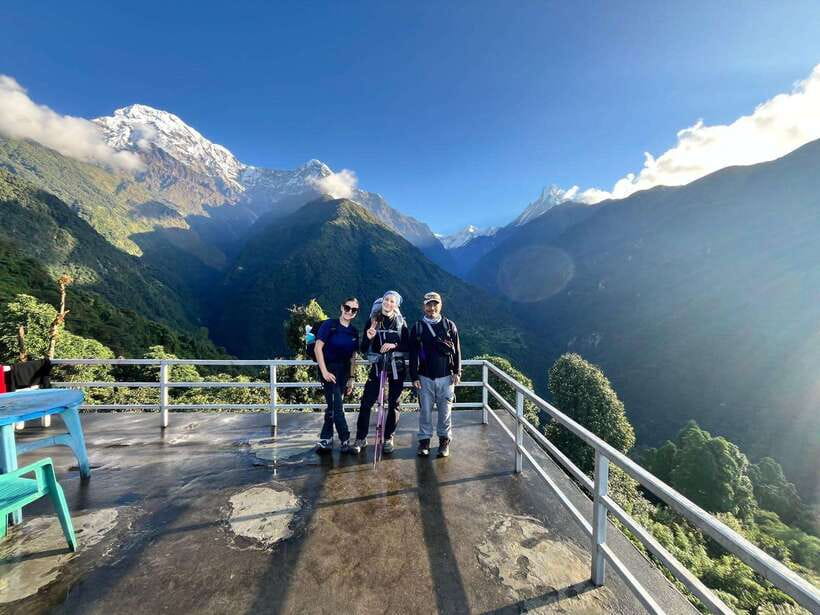
- ABC at 4,130 m: you get the big base-camp moment in just five hiking days
- Machhapuchhre Base Camp (MBC) en route: the route adds extra scenery before the final push
- Jhinu Danda hot springs: a real recovery stop after a tough day of descending
- Licensed guide + equipment help: down jacket, sleeping bag, and trekking poles are borrowable
- Tea-house rhythm with planned altitude steps: manageable day lengths that still feel challenging
- Real-world flexibility in tough moments: guides in past departures stepped in when weather and timing got messy
The Big Picture: Why a 5-Day ABC Trip Works
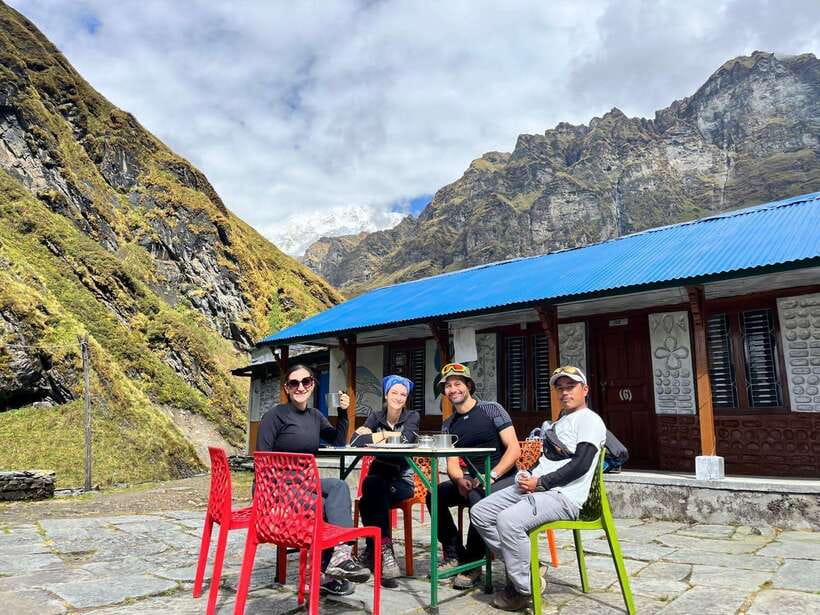
Most Annapurna Base Camp itineraries stretch longer than this. This one is shorter on purpose. You’ll cover about 10–14 km on most days, with one longer push on day 4, and you’ll use guesthouses along the way instead of carrying overnight gear.
That “tight but doable” pace is the whole idea. You get the essence of the Annapurna Sanctuary—forests, waterfalls, villages, and mountain views—without burning weeks. And because the trip is built around set pickups, transfers, and lodge stops, you spend your energy hiking instead of organizing.
You should also know what makes ABC special here. Annapurna-I rises inside the Annapurna Sanctuary, and you’re hiking to the base level where the mountain feels close enough to smell the snow. The trek culminates at 4,130 m, so the change in air and temperature is a big part of the experience, not just the view.
You can also read our reviews of more tours and experiences in Pokhara.
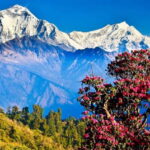
Day 1: Pokhara or Kathmandu to Simrung, Then Sinuwa (First Altitude Hit)
Your trip starts with hotel pickup in Pokhara or Kathmandu. If you begin in Kathmandu, you take a short flight to Pokhara (about 30 minutes), then you drive roughly 2–3 hours to Simrung via Nayapul.
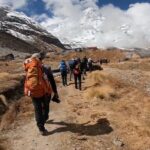
Once you start hiking, the first day is your warm-up-with-a-purpose. You trek from Simrung to Sinuwa (about 10–11 km, roughly 5–6 hours). You’ll move through the lower valley world where trails feel “alive”: rivers nearby, waterfalls in the distance, and forested sections that help you settle into trekking mode.
Why day 1 matters: it sets your rhythm for everything after. You’re going from around hill-town life into the foothills-to-mountain transition, and your body learns how to handle uphill time. The maximum altitude for the day is listed at 2,340 m, so it’s a first step rather than a surprise.
That night, you sleep at a guesthouse in Sinuwa. Think simple comfort: warm drinks, a little downtime, and an early-to-bed vibe. Cold can arrive fast at altitude, even when the afternoon felt fine.
Day 2: Sinuwa to Deurali Through Forest and Waterfalls (3230 m Day)
Day 2 follows a classic ABC pattern: move higher, keep the trail interesting, and let the body adjust. You trek Sinuwa to Deurali (again about 10–11 km, roughly 5–6 hours), passing through Himalaya, a small settlement with tea houses.
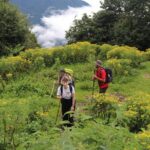
This is the day of dense forest and frequent waterfalls, based on the route description. The vegetation and soundscape change the feel of your walk. Instead of staring at the mountains all day, you get moments of shade, mist, and water crossings that keep your attention on the trail.
You’ll spend the day climbing to a maximum altitude of about 3,230 m. That number matters because it’s where many people start feeling the difference in breathing, especially if you go too fast. The best strategy is boring and effective: slow steps, steady pauses, and don’t treat the first hour like a race.
Your reward is a stronger sense of “I’m really in the mountains now,” plus a guesthouse stop at Deurali. It’s also a good day to double-check your layers. Night temperatures can drop even when the trail feels manageable.
Day 3: Deurali to Annapurna Base Camp (ABC) via Machhapuchhre Base Camp
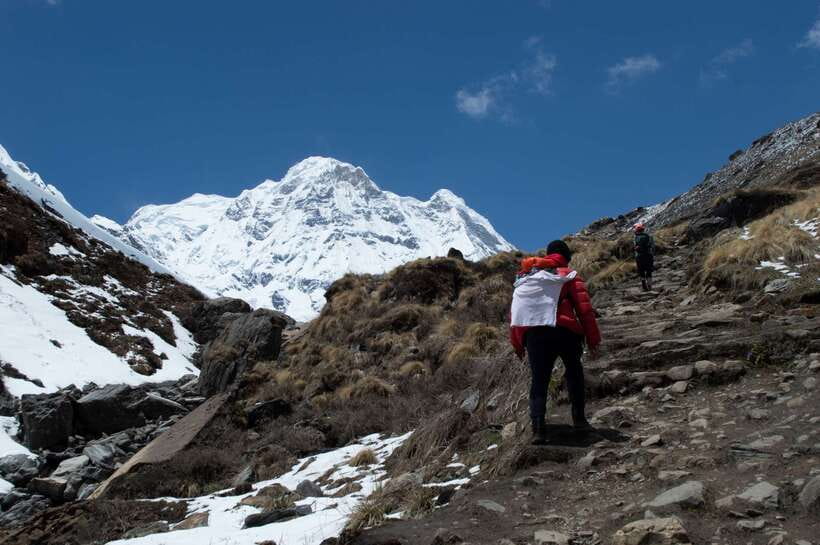
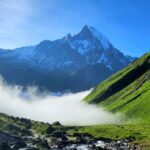
Day 3 is the one you’ve been aiming at. You trek from Deurali to Annapurna Base Camp (about 10–11 km, roughly 5–6 hours). The route takes you via Machhapuchhre Base Camp (MBC), and you’ll pass through the MBC valley on the way.
MBC adds something practical: it gives you extra scenery and a second “gear up” moment before ABC. You’re not just walking a straight line uphill. You’re crossing terrain that feels more remote, more exposed, and more mountain-focused as the day goes on.
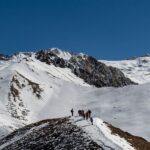
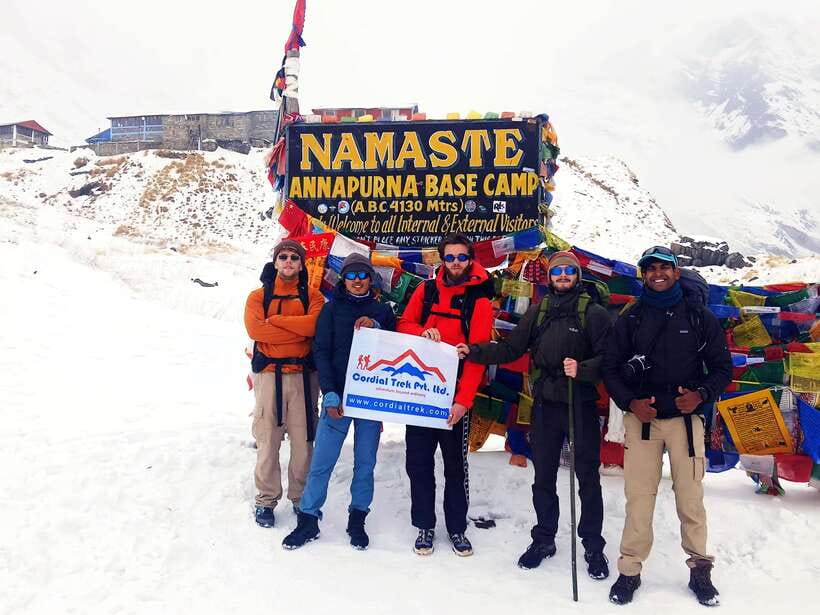
Then you reach ABC at 4,130 m. This is where the mountains feel huge, close, and real in a way photos never fully capture. Your senses also get sharper. Even if skies are foggy, the cold air, the rock tones, and the pace of life at base camp make it feel like a different planet.
You sleep at tea houses at ABC. Many hikers want to stay outside longer, but don’t ignore your body. Altitude fatigue is sneaky. If you want a shot at sunrise on day 4, you need energy too.
Day 4: Sunrise at ABC, Then the Long Return to Bamboo/Sinuwa
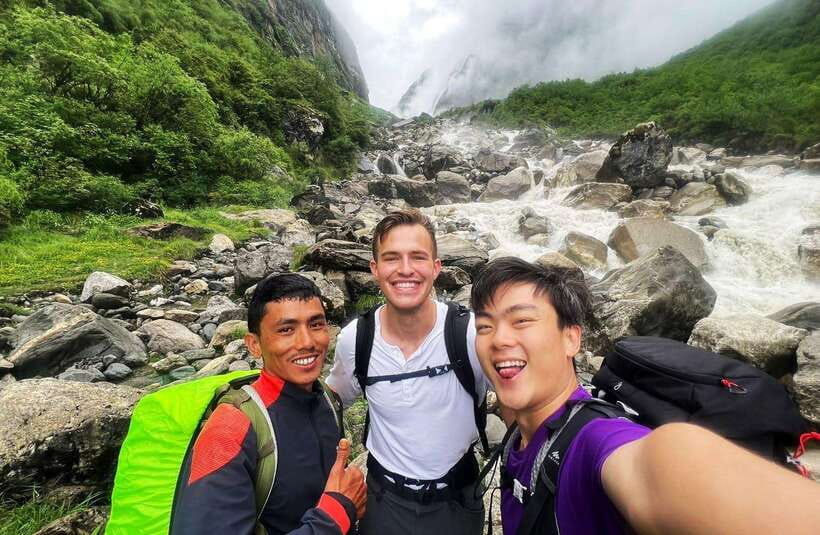
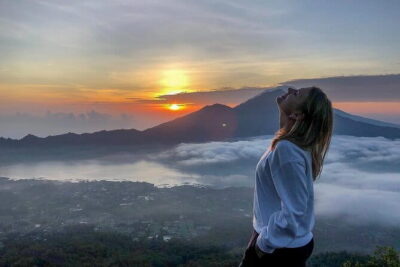
Day 4 starts with the real spectacle: sunrise view at ABC. The timing can be cold and early, but it’s a big reason people do this trek in the first place.
After sunrise, you hike back to Bamboo/Sinuwa (about 12–14 km, roughly 7–8 hours), going via Deurali, Himalaya, and Dobhan. This is the longest day on paper. Even if your legs are strong, downhill hours can grind your knees and calves.
What makes day 4 tricky isn’t just distance. It’s the mental work of moving away from the goal. Base camp stops being a destination and becomes a memory, and your job is to keep walking anyway.
You’ll be heading back toward lower altitudes, and your itinerary notes a minimum altitude around 2,340 m for the day’s endpoint. That means the air should feel easier, but you’ll still feel tired because your body has already climbed high.
You’ll sleep in a guesthouse in Bamboo/Sinuwa. Many tea-house meals taste better when you finally stop. Hydrate, eat, and try to get warm without overdoing it.
Day 5: Jhinu Danda Hot Springs to Simrung, Then Back to Pokhara
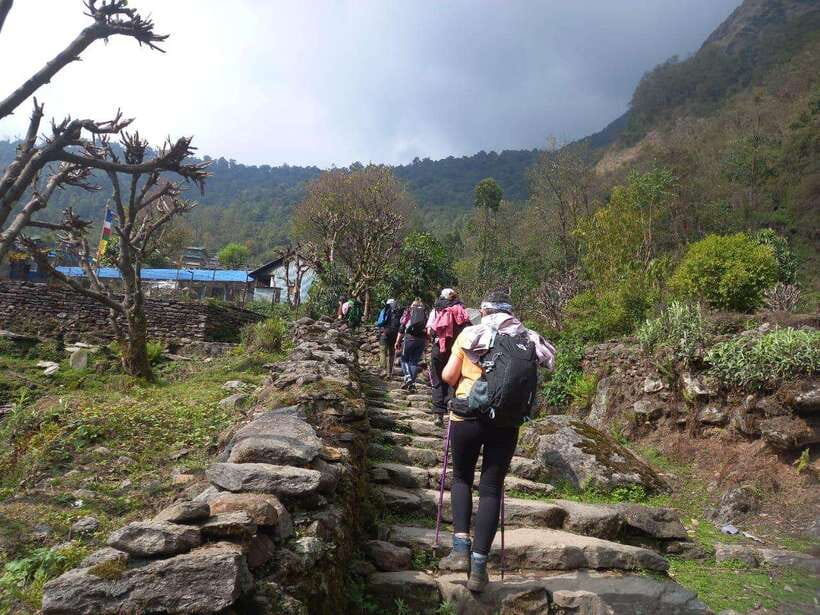
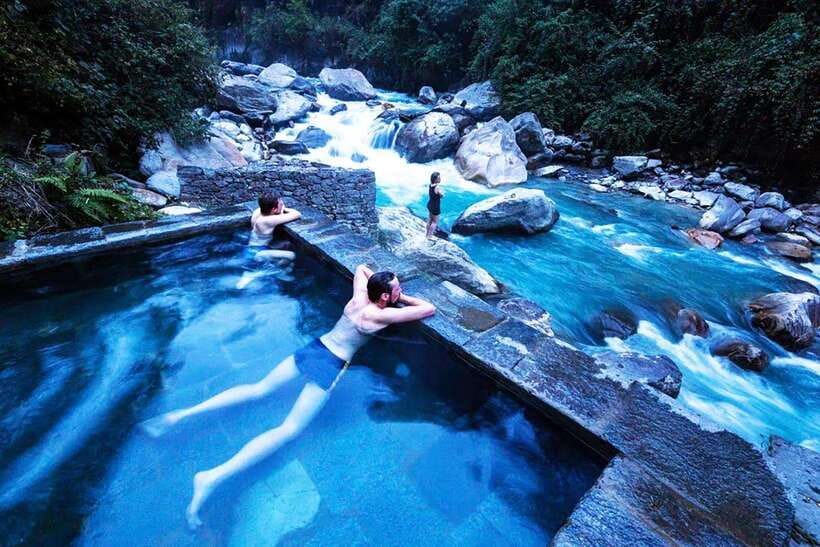
Day 5 is your cleanup day: a final hike, a hot spring reset, and a drive home. You trek to Simrung via Jhinu Danda (about 7–8 km, roughly 4–5 hours). The big highlight here is the hot springs at Jhinu Danda, which makes this itinerary stand out versus more basic out-and-back treks.
After the hot springs and the final trail stretch, you drive from Simrung back to Pokhara (about 2–3 hours). The handoff is organized with hotel drop-off in Pokhara, no later than 17:00. If you booked return flights, you’ll be dropped at Pokhara Airport instead.
If you started in Kathmandu and have a Kathmandu return, arrival is planned for no later than 19:30, with late international departures handled by self-transport to the terminal.
Why this matters: your ABC days are physically intense. Finishing with a real recovery stop makes the final descent feel less like punishment and more like closure.
Your Guide and the Safety Rhythm (What the Best ABC Teams Do)
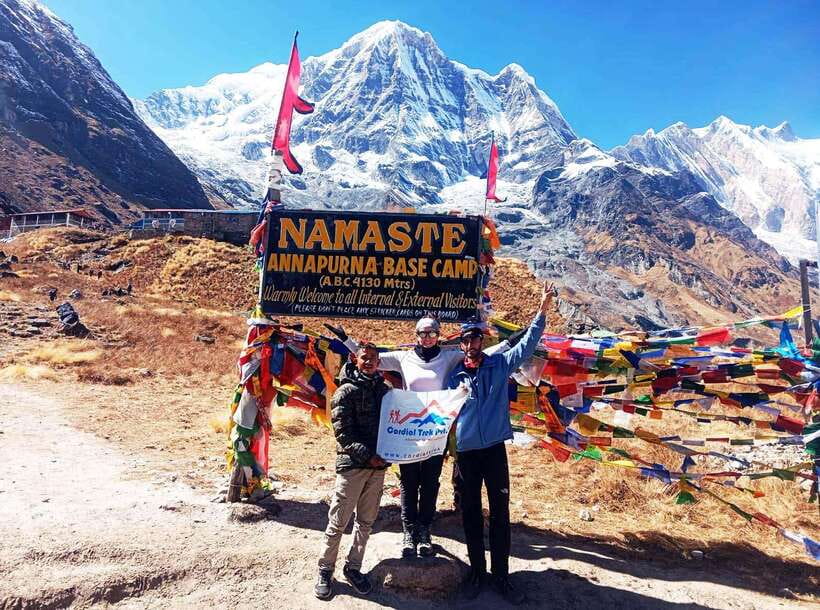
This trek is guided, and that’s not a small detail. On the Annapurna route, a guide helps with pacing, trail choices, and how you handle rough conditions.
In past departures, guides such as Raju, Anil Sherpa, Pratip, Oham Raj Tamang, and Smile show up in feedback for being attentive and organized. The common thread in that kind of service is simple: you check in often, someone watches how you’re doing, and the team helps you keep moving at the right speed.
A porter (when included in your option) also changes the feel of the hike. You’re still hiking, but your back stays calmer. That matters most when tired legs want to compensate by tightening your core.
If you’re solo, you’ll want to ask how rooms are assigned. One solo hiker reported a shared room one night, which can happen when lodges fill up. The upside: most of the care-focused feedback points to guides pushing to get comfortable setups when possible.
Tea Houses, Food, and the Real Comfort Level at Altitude
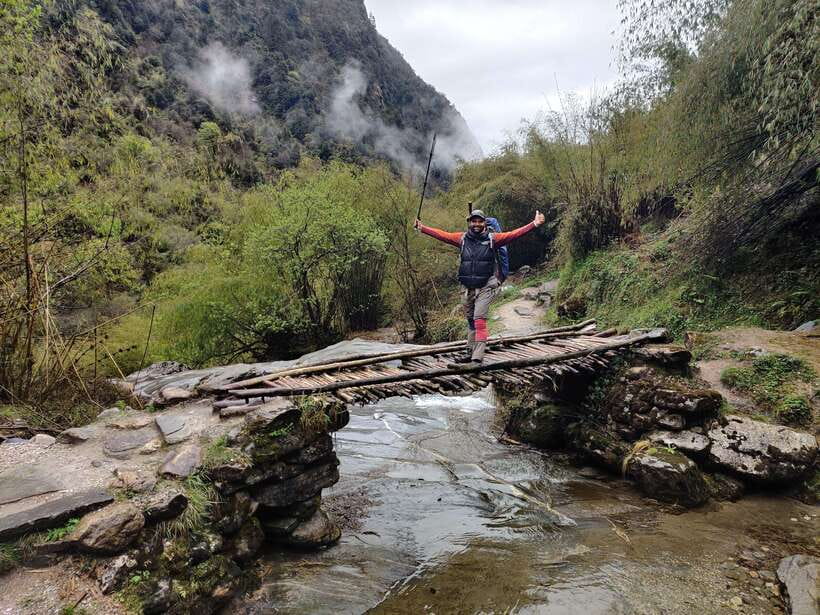
The trek uses guesthouses and tea houses each night. This is where expectation-setting helps.
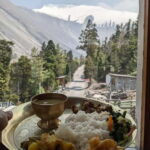
Meals are included only with certain options. The information provided says meals (breakfast/lunch/dinner counts) are included with the all-inclusive option, or you can add them. Hot showers, Wi‑Fi, and charging are not included, so plan for a low-power, offline mountain routine.
That said, food still tends to be a highlight because it’s simple and practical after a long climb. Many hikers talk about meals being plentiful and good after tough days, which makes sense: you’re burning calories and your body wants warmth and salt.
Practical tip: bring cash. Tea houses run on cash, and the cost of extras adds up fast at higher points.
Also, pack a towel. You’ll thank yourself. And plan for cold water and limited shower options. Even if you can pay for hot water, it may not be available on every day.
Packing for ABC: What You Need vs. What You Can Borrow
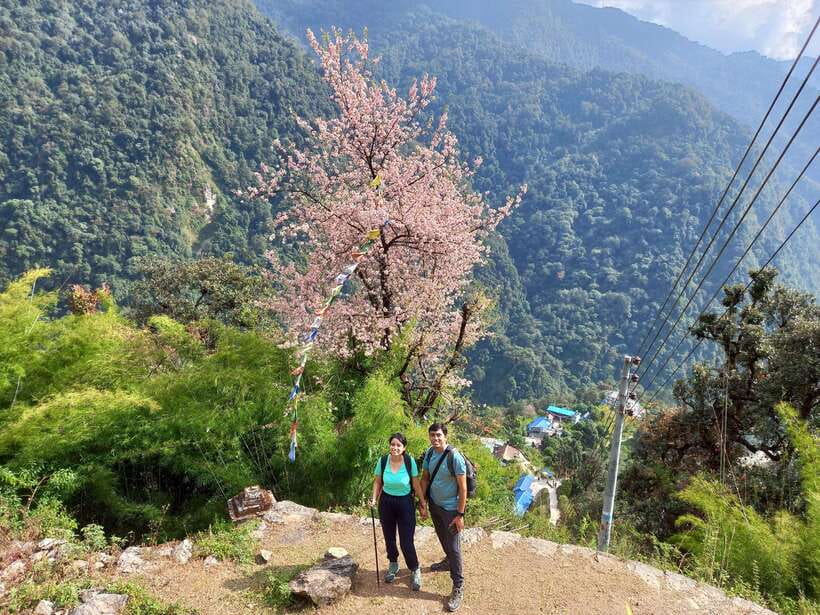
The checklist here is solid. You’ll want warm layers that handle temperature swings, plus footwear that can deal with mud and stone.
Key items I’d prioritize:
- Down or puffer jacket
- Thermal base layers
- High-ankle waterproof trekking boots (recommended)
- Trekking poles (borrowable)
- Warm socks
- Beanie, gloves, neck gaiter
- Sunscreen and sunglasses
Gear you can borrow includes a down jacket, sleeping bag, and trekking poles, at no extra cost. That’s valuable if you’re traveling light or renting gear at home would be a hassle.
If your season has snow, the checklist also mentions crampons for snowy conditions. Don’t ignore this. Slippery rock turns a hike into a wrestling match.
Finally, don’t forget basics people skip: a water bottle or CamelBak, toiletries, and your camera. Bring passport details too. Permits need documentation, and the trek company asks for a copy of your passport and a passport-sized photo at least one day in advance.
Weather and Temperatures by Season: What the Numbers Mean for Your Day
Temperature guidance is included for different seasons:
- Spring/Autumn (Mar–May, Sep–Nov): lows can reach -3°C to 3°C, highs around 2°C to 20°C
- Summer/Monsoon (Jun–Aug): lows around 0°C to 5°C, highs around 5°C to 22°C
- Winter (Dec–Feb): lows can reach -10°C to -2°C, highs around -5°C to 15°C
Numbers are one thing. Trail behavior is another. In monsoon season, you can expect wet feet and damp gear that doesn’t dry overnight. That matches what you’d logically expect at altitude with frequent rain and cold air.
So plan your strategy:
- Wear layers you can add or remove fast.
- Bring extra socks if you tend to get cold.
- Assume moisture stays in your shoes and clothes longer than you want.
Price and Value: Is $96 Realistic for ABC?
The listed price is $96 per person for a 5-day trek. The real question is what’s included with that price, and what you’d likely add.
From the included list, you’re getting a lot of core mountain support:
- Hotel pickup and drop-off in Pokhara (and in Kathmandu if the flight option is selected)
- Transfers between Pokhara and Simrung by shared jeep
- 4-night mountain guesthouse accommodation
- A licensed trekking guide
- Borrowing equipment (down jacket, sleeping bag, trekking poles)
- Necessary permits
- Water purification tablets as required
- First aid
What changes by option:
- Meals are explicitly included only with the all-inclusive route option, or as an add-on.
- Porter coverage is included only in the all-inclusive option.
- Hot showers, Wi‑Fi, and battery charging aren’t included.
So is $96 good value? For ABC, it can be. You’re essentially paying for logistics, permits, guide leadership, and the hardest part of the trip being made safer and easier to manage. The cost can also be very low compared to self-organizing, especially if you’re not familiar with trekking permits and tea-house booking patterns.
If you want the most comfort for your money, choose the option that includes meals and a porter. If you’re cost-sensitive, go budget, but then you’re responsible for managing meals and carrying your own essentials more carefully.
Who Should (and Shouldn’t) Choose This Trek
This trek fits hikers who want a short, intense ABC hit. It also works for first-time trekkers if you’re realistic about effort. Even in the reviews you’ll see plenty of first-timers complete the hike, but the message stays the same: it’s hard work, not a casual walk.
It’s not suitable for people with mobility impairments, and there’s an upper age limit listed as over 95 years.
If you’re an experienced hiker, the shorter duration still feels demanding, mainly because day 4 is long. If you’re new to trekking, you’ll want to keep a steady pace from day 1 and not try to copy the fastest walkers.
Should You Book This 5-Day Annapurna Base Camp Trek?
I’d book it if you want:
- ABC in a short window (five days)
- A guided plan with permits, lodge stays, and equipment help
- A meaningful recovery stop at Jhinu Danda hot springs
- A support team that pays attention to safety and pacing
I might pass if:
- You’re chasing a cushy trip with lots of comfort extras (hot showers and charging cost extra or may be limited)
- You’re sensitive to cold and wet conditions, especially in monsoon months
- You need lots of privacy in accommodations (room sharing can happen)
If you want a practical ABC experience with real structure, this one is built for you.
FAQ
What starting city options do I have?
You can start in Pokhara or Kathmandu. If you choose Kathmandu, the itinerary includes a short flight to Pokhara.
How high does the trek go?
The itinerary lists a maximum altitude of 4,130 m at Annapurna Base Camp. It also lists daily maximums such as 2,340 m on day 1 and 3,230 m on day 2.
Is Annapurna Base Camp included on the route?
Yes. Day 3 is trekking to Annapurna Base Camp (ABC), and day 4 includes the sunrise view in the morning.
Do I get to visit Jhinu Danda hot springs?
Yes. Day 5 includes trekking via Jhinu Danda so you can use the natural hot springs before heading back toward Pokhara.
Is a guide included?
Yes. The trek includes a licensed and experienced trekking guide. The languages listed are English and Hindi.
Are meals included?
Meals are included with the all-inclusive option (4 breakfasts, 5 lunches, and 4 dinners). If you choose a budget option, meals may not be included unless you select an add-on.
What equipment do I need to bring, and what can I borrow?
You should bring warm clothing and proper trekking boots. The trek includes borrowing a down jacket, a sleeping bag, and trekking poles at no extra cost. The checklist also mentions crampons for snowy conditions.
What documents are required for permits?
You need to provide a copy of your passport and a recent passport-sized photograph at least one day in advance so trekking permits can be processed. Passport copies are accepted.