REVIEW · KATHMANDU
Unforgettable Everest Base Camp Trek with Third Rock Adventures! 🌄 I recently completed an incredible journey to Everest Base Camp with Third Rock Adventures, and I can’t recommend them enough! From starRead more
Book on Viator →Operated by Third Rock Adventures · Bookable on Viator
Everest Base Camp is the kind of trek that makes a spreadsheet feel silly. In 14 days you’ll mix Lukla flights, Sherpa villages like Namche and Dingboche, and the big payoff at Everest Base Camp plus Kala Patthar. It’s iconic, yes, but what makes it interesting is the way the route builds in acclimatization while still pushing toward altitude highs.
I really like the practical structure here: you get Kathmandu hotel time with a briefing and gear check, then a guided trek that uses tea houses along the way. Two standouts for me are the included meals with tea/coffee each day and the support system built around a government-licensed, English-speaking guide plus a porter to carry your main luggage (2 trekkers per 1 porter). That combo matters because it lowers the stress level when the days get steeper and the air gets thin.
One drawback to plan for: this is graded moderate to difficult, so you’ll need solid physical readiness and patience with slower hiking. Even with meds like Paracetamol and Diamox carried by the guide and a pulse oximeter in the toolkit, you’re still climbing to very high elevations where weather and altitude can change the day’s feel.
In This Review
- Key things I’d pay attention to before you go
- How 14 Days Shapes Everest Base Camp (and what moderate really means)
- Kathmandu arrival, private pickup, and the Thamel gear reality check
- Flights to Lukla and Day 2’s first Khumbu steps to Phakding
- Namche Bazaar: your acclimatization hub with markets and Everest views
- Tengboche and Ama Dablam: forests, monastery time, and big views
- Dingboche and Nagarjun Hill: Imja Glacier views without the summit scramble
- Lobuche, Thukla Pass memorials, and earning Everest Base Camp on Day 9
- Kala Patthar at 5,550 m: sunrise payoff and the 360-degree mountain moment
- Coming down through Pheriche, Tengboche, and back to Namche
- Hillary suspension bridge again and the Lukla finish-line
- Kathmandu recovery, Ason Market, and your last day in Nepal
- Price of $1,799: what’s included, what’s not, and why the math can work
- Guides, porters, and how support shows up when conditions shift
- Tea house trekking: what to expect day to day (and how to handle the comfort level)
- Who should book this Everest Base Camp trek?
- Should you book Third Rock Adventures for Everest Base Camp?
- FAQ
- How long is the Everest Base Camp trek?
- What’s included in the trek price?
- Do I get a porter?
- What should I plan for in terms of visas, insurance, and tips?
- What about flights to Lukla and any helicopter option?
- Where do the meals and accommodations come from during the trek?
Key things I’d pay attention to before you go
- Lukla flight + domestic flights included: you’re not left guessing how to get to the start, and the itinerary includes Ramechhap/Kathmandu to Lukla and back.
- Real acclimatization days, not just hiking: Namche gets a full acclimatization day, plus Dingboche includes a hill hike.
- Kala Patthar at 5,550 m is the big summit push: expect cold, early mornings, and a payoff of 360-degree views at sunrise timing.
- Tea house comfort varies, but it’s guided: your stay is “best available clean and comfortable,” which is as good as it gets in the Khumbu.
- Guide and porter quality shows up in the reviews: names like Gnawang, Deepak, and Dawa come up with strong support and help when plans shift.
- Included trek gear that helps you travel lighter: a down jacket and sleeping bag are provided to use during the trek (returned after).
How 14 Days Shapes Everest Base Camp (and what moderate really means)
Fourteen days is a sweet spot for the Everest Base Camp route because it gives you multiple “work” days at altitude and a couple of “digest what you climbed” days. The itinerary builds around acclimatization—especially in Namche and Dingboche—so you’re not only going higher, you’re also learning how your body responds.
This trek is described as moderate to difficult. That phrase is honest. You’ll deal with steep stretches, long days of uphill walking, and cold at night. If you’re the type who wants everything to be easy and flat, you’ll get frustrated; if you’re okay with slow, steady effort, you’ll feel the route makes sense.
You can also read our reviews of more tours and experiences in Kathmandu.
Kathmandu arrival, private pickup, and the Thamel gear reality check
Day 1 is all about getting set up. You’re met in Kathmandu by a representative and transferred to your hotel, then you meet your trek leader and team for a detailed briefing. You also have time to check gear and shop for essentials in Thamel, which is useful because trekking-ready clothing can be easier to buy locally than to carry from home.
You’ll get two nights in a 3-star deluxe hotel in Kathmandu with breakfast. That’s not luxury for the sake of luxury; it’s a comfort buffer before you start sleeping at altitude in simpler tea houses. If you’re coming in with a tight schedule, this is also where you can confirm your packing plan before you’re committed to the mountains.
Flights to Lukla and Day 2’s first Khumbu steps to Phakding
On Day 2, the trek officially begins with the thrill of a flight from Kathmandu to Lukla. Once you land, you meet your crew and start trekking through Chauri Kharka village, then follow the Dudh Koshi River toward Phakding.
This early walking day is important because it lets you settle into trail rhythm. You’re not trying to “win” the trek on Day 2. You’re building a routine: pace, hydration, and how quickly you warm up once you start climbing.
Phakding is a classic starting valley stop. You’ll get your first full feel for the tea house setup: small rooms, basic hot-water limitations (if available), and meals that are simple and filling. The trek being organized with all meals included helps here—you spend less time negotiating and more time resting.
Namche Bazaar: your acclimatization hub with markets and Everest views
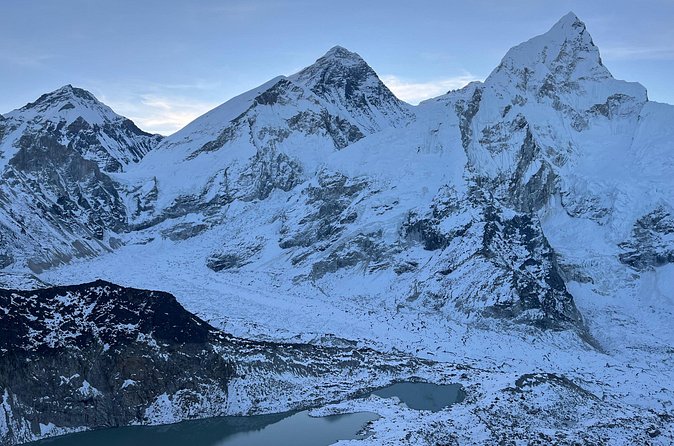
Day 3 is a big day. You cross the Dudh Koshi on suspension bridges, including the famous Hillary Bridge, then enter Sagarmatha National Park. After lunch at Jorsale, you climb steeply toward Namche Bazaar, the Sherpa capital and trading hub.
Then Day 4 is a key acclimatization day. You explore Namche—bakeries, shops, and the Saturday Market—and you get a sunrise hike to Sagarmatha National Park for views of Everest, Ama Dablam, and Lhotse. That sunrise hike is not just scenery; it’s your first real reminder that the mountains can look close enough to touch and still be impossibly far.
Why this day matters: Namche is often where people notice altitude in a practical way (breath, sleep, head feel). Having a full day here reduces the chances you’ll treat acclimatization like an optional side quest.
Tengboche and Ama Dablam: forests, monastery time, and big views
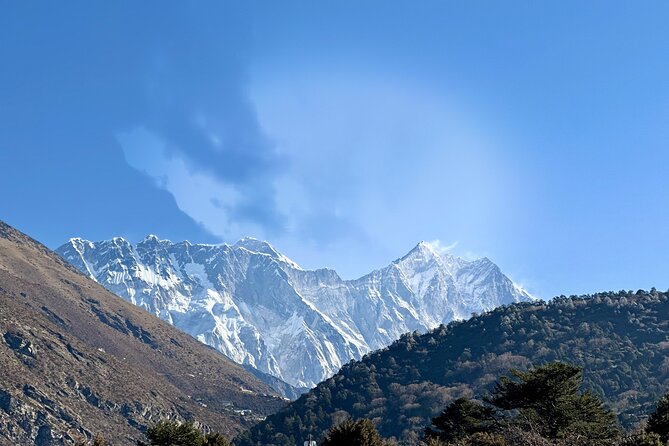
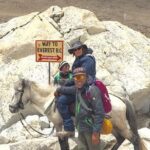
Day 5 moves from lower valley trails into forested hiking with views of Everest, Lhotse, Nuptse, and Ama Dablam. You’re trekking through rhododendron and juniper forests, which is a welcome change from pure rocky uphill.
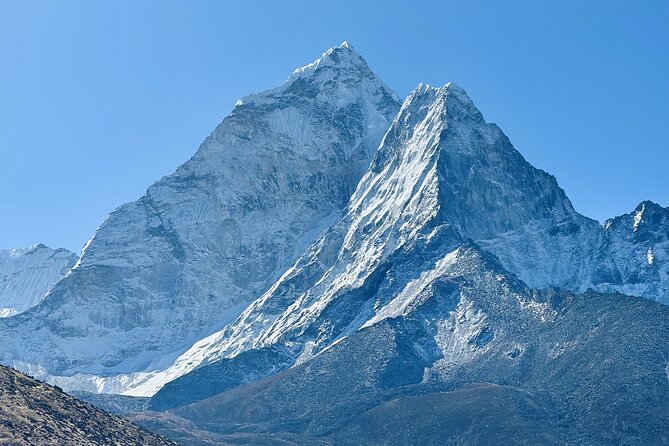
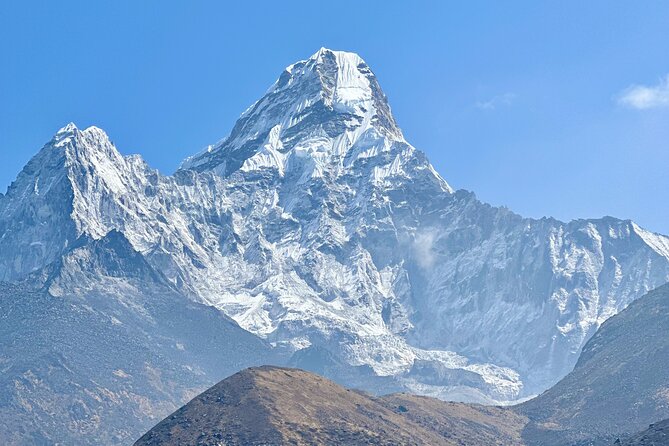
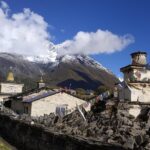
You arrive at Tengboche, home to the region’s largest monastery. This stop is one of the most meaningful cultural moments on the route. The scenery comes with context: in Tengboche you’re not just looking at mountains; you’re also seeing how Sherpa communities organize life around the spiritual rhythm of the Himalaya. You also get close-up views of Ama Dablam, which tends to read as a “wow” mountain even for people who think they’re already prepared for wow.
Dingboche and Nagarjun Hill: Imja Glacier views without the summit scramble
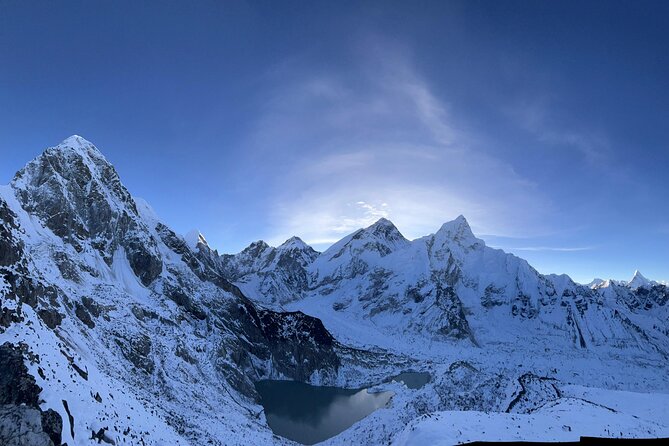
Day 6 is a crossing and transition day. You cross the Imja Khola and pass through Pangboche, described as the highest permanent Sherpa settlement. From there you continue to Dingboche with views of Island Peak and Ama Dablam.
Then Day 7 gives you another altitude tool: a hike to Nagarjun Hill at 5,100 m for panoramic views of Makalu, Lhotse, Ama Dablam, and Island Peak, plus a close look at the Imja Glacier. The hike is strenuous enough to help acclimatize but not the kind of peak mission that forces you to go all-in on Day 7.
Afternoon time is left for rest or exploring Dingboche. That downtime is valuable. At altitude, your recovery isn’t just comfort—it’s part of your safety plan.
Lobuche, Thukla Pass memorials, and earning Everest Base Camp on Day 9
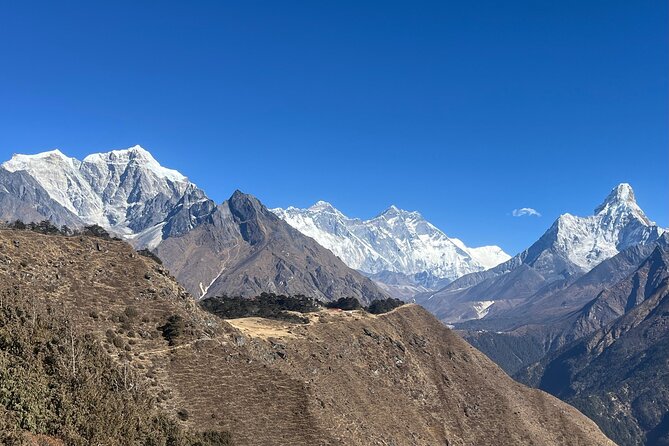
Day 8 is a route-building day from Dingboche to Lobuche. You hike about 8 km over rugged high altitude terrain with views of Lobuche, Pumori, and Nuptse. You pause at Thukla Pass to honor Everest climbers at memorial stupas before continuing toward the Nepal–Tibet border area.
That memorial stop tends to stick with people because it makes the trek feel bigger than personal achievement. You’re walking in a place where risk and rescue are real parts of the story.
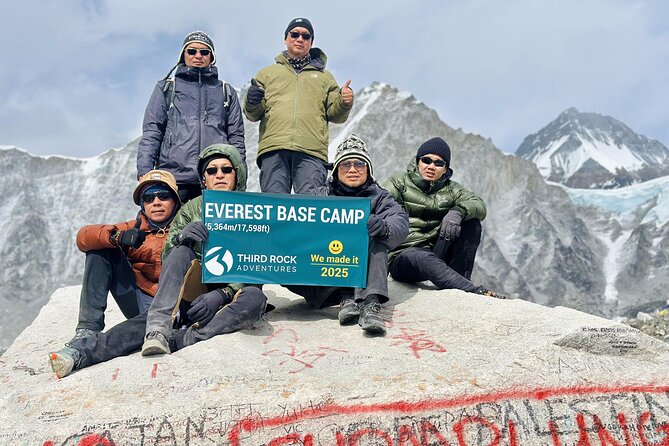
Day 9 is the emotional core. You trek from Lobuche to Gorak Shep, then hike alongside the Khumbu Glacier to reach Everest Base Camp. Expect epic views of the Khumbu Icefall and surrounding peaks. Then you return to Gorak Shep for the night.
If you care about photos, this is where you’ll take a lot. But don’t treat it like a checklist. Base Camp is also about the slower feeling: watching icefall terrain, noticing how the light changes, and letting the “I’m here” moment land.
Kala Patthar at 5,550 m: sunrise payoff and the 360-degree mountain moment
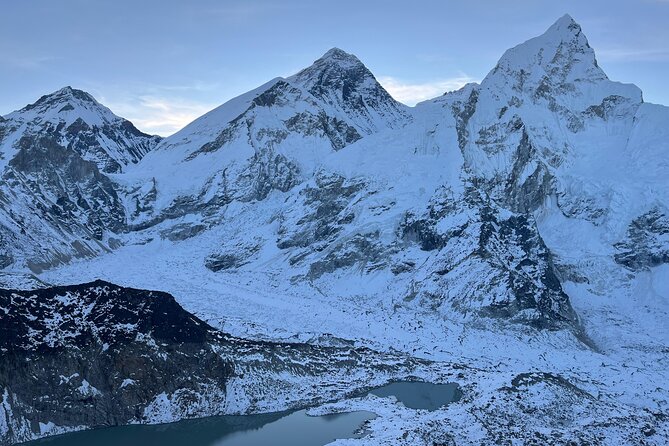
Day 10 is the highest-point push: you hike to Kala Patthar (5,550 m) after breakfast. You’re aiming for stunning 360-degree views of Everest, Lhotse, Nuptse, and Pumori. The itinerary also calls out sunrise, where the peak lights up—this is the classic Khumbu timing that many people plan their trek around.
Afterward, you return to Gorak Shep and descend toward Pheriche. The big reminder here is that your hardest part often comes twice: once when you climb, and again when you decide whether you can handle the cold and fatigue of the early start.
Coming down through Pheriche, Tengboche, and back to Namche
Day 11 is a descent day with meaning. You descend from Pheriche through scenic trails, passing Tengboche along the way. After a short climb in the afternoon, you arrive back at Namche Bazaar to rest and reflect.
Day 11 can feel strangely emotional. You’ve already done the “hard work.” Now you’re moving back through familiar terrain, and the mountains often feel even more dramatic because you’re no longer focused only on the next step.
Hillary suspension bridge again and the Lukla finish-line
Day 12 brings you down from Namche to Lukla. You descend through local villages and cross the Hillary Suspension Bridge along the way. You reach Lukla in the afternoon and celebrate completing your Everest adventure, then enjoy your final night.
That bridge detail matters because it links the route together. You’re seeing the same landscape from a different angle with fresh appreciation.
Kathmandu recovery, Ason Market, and your last day in Nepal
Day 13 is a scenic flight from Lukla to Kathmandu, then a transfer to your hotel. You can rest or explore nearby shops for handicrafts and souvenirs, and you also visit Ason Market for spices, tea, and decorative items. The day ends with a fare-well dinner.
Day 14 is your departure day. You get a transfer to the airport three hours before your scheduled flight.
I like this finish because it doesn’t rush you into “tour mode.” It gives you a real chance to recover, shop thoughtfully, and leave with memories that go beyond the trek itself.
Price of $1,799: what’s included, what’s not, and why the math can work
At $1,799 per person, this trek price isn’t just “a guided hike.” It includes a lot of the expensive and hard-to-organize pieces that often break budgets on big treks.
On the plus side, your price includes:
- Private vehicle pickup and drop-off in Kathmandu
- Two nights in Kathmandu at a 3-star deluxe hotel with breakfast
- Clean, comfortable tea house accommodation during the trek
- All meals (breakfast, lunch, dinner) with a cup of tea/coffee
- The guide (English-speaking, government-licensed, first-aid trained)
- Porter service for your main luggage (2 trekkers per 1 porter)
- Sagarmatha National Park entry fee and community fee
- A first aid kit, pulse oximeter, and essential medicines carried by the guide
- Domestic flights (Ramechhap/Kathmandu to Lukla and back)
- Down jacket and sleeping bag provided for the trek (returned afterward)
- Staff costs, insurance, and equipment covered in the overall package
What’s not included matters too:
- Nepal visa fee, travel and medical insurance
- Tips for guide, porter, and driver
- Personal expenses like bottled/boiled water, internet, hot showers, snacks, laundry, and charging
- Upgraded Kathmandu hotel costs if you want 4-star or 5-star
- Extra baggage fees if you exceed the 15 kg allowance
- Any add-ons or weather-related changes not covered by the itinerary
- The optional shared helicopter flight cost of $1,200 per person
Here’s the value angle: the price packs in the big moving parts—flights, guide/porter staffing, park fees, and most of your daily logistics. You still pay for personal items and tips, but you don’t have to cobble together the core trek infrastructure yourself.
In the reviews, the biggest praise tends to land on organization and real support. People bring up guides like Gnawang and Deepak, and support from Dawa when plans need to change due to altitude symptoms. One review even calls out fast communication from Naba before departure. That kind of responsiveness is hard to price, but it’s often what keeps a trip from feeling chaotic in the mountains.
Guides, porters, and how support shows up when conditions shift
On paper, you get an English-speaking guide who’s government-licensed and trained in first aid, with a pulse oximeter and essential medicines like Paracetamol and Diamox carried. In practice, the reviews reinforce that support is more than paperwork.
Names that show up with strong feedback include:
- Gnawang (praised for politeness, help, and smart answers during the trek)
- Somdey (credited as an excellent porter)
- Deepak (praised for helping the group reach the start safely when poor weather affected the Kathmandu schedule)
- Dawa (praised for knowing the route, watching out for the group, and supporting plan changes due to altitude sickness)
That last point is worth your attention. On an Everest route, weather and body response can force decisions. Having a guide who can adapt rather than push a rigid plan can be the difference between a tough day and a risky one.
Also, the group size is capped at a maximum of 12 travelers. That tends to make it easier for your guide and porter team to manage pace and attention than in huge groups.
Tea house trekking: what to expect day to day (and how to handle the comfort level)
Tea houses are the backbone of this route. You’ll sleep in “best available clean and comfortable” tea house accommodations, but it’s still high-altitude rustic living. Expect simpler rooms, limited hot water, and a need to dress well for cold.
Good news: you have meals included—breakfast, lunch, dinner—with tea/coffee each day. That reduces one of the biggest trekking headaches: figuring out where and what to eat while you’re tired and altitude-aware.
Also, you’re given a down jacket and sleeping bag to use during the trek and return afterward. That helps you keep your luggage manageable and avoids the problem of bringing bulky winter gear to Nepal just to use it for two weeks.
Bring personal trekking gear even if you’re getting some items included. The tour data lists personal trekking gear/equipment as not included, so you’ll want to budget and pack accordingly.
Who should book this Everest Base Camp trek?
This trek is a great fit if you:
- Can hike steadily with a moderate to difficult fitness base
- Want a guided route with porters and included meals
- Prefer organization that includes acclimatization days rather than rushed schedules
- Like the idea of combining big mountain views with Sherpa village life and monastery culture
It’s less ideal if you:
- Want a very comfortable, hotel-style experience every night
- Don’t want early starts for Kala Patthar or sunrise-style viewpoints
- Are hoping to avoid physical strain entirely
Should you book Third Rock Adventures for Everest Base Camp?
If you want Everest Base Camp with less logistics stress, I think this is a strong option. The value comes from what’s included: domestic flights, guide and porter support, tea house meals, park fees, and key safety tools like a pulse oximeter and essential meds carried by the guide.
My main caution is simple: don’t underestimate the hike. Even with great support, you’re still walking in thin air and cold conditions. If you train, hydrate, pace yourself, and keep an open mind for how weather and altitude can shift the day, you’ll likely love the balance of challenge and reward.
If you’re unsure, compare your readiness to the itinerary profile and plan your training around steady uphill hiking plus a few longer days. That prep usually decides whether this trip feels “hard but doable” or “hard and exhausting.”
FAQ
How long is the Everest Base Camp trek?
The trek is listed as 14 days (approx.).
What’s included in the trek price?
Included items include Kathmandu airport pickup and drop-off, two nights in a 3-star deluxe hotel with breakfast, tea house accommodation during the trek, all meals (breakfast, lunch, dinner) with tea/coffee, guide and porter service, Sagarmatha National Park entry and community fees, first aid kit and pulse oximeter, domestic flights to and from Lukla, and a down jacket and sleeping bag for use during the trek.
Do I get a porter?
Yes. Porter service is included to carry your main luggage, with the tour noting a 2 trekkers to 1 porter ratio.
What should I plan for in terms of visas, insurance, and tips?
Nepal visa fee, travel and medical insurance, and tips for guide, porter, and driver are not included in the package.
What about flights to Lukla and any helicopter option?
The itinerary includes domestic flights (Ramechhap/Kathmandu to Lukla and back). A sharing helicopter flight from Kathmandu to Lukla to Kathmandu is listed as an optional cost of $1,200 per person, and it is not included.
Where do the meals and accommodations come from during the trek?
You’ll stay in tea houses and have breakfast, lunch, and dinner included each day during the trek, with a cup of tea/coffee.