REVIEW · KATHMANDU
8 Days Annapurna Base Camp Budget Trek from Kathmandu
Book on Viator →Operated by Welcome Nepal Treks P.ltd · Bookable on Viator
Annapurna sunrise hits before breakfast. This 8-day trek is a practical way to get into the Annapurna region with real village walking, lodge stays, and that big Base Camp morning. I especially like that your conservation paperwork and permits are handled, so you can focus on your pace, not forms. I also like the built-in reset at Jhinu hot spring, which turns sore legs into something closer to normal.
The main drawback to plan for is that the trek price does not include your lunch and dinner each day, so your final trip cost will depend on how and where you eat during the walk. Expect colder mornings as you gain altitude, and the schedule is active from the start.
In This Review
- Key things to know before you go
- Why This 8-Day Annapurna Base Camp Trek Makes Sense for a Budget Plan
- Kathmandu to Pokhara: Get Oriented, Then Let the Trek Take Over
- Siwai to Chhomrong: Terraces, a Suspension Bridge, and Big Annapurna Views
- Into the Forest: Sinuwa, Bamboo, Dovan, and the Modi River Soundtrack
- Hinko Cave to Machhapuchhre Base Camp: The Big Step Toward the Sanctuary
- Sunrise at Annapurna Base Camp: Why That Morning Changes the Trek
- Chhomrong to Jhinu Danda: Gurung Village Walking and the Hot Spring Recovery
- Back to Pokhara: Nayapul Walk, City Reset, and One More Hot Spring Chance
- The Final Day: Pokhara Back to Kathmandu by Tourist Bus
- Price and Value: What You’re Paying For (and What You Still Need to Budget)
- Pacing, Fitness, and What the Schedule Feels Like on Your Body
- Who This Annapurna Base Camp Trek Fits Best
- Should You Book This Trek?
- FAQ
- What is the duration of this Annapurna Base Camp trek?
- Where do you start the trip, and how do you get to Pokhara?
- What time does the experience start?
- What’s included in the price?
- Are meals during the trek included?
- Is Jhinu hot spring part of the trek?
- FAQ
- Can I cancel and get a full refund?
Key things to know before you go
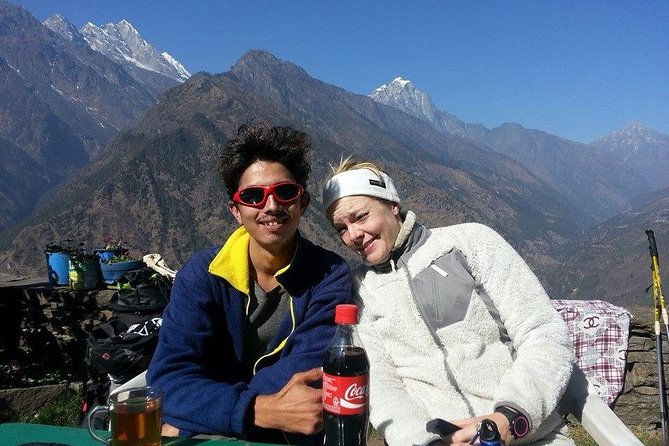
- Max 15 people in the group keeps the trek feeling manageable, not chaotic
- Jhinu hot spring time on Day 6 (and optional again on Day 7) gives you a real recovery moment
- Sunrise at Annapurna Base Camp is built into the route, so you’re not guessing when the best moment happens
- Lodge/tea house stays during the trek are included, which simplifies packing and planning
- Kathmandu to Pokhara by tourist bus plus a local drive to the trailhead keeps logistics straightforward
- A 6:45am start time helps you beat crowds and cold, especially on trekking days
Why This 8-Day Annapurna Base Camp Trek Makes Sense for a Budget Plan
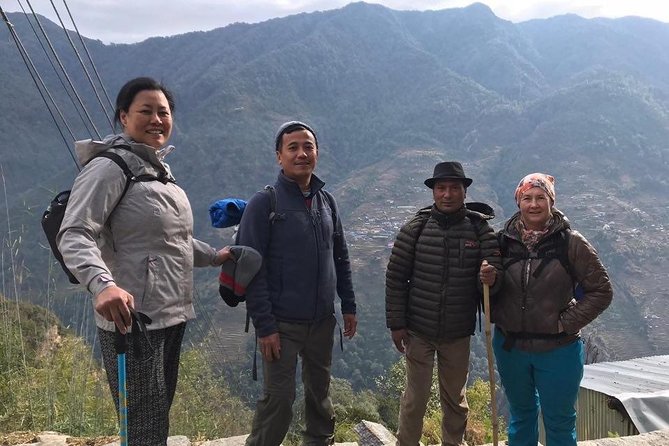
This is a classic Annapurna Base Camp trek shaped into a doable 8-day format. You’re not just moving uphill for the views. You’re also moving through forests, terraced farmland, and Gurung villages, then closing the loop by working your way back toward Pokhara and Kathmandu.
What makes it good value is the mix of what’s handled for you and what you control. You get ground transport between Kathmandu and Pokhara, lodge nights during the trek, an experienced guide, and the conservation permits/paperwork. That means you’re paying for the pieces that usually get messy when you DIY it—especially paperwork and daily logistics.
The other part is pace. Six-hour trekking days are common on paper here, and the route includes climbs and descents that feel like real mountain travel, not a nonstop grind. Still, you’ll gain altitude and you’ll feel it. If you show up with moderate fitness, plan for slow steps, and keep your expectations aligned with a mountain routine, you’ll be fine.
You can also read our reviews of more tours and experiences in Kathmandu.
Kathmandu to Pokhara: Get Oriented, Then Let the Trek Take Over
Day 1 starts with a drive from Kathmandu to Pokhara by tourist bus. The distance is listed as about 210 km, and the ride takes roughly 5–6 hours depending on the road and traffic. Once you arrive, you get free time to explore around Phewa Lake and the lakeside tourist area.
This first day matters more than it sounds. Pokhara is where you’ll shift gears from city movement to hiking boots. It’s also where you can buy any last items you forgot. Even if you do only a short walk by the lake, you’ll feel your body start adjusting to the trip.
You’ll sleep at a 3-star hotel in Pokhara (Hotel Third Pole or similar) with free breakfast. And yes, this is the kind of hotel stop that helps you stay on-budget without making you choose between comfort and thrift.
Siwai to Chhomrong: Terraces, a Suspension Bridge, and Big Annapurna Views
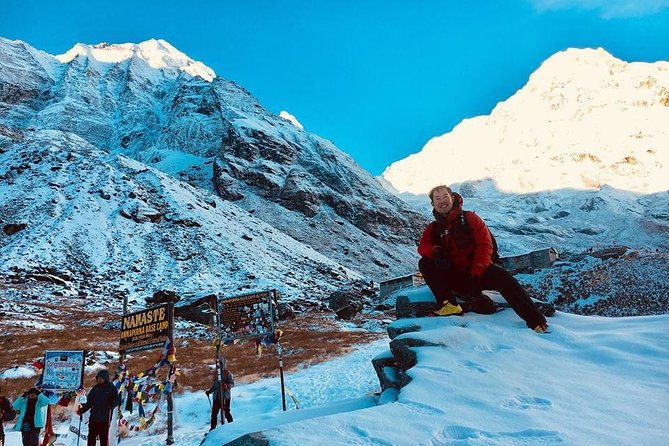
On Day 2, you move from Pokhara area toward the trek route via a sharing vehicle to Siwai. The drive is listed as about 3 hours along the route via Naudanda, Nayapul, and Birethanti. Once you start walking from Siwai, the trail turns scenic quickly.
The first standout here is the variety right away: smaller farm villages, then the crossing of a new long suspension bridge over Kimrong Khola. That bridge moment is one of those small things that makes a trek feel alive—you’re not just walking through scenery, you’re crossing the actual systems that shape life in the valley.
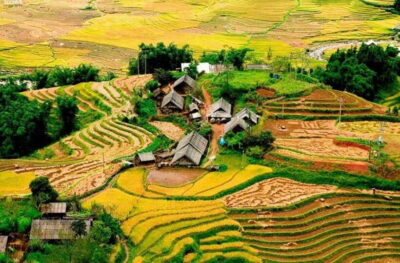
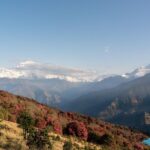
From Jhinu Danda onward, the route climbs along terraced farm fields up to Chhomrong. Chhomrong is also a vantage point, with views mentioned for Annapurna South, Fishtail (Machhapuchhre), Hiunchuli, and Annapurna III. That’s a lot of major mountain names in one viewpoint, which tells you the scenery is a real feature, not an afterthought.
The practical consideration: this is a day where you’ll start building altitude pressure. Walk slowly, keep your breathing steady, and resist the urge to rush just because the views are tempting.
Into the Forest: Sinuwa, Bamboo, Dovan, and the Modi River Soundtrack
Day 3 follows a classic Annapurna Base Camp feel: a morning start with a downhill walk toward a river, then short bridge crossings and gradual changes in scenery. You head to Sinuwa at 2,330 m. This is described as a lonely spot with a few shops and nice lodges, which usually means fewer people and more stillness.
After Sinuwa, the trail moves into a cool forested area with oak, rhododendron, and pine trees. This is one of the reasons this trek works for you mentally. Forest walking gives you a break from constant wide-open views, and your legs can settle into a rhythm.
Then you descend to Bamboo, a small settlement with about 5–6 lodges surrounded by bamboo trees. From Bamboo, you climb slowly for a bit more than an hour to Dovan. The Modi River becomes a key background presence here, with the sound of the raging river mentioned clearly. That sound tends to be a useful cue as you hike—when you hear it strong, you know you’re near the river gorge and the terrain is shaping up around it.
The day ends at Himalaya Hotel beneath Huichuli peak. Even if you’re not sleeping in the exact same place as the description, the region theme is consistent: lodge evenings, mountain air settling in, and a sense that you’re working toward something bigger.
Hinko Cave to Machhapuchhre Base Camp: The Big Step Toward the Sanctuary
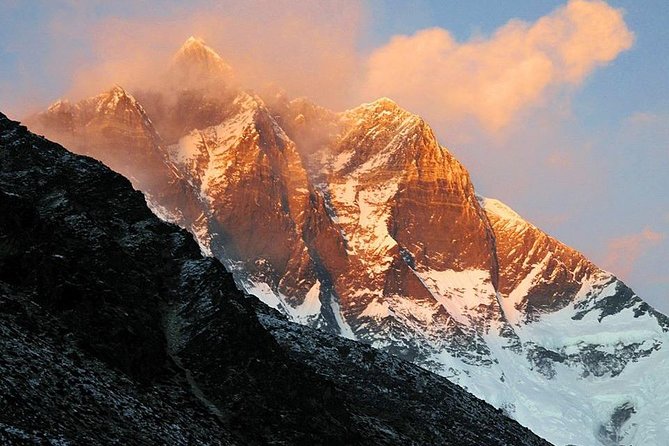
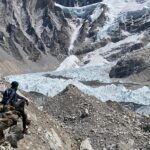
Day 4 is where the trek starts to feel high-altitude serious. The route steeply climbs to Hinko cave. Then you take a short descent, cross areas described as ablation of old avalanches on rocky moraine, and climb again to Deurali after leaving the gorge area.
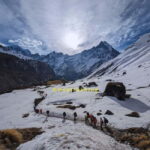
After Deurali, things open up. You head higher leaving the tree lines behind and follow the raging glacial Modi River. This is the section that many people remember because the scenery changes fast: fewer trees, more exposed trail, and stronger impressions of the mountains towering above you.
Then comes Machhapuchhre base camp at 3,700 m, located beneath the North Face of Fish Tail Mountain. Lunch is at MBC, which is a good plan for you because it gives your body energy before the final push into the Annapurna Sanctuary.
From MBC, you move into the famous and picturesque Annapurna Sanctuary where Annapurna Base Camp is located. Your “arrival” feeling is real here. Even if you don’t know the geography perfectly, your body understands you’ve reached the zone where the air feels different and the view is direct.
Sunrise at Annapurna Base Camp: Why That Morning Changes the Trek
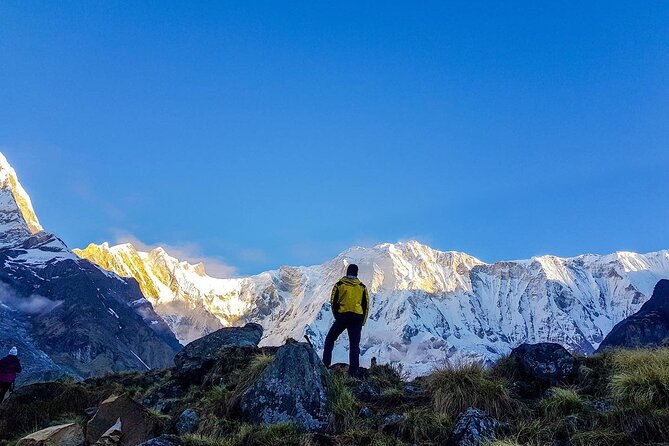
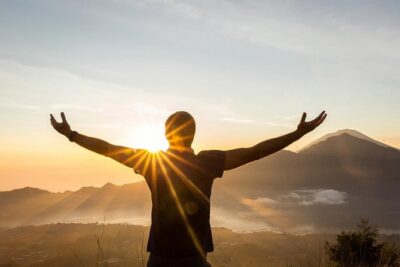
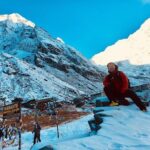
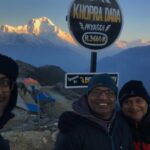
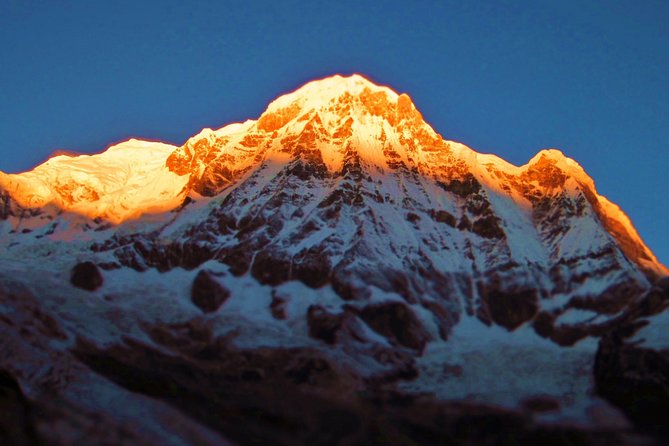
Day 5 is a split day: sunrise at Annapurna Base Camp, then a long descent. Observing sunrise from Base Camp is listed as a key moment. That matters because it turns the summit-like feeling into a time you share with the mountains instead of just a view you pass through.
After breakfast, you start descending. This day is described as an outstanding experience because you’re moving from high altitude back down. The route drops you to Modi Khola at Bamboo, with an elevation drop of about 1,700 m.
That kind of descent changes your comfort fast. Your legs will still feel it, but you’ll start noticing how the air warms and how villages and lodges feel closer and more human-sized again. Overnight is at Bamboo, which is a helpful reset before the Jhinu hot spring day.
Chhomrong to Jhinu Danda: Gurung Village Walking and the Hot Spring Recovery
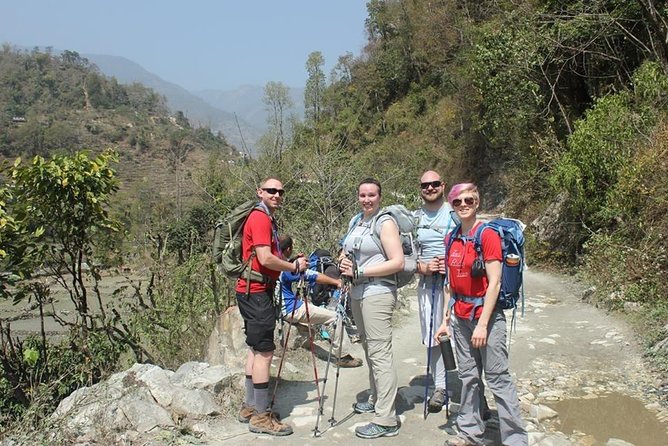
Day 6 focuses on culture and recovery. From Bamboo, you hike up to Kuldhigar, where you find the ACAP office and a visitor center. That stop is valuable because it connects you to the real-world management behind trekking in protected areas. It’s not just views and effort; it’s also conservation in action.
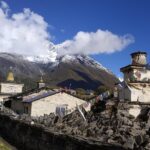
Then you hike down to a bridge across the Chhomrong River, passing Sinuwa. You cross the bridge and enter a Gurung village of Chhomrong. The route then takes you through a steep descent down to Jhinu Danda.
Jhinu hot spring is listed as 15–20 minutes downhill from Jhinu Danda. So the hot spring isn’t just a vague idea. It’s a short walk that you can time for real muscle relief. Getting a dip in hot water after a descent is one of the smartest ways to keep yourself comfortable for the final days.
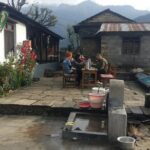
You sleep in Jhinu Danda lodge-style accommodation. It’s another night where you’ll likely feel the difference between trekking fatigue and the slow relaxation that warm water brings.
Back to Pokhara: Nayapul Walk, City Reset, and One More Hot Spring Chance
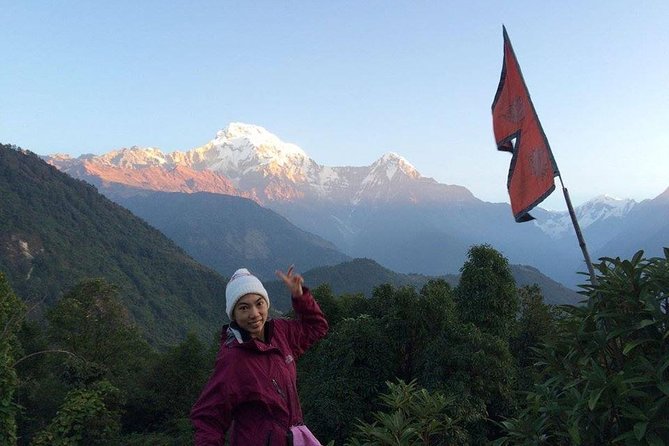
Day 7 gives you a downhill exit day. You can go to the hot spring again this morning, then trek down to Nayapul. After that, you drive back to Pokhara.
This is the part where you should let the day be simple. You’re not chasing altitude now. You’re shifting from mountain time to city time. If you’re someone who gets stir-crazy after long hikes, Pokhara is a good payoff because it’s set up for relaxation.
You overnight in Pokhara again, at Hotel Third Pole or similar.
The Final Day: Pokhara Back to Kathmandu by Tourist Bus
Day 8 is the return drive to Kathmandu by tourist bus. The ride is listed as about 6–7 hours. This last day is mostly about staying hydrated, keeping snacks handy, and letting your body calm down after days of walking.
It’s not glamorous, but it’s practical. Getting you back reliably matters when you’re ending a physically demanding trek.
Price and Value: What You’re Paying For (and What You Still Need to Budget)
The price is listed as $853.34 per person for an 8-day trek. For this kind of route, the value comes from the logistics you don’t have to untangle yourself.
Included costs cover:
- Breakfast (and a free breakfast at your Pokhara hotel)
- Pokhara hotel for Day 1 night (3-star)
- All necessary paper works and conservation entry permits
- Ground transportation Kathmandu ↔ Pokhara by tourist bus
- Trek accommodations in lodges/tea houses
- An experienced, helpful and friendly guide
- Guide-related costs (salary, food, drinks, accommodation, transportation, insurance)
- Government taxes, VAT, and service charge
Not included costs are:
- Your standard meals (breakfast, lunch, dinner) during the trekking
- Gratuities, described as not mandatory but expected
Here’s how I’d think about the value in your real life: this package takes care of your shelter, your guide, and the official paperwork that can slow you down. What you still control is how often you buy meals during the walk. If you eat simply, you’ll keep spending low. If you’re the type who wants comfortable meals with frequent snacks and hot drinks, your budget should expand.
Also note the group size limit: up to 15 people. That usually helps the experience feel more organized and less crowded on trail moments, compared with very large group tours.
Pacing, Fitness, and What the Schedule Feels Like on Your Body
This trek is for people with moderate physical fitness, which is exactly what you should look for if you want Annapurna without turning it into a hardcore training plan. Still, don’t treat the daily hours as a guarantee that the hike will feel easy.
Many days are listed around 6 hours. But time on the mountain isn’t just time walking—it’s also time adjusting to steep parts, stone steps, and changing altitude. Your body may feel it most on the days that climb toward Deurali and then toward MBC and the sanctuary.
A smart approach is to keep your pace slow enough that you can still talk in short sentences. You’re aiming to finish each day feeling okay enough to enjoy the next morning.
Cold mornings are part of the experience since sunrise is built into the itinerary. Also, the route description specifically points to crisp cold air and isolated desolation at some stages—so packing warm layers matters.
Who This Annapurna Base Camp Trek Fits Best
This trip fits you if:
- You want Annapurna Base Camp without complicated planning
- You appreciate lodge/tea house trekking, not camping
- You care about a guided experience with permits handled
- You like a mix of views, villages, and one strong recovery moment at Jhinu hot spring
It may not fit you if:
- You hate spending extra on lunch and dinner during the trek (meals are not included)
- You want fully free time every day. This is an active route with morning starts and walking blocks.
If you’re traveling with a group of friends, this kind of structure helps you stay together without constant route research. If you’re traveling solo, the guide and group size cap help you feel less alone on the challenging sections.
Should You Book This Trek?
If you want a straightforward, budget-aware Annapurna Base Camp trek that doesn’t bury you in paperwork or logistics, this is a solid choice. The mix of included permits, lodge nights, and transport does the heavy lifting. And the most memorable moments here—sunrise at Base Camp and hot spring relief at Jhinu—are built into the schedule, not left to luck.
Before you book, do two quick reality checks:
- Confirm you’re comfortable paying for lunch and dinner while trekking.
- Make peace with early starts and mountain cold, especially around sunrise.
If you can do both, you’ll likely feel like the $853.34 is buying you the right things: guidance, official access, shelter, and a classic Annapurna journey.
FAQ
What is the duration of this Annapurna Base Camp trek?
It’s listed as 8 days (approximately).
Where do you start the trip, and how do you get to Pokhara?
You start in Kathmandu. The trip includes ground transport by tourist bus from Kathmandu to Pokhara, which takes about 5–6 hours for the 210 km drive.
What time does the experience start?
The start time is listed as 6:45 am.
What’s included in the price?
Included items are breakfast, the 3-star hotel in Pokhara with free breakfast, conservation entry permits/paperwork, tourist bus transport Kathmandu–Pokhara–Kathmandu, lodge/tea house accommodations during the trek, and an experienced guide. Guide costs and government taxes are also included.
Are meals during the trek included?
No. The trek package does not include standard meals during the trekking.
Is Jhinu hot spring part of the trek?
Yes. Jhinu hot spring is included in the itinerary, reached by going 15–20 minutes downhill from Jhinu Danda. You can also go again on the following morning.
FAQ
Can I cancel and get a full refund?
Yes. You can cancel up to 24 hours in advance for a full refund, and cut-off times use the experience’s local time.