REVIEW · KATHMANDU
5-Day Annapurna Base Camp Trek with Natural Hot Springs
Book on GetYourGuide →Operated by MTA Trekking · Bookable on GetYourGuide
Five days, one big mountain moment. This Annapurna Base Camp trek blends classic Himalayan views with real Gurung village life, and it throws in a soak at Jhinu Hot Springs. Two things I really like are the way the guide (Ramit, in at least one recent trip) helps you understand what you’re seeing and the fact that you sleep in trail-side tea-house lodges instead of hauling camping gear. The main consideration: Annapurna Base Camp tops out at 4,130 meters, so altitude sickness is possible, even if it’s said to be rare.
You’ll start from Lakeside Pokhara, get hotel or airport pickup, and roll partway to the trail by Jeep or SUV. This is built as a private group trek with English support, so the pacing feels more adjustable than fixed joiner-group schedules. If monsoon weather hits, plan for wet trails, extra patience, and leeches on the lower sections.
In This Review
- Key takeaways before you go
- Why Annapurna Base Camp in 5 days feels worth it
- Price, permits, and the real value of this $320
- The pacing: why the days feel doable (even when they aren’t easy)
- Day 1: Pokhara to Lower Sinuwa via Jhinu hot springs
- Day 2: Deurali at 3,200 m and the shift into real altitude
- Day 3: The Base Camp arrival at 4,130 m, plus Machhapuchhre Base Camp
- Day 4: From Base Camp views to the Bamboo lodge reset
- Day 5: Bamboo back to Pokhara via Jhinu hot springs
- Tea-house stays, guide energy, and why Ramit’s style mattered
- What to bring (and what to prioritize for altitude and wet trail days)
- Who should book this trek, and who should skip it
- Should you book this Annapurna Base Camp trek with natural hot springs?
- FAQ
- How high do you reach on this trek?
- What’s the total duration and how many nights?
- Where does the trek start and end?
- Is hotel pickup included?
- Are permits included in the price?
- Do I need a porter?
Key takeaways before you go
- Jhinu Hot Springs are built into the schedule, so you get a warm reset on the way up or back
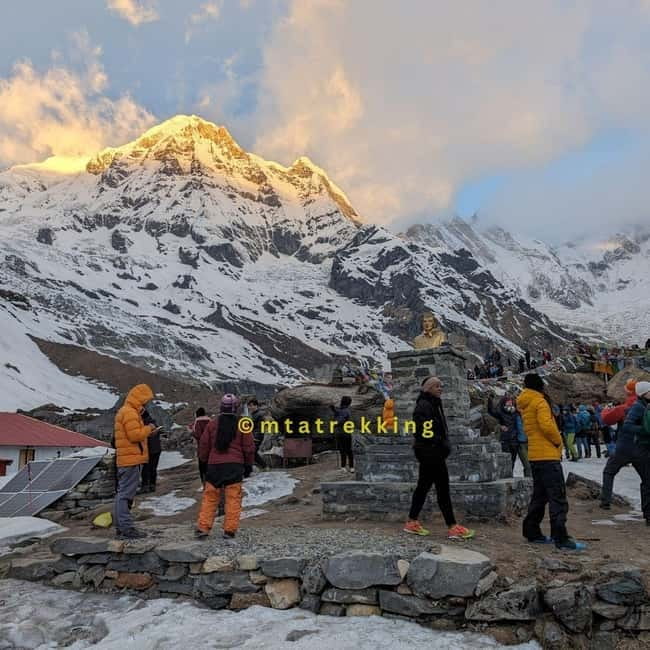
- Base Camp at 4,130 m plus a detour to Machhapuchhre Base Camp for classic Fishtail Peak views
- Private, English-guided trek with a government-registered trekking guide (including a firsthand guide named Ramit)
- Tea-house accommodation with meals included when you choose the full-board option
- Permits handled: ACAP, TIMS, and government paperwork are included in the price
Why Annapurna Base Camp in 5 days feels worth it
Annapurna Base Camp is the kind of trek people talk about for a reason: you don’t just hike through scenery, you end up at a destination that feels like the center of the mountains. In this 4-night, 5-day format, you gain altitude steadily without turning it into a death march. The route also gives you variety: terrace edges and village paths, dense forest sections, and then the more exposed high-country feel as you climb.
What makes this specific trek appealing is the mix of goals. Yes, you reach Base Camp. But you also spend time at places along the way where the mountains frame daily life. You’re moving through settlements tied to Gurung culture, and that changes the feel of the hike from pure sightseeing to something more human. And then there’s the hot springs factor. A trek is hard work. Getting your legs warm afterward is not a small detail.
The trek is also clearly set up for travelers who want guidance and structure. You get pickup, transport to the last road access point, a professional guide, and tea-house stays lined up. If you’ve done DIY trekking before, you’ll still appreciate the organization here. If you haven’t, this kind of planning lowers the mental load on the days when your breathing is doing most of the work.
You can also read our reviews of more tours and experiences in Kathmandu.
Price, permits, and the real value of this $320
At $320 per person, the price is competitive if you compare what’s actually covered. You’re not just paying for a walk; the included package covers the big essentials that can otherwise add up fast:
- Tea-house accommodation for your nights on the route
- Meals when you select the full-board option
- Hotel pickup and drop-off in Lakeside Pokhara (and airport pickup)
- Private transport from Pokhara to Siwai (the last road) and back
- ACAP permit plus TIMS and government permits/taxes
- A government-registered trekking guide and a first-aid kit
- Luggage storage in Pokhara during the trek
In plain terms: you’re paying for less hassle. Permits and logistics are handled, so you can focus on walking, resting, and taking in the views at altitude. That’s also why this can be good value for first-timers, since the cost of scrambling for permits, guides, or pickup can be a surprise on your own.
What’s not included matters too. If you’re considering a porter, the cost is listed as $20 per day. And you should budget for personal items like Wi-Fi, drinks, mineral water, hot shower access, and laundry. Rescue and insurance are also not included, so you’ll want to bring your own travel insurance that makes sense for trekking at altitude.
The pacing: why the days feel doable (even when they aren’t easy)
This trek is designed as a sequence of manageable climbs. The time estimates are fairly consistent with what you’d expect for a short Himalayan trek:
- Day 1 is about getting your legs going after transport, with a hike of roughly 5 hours to Lower Sinuwa (2,300 m).
- Day 2 climbs to Deurali (3,200 m) in roughly 6 hours, usually a day where you’ll feel the altitude more than the steepness.
- Day 3 is shorter in hours, around 4 hours to Annapurna Base Camp (4,130 m), but it includes a detour to Machhapuchhre Base Camp, so you’ll still be working.
- Day 4 drops to Bamboo (2,400 m) after time at Base Camp.
- Day 5 is mostly a return day, with the option to soak in Jhinu again before heading back to Pokhara.
A key detail: Day 3 is the summit-style emotional peak of the trek, even though you’re not walking for a long time. That’s typical at Base Camp. You can feel tired while still moving steadily. The payoff is huge, and the guide’s role becomes more about pacing and timing than about technical climbing.
Day 1: Pokhara to Lower Sinuwa via Jhinu hot springs
Your day starts in Lakeside Pokhara with pickup from your hotel (or the airport). Then you transfer by Jeep/SUV for about 3 hours to reach the trail access point at the last road area.
After that, you hike toward Lower Sinuwa (2,300 meters), with a rough 5-hour trek time. The route passes through Jhinu, a village known specifically for its natural hot springs. That matters because it gives you an emotional and physical “mid-trek reward” before you ever reach the high core of the Annapurna region.
What to watch for on Day 1 is simple: don’t rush. You’ll feel fine at first, then the walking rhythm will start to matter. Your goal is steady steps and consistent breathing, not speed. Also, pack for sweaty-to-cool shifts. Lower elevations can feel warm in sun, and later you’ll want layers ready without turning your day into a gear-management contest.
Day 2: Deurali at 3,200 m and the shift into real altitude
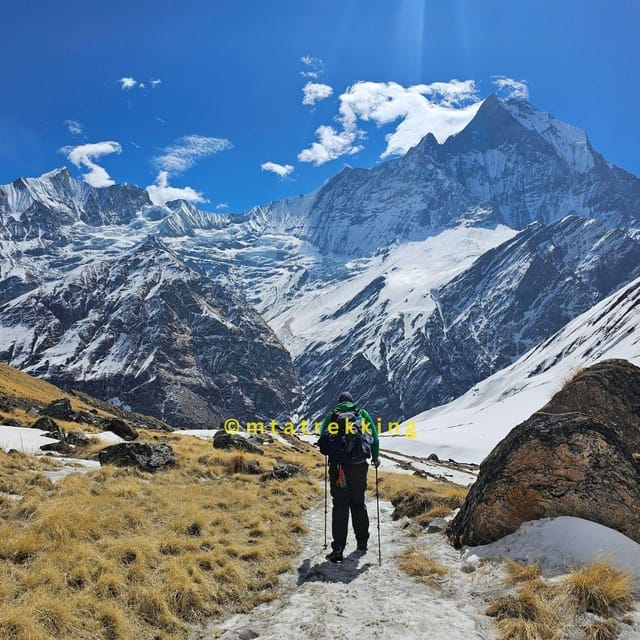
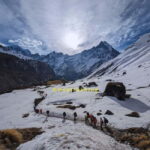
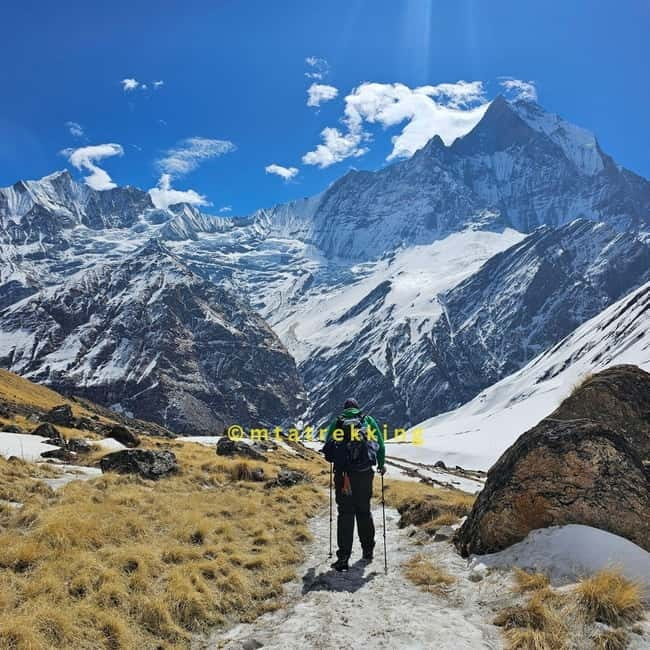
Day 2 takes you from Lower Sinuwa to Deurali (3,200 m) in about 6 hours. This is the day where you’ll likely notice thin air more clearly. The terrain is varied, moving from forest and cultivated sections up toward more alpine terrain.
The schedule includes time for photo stops, plus a mix of sightseeing and guided moments, and then you sleep in Deurali. That night matters. A comfortable sleep in a warm room (within the limits of tea-house trekking) can make Day 3 feel less brutal.
If you get even mild headache or nausea on this climb, treat it seriously. This trek notes altitude sickness as a possibility, even if it’s rare. In practice, that means telling your guide quickly rather than trying to “push through” like it’s a minor cold.
Day 3: The Base Camp arrival at 4,130 m, plus Machhapuchhre Base Camp
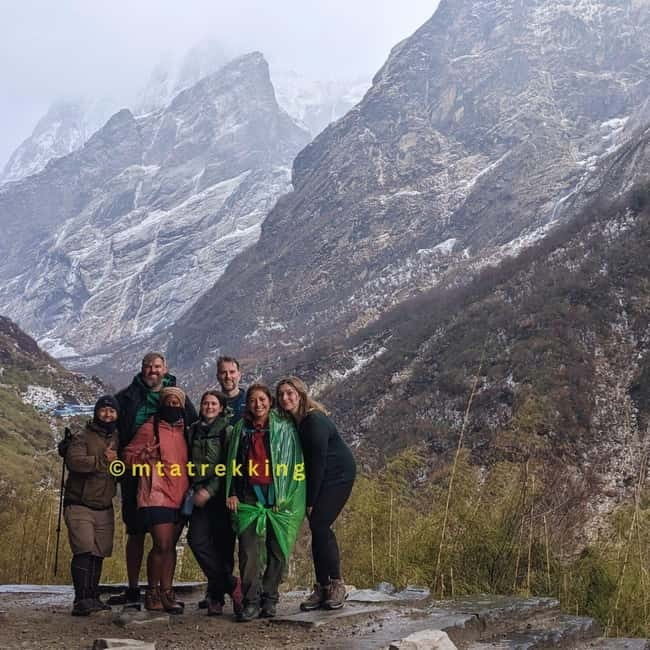
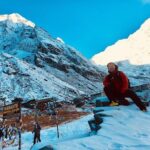
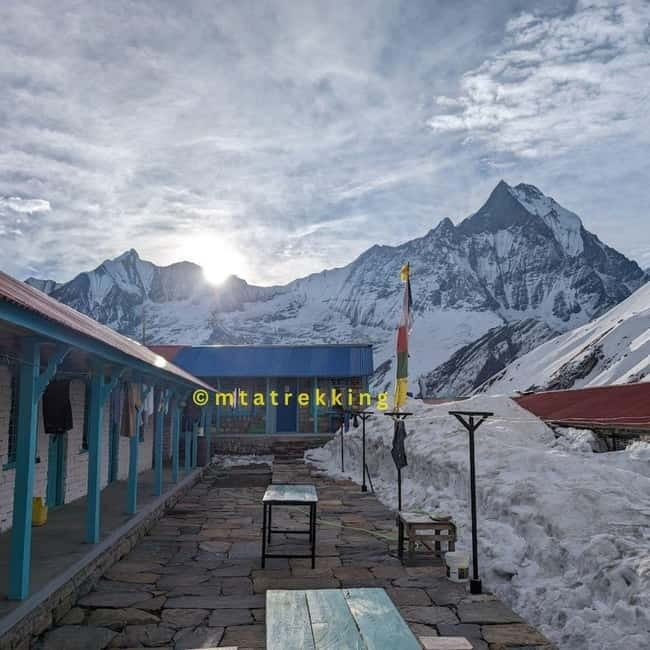
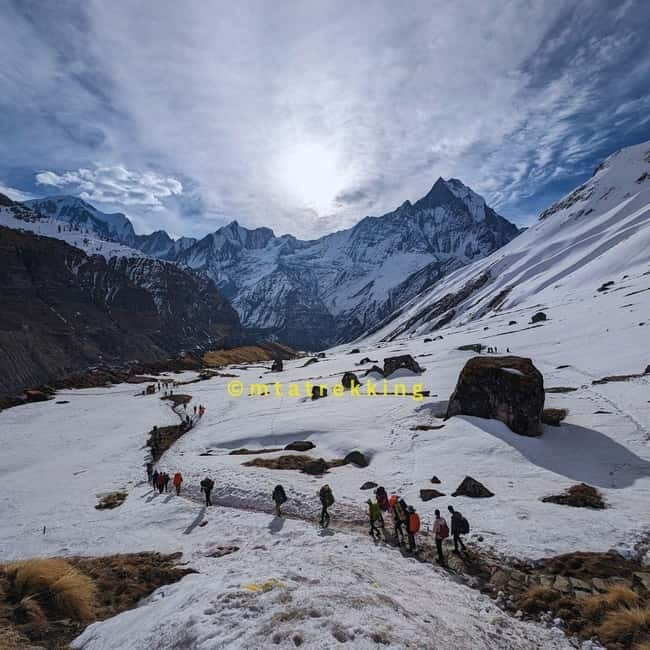
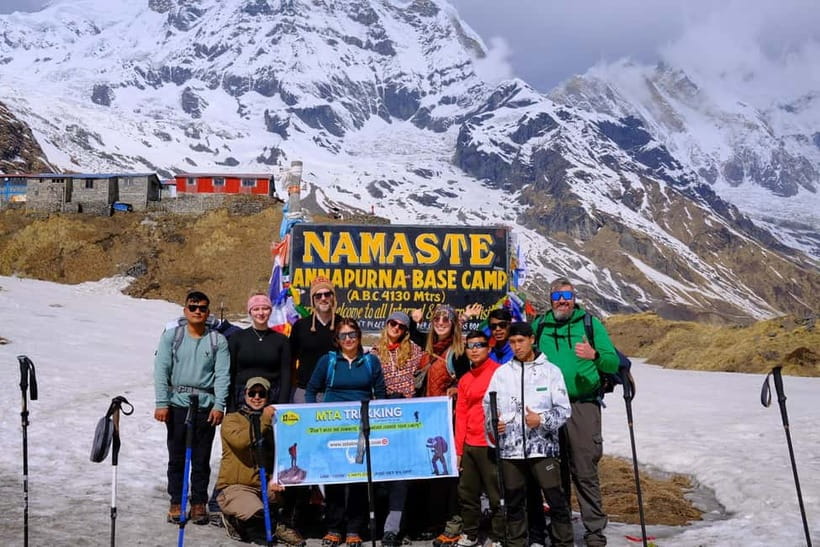
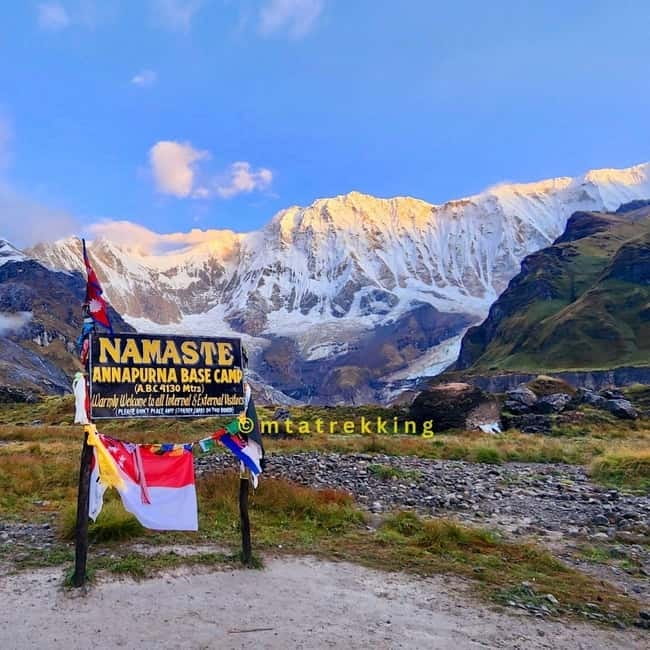
Day 3 is the main event: trekking roughly 4 hours to Annapurna Base Camp (4,130 meters). But it’s not just a straight shot. You take a detour to Machhapuchhre Base Camp for big views of Fishtail Peak (Machhapuchhre is the iconic shape you’ll hear trekkers talk about for good reason).
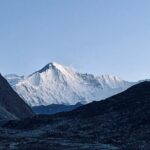
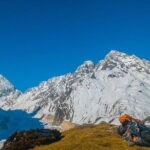
This detour is valuable because it gives you a layered experience. You’re not only chasing the final number on the map. You’re also earning great views along the way. And you arrive at Base Camp surrounded by the Annapurna massif peaks, where the air and angles make everything look sharper.
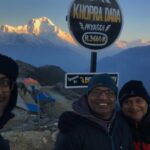
Here’s a real highlight from a past trip: the sunrise at Base Camp in front of the south face of Annapurna left a strong impression. Even if you don’t catch the same conditions, the idea is consistent—this is the moment your effort feels like it finally adds up.
Day 4: From Base Camp views to the Bamboo lodge reset
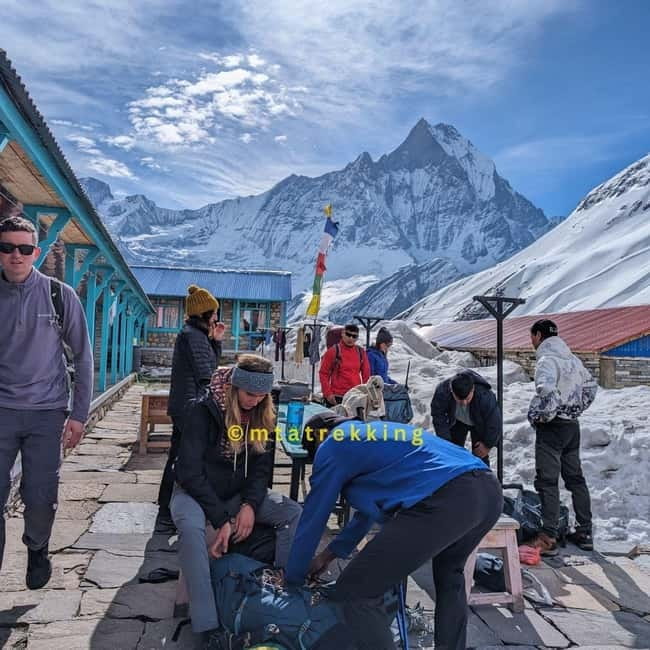
Day 4 starts with time in the Annapurna Base Camp area for views and photos. You’ll also have time for guided information and then you descend to Bamboo (2,400 m) for the night.
Descending on a short trek is more than just “getting back down.” It’s recovery. Your knees and ankles get a break from sustained uphill effort, and the air feels thicker. That gives you a more comfortable next day, especially if you’re tired from the emotional intensity of reaching Base Camp.
Also, Base Camp days can make you hungry in a big way. The schedule includes meals, and you’ll want to take advantage of them. Hydration matters too, even when the weather looks cool.
Day 5: Bamboo back to Pokhara via Jhinu hot springs
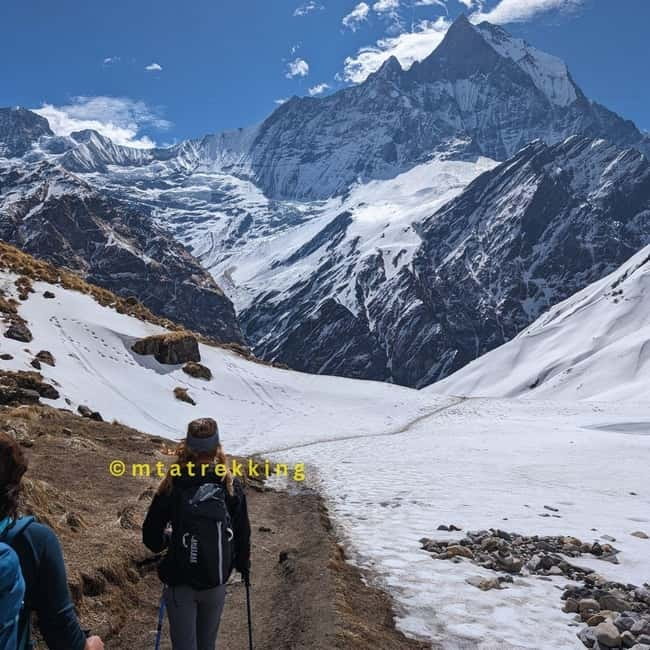
Day 5 is a return day with one last pleasant option. You trek from Bamboo back toward Jhinu, where you can relax in the natural hot springs if you want. After that, you transfer by vehicle back to Pokhara, ending at your meeting point back in Lakeside.
This is a smart final structure. You don’t just end with a long hike and then scramble to recover. You get the hot spring idea again, so the trek finishes with a body-friendly ritual. If you skip the soak, you’ll still get a scenic return and the satisfaction of a complete loop experience.
Tea-house stays, guide energy, and why Ramit’s style mattered
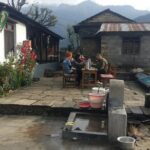
This trek includes tea-house accommodation, which keeps things simple: you sleep in village lodges along the route rather than hauling camping gear. Expect the usual mountain trek trade-offs—smaller rooms, basic facilities, and the need to be flexible. The upside is that you can travel light. And since there’s luggage storage in Pokhara, you’re not forced to carry everything you own on your back.
The guide is a big part of why this kind of trip lands well. One recent trip singled out a guide named Ramit as especially helpful and caring, with a style that included explaining and illustrating natural beauty and local curiosities. That type of guidance makes the walking more meaningful. Instead of just seeing peaks, you understand what you’re looking at and why it’s special.
Also, you’re not on your own for timing. The schedule includes rest and travel pacing managed by the guide, which helps you avoid the common mistake: going too hard on the first day, then fading.
What to bring (and what to prioritize for altitude and wet trail days)
The trek gives a basics list: comfortable shoes, change of clothes, comfortable clothes, cash, and passport/ID. That’s solid. But here’s how I’d translate it into practical priorities:
- Shoes that feel secure on uneven stone and muddy steps
- A warm layer for high points, even if the morning starts mild
- A rain layer for monsoon timing, since conditions can turn fast
- Long pants you can tuck into gaiters or wear in a way that helps with leeches
The trek notes that monsoon season (June to August) brings erratic weather with heavy rainfall, so you need appropriate gear and you should follow the guide’s advice. It also points out that leeches can be a nuisance on lower trails, especially during monsoon, and that long pants and insect repellent can help deter them.
Altitude risk is listed as rare but possible. If you’re sensitive to heights, it’s smart to plan for slower steps and close communication with your guide. If you have a history of altitude issues, this trek isn’t listed as suitable for you.
Who should book this trek, and who should skip it
This experience is described as suitable for trekkers of all levels and also for nature lovers and culture enthusiasts. In real-world terms, I’d say it fits best when you want:
- A clear, guided route with minimal logistics stress
- A destination payoff at Base Camp without needing advanced climbing skills
- A chance to see village life connected to Gurung communities
That said, it’s not a fit for everyone. It’s listed as not suitable for:
- Pregnant women
- People with mobility impairments or wheelchair users
- Visually impaired people
- People with altitude sickness
- People over 70
So if any of those apply, you’ll want to look for a different style of trek that matches your physical needs and comfort level.
Should you book this Annapurna Base Camp trek with natural hot springs?
If you want the Annapurna Base Camp goal plus a thoughtful human touch, I think this package makes sense. The best reasons to book are the inclusion of permits, the government-registered English guide, the tea-house plan, and the hot spring stops in Jhinu that help your body recover. The route also balances hiking time with altitude pressure, with Day 3 built as the emotional peak and Day 4 as the recovery move.
I’d only hesitate if you’re worried about altitude, you expect to travel during heavy monsoon conditions without good rain gear, or you know leeches and wet trails would stress you out. In those cases, you can still choose Annapurna, but be pickier about timing, support, and how you handle discomfort.
If you do book, I’d go in ready for steady steps, honest rest, and lots of photos at the high points. The sunrise-at-Base-Camp feel is the kind of memory that doesn’t need extra marketing once you’re standing there.
FAQ
How high do you reach on this trek?
You reach Annapurna Base Camp at 4,130 meters (13,550 feet).
What’s the total duration and how many nights?
It’s a 5-day trek with 4 nights.
Where does the trek start and end?
It starts and ends back at the meeting point in Lakeside Pokhara area.
Is hotel pickup included?
Yes. There is hotel pick up and drop off from any hotel in Lakeside Pokhara and also from the airport.
Are permits included in the price?
Yes. The price includes the ACAP permit, TIMS, and government permits/taxes.
Do I need a porter?
A porter service is not included. It’s listed at $20 per day if you choose to add one.