REVIEW · KATHMANDU
Everest Base Camp Trek
Book on Viator →Operated by Nepal Hiking Team · Bookable on Viator
Everest waits, but the day starts early. This 14-day Everest Base Camp trek runs as a private guided route from Kathmandu, with flights to Lukla via Ramechap and logistics handled so you can move at your own pace toward Everest Base Camp.
I like the pace control that comes with a private guide, especially when the trail turns steep and your legs need to set their own rhythm. I also appreciate the comfort touches: lodge-to-lodge twin-share stays, plus private bathrooms with hot shower access at Phakding, Namche, and Lukla, along with full board meals and tea/coffee.
The main consideration is the schedule risk: you’ll begin with a 2:15 am start for the Lukla flight, and weather can affect flight timing on both ends of the trek.
In This Review
- Key things that make this Everest Base Camp trek feel worth it
- Price and logistics: what $1,790 buys you (and what to plan for)
- Getting to Lukla: the 2:15 am meeting and why Ramechap matters
- Day by day, the Everest Base Camp route that actually makes sense
- Days 1 to 3: Kathmandu arrival, then Lukla to Phakding, then Namche Bazaar
- Day 4: Acclimatize at Everest View Hotel, not just for photos
- Days 5 and 6: Tengboche and Dingboche, with religion and big air
- Day 7: Nagarjun hill acclimatization loop
- Day 8: Dingboche → Lobuche, where the air thins
- Days 9 and 10: Gorakshep and Base Camp, then Kala Patthar
- Days 11 to 13: Namche, Lukla, then back to Kathmandu
- Where you sleep and how comfort works at altitude
- The private-team advantage: your guide choices and why they matter
- Packing smart: the equipment checklist that keeps you sane
- Who should choose this Everest Base Camp trek
- Should you book this Everest Base Camp trek?
- FAQ
- How long is the Everest Base Camp trek?
- Where does the trek start, and what time do we meet?
- Is airport pickup and drop-off included?
- Are flights to Lukla included?
- What meals are included during the trek?
- What kind of accommodation is provided?
- Do I get a guide and porter?
- Are permits included?
- Is there a vegetarian option?
- What expenses are not included?
Key things that make this Everest Base Camp trek feel worth it
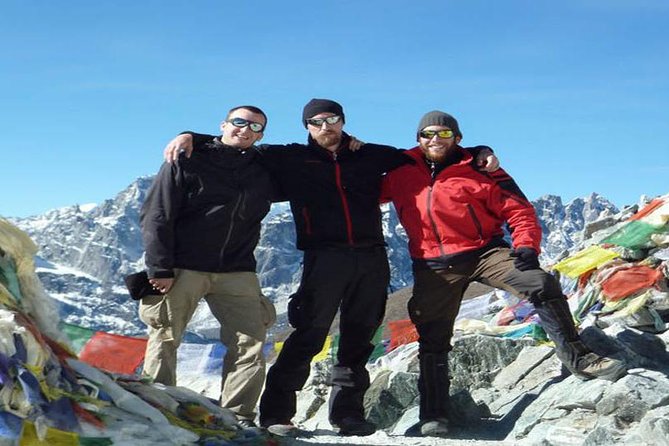
- Private guide + porter support: you get certified guidance and one porter per two trekkers for carrying load (up to 25 kg).
- All permits, taxes, and meals handled: your daily food and paperwork work is taken care of.
- Lukla flights via Ramechap: you’re not stuck guessing how to get to the trailhead.
- Acclimatization built into the route: Everest View Hotel and Nagarjun hill are there for a reason.
- Big view days, not just walking days: Everest Base Camp plus Kala Patthar are the payoff.
Price and logistics: what $1,790 buys you (and what to plan for)
At $1,790 per person, this is not a bargain-basement trek. But it is fairly priced when you look at what’s included for the Everest zone: round-trip flights to Lukla (via Ramechap), permits, a certified English-speaking guide, porter support, lodge accommodation, and meals across the full trek.
Here’s the practical way to think about value. You’re paying to reduce decision fatigue. Instead of calling multiple operators, chasing permits, figuring out who books flights to Lukla, and worrying about where you sleep each night, you get a built route with a team behind it. That matters because the Everest trail punishes delays. If you’ve ever missed a connection on a normal travel day, imagine that problem with altitude and a short flight window.
What’s not included is still worth budgeting:
- Travel insurance (you’ll want one that covers high-altitude trekking).
- International airfare to Nepal.
- Visa: Nepal entry visa can be obtained on arrival for USD 40 for 30 days.
- Drinks, snacks, and personal expenses during the trek.
- Tips for trekking staff and drivers.
- Personal trekking gear.
You can also read our reviews of more tours and experiences in Kathmandu.
Getting to Lukla: the 2:15 am meeting and why Ramechap matters
Your trek begins before most people have even finished sleeping. You’ll meet at 2:15 am and get airport transfers by car in Kathmandu. Then comes the high-stakes part: flying from the Kathmandu area up to Lukla, routed via Ramechap (round trip flight included, with transfers).
Two things to keep in mind. First, the early start is about timing, not cruelty. You’re matching the flight schedule to the day’s weather and runway conditions. Second, Lukla flights can be weather-dependent. This trek is built with realistic pacing, but air transport is still the variable.
If you hate waking up early, this might sting. If you want a smoother start and fewer logistics headaches, it’s a big plus that the transfer and flight plan is already lined up for you.
Day by day, the Everest Base Camp route that actually makes sense
This trek is challenging, and it doesn’t try to trick you with denial-style “light hikes.” The route is built around steady climbs, plus a couple of deliberate acclimatization days so you don’t pay for altitude with a miserable head.
Days 1 to 3: Kathmandu arrival, then Lukla to Phakding, then Namche Bazaar
Day 1: Arrive in Kathmandu. You get set up with a couple nights in a 3-star hotel in Kathmandu, which is a welcome breather before you go full-on trail life.
Day 2: Ramechap → Lukla flight → Phakding. You’ll land and trek to Phakding (8,699 ft), about 8 km and roughly 3 hours on foot. This first walking day is short on purpose. It helps you shake out your legs and get used to the air without demanding too much effort immediately after the flight.
Day 3: Phakding → Namche Bazaar. Now the climb starts in earnest: trek to Namche Bazaar (11,283 ft), around 10–12 km and about 6 hours. Namche is more than a “place to sleep.” It’s where you’ll notice altitude and how quickly your body asks for patience.
Day 4: Acclimatize at Everest View Hotel, not just for photos
Day 4 is your altitude tool. You hike up to Everest View Hotel (12,995 ft) and spend about 3–4 hours covering 3–4 km.
This is one of the smartest parts of the plan. You get the higher elevation experience without turning it into a punishment day. You’ll also see the mountains in a more dramatic way than at lower points, which makes the effort feel justified.
Days 5 and 6: Tengboche and Dingboche, with religion and big air
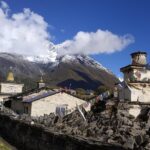
Day 5: Namche → Tengboche (12,660 ft). About 10–11 km and roughly 5 hours. Tengboche is famous for its monastery setting. Even if you’re not chasing spiritual sites, it’s a good place to pause, regroup, and see how the culture of the Khumbu region sits right inside the mountains.
Day 6: Tengboche → Dingboche (14,464 ft). Around 11–12 km and 5 hours. Dingboche is higher and cooler. You’ll feel it in every step—slow down, breathe, and let the day happen.
Day 7: Nagarjun hill acclimatization loop
Another acclimatization day: Nagarjun hill hike and return. You’ll walk about 5–6 km over 4–5 hours.
The point is simple: you need repeated exposure to altitude, with enough recovery that you keep moving forward comfortably. This day usually helps you avoid the “why am I struggling so much” feeling later.
Day 8: Dingboche → Lobuche, where the air thins
Day 8: Trek to Lobuche (16,105 ft). About 11–12 km, around 5 hours.
This is where your mental toughness starts doing more work than your legs. The terrain keeps the pace honest. Bring a steady rhythm and avoid sprinting up anything that looks tempting.
Days 9 and 10: Gorakshep and Base Camp, then Kala Patthar
Day 9: Lobuche → Gorakshep → Everest Base Camp → back. You’ll cover about 14–15 km, roughly 8 hours, including the walk to Everest Base Camp (listed at 5,364 m / 17,594 ft on the trek plan) and return to Gorakshep.
This is the emotional centerpiece. Base Camp is the destination everyone imagines, but it still needs stamina. You’ll want a calm pace and good hydration habits, because the day is long.
Day 10: Gorakshep → Kala Patthar → Pheriche. First you’ll trek to Kala Patthar (the plan shows 11,283 ft alongside this day’s notes), then continue down to Pheriche (4,210 m / 13,810 ft). Expect 13–14 km and about 7 hours.
Kala Patthar is the payoff for many trekkers because it’s where the Everest view is often at its most rewarding. And then you still have a descent day to actually bring your altitude comfort back down.
Days 11 to 13: Namche, Lukla, then back to Kathmandu
Day 11: Pheriche → Namche. About 14–15 km and roughly 7 hours.
Day 12: Namche → Lukla. This day is long in distance: about 18–19 km and 7 hours.
Day 13: Fly Lukla → Ramechap, then drive back to Kathmandu.
You’ll likely feel a mix of relief and sadness on the final walking sections. The route is hard, so finishing feels real, not symbolic.
Day 14: Departure.
Where you sleep and how comfort works at altitude
This trek uses the “lodge-to-lodge” style, with the best available twin sharing lodge accommodations. The plan includes private bathrooms with hot shower access at Phakding, Namche, and Lukla.
Two practical notes. First, lodge comfort at altitude is always simpler than in Kathmandu, even when the bathroom is private. Second, the trek plan lists hot shower access in certain places and also notes hot shower as not included. So keep your expectations flexible and plan to use what’s available rather than counting on consistent showers every day.
Meals are full board, with breakfast, lunch, and dinner, plus tea/coffee. Expect that this food plan is part of why the itinerary works. You’re not guessing where to eat or what’s open each night.
Also included are seasonal fruits, which are a small thing that can feel like a big deal once you’ve been hiking for days.
The private-team advantage: your guide choices and why they matter
This is a private trek/activity for your group, with a limit of 15 people per booking and a minimum of 2. More importantly, it’s not just a guide in name. You get 1 professional English-speaking certified guide plus a porter (including their safari, foods, accommodation, insurance).
What makes this feel valuable is the human element. In the experience notes you provided, guides like Ram, Vishma, Shyam, Paban, and Rambakrishna show up as names associated with being attentive and prepared. That’s exactly what you want on a trek where altitude can make every decision feel heavier.
A private guide also helps in the places that matter most:
- pacing on climbs so you don’t blow your energy early
- help managing acclimatization days so they feel like part of the plan, not random detours
- navigation support so you’re not relying on maps in a region where conditions can be disorienting
Packing smart: the equipment checklist that keeps you sane
You’ll be carrying a day pack, and you also need a system for what goes in the duffel. The trek provides a complimentary water and a wind-proof duffel/kit bag, plus instructions that a porter can carry up to 25 kg (for two trekkers: 1 porter). So your best strategy is to pack light and only bring the gear you’ll actually use.
From the gear checklist, the items that matter most in real life on EBC are:
- layers that handle cold: negative 10°C rated sleeping bag and expedition-ready thermals
- sun protection: UV sunglasses and a hat/scarf
- headlamp with spare batteries (long days can mean dark returns)
- trekking poles if you use them (especially on descents)
- warm gloves plus windproof shell gear for exposed sections
- waterproof outer shell layers for the seasonal conditions you’ll meet
If you’ve forgotten something, the plan states you can buy gear in Kathmandu. Quality in Kathmandu is generally fine for the basics, and many items are locally made or imported, so you can solve most problems before you ever reach the trail.
Who should choose this Everest Base Camp trek
This trek fits best if you’re an active traveler with strong fitness. The walking distances add up, and the climbs demand a patient effort. It’s also ideal if you:
- want private, pace-friendly guiding
- prefer having permits, meals, and lodging handled
- don’t want to piece together flights and logistics to Lukla on your own
- like the structure of acclimatization days (Everest View Hotel and Nagarjun hill)
If you’re dealing with health uncertainty, ask yourself honestly whether you can handle altitude exposure. This route is built for people who can walk steadily for hours and manage steep terrain without panic.
Should you book this Everest Base Camp trek?
Book it if you want a well-run Everest Base Camp experience where you can focus on walking, views, and acclimatization rather than logistics. At $1,790, the big value is the package: flights to Lukla via Ramechap, permits, guide and porter team, lodge stays, and full meals. Those are the things that usually go sideways for independent planning.
Pass on it or compare other options if you’re extremely sensitive to early departures, worried about weather-related flight delays, or you’re still figuring out your fitness. This trek doesn’t pretend the mountain is casual.
FAQ
How long is the Everest Base Camp trek?
It’s listed as 14 days (approx.) from Kathmandu to the trek route and back, including departure day.
Where does the trek start, and what time do we meet?
The starting location is Kathmandu, Nepal, and the meeting/start time is 2:15 am.
Is airport pickup and drop-off included?
Yes. You get airport pickup and drop-off by car in Kathmandu.
Are flights to Lukla included?
Yes. The package includes round-trip flights to/from Lukla via Ramechap, including transfers.
What meals are included during the trek?
You get full board meals: breakfast, lunch, and dinner, plus tea/coffee during the trek.
What kind of accommodation is provided?
Lodge-to-lodge twin sharing accommodation is included. The plan also specifies private bathrooms with hot shower at Phakding, Namche, and Lukla.
Do I get a guide and porter?
Yes. You get 1 professional, English-speaking certified guide and porter support (noted as 2 trekkers to 1 porter), and porter services include their food, accommodation, insurance, and related support.
Are permits included?
Yes. The package covers all required permits for the trek, plus government taxes and office service charge.
Is there a vegetarian option?
Yes. Vegetarian option is available if you advise at the time of booking.
What expenses are not included?
The plan lists travel insurance, international airfare, Nepal entry visa (USD 40 for 30 days on arrival), drinks/snacks/personal expenses, hot shower outside what’s specifically stated, personal trekking equipment, and tips/gratuities for staff and drivers.