REVIEW · KATHMANDU
Everest Base Camp Trek with Helicopter Flight Back
Book on Viator →Operated by Bold Himalaya Treks and Travels Pvt Ltd · Bookable on Viator
Everest, minus the long hike back down. This Everest Base Camp plan keeps the classic Khumbu experience, but swaps the return trek for a helicopter flight back after Kala Patthar and Gorak Shep. You still get the high-altitude landmarks most trekkers dream about.
I like two big things about this setup: solid human support and smoother comfort along the way. The guide team matters in the Himalaya, and the names Surendra and porter Uncle Doma Ghale come up for good reason, especially when conditions feel uncertain. I also appreciate that the operator has aimed for comfort in Kathmandu and the lodges, including hot water, even when weather throws curveballs.
One caution: the helicopter part needs a quick confirmation. The itinerary says you’ll fly back to Kathmandu, but the inclusions list also says the helicopter flight from Gorakshep to Kathmandu is not included, so you’ll want to verify how that’s handled and what it costs.
In This Review
- Key points that make this Everest trek different
- Why skipping the hike back makes Everest feel more doable
- Price and logistics: what $446.50 covers (and what to double-check)
- Day-by-day: how the trek unfolds from Kathmandu to Kala Patthar
- Day 1: Kathmandu arrival, transfer, and trek briefing
- Day 2: Kathmandu to Lukla, then down to Phakding
- Day 3: Phakding to Namche Bazaar with Sherpa village scenery
- Day 4: Everest View area, Sherpa Museum, and a hike to Everest View Hotel
- Day 5: Tyangboche (Tengboche area) and the Everest/Lhotse framing
- Day 6: Dingboche via Imja Khola and rhododendron country
- Day 7: Acclimatization day with Nagarjun Peak
- Day 8: Lobuche with Thukla Pass memorials and glacier views
- Day 9: Everest Base Camp, Khumbu Icefall views, and Gorak Shep overnight
- Day 10: Kala Patthar sunrise, then helicopter back to Kathmandu
- Lodges, comfort, and the guide/crew factor that actually matters
- Gear, permits, and food: the practical stuff that saves money
- Gear help you don’t want to buy last minute
- Permits and fees are handled
- Meals keep you consistent
- Helicopter return: comfort win, but timing and costs can shift
- Who this trek is best for (and who should think twice)
- Should you book this Everest Base Camp trek with helicopter return?
Key points that make this Everest trek different
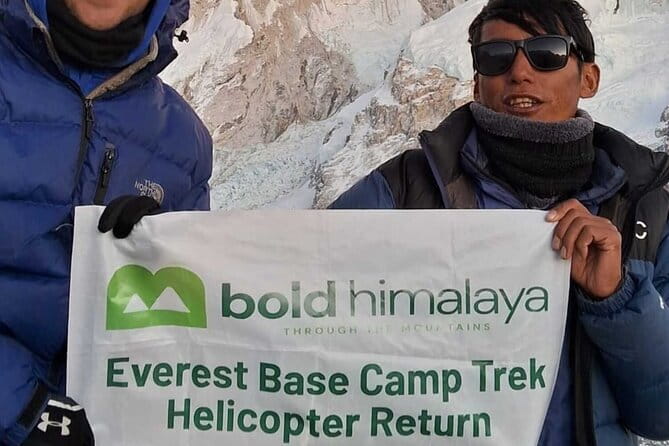
- Kala Patthar sunrise timing to see Everest in early light before you go back toward Gorak Shep
- A classic route with real acclimatization including a Nagarjun Peak day from Dingboche
- Fewer trekking days overall because the itinerary is designed to end with a helicopter ride
- Cultural stops built in like the Sherpa Museum and a visit to Everest View Hotel
- Permits and park fees included (Sagarmatha National Park, TIMS, and local entrance fees)
- Gear support can reduce hassle with a sleeping bag, down jacket, and trekking poles offered if you need them
Why skipping the hike back makes Everest feel more doable
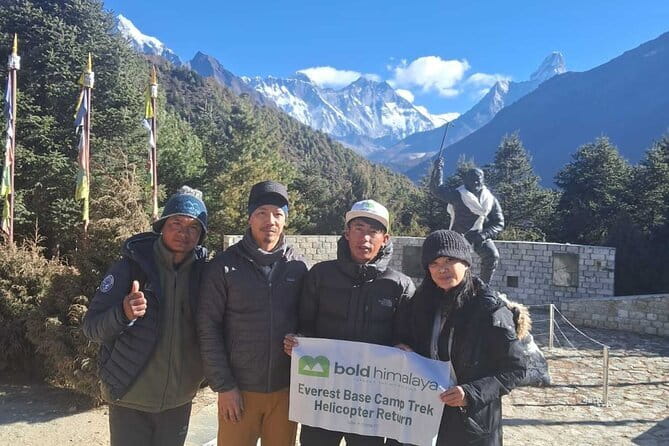
Most Everest Base Camp treks are all about the long out-and-back. This one keeps the memorable parts (Lukla, Namche, Tengboche/Tyangboche, Dingboche, Lobuche, Base Camp, Kala Patthar), but it shortens your time on the trail by not trekking all the way back down to Kathmandu.
That matters for two reasons. First, your knees and ankles get a break in the final days, when you’re already tired and altitude-focused. Second, it can help you keep more energy for the two biggest view days: the Everest View area near Namche and the sunrise at Kala Patthar.
You’ll also notice the itinerary keeps a sensible rhythm. You start with a downhill stretch from Lukla to Phakding, then gradually build altitude with rest stops. On Day 7, you get an acclimatization outing with a hike to Nagarjun Peak. That’s the kind of pacing that helps most people feel steadier as the air thins.
And yes, you’re still signing up for real high-country trekking. This route climbs through places like Thukla Pass memorials and ends at Everest Base Camp around 5,364m. The helicopter just changes the ending, not the difficulty.
You can also read our reviews of more tours and experiences in Kathmandu.
Price and logistics: what $446.50 covers (and what to double-check)
At $446.50 per person, this package is trying to be value-forward. The included list covers several things that many trekkers end up paying for separately—especially permits and guide support.
Here’s what stands out as good value:
- Domestic flights to Lukla (either from Kathmandu or Ramechchap/Ramechap, depending on the itinerary)
- A trekking guide with salary and insurance, plus food and accommodation for the guide
- Private transport and Kathmandu hotel for one night (twin share, breakfast included)
- Park fees and paperwork: Sagarmatha National Park entrance fee, Pasang Lhamu Rular Municipality Entrance fee, and TIMS
- Meals across the trek: 9 breakfasts, 8 lunches, 8 dinners listed in the package
- Trek gear support: sleeping bag, down jacket, trekking poles if you need them (with the note about returning after the trek)
- A cultural show and dinner program in Kathmandu
Now the key caution. The itinerary clearly frames Day 10 as a helicopter return to Kathmandu. But the exclusions list also says the helicopter flight from Gorakshep to Kathmandu is not included. That means your final cost may depend on what Bold Himalaya actually confirms for your departure date.
So what should you do? Ask one simple question before you pay:
- Is the Gorak Shep to Kathmandu helicopter flight included in what I’m paying, or is it an extra charge?
Do that, and you’ll avoid the most annoying surprise in a trip where weather can already change schedules.
Day-by-day: how the trek unfolds from Kathmandu to Kala Patthar
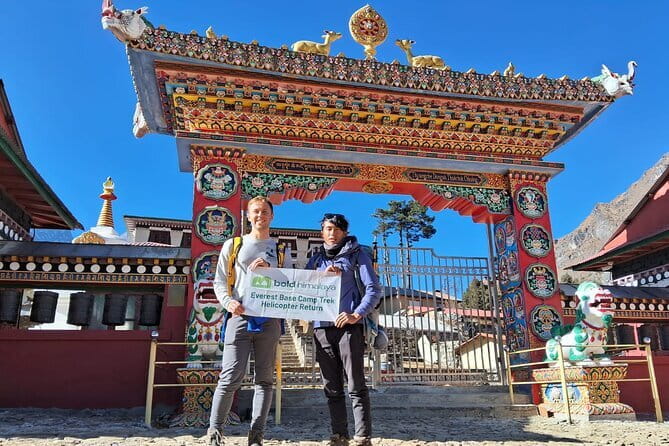
This itinerary is built around a smooth transition from city life to mountain routine. Expect a morning or afternoon flow most days, with hiking times roughly 3 to 7 hours depending on the day.
Day 1: Kathmandu arrival, transfer, and trek briefing
When you land in Kathmandu, you’ll get a pickup and transfer to your hotel (listed as Thrive or similar). After you settle in, there’s an evening briefing covering how the trek will run.
This is more than admin. A good briefing helps you line up expectations for altitude days, lodging norms, and daily pace. It also lets you confirm gear needs before you start moving.
Day 2: Kathmandu to Lukla, then down to Phakding
You fly to Lukla, landing at the airport with Himalaya views. From there, the trek starts downhill to Phakding through alpine forest scenery, roughly 4 hours.
That first descent is a smart move. It gives you time to find your stride and warm up without pushing altitude too fast on Day 2.
Day 3: Phakding to Namche Bazaar with Sherpa village scenery
You trek from Phakding to Namche Bazaar, around 6 hours. The route crosses the Dudhkoshi River on suspension bridges, and you pass Sherpa villages along the way.
Namche isn’t just a waypoint here. It’s the place where you start feeling like you’re in the Khumbu system: shops, lodge life, and the sense that you’re approaching Everest territory.
Day 4: Everest View area, Sherpa Museum, and a hike to Everest View Hotel
This day splits into exploration and a view-focused hike. You rest, explore the town, visit the Sherpa Museum, then in the afternoon hike up to the Everest View Hotel for panoramic views.
I like this approach because it gives you something cultural and educational at altitude—then rewards you with big mountain sightlines. If you’re the type who wants your trip to teach you as it photographs you, this day hits.
Day 5: Tyangboche (Tengboche area) and the Everest/Lhotse framing
You move on to Tyangboche, about 6 hours. You’ll have lunch at Phungi Thanga and then continue.
This is a major scenery day. The itinerary notes magnificent views of Everest, Lhotse, and surrounding peaks. Expect cold air and long photo stops, especially with the lodge-and-chapel rhythm of the area.
Day 6: Dingboche via Imja Khola and rhododendron country
The trek continues to Dingboche, again around 6 hours. You cross a suspension bridge over the Imja Khola and pass through rhododendron forests and villages like Pangboche and Somare.
Rhododendron forests are one of those details that make the route feel different from “just a line of rocks.” It breaks up the visual rhythm and helps the day feel less repetitive.
Day 7: Acclimatization day with Nagarjun Peak
Today is your preparation day for higher altitudes. You explore Dingboche Valley and hike up to Nagarjun Peak, around 5 hours.
The goal here is altitude education for your body: you gain elevation without rushing toward the highest points immediately. It’s the kind of day that can make the later push to Lobuche and Gorak Shep feel steadier.
Day 8: Lobuche with Thukla Pass memorials and glacier views
You trek to Lobuche (about 4,940m). The route passes Thukla Pass with memorials to climbers and finishes with overnight in Lobuche.
This is a reflective day. Memorials are never a quick photo stop; they slow you down and remind you this is a real high-risk environment. The itinerary also calls out close-up views of surrounding glaciers, which is a big reason Lobuche is so memorable.
Day 9: Everest Base Camp, Khumbu Icefall views, and Gorak Shep overnight
You hike to Everest Base Camp (5,364m) and overnight in Gorak Shep (5,170m). The plan notes leaving your gear at Gorak Shep, then continuing to Base Camp and savoring views of the Khumbu Icefall before returning to Gorak Shep.
This day is about payoff. You’re going higher, but you’re also investing the most in the views. The Icefall is one of those things that’s hard to understand until you’re there seeing it in motion shape and scale.
Day 10: Kala Patthar sunrise, then helicopter back to Kathmandu
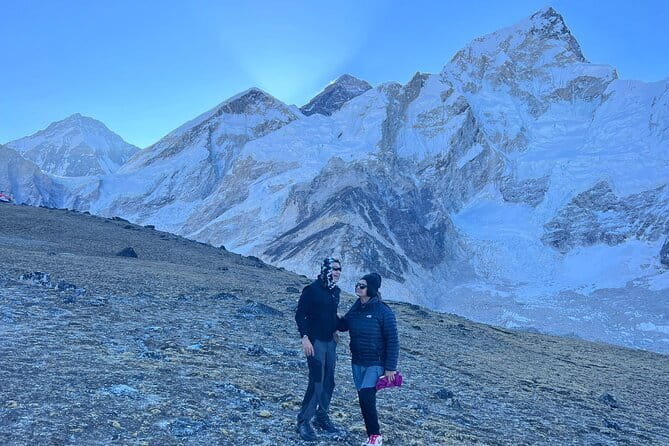
Day 10 is an early morning hike to Kala Patthar (about 5,550m) for sunrise views. Then you head back to Gorak Shep and board a helicopter to Kathmandu, with a transfer after landing.
This is the emotional climax for a lot of trekkers. Even if you’ve seen Everest in photos for years, sunrise light at Kala Patthar is the kind of moment that resets your sense of scale.
Just remember the earlier caution: confirm what the helicopter cost/coverage looks like for your booking.
Lodges, comfort, and the guide/crew factor that actually matters
One reason this itinerary works for many people is that it focuses on the human parts of the trek, not just the route line.
You get an experienced trekking guide with salary, insurance, food, and accommodation included. That means you’re not just buying a GPS track—you’re paying for decision-making support. When weather shifts, when someone feels off, or when trail conditions change, that guidance can be the difference between a smooth day and a stressful one.
The guide/porter team is also a key part of how this tour is described in past experiences. Names like Surendra (guide) and Uncle Doma Ghale (porter) are mentioned for safety and determination in getting people through the trek.
The comfort angle is also real. The package includes a Kathmandu night in a hotel like Thrive or similar on a twin share basis with breakfast. It also supplies some seasonal fruit and dry nuts during the trek, which may sound small until you realize how much energy you burn up high.
And yes, lodge comfort is part of your experience too. The operator’s approach has been described as keeping stays comfortable with hot water even during rough weather periods, though plans may be adjusted a few times due to unexpected circumstances. In the mountains, that flexibility is often worth more than a perfect schedule on paper.
Gear, permits, and food: the practical stuff that saves money
This is where the package quietly earns its keep.
Gear help you don’t want to buy last minute
The inclusions list sleeping bag, down jacket, and trekking poles if needed, with the note about returning after trekking. That can remove a big headache before you ever reach Lukla.
Still, I’d bring your own essentials too (especially warm layers you trust). Even with a down jacket in the package, you may want your own gloves, base layers, or a hat that fits you well. Cold at altitude isn’t the same for everyone.
Permits and fees are handled
You should feel good that Sagarmatha National Park entrance fees, TIMS, and a local municipal entrance fee are included. Paperwork surprises are common on their own. Here, it’s already part of the plan.
Meals keep you consistent
The trekking meal list includes breakfasts, lunches, and dinners across the days. On a trek like this, your appetite can wobble with altitude. Having a set routine for meals helps you stay fueled without needing to shop for every stop.
Helicopter return: comfort win, but timing and costs can shift
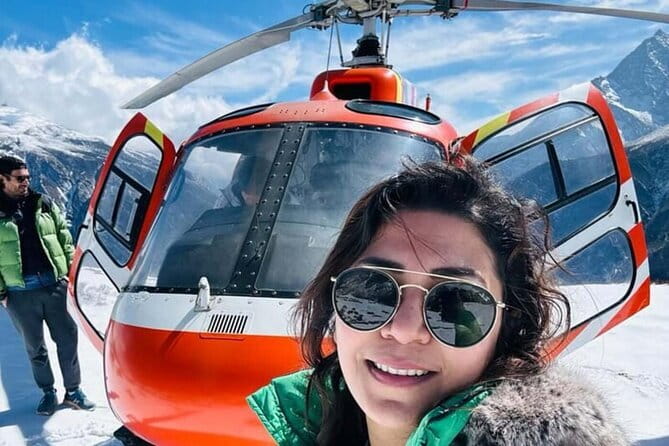
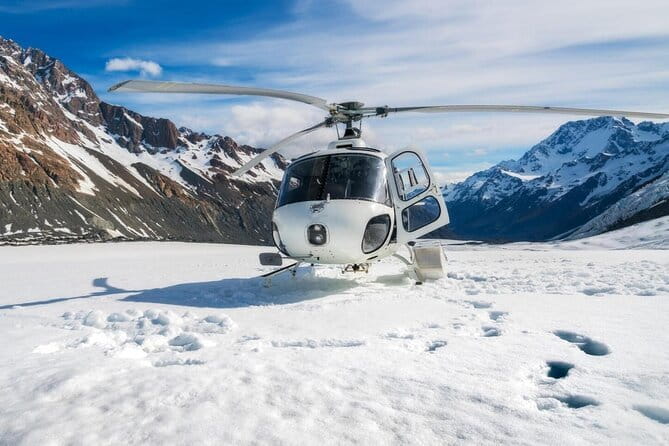
A helicopter back to Kathmandu sounds like a luxury. In reality, it’s also a fatigue management tool.
Instead of spending extra days hiking down, you rest in the high country, do the Kala Patthar sunrise, then fly. That means you can be in Kathmandu sooner, with less time for your body to grind down from long descents.
But helicopters are weather-dependent. The experience notes it requires good weather, and if it’s canceled due to poor weather you’ll be offered another date or a full refund. That’s not a guarantee of smooth flying—just a sign the operator is clear about the reality.
Again: confirm what’s included for the Gorakshep to Kathmandu helicopter. The itinerary promises a helicopter ride, but the exclusions list says it’s not included. Once you know how it’s handled, you can judge the true value of the package.
Who this trek is best for (and who should think twice)
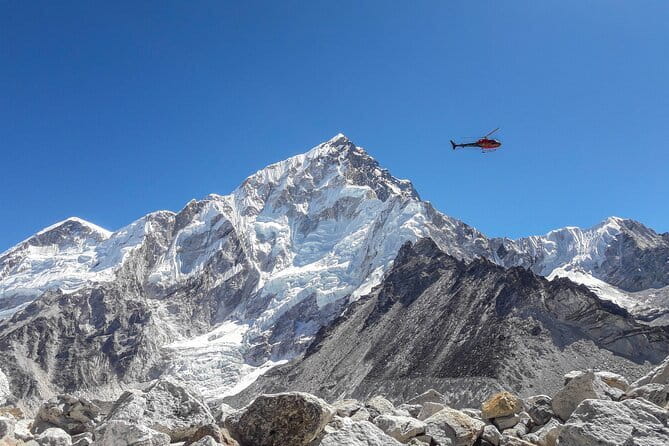
This plan suits you if:
- You want the full Everest Base Camp experience but don’t want the full out-and-back trek
- You have moderate physical fitness and you like a structured acclimatization day
- You value a guided setup with permits and meal routines handled
- You want a big sunrise moment at Kala Patthar and a faster recovery into Kathmandu
This plan might be less ideal if:
- You’re very budget-tight and the helicopter is an extra cost you haven’t priced in yet
- You’re expecting total certainty in helicopter schedules
- You hate early starts (Kala Patthar means early morning hiking for sunrise)
As always with altitude, listen to your body. A steady pace and a real acclimatization day are more important than heroics.
Should you book this Everest Base Camp trek with helicopter return?
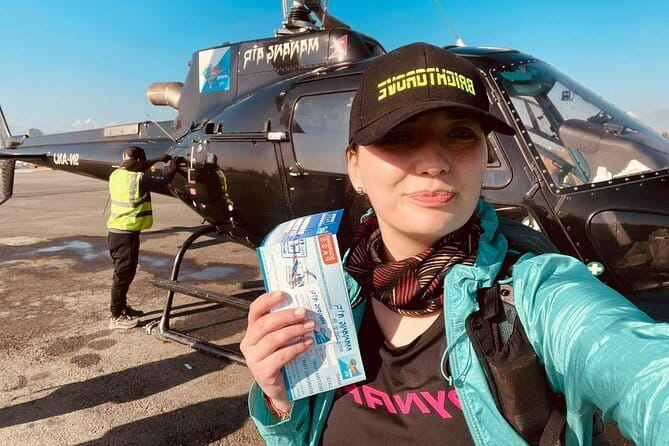
If your priorities are big Everest views, a real acclimatization rhythm, and a less punishing finish, this is an appealing way to do it. The inclusions (guide support, permits, meals, and gear help) are the kind of value that reduces stress—exactly what you want when flights and weather are part of the deal.
Before you book, do one smart check: clarify whether the helicopter from Gorakshep to Kathmandu is truly included in your price. If it is, the package looks like strong value. If it’s not, you can still do it—but price it in before you commit so the ending matches your budget and expectations.