REVIEW · KATHMANDU
Annapurna Circuit Trek with Tilicho Lake
Book on Viator →Operated by Discovery World Trekking · Bookable on Viator
One long day in the mountains is not the point here. What makes this trek special is the Tilicho Lake detour plus the extra care of a licensed guide keeping the logistics tight. I love that ACAP and TIMS permits are handled, and that meals and lodge stays are included so you can focus on walking and altitude. The only real drawback to plan for is the effort level: this is a challenging trek, and you’ll need solid fitness for long days and high passes.
You start with a long overland transfer from Kathmandu, then ease into the Annapurna Range through villages and monasteries before the route turns serious near the high country. You’ll spend time in Manang for acclimatization, then climb to Tilicho’s frozen-feeling heights early in the day. Late in the trek, you hit the big milestone at Thorong La and then wind down with Muktinath and the well-known Tatopani hot springs before sunrise at Poon Hill.
A nice bonus for sanity: this is a small group tour (maximum 15), and you’re not navigating on your own. Still, you should expect cold nights, basic lodge comfort, and some fatigue that builds over time.
In This Review
- Key highlights that matter on the ground
- A guided Annapurna Circuit with Tilicho: what you’re really buying
- Price and logistics: value looks good, but check what’s not included
- Fitness reality check: challenging trek, clear milestones
- Your 16-day route, stop by stop: what each phase feels like
- Day 1: Kathmandu driving to the trailhead and Sandup Choeding Gompa
- Day 2: Dharapani Temple and the early swing toward Manang
- Day 3: Forest walking into Chame, with Annapurna views in reach
- Day 4: Narrow valley hiking and the Paungda Danda rock face moment
- Day 5: Upper trail via Geru, toward higher air and Manang Airport
- Day 6: Acclimatization day in Manang, with Gangapurna Lake
- Day 7: Easier-feeling day on the Mardi Himal route into Khangsar
- Day 8: Into Tilicho base camp territory
- Day 9: Tilichol Lake, the high “ice lake” day
- Day 10: Back down toward Khangsar and out through Thorong Khola
- Day 11: Thorong Phedi, views and final setup for the pass
- Day 12: Thorong La crossing (early start at 3 a.m.)
- Day 13: Muktinath first, then Tatopani hot springs
- Day 14: Ghorepani approach through Sikha and Chitre
- Day 15: Poon Hill sunrise and classic Himalaya panorama
- Day 16: Return to Kathmandu (bus) and an optional flight
- Who this trek suits best (and who should rethink it)
- What “supported trekking” feels like with this operator
- Should you book this Annapurna Circuit with Tilicho Lake?
- FAQ
- How long is the Annapurna Circuit trek with Tilicho Lake?
- Where does the trip start?
- What’s included for meals and accommodation during the trek?
- Are permits included?
- Is local transport included?
- What kind of support do you get on the trek?
- What return options do you have after the trek?
Key highlights that matter on the ground
- Tilicho Lake detour with early starts to beat afternoon wind
- Permits included (Annapurna Conservation Area Permit and TIMS card fee)
- Tea house/lodge with meals during the trek plus one Pokhara hotel night
- Acclimatization built in around Manang before Thorong La
- Thorong La crossing timed for an early 3 a.m. start
- Hot springs at Tatopani plus temple stops at Muktinath
A guided Annapurna Circuit with Tilicho: what you’re really buying
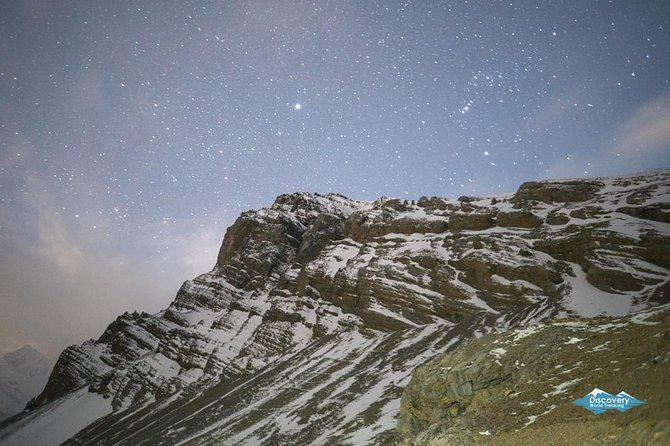
This is not a self-guided “good luck out there” trek. You’re paying for a team approach: a government licensed trek leader, plus guides and porters whose support is part of the package. In practice, that means fewer decisions for you, fewer chances to get turned around, and a smoother rhythm for altitude days.
The other thing you’re buying is time. The route covers the Annapurna Circuit core plus a meaningful detour up to Tilicho. That extra effort is what turns a standard circuit into a trip you’ll remember for the big lakes, the high-pass milestone, and the variety of terrain in between.
You can also read our reviews of more tours and experiences in Kathmandu.
Price and logistics: value looks good, but check what’s not included
The listed price is $1,093 for about 16 days. That cost includes a long list of items that usually add up on their own: permits (ACAP and TIMS), trek leader and porter support (including their meals, insurance, lodging, and salary), tea house/lodge accommodation with breakfast, lunch, and dinner on trek days, and several overland transfers (including an air-conditioned vehicle out of Kathmandu and transport later on).
It also includes practical extras that help you travel with less stress, like assistance arranging rescue operation if a complicated health situation comes up. You’ll also get a farewell dinner and a trek certificate after finishing.
What’s not included is basically anything not listed under inclusions. For budgeting, I’d plan for the usual personal extras that aren’t spelled out in the package (gear upgrades, drinks, and anything you decide to buy along the way). The trek itself is well covered, but your spending beyond the trek will be your call.
One logistics detail worth knowing: you may receive confirmation within 48 hours of booking, subject to availability. The tour also uses a mobile ticket, and it notes pickup is offered.
Fitness reality check: challenging trek, clear milestones
This trek is aimed at fit, active travelers. You should have a moderate to solid fitness base because you’re dealing with:
- continuous uphill walking for multiple days
- altitude effects as you gain elevation
- a high-pass crossing at Thorong La
- a demanding day reaching Tilicho Lake (often the cold “ice lake” type of experience)
The itinerary builds in acclimatization around Manang before the pass. That matters. If you rush your body, you’ll pay for it later. Here, the route tries to help your lungs adjust, then asks you to work.
A small practical tip: pack for cold and dry air. One day you’ll feel like the mountains are giving you a break; the next day you’ll step into sharper air and slower breathing. I’d rather be over-prepared than regretting gloves at high altitude.
Your 16-day route, stop by stop: what each phase feels like
Below is how the journey unfolds, and what each section is good for (and what can be annoying).
Day 1: Kathmandu driving to the trailhead and Sandup Choeding Gompa
You start with an early drive out of Kathmandu for about 6–7 hours (around 190 km). On the way you pass villages, farms, rivers, and distant views. The first stop listed is Sandup Choeding Gompa, which is a calm, cultural start before your legs really lock in.
Watch-outs: it’s a long day even before trekking. If you’re prone to getting stiff after travel, plan to stretch when you can.
Day 2: Dharapani Temple and the early swing toward Manang
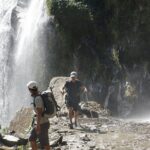
After breakfast, you cross a suspension bridge and climb into the Manang region near the village of Tal. The day includes waterfalls and a river scene shaped by sandy beaches.
Why it’s worth it: this is where the trek starts to feel like it’s leaving the low hills behind and turning toward the Himalaya.
Day 3: Forest walking into Chame, with Annapurna views in reach
Today follows a trail by a river through forest types like pine, fir, oak, and maple. You reach Chame, the district headquarters for Manang.
What you get: greener walking at first, then those first clear “big-mountain” sightlines when the trees thin out.
Day 4: Narrow valley hiking and the Paungda Danda rock face moment
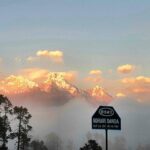
You work a steep, narrow valley and reach a first real viewpoint: Paungda Danda, a curved rock face that rises roughly 1,500 m from the river. From here, you can see Annapurna II to the south and Pisang Peak to the north-east.
Potential drawback: steep and narrow trails can be slow-going. If you’re trying to move quickly, remind yourself that altitude punishes speed.
Day 5: Upper trail via Geru, toward higher air and Manang Airport
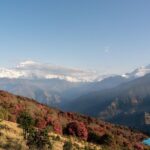
You trek on the upper trail through upper Pisang via Geru for standout north-face views: Annapurna II, III, IV, Gangapurna, Tilicho, and Pisang Peak. As you ascend, the air turns colder, drier, and harsher.
This day’s focus is elevation, scenery, and getting you positioned for the acclimatization work ahead.
Day 6: Acclimatization day in Manang, with Gangapurna Lake
This is an important “give your body a chance” day. You explore Manang and hike up toward Gangapurna Lake and Base Camp, while admiring peaks including Annapurna III, Tilicho, Pisang, and Chulu Peaks. You also spend time roaming around Manang village and monasteries.
Why you’ll be grateful: it’s not just a sightseeing day. It’s a body-prep day before Thorong La.
Day 7: Easier-feeling day on the Mardi Himal route into Khangsar
The trek shifts to an easier pace. You take an upper route down toward a river, cross it, and walk through coniferous forests. After about -3 hours you arrive at the Tibetan settlement of Khangsar, then continue with additional walking toward your stop for the day.
Why it works: when the trek gets harder later, you’ll feel the benefit of not crushing yourself every day.
Day 8: Into Tilicho base camp territory
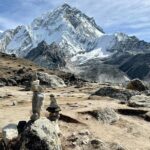
Today takes you through a landslide area with striking rock formations. You trek up to Tilicho base camp, aiming for views of Tilicho Peak and other snow-covered mountains.
Consideration: landslide zones can feel unstable underfoot. You’ll want to keep steady steps, especially on cold mornings.
Day 9: Tilichol Lake, the high “ice lake” day
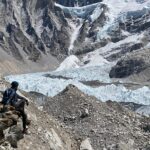
You start early to avoid afternoon wind. Then it’s a consistent climb of about 2–3 hours to reach Tilicho Lake, described here as the highest lake in the world and also referred to as the Great Ice Lake by a French expedition leader.
What to expect: this is the kind of altitude day where you’ll want slow, steady movement. Your breathing becomes your pace.
Practical tip: eat early and drink water consistently. Your body will work harder even if your legs don’t feel like they’re sprinting.
Day 10: Back down toward Khangsar and out through Thorong Khola
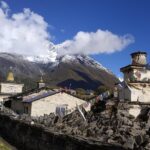
You descend to the uninhabited Khangsar area, pass Tare gumba, a thousand-year-old monastery, then follow the rock wall out of Khangsar. You descend toward a bridge in the Thorong Khola valley, cross a river, then hike up to a plateau and reach yak kharka.
Why this day is special: it’s not just “getting lower.” It’s a scenery shift plus that historic monastery stop.
Drawback: descending can still be hard on knees. Keep your steps controlled.
Day 11: Thorong Phedi, views and final setup for the pass
You walk uphill to Thorong Phedi, a small busy settlement with major mountain views. You get sightings of Mt. Gundang, Mt. Syagang, Thorung Peak, and Mt. Khatungkan on the way.
Why this matters: this is your staging point. You’ll sleep with one eye on your next morning’s big push.
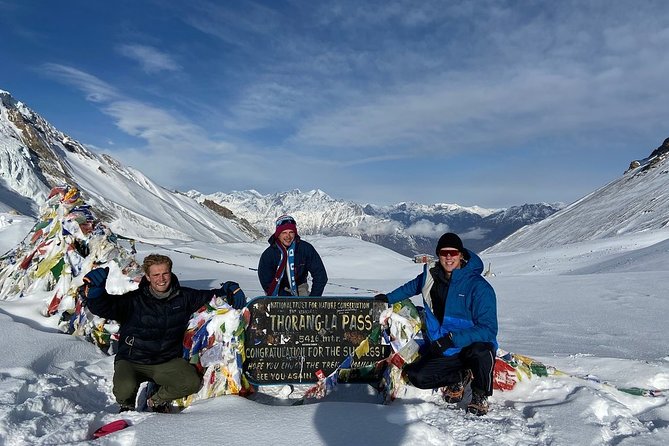
Day 12: Thorong La crossing (early start at 3 a.m.)
This is the toughest milestone day. You wake up at 3 a.m. and push over Thorong La, described here as one of the highest passes in the world and the highest point of the trek.
What to keep in mind: this isn’t the day for heroics. It’s steady effort, hot tea when offered, and watching your breathing.
Day 13: Muktinath first, then Tatopani hot springs
You visit Muktinath Temple before continuing by car ride to Tatopani. Tatopani is famous for natural hot springs, so this is your main recovery moment.
Why you’ll love this stop: after the pass and long walking days, a soak (within what’s practical for your comfort and hygiene standards) feels like a reset button.
Day 14: Ghorepani approach through Sikha and Chitre
You ascend toward Ghorepani through villages of Sikha and Chitre, noted as ethnic Thakali areas. The day includes terraced farmland and forests with rhododendron, birch, and magnolia.
This is a “more human scale” day compared to the stark high pass terrain.
Day 15: Poon Hill sunrise and classic Himalaya panorama
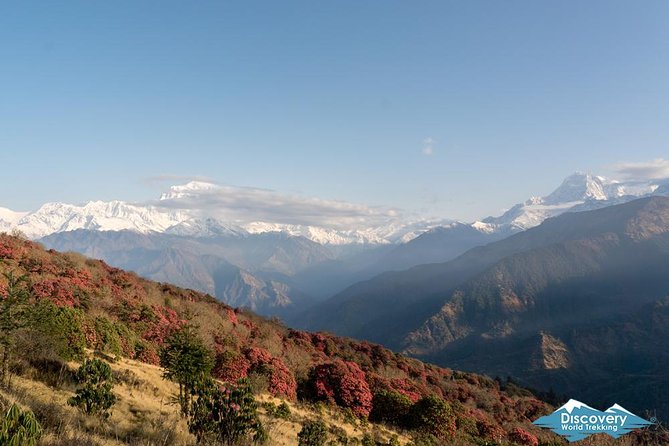
You go up to Poon Hill (3,210 m) early for sunrise over the Annapurna and Dhaulagiri massif, including Mt. Machhapuchhre (Fishtail) and Mt. Manaslu plus surrounding rice terraces. After sunrise and a visit, you continue on to the next stop for the night as the trek winds down.
Practical note: sunrise days often mean very cold mornings. Even if the day ends nicely, bring layers you can actually breathe in.
Day 16: Return to Kathmandu (bus) and an optional flight
After breakfast, you drive back to Kathmandu on a tourist bus. You can also choose to return by flight (not included) noted here as a 225-minute flight.
This final day is mainly logistics and comfort after days of walking.
Who this trek suits best (and who should rethink it)
This trek is best for:
- active travelers who can handle a challenging mountain schedule
- people who want a guided experience with permits, meals, and accommodation handled
- travelers excited by Tilicho Lake and the big high-pass moment at Thorong La
It may be a tough fit if:
- you’re looking for a gentle hike with lots of downtime
- you expect luxury comforts (tea houses and lodges are practical, not fancy)
- you’re uncomfortable with cold mornings and early start days
What “supported trekking” feels like with this operator
One of the strongest advantages here is how much gets organized for you: guide and porter support is included, plus their food and insurance-related costs. That matters because high-altitude trekking isn’t only about views. It’s also about pacing, safety decisions, and knowing what comes next.
The trip is also designed around not getting lost. With a licensed guide handling the route and logistics, you’re freer to focus on your breathing, your footing, and the scenery.
In that same spirit, the operator’s trekking teams have been recognized for warm, relaxed support and for giving context along the way, including education about mountain areas and towns you pass. You end up with more than just walking partners; you get people who can explain what you’re seeing.
Should you book this Annapurna Circuit with Tilicho Lake?
Book it if you want an Annapurna Circuit trek that includes a standout detour to Tilicho Lake, you’re ready for real high-altitude effort, and you like the security of a guided small group with permits and meals included.
Consider not booking (or switching to a less demanding version) if you’re still building fitness, dislike early mornings, or want a trip with minimal physical strain.
If you do book, plan your prep like this:
- train for sustained uphill walking
- pack for cold and dry air
- sleep with the next day’s early start in mind
- treat the acclimatization day as part of the trek, not a break
FAQ
How long is the Annapurna Circuit trek with Tilicho Lake?
The trek is approximately 16 days.
Where does the trip start?
The experience starts in Kathmandu, Nepal, with pickup offered.
What’s included for meals and accommodation during the trek?
Tea house/lodge accommodation is included during the trek, along with breakfast, lunch, and dinner. There is also one night of selected hotel accommodation in Pokhara with breakfast.
Are permits included?
Yes. The package includes the Annapurna Conservation Area Permit (ACAP) fee and the TIMS card fee.
Is local transport included?
Yes. It includes overland transportation such as an air-conditioned vehicle, a drive from Kathmandu toward the trek area, public transportation from Muktinath to Tatopani, and a tourist bus from Pokhara to Kathmandu.
What kind of support do you get on the trek?
A government license holder trek leader is included, and the costs for guides and porters (including meals, insurance, salary, and lodging) are part of the package. Assistance for rescue operation in case of complicated health conditions is also included.
What return options do you have after the trek?
You return to Kathmandu by tourist bus after breakfast on the final day. You may also choose to return by flight (not included in the package).