REVIEW · KATHMANDU
Upper Mustang Tiji Festival Trek 2024 – 18 Days
Book on Viator →Operated by Himalayan Excursion Nepal · Bookable on Viator
Time slows down in Upper Mustang.
This trek takes you into the last forbidden kingdom, with the Tiji festival in Lo-Manthang as the big cultural payoff. You’ll move through stark Mustang terrain, crest high passes, and arrive at walled-city Lo-Manthang just in time for monks’ ritual dances in front of Choedhe monastery.
I like how the trip is built around two concrete wins: restricted-area permit access (Upper Mustang is not a free-for-all) and food coverage during the trek (breakfast, lunch, and dinner are included throughout your trekking days). On top of that, you also get a real Kathmandu reset with UNESCO World Heritage sightseeing and a Pokhara stop with Phewa Lake boating and Tal Barahi Temple.
One thing to think about: this is high-altitude trekking with long travel days and passes (including Taklam La Pass at 3,624 m and a windy Lo pass around 3,850 m). If you’re not comfortable at elevation yet, you’ll feel it—so train a bit and take the acclimatization seriously.
In This Review
- Key moments that make this trek worth your money
- Why Tiji in Lo-Manthang feels like a living ritual
- Price and what your $2,500 actually covers in real terms
- Day-by-day flow: from UNESCO Kathmandu to Mustang’s dry rhythm
- Kathmandu: UNESCO sites first, jet lag second
- Pokhara: lake calm before dry high-country
- Getting into Mustang: Kagbeni and the first real village day
- Tsaile, Tangbe, Tetang, Chhuksang: villages built for survival
- Taklam La Pass and Ghiling: the day you remember
- Dhakmar and the slow arrival to Lo-Manthang’s walled world
- Three festival days: monastery dances, sacred places, and the Dorje Jono story
- Day 1 of festival: Choedhe monastery ritual dancing
- Day 2 of festival: gompas and Tingkhar, then dance again
- Day 3 of festival: Chhosar Cave and the final performance
- The return route isn’t a copy-paste: Gyakar, Ghar Gompa, and salt at Chhuksang
- Muktinath and the Kali Gandaki walk to Jomsom
- Guides, comfort, and why a private group can feel easier than you expect
- What to budget for on your own
- Who should book this trek (and who should think twice)
- Should you book the Upper Mustang Tiji Festival Trek 2024?
- FAQ
- How long is the Upper Mustang Tiji Festival trek?
- Where does the trip start, and what time is the start?
- Is the trip private or will I share it with other groups?
- Are flights included during the journey?
- Is the Upper Mustang restricted area permit included?
- What meals are included during the trek?
- What sightseeing or access fees are not included?
- Can I cancel and get a full refund?
Key moments that make this trek worth your money
- Tiji festival in Lo-Manthang: three days tied to monastery ritual dances in front of Choedhe monastery
- Upper Mustang permit fee included: the paperwork cost is handled for you
- High pass days with major viewpoint payoff: Taklam La Pass (3,624 m) and Lo pass near 3,850 m
- Hands-on culture stops: Namgyal Gompa, Choedhe Gompa, Chhosar Cave with 44 living rooms, and Ghar Gompa rock paintings
- Salt mine and pilgrimage contrast: Chhuksang salt mine plus Muktinath for Hindu and Indian devotees
- Flights that reduce backtracking: Kathmandu–Pokhara–Kathmandu and Pokhara–Jomsom–Pokhara hops are part of the plan
Why Tiji in Lo-Manthang feels like a living ritual
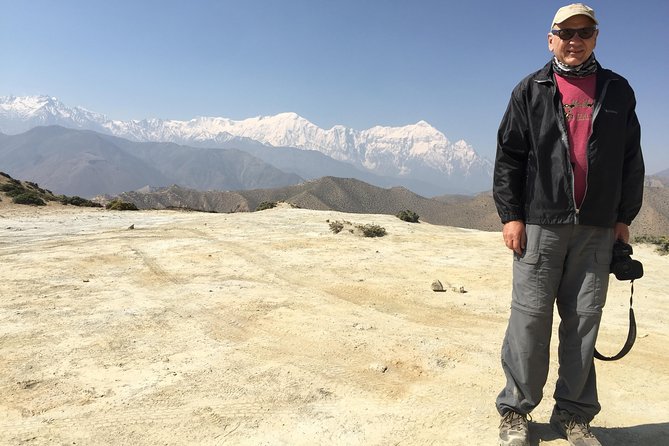
Upper Mustang isn’t just a trek. It’s a change in atmosphere. The terrain is dry and treeless for long stretches, the villages feel tucked into stone-and-sand realities, and the architecture you see—whitewashed walls, walled city corners, monastery buildings—feels like it’s been doing the same job for generations.
Then comes the Tiji festival. It’s a three-day event celebrated in late May, in front of Choedhe monastery, where monks perform ritual dances. The festival story centers on deity Dorje Jono and his demon father, Dorje Jono fighting his demon father to save the kingdom of Upper Mustang from destruction. In practical terms, that means you’re not just watching a performance. You’re timing your arrival so you can be in the middle of the cultural calendar of Lo-Manthang rather than arriving on a random day.
I also like that the trip builds the festival into multiple days, not just one evening. You’ll have festival time on all three days while you’re based in Lo-Manthang, and you’ll also pair the dances with monastery visits around them. That makes the festival easier to place and understand because you’re seeing the religious sites that sit in the same worldview.
You can also read our reviews of more tours and experiences in Kathmandu.



Price and what your $2,500 actually covers in real terms
At $2,500 per person for about 18 days, the cost can look high on paper until you line up what’s included.
Here’s the big value: you’re paying for the hard parts to run smoothly in a restricted region. Upper Mustang restricted area permit fee is included, and the plan also covers guide support—salary, food, accommodation, and insurance. Add in the food math: breakfast, lunch, and dinner are included during the trek, which saves you from hunting for meals in remote areas where choices can be limited.
You also get flights that would be annoying to juggle yourself:
- Flight tickets Kathmandu–Pokhara–Kathmandu
- Flight Pokhara–Jomsom–Pokhara
- Plus a scenic flight early in the journey from Pokhara to Jomsom
For many people, that combination is where the budget starts to make sense. You’re not only paying for scenery; you’re paying for permissions, coordination, and transit that keeps you from spending your vacation locked in logistics.
What’s not included matters too, so you don’t get surprised:
- Lunch and dinner in Kathmandu and Pokhara aren’t included
- Temple and monastery entry fees during Kathmandu and Pokhara sightseeing aren’t included
- Personal expenses and bar expenses are on you (phone calls, laundry, battery recharge, bottled/boiled water, shower items)
My practical take: if you already know you’ll eat in casual places and won’t treat every sight as a paid entry ticket marathon, the price often feels fair for what it removes from your planning load.
Day-by-day flow: from UNESCO Kathmandu to Mustang’s dry rhythm
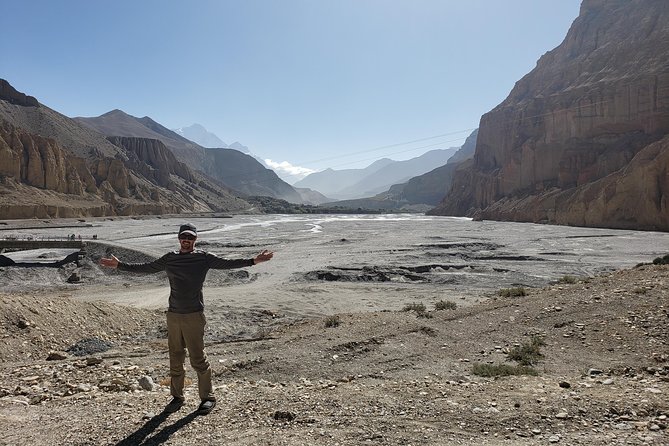
Your journey starts in Kathmandu, with a representative meeting you at Tribhuvan International Airport and transferring you to a pre-booked hotel.
Kathmandu: UNESCO sites first, jet lag second
The second day is Kathmandu Valley sightseeing by private tourist vehicle. You’ll hit:
- Basantapur Durbar Square
- Monkey Temple
- Boudhanath Stupa
- Pashupatinath temple
This is a smart warm-up. Kathmandu is loud and human-scale, and it gives you a cultural anchor before you leave the easier world of roads and schedules. If you’re coming off a long flight, the private vehicle and full-day structure help you settle fast without improvising too much.
Pokhara: lake calm before dry high-country
Next, you fly about 25 minutes to Pokhara. After checking in, you go for boating at Phewa Lake and visit Tal Barahi Temple. The plan also includes an evening walk and dinner by the lakeside.
Pokhara works as a buffer—mentally and physically—before you start trekking in a much drier, harsher environment. It’s also a useful timing point because it sets up your short hop to Jomsom the next morning.




Getting into Mustang: Kagbeni and the first real village day
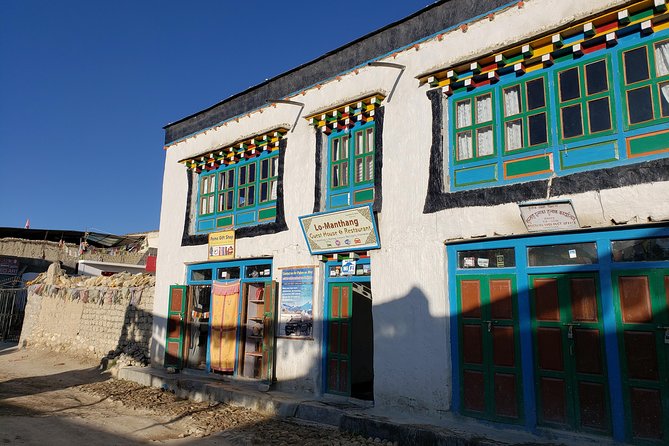
After breakfast in Jomsom (reached by a short scenic flight from Pokhara), your trek begins toward Kagbeni. It’s only about 3–4 hours, so this day is more about orientation than suffering.
Kagbeni is a good first look at what Upper Mustang does differently: narrow village lines, Buddhist monastery presence nearby, and a sense of being on a trail that’s lived-in by locals rather than just visiting hikers. You’ll explore the village and ancient Buddhist monastery in the evening, which helps you connect with the place right away, not after days of walking.
Tsaile, Tangbe, Tetang, Chhuksang: villages built for survival
Your next trekking day pushes toward Tsaile, with the trail passing through Tangbe (3,060 m), Tetang (3,040 m), and Chhuksang (2,980 m). You’ll enjoy lunch at Chhuksang village.
This is one of those days that feels deceptively manageable because the altitude is starting to come into play, but you’re still in a rhythm where your body can adjust. You’re also seeing how villages sit at different elevations along the trekking route—useful context for understanding why people moved and built where they did.
If you like “small moments,” this is the kind of day where you notice prayer flags, monastery corners, and the way dust and wind shape everyday life.
Taklam La Pass and Ghiling: the day you remember
One of the standout trekking days comes next. You’ll climb above Samar village, drop into a huge gorge, then work through a valley with junipers and streams before climbing back up toward a ridge around 3,800 m.
Then the real milestone: Taklam La Pass (3,624 m). From the pass area you get views of Damodar Danda, Yakawa Kang, and Tilicho Peak (weather permitting, because the Himalayas love keeping secrets when clouds roll in). Finally, the trail drops steeply to the whitewashed buildings of Ghiling.
This day is the reason altitude matters. You’re not just walking; you’re crossing a high notch with big views. If you pace yourself and keep your effort steady on the climbs, this is one of the best “earned” scenery days of the whole trip.
Dhakmar and the slow arrival to Lo-Manthang’s walled world
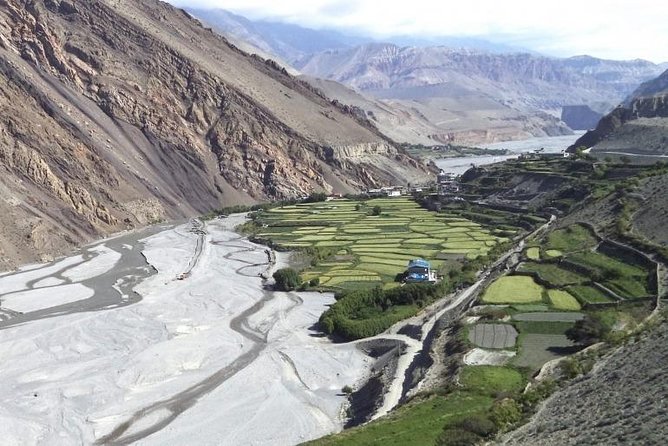
From Ghiling, you head to Dhakmar. The focus here is a mix of hiking, Himalayan range views, and exploring ancient Buddhist monasteries.
Then comes the day you reach Lo-Manthang, the final destination. The trail passes villages and then ascends gently to a windy pass of Lo around 3,850 m. Once you crest it, you can see the walled city of Lo-Manthang.
That first sight of a walled city in a desert-like basin is hard to explain until you see it. It hits as a visual signal that you’re in a place protected by geography and by history. And because the festival is tied to Lo-Manthang’s monastery world, arriving when you do matters. You’ll go from high pass wind to ritual setting without a long gap.
Three festival days: monastery dances, sacred places, and the Dorje Jono story
This is the heart of the experience.
Day 1 of festival: Choedhe monastery ritual dancing
After exploring Lo-Manthang in the morning and having lunch, you’ll enjoy monks’ ritual dance performance during the first day of Tiji festival in front of Choedhe monastery.
Even if you don’t know every part of the story ahead of time, the setting helps you follow. Monastery rhythm, crowd energy, and the physical presence of performers make the event feel like a ritual you can sense, not just read.
Day 2 of festival: gompas and Tingkhar, then dance again
On the second festival day, you’ll visit Namgyal Gompa, Choedhe Gompa, and Tingkhar before the festival performance again in the afternoon. In the evening, you’ll have time to visit local people and learn about their unique culture and tradition.
This is a practical structure. You’re not only doing the festival event. You’re also building context by moving through sacred and everyday local spaces nearby.
Day 3 of festival: Chhosar Cave and the final performance
On the third day, you trek to Chhosar Cave, which is described as having 44 living rooms. You’ll also visit old Buddhist monasteries, then trek back to Lo-Manthang and enjoy the third and final festival day.
The cave stop adds variety. If you feel festival fatigue on day two, caves and monastery visits give your brain a different kind of input—still spiritual, but in a quieter, older way.
The return route isn’t a copy-paste: Gyakar, Ghar Gompa, and salt at Chhuksang
Once festival days finish, the route changes. That matters because you won’t get bored retracing the same steps.
On the way back to Dhakmar, you pass through Gyakar village, where there’s a Ghar Gompa said to be more than 1,200 years old, with famous rock paintings. There’s also a belief that if someone makes a wish at Ghar Gompa, it will be fulfilled. Whether you treat that as spiritual or symbolic, the cave-and-art element makes the return feel like part of the story, not just transportation.
Back around Ghiling, daytime can get dusty and windy, so the plan suggests exploring villages and hiking mainly in the morning and evening. That’s a useful piece of real-world wisdom: in Mustang, wind is not just weather. It’s a daily condition you plan around.
Then you trek to Chhuksang village and visit a salt mine. That contrast is what I like about this trek. It includes big religious moments, but it also shows the kinds of livelihoods tied to the landscape and resources.
Muktinath and the Kali Gandaki walk to Jomsom
After Chhuksang, you head toward Muktinath, a holy temple for Hindus. The plan notes that daily many Nepali and Indian pilgrimage visitors come to show devotion to Hindu gods.
Muktinath is one of those places that broadens the cultural lens. Upper Mustang often draws people for Buddhism and Tibetan-influenced sites, but here you’ll feel the pull of South Asian pilgrimage traditions. You also get stunning views of Himalaya Parbat from the area, depending on visibility.
Then you transition into a flatter walking day by the Kali Gandaki River. The trail is described as flat down, making hiking easier, with 5–6 hours of walking. You’ll see views of Mount Dhaulagiri and Mount Nilgiri and reach Jomsom airport.
Finally, you fly back: early morning to Pokhara, and then onward to Kathmandu. Your final night includes a farewell dinner with a Nepali cultural dance program.
Guides, comfort, and why a private group can feel easier than you expect
This is described as a private tour/activity, with only your group participating. For a trek like this, that matters because:
- Your pace can be handled without fighting for attention in a large crowd
- Sight timing can flex around how everyone is feeling at altitude
- You get fewer awkward moments trying to coordinate in unfamiliar places
The included support is also clear about the guide being cared for: salary, food, accommodation, and insurance for the guide are included. That often correlates with smoother daily operations, because someone who isn’t worried about basic logistics can focus on your trail flow and safety.
In feedback related to the operator, names like Mukesh, Samsher, and Tsering show up in connection with organization, professionalism, and being prepared. I don’t assume the exact same team will be on your dates, but it’s a good sign that the company tracks competence through real-world execution, not just marketing.
What to budget for on your own
Even with a strong package, you’ll still want to plan for extras. From the included list and the exclusions, your personal spending usually shows up as:
- Lunch and dinner in Kathmandu and Pokhara
- Temple and monastery entry fees in Kathmandu and Pokhara sightseeing
- Bar expenses
- Phone calls, laundry, battery recharge
- Bottle or boiled water and shower-related items
If you’re the type who wants to recharge gear every day, buy extra water, or add little comforts, budget a bit more than you think. The trek itself is covered for meals, but everyday conveniences can land as add-ons once you leave the big cities.
Who should book this trek (and who should think twice)
This trek is best for people with at least moderate physical fitness. You’ll be walking multiple days in high country, and the presence of passes means you should be comfortable with sustained uphill effort and altitude adjustment.
I’d especially recommend it if you:
- Want a festival-centered travel experience, not just a standard route
- Like mixing culture sites (gompas, monasteries, caves) with dramatic natural viewpoints
- Are okay traveling via multiple flights and then settling into the trekking rhythm
You might think twice if you:
- Struggle with altitude already, especially at higher elevations
- Want a low-commitment walk with minimal effort days
- Hate the idea of dust and wind conditions affecting timing outdoors
Should you book the Upper Mustang Tiji Festival Trek 2024?
If your goal is a once-in-a-lifetime cultural moment paired with real trekking, I’d say yes—this is built for that. The Tiji festival placement in Lo-Manthang is the reason to choose this route over a generic Upper Mustang trek, and the inclusion of the Upper Mustang permit fee plus trek meals and key flights helps the trip feel more “handled” than DIY.
But do one homework step before you pay: confirm your exact festival timing for your 2024 dates. The tour notes mention Tiji dates in late May for one referenced year, and the festival is generally at the end of May. Since festival days are the core attraction here, you want your departure to match the dances in Lo-Manthang rather than arrive a day too early or too late.
If you’re ready for high passes, dry winds, and a structured journey that trades freedom for smooth execution, this trek is a strong pick.
FAQ
How long is the Upper Mustang Tiji Festival trek?
The tour duration is 18 days (approx.).
Where does the trip start, and what time is the start?
It starts at Tribhuvan International Airport, Ring Rd, Kathmandu, Nepal, with a start time of 6:15 am.
Is the trip private or will I share it with other groups?
It’s listed as a private tour/activity, so only your group will participate.
Are flights included during the journey?
Yes. Flight tickets for Kathmandu–Pokhara–Kathmandu are included, along with a Pokhara–Jomsom–Pokhara flight.
Is the Upper Mustang restricted area permit included?
Yes. The Upper Mustang restricted area permit fee is included.
What meals are included during the trek?
Breakfast, lunch, and dinner are included during the entire trek.
What sightseeing or access fees are not included?
Temple and monasteries entry fees during sightseeing in Kathmandu & Pokhara are not included.
Can I cancel and get a full refund?
You can cancel up to 3 days in advance for a full refund. If you cancel less than 3 full days before the experience’s start time, the amount you paid will not be refunded.