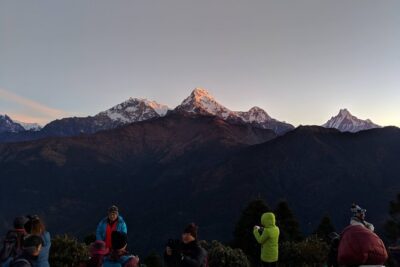
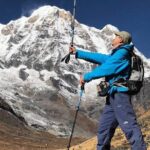
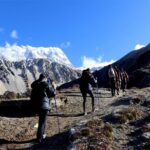
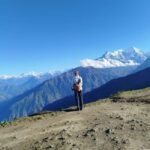
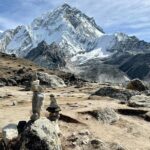
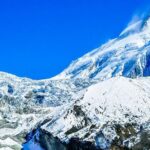
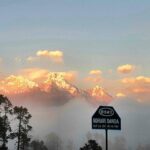
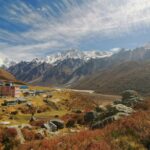
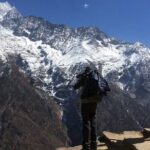
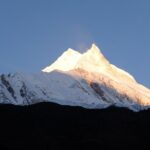
This trek has a serious wow factor. Larkya La Pass sits high above Manaslu, and the circuit stitches together remote villages, glacial scenery, and serious mountain passes.
I like how the trip gives you both structure and breathing room: permits and guides are handled, and you also get an acclimatization day in Samagaon. The main drawback is the usual one for Manaslu: it’s physically demanding, and weather can affect what you feel comfortable attempting.
In This Review
- Key highlights worth your attention
- Why the Manaslu Circuit feels more real than the postcard trails
- Your money at work: what $1,300 covers (and what it doesn’t)
- Day-to-day flow: from Kathmandu to Soti Khola and the slow ramp up
- Entering Manaslu Restricted Area: Jagat to Philim and the Gurung trail feel
- Deng, Namrung, and the Budhi Gandaki corridor
- Samagaon: the acclimatization day that changes everything
- Samdo and Dharamsala: Tibet trade routes meet glacial walking
- Larkya La Pass day: expect cold exposure and careful pacing
- Gho and Tal: the quieter middle-to-lower descent
- Final push back to Kathmandu and the let-down (then the relief)
- Lodging and food: tea-house comforts, with a few reality checks
- Guides, porters, and the small choices that keep you safe
- Getting ready: who this trek suits best
- Weather and altitude: the part you can’t control
- Should you book the Manaslu Circuit Trek with this operator?
- FAQ
- How many days is the Manaslu Circuit Trek?
- What is the highest point on the trek?
- Are trekking permits included?
- What meals are included during the trek?
- Is accommodation included during the trek?
- What about transport to and from Kathmandu?
- What is not included in the price?
Key highlights worth your attention
- Larkya La Pass (5,160m): the peak moment, plus big, exposed walking conditions
- A real acclimatization day in Samagaon before you push higher
- Budhi Gandaki River route: lush starts, then a steady move toward alpine and barren terrain
- Tea-house trek style with meals included during the walking days
- Guides and local porters included, with optional jeeps costing extra if you want more comfort on transfers
- Private tour setup: only your group participates
Why the Manaslu Circuit feels more real than the postcard trails
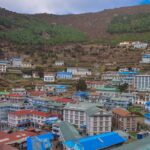
Manaslu isn’t just another high-mountain loop. It’s a trek through the Manaslu Conservation Area and around the world’s eighth-highest peak, Mount Manaslu, with the route shaped by the Budhi Gandaki River and the villages that cling to it.
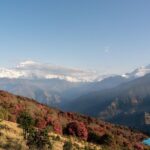
What I find especially appealing is the variety of daily walking. You start with lower, greener valleys and then gradually move into harsher high-altitude terrain. That change happens in a way that feels earned, not rushed, and it gives you a real sense of the Himalayas as a living system rather than a single viewpoint.
You can also read our reviews of more tours and experiences in Kathmandu.
Your money at work: what $1,300 covers (and what it doesn’t)
At $1,300 per person, this isn’t the kind of deal where you’re left guessing what “included” means. The big value pieces are the logistics and the permits.
You get:
- All trekking permits
- License holder trekking guide plus local porters
- Tea-house accommodation during the trek (so you’re not carrying a tent)
- Meals during the trek: breakfast/lunch/dinner with tea
- Two nights in Kathmandu at a 3-star hotel with breakfast
- Airport to hotel to airport support, plus Kathmandu to Sotikhola and back via public express bus
- A sleeping and duffle bag item handled by the company after your return
What’s not included is also important for budgeting:
- Travel and evacuation insurance
- Tips for guide and porter
- Personal expenses (water, hot shower, Wi‑Fi, snacks)
- Extra Kathmandu nights
- Optional private jeeps (priced separately) if you choose more comfort on the rough segments
For me, the best “value” signal here is that the operational basics are covered: guides, permits, food on the trail, and lodging. You still pay for comfort and risk-management on top (insurance and tipping), but you’re not buying into a confusing, add-on-heavy setup.
Day-to-day flow: from Kathmandu to Soti Khola and the slow ramp up
Most Manaslu treks begin with a long travel day, and this one is no different. You fly or arrive into Kathmandu, meet the team at TIA, and sleep in Kathmandu for the night.
The next morning starts early. You leave Kathmandu by jeep or bus along the Prithvi Highway, passing through places like Thankot and then continuing toward Arughat—the old starting point. This is where you should expect the road to get bumpy. Past Arughat, the route roughens, so if you’re sensitive to motion sickness, bring what works for you.
By the time you reach Machhakhola, you’ve already “earned” the first day’s rest. It’s a good pattern for this trek: travel isn’t just transport; it’s the first step in getting your body used to the rhythm.
Entering Manaslu Restricted Area: Jagat to Philim and the Gurung trail feel
After breakfast, you move into the Manaslu Restricted area and the Manaslu Conservation Area under a controlled system. That matters because it shapes the kind of communities and guesthouses you’ll see. This is not a free-for-all trail.
You also pass through Jagat, described as the biggest Gurung trail hub in the Manaslu region. That’s a nice cultural marker: you’re not only hiking; you’re moving through Gurung-influenced villages and daily life.
Then you work your way toward Philim, staying in lodges along the way. Expect small village walking, river crossings, and a steady climb that doesn’t feel like a sprint.
Deng, Namrung, and the Budhi Gandaki corridor
From Jagat/Philim, the days toward Deng and beyond start to feel like a sequence of “small worlds.” You trek through villages and frequent crossings, including rocky stretches and bamboo forest segments.
When you reach Deng, you’re in the kind of place where the trail narrows and you feel tucked into the valley. This is where tea-house life really kicks in: warm drinks, simple meals, and lodge evenings that revolve around weather, altitude, and tomorrow’s plan.
The next day pushes toward Namrung, passing through villages such as Ghap and walking along the Budhi Gandaki. You’ll see cultivated fields—millets, wheat, barley—and it’s a reminder that people manage agriculture at real altitude, not just tourists chase views.
Samagaon: the acclimatization day that changes everything
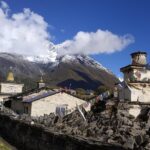
If you do only one “smart hiking thing” on the Manaslu Circuit, this is it: you spend time in Samagaon for acclimatization. The itinerary includes a full day here, with a visit to the lake and the local village.
This day is valuable for two reasons:
- It reduces the risk of altitude problems by letting your body catch up.
- It makes the trek feel less like a grind. You’ll notice the difference when you move higher toward glacial valleys.
Also, Samagaon is described as an origin area for local culture, and it’s a great place to slow down without losing the mountain connection.
If you’re someone who hates wasted sightseeing days, this isn’t one. It supports the higher part of the route, including the approach to Samdo and the lead-up to Larkya La.
Samdo and Dharamsala: Tibet trade routes meet glacial walking
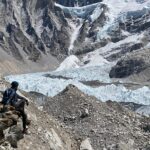
After Samagaon, the circuit moves toward Samdo, with a walking day that includes views and the chance to see the trail’s higher wildlife and travel patterns. You follow the stream areas, cross water, and spend a night in Samdo.
One of the more interesting notes from past trekking experiences on this route is the sense of “cross-border trade life.” You can see goods carried by yak and the mix of Tibetan and Chinese items moving through these high corridors. It’s not just scenery; it’s how people survive out here.
Then comes Dharamsala, reached after walking with glacier views and crossing streams associated with passes and higher terrain. You spend the night there before the pass day. In practical terms, Dharamsala is a staging zone: you’ll feel the mental shift from hiking to managing the pass.
Larkya La Pass day: expect cold exposure and careful pacing
The day you go for Larkya La is the headline. You leave Dharamsala toward Larkya La, reach the pass, then continue onward to Bimthang.
This is one of those days where the “difficulty” isn’t only steepness. It’s also:
- exposed cold air at altitude
- potential snow or ice depending on season and conditions
- the need to move steadily, not fast
On the other side of Larkya La, your walking changes again. The trek descends and then links into Bimthang, where the atmosphere feels more like rest and reset. If you handled the pass with a conservative pace, Bimthang helps you recover both physically and mentally.
Gho and Tal: the quieter middle-to-lower descent
From Bimthang, you continue toward Gho, typically resting there for the night. The route keeps offering viewpoints, but the day-to-day becomes less about the pass and more about consistent progress.
Then comes the move to Tal, with another overnight stop. This stretch matters because it’s how your body transitions back down after altitude exposure. Even if you’re feeling tired, it’s still a rewarding part of the circuit because the trail feels more human-scale again—less “vertical drama,” more community rhythm.
Final push back to Kathmandu and the let-down (then the relief)
After your last trekking day, you take breakfast and then drive back to Kathmandu by express bus, staying overnight in the city. On your final day, you’re dropped to TIA for departure.
I’ll say this plainly: the final city night hits differently after a circuit like Manaslu. You go from simple lodge routines and high-air mornings to traffic and noise. It’s not bad. It’s just a reset moment, and you’ll be grateful you don’t have to hike the next day.
Lodging and food: tea-house comforts, with a few reality checks
This is a tea-house trek, and the package includes accommodation in tea houses during the trek. That means you get beds and communal meal spaces, not camping.
Food is also handled with three meals during the trek plus tea. In the past, trekking teams on this route have put real effort into the morning routine, including things like apple porridge and honey lemon ginger tea. That kind of comfort matters on cold days, because it helps you start moving without feeling like you have to “tough it out” from the first steps.
Still, keep expectations grounded. Tea houses at altitude are basic by design. Hot showers and Wi‑Fi are personal expenses, so don’t plan your whole trip around them.
Guides, porters, and the small choices that keep you safe
A big reason people rate this style of trek highly is the human support. The operator uses a licensed guide and includes local porters, and the guide approach is repeatedly described as caring, professional, and focused on safety and comfort.
Names that come up again and again include Sandesh and Veer (often tied to smooth hiking days), plus Rabin as a point of contact for planning and coordination. Guides like Dhansingh, Aita, Sukra Gurung, and Sushil Gurung are also associated with a calm, well-organized experience.
Here’s how that matters for you: on a circuit trek, the biggest wins are the boring ones—good pacing, smart stop timing, checking how you feel, and getting you to the right village at night. A competent guide makes those choices. A weaker one turns every day into problem-solving.
Getting ready: who this trek suits best
This trek is listed as challenging, and the requirement is clear: you should have strong physical fitness. That doesn’t mean you need to be an athlete. It does mean you should be comfortable with long uphill days and altitude risk.
You’ll enjoy the Manaslu Circuit most if you like:
- steady multi-day hiking with simple lodge nights
- scenery changes that happen day by day
- a route that isn’t designed only for quick selfies
It’s also a good choice if you’re tired of ultra-crowded routes and want something more rugged and village-based.
Weather and altitude: the part you can’t control
The experience is described as requiring good weather. That’s not fine print; it’s the mountain talking. Pass-day conditions and trail comfort can shift quickly. If conditions are poor enough, the operator offers another date or a full refund (per the policy terms).
Also, your itinerary includes an acclimatization day at Samagaon and a climb through high passes like Larkya La. Those planning choices help, but they don’t remove risk. You should travel with realistic expectations about cold, wind, and slow walking at altitude.
Should you book the Manaslu Circuit Trek with this operator?
I’d book if you want:
- a structured circuit with permits, guides, and tea-house lodging handled
- a route that’s genuinely remote and village-led
- a plan that takes altitude seriously with acclimatization in Samagaon
- dependable coordination in Kathmandu, including hotel nights and transfers
I wouldn’t book if you:
- want guaranteed private jeeps throughout (those are optional and priced extra)
- hate cold, basic lodging, and long days on rough terrain
- don’t plan for insurance and tipping (those are clearly not included)
If you’re fit, flexible with weather, and excited by real mountain villages, this is a strong pick for a 14-day Himalaya circuit.
FAQ
How many days is the Manaslu Circuit Trek?
The duration is about 14 days (approximately 10 to 14 days for the trek itself).
What is the highest point on the trek?
The highest point is Larkya La Pass at 5,160 meters (16,930 feet).
Are trekking permits included?
Yes. All trekking permits are included.
What meals are included during the trek?
You get three meals a day during the trek (breakfast, lunch, dinner) with tea.
Is accommodation included during the trek?
Yes. Accommodation during the trek is provided in tea houses.
What about transport to and from Kathmandu?
The package includes airport/hotel/airport pickup and drop, plus public express bus from Kathmandu to Sotikhola and return to Kathmandu. Private jeeps are optional at an extra cost.
What is not included in the price?
Travel and evacuation insurance, tipping for guide and porter, personal expenses (like hot shower, Wi‑Fi, mineral water), extra meals or hotel nights in Kathmandu, and optional private jeeps.