REVIEW · KATHMANDU
Tsum Valley and Manaslu Trek
Book on Viator →Operated by Accessible Adventure Pvt. Ltd · Bookable on Viator
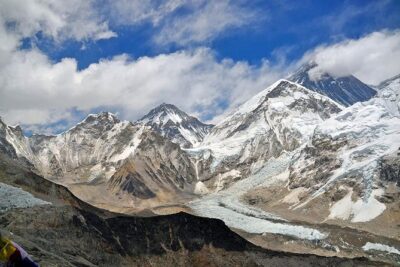
Tucked beyond the usual Nepal trail radar, this trek mixes quiet Tibetan culture with big Manaslu views. Tsum Valley was restricted until 2008, so the route still feels world-separate, with monasteries, mani walls, and hamlets that don’t act like tourist sets.
I especially like how this trip is set up to take the hassle off your plate: private vehicle transfers, a true guide team, and trek gear basics handled (down jacket and sleeping bag use). I also like the “people-first” focus in Tsum, from community stops like a Tsum school project to monasteries such as Mu Gompa and Rachen Gompa.
The main consideration: this is a physically demanding trek with steep sections and tricky footing near passes (including Larkya La), and the package only covers what’s explicitly listed—so plan for no hot shower during the trek and keep your water/snacks budgeted.
In This Review
- Quick take: what matters most
- Kathmandu: Thamel comfort, then permit and temple days
- Getting into the trekking rhythm: river gorges, suspension bridges, and Tatopani
- Entering Tsum Valley for real: Salleri, Lokpa, and the checkpoint moment
- Chumling and the Tsum school project: Tibetan Buddhist life on foot
- Nile and Mu Gompa: when the trail starts feeling sacred
- Rachen Gompa and the nunnery: two sides of the same faith
- Leaving Tsum: Deng, stone arches, mani walls, and entering the Manaslu circuit
- Samagaon rest day energy: Sama village, Ribung Gompa, and big glacier framing
- Samdo to Larkya Phedi: birch and juniper, then the pass world
- Larkya La summit day: prayer flags, moraine, slippery steps, and payoff views
- Karcha La and Tilje: a gentler close to the circuit
- Back to Kathmandu: time to decompress, not rush
- Price and value: what $1,495 buys you (and what it doesn’t)
- Who this trek suits best
- Should you book this Tsum Valley and Manaslu trek?
- FAQ
- What time does the tour start?
- Where are you staying in Kathmandu before the trek?
- What trekking permits are included?
- How is accommodation handled during the trek?
- What gear is included for the trek?
- Is a hot shower included during the trek?
- Is there free cancellation?
Quick take: what matters most
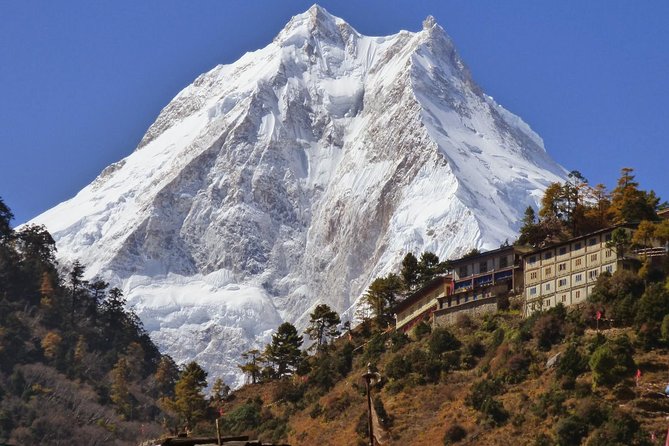
- Tsum Valley’s restricted-area feel means fewer crowds and more time with real routines, not just photo stops.
- Monastery-heavy days: Mu Gompa and Rachen Gompa (with a nunnery) give you a strong sense of Tibetan Buddhism in Nepal.
- Support that sounds like it actually works: guide Mahendra’s care and porter support (like Ratskumar) are a repeated theme in trip feedback.
- Weather and footing reality near passes: Larkya La and nearby moraine sections demand steady steps and patience.
- Gear included for colder nights: down jacket and sleeping bag use can save you from lugging bulky items.
Kathmandu: Thamel comfort, then permit and temple days
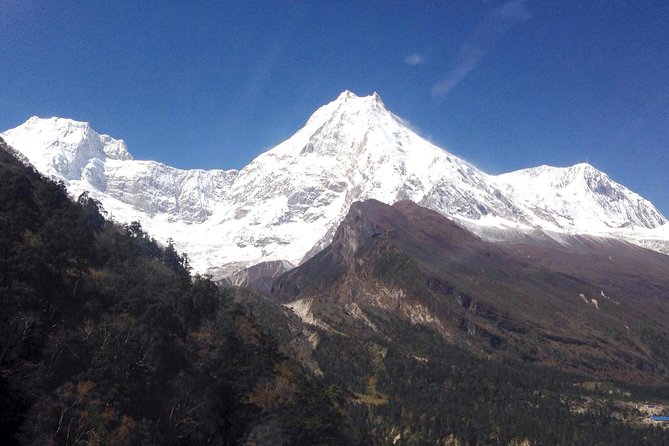
Your trek starts with a Kathmandu buffer, which I strongly prefer for high-altitude travel. You’ll land at Tribhuvan International Airport and get picked up to a hotel in Thamel, close enough that you’re not burning jet lag time on long transfers. After unpacking, there’s a welcome dinner with authentic Nepali food—useful if you want a low-stress first night.
Day 2 is where the practical stuff gets locked in: you meet the team, head to the authorities to get your documents ready, then you’re back out exploring. Kathmandu Durbar Square is the cultural warm-up, and Swayambhunath adds that classic hilltop view with Buddhist and Hindu pilgrimage energy. Pashupatinath sits on the edge of the city northward—worth seeing if you want the broader religious context before you head into the Tibetan-influenced Tsum world.
One small tip: day 2 is also your “paperwork brain” day. If you’re the type who hates paperwork, keep your passport and permit copies organized from the start, so you don’t spend the evening hunting folders.
You can also read our reviews of more tours and experiences in Kathmandu.
Getting into the trekking rhythm: river gorges, suspension bridges, and Tatopani
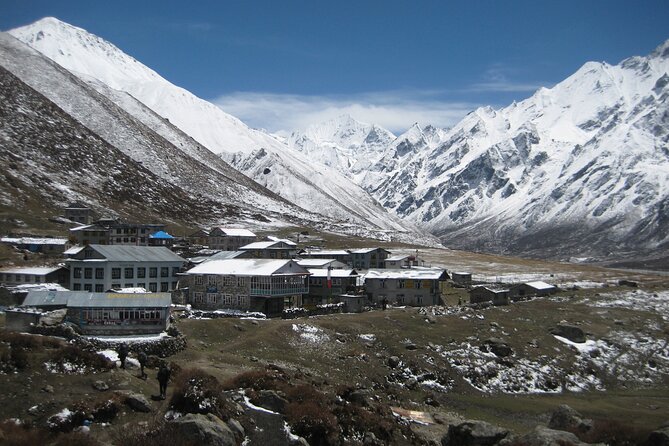
The trek proper begins with a drive out of Kathmandu. Day 3 includes a rougher road stretch after getting through the Dhading Besi area—so if you’re prone to motion sickness, this is your signal to plan for it early.
By Day 4, you’re walking the river gorge with a trail that keeps changing between narrow segments and up-and-down terrain. You’ll cross the Tharo Khola and reach places like Khorlabesi, then continue toward Tatopani, a hot-spring stop. This kind of reset matters because it helps you recover before longer walking days.
You also move across multiple suspension bridges (Tharo Khola and Yaru Khola are specifically mentioned) and climb the stone staircase toward Tharo Bharyang. That region includes Gurung villages and monkeys that pop around trees—small moments, but they break up long stretches of concentration. You end the day in Jagat, and you’ll show your trekking permits at the check post there. That check is more than formality; it reinforces how Tsum stays controlled and less exposed than many other trekking corridors.
Entering Tsum Valley for real: Salleri, Lokpa, and the checkpoint moment
Day 5 is your pivot day into the restricted-area feel. You cross the Dudh Pokhari Khola, pass into villages such as Salleri and Siridibas, and then head toward the Budhi Gandaki River. You’ll also pass through Philim, described as relatively larger, but the bigger point is that you reach a checkpoint specifically for entering Tsum Valley where permits are checked.
After the checkpoint, the trek takes you to Lokpa, positioned between Budhi Gandaki and Siyar Khola. This is the kind of stop where the isolation shows in how you experience daily life—secluded livelihoods rather than a road-fed tourist economy. If you’re hoping for an experience that feels more like walking through someone’s home than visiting a park, this is the direction it goes.
Logistics note: since this is a restricted region with permit checks, keep a photocopy or digital access plan ready for your permits and any documents you’re told to carry.
Chumling and the Tsum school project: Tibetan Buddhist life on foot
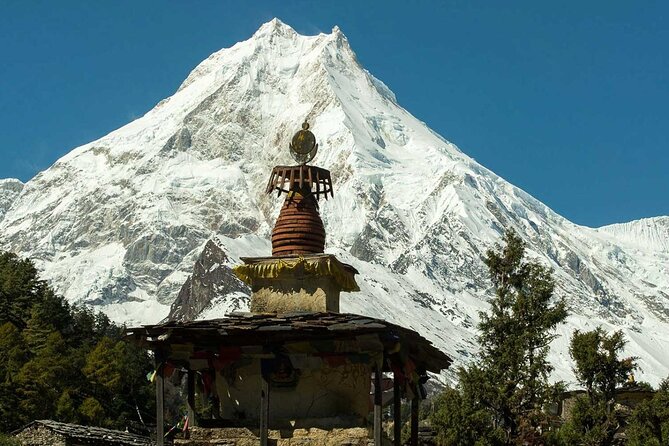
Days 6 and 7 focus on the Tsum communities around Chumling. You trek south bank of the Siyar Kola, follow paths through forest, and cross over Lungwaa and Sarli Khola before climbing gradually toward Chumling village. The trip description is clear that you’ll see Tibetan Buddhist communities living by their own rhythms.
There’s also a stop connected to the Chumling school (Tsum community school project). For me, this is one of the more meaningful “tour stops” you can have. It gives you a practical reason the trip is affecting lives: education needs don’t happen at 5-star distances, and it’s easier to understand the stakes when you’re actually walking in the community.
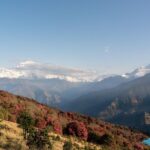
The area’s also tied to views—Ganesh Himal is mentioned east of Chumling. So you’re not only walking among culture; you’re also getting orientation on the mountains that frame this valley.
Nile and Mu Gompa: when the trail starts feeling sacred
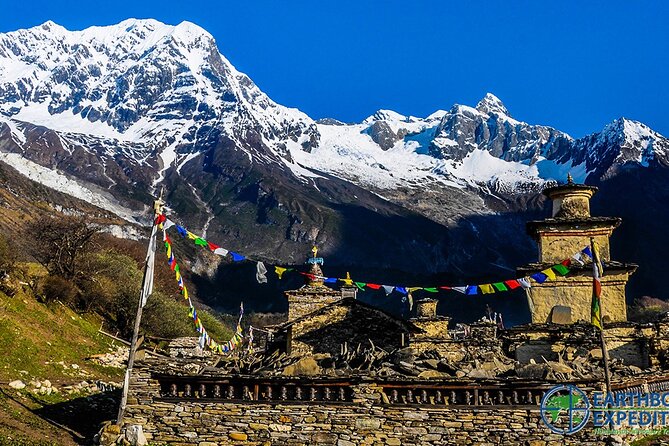
On Day 8, you move along a flatter trail near the north of the Siyar Khola, crossing a string of secluded villages—Lamagaun, Bursi, Lar, Phurbey, Chhule, and Pungdun are all listed. Between villages, you can stop at the Rachen Gompa and Milerapa Cave, which gives you a mix of spiritual sites without every day becoming a strenuous climb.
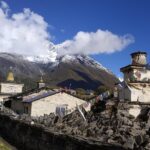
Day 9 goes deeper: you ascend and reach Mu Gompa, described as both a monastery and the highest point in the valley. The monastery was established by Drupa Rinpoche, a Bhutanese lama who meditated in nearby caves. That detail matters because it’s not just a name on a map—you get a sense of how meditation traditions anchored places long before trekking routes existed.
You’ll see monks meditating and praying, and because it’s high in the valley, the mountain views can feel crisp and close. After days of village walking, this is the point where the trip shifts from cultural observation to cultural presence.
Rachen Gompa and the nunnery: two sides of the same faith
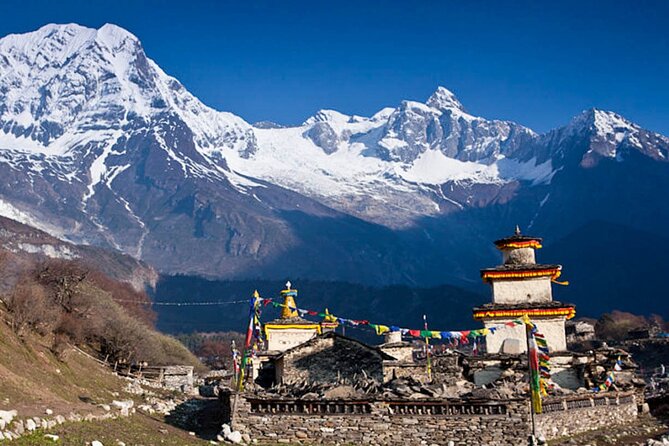
Day 10 centers on Bursi village and older monastic sites. You pass villages like Kalung and Bhajyo to reach Bursi, then visit one of the oldest monasteries: Rachen Gompa. There’s also a nunnery where nuns reside, plus a lodging area for travelers mentioned in the plan.
If you want to understand Tibetan Buddhism beyond chants you hear from a distance, this is one of the stronger stops here. You’re not only seeing architecture; you’re seeing living institutions—monks and nuns with roles that shape day-to-day life in the valley. You can also try local meals there, which is often the best way to ground what you’re seeing.
Day 11 turns back toward Chumling, using trails you already walked. That’s practical: you’re not guessing your way through new terrain while your body is adjusting.
Leaving Tsum: Deng, stone arches, mani walls, and entering the Manaslu circuit
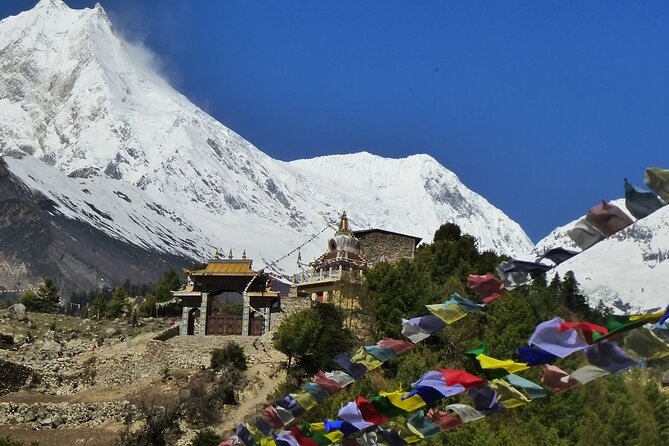
Day 12 is where you say goodbye to the Tsum Valley portion. You leave Chumling, descend to Deng, and on the way you pass the bridge over the Budhi Gandaki. The description notes that you’ll join the Manaslu circuit, passing Buddhist stone arches along the way before reaching Deng.
This day is important because it changes your trek character. Tsum is the quiet, controlled-cultural section. The Manaslu circuit adds bigger-scale trekking energy: more dramatic river and canyon features and a shift toward the classic high-mountain pass circuit feel.
Day 13 continues that trend. You cross the Budhi Gandaki again to join Bihi Phedi, passing a large waterfall and a wooden bridge out of the canyon. You then drop into the Shringi Khola valley, moving through lush forests and quiet villages. You end up in Ghap, where you can see mani walls on the southern side of the river, and then you walk on to Namrung.
That sequence is a reminder to pack patience. The circuit is beautiful, but it rewards people who keep steady pace rather than those who sprint for views every 20 minutes.
Samagaon rest day energy: Sama village, Ribung Gompa, and big glacier framing
Day 14 brings viewpoint time and a series of village explorations. You climb through forests to Lihi, which has stupas and barley terraces. Then it’s onward to Sho and Lho, finishing with Shyala and then Sama.
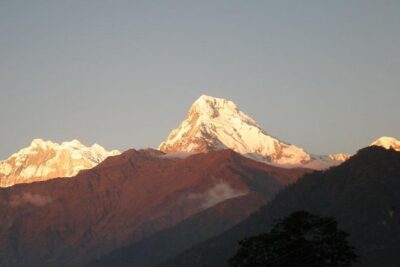
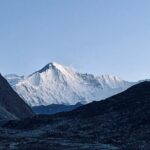
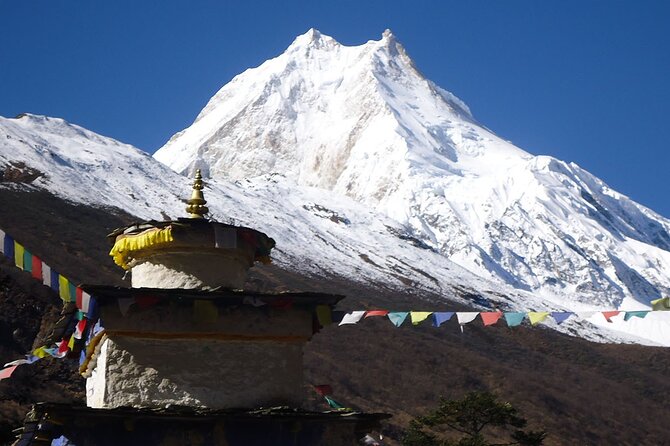
Ribung Gompa is mentioned as a visit you can fit in. Sama is described as looking toward a large glacier straight ahead with snow-capped Manaslu. This is the kind of composition that makes the earlier trekking days feel worth it—you’re finally getting the mountain in a way that’s hard to fake with photos.
Day 15 is a rest day in Sama. You can wake up late, take a slower breakfast, and interact with Sherpas to learn traditions and culture. You’ll also see long mani walls with Buddhist texts, plus the chance to go up to Pungyen Gompa, an ancient gompa sacred to locals. You can also get amazing glacier views from there.
If you’re worried about “rest day fatigue,” don’t be. Here, rest isn’t sitting on a bench—it’s using the slower pace to understand what you walked past earlier.
Samdo to Larkya Phedi: birch and juniper, then the pass world
On Day 16, you head to Samdo. You descend toward Budhi Gandaki, cross a bridge, and pass mani walls in the village. The path is described as going through juniper and birch forest, leading to Kermo Kharka, and then you cross a wooden bridge before reaching a vantage point and eventually Samdo in about four hours.
This day matters because it’s transitional acclimatization. The route builds toward the pass without throwing you straight into Larkya La’s full intensity. The forest texture (juniper/birch) is also a welcome change after more village-and-stone sections.
Day 17 is the climb toward Larkya La with Larkya Glacier views. You start with a descent through terraced fields, then ascend. You’ll see mani walls and stone arches and cross another wooden bridge. The trail rises to a side of a gorge near the glacier before reaching Larkya Phedi.
One practical note from the description: there’s a small lodge at the phedi, and you won’t find settlements here. So you want to plan your warmth and hydration early, rather than expecting last-minute supplies to appear.
Larkya La summit day: prayer flags, moraine, slippery steps, and payoff views
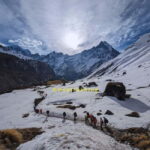
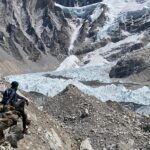
Day 18 is the showpiece. You begin with a gentle climb to the moraine and a route that stays on the moraine ridge, where the plan warns it becomes challenging. You’ll eventually see prayer flags near the Larkya La pass and cross grayer slopes to encounter rustic villages, glacier lakes, and wildlife.
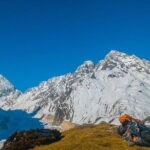
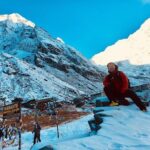
Then comes the summit itself. From the summit of Larkya La, the views of Mt. Manaslu are described as up close and clear—one of the best views on the entire trek in the tour notes. You’ll also get the reality check: the path is slippery, so you need to take extra care with each step.
After the summit, you descend back to a grassy moraine, reach a meadow and spring, and then head toward Bimthang for overnight. The sequence is classic pass travel: long focus on footing, followed by the relief of wider valley space.
Karcha La and Tilje: a gentler close to the circuit
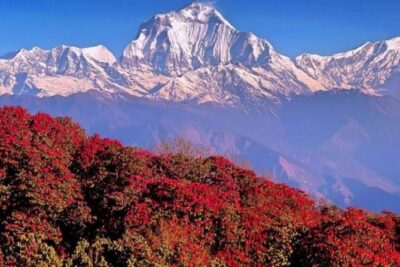
Day 19 shifts gears after the big pass. You take a gentle climb through paddy fields to a small Karcha La pass, then descend through fig trees and rhododendron forests to Tilje. The description doesn’t promise a flat walk, but it does signal a more forested, varied finish compared with the moraine intensity.
Overnight is at a guesthouse. This is a good time to check your pack condition, wipe dust off your gear, and get ready for the final run back.
Back to Kathmandu: time to decompress, not rush
Day 20 ends the trek portion with a drop-off at the airport. The route back includes a farewell moment with the team, and the plan is that you’ll reflect on the secluded Tsum section and the Manaslu circuit mountains.
Day 21 is also described as a final end-of-stay day, with another airport-area transfer. So from a traveler’s-eye view, don’t schedule anything important right after arrival dates. You’ll likely need that last morning to recover from travel logistics and the long day before.
Price and value: what $1,495 buys you (and what it doesn’t)
At $1,495 per person for about 21 days, the value here comes from what you don’t have to arrange yourself.
You get:
- Private ground transport including airport transfers
- Three nights in Kathmandu at a 3-star category hotel with breakfast
- Lodge-to-lodge trekking accommodation during the trek (best available, twin sharing)
- A guide plus porter support, with staff meals, accommodation, salary, equipment, and accidental insurance handled
- Manaslu and Tsum special trekking permits and the Annapurna and Manaslu conservation fee
- Down jacket and sleeping bag use, plus a duffle bag
- A first aid medical kit, government taxes, and office service charge
What you should budget separately:
- Travel insurance and international airfare
- Your Nepal entry visa (available on arrival; cost depends on duration)
- Lunch and dinner details aren’t presented as fully included beyond what’s explicitly noted, so plan for extra meal costs
- Cold drinks, bottled or boiled water, snacks, and personal expenses
- Hot shower during the trek isn’t included
So here’s how I’d judge it: if you hate permit headaches and gear shopping, this price starts looking fair quickly. The trek is long, the logistics are complex, and this package covers the big-ticket friction points—especially permits and gear basics.
Who this trek suits best
This is built for people with moderate physical fitness who want a cultural trek with real monastic weight behind it. If you like steady days, community-focused walking, and the moment when the mountains switch from background to main character, this fits.
It’s also a good match for small groups. The max group size is 15 travelers, and with porter support at 1 porter for 2 people, you’re not doing everything on your shoulders (literally or mentally).
If you’re the kind of hiker who needs a guaranteed hot shower every night and easy gradients, you might find it frustrating. But if you can handle uneven terrain and cold nights, the structure makes the challenging parts more manageable.
Should you book this Tsum Valley and Manaslu trek?
I’d book it if you want the rare combo: restricted-area Tsum Valley culture plus the famous Manaslu circuit pressure points like Larkya La. The permit handling, included trek gear basics, and lodge support reduce the most stressful parts of planning.
I’d hesitate if you’re sensitive to steep, slippery footing and want full comfort amenities. This trek gives you the goods—monasteries, mani walls, and pass views—but it’s not trying to be a luxury walking tour.
If you go, set yourself up for success: pack for cold nights, keep your permits organized for checkpoint days, and treat the pass days like a careful job with lots of small steps.
FAQ
What time does the tour start?
The meeting start time is 7:00 am.
Where are you staying in Kathmandu before the trek?
You get three nights in Kathmandu at a 3-star category hotel in Thamel, with breakfast included.
What trekking permits are included?
The package includes Manaslu and Tsum Valley special trekking permits and the Annapurna and Manaslu conservation fee.
How is accommodation handled during the trek?
During the trek you stay lodge to lodge in twin-sharing accommodations, using the best available options.
What gear is included for the trek?
You get the use of a down jacket and sleeping bag while trekking, plus a duffle bag, trekking map, and trip achievement certificate.
Is a hot shower included during the trek?
Hot shower during the trek is not included.
Is there free cancellation?
Yes. You can cancel up to 24 hours in advance for a full refund.
—
If you tell me your hiking background (how many days you’ve done at altitude or big passes before), I can help you sanity-check whether this 21-day plan matches your pace and comfort level.