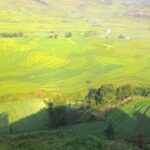
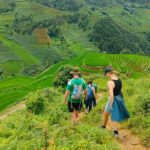
Two regions, one hard walk, zero boredom. This 6-day Ha Giang Loop and Sapa trek stacks big scenery with real village trekking, moving you from Hanoi into Hà Giang’s limestone world and then into Sapa’s Muong Hoa Valley. I especially like the Ha Giang–to–Sapa contrast and the way the trip stays active with 5–15 km trekking days instead of just car stops.
The main thing to consider is pace. You’ll be on buses between zones (including a night arrival in Sapa), and some trekking legs can be steep or mostly downhill.
In This Review
- Key highlights to know before you go
- Ha Giang Loop meets Sapa trekking: the idea that works
- Price and value: what $380 really buys you
- Hanoi to Hà Giang by sleeper bus: your first culture shift
- Quan Ba Heaven Gate and the karst world around Đồng Văn
- Ma Pi Leng Pass and Mèo Vạc: where the drive feels like the show
- Du Gia waterfall, Lung Tam weaving craft, then night transfer to Sapa
- Muong Hoa Valley trekking: Y Linh Ho, Lao Chải, and Tả Van
- Giang Tả Chải and the last steps into Sapa
- Homestays and Red Dao herbal medicine: what local time feels like
- Motorbike option: good gear, clear instructions, and licence basics
- What to pack for a 6-day walking + bus rhythm
- Who this tour fits best
- Should you book this 6-day Ha Giang Loop & Sapa trek?
- FAQ
- What is the duration of this Ha Giang Loop and Sapa trekking package?
- How much does the tour cost?
- Where does the tour start and what time should I show up?
- Is pickup included?
- What meals and entrance fees are included?
- How big is the group?
- Can I ride a motorbike myself?
- Is free cancellation available?
- How much trekking is included each day?
Key highlights to know before you go
- Motorbike option with clear support: motorcycling equipment is described as good, and step-by-step instructions are provided; an international driving licence can let you ride yourself.
- Ma Pi Leng and the Dong Van core: the route focuses on classic Hà Giang views such as Ma Pi Leng Pass and the UNESCO-listed karst area stop.
- Village trekking, not check-in walking: daily routes are planned around walking (about 5–15 km) through villages and terraced areas.
- Homestay life, with hands-on moments: you sleep in a local stilt-house style setup, cook/eat together, and you may have a chance to bathe with Red Dao herbal medicine.
- Small group size (max 12): easier to manage, less chaotic when you’re switching between buses, villages, and viewpoints.
- Food and entry fees are built in: meals and entrance tickets are included, so your “real daily budget” stays under control.
Ha Giang Loop meets Sapa trekking: the idea that works
This package is designed for one specific kind of traveler: the one who wants variety without feeling rushed. You start in Hà Giang, where the big moves are mountain roads, limestone plateaus, and passes. Then you switch to Sapa, where the action turns into walking between village communities and terraced slopes.
What makes the mix feel smart is timing. You don’t just hop from one highlight to another. You spend enough hours at key viewpoints and towns to actually absorb them, then you follow with days that emphasize walking routes and local culture.
And that’s where the value comes from. If you’re paying to visit this part of Vietnam anyway, the key question is whether you can do it in a way that feels human. This tour leans hard into that by pairing scenic roads with trekking that actually puts your feet to work.
You can also read our reviews of more tours and experiences in Hanoi.
Price and value: what $380 really buys you
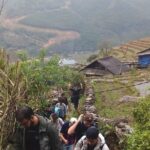
At $380 per person, the pricing looks simple until you break down what’s included. You’re not only paying for sightseeing. Your package lists transportation, entrance fees, plus 5 breakfasts, 5 lunches, and 3 dinners. That matters because Hà Giang and Sapa each have their own “cost layers” when you plan them on your own.
Also, you’re getting intercity movement handled for you: a sleeper bus from Hanoi to Hà Giang, plus a later bus transfer from Hà Giang to Sapa, and then onward transport back toward Hanoi. Those transfers are usually where DIY plans get annoying fast, especially when you’re trying to line up timing around trekking and check-in windows.
One more value point: the group size is capped at 12, and that tends to reduce the “factory-tour” feel. You still need to be ready for a busy schedule, but at least you’re not fighting crowds.
Hanoi to Hà Giang by sleeper bus: your first culture shift
Your day starts with a meeting time listed at 8:30 am, and the plan begins with an overnight sleeper bus ride from Hanoi to Hà Giang (about 6 hours is listed). The advantage here is simple: you gain time. Instead of losing a whole day to transit, you wake up closer to the mountains.
When you arrive, you’re already in a different rhythm. The air cools off sooner at altitude, the roads feel sharper, and the whole trip stops feeling like city tourism. It starts to feel like a route—one that’s meant to be driven through carefully, then walked through slowly.
Keep expectations realistic: your first day is more about getting into place than exploring casually.
Quan Ba Heaven Gate and the karst world around Đồng Văn
After the first transition day, you head into Hà Giang’s signature photo terrain.
At Quan Ba Heaven Gate, you get a viewpoint from the highest point on the pass, with wide panoramas over Tam Son Valley, limestone mountains, and terraced fields. There’s also a small cafe at the top, which is useful when you want a short, non-rushed break while you look across the valleys.
Next is the Dong Van Karst Plateau Geopark area, with a stop connected to Thẩm Mã Pass on the Happiness Road (QL4C). The key thing you’ll notice here is not just the curves—it’s the contrast of steep rock walls and working farmland below.
Then comes Dinh Vua Mèo (Vuong Palace) in the Sa Phìn Valley area of Đồng Văn District. This is the home tied to Vuong Chinh Duc, known as the Hmong King. It’s not a “wow only museum” stop. Think of it as context: why these regions mattered, and how local power and identity shaped daily life.
Finally, you spend long time in Đồng Văn. The tour lists a full-day-style window here (about 10 hours). That’s your breathing space for the town atmosphere and for seeing how the UNESCO-recognized karst region lives beyond the viewpoint photo.
Ma Pi Leng Pass and Mèo Vạc: where the drive feels like the show
Day 3 shifts into one of Hà Giang’s most famous scenic stretches: Ma Pi Leng Pass (about 2 hours at the pass area). This is part of the Happiness Road route between Đồng Văn and Mèo Vạc and is famous for the dramatic mountain-and-valley views.
Right after that, you land in Mèo Vạc, a remote district along the same road corridor, with towering limestone peaks and steep valleys. Even if you’re mostly sitting during transfers, this is where you start to understand why people call this route legendary.
And then you arrive at Du Gia village around 16:00. Here, the trip pivots from big-drive scenery into slower homestay living. You check in, shower, then relax and have dinner with the family. This is where the trip stops feeling like a bus circuit.

Du Gia waterfall, Lung Tam weaving craft, then night transfer to Sapa
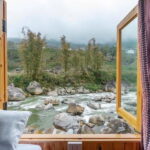
Day 4 keeps the contrast going. You start near Du Gia Waterfall (listed about 2 hours). It’s a multi-tiered waterfall about 6m high, pouring into a natural basin. The tour frames it as a classic Ha Giang Loop stop, and it works well as a “fresh air” break between mountain viewpoints.
Then you head to Lung Tam Village in the Quản Bạ area. Lung Tam is known for H’Mông weaving—particularly linen and brocade craft—so it’s less about one single sight and more about observing the work behind the clothing and patterns.
After that, you move on to Hà Giang city and then wait for the bus to Sapa. The plan says the loop finishes around 15:00–16:00 at your hostel in Hà Giang, and then you take a bus (about 6 hours) arriving in Sapa in the middle of the night to get your room and sleep.
This is the hardest logistics day for most people. If you hate night transfers, this is the one to think about. But if you accept it as part of the plan, it also saves you from losing a day.
Muong Hoa Valley trekking: Y Linh Ho, Lao Chải, and Tả Van
Once you’re in Sapa, the focus becomes walking routes through Muong Hoa Valley and village communities.
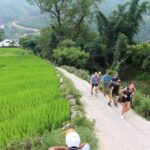
You start at Y Linh Ho Village, about 5 km southwest of Sapa. It’s described as a tranquil H’Mông and Dao settlement, tied to the valley’s lush setting. The point of the stop is less “ticket attraction” and more “see daily life while you walk.”
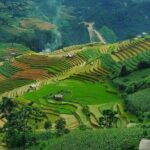
Then it’s on to Lao Chải, around 7 km southeast of Sapa. This is known for terraced rice fields and ethnic culture, with around 100 Black H’Mông community members mentioned in the description. This is also a good place to notice how terraces shape everything: where paths run, how homes are placed, and why viewpoints appear suddenly when you turn a corner.
Next comes Tả Van Village, about 3 km from Lao Chải, with communities from H’Mông, Giay, and Red Dao groups. The description mentions roughly 150–200 households. The practical benefit of this stop is that it gives you a long stretch of time around the village area rather than just a quick photo stop.
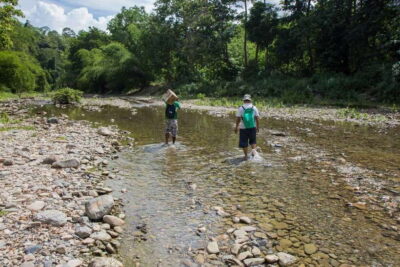
Here’s the trekking reality check: even though you’re walking, it’s not an all-day hike marathon every day. The package frames trekking as 5–15 km daily, which gives you a real workout without always feeling like you’re on the edge of exhaustion.
Giang Tả Chải and the last steps into Sapa
For the final trekking segment, you visit Giang Tả Chải Village, a Red Dao village about 5 km from Tả Van. It’s described as sitting on terraced terrain, with trekking routes winding through bamboo groves and across steep-ish country paths.
You get about 3 hours listed here before the trip ends around 14:00–15:00 in Sapa. Then the driver picks you up back to Sapa Station Hostel. From there, the package plans onward bus travel back to Hanoi, with departures listed as every hour. The tour also says they arrange luxury bus pick-up from Saparis Station Hostel to Hanoi, with the Sapa-to-Hanoi ride about 6 hours.
So your last day is a “finish strong” day: walking in the morning, then transit and rest.
Homestays and Red Dao herbal medicine: what local time feels like
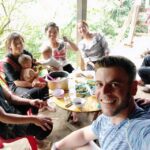
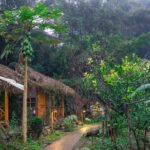
The homestay part is a big reason this combo tour gets recommended. Instead of a standard hotel experience, you’re sleeping in community-based houses, and the description highlights a stilt house style stay and a more local rhythm.
What you should expect from the package description:
- You may cook together and eat together with the family.
- You sleep in a traditional home setup rather than a hotel room-only experience.
- You can experience a bath using Red Dao herbal medicine, with village stories shared along the way.
I like this style because it changes what your days mean. You’re not only looking at people from the outside; you’re sharing time with them at the pace of the household.
One consideration: this is not luxury. If you’re used to private bathrooms, quiet hallways, and perfect bedding, this part might feel rustic. If you’re curious and flexible, it tends to be memorable for the right reasons.
Motorbike option: good gear, clear instructions, and licence basics
The tour is marketed as including the Ha Giang Loop easy rider style, and one of the most praised practical points is the motorbike equipment. The support described includes good gear and guidance that feels step-by-step, with new instructions provided for each step.
If you want to ride yourself, the information provided says you can do so if you have an international driving licence. That’s a crucial detail to confirm before you go, because you don’t want to reach the start line and find out you’re limited to a passenger role.
Also, the trekking difficulty comes with real terrain. One of the comments notes the hike was mainly downhill but still exciting due to steep stretches at times. That matches what you’d expect from village-to-village routes in terraced country.
What to pack for a 6-day walking + bus rhythm
The biggest enemy on this kind of trip is not just weather. It’s the fact that you’re mixing walking days with bus travel days and sometimes night timing.
Based on the route style and the listed trekking distances (5–15 km/day), I’d plan for:
- sturdy footwear for steep or slippery descents
- a light rain layer (mountain weather can shift quickly)
- a day bag you can keep with you during viewpoints and transfers
- a small towel and basic toiletries (homestay setups can be more simple)
- a refillable water bottle (you’ll want frequent sips during pauses and trekking legs)
And bring your expectations down to earth. This trip is meant to be experienced at human speed: stop, look, walk, eat, sleep, repeat.
Who this tour fits best
I’d point you here if:
- you want a two-part North Vietnam journey without juggling separate bookings
- you like walking between villages rather than only sightseeing by car
- you’re comfortable with a homestay experience and shared meals
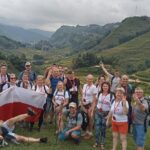
- you want a small group format (max 12) to keep the day-to-day manageable
- you’re okay with transit days, including a night arrival in Sapa
I’d think twice if:
- you hate night buses and you’re highly sensitive to schedule changes
- you’re looking for a fully luxury, low-contact experience every single day
- you need a very easy walking level with minimal steep sections
Should you book this 6-day Ha Giang Loop & Sapa trek?
If your ideal trip is part road trip drama and part village walking, this package is a solid pick. The value stands out because meals and entrance fees are included, and the route structure gives you both classic Hà Giang viewpoints and real Muong Hoa trekking.
My final advice: book if you want the trip to feel like a route you can understand, not a checklist. And before you go, be honest with yourself about one thing: you’re trading some comfort for time with the landscape, the villages, and the daily rhythm of local living.
FAQ
What is the duration of this Ha Giang Loop and Sapa trekking package?
It runs for 6 days (about 6 days total) and is listed as a 6-day, 5-night style journey.
How much does the tour cost?
The price is $380.00 per person.
Where does the tour start and what time should I show up?
The start time is listed as 8:30 am, with meeting at the provided meeting point for the first part of the program.
Is pickup included?
Pickup is offered.
What meals and entrance fees are included?
The package includes transportation, entrance fees, 5 breakfasts, 5 lunches, and 3 dinners.
How big is the group?
The maximum group size is 12 travelers.
Can I ride a motorbike myself?
The information provided indicates you can ride yourself if you have an international driving licence; otherwise, you would ride as a passenger.
Is free cancellation available?
Yes. You can cancel for a full refund up to 24 hours in advance of the experience start time.
How much trekking is included each day?
The trip is described as focusing on trekking about 5–15 km per day.