REVIEW · KATHMANDU
Gokyo Lakes and Gokyo Ri Trek
Book on Viator →Operated by Nepal Mountain Trekkers - Day Tours · Bookable on Viator
Turquoise lakes meet Everest-region giants. This Gokyo Lakes and Gokyo Ri trek is a top alternative to the classic Everest Base Camp route, with a glacial valley vibe and some of the best mountain panoramas in the area. Gokyo Ri’s viewpoint is the headline, with Ngozumba Glacier and towering peaks sitting under you.
My two favorite parts: the turquoise lake circuit around Gokyo, plus the way the trip is paced for altitude with real acclimatization time in Namche Bazaar. One thing to consider is that the Gokyo Ri summit climb is described as continuous and strenuous, so you’ll want to be comfortable hiking uphill step-by-step at altitude.
In This Review
- Key Points at a Glance
- Why Gokyo Lakes and Gokyo Ri feels different from the Everest crowd
- Kathmandu warm-up: Thamel, temples, and getting your bearings fast
- To Lukla and Phakding: the Dudh Koshi valley start
- Namche acclimatization: Everest View Hotel and the pace that matters
- From pine forests and suspension bridges to Ama Dablam viewpoints
- Heading for Machhermo: ridges, settlements, and glacier-ready terrain
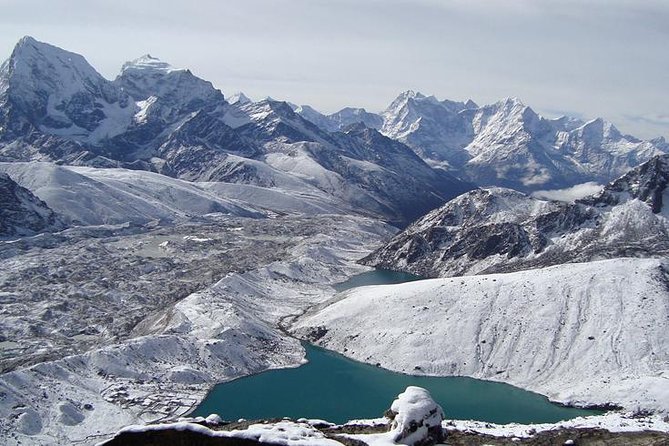
- The Ngozumba Glacier and Gokyo Lakes: turquoise water on an alpine scale
- Gokyo Ri summit day: slow climb, big-peak payoff
- Coming back via Luza and Dole: less summit pressure, still real mountain beauty
- Namche again and biodiversity you can actually see
- The long descent to Lukla and back to Kathmandu
- Price and logistics: what $1,706.67 buys in real trek terms
- Who should book this trek (and who should rethink)
- Should you book the Gokyo Lakes and Gokyo Ri Trek?
- FAQ
- How long is the Gokyo Lakes and Gokyo Ri trek?
- How much does it cost per person?
- Where does the experience start and what’s the meeting point?
- Are meals included?
- Does the tour include pickup?
- What’s the maximum group size?
- Does the itinerary fly between Kathmandu and Lukla?
- Is service for animals allowed?
Key Points at a Glance
- Small group size (max 10) means your guide can actually manage pace and questions, not just herding.
- Gokyo Ri viewpoint day includes a slow, steady ascent and giant-peak views from the top.
- Accredited altitude setup in Namche gives you time to adjust, plus day-side options like Everest View Hotel.
- Cultural warm-up in Kathmandu covers major UNESCO-listed sites before you head for the mountains.
- Meals and key admissions included help you budget better once you’re on the trail.
Why Gokyo Lakes and Gokyo Ri feels different from the Everest crowd
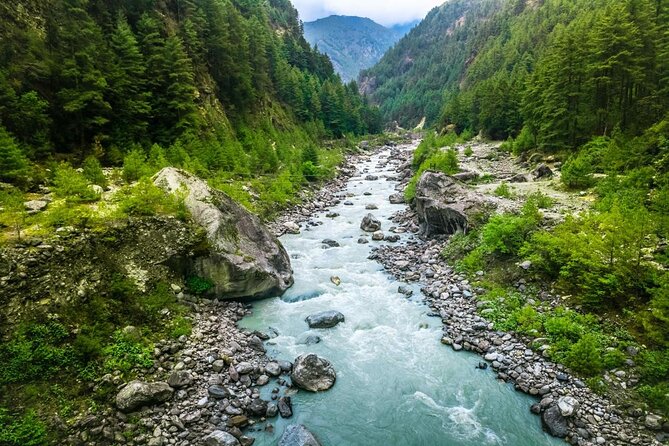
The Everest region can be busy. This trek gives you a similar “wow, those mountains are huge” feeling, but you spend more time in the Gokyo glacial valley than in the most crowded approach corridors.
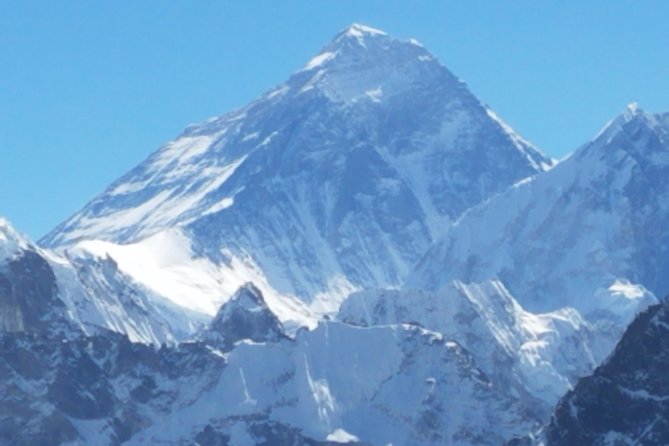
The payoff is visual. You’re not just seeing a few peaks from a ridge. You’re getting a whole sequence: high Himalayan walls, glacier features, and those signature turquoise lakes (the kind that look unreal until you’re standing right beside them). And then you climb Gokyo Ri for a panorama that pulls in multiple 8,000-meter-class summits, including Everest.
You can also read our reviews of more tours and experiences in Kathmandu.
Kathmandu warm-up: Thamel, temples, and getting your bearings fast
You start in Kathmandu, staying near Thamel, the practical base for trekking errands. If you forgot gloves, a headlamp battery, or the one item you swore you had at home, this is where you usually can still fix it.
Then you’ll get a proper cultural run-up before the mountains take over. You visit Pashupatinath Temple (UNESCO-listed), Boudhanath Stupa (also UNESCO-listed), and Swayambhu Mahachaitya—the Monkey Temple—where you get a high-up view over Kathmandu and a calmer break from street noise.
If you arrive with jet lag, don’t fight it. Use this first day and the morning after to walk easy, eat well, and get your questions answered. Trekking is easier when your logistics are already handled.
To Lukla and Phakding: the Dudh Koshi valley start
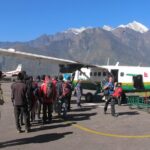
The trek technically begins after you fly from Kathmandu to the Tenzing-Hillary Airport in Lukla. That short flight is a big part of why this trek works: it avoids long road transfers and drops you straight into the mountain rhythm.
From Lukla, you trek along the Dudh Koshi River to Phakding, with a route that blends forest and river travel. You descend and climb in early segments, which is exactly what you want at the start: not a punch-in-the-gut day, just enough hiking to wake up your legs and teach your body the day’s pace.
You’ll also cross into Sagarmatha National Park via Monjo, where permits are checked. That’s useful to know because it sets expectations: there’s a system here, and your team handles the important steps so you can focus on walking.
Namche acclimatization: Everest View Hotel and the pace that matters
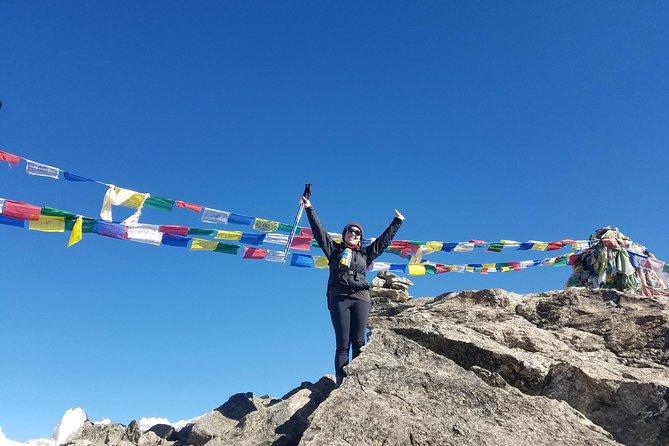
By the time you reach Namche Bazaar, the trek’s “real altitude” phase is on deck. This route builds in an acclimatization day instead of pushing straight upward like a bad idea in hikers’ clothing.
In Namche, you’re set up to be active instead of just resting. A recommended side trip here is to Everest View Hotel for strong views of peaks like Everest, Ama Dablam, Nuptse, and Lhotse. You can also head toward Khumjung and the Kunde Hospital and school, known as the Schoolhouse in the Clouds.
This is one of those travel choices that pays off later. When your body has a chance to adjust, the next uphill stretches feel less like survival and more like work you can manage.
From pine forests and suspension bridges to Ama Dablam viewpoints
Between earlier villages and Namche, the trail crosses suspension bridges and moves through pine groves and river gorges. You’ll see the “Everest region” mix of features: steep switchbacks, big river energy, and occasional glimpses of major peaks when the clouds cooperate.
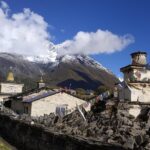
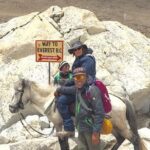
After Namche, the trek shifts toward the Ama Dablam area with a walk that starts up from Kyangjuma. This section is timed for views—especially of Ama Dablam (plus Thamserku and Katenga). Even if you’ve seen pictures, it’s still different in person. You can understand scale better when you’re close enough to realize the peaks are layered and textured.
Heading for Machhermo: ridges, settlements, and glacier-ready terrain
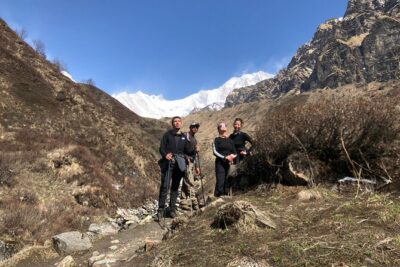
Next comes the transition day toward the Gokyo valley approach: Luza, Lhabarma, and finally Machhermo as your overnight. This is a “steady build” route. It’s not presented as a hike full of technical difficulties, but it does keep you moving upward.
The highlight of the day is partly the terrain and partly the mountain context—views tied to the confluence of streams coming from nearby high areas (Kyajo Ri and Pari Lapche are named in the route description). You’re also moving through Sherpa settlements and smaller communities, which helps the days feel human-sized rather than just “trail, then nothing.”
The Ngozumba Glacier and Gokyo Lakes: turquoise water on an alpine scale
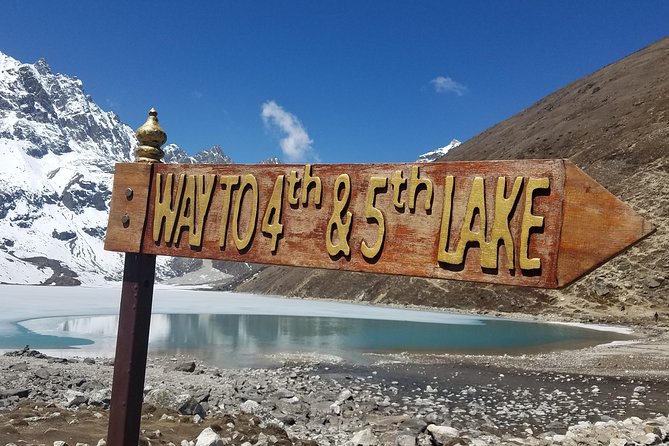
Now you get the core reason people come here: the lake valley. From Machhermo, you move toward Phangka, then the valley opens up and you descend toward the river before a steep climb to a terminal moraine formed by the Ngozamba Glacier.
This is a cool travel detail because moraines are physical proof of glacier movement. You’re not just walking near scenery; you’re walking across evidence of how this place has been shaped.
From there, you cross an iron bridge that marks the start of the Gokyo lake area. The route description names Longpongo as the first lake on a gentle trail, then connects onward toward Taboche Tso. The vibe here is calm, wide, and intensely cold-air sharp—even on days that are sunny.
If you’re the type who likes photos, you’ll do fine. If you’re the type who likes quiet, you’ll do even better. These lakes are the kind of place where you can stop, breathe, and actually notice what your body feels like.
Gokyo Ri summit day: slow climb, big-peak payoff
This is the day with the name recognition: Gokyo Ri. The route description is clear that it’s the most awaited day and that the climb is continuous and strenuous.
That matters because the best advice here is simple: go slow and steady. The summit is not a “sprinters get the prize” situation. The goal is to keep your breathing controlled, take short rests, and let the altitude do its job without letting panic steal the pace.
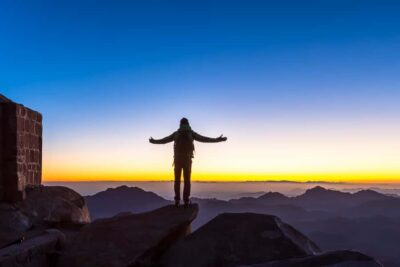
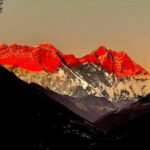
From the top, the view is listed as including multiple 8,000-meter peaks, with names such as Cho Oyu, Lhotse, Makalu, Thamserku, Lhouche, and Mount Everest. You can also look down toward Ngozumba Glacier and the Gokyo Lakes.
There’s also time planned to hike to the fourth lake, Thonak Tsho. That turns the day from just a summit mission into a full experience loop: climb, look, then keep walking to another piece of the lake system.
Coming back via Luza and Dole: less summit pressure, still real mountain beauty
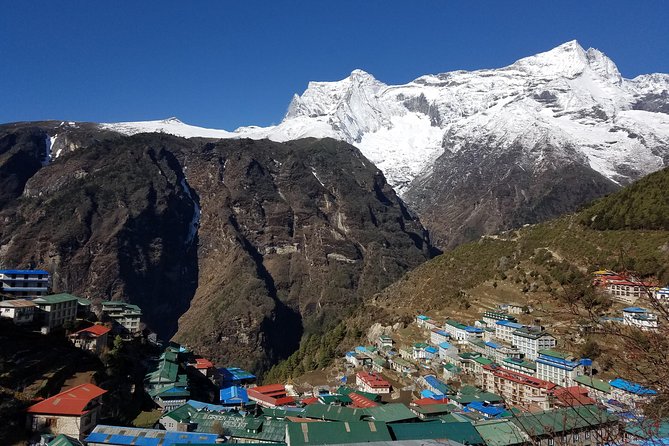
After the summit, the trek eases into a return loop through Machhermo, Luza, Lhabarma, and onward toward Dole. Your pace gets described as slower and more gradual.
This stretch still matters. You’re walking back through places where you’ll spot the same glacier-and-valley logic from fresh angles. You’ll also pass features that make the trail feel like a lived-in culture zone—chortens, iron bridge segments, and terraces.
There’s even a named rest stop in this phase at a place called Irish Pub, which is a handy clue that you’re not “always hiking, never eating.” Expect a tea-house rhythm with breaks that keep you moving safely.
Namche again and biodiversity you can actually see
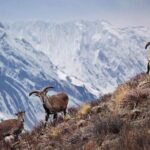
On the way back toward Namche Bazaar, the route includes another leg that’s described as having sharp slopes. It also highlights biodiversity: wildflowers and rhododendron, and animals like pheasants, mountain goats, and musk deer.
This is not a promise that you’ll spot wildlife on schedule. But it is a good reminder: the trail doesn’t just run through blank rocks. It runs through habitats, and the seasons matter.
You’ll reach Namche—then re-energize for the final push back toward Lukla. A second return stop in Namche also helps you mentally. When your brain knows you’re near the “last stretch,” it stops acting like the journey is infinite.
The long descent to Lukla and back to Kathmandu
The return to Lukla is listed as one of the longer trekking days. You follow the Dudh Koshi River back and pass through richer forests as the trail becomes easier in grade.
In this phase, the mountains feel less like an exam and more like a memory forming. You’ll also see more religious trail markers—prayer stones, prayer flags, and monasteries and chortens—along with tranquil villages that still feel lively.
Then you fly back to Kathmandu, where the remaining time is left open for rest, shopping, and a farewell dinner. That wrap-up matters more than it sounds. Trekking days cost energy; planning a recovery block gives you a better ending.
Price and logistics: what $1,706.67 buys in real trek terms
At $1,706.67 per person for about 14 days, this is not a cheap trek. But it’s also not “paying only for a map.” The included items help you understand where the value comes from.
From what’s listed, your package includes:
- Meals: 12 breakfasts, 11 lunches, 11 dinners
- Admission tickets for the included sightseeing and park-related entries
- Pickup offered (so you’re not stuck solving first-day transport while tired)
You also get operational support that shows up in the reviews. One praised guide, Krishna, was described as taking care of details after arrival, checking in often, and making sure comfort needs were handled at tea houses. That kind of practical attention is often the difference between a trek that feels smooth and one that turns into constant micro-problems.
And on the safety side, there’s an example from a company experience report of fast escalation when altitude sickness hit: the guide contacted the company owner, Paul Gurang, and they prepaid a helicopter for rescue. That doesn’t mean every situation ends that way, and it’s not a guarantee. Still, it signals that the company has a plan when things go wrong—which is worth paying for.
Who should book this trek (and who should rethink)
This trek is described as ideal for people wanting big panoramas of the Everest region without too much physical challenge. That’s a fair framing for the overall route design—especially with acclimatization time in Namche.
But don’t ignore the one hard truth in the plan: Gokyo Ri is strenuous. If you hate uphill suffering, or you have limited tolerance for altitude, you might want a less summit-focused itinerary.
Best match:
- You’re okay with daily hiking on a trail that climbs and descends.
- You want glacier-and-lake scenery, not just peak viewing.
- You like guided structure with small-group attention (max 10).
Should you book the Gokyo Lakes and Gokyo Ri Trek?
Book it if you want the Everest region’s dramatic scale but prefer a route that feels more lake-and-glacier focused than crowd-and-corridor focused. The combination of acclimatization in Namche, a full Gokyo lake valley experience, and a summit day designed around a slow climb is a strong recipe for real payoff.
Think twice if you’re nervous about a continuous strenuous climb to a viewpoint or if altitude history has been rough for you. In that case, you’ll want to talk with your doctor and honestly assess how you handle climbs at elevation.
If you do book, pack with the assumption that weather and temperature will change fast, and treat the summit day as a controlled effort, not a race.
FAQ
How long is the Gokyo Lakes and Gokyo Ri trek?
The tour is listed as 14 days (approx.).
How much does it cost per person?
The price is listed as $1,706.67 per person.
Where does the experience start and what’s the meeting point?
The ticket redemption point is Kathmandu, Nepal (44600).
Are meals included?
Yes. The listing includes breakfast (12), lunch (11), and dinner (11).
Does the tour include pickup?
Pickup is offered.
What’s the maximum group size?
The maximum is 10 travelers.
Does the itinerary fly between Kathmandu and Lukla?
Yes. The route uses flights to the Tenzing-Hillary Airport in Lukla, and then returns to Kathmandu.
Is service for animals allowed?
Yes. Service animals are allowed.