REVIEW · KATHMANDU
Annapurna Base Camp Trek
Book on Viator →Operated by Green Valley Nepal Treks & Research Hub Pvt Ltd · Bookable on Viator
Annapurna Base Camp is a view machine. What makes this trek especially compelling is the max-10 small-group pacing and the way all meals on the trail are built into the plan, so you spend less time planning and more time walking.
The only real catch is fitness: this is a moderate high-altitude trek with about 4 to 7 hours of hiking most days, so you need to show up ready to work for the views.
In This Review
- Key things I’d put on your radar
- Why This Annapurna Base Camp Trek Feels Low-Stress
- Value Check: What Your $925 Actually Buys
- Small Group Magic: Max 10 Trekkers and Real Support
- Getting There and Settling In: Thamel, Airport Pickup, and the Pokhara Drive
- Day-by-Day: From Nayapool to ABC and Back to Sinuwa
- Day 1: Kathmandu and Thamel orientation
- Day 2: Drive to Pokhara
- Day 3: Begin at Nayapool, follow the Modi River to Birethani
- Day 4: Ulleri to Ghorepani through rhododendron and oak
- Day 5: Poon Hill at 3210m for sunrise-style viewpoint energy
- Day 6: Tadapani to Gurjung to Chhomrong
- Day 7: Chhomrong steps, suspension bridge, Sinuwa, and Bamboo
- Day 8: Dovan to Himalaya with a quiet temple rule
- Day 9: Deurali to Machhapuchhre Base Camp views
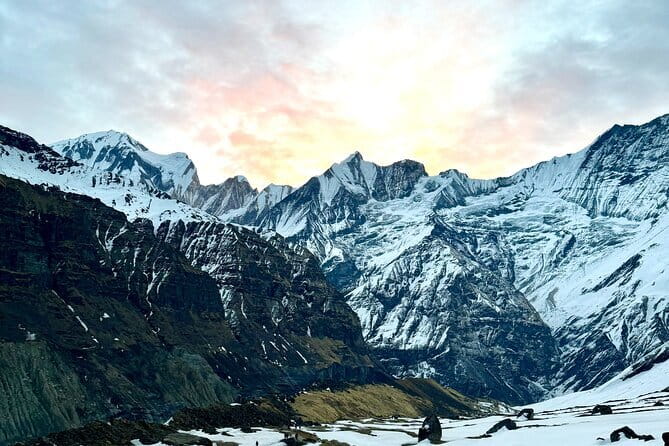
- Day 10: Sunrise from ABC, then retrace back to Sinuwa
- Day 11: Chhomrong stop for lunch and Annapurna/Machhapuchhre views
- Day 12: Jhinu Danda hot springs after the hike
- Day 13: Malekhu for lunch break and fish-country stop
- Day 14: Final day with a Pashupatinath Temple photo stop
- Poon Hill, Forest Trails, and Chhomrong Views: What the Trek Actually Feels Like
- Teahouses and Hotels: The Comfort Setup You Don’t Want to Manage Alone
- Altitude and Pace Reality: This Is Not a Casual Walk
- Weather Dependence: Why Your ABC Sunrise Plans Need Flexibility
- Who Should Book This Trek, and Who Should Skip It
- Should You Book This Annapurna Base Camp Trek?
- FAQ
- Where does this Annapurna Base Camp trek start?
- How long is the trek?
- What group size should I expect?
- What kind of hiking fitness level is required?
- What meals are included?
- What about accommodation?
- Is pickup available?
- What are the main sightseeing highlights?
- Is the trek dependent on weather?
- How does cancellation work?
Key things I’d put on your radar
- Small group size (max 10): You get more personal attention when the trail gets busy or weather shifts.
- Meals included on trek: Breakfasts, lunches, and dinners are covered while you’re hiking, which keeps your budget and daily decisions simple.
- Teahouses and hotels included: You’re not hunting for a place to sleep after a long day.
- Poon Hill viewpoint at 3210m: A short early hike that pays off with huge photo potential.
- ABC sunrise and return descent: You’ll get the classic early payoff, then retrace key sections down toward Sinuwa.
Why This Annapurna Base Camp Trek Feels Low-Stress
The Annapurna Base Camp trek can be intimidating on paper. With routes, teahouses, meals, and altitude all competing for your attention, it’s easy to spend your mental energy on logistics instead of the mountains. Here, the big win is that your guide and small-group setup keep the “where do we go next?” question mostly out of your hands.
I also like how the itinerary is designed for real trekking days. Most days fall into that 4 to 7 hour hiking window mentioned in the tour overview, which is long enough to feel like a trek but not so punishing that every day becomes a battle.
Finally, this is built for active travelers. If you’re in good shape and enjoy steady walking, you’ll probably feel like the trek is giving you a rhythm instead of chaos.
You can also read our reviews of more tours and experiences in Kathmandu.
Value Check: What Your $925 Actually Buys
At $925 per person for about 14 days, this trek is priced like a guided experience with real overhead. What you’re paying for is not just a walking route. You’re paying for transport, a professional guide, and the day-to-day stuff that usually creates stress.
Here’s the practical breakdown:
- Meals on the trek are included: You get breakfast (13), lunch (10), and dinner (10) as listed. That coverage is a big deal in the Himalaya, where meal costs add up fast and where you don’t want to stop and debate money when you’re tired.
- Some meals in Kathmandu/Pokhara are not included: Lunch and dinner in those cities are not part of the package. That means you’ll still want a little extra cash for evenings in town.
- Accommodation is included: Teahouse stays during the trek, plus hotels/guesthouses in Kathmandu and Pokhara per the itinerary.
- Transfers and guide are included: Round-trip shared transfer is listed, and the tour also includes pickup.
So the question isn’t only whether $925 feels cheap or expensive. It’s whether you want to manage your own guides/booking/meal budgeting in a place where small choices can snowball. If you’d rather trade money for simplicity and safety, this setup makes sense.
Small Group Magic: Max 10 Trekkers and Real Support
A max group size of 10 changes the whole feel of a trek. You’re not stuck walking in a huge line where you’re forced to match strangers’ pace. Instead, the guide can pay closer attention—especially when weather or trail conditions shift.
It also helps with practical decisions. For example, if someone in the group isn’t feeling great, a good guide can adjust pacing and help you think through what’s smart for the day.
The guide experience shows up in the feedback, with names like Suvi, Tulsi, Arjun, Anil, and Krishna appearing as guides, and porter support also coming up (one example pairs guide Anil with a porter named Sumon). The common thread in that feedback is care and organization—meaning you’re not left to figure out the trekking machine by yourself.
Getting There and Settling In: Thamel, Airport Pickup, and the Pokhara Drive
This trek starts in Kathmandu at Tribhuvan International Airport, with an airport representative meeting you and arranging a drop to your hotel by private tourist vehicle. After that, you can rest, or you can swing by the office to get the detailed plan.
Then comes Pokhara:
- Day 2 is a 200 km bus ride, about 6 hours, with lunch taken during the drive.
- You overnight in Pokhara at a guesthouse.
Why this matters: Pokhara is where you set up mentally for hiking days. You’ll have time to get oriented, manage gear, and rest your body before the trail work begins.
Day-by-Day: From Nayapool to ABC and Back to Sinuwa
Below is what your days look like, in the order you’ll experience them.
Day 1: Kathmandu and Thamel orientation
You arrive, get picked up, and get dropped into the Thamel area. After arrival, you can rest or check in with the office for the details.
Tip for you: keep this first day light. Even if you feel fine, jet lag can hit later at altitude.
Day 2: Drive to Pokhara
You travel by tourist bus from Kathmandu to Pokhara (about 200 km). Lunch is included during the drive, and you sleep at a guesthouse.
This is a long travel day, but it’s also a buffer. You’re not starting the trek in full-on uphill mode right after the flight.
Day 3: Begin at Nayapool, follow the Modi River to Birethani
From Pokhara, you drive about an hour to Nayapool. The trek begins with a short walk along the banks of the Modi River, reaching Birethani where small teahouses are plentiful.
This day is often where you feel the rhythm of the trek: a gentle start, a changing river scene, and the first taste of village trails.
Day 4: Ulleri to Ghorepani through rhododendron and oak
The trail starts with a gentle ascent. You pass through rhododendron and oak forests, then reach Banthanti and continue to Ghorepani.
What I like here is variety: you’re not only walking on one kind of trail surface or one kind of forest.
Day 5: Poon Hill at 3210m for sunrise-style viewpoint energy
Today’s big moment is the hike to Poon Hill, the viewpoint described as a photographer’s paradise. The top is at 3210m, and the walk to the summit is around 45 minutes.
Practical note: bring layers. Morning mountain air can feel sharp, even when you’re warm from walking.
Day 6: Tadapani to Gurjung to Chhomrong
After breakfast at Tadapani, you move down gradually along rhododendron forests, cross the Kimsung River, then ascend to Gurjung, a Gurung village. From there, you climb to Chhomrong.
Chhomrong is one of those hubs where the scenery starts feeling big. Even without extra hiking time, the high viewpoint vibe begins to show up.
Day 7: Chhomrong steps, suspension bridge, Sinuwa, and Bamboo
From Chhomrong, you descend stone steps toward Chhomrong Khola, cross a suspension bridge, then climb steeply to Sinuwa. After that, an easy downhill through jungle leads you to Bamboo.
This is a mixed day, and those mixed days are often the most memorable. You get descent work, bridge crossing, then a climb—then relief.
Day 8: Dovan to Himalaya with a quiet temple rule
The walk from Dovan to Himalaya is described as silent because big noises aren’t allowed near a temple on the way. The route includes bamboo forests first, then shifts to rhododendron forests.
If you like respectful travel, this is a nice reminder that the trail isn’t just scenery—it’s lived-in places with local rules.
Day 9: Deurali to Machhapuchhre Base Camp views
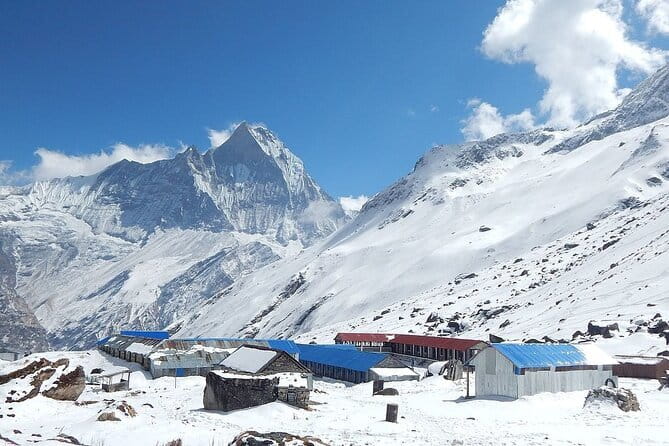
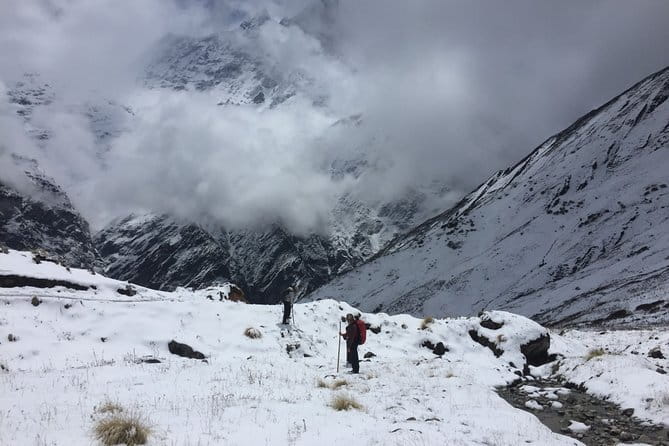
From Deurali, the trail passes through a river bed and includes a tedious climb to Machhapuchhre Base Camp. You’re surrounded by mountains, and views include Annapurna, Machhapuchhre, Gangapurna, and Himchuli.
This is the kind of day where you look up more often than you look at your feet. The base-camp feeling starts to click.
Day 10: Sunrise from ABC, then retrace back to Sinuwa
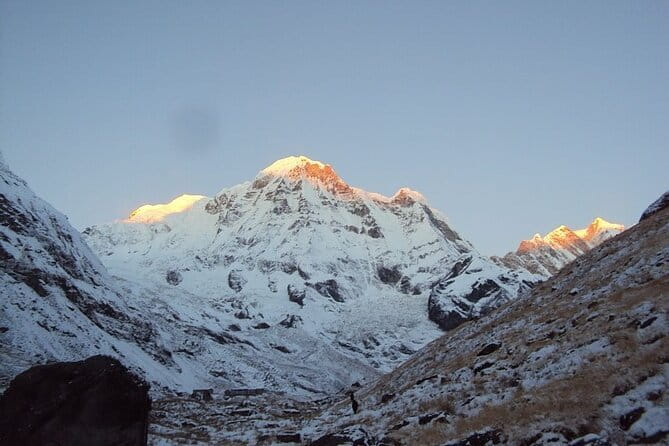
After viewing sunrise from ABC, you head back mostly downhill. You follow the same trail through MBC, Deurali, Himalaya, and Bamboo, all the way to Sinuwa.
A good part of the benefit here: retracing gives you less navigation stress. Your body also benefits from the downhill nature after the earlier climb work.
Day 11: Chhomrong stop for lunch and Annapurna/Machhapuchhre views
You stop at Chhomrong, with lunch in Chhumrung. The village is spread over a hillside with strong views of the Annapurnas and Machupachare.
Even if you’ve already been here, this is different on the return. The light and fatigue level change how the place hits you.
Day 12: Jhinu Danda hot springs after the hike
You head to Jhinu Danda. The highlight is the natural hot spring and ponds where you can bathe. It’s about 20 minutes from your hotel, and it’s alongside the Modi River.
After a trek, hot springs can be the best recovery tool you’ll find. It’s simple and it works.
Day 13: Malekhu for lunch break and fish-country stop
You stop at Malekhu for lunch about 30 minutes. Malekhu is noted as famous for various types of fish and fish products.
This is a quieter, lighter-feeling day. You’re building momentum toward wrapping up the trek.
Day 14: Final day with a Pashupatinath Temple photo stop
On the way, you drive via Pashupatinath Temple so you can stop for a few minutes to take photos.
This final day helps you transition from mountain mode back to city mode without rushing.
Poon Hill, Forest Trails, and Chhomrong Views: What the Trek Actually Feels Like
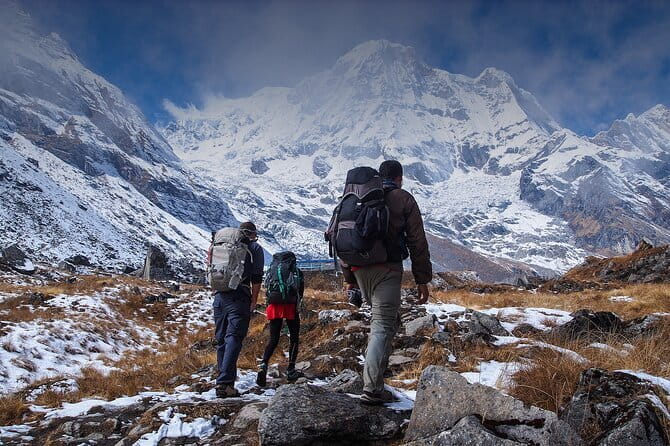
If you care about scenery variety, this route delivers. You start with a river approach (Modi River) before moving into forest hiking—rhododendron and oak early on, then bamboo and rhododendron again later.
Then come the viewpoint payoffs:
- Poon Hill gives a big-bang look, with that early climb to the summit at 3210m.
- Machhapuchhre Base Camp adds depth, with the description of being surrounded by mountains and seeing multiple named peaks.
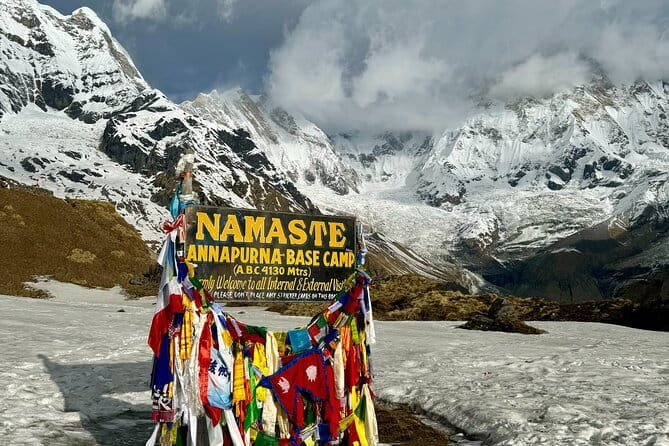
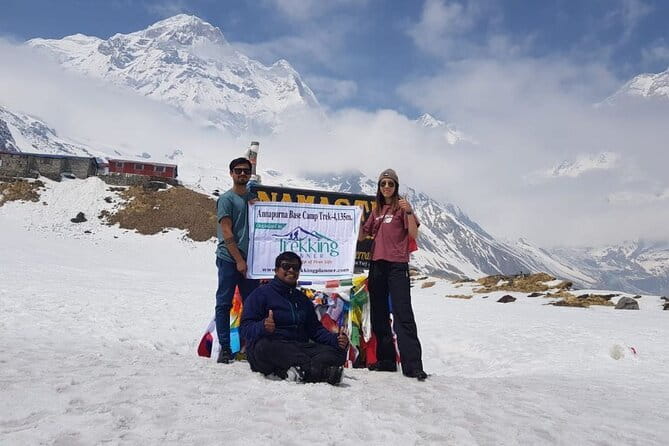
- ABC sunrise is the classic early reward built into Day 10.
And along the way, villages like Gurjung and the hillside spread of Chhomrong are part of the experience, not just pit stops. You’ll spend time moving through communities where the trail is a working road, not a theme park.
Teahouses and Hotels: The Comfort Setup You Don’t Want to Manage Alone
One reason this trek is appealing is that accommodation is included across the itinerary, with teahouses during the trek and hotels/guesthouses in Kathmandu and Pokhara.
Why I think that matters for you:
- After hiking all day, the last thing you want is to negotiate lodging options in a language you don’t speak.
- Teahouses are part of the rhythm of the trek. They let you rest, eat, and sleep without turning each day into a logistics problem.
If you’re the type who values predictable comfort—even a simple kind—this setup is a relief.
Altitude and Pace Reality: This Is Not a Casual Walk
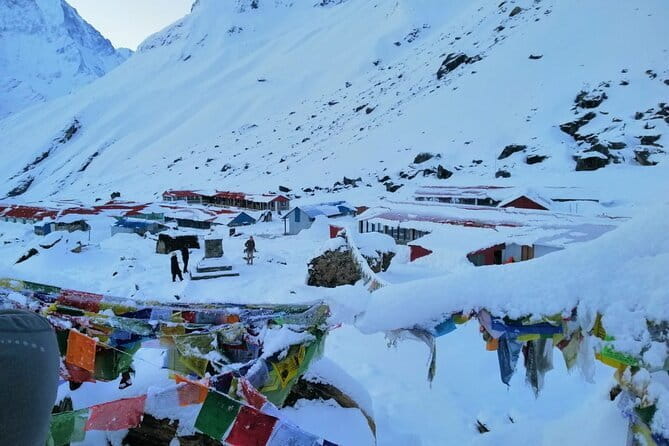
The trek is rated for moderate high-altitude fitness, and your hiking time is typically 4 to 7 hours a day. That means you’ll want to treat it like training, not like sightseeing.
A few practical ways to handle this:
- Start slower than you think you should on the earlier days.
- Drink water consistently, not just when you feel thirsty.
- Use the included stops and meal times to reset. The trek’s structure is already built around recovery opportunities.
If altitude scares you, or you’ve had breathing issues on hills before, this is still doable for some people—but you should be honest with yourself about your baseline fitness and talk with your guide about pacing early.
Weather Dependence: Why Your ABC Sunrise Plans Need Flexibility
This experience requires good weather. That’s not a small detail. In mountain travel, clouds can erase the view you came for, and wind can change how comfortable it feels at higher elevations.
The good news is that the tour includes a plan if weather won’t cooperate: if the trek is canceled due to poor weather, you’ll be offered a different date or a full refund.
In other words, you should treat this like a flexible nature schedule, not a guaranteed photo shoot on a fixed timeline.
Who Should Book This Trek, and Who Should Skip It
This Annapurna Base Camp trek fits best if you:
- Are an active traveler who can handle 4–7 hours of hiking on most days
- Want guided logistics so you don’t spend your trip micromanaging rooms and meals
- Like small group travel and appreciate a guide who can manage pace and needs
You might think twice if you:
- Have concerns about high-altitude effort and don’t want to manage pace on the trail
- Are expecting fully cushy comfort every night (you’ll be in teahouses during the trek)
It also works well as a first serious Himalayan trek, especially if you value being guided through the big-picture flow.
Should You Book This Annapurna Base Camp Trek?
I’d say book it if you want the classic Annapurna Base Camp and Poon Hill experience with fewer moving parts. The best value here is the combination of meals covered on the trek, accommodation handled, and a small-group guide-led plan that reduces decision fatigue.
Skip or rethink if you’re not comfortable with moderate high-altitude walking time or if you’re looking for a purely low-effort trip. This trek pays you back for effort—but it expects you to bring effort.
If you’re on the fence, the biggest deciding factor for me would be this: do you want to hike with a plan and support, or do you want to self-organize every day? This one leans hard toward support.
FAQ
Where does this Annapurna Base Camp trek start?
The start point is Tribhuvan Airport in Kathmandu, Nepal. An airport representative meets you and arranges a drop to your hotel.
How long is the trek?
It runs for about 14 days.
What group size should I expect?
This tour/activity has a maximum of 10 travelers.
What kind of hiking fitness level is required?
The tour says travelers should have a moderate physical fitness level.
What meals are included?
All meals on the trek are included, and some meals are included in Kathmandu and Pokhara. Lunch and dinner in Kathmandu & Pokhara are not included.
What about accommodation?
Accommodation is included according to the itinerary: teahouses during the trek and teahouses/hotels (in Kathmandu/Pokhara) as specified in the plan.
Is pickup available?
Pickup is offered, and round-trip shared transfers are included.
What are the main sightseeing highlights?
Key highlights include Poon Hill (at 3210m), Machhapuchhre Base Camp views, and sunrise from Annapurna Base Camp, plus a hot spring stop at Jhinu Danda.
Is the trek dependent on weather?
Yes. This experience requires good weather. If it’s canceled due to poor weather, you’ll be offered a different date or a full refund.
How does cancellation work?
Free cancellation is available up to 24 hours in advance for a full refund. If you cancel less than 24 hours before the start time, the amount paid is not refunded.