REVIEW · KATHMANDU
Annapurna Base Camp Trek
Book on Viator →Operated by Shikhar Adventure · Bookable on Viator
Sunrise over Annapurna starts before your alarm. This 12-day trek blends the famous Ghorepani Poonhill morning with the quieter goal of reaching Annapurna Base Camp inside the sanctuary. You’ll move through rhododendron and oak forests, small hillside settlements, and thick mountain air that gets noticeably thinner as you go higher.
I really like two things here: first, the built-in timing for the Poonhill sunrise at about 3,210 meters, then the payoff at around 4,130 meters when you reach ABC. Second, the logistics are set up so you spend energy walking, not chasing permits, beds, and daily meals—your guide and porter team are part of the package, and even key gear is handled.
One consideration: this trek climbs high and moves on a schedule, so if you’re sensitive to altitude or prefer slow, flexible days, you’ll want to think hard. Also, hot showers and charging can cost extra at some guesthouses during the trek.
In This Review
- Key takeaways
- Why This Annapurna Base Camp Plan Works (Poonhill + ABC in one trip)
- Kathmandu arrival and the quick reset in Pokhara
- Ulleri to Ghorepani: villages, forests, and real trail variety
- Poonhill at dawn: the view you plan your feet around
- Tadapani to Sinuwa: the walk gets higher and more remote
- Deurali and the push to ABC: bamboo, rocky ground, and a real milestone
- The ABC day: what you’ll do with your time once you arrive
- Coming down to Sinuwa and the return that feels easier
- Jhinu Danda hot springs: the best kind of detour
- Getting back to Kathmandu: long drive, easy finish
- Dambar Thapa and why an experienced guide changes your trek
- What $940 buys you: value check, line by line
- Packing and pacing tips that match this itinerary
- Who this trek fits best (and who should rethink it)
- Should you book this Annapurna Base Camp trek?
- FAQ
- Where does this trek start and meet for the trip?
- How long is the Annapurna Base Camp trek?
- What altitude does the itinerary reach?
- What’s included in the price?
- What is not included?
- Is the trek suitable for solo travelers and what fitness level is expected?
Key takeaways
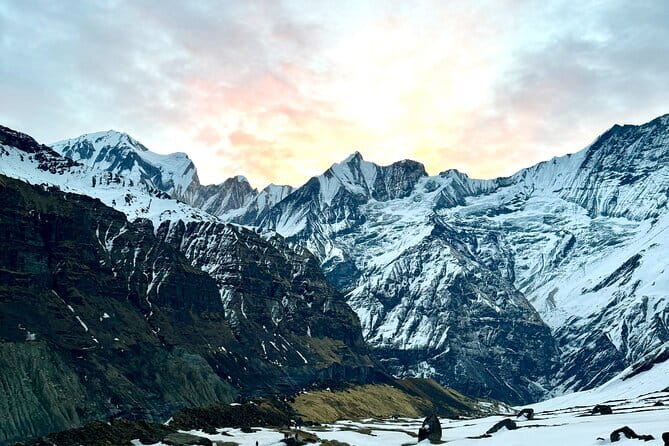
- Poonhill sunrise (3,210m): a dedicated early morning hike for big peaks in the first light
- Annapurna Base Camp (~4,130m): the main milestone in the Annapurna Sanctuary
- Gear included: sleeping bag and duffel bag (returned at the end)
- Hot springs stop at Jhinu Danda: a muscle-soothing option after trekking days
- Permit + trained team included: Annapurna Conservation Area Permit, government-authorized guide/porters
- Early starts and mountain pacing: start time is listed for 2:15am, plus altitude changes through the route
Why This Annapurna Base Camp Plan Works (Poonhill + ABC in one trip)
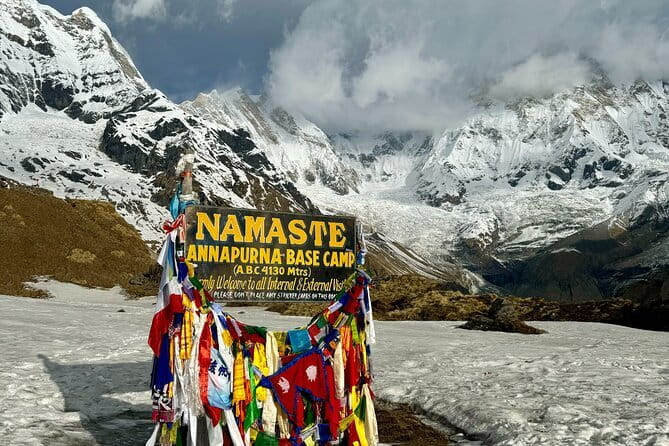
Most Annapurna Base Camp treks are either all-business (straight to the sanctuary) or all-show (mostly about Poonhill). This one tries to do both without wasting days. You get a classic sunrise setup over the Annapurna and Dhaulagiri ranges, then you keep climbing until the base camp day feels like a real destination, not just a viewpoint.
The walking days also make sense. You’re not dropped into one giant elevation leap. Instead, your route builds gradually through villages and forest sections, then turns more “high-country” once you’re near Sinuwa, Deurali, and the final push to ABC. That pacing matters because your body needs time to adjust, and your mind benefits too: the mountains look different each day as you gain altitude.
I also appreciate the cultural angle baked into the plan. You pass through everyday places—terraced fields, local guesthouses, and communities that depend on trekkers. It’s not just a photo route; it’s a working landscape where people are used to walkers, guides, and porters sharing trails.
You can also read our reviews of more tours and experiences in Kathmandu.
Kathmandu arrival and the quick reset in Pokhara
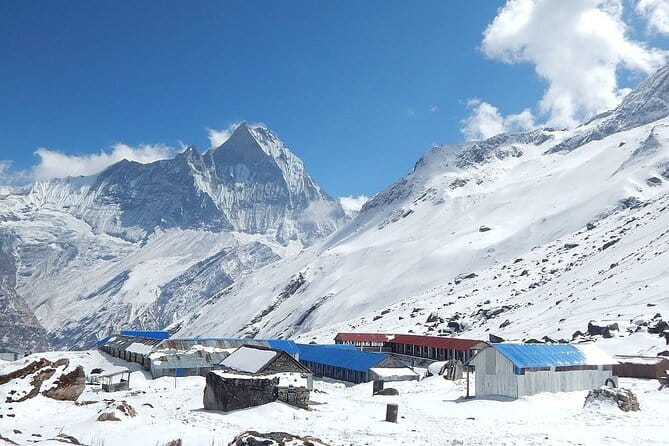
Your trip starts in Kathmandu, with pickup by private car and a hotel stay (two nights in a listed midrange category). The itinerary keeps Day 1 practical: airport transfer, then rest after arrival, with time to get your bearings around Kathmandu Valley.
Then comes a simple evening break on Phewa Lake in Pokhara. It’s a small but smart moment. After travel, you don’t want to jump straight into trekking boots without a pause. Phewa Tal is easy to enjoy at a slow pace, and it gives you a calm “landing” before the trek days begin.
Two nights in Pokhara matter more than people think. You get time to settle in, handle gear basics, and prepare for the long hiking rhythm ahead. If you’re the type who likes to know where everything is—bed, bathroom, charging, where you’ll meet your guide—Pokhara gives you that breathing room.
Ulleri to Ghorepani: villages, forests, and real trail variety
The trek proper starts with a drive to Birethanti and then hiking uphill toward Ulleri. This first trekking stretch is where the Annapurna region starts to feel like Nepal, not just a mountain brochure. You’re walking through villages, terraced fields, and forests, with views that expand as you gain height.
From Ulleri to Ghorepani, the trail becomes more about forest walls and shifting viewpoints. The route runs through rhododendron forests (and you’ll also see oak along the way later). This is the kind of trek day where you stop less for long photos and more because you keep walking past new angles of peaks and valleys.
Ghorepani itself is a classic trekking base. It’s busy enough to feel like a trekking hub, but not so commercial that it loses the mountain feel. It also sets you up for the next morning: sunrise views over the Annapurna and Dhaulagiri ranges are the whole point.
Poonhill at dawn: the view you plan your feet around
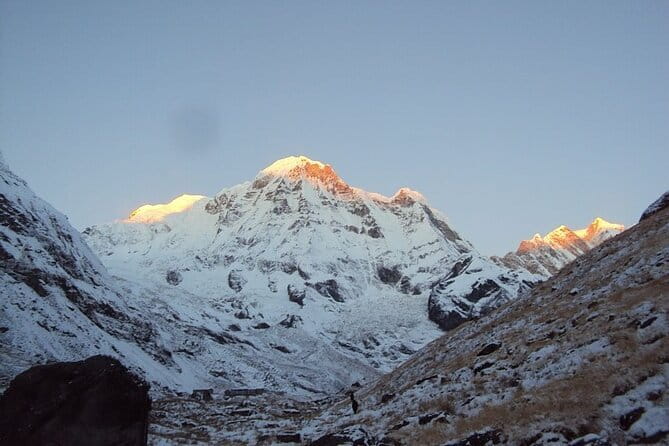
Poonhill is at about 3,210 meters, and the itinerary builds a dedicated sunrise hike. That early start is not a small detail—it’s the difference between a flat, gray morning and a sky that actually turns dramatic.
Here’s what makes the Poonhill moment work: you climb early, then you descend for breakfast in Ghorepani. That rhythm keeps it enjoyable instead of miserable. You still get the iconic viewpoint, but the day also has recovery built into it.
The trail itself also matters. It winds through rhododendron and oak forests, so even before sunrise hits, you’re moving through a pleasant, changing environment rather than just walking toward a single point.
If you’re thinking about timing your expectations: sunrise visibility depends on weather. Some mornings are crystal clear; others are more cloud-soft. Either way, you’ll at least feel the mountains change as daylight climbs the ridgelines.
Tadapani to Sinuwa: the walk gets higher and more remote
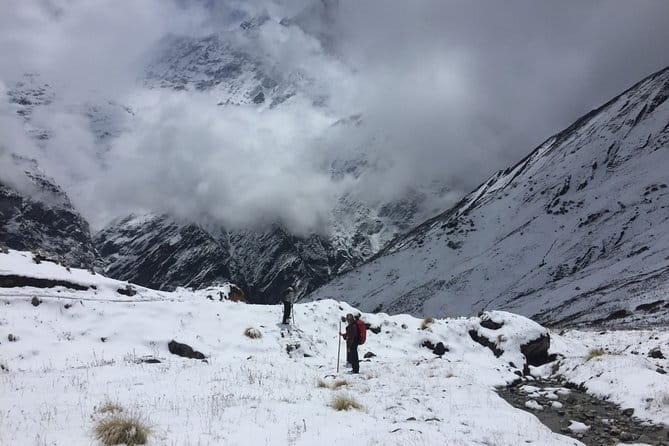
After Poonhill, you descend for breakfast in Ghorepani, then continue to Tadapani at about 2,630 meters. That section is a good “middle day” between big sunrise pressure and the next elevation push. The route runs through dense oak and rhododendron forest, with mountain glimpses breaking through the trees.
Tadapani is described as a quaint nature stop, and that’s what you want here: a place to reset your legs. You’re not sprinting to another milestone. You’re transitioning into the deeper portion of the route.
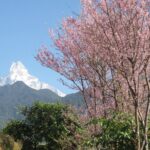
Then you move from Chule to Sinuwa, with a six-hour-style day and panoramic views of the Annapurna massif and Machhapuchhre (Fishtail). Sinuwa gives you a calmer night before the route angles toward higher terrain. As you go up, the trail feels less like a line between villages and more like a corridor through mountain zones.
Deurali and the push to ABC: bamboo, rocky ground, and a real milestone
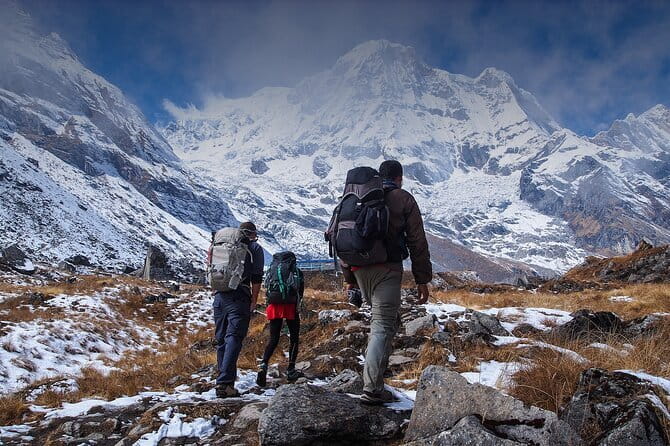
From Sinuwa to Deurali, the route leans into higher, wilder walking: bamboo forests, rocky segments, and river valleys. You’ll notice the air and the effort level changing. This is where pacing becomes crucial, because you’re not just covering distance—you’re managing breath.
Deurali sits in the “almost there” zone. The itinerary framing is clear: by the time you reach this portion, you’re closer to the peaks of the Annapurna massif and the route carries a stronger sense of altitude and exposure.
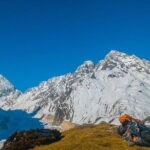
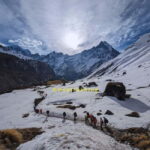
Then comes Day 8: Deurali to Annapurna Base Camp (around 4,130 meters). This is the highlight. Your arrival at base camp is the goal, with views including Annapurna I, Annapurna South, Hiunchuli, and Gangapurna.
What I’d keep in mind is that base camp days can feel both huge and oddly quiet. You’ll likely see trekkers arriving in waves, but the moment itself is about your own reaction to being that high in that region. When you’re at ABC, you’re not just looking at tall mountains—you’re standing in a basin that’s shaped by them.
The ABC day: what you’ll do with your time once you arrive
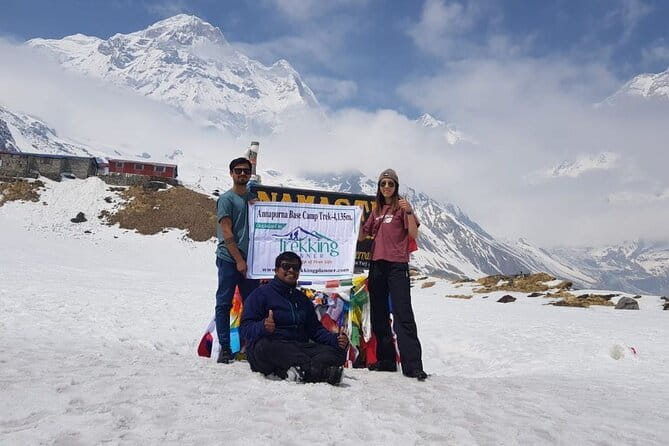
The itinerary suggests about five hours for the final trek to base camp, then a night at ABC before you head back down. Plan for a slower-feeling day at base camp. Even if your body feels okay, your altitude may make everything seem more deliberate.
Also, remember the route runs both ways along the core trail. That’s helpful: you don’t need to guess where the path goes. You already know you’re returning through the same corridors of forest and ridge transitions—just in the opposite direction, with new angles as the elevation drops.
If you want a practical approach: use the first part of your ABC day to enjoy the big views, then give yourself time to rest. Don’t treat it like an all-day sprint of photo stops. The real win is letting your first clear look sink in.
Coming down to Sinuwa and the return that feels easier
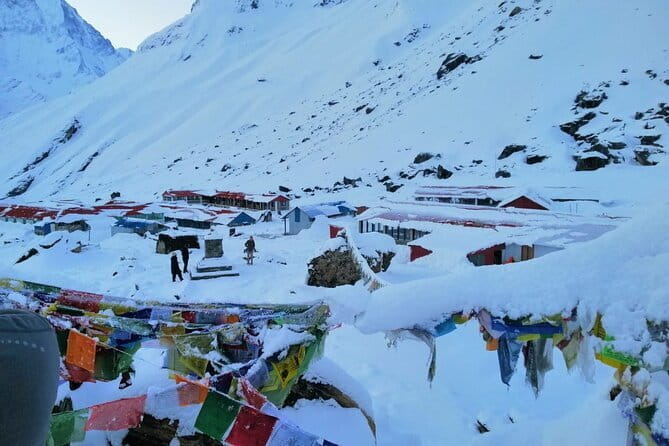
After a night at base camp, you trek back to Sinuwa at about 2,340 meters. Descent is often easier on your legs than the ascent—though it can still feel rough on knees and ankles. The route description emphasizes that the downhill walk is more comfortable on your legs and gives you another chance to notice scenery you might’ve missed going up.
As you pass suspension bridges over rushing rivers and walk from rockier zones into more lush green areas, the environment flips in a very satisfying way. You’re not just walking down; you’re watching the region transform.
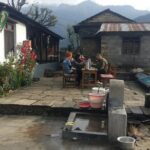
At Sinuwa, local teahouses welcome you, and you get a night there. The teahouse style lodging keeps the trek grounded. It’s not a hotel vacation, but it’s exactly what makes the trek feel real: simple rooms, shared dining spaces, and the comfort of knowing you’re in familiar rhythm again.
Jhinu Danda hot springs: the best kind of detour
On Day 10, the route takes you to Jhinu Danda, famous for natural hot springs at about 1,780 meters. After days of hiking, this stop has an obvious appeal. Even if you don’t soak for long, warm water can help your legs feel less angry.
The trek to Jhinu Danda runs through lush forests and terraced fields, giving you a break from the higher, harsher feel of the sanctuary area. It’s a nice “re-entry” day toward lower altitude comfort.
Getting back to Kathmandu: long drive, easy finish
On Day 11, you drive back to Kathmandu for about seven hours. Then on Day 12, you continue on to your onward destination.
These drive days are the payoff of good planning. After a trekking sequence, you want transport that’s organized and not dependent on you finding seats, routes, and timetables yourself. The itinerary uses private car/jeep for specific legs and a tourist bus for Pokhara-style transfers, which is a practical mix.
If you like a clean ending: plan a little downtime on arrival. It’s the kind of trip where your body might feel fine but your mind is still processing the mountains you just lived with.
Dambar Thapa and why an experienced guide changes your trek
One standout theme in the guidance for this trek is the role of the guide. In the comments you provided, the name Dambar Thapa shows up again and again. He’s described as knowledgeable and professional, with a long track record.
More importantly for day-to-day trekking: he’s also credited with being attentive when altitude starts affecting people. That’s not a small compliment. On Annapurna, the smart strategy isn’t forcing pace—it’s pacing yourself so you can keep walking and still enjoy the views.
He also comes across as someone who’s willing to adapt to preferences, not just run the route like a factory. That flexibility matters for solo trekkers too. If you’re traveling alone, having someone who helps you feel safe and supported can be the difference between okay days and truly satisfying ones.
What $940 buys you: value check, line by line
Let’s talk price honestly. At $940 per person, this is not a bare-bones trekking ticket. You’re paying for more than a route on a map.
Included value highlights:
- Trek permits: Annapurna Conservation Area Permit
- Guide and porters: government-authorized, with insurance, food, accommodation, and wages covered for the team
- Gear: sleeping bag and duffel bag (the duffel is returned after the trek)
- Lodging: two nights in Kathmandu, two nights in Pokhara, and mountain guest house accommodation during the trek
- Meals during the trek: breakfast, lunch, and dinner through the trekking days (Kathmandu and Pokhara meals are not included beyond breakfast)
- Transport: arrival and departure by private car, drive to/from key trail junctions, plus a bus ride to Pokhara
What isn’t included (and where you’ll feel it):
- International airfare
- Meals in Kathmandu and Pokhara besides breakfast
- Shower and electronic charging fees during the trek (about $5 in some guesthouses)
- Alcohol, chocolates, and packaged beverages
- Tips for guide and porter
- Your own travel insurance (mandatory)
If you compare this kind of package to doing the trek independently, the big value is reduced friction. You’re not arranging permits, scrambling for a guide at the last minute, or building a meal-and-lodging plan day by day while you’re already adjusting to altitude. For many people, that friction is worth real money.
Packing and pacing tips that match this itinerary
This route gives you a mix of early mornings (Poonhill), steady ascent phases, and a base camp day followed by a descent. So your packing and pacing should match.
- Start thinking about your legs and knees before you start thinking about comfort. Downhill can be harder than you expect.
- Expect that charging and showers may come with extra fees. Bring a power plan and accept that you won’t live on a wall socket.
- Since you’re given a sleeping bag, focus your packing on what keeps you warm at night and what helps you stay dry on forest-trail mornings.
- Keep your fitness as “moderate,” as the trip suggests. This is not an extreme technical climbing itinerary, but it is still a daily effort at altitude.
Most of all: treat sunrise as a hike with purpose, not a race. The itinerary starts early, and that’s partly how it delivers those clear mountain moments.
Who this trek fits best (and who should rethink it)
This Annapurna Base Camp plan is a strong fit if:
- You want the famous Poonhill sunrise plus the big goal of reaching Annapurna Base Camp
- You like a guided setup with meals, permits, and lodging handled
- You’re comfortable with moderate fitness expectations and altitude climbing up to 4,130 meters
- You prefer not to manage logistics across Kathmandu and the trek sections yourself
You might rethink it if:
- You need luxury comforts, private bathroom setups, or frequent long rest days
- You’re very altitude-sensitive and want more buffer time than a fixed itinerary provides
- You dislike early mornings. The meeting start time is listed for 2:15am, and Poonhill also requires a sunrise schedule
Should you book this Annapurna Base Camp trek?
If you want a classic, high-value Annapurna experience with a guided team, this package makes a lot of sense. The combination of Poonhill and ABC is efficient: you get both the iconic first light and the real sanctuary destination without adding extra travel chaos.
I’d book it if your priority is a well-run trek—one that handles permits, guide/porter support, mountain lodging, and trekking meals—so you can focus on the trail. I’d also book it if you care about having a guide like Dambar Thapa, known for pacing support when altitude gets challenging.
Just go in with clear expectations: you’ll be hiking for multiple days at altitude, guesthouse services may cost extra for showers/charging, and the schedule is part of how you earn those mountain views.
FAQ
Where does this trek start and meet for the trip?
The meeting point is in Thamel, Kathmandu 44600, Nepal. The experience ends back at the same meeting point.
How long is the Annapurna Base Camp trek?
The trek is listed as 12 days approximately.
What altitude does the itinerary reach?
The trek climbs to about 4,130 meters at Annapurna Base Camp. Poonhill is about 3,210 meters, and Jhinu Danda is about 1,780 meters.
What’s included in the price?
Included items are the guide and porters (with insurance, food, accommodation, and wages), Annapurna Conservation Area Permit, mountain guest house accommodation, trekking meals (breakfast, lunch, dinner during the trek), first aid kit, sleeping bag and duffel bag, and selected transportation including private car transfers and drives. Two nights in Kathmandu and two nights in Pokhara are also included.
What is not included?
Not included: international airfare, meals in Kathmandu and Pokhara besides breakfast, shower and electronic charging fees during the trek, alcoholic drinks and packaged beverages, personal expenses and shopping, tips for guide and porter, extra meals or accommodation outside the itinerary, and your own travel insurance (mandatory).
Is the trek suitable for solo travelers and what fitness level is expected?
The itinerary states travelers should have a moderate physical fitness level, and the experience is a private tour/activity with only your group participating. Service animals are allowed.