REVIEW · KATHMANDU
14-Day Everest Base Camp Trek
Book on Viator →Operated by Magical Nepal · Bookable on Viator
Everest begins with a hop to Lukla. This 14-day Everest Base Camp trek starts with a flight into Lukla Airport at 2,860 m, then settles into real walking through the Everest Region’s villages, bridges, and glacier-river valleys. I like that the company keeps things organized for you (pickup is offered, and you get a mobile ticket), and that you’re trekking with a small group (up to 8), often with guides like KP Bhatta who bring calm, practical know-how to the chaos of high-altitude travel.
I also really like the payoff moments built into the route. You get Tengboche Monastery (the biggest monastery in the Khumbu/Everest region) plus the big view day at Kalapatthar, where sunrise lights up Everest and the nearby peaks. And because it’s not just “go up, suffer, repeat,” you’ll have acclimatization time at Namche Bazaar and a full rest day around Dingboche.
One drawback to plan for: this trek depends on mountain weather and flight timing. If Lukla flights reroute to Ramechhap, you’ll need an early 2 a.m. departure from Kathmandu, and later the drive back can run 4 to 6 hours depending on traffic. Also, the Base Camp day includes serious rocky walking over glacier debris—good boots and a steady pace matter.
In This Review
- Key highlights you’ll feel on the trail
- Lukla at 2,860 m: the flight that sets your whole week
- Phakding to Namche Bazaar: bridges, pine forests, and your first real Everest stare
- Acclimatization days: the reason you don’t wreck yourself
- Tengboche Monastery: blessings, views, and the Sherpa culture moment
- Dingboche to Lobuche: where trees fade and the trail turns harder
- Gorakshep to Everest Base Camp: the long, rocky day you plan your energy for
- Kalapatthar at dawn: sunrise is the main character
- Heading back: Pheriche to Namche, then Lukla and a farewell party
- Price and value: what $1,600 covers and what it doesn’t
- What to expect day to day (without surprises)
- Guides, small groups, and why logistics feel smoother here
- Should you book this Everest Base Camp trek?
- FAQ
- Where does this trek start and end?
- What’s the typical daily hiking time?
- How do the Lukla flights work, and what if Kathmandu flights are rerouted?
- Are guides and porters included?
- What permits are included?
- What accommodations and meals are included?
- What group size is this trek?
- What if the trek gets canceled due to weather?
- Is free cancellation available?
Key highlights you’ll feel on the trail
- Lukla at 2,860 m: the adventure starts with altitude on day one
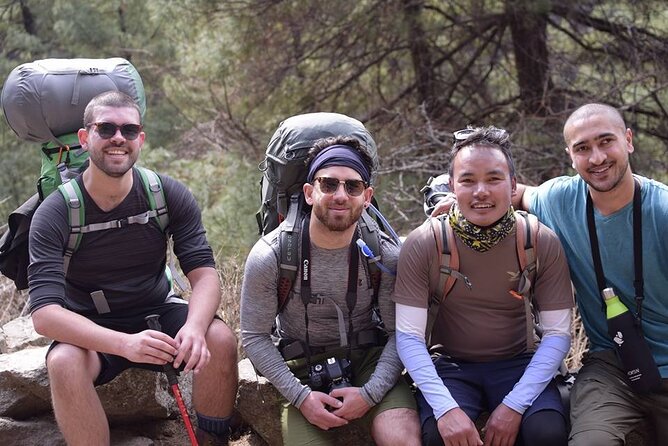
- Small group (max 8): easier logistics, more personal guiding
- Tengboche Monastery: a sacred Sherpa stop with major mountain views nearby
- Namche acclimatization + Everest View Point: you test your altitude before going higher
- Kalapatthar sunrise: the most intense “look at Everest” moment on the trek
- Gorakshep to Everest Base Camp: 6–7 hours of focused walking on rough, rocky ground
Lukla at 2,860 m: the flight that sets your whole week
The hardest part of understanding this trek is also the easiest part to admire. It starts with a plane. You fly from Kathmandu to Lukla (and later back), and that first landing at Lukla Airport (2,860 m) is your on-ramp to the Himalayas.
What I like about this setup for you is how fast it gets real. You don’t spend days “building up” to the altitude. You’re in the Everest Region quickly, and the trek starts almost immediately with a descent toward the Dudh Koshi river area. That means your first days are all about finding your rhythm: short bursts of effort, lots of sights, and steady breathing.
Practical heads-up: Lukla flights can be rerouted. At certain times, flights may shift to Ramechhap because of upgrades at Kathmandu Airport. The important detail is timing: if that happens, you leave Kathmandu around 2 a.m., and the drive to Ramechhap is about 4 hours. On the way back, expect 4–6 hours of driving depending on traffic. Build extra patience into your schedule.
You can also read our reviews of more tours and experiences in Kathmandu.
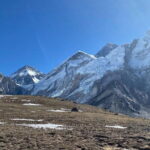
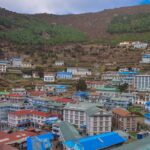
Phakding to Namche Bazaar: bridges, pine forests, and your first real Everest stare
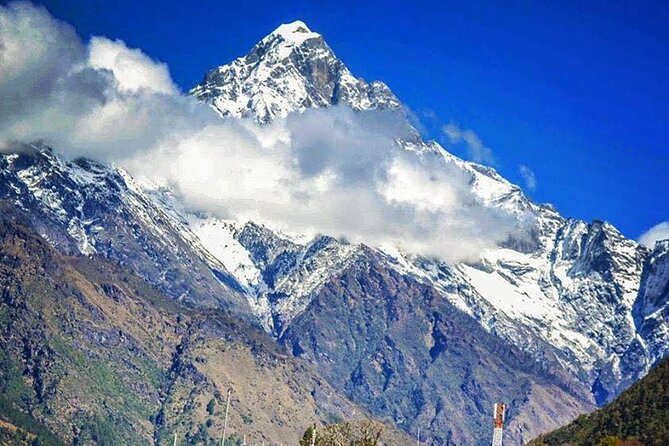
After you land in Lukla, the trek begins with that first taste of the river valley. You head to Phakding, descending toward the Dudh Koshi Ghat and walking along the river bank. On paper it looks like an easy warm-up. In the mountains, “easy” still means you’re adjusting—cool air, different footing, and the constant sense that you’re getting higher each day.
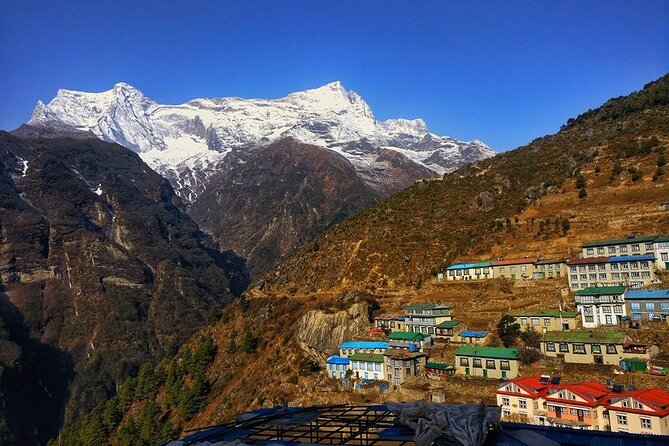
Then comes Namche Bazaar, the main hub of the Khumbu. You’ll cross long suspension bridges over the Dud(h) Koshi, walk through pine forests, and pass through the entrance area of Sagarmatha National Park, where permits are checked. Lunch often comes on a downhill portion (Jorsale is one such lunch stop on this route), and then you work back uphill to Namche, including a first “serious” climb over the Hillary Suspension Bridge.
This is where you start to feel the human side of the trek. Namche isn’t just a viewpoint town; it’s the starting point for many Everest expeditions. When you arrive, you’ll get that first solid view of Everest. From a travel-writer standpoint, that moment matters because it turns “destination” into “working reality.” You’re not just hiking to a name on a map.
Acclimatization days: the reason you don’t wreck yourself
If you want to finish this trek strong, acclimatization isn’t optional. This itinerary builds in time so your body can adjust as altitude climbs.
One day in particular is designed for it: you spend a day at Namche when you’re already quite high. You can choose a short hike (about 2 hours) to Everest View Point, or stay local and explore Namche. There’s also a Sherpa museum, and on Saturday you may catch a small outdoor market. This matters because it gives you something other than trekking to do—walking stays light, while you still move your body enough to feel normal.
Later, the trek gives you another “pause” at Dingboche. Altitude fatigue is real, and a rest day is how the itinerary protects you from rushing. On that day, you can explore around the Chhukung and Imja valleys if you feel good. If you don’t, you rest. Either way, it helps you avoid the mistake of pushing hard every single day.
The trekking rhythm here is also practical: most days are about 5 hours of hiking, with some days running 7 to 8 hours. You should arrive expecting walking time to vary, not to be identical each day.
Tengboche Monastery: blessings, views, and the Sherpa culture moment
Tengboche is famous for a reason: the monastery here is the largest in the Khumbu/Everest region. On your trekking day to Tengboche, you get a visit inside that religious and cultural center, along with the chance to receive blessings.
What I like for you is how this stop breaks up the “pure hiking” feeling. Yes, you’ll be surrounded by huge mountains, but Tengboche is also about people. Sherpa life is visible in the routine: how communities organize around seasons, how monasteries serve as gathering points, and how the culture of the region remains strong even with all the trekking traffic.
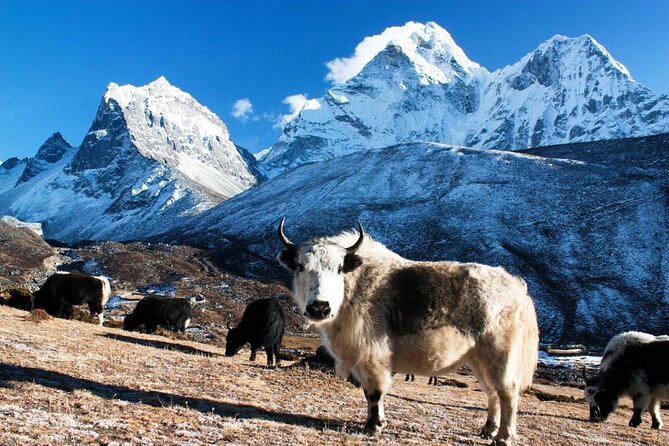
The area around Tengboche is also known for sharp mountain views. On clear days you may see peaks like Ama Dablam, Thamserku, and Khumbila—and the mountain names themselves carry local meaning. Even if you’re not into spiritual stops, this is still a memorable pause because it gives your legs time while your brain records the day.
Dingboche to Lobuche: where trees fade and the trail turns harder
As you move toward Dingboche, the trek starts shifting from forested walking to higher, thinner vegetation. The route includes hiking through alpine forests at the start, then moving into the Khumbila Khola Valley. As you ascend toward a ridgeline, the view expands, and you’ll start noticing how the terrain changes—fewer trees, more shrubs.
Then comes the next step: Lobuche. This is where things feel more serious because the altitude makes every effort cost more. The walking can be slower, and you’ll want to keep your pace steady rather than trying to “make up time.”
A striking feature on the Lobuche day is the set of memorial stupas for those who lost their lives on Everest. It’s not a long detour, but it hits emotionally. After that, the mountains close in visually. You may get strong views of Lobuche, Pumori, and Nuptse—and the trail terrain starts to look more like the edge of a glacier-world.
Gorakshep to Everest Base Camp: the long, rocky day you plan your energy for
The Base Camp day is the one you’ll remember forever, but you need to treat it like a workout. The route from Gorakshep to Everest Base Camp and back takes about 6 to 7 hours of serious walking. This is rocky ground, often over glacier debris. The surface can feel uneven and tiring even when the elevation isn’t the only challenge.
The trek itself starts deceptively from Lobuche to Gorakshep. Then the trail becomes more about footing: rocky stretches, dunes, and moraine-like terrain until you reach Base Camp. Once you arrive, the view of the Khumbu Glacier and Icefall is the headline. This is also a place where you might spot climbers on their way to attempt the summit. Even if you’re not a mountaineer, standing in that area gives you a new understanding of how close the expedition world really sits to the trekking world.
Key advice for you: don’t burn yourself trying to capture everything. You’ll have the time you need if you pace your outbound walk, take your photos, and then move carefully on the return. “Carefully” matters on rocky debris because fatigue changes your stride fast.
Kalapatthar at dawn: sunrise is the main character
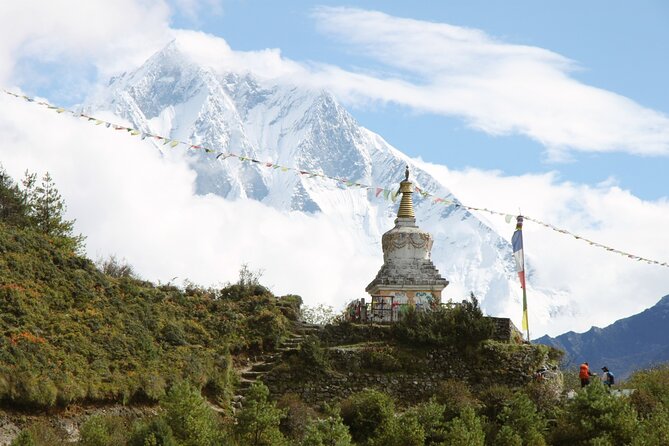
If Base Camp is the landmark, then Kalapatthar is the moment. On this portion of the trek, you’ll rise early to hike up for sunrise and views.
This is the point where the itinerary turns cinematic. From Kalapatthar, you’re as close as you can get to Everest without going to the summit. Sunrise can bring out Everest and neighboring peaks including Nuptse, Nup, Changtse, and Lhotse as the first rays hit.
After sunrise, you descend back to Gorakshep for breakfast and then continue toward Pheriche. If the group still has energy, there’s also an option to walk on to Panboche. Even if you don’t go, the day still works because the sunrise effort creates a strong sense of completion.
The hiking here is early, so pack for cold. Even if the air is clear, you’ll feel temperature changes while you’re exposed on the climb. Warm layers and gloves are the kind of “boring” gear that makes the experience much better.
Heading back: Pheriche to Namche, then Lukla and a farewell party
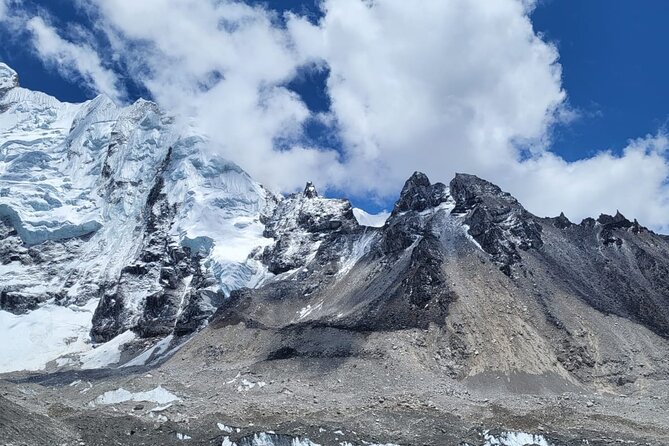
The return portion is mostly downhill or gradual effort, but it’s not effortless. Your calves will know you did this. From Pheriche, you hike mainly downhill back through Tengboche and arrive at Namche Bazaar for the night.
Then it’s down to Lukla again. A familiar moment returns on this section: you cross the Hillary Suspension Bridge once more. It’s a small ritual of sorts because you’ve seen these bridges before, and now they feel like proof you made it across the region once already.
When you reach Lukla, you arrive in the afternoon and attend the traditional group farewell party. It’s not a big event in the Hollywood sense, but it does underline something important: this trek is a social experience even when you keep your own pace. With max group size at 8, those last-night conversations tend to be more personal.
Price and value: what $1,600 covers and what it doesn’t
At $1,600 per person, this is not a cheap add-on. But for the Everest Base Camp route, it’s a fairly straightforward value proposition—because many of the expensive headaches are handled for you.
Included items you’ll care about:
- Round-trip flights: Kathmandu to Lukla and back (plus local transfers for international flights and domestic flights)
- Permits: Sagarmatha National Park entry and local entry permits
- Guide and porter support: guide for 12 days, porter for 11 days
- Lodging: 2 nights in Kathmandu (Bodhi Boutique or similar) and 11 nights in mountain teahouses
- Meals: breakfast, lunch, and dinner listed for 12 days (so trekking days are covered; Kathmandu meals are not)
- Insurance for support staff and ground transport for them
Not included:
- Lunch and dinner in Kathmandu
- Your personal travel insurance and personal expenses of any kind
When you look at it this way, the price starts making sense: you’re paying for the aircraft seat, the permits, the trekking logistics, and the team that keeps you moving. The big reason to consider a guided setup is not comfort. It’s risk management: the mountains don’t care about your plans, but a good team helps you adjust.
Also note: the trek requires good weather. If the trek is canceled for poor conditions, you should expect a different date or a full refund. That matters when budgeting time.
What to expect day to day (without surprises)
Most days come out to about 5 hours of hiking, though some can go 7 to 8 hours. The schedule also mixes long walking days with acclimatization and rest days. That balance is what lets people finish without being completely fried.
Here’s how the “story” of the trek typically unfolds:
- Day 1: Kathmandu hotel and airport support
- Day 2: Lukla arrival, trek to Phakding with river-valley walking
- Days 3–4: Namche Bazaar, including suspension bridges and a built-in acclimatization day
- Day 5: Tengboche Monastery visit
- Days 6–7: Dingboche changes vegetation; then a second acclimatization/rest day
- Day 8: Lobuche, memorial stupas, sharper mountain focus
- Day 9: Gorakshep and Base Camp, the long rocky push (serious walking time)
- Day 10: Kalapatthar dawn, then down to Pheriche
- Day 11–12: Pheriche back toward Namche and finally down to Lukla
- Day 13: Lukla flight back to Kathmandu or Ramechhap (timing depends on airport situation)
- Day 14: Kathmandu and onward travel
No matter how you pace it, you should plan for cold nights at altitude and slower walking when your body needs time to adjust.
Guides, small groups, and why logistics feel smoother here
A major reason this trek earns top marks is the people running it. Across past departures, names like KP, Dil Man, Jay, Narayan, and Pemba Sherpa show up repeatedly in the positive feedback. The pattern isn’t just friendliness. It’s the practical stuff: keeping the group on track, guiding altitude decisions, and handling last-minute changes.
The owner, Pradeep, also gets credit in multiple notes for being helpful and realistic during planning. That kind of communication matters because Everest Region trekking has uncertainty built in—weather, flight timing, and how your body responds.
If you’re someone who wants a calm, capable team rather than a “survive on your own” vibe, this style of guiding is a strong fit. And with a maximum of 8 travelers, you’re less likely to feel like a number.
Should you book this Everest Base Camp trek?
If your goal is the classic Everest Base Camp experience—Lukla flight, Namche Bazaar, Tengboche Monastery, Everest Base Camp, and Kalapatthar sunrise—this plan is a solid way to do it. The biggest strength is the pacing: acclimatization days at Namche and Dingboche, plus the fact that walking time is realistic for a guided trek.
You should think twice if you’re not comfortable with a long, rough day at the end of the trip’s “big push” (that 6–7 hour rocky Gorakshep–Base Camp round trip). You also need flexibility in your schedule because flights can reroute via Ramechhap, including a 2 a.m. departure from Kathmandu if needed.
If you want a well-run guided trek with teahouse lodging, permits handled, and a team that keeps the experience humane even when the mountain is not, I’d say book it—then train for your legs, pack smart, and don’t treat sunrise like an optional hobby. It’s the whole point.
FAQ
Where does this trek start and end?
It starts at Tribhuvan Airport in Kathmandu, Nepal, and ends back in Kathmandu.
What’s the typical daily hiking time?
Most days are about 5 hours of trekking, with some days running longer (around 7 to 8 hours). The Gorakshep to Everest Base Camp round trip takes about 6 to 7 hours of serious walking.
How do the Lukla flights work, and what if Kathmandu flights are rerouted?
Lukla flights can sometimes depart from and return to Ramechhap instead of Kathmandu due to upgrades at Kathmandu Airport. When that happens, you leave Kathmandu around 2 a.m., and the drive to Ramechhap takes about 4 hours. The return drive after the trek is typically 4 to 6 hours depending on traffic.
Are guides and porters included?
Yes. A guide is included for 12 days, and a porter is included for 11 days.
What permits are included?
You get Sagarmatha National Park entry permits and local entry permits included in the tour.
What accommodations and meals are included?
You’ll have 2 nights in Kathmandu (Bodhi Boutique or similar) and 11 nights in mountain teahouses. Meals listed as included are breakfast, lunch, and dinner for 12 days.
What group size is this trek?
The maximum group size is 8 travelers.
What if the trek gets canceled due to weather?
This experience requires good weather. If it’s canceled due to poor weather, you’ll be offered a different date or a full refund.
Is free cancellation available?
Yes. You can cancel up to 24 hours in advance for a full refund. If you cancel less than 24 hours before the experience starts, the amount paid won’t be refunded.