REVIEW · YULARA
Uluru: Guided Trek of Uluru’s Base in a Small Group
Book on GetYourGuide →Operated by SEIT · Bookable on GetYourGuide
Uluru at dawn rewires your brain. This 6-hour small-group trek circles the entire base before the heat and crowds show up, with breakfast along the way and an expert guide who connects what you see to Anangu life.
I love that you actually walk the full perimeter of Uluru instead of doing a quick highlight loop. I also like how the guide’s storytelling ties Tjukurpa (creation stories) to specific spots like Kuniya Walk and Mutitjulu Waterhole.
One consideration: it’s a long walk, about 10.5 km, so you’ll want good shoes and patience, plus the sunrise start is early.
Key things I’d plan around
- Full-base route: You get the complete circumnavigation, not a short detour.
- Small group (max 11): Easier conversations, more attention, less crowd noise.
- Breakfast mid-walk: Outback picnic in a carry pack with tea and coffee.
- Culture told on the ground: Stories tied to Tjukurpa, rock art sites, and waterholes.
- Mutitjulu Waterhole + Kantju Gorge: Two standouts that change the feel of the walk.
- Optional audio languages: Spanish, Chinese, French, German, Italian, Russian included.
In This Review
- Sunrise Pickup and a Max 11 Vehicle Before the Heat
- Walking Uluru’s Full Base: 10.5 km of Easy Terrain, Long Time
- Outback Picnic Breakfast: Included, Convenient, and Not a Feast
- Mutitjulu Waterhole and Rock Art Sites: The Meaning Behind the Marks
- Kuniya Walk to Mala Walk: When the Stories Track the Terrain
- Kantju Gorge: A Stop That Adds Drama and Perspective
- Audio Guides and Language Options: Use Them If They Help
- Price and Park Tickets: Where the Value Really Shows
- Who This Sunrise Base Walk Is Best For
- My Booking Checklist for a Smooth, Comfortable Morning
- Should You Book This Uluru Base Walk Tour?
- FAQ
- How long is the Uluru guided base walk?
- How big is the group?
- What is included in the tour price?
- Is Uluru Kata Tjuta National Park entry included?
- How many kilometers do you walk?
- What languages are available for the audio guide?
- Where does pickup happen?
- What should I bring for the walk?
- What is the cancellation policy?
Sunrise Pickup and a Max 11 Vehicle Before the Heat
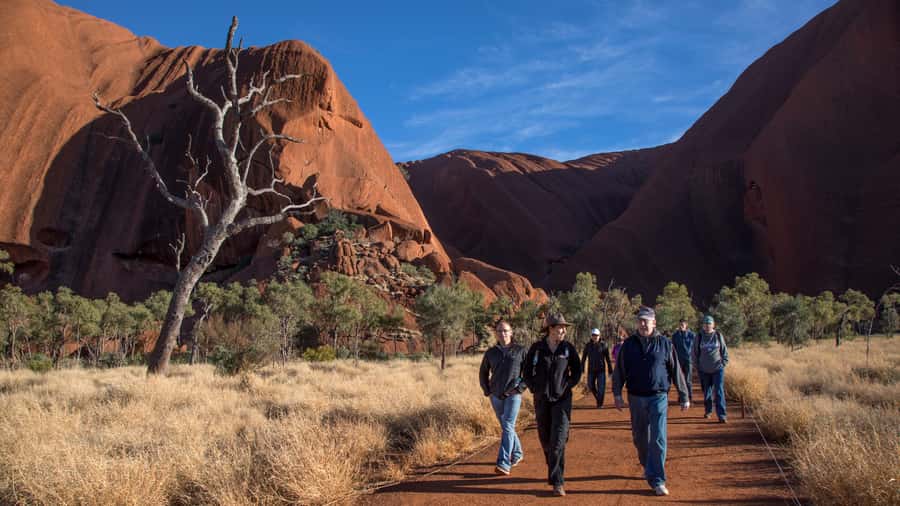
Your morning starts with a pickup about one hour before sunrise from Ayers Rock Resort hotels. The vehicle is set up for a maximum of 11 participants, so you’re not stuck in a packed bus while everyone is still waking up.
The drive into Uluru Kata Tjuta National Park happens in the dark, then you build toward the moment you first see the monolith in dawn light. In the small-group format, you also tend to get more of the guide’s vibe right away, like when guests mention guides such as Michael and Dimitri bringing a lot of energy at the early hour.
Tip for comfort: plan for cold mornings. More than one person recommends a pullover or warmer layer for that pre-sunrise feel, even if you know the day will warm up.
Walking Uluru’s Full Base: 10.5 km of Easy Terrain, Long Time
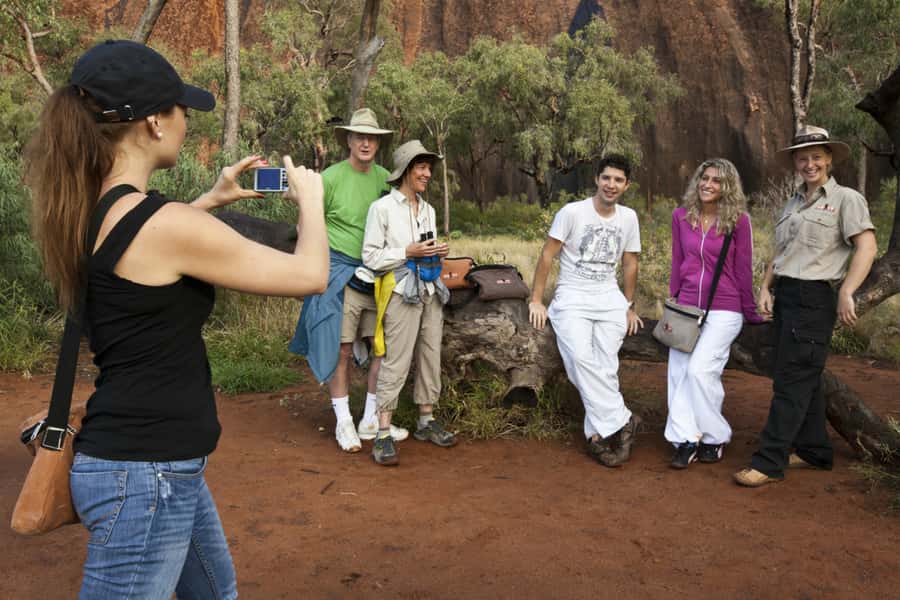
This tour is built around the full base walk of Uluru, with the walking distance listed at about 10.5 km for roughly six hours. You’ll hear it as a serious number, but the route is generally described as flat and on gravel tracks, so the main challenge is time, not technical difficulty.
You’ll also get built-in pacing. The guide plans stops for water and breaks, and people have mentioned photo opportunities without feeling rushed. Some have even recorded longer distances than the stated amount, which usually means your route line and rest stops add a bit—nothing scary, just be mentally ready for a “long walk,” not a sprint.
Practical footnotes that matter: bring sensible walking shoes, and wear a hat and sunscreen because the first half can be shaded but the second half can get warm. One guest also suggested a fly net for face comfort, which is exactly the kind of small detail that can make the difference when you’re walking for hours.
Outback Picnic Breakfast: Included, Convenient, and Not a Feast
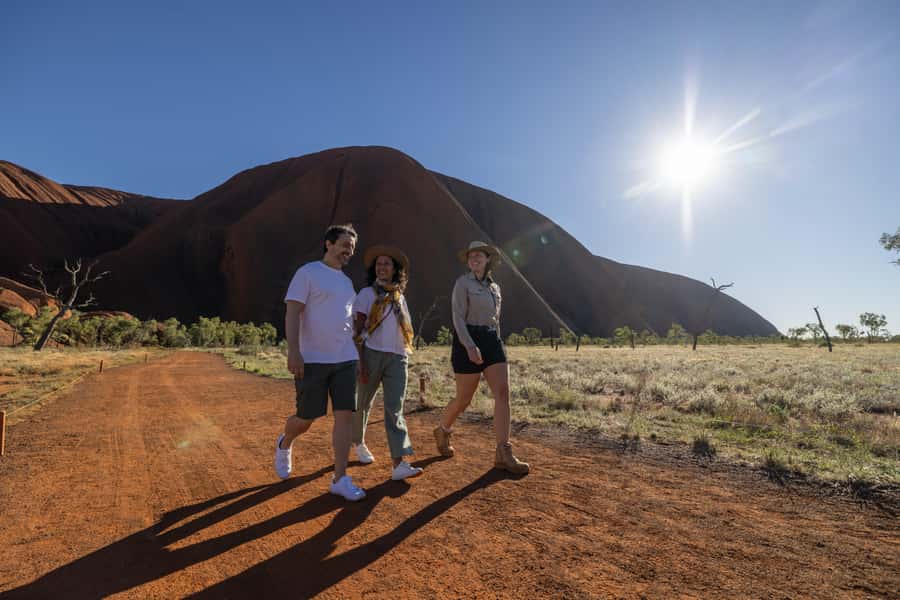
Midway through the walk, you stop for an outback picnic breakfast supplied in a carry pack. Tea and coffee are included, which is a big deal when you’ve been up early and you want your body to start working instead of just tolerating cold.
To manage expectations, the breakfast is described as pleasant and well planned, but one guest felt it wasn’t very filling. If you know you need more food in the morning, you might consider bringing a small extra snack for after the picnic (only if your tour rules allow it, of course).
Another comfort detail: there are restroom stops along the way, and guests note they’re available at two points. That makes the long loop easier to handle, especially if you’re doing the walk at your own rhythm.
Mutitjulu Waterhole and Rock Art Sites: The Meaning Behind the Marks
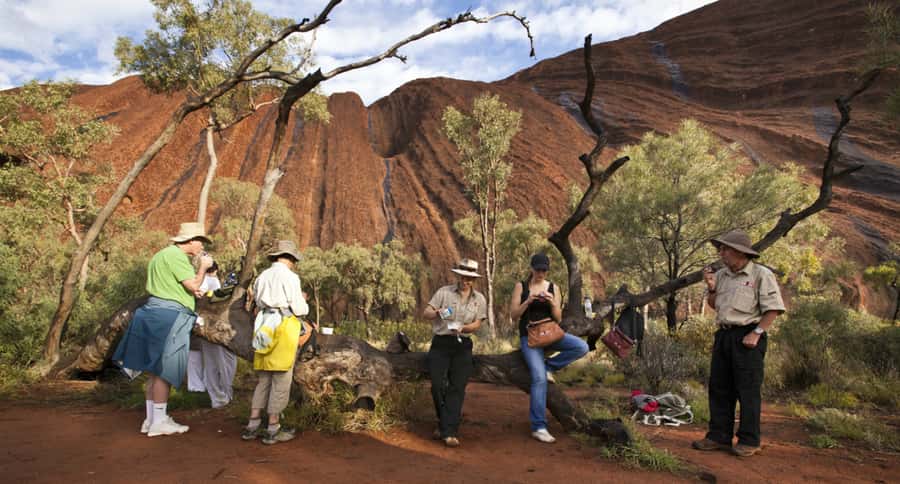
As you continue the base walk, you’ll see places tied to water and to the deep cultural map of Uluru. Mutitjulu Waterhole is one of the key stops, and it’s not just scenic—it’s where the guide can explain how water, survival, and sacred meaning intersect.
You’ll also visit rock art sites, and the guide connects what you see to stories in a way that’s meant to give you context, not just trivia. The tour format matters here: you’re outside for hours, which lets you absorb how the details change with light and angle rather than snapping a quick photo and moving on.
Expect stories linked to Tjukurpa, including the Liru and Kuniya creation story as you walk the Kuniya route. Guides often talk about the cultural significance of landmarks in Anangu life, and that’s where the whole experience stops being only scenic and starts becoming personal.
Kuniya Walk to Mala Walk: When the Stories Track the Terrain
Uluru’s base walk is structured around the idea that the land is part of the story. The tour mentions the guide sharing multiple creation-story threads as you move, including the story of Liru and Kuniya during the Kuniya Walk and the Mala people story during the Mala Walk.
This matters because it changes how you look. Instead of seeing Uluru as one big shape, you begin treating each turn, each outcrop, and each water-related area as a clue. That’s also why a professional guide who knows the geology, flora and fauna, and Aboriginal culture makes such a difference on this route.
If you like learning with your feet moving, this portion is where you’ll feel the tour’s value the most. The guide’s job isn’t only to point; it’s to keep the meaning grounded in what’s right there in front of you.
Kantju Gorge: A Stop That Adds Drama and Perspective
Later in the walk, you’ll head toward Kantju Gorge. This stop is often the kind of moment that flips the walk from “monolith appreciation” to “how the land really works.”
People describe the pace as manageable, and the gorge adds variation: tighter visuals, changes in textures, and a different sense of scale. If you’re the type who gets restless on long straight walks, this kind of natural shift gives your brain a new target—and gives your photos variety too.
Just remember: even when the walk feels easy, it’s still hours of time outdoors. Keep drinking water, take the small rests the guide calls out, and you’ll enjoy the gorge instead of just reaching it.
Audio Guides and Language Options: Use Them If They Help
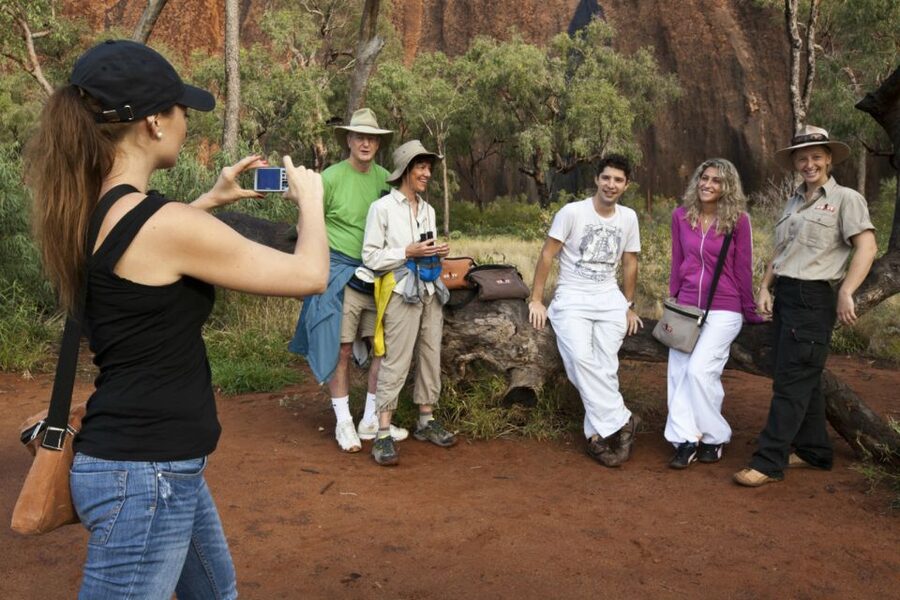
You’ll have live guiding in English. On top of that, the tour includes an optional iPod audio guide in several languages: Spanish, Chinese, French, German, Italian, Russian.
This is useful if you’re traveling as a mixed group or if you want to re-check a concept while you’re walking. It also lets you spend less time translating in your head and more time connecting the story to the actual place.
You don’t need it to enjoy the tour, but if language is part of how you learn, this add-on is a practical inclusion.
Price and Park Tickets: Where the Value Really Shows
The price is listed at $169 per person for a 6-hour experience, and it includes a lot of what usually adds up fast on these tours: pickup from Ayers Rock Resort hotels, a professional driver/guide, tea and coffee, and the outback picnic breakfast in a carry pack.
The big catch is that Uluru Kata Tjuta National Park entry tickets are not included. You can purchase tickets at the entry station, and they’re valid for three consecutive days from the date of issue.
So here’s the value math: you’re paying for the guide-led timing, the full base route, the breakfast convenience, and the small-group experience. Then you only add the park entry ticket cost separately. If you’re staying in the resort area, pickup alone can be worth real effort saved.
One more small value detail: guests mention comfortable air-conditioned transport on at least some departures. Even if you don’t care about AC normally, that comfort matters when your day starts early and ends with less stress.
Who This Sunrise Base Walk Is Best For
This tour fits best if you want meaning, not just miles. The full-base route plus stories about Anangu culture, survival, geology, and Tjukurpa is ideal for people who like guided learning while walking.
It’s also a great match if you dislike tour chaos. The group limit of 11 participants helps you feel more connected to your guide and to the pace of the walk.
On the other hand, this isn’t the choice for you if you want a short, casual stroll. You’re covering around 10.5 km outdoors, and sunrise starts mean an early wake-up and cooler morning layers.
My Booking Checklist for a Smooth, Comfortable Morning
If you’re planning to do this walk, you’ll feel better if you pack like it’s a long, sunny hike with a cold start. The basics from the tour guidance still matter most: water bottle, walking shoes, hat, sunscreen, and appropriate walking gear.
For clothing, plan for the temperature swing. In cooler months, bring warmer clothing for the pre-dawn and early start. If you get the chance, include something to cover shoulders too, since you’ll be exposed for hours.
Water matters. The tour guidance says to bring your own water, and a guest also noted there are two water taps along the way where you can refill with filtered rain water. They described the taste as earthy and metallic and said it isn’t very cold, which is useful to know so it doesn’t surprise you.
Should You Book This Uluru Base Walk Tour?
Book it if you want the full Uluru experience with structure, meaning, and a small group. The sunrise timing, the complete base walk, the included picnic breakfast, and the guide-led cultural context make this feel like more than just sightseeing.
Skip or reconsider if you’re not comfortable with a long outdoor walk or if early mornings are a deal-breaker for you. Also remember the park entry ticket is extra, since the tour price doesn’t cover it.
If you’re the kind of traveler who wants to look at Uluru and understand what you’re seeing, this is one of the most direct ways to do it—step-by-step, story-by-story, in the best light of the day.
FAQ
How long is the Uluru guided base walk?
It runs for about 6 hours.
How big is the group?
The group is limited to a maximum of 11 participants.
What is included in the tour price?
Pickup is included from Ayers Rock Resort hotels, plus a professional driver/guide, tea and coffee, and an outback picnic breakfast supplied in a carry pack.
Is Uluru Kata Tjuta National Park entry included?
No. National park entry tickets are not included and must be purchased at the entry station.
How many kilometers do you walk?
The walk is approximately 10.5 km.
What languages are available for the audio guide?
Audio guides are included for Spanish, Chinese, French, German, Italian, Russian. The live guide language is English.
Where does pickup happen?
Pickup is from the out front of hotel reception within Ayers Rock Resort. For Emu Walk Apartments, pickup is at Desert Gardens Hotel next door, and for The Lost Camel, pickup is at Sails in the Desert next door.
What should I bring for the walk?
Bring a water bottle, sensible walking shoes, a hat, sunscreen, and appropriate walking gear. In cooler months, bring warmer clothing.
What is the cancellation policy?
You can cancel up to 3 days in advance for a full refund.