REVIEW · KATHMANDU
Upper Mustang Trek – 13 Days
Book on Viator →Operated by Welcome Nepal Treks P.ltd · Bookable on Viator
Upper Mustang feels like time travel in dusty cliffs. This 13-day trek puts you on the Tibetan Plateau vibe, walks you toward the Kali Gandaki gorge (often called the world’s deepest gorge), and drops you inside the walled city of Lo Manthang, with the bonus chance to catch the Tiji Festival if your dates match.
I also like that this is built around the expensive, paperwork-heavy pieces. The trip includes Upper Mustang special permits and ACAP permits, plus an English-speaking licensed guide, porters (for your luggage), domestic flights, and your Pokhara hotel. The main drawback to factor in: it’s not a walk-in-the-park. Expect multiple long walking days (around 4 to 6 hours) and you’ll pay for city meals and extras that aren’t included.
In This Review
- Key things that make this trek worth your time
- Upper Mustang: why it feels so different from the rest of Nepal
- Price and value: what $2,300 actually buys you
- Getting started: Kathmandu pickup, Pokhara transfer, and the early rise
- Day-by-day walking: from Kagbeni into Mustang’s stone-and-sand world
- Day 2: Fly to Jomsom, then walk to Kagbeni
- Day 3: Kagbeni to Chele via Tangbe and Chhusang
- Day 4: Chele to Syangbochen with the Taklam La Pass viewpoint
- Day 5: Syangbochen to Ghami
- Day 6: Ghami to Tsarang
- Day 7: Tsarang to Lo Manthang (the walled city)
- Days inside Lo Manthang: monasteries, durbars, and a slower kind of awe
- Day 8: Explore Lo Manthang’s key sites
- Day 9: Lo Manthang to Dri and the rock-painting Ghar Gompa
- Day 10: Dri to Tange via Damodar Kunda and chortens
- Muktinath and the return loop: wrapping up in Jomsom and Pokhara
- Day 11: Tange to Muktinath, then onward to Jomsom
- Day 12: Flight back to Pokhara and a real rest day
- Day 13: Pokhara to Kathmandu by tourist bus
- Tiji Festival: the special cultural timing you might catch
- Your team on the ground: English guide, porters, and small-group comfort
- What to pack and how to think about comfort (without overpacking)
- Should you book Upper Mustang Short Trek?
- FAQ
- How long is the Upper Mustang Short Trek?
- Where does the trip start and what time is the meeting?
- Do I get pickup in Kathmandu?
- Are flights included in the tour?
- What permits are included?
- Is there a hotel stay included?
- What meals are included during the trek?
- How many people are in the group?
- What fitness level do I need?
- What is the cancellation policy?
Key things that make this trek worth your time
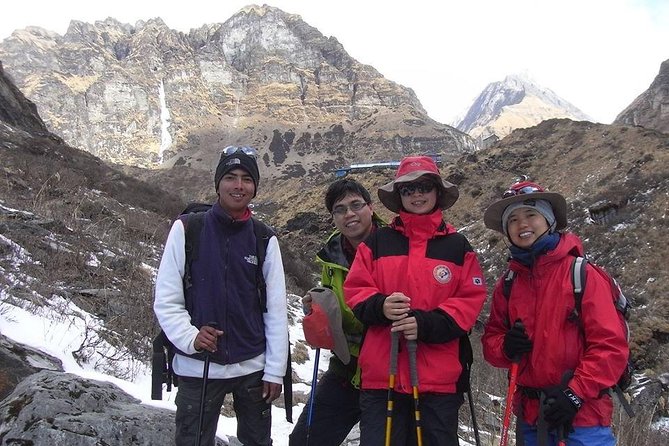
- Lo Manthang and the walled-city feel: you’ll spend real time exploring the Mustang capital and its key gompas and temples
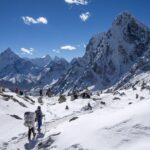
- The Taklam La Pass day: a serious viewpoint day with big named peaks in view (Tilicho peak, Yakwa Kang, Damodar Dada)
- Caves, rock paintings, and sacred sites: Ramchung cave, and the 1200-year-old Ghar Gompa rock paintings near Dri
- Kali Gandaki gorge energy: river and canyon views are part of what makes Mustang special
- Permits handled for you: included Upper Mustang special permits and ACAP permits reduce headaches
- Small-group pace: maximum of 15 travelers, which matters when you’re moving through remote areas
Upper Mustang: why it feels so different from the rest of Nepal
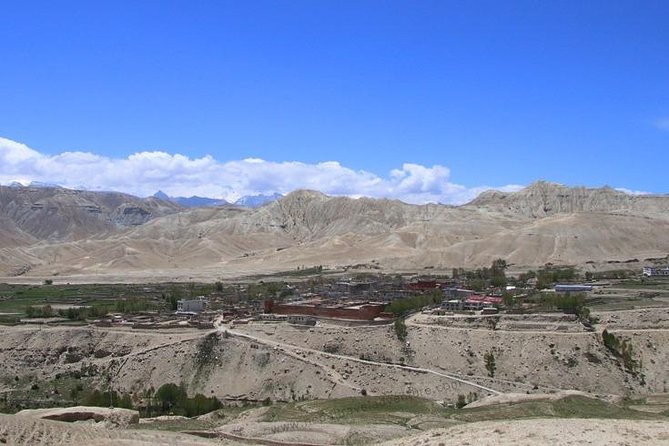
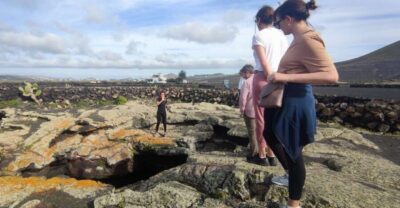
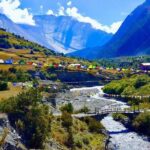
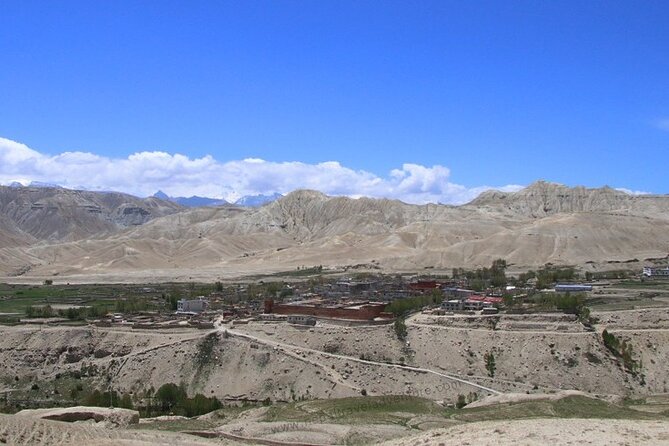
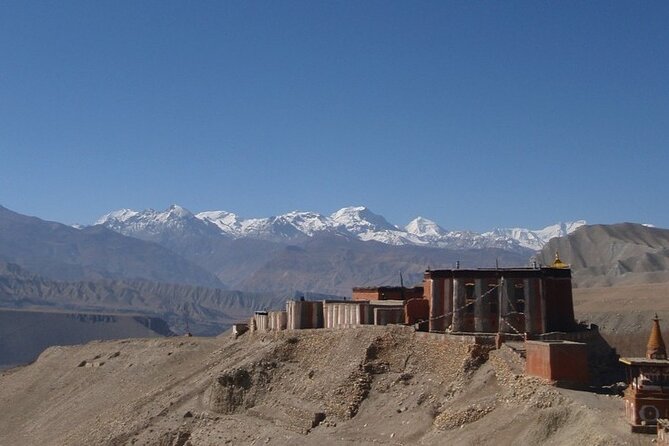
Upper Mustang is Nepal’s oddball in the best way. Instead of the lush mountain valleys you might expect, you get a dry, high, almost lunar feel—stone walls, wind-carved formations, and villages that look like they’ve been holding their shape for centuries. The route is also tied to the Kali Gandaki gorge, where the dramatic drop between ridgelines gives you that “how is this even possible?” canyon perspective.
What I like about this trek’s design is that it’s not only about scenery. You also get the cultural rhythm: gompas, monasteries, chortens, and the daily life of villages that still follow an old-school cadence. And if your timing lines up, the Tiji Festival can add one unforgettable layer—music, color, and religious storytelling in the middle of big mountain country. You won’t know until you’re closer to departure, but the fact that the program is aware of Tiji is a big plus.
The walk is called a short trek, but you shouldn’t treat it like a gentle stroll. It’s paced for steady progress: your hiking days are mostly in the 4 to 6 hour range, with enough climbing to make you work, especially on pass days.
You can also read our reviews of more tours and experiences in Kathmandu.
Price and value: what $2,300 actually buys you
At $2,300 per person, this isn’t a bargain—especially if you’re comparing it to common, lower-cost Nepal routes. But Mustang is pricey for a reason: permits, remote transport, and flights in limited windows.
Here’s the value angle that matters:
- Permits included: Upper Mustang special permits plus ACAP permits are included, which are the biggest “gotchas” people forget to budget for.
- Flights are included: the program includes domestic flights Pokhara–Jomsom–Pokhara.
- Guides and porters are included: you get a government licensed English-speaking guide, and porters carry your luggage during the trek.
- Meals are partly handled: breakfasts, and set lunches/dinners during the trek are included (breakfasts 12; lunches 10; dinners 10).
- Lodging is included where it counts: you have a Pokhara hotel night as part of the schedule.
What’s not included is also important, because it can add up fast in trekking zones:
- Major meals in Kathmandu and Pokhara aren’t included.
- Personal expenses like water, tea/coffee, snacks, bar bills, and shower costs aren’t included.
- If flights are canceled and you need changes due to weather, those added costs are not included.
My advice: treat the trek cost as “permits + guide + flights + structure.” Then add a buffer for city meals and daily extras. That way there are no surprise moments when you’re hungry and tired in a town.
Getting started: Kathmandu pickup, Pokhara transfer, and the early rise
Your day begins early. The meeting start time is 6:45 am, and pickup is offered from your hotel in Kathmandu. The program then moves you to Pokhara by tourist bus. The first night is in Pokhara with an evening free to get your bearings.
Pokhara is useful here because it’s not just a “stop.” It’s your runway to the next phase: flight to Jomsom and then the long, dry Mustang walking start. If you’ve never done a flight-then-trek itinerary, this setup is about reducing chaos. You land, you check in, you start walking—simple, and it keeps the first trekking day from feeling like a mad scramble.
A small, practical note: because your start time is early, plan your sleep like a pro. You’ll be happier if you’re not trying to pack at the last minute and you’ve got your layers ready.
Day-by-day walking: from Kagbeni into Mustang’s stone-and-sand world
Day 2: Fly to Jomsom, then walk to Kagbeni
After morning breakfast, the program takes you to the airport for a flight to Jomsom. From there, you head up to Kagbeni, passing places like Ekle Bhatti, then walking about 4 to 6 hours to reach your overnight stop.
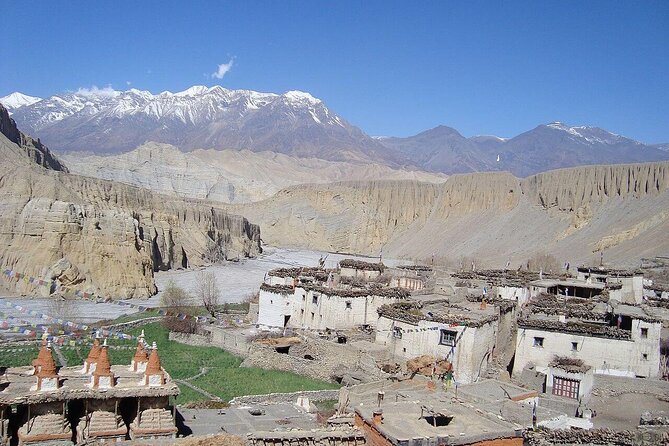
This is one of those days that sets the tone. You get an early taste of Mustang’s character: dry air, stone villages, and a canyon feel that shows up quickly once you’re out of the bus-and-hotel routine. Kagbeni also acts like a gateway town, so the vibe is more “route hub” than deep destination.
Day 3: Kagbeni to Chele via Tangbe and Chhusang
The next day is a scenery walk. You gear up for Chele, passing Tangbe and Chhusang along the way, then settle for the night.
This is where you start noticing the differences between villages—wall styles, temple shapes, and how people live in this harsher terrain. If you enjoy slow looking—rather than only chasing photos—you’ll get a lot out of this day.
Day 4: Chele to Syangbochen with the Taklam La Pass viewpoint
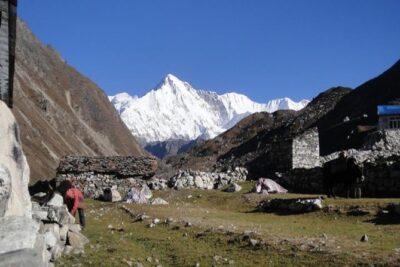
This is a heavy highlight day. You pass through Ekle Bhatti again, then climb to Taklam La Pass. From up there, you should get big views of named peaks like Tilicho peak, Yakwa Kang, and Damodar Dada. On the way, you pass Samar and stop near Ramchung cave, then continue to Syangbochen.
If you like memorable “I can’t believe I’m standing here” moments, this is the day for you. The pass makes it feel earned, not random. Just remember: pass days don’t care if your phone battery is at 37 percent. Build time for a slower pace.
Day 5: Syangbochen to Ghami
You move toward Ghami and walk through fields that include barley, with mountain backdrops that feel wide and exposed. Ghami is your overnight stop.
Ghami tends to give you a classic Mustang “everyday life” view: people farming what they can, living with limited water, and moving at a calmer pace than the trekking schedule.
Day 6: Ghami to Tsarang
Today you head to Tsarang, where you’ll see willow trees, maze-like farming patterns, stone wall houses, and a gompa that draws the eye.
This is a good day for culture-minded travelers. You’re not only walking between points. You’re collecting small “religion meets daily life” moments along the way.
Day 7: Tsarang to Lo Manthang (the walled city)
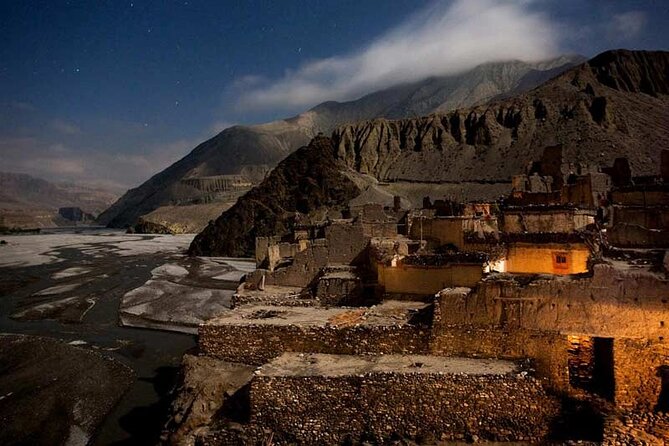
After breakfast, you gear up for Lo Manthang, described as the capital city of Mustang, in the walled-city setting of the region.
And yes, the names matter. Lo Manthang isn’t just a stop—it’s the reason many people come to Upper Mustang. The walled layout makes the transition feel physical. One minute you’re walking valley-to-valley; the next, you’re stepping into a place built to protect itself.
Days inside Lo Manthang: monasteries, durbars, and a slower kind of awe
Day 8: Explore Lo Manthang’s key sites
You get a full chunk of time to explore Lo Manthang. You’ll see big mountain views and then visit major religious and architectural sites, including:
- Durbar (four-storey)
- Chyodi Gompa
- Namgyal Gompa
- Tingkhar
- Tall Champa Lakhang Gompa
This is where your trek becomes more than hikes. You’re watching how power and faith shaped the town’s layout. I love this kind of day because it’s flexible enough for you to take short breaks, ask questions, and sit quietly when the light changes. It’s also a good counterweight to the trekking days that come before and after.
Day 9: Lo Manthang to Dri and the rock-painting Ghar Gompa
You head up toward Dri, known for the 1200 years old Ghar Gompa, famous for rock paintings. After a long walk, you reach Dri for the night.
Rock paintings are the kind of attraction that makes time feel strange—in a good way. You’re seeing art that has outlasted many empires, and it helps you understand how the Mustang religious tradition keeps telling the same stories through generations.
Day 10: Dri to Tange via Damodar Kunda and chortens
You walk to Tange. Along the way you pass shallow stream crossings, reach Damodar Kunda, and then move through a series of chorten before arriving.
Damodar Kunda matters because it’s not just scenery. It’s part of a sacred pathway. The chortens add rhythm to the walk—each one is a small checkpoint that turns walking into a kind of pilgrimage.
Muktinath and the return loop: wrapping up in Jomsom and Pokhara
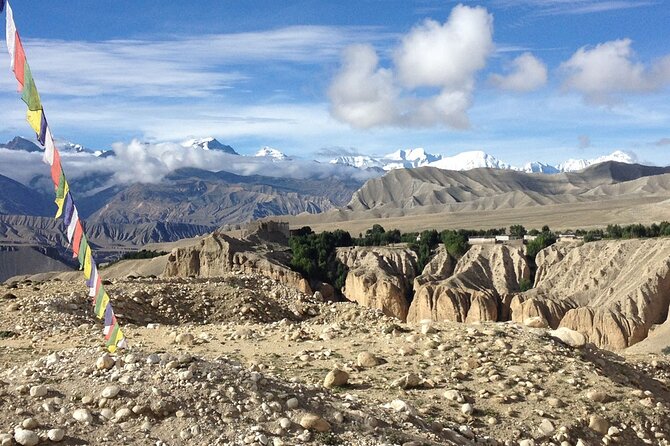
Day 11: Tange to Muktinath, then onward to Jomsom
After breakfast, you head to Muktinath. The route includes nature views on the way, and after a long walk you reach Jomsom for the night.
Muktinath is one of those spiritual anchor points in the region, and adding it into the trek makes the end feel more meaningful than just “we’re leaving.”
Day 12: Flight back to Pokhara and a real rest day
You fly back and then spend time resting and hanging around Pokhara. This is a good day for laundry, a slow meal, and letting your legs forget they were ever challenged.
Day 13: Pokhara to Kathmandu by tourist bus
After breakfast, you drive back to Kathmandu by tourist bus. It’s a simple finish. No big final hike. Just the transition back to traffic, cafés, and the normal world.
Tiji Festival: the special cultural timing you might catch
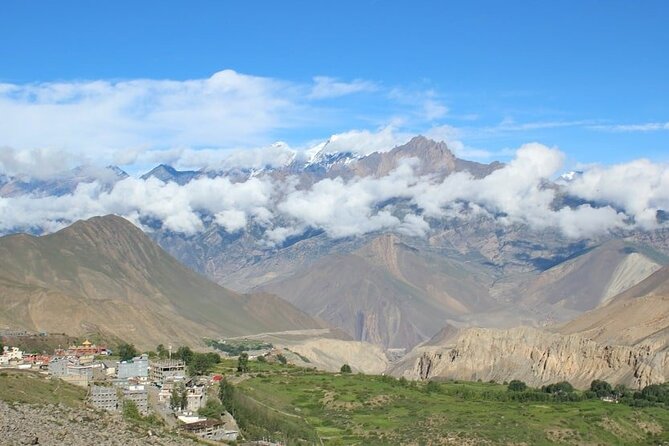
One of the big reasons to choose this trek is that it’s designed around the possibility of attending the Tiji Festival—a famous Mustang celebration—if it falls during your trekking window. If it happens during your dates, it can transform the trip from scenic and spiritual into something with real energy: color, ritual performances, and community celebration in a remote setting.
Practical tip: if festival days are within your range, be ready for schedule shifts around local events and crowds. Bring patience. Also bring a layer for cool evenings—festival lights don’t stop mountain weather.
Your team on the ground: English guide, porters, and small-group comfort
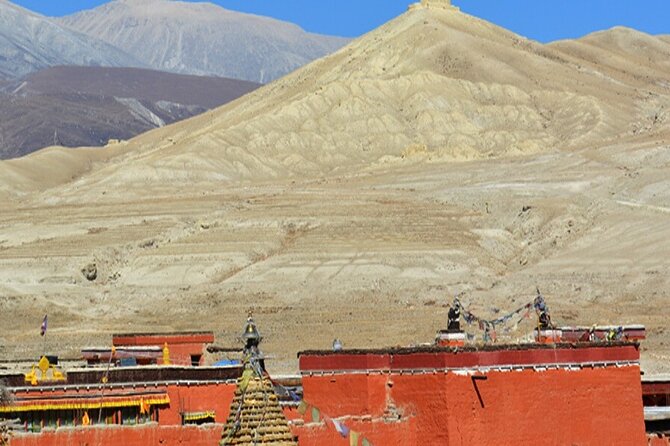
This is run with a maximum group size of 15 travelers, which is a quiet quality upgrade. In remote areas, smaller groups mean fewer bottlenecks and more room for questions.
You’ll have:
- a government licensed English-speaking guide
- porters to carry your luggage during the trek
- a duffle bag available if you need one
One name came up in past trekkers’ feedback: Mr Hari. People highlighted how helpful he was with setup and preparation questions. That kind of pre-trip support matters on a trek like this, where packing mistakes can snowball into comfort problems later.
Also, at the end, some trekking groups report a finish that includes a traditional Nepali dinner with a culture show. That sort of closing moment can be a nice way to make the trip feel complete. Just don’t count on it like a flight schedule—see what’s available for your specific dates.
What to pack and how to think about comfort (without overpacking)
Your program includes trekking days with about 6 hours on most hiking days, plus pass walking and longer canyon stretches. So you want comfort that works for real use, not just a good photo kit.
A good strategy:
- pack layers for morning chill and afternoon sun
- plan for dust (Mustang isn’t a place where you’ll feel clean after long walks)
- keep essentials easy to reach since you may be moving through villages and viewpoints
Water and snacks are not included in the cities and come at your cost, so budget for small daily purchases. The trekking meals are included in set counts, but that doesn’t always mean you’ll be covered for every snack break.
And if you’re thinking, I can carry everything myself, consider the porter setup. The program includes porters so you can keep your pack lighter for the long walking days.
Should you book Upper Mustang Short Trek?
Book this trek if:
- you want Lo Manthang and a walled-city cultural focus, not just mountain views
- you like a mix of walking plus monasteries, caves, and sacred stops
- you want a program that handles the Upper Mustang permits and ACAP paperwork for you
- you’re okay with moderate fitness and a steady pace
Skip or rethink if:
- you’re looking for a purely easy stroll with minimal exertion
- you hate early starts (meeting time is 6:45 am)
- you don’t have room in your budget for city meals and personal expenses during the trip
If you’re torn, here’s my straight take: this is one of those rare Nepal experiences where “the walking” and “the culture” are equally important. The permits and flights are baked in, and the route is built to show you more than one side of Mustang. You just need to show up ready to walk—and ready to look around.
FAQ
How long is the Upper Mustang Short Trek?
It runs for about 13 days.
Where does the trip start and what time is the meeting?
You meet in Kathmandu with a start time of 6:45 am.
Do I get pickup in Kathmandu?
Yes, pickup is offered.
Are flights included in the tour?
Yes. The itinerary includes domestic flights Pokhara–Jomsom–Pokhara, plus airport departure taxes.
What permits are included?
The tour includes Upper Mustang special permits and Annapurna Conversation Area Project (ACAP) permits.
Is there a hotel stay included?
Yes. You have a hotel in Pokhara as per the itinerary.
What meals are included during the trek?
The package includes breakfasts (12), lunches (10), and dinners (10). Major meals in Kathmandu and Pokhara are not included.
How many people are in the group?
The maximum group size is 15 travelers.
What fitness level do I need?
The tour says you should have moderate physical fitness.
What is the cancellation policy?
You can cancel for a full refund up to 24 hours in advance of the experience start time.