REVIEW · POKHARA
Pokhara: 3-Day Ghorepani, Poon Hill & Ghandruk Trek
Book on GetYourGuide →Operated by Snow Peak Tours and Travels pvt.ltd. · Bookable on GetYourGuide
Sunrise on Poon Hill can run your whole trip. This short Annapurna trek pairs Himalayan sunrise thrills with real village life at Ghandruk, plus the comfort of a guided setup and included meals and stays. One thing to plan for: it’s an early start day—your body will feel it before your eyes get the view.
I also like how practical this route is. You get pickup options around Pokhara, a mix of bus and jeep transfer time, and then steady hiking that’s long enough to feel like a trek but short enough to fit a tight schedule. The main trade-off is that the hiking days are paced to the schedule, so if you want lots of slow, unscheduled wandering, you may want to build in extra buffer time.
The good news is that the guide experience can make a big difference. With an English/Hindi/Nepali live guide in a private group, you’re not just walking for photos—you get help spotting mountains and noticing the smaller trail details that make this region feel alive.
In This Review
- Key points you’ll actually care about
- Pokhara to Ulleri: the transfer that sets your mood
- Day 1 to Ghorepani (2,840m): forests, stone steps, and your first tea-house night
- Day 2 Poon Hill sunrise (3,210m): the pre-dawn moment you’re paying for
- Day 3 Ghandruk village: Gurung culture, prayer flags, and the ride back to Pokhara
- Guides and the difference between walking and learning
- Tea houses and meals: simple stays, plus a budget question to ask
- Price and value: is $190 a fair deal for Pokhara to Annapurna?
- Who this 3-day Ghorepani–Poon Hill–Ghandruk trek is for
- Should you book this trek?
- FAQ
- What’s the duration of the Pokhara 3-Day Ghorepani, Poon Hill & Ghandruk trek?
- What pickup and drop-off locations are available in Pokhara?
- Are meals and accommodation included?
- Do I need trekking permits?
- Is a trekking porter included?
- What languages is the live guide available in?
- Is travel insurance required?
Key points you’ll actually care about
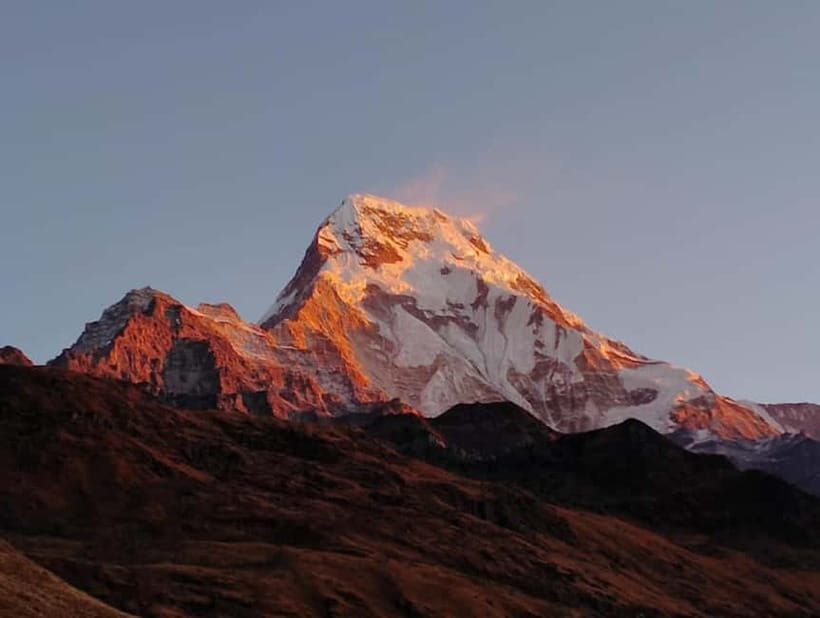
- Poon Hill sunrise at 3,210m: pre-dawn climb for those pink-orange-gold sky moments
- Ghorepani stop at 2,840m: an overnight base that keeps the views coming
- Rhododendron trail to Tadapani (2,630m): birds, forest walking, and a calmer second-day pace
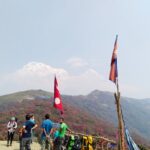
- Ghandruk Gurung village scenery: terraced fields, stone houses, and colorful prayer flags
- Private guided comfort: a certified guide and included logistics so you’re not guessing
- Gear and structure included: trekking sticks and sleeping bags as needed, plus tea-house or lodge nights
Pokhara to Ulleri: the transfer that sets your mood
Most people think they’re booking a trekking tour, but the real mood-setter here is the Pokhara-to-start transport. You can be picked up from several spots in the Pokhara area (including Lakeside and Sarangkot) and even the Pokhara International Airport. Plan on a few hours of overland driving—bus/coach time mixed with jeep/SUV legs—because the Annapurna foothills don’t just look close on a map.
Those drive segments matter because they shape your first-day energy. If you’re the type who hates being rushed, it helps to mentally accept the travel time as part of the experience rather than something you’re enduring. I like tours that treat the transfer as a real day-one activity, with short breaks and photo stops rather than nonstop sitting.
When you reach Ulleri, you get a break plus a photo stop and guided time before the actual walking begins. That’s a small thing, but it helps you get your bearings fast—especially on a short trek where there’s no room for confusion.
You can also read our reviews of more tours and experiences in Pokhara.
Day 1 to Ghorepani (2,840m): forests, stone steps, and your first tea-house night
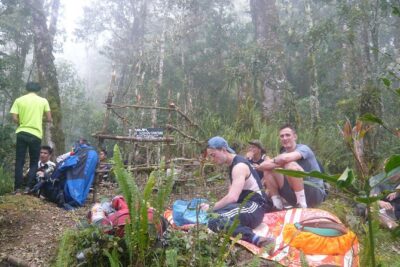
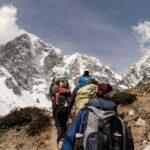
Day 1 starts with the drive to Ulleri, then the trail climbs from there up toward Ghorepani (2,840m). Expect lush forest walking and plenty of stone steps, the kind that gradually gets your legs working without a sudden “wall” of effort. It’s classic Annapurna foothills terrain: you’re moving through greenery, stopping for photos when your guide suggests it, and arriving ready for a proper mountain evening.
Ghorepani is your first overnight at a respectable elevation. That means the air tends to feel crisp once the walking is done, and the views start to become part of the “after-hike” experience, not just the sunrise plan. Tea houses or lodges here are simple by design. You’re not paying for luxury; you’re paying for a functioning base that’s in the right place for tomorrow morning.
What I like about a Ghorepani overnight is that it makes Poon Hill feel possible. If you’re coming in for sunrise only and skipping the overnight, you lose that acclimation-by-routine effect. Here, you’re already at the right altitude for the big morning.
Day 2 Poon Hill sunrise (3,210m): the pre-dawn moment you’re paying for
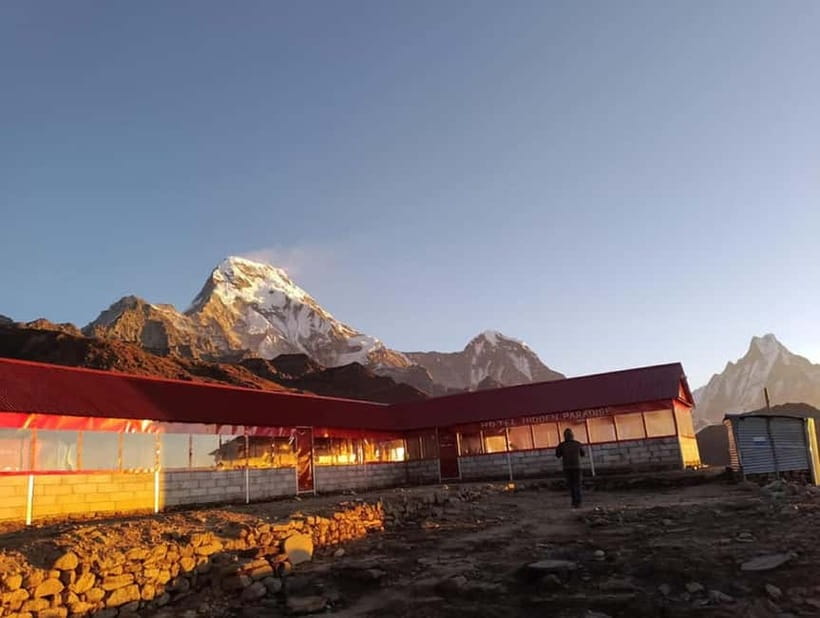
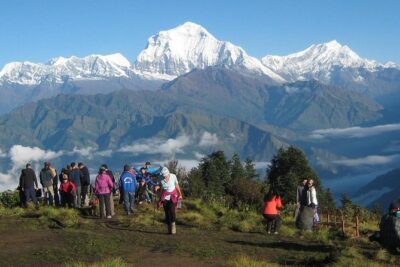
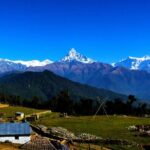
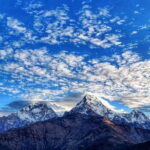
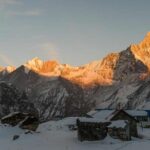
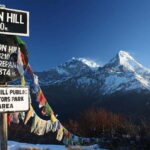
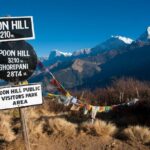
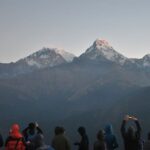
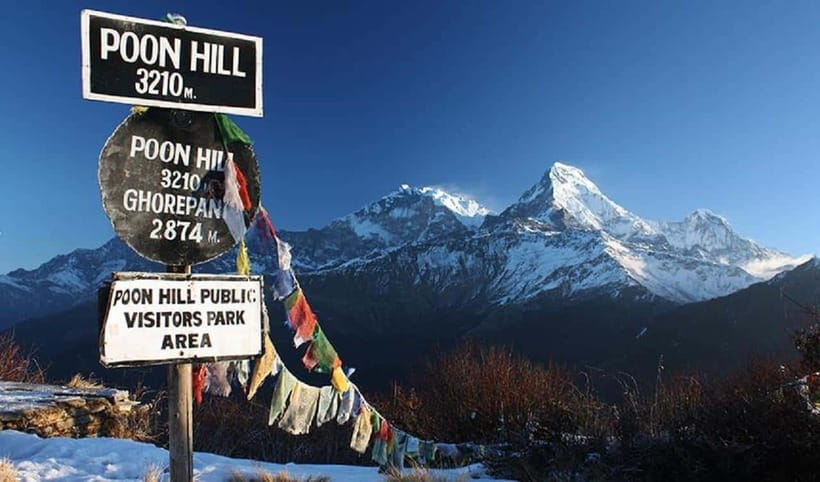
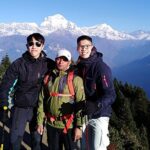
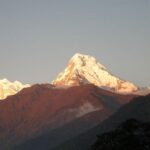
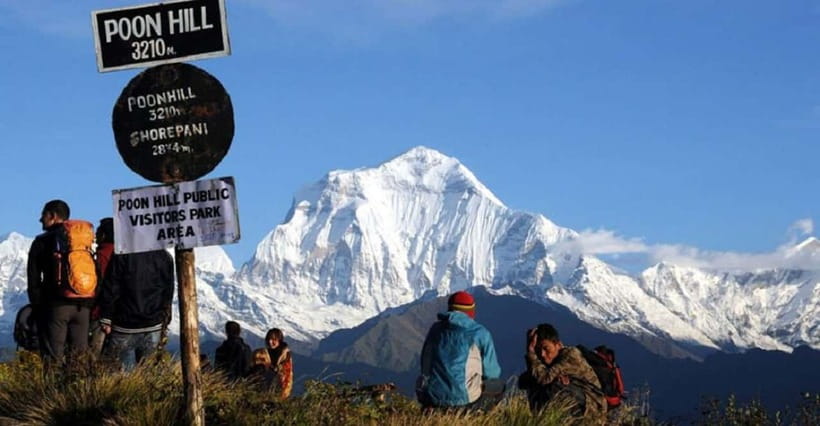
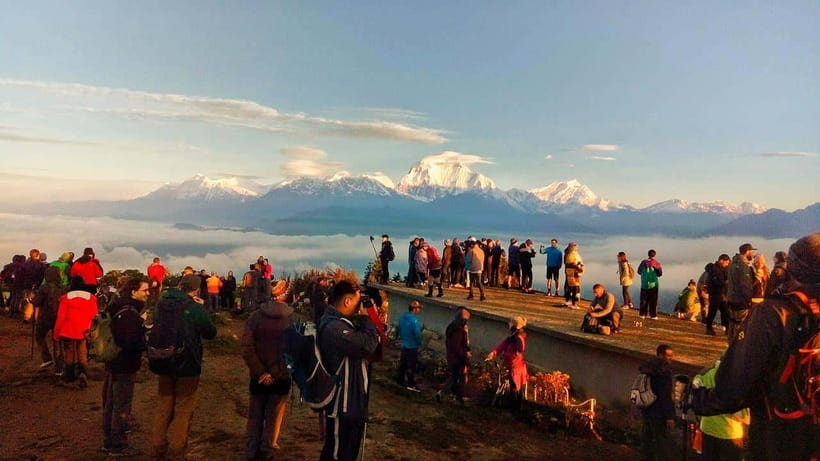
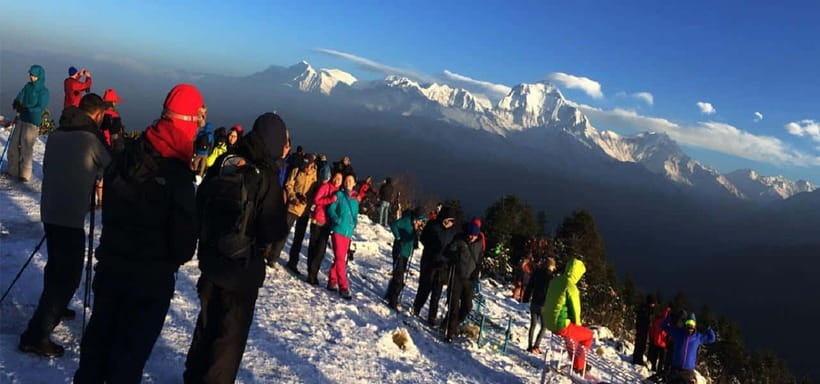
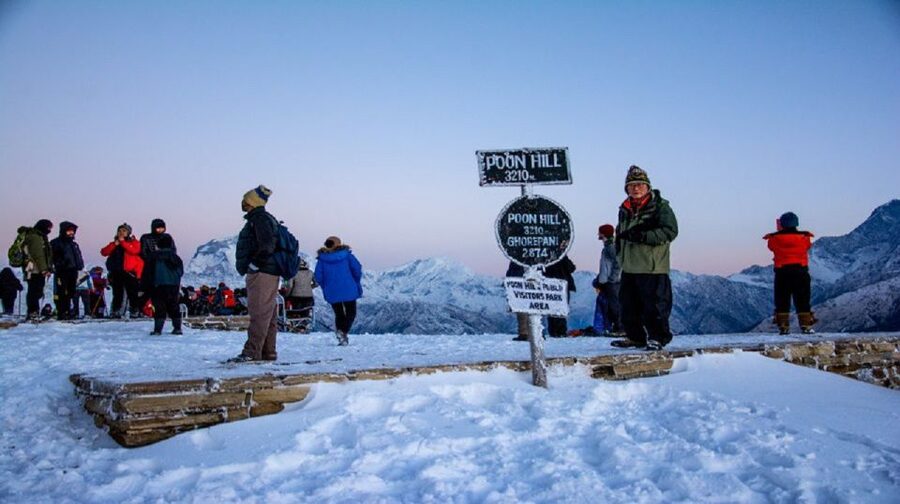
This is the day. You rise before dawn and head to Poon Hill (3,210m). The goal is first light hitting snow-capped peaks, with the sky shifting through pink, orange, and gold tones. If you’re even slightly interested in Himalayan views, this is the kind of “I get it now” payoff that justifies the whole trek.
The route to the viewpoint is short but not effortless. Sunrise treks have a specific rhythm: quiet dark paths, then sudden action as the sky warms up. It helps to wear layers and move with a steady pace, because pre-dawn conditions can feel colder than you expect once you’re up high.
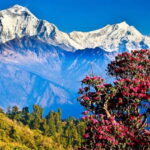
After you’ve soaked in the view and taken enough photos to calm your phone battery anxiety, you continue the trek onward to Tadapani (2,630m). This part leans more toward rhododendron forest walking and calmer trail energy. The forest setting is a welcome change after the sunrise focus. Birds and vegetation become the story, and that’s where the guide can really earn their pay.
This is also where a well-tuned guide makes a difference. In this region, the best ones point out things you’d otherwise miss—like small wildlife in the trees (including monkeys), vegetation details at your feet, and even beehives built on rock walls. You end up leaving the trail with more than just photos.
Tadapani is another overnight point, and it keeps the itinerary balanced: sunrise intensity on one side, forest calm on the other.
Day 3 Ghandruk village: Gurung culture, prayer flags, and the ride back to Pokhara
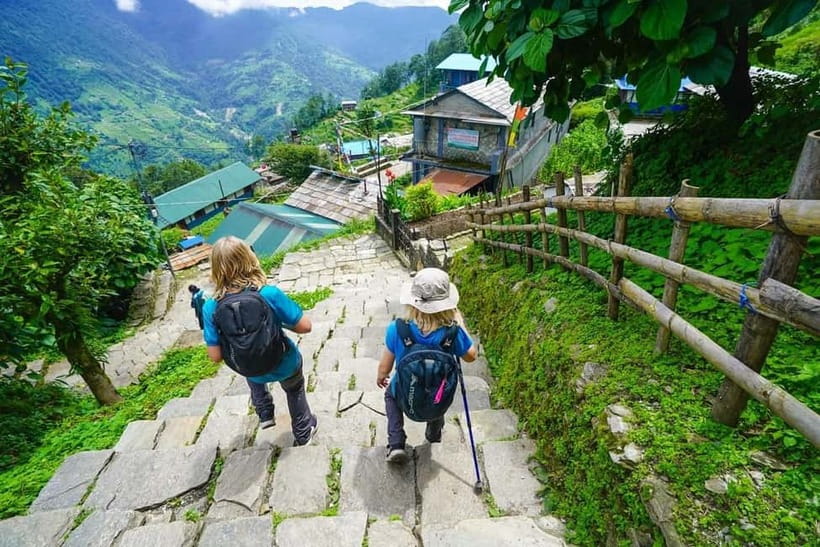
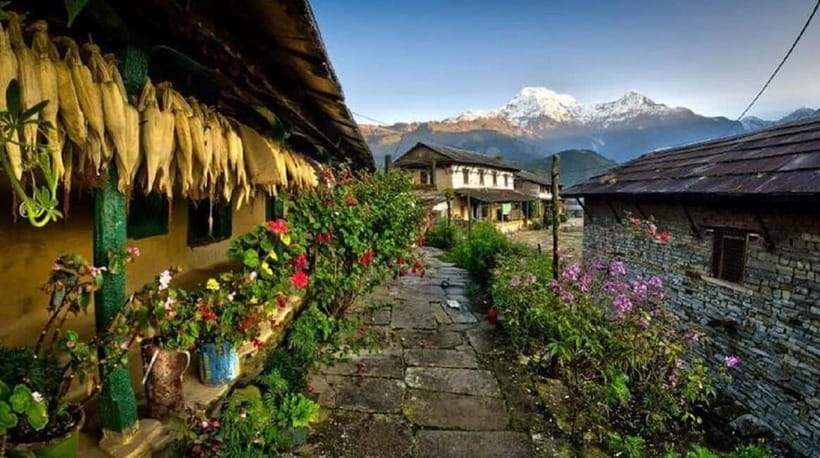
The last day is about Ghandruk—one of the Annapurna villages that feels both scenic and lived-in. You trek to Ghandruk, a charming Gurung village known for stone houses and terraced fields. Colorful prayer flags add a strong visual identity, and the whole place reads like a postcard, but with daily life happening around you.
I like village days that don’t force you into a museum-style checklist. This one is paced for exploring: you take time to wander, interact with locals if you want, and soak up the mix of village rhythm and big mountain surroundings. It’s the kind of stop that helps you understand what all that trekking is really for—seeing how people make life work in the mountains.
After the village time, you drive back to Pokhara as the afternoon light starts to soften. The return journey is another bus/jeep mix, and that’s actually a nice ending. You finish with views, then swap hiking boots for seat time and a hot meal back in town.
If you’re tight on schedule in Nepal, this structure is smart: two nights in mountain villages, then one “culture + drive” finale.
Guides and the difference between walking and learning
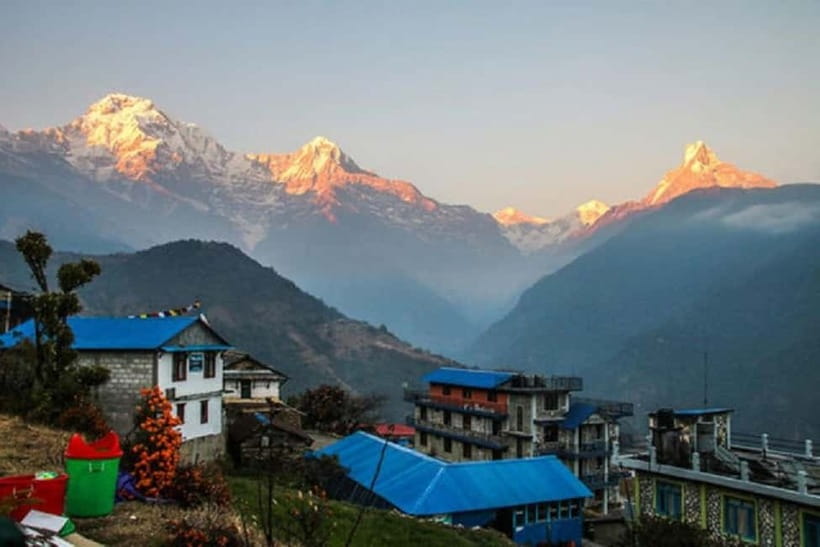
This trek is a guided private group, so you’re not left figuring out the best photo points or how to interpret what you’re seeing. The guides are described as experienced and certified, and they work in English, Hindi, and Nepali.
The practical benefit is clarity. A good guide will explain what mountains you might be looking at, how the trail is laid out, and what’s going on in the surrounding forest. I really like when a guide goes beyond “turn here” instructions and helps you notice the living parts of the trek—wildlife, vegetation, and the small human details built into the scenery.
Names matter here because you’ll hear them used by operators and groups (for example, guides like Jeet, Anil, and Sanjay). And the praise attached to those names is consistent: warm energy, clear explanations, and a knack for spotting trail details.
That matters for you because short treks can feel like a blur. If the guide helps you connect dots—mountain names, local features, and what you’re walking through—you end the trek with understanding, not just movement.
Tea houses and meals: simple stays, plus a budget question to ask
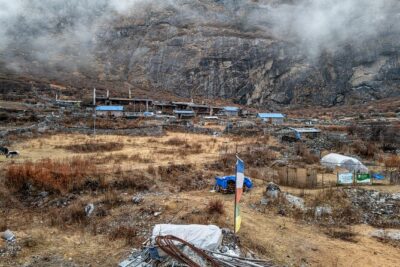
Accommodation along the route is in simple tea houses or lodges. That’s part of the charm, and it’s also part of the reality. You’re staying where trekkers stay, not in high-end hotels.
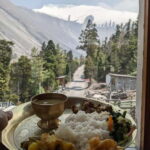
Meals are included depending on your chosen option. This is where I’d encourage you to check the details before you get hungry and find out you’re not sure what you’re paying for. One common budget concern is that prepaid meal plans can feel pricey compared to ordering directly at the tea houses.
So here’s the practical move: confirm exactly what meals are included in your option and whether you can eat some meals independently if you choose. You don’t need to micromanage. You just want to avoid surprises on day two and day three when you’re tired and ready to eat.
Also remember: snacks and beverages are not included as personal expenses. If you like sweet treats, electrolyte drinks, or just want a soda after a climb, plan for that cost.
Price and value: is $190 a fair deal for Pokhara to Annapurna?
At $190 per person, this is a short trek package with real structure. You’re not just buying the right trail. You’re buying:
- Round-trip transportation between your hotel/airport area and the trek start
- Trek permits and required fees
- Meals throughout the trek (depending on option)
- Tea-house or lodge accommodation
- An experienced, certified trekking guide
- Guide expenses (meals, lodging, insurance, salary, transportation, equipment)
- Government and local taxes
- Trekking gear like sticks and sleeping bags as needed
That’s a lot of overhead bundled into one number. Where the value can shift is in optional extras and food choices. A porter is optional at $15 per day, which can be a smart move if you’re carrying less and want to keep energy for the views.
The other “value check” is your meal plan option. If you’re someone who’s happy eating whatever’s on the included plan, then the package feels cleaner. If you’re used to comparing tea-house menus and pricing, you may want to understand how the package meal pricing works in your specific option so you can decide if you want to stick with it.
Overall, the price makes sense if you want a guided, low-stress trek with logistics handled. It’s less about luxury and more about not having to organize everything yourself for a tight 3-day window.
Who this 3-day Ghorepani–Poon Hill–Ghandruk trek is for
This trek fits best if you want:
- A classic Annapurna sunrise experience without a long multi-week commitment
- Village time at Ghorepani and Ghandruk, not just viewpoint photos
- A guided experience with explanations and help navigating the trail
- A short schedule from Pokhara that still feels like trekking
If you hate early mornings, day two may feel like a penalty. But if sunrise views are your priority, this is one of the most direct ways to get them.
Also, since it’s a private group, it suits couples, small families, or friends who prefer a more controlled pace and personal attention from the guide.
Should you book this trek?
Yes, if you want the Annapurna highlights in 3 days and you value a guide that helps you understand what you’re seeing. The Poon Hill sunrise is the headline, but the Ghorepani overnight and the Ghandruk village finish turn it into more than a one-morning detour.
I’d hesitate only if you strongly dislike pre-dawn wake-ups or you want maximum freedom to roam without a set structure. In that case, you might prefer a longer trek where you can slow down and add flexibility.
If you’re choosing between options, ask one key question: what meals are included in your specific plan, and what costs are likely to sit outside the package (snacks, beverages, optional porter)? Answer that, and you’ll know whether the $190 feels like a smooth deal or an annoying one.
FAQ
What’s the duration of the Pokhara 3-Day Ghorepani, Poon Hill & Ghandruk trek?
The trek lasts 3 days. Starting times can vary, so availability determines when the group begins.
What pickup and drop-off locations are available in Pokhara?
Pickup and drop-off options include Pokhara International Airport (PIA), Pokhara Lakeside (including Lakeside Road and Lakeside-6), and Sarangkot.
Are meals and accommodation included?
Meals throughout the trek are included depending on the option you choose. Accommodation is provided in simple tea houses or lodges along the route.
Do I need trekking permits?
Yes. The price includes all required permits and fees for the trek.
Is a trekking porter included?
A porter is optional and available at $15 per day. The base package includes a guide, but porters are not automatically included.
What languages is the live guide available in?
The guide provides interpretation in English, Hindi, and Nepali.
Is travel insurance required?
Travel insurance is mandatory for safety and peace of mind, even though emergency rescue services are available if needed.