REVIEW · KATHMANDU
Mohare Danda Trek
Book on Viator →Operated by Asian Heritage Treks and Travels · Bookable on Viator
Mohare Danda delivers quiet Himalayan views on a schedule that actually works. This 12-day Eco-Community Lodge trek in Annapurna’s foothills mixes lesser-used village trails with major sunrise viewpoints, plus a Kathmandu cultural warm-up before you even lace up. I love the off-the-main-path feel and I love the eco-community lodge setup that keeps the trek grounded in local life. One consideration: plan for extra entrance fees for heritage sites in the city and some early starts if you want the best light at the viewpoints.
I also like how the experience is built around real people doing real work. In prior departures, guide Norris and porter Melan have been praised for careful support and local know-how, which matters a lot when you’re trekking on paths that aren’t designed for tourists with perfect timing. The itinerary has a clear pace, but it’s still walking days stacked back-to-back.
If you have moderate hiking fitness and you don’t mind a few long driving blocks between Kathmandu, Pokhara, and trailheads, this is a very practical way to see more of Nepal than just the famous postcard stops.
In This Review
- Key things to know before you go
- Price and logistics: what you’re really paying for
- Fitness and pace: the “moderate” reality check
- Kathmandu warm-up: Swayambhunath to Pashupatinath to Thamel
- Pokhara setup: the drive that resets your mindset
- Day 4 trailhead to Bans Kharka: Galeshwor, Kali Gandaki, and a suspension bridge
- Day 5 to Naangi: villages, an organic farm school, and Magar community time
- Mohare Danda on day 6: forests, big views, and a sunset station
- Ghorepani on day 7: sunrise first, then the long middle day
- Poon Hill and Ghandruk on day 8: classic light, local villages, and bridge time
- Day 9 descent to Nayapul: stone paths, terraces, and the long exhale
- Day 10–11 in Kathmandu: Durbar Squares and a hands-on pottery workshop
- Day 12 departure: timing that keeps stress low
- Who this trek suits best (and who should think twice)
- Should you book Mohare Danda Trek?
- FAQ
- Where does the trek start and what time?
- How long is the Mohare Danda Trek?
- What fitness level do I need?
- What’s the group size?
- What meals are included during the trip?
- Are entrance fees included for heritage sites in Kathmandu Valley?
- Is porter service included?
- What accommodations do I get?
- Is free cancellation available?
Key things to know before you go
- Eco-community lodges with full-board trek days means fewer decisions once you’re on the route
- Mohare Danda viewpoints around 3300m give close, dramatic looks toward Annapurna and Dhaulagiri
- Sunrise timing at Mohare Danda and Poon Hill (3210m) is the big payoff, with multiple mountain angles
- Local village days with Naangi and a Magar settlement add culture without turning the trip into a museum tour
- Kali Gandaki and Khumbu Khola suspension bridges give that hands-on rope-and-views feeling
- Porter support (2 trekkers : 1 porter) helps you keep energy for the longer walk days
Price and logistics: what you’re really paying for
The Mohare Danda Trek is priced at $1,375.33 per person for about 12 days. On paper, that can sound steep until you look at the workload it covers. You’re getting land transportation by private vehicle for transfers between Kathmandu, Pokhara, and the trail region, plus an English-speaking local guide and the paperwork side (ACAP, TIMS, and other necessary permits). You’re also covered for porter service, with a ratio of 2 trekkers to 1 porter, and staff costs including insurance, equipment, and accommodation.
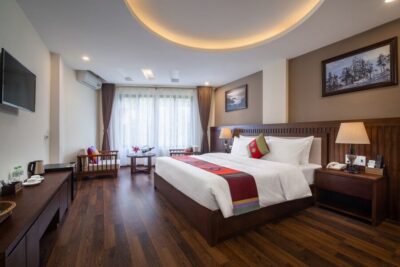
You should also notice where the cost is heavy versus light. The trek portion includes 5 nights in eco-community lodges on a full-board basis, and Kathmandu + Pokhara include multi-night hotel stays (4 nights in Kathmandu at a 4-star property level, and 2 nights in Pokhara). Meanwhile, meals in Kathmandu and Pokhara are not included, and drinks are not included anywhere—so you’ll still spend some money once you reach cities.
One more practical point: heritage entrance fees in Kathmandu Valley are not included (listed as about USD 50 per person). That’s worth budgeting early so you don’t end up doing math while everyone else is ready to go in.
You can also read our reviews of more tours and experiences in Kathmandu.



Fitness and pace: the “moderate” reality check
This trek calls for moderate physical fitness, and the hiking days are built around long-but-manageable walking blocks. You’ll see trekking days that run roughly 3 hours, 5 hours, and 6–7 hours, plus one section that combines steady ascent with forest trail and bridge crossings.
The itinerary also has a few driving days, which helps the pacing overall, but it means you’re not just hiking—you’re also traveling. If you’re the type who likes a relaxed itinerary with lots of downtime, you might find some days feel packed. If you like structure, this is the kind of trip that keeps you moving with purpose.
Kathmandu warm-up: Swayambhunath to Pashupatinath to Thamel
Your trip starts in Kathmandu with a pickup at Tribhuvan Airport and a transfer to a downtown hotel in the Thamel area. That’s useful because Thamel is close to a lot of the services you’ll want right away: gear shops, casual meals, and places to settle before your trek.
Day 1 is a good “get your bearings fast” mix of Kathmandu icons you can reach without complicated logistics. You pass by Pashupatinath Temple, the Narayanhity Royal Palace Museum, and the Garden of Dreams, then end in Thamel.
Day 2 is even more direct: Swayambhunath Temple (the Monkey Temple) with its famous city and mountain views, then Boudhanath Stupa, dated to around 600 A.D., where the scale and prayer-ritual vibe are the point. After that you go to Pashupatinath Temple and the adjacent Guhyeshwori Temple area, including a chance to see body cremation ceremonies on the Bagmati River banks. Whether you find that spiritually moving or simply intense, it’s a powerful cultural contrast to the quieter mountain trekking days.
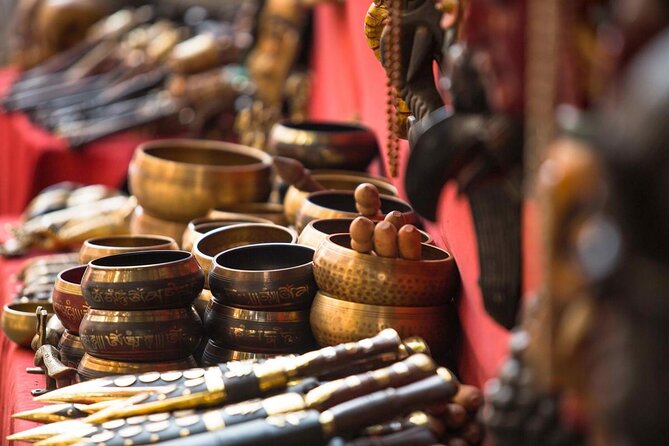
You end Day 2 in Thamel with time to shop for souvenirs and crafts. This is also where you can top up personal items you’ll need for the trek—just remember that your included meals are mostly on the trekking days, not in the cities.
Pokhara setup: the drive that resets your mindset
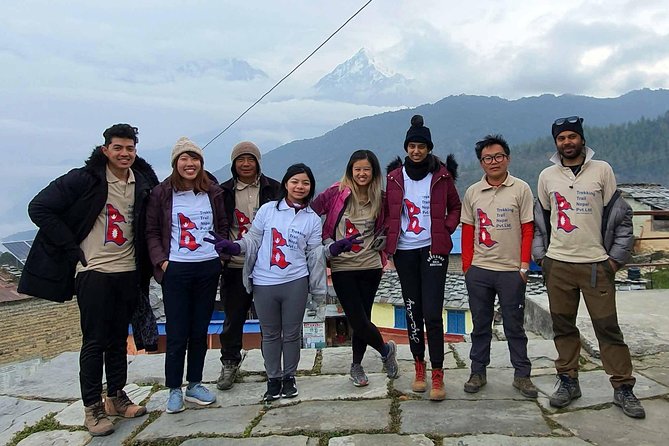
On Day 3, you drive from Kathmandu to Pokhara. The itinerary highlights the Pokhara valley’s natural beauty and the classic view connection between mountains and Fewa Lake. Even if you’re not a “lake person,” Pokhara is where the trip starts to feel more like a hiking journey than a city tour.
This day is mostly about transition and comfort. You’re putting yourself in the right base area for the trail. If you tend to get restless when travel is too slow, this is still a good speed—enough time to see the changing hills and reset mentally before the first walking day.
Day 4 trailhead to Bans Kharka: Galeshwor, Kali Gandaki, and a suspension bridge
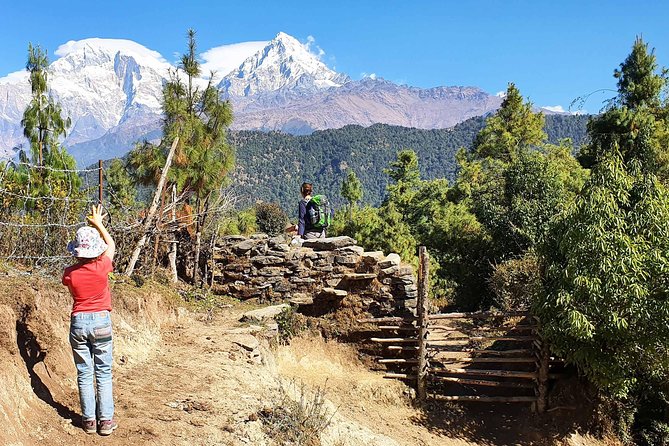
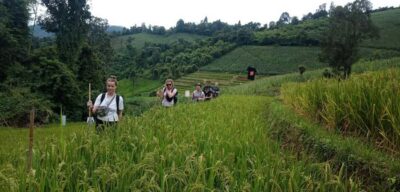
Day 4 begins with a transfer toward Galeshwor along the Kali Gandaki River, about a 3-hour ride. Then you start trekking to Bans Kharka for about 3 hours. This is one of the better “intro” days because it’s not too long, but it still gives you the real Annapurna foothills experience.
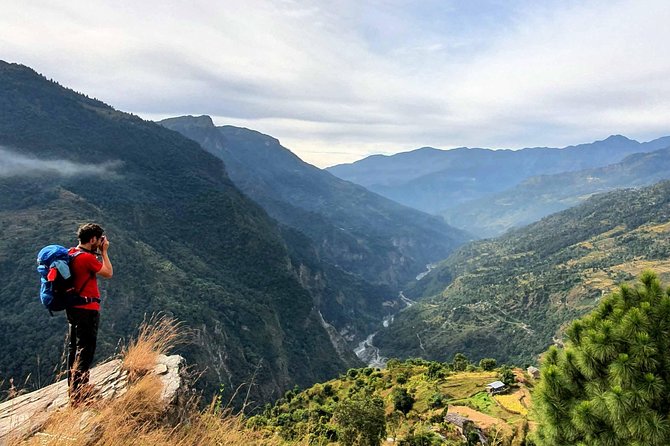
The highlight is the crossing of a suspension bridge over the Kali Gandaki River, including reference to it being part of the deepest gorge. The exact vibe depends on weather and river conditions, but the core experience is consistent: you’re moving through forest and gorge country, not flat garden paths.
You’ll also get time on the trail through lush areas with forest cover before you reach Bans Kharka. It’s a day that helps your body learn the rhythm without exhausting you right away.




Day 5 to Naangi: villages, an organic farm school, and Magar community time
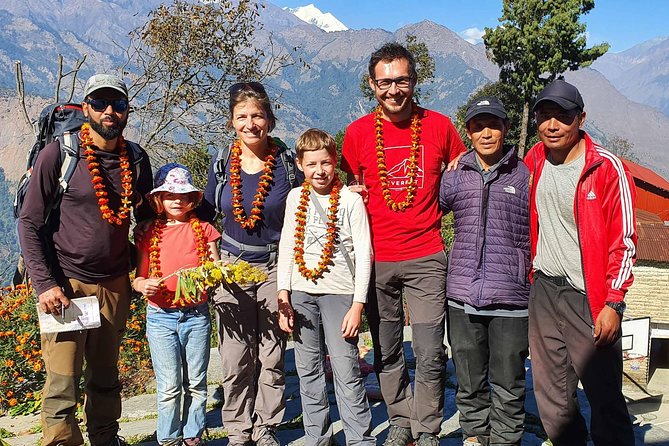
On Day 5, the walk to Naangi is a longer day at about 6–7 hours. This is where the trek starts to feel like a real local journey rather than a guided walk between viewpoints.
The route runs through villages and gives mountain and landscape views as you go. Two cultural stops make this day stand out:
- An organic farm school
- A Magar settlement
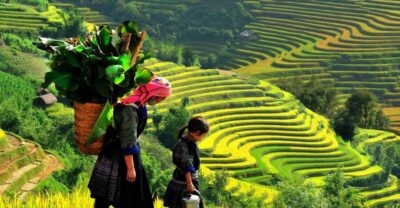
Those two additions matter because they connect the trekking route to daily life and local systems for farming and community education. If you want your trip to do more than scenic photos, this is the kind of stop that makes the later eco-lodge days feel less like a gimmick and more like a real exchange.
Mohare Danda on day 6: forests, big views, and a sunset station
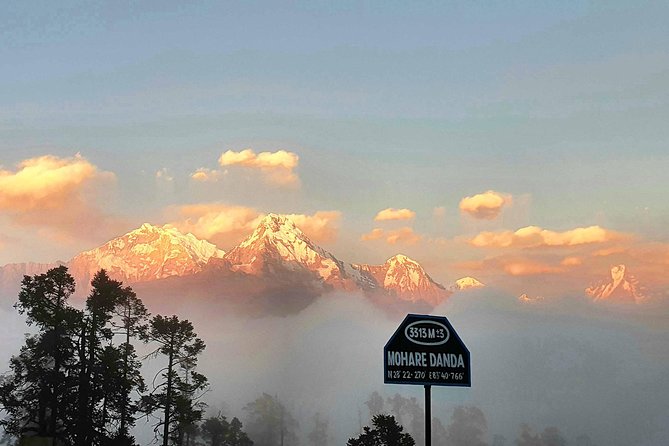
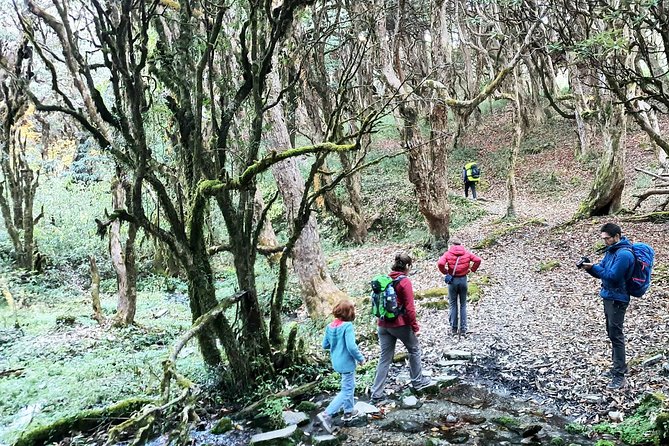
Day 6 is when you reach Mohare Danda itself, after trekking through oak and rhododendron forests. The itinerary calls out views of major nearby peaks—Mt. Fishtail, south Annapurna, Dhaulagiri, Tukche, and others. Even if the day’s visibility varies, this is clearly a major viewpoint day built around where the trail takes you.
The day ends with a sunset view from Mohare Danda station, then you return to the eco-community management lodge for the night. This structure is smart: you’re not just hiking until tired, you’re hiking to a reason. If you like photography, this is also the kind of time of day when even a simple moment—orange light on distant ridges—turns into the memory.
A practical note: sunset plans depend on cloud cover. If visibility is poor, the lodge-time and village feel still make the day worthwhile, but don’t assume perfect skies.
Ghorepani on day 7: sunrise first, then the long middle day
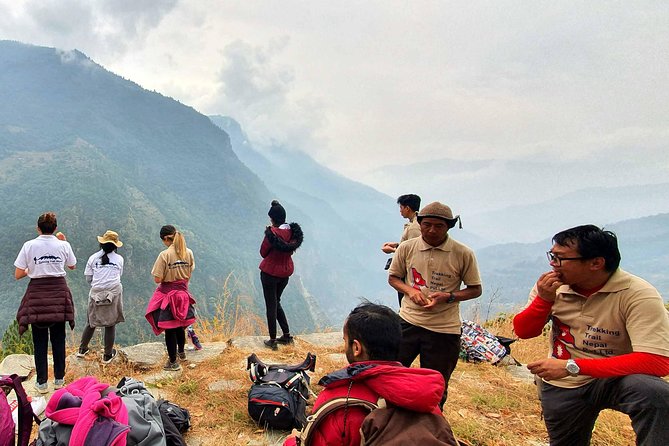
Day 7 includes a wake-up early sunrise setup at the lodge area, with views of mountains such as Mount Fishtail, Dhaulagiri I and II, Tukche, South Annapurna, Nilgiri, and more. Then you trek to Ghorepani for about 5 hours, with a gradual ups-and-downs profile.
Ghorepani is the practical hub for what comes next. It’s also where you’ll likely notice how the trails feel more established and more focused on sunrise viewpoint traffic. That doesn’t ruin the experience; it just means the next day’s highlight is easier to plan.
This is also a good day to pace yourself. You want enough energy for the early morning push and the longer village walk that follows.
Poon Hill and Ghandruk on day 8: classic light, local villages, and bridge time
Day 8 starts with an early trek to Poon Hill (3210m) to catch the first ray of sunlight. Poon Hill is famous for a reason: the itinerary calls out sunrise over Mt. Annapurna, plus panoramic views including Annapurna and Dhaulagiri range peaks.
After sunrise, you return to Ghorepani for breakfast, then begin the trek to Ghandruk for about 7 hours. This segment is longer and more about walking through a variety of terrain: flatlands, forests, cultivated lands, and a suspension bridge crossing Khumbu Khola.
Ghandruk itself is where the trip’s feel shifts from viewpoint-focused to village-focused. If you want a bit of rhythm variety—less “stop for photos every ten minutes” and more “walk and watch village life”—this is your day.
The only drawback here is the time commitment. Seven hours is a solid day, and you’ll feel it the next morning unless you manage your pace and hydration.
Day 9 descent to Nayapul: stone paths, terraces, and the long exhale
Day 9 is your descent day back toward roads. After breakfast, you trek down to Nayapul, about 5 hours. The route is described as paved by stones and passing through villages and terrace framings.
You cross Modi Khola to Birethanti, then continue to Nayapul. From there, a private vehicle is waiting to take you to Pokhara for a hotel transfer.
This day is valuable because it gives you a full-body finish: legs get a workout but you’re not climbing higher. Mentally, it also closes the loop. You’ll feel the shift from trekking logistics to normal vacation time in Pokhara.
Day 10–11 in Kathmandu: Durbar Squares and a hands-on pottery workshop
Day 10 is a drive back to Kathmandu from Pokhara, then some free time around Thamel for shopping and souvenirs.
Day 11 is a classic Kathmandu Valley culture day with major UNESCO-related stops and a workshop element:
- Bhaktapur Durbar Square, with guide explanations and time for your own meal choice
- Pottery Square, including a workshop where a local craftsman teaches you how to make a clay pot
- Patan Durbar Square, plus visits to Krishna Temple and Patan Museum
- The Golden Temple and Banglamukhi Temple
This mix is one of the best parts of the trip if you enjoy craft and architecture. The pottery workshop is particularly practical because it gives you something you can point to later that isn’t only a photo.
Day 12 departure: timing that keeps stress low
Your last day is straightforward: you get assisted with onward travel arrangements and a private van transfer to Tribhuvan International Airport, scheduled around 3 hours before your flight.
That timing matters. After a trek, you want a departure flow that doesn’t turn into a last-minute scramble.
Who this trek suits best (and who should think twice)
This Mohare Danda Trek fits you best if you want:
- A trek that mixes big mountain viewpoints with village life
- Eco-community lodge nights during the walking days
- Sunrise planning at multiple points (Mohare Danda and Poon Hill)
- A supported experience with an English-speaking guide and porter help
It’s a weaker match if you:
- Hate early mornings and photo-focused sunrise plans
- Don’t want to budget for extra entrance fees in Kathmandu
- Want a trip with more free time and fewer hiking hours
Also, the group size is capped at 12, which usually helps keep the experience from feeling overcrowded.
Should you book Mohare Danda Trek?
I’d book it if you’re after a smart blend of the Annapurna foothills: quiet trekking days, clear cultural stops, and viewpoint payoffs without needing to manage permits and logistics on your own. The value is strongest when you look at what you get for the trek section—eco-community lodge full-board nights, porter support, and permits handled—then compare it to the extra costs you’ll still pay (city meals, drinks, heritage entrance fees, and personal gear).
If you’re comfortable with moderate fitness and you’re okay carrying some of your own planning mindset (especially budgeting entrance fees and preparing for sunrise starts), this is a very practical, human-scale way to see a part of Nepal that isn’t just one big scenic highway.
FAQ
Where does the trek start and what time?
It starts at Tribhuvan Airport in Kathmandu, with a start time listed as 9:00 am.
How long is the Mohare Danda Trek?
The duration is listed as 12 days, approximately.
What fitness level do I need?
The tour recommends travelers have a moderate physical fitness level.
What’s the group size?
The maximum group size is listed as 12.
What meals are included during the trip?
Breakfast is included 10 times, lunch 6 times, and dinner 5 times. Food in Kathmandu and Pokhara is not included.
Are entrance fees included for heritage sites in Kathmandu Valley?
No. Entrance fees are listed as approximately USD 50 per person and are not included.
Is porter service included?
Yes. Porter service is included, with a ratio of 2 trekkers to 1 porter.
What accommodations do I get?
Kathmandu includes 4 nights at 4-star Yatri Suites & Spa (or similar). Pokhara includes 2 nights at Batika Classic Hotel (or similar). The trek includes 5 nights in eco-community lodges with full-board basis.
Is free cancellation available?
Yes. Free cancellation is available up to 24 hours in advance for a full refund.