REVIEW · MOSHI
Kilimanjaro Trek 7 Days – Machame Route
Book on Viator →Operated by Kilitwende Adventures · Bookable on Viator
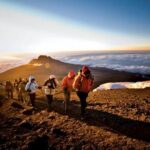
Climb a mountain that changes color every day. The Machame Route is the popular, scenic route on Kilimanjaro, often nicknamed the Whiskey route, and it stacks varied ecosystems into a steady 7-day rhythm that helps most hikers feel acclimatized rather than rushed. I like how this plan links habitat changes to real hiking days, from rain forest to heath to alpine desert and finally the arctic conditions near Uhuru Peak.
I also like that the package is built for logistics, not just the trail. You get hotel nights in Moshi before and after, gate transfers, camping fees and rescue coverage, a full crew, and base trekking comfort like tents, mattresses, meals, and even a portable flush toilet—so you can focus on breathing and moving.
One drawback to consider: Kilimanjaro runs on weather windows. If conditions are too poor, your trek can be canceled and rescheduled, so you’ll want flexible plans and patience.
In This Review
- Key Highlights You’ll Care About
- Machame Route on Kilimanjaro: The 7-Day Scenic Bet From Moshi
- Price and Logistics: What $2,890 Really Buys You
- Day-by-Day Machame Route: Rain Forest to Uhuru Peak
- Day 1: Moshi to Machame Gate, Into Rain Forest to Machame Camp
- Day 2: Rain Forest Out, Heath and Moorlands to Shira Cave Camp
- Day 3: Lava Tower Altitude Work, Then Senecio Forest Down to Barranco Camp
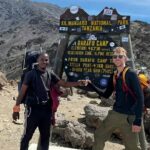
- Day 4: Barranco Wall Up, Karanga Valley Down to Karanga Camp
- Day 5: Barafu Hut and the Southern Circuit Finish Feeling
- Day 6: Midnight Summit Push to Stella Point, Uhuru Peak, Then Down to Mweka Camp
- Day 7: Final Descent to Mweka Gate and Summit Certificate
- Your Summit Team and Camps: The Comfort Details That Matter
- Getting There From Moshi: Start Time, Gate Transfers, and the Clean Exit
- Who This Machame Trek Fits Best (and Who Should Be Cautious)
- Should You Book the Kilimanjaro 7-Day Machame Route?
- FAQ
- How long is the Kilimanjaro trek on the Machame Route?
- Where does the trek start and end?
- Is pickup from Moshi included?
- What time does the trek start?
- What’s included in the price?
- What is not included?
- Does the trek include meals during the climb?
- Do you get oxygen for emergencies?
- What sleeping gear might I need to bring or hire?
- What happens if weather is poor?
Key Highlights You’ll Care About
- Whiskey Route nickname: Machame is the most popular Kilimanjaro route and known for strong scenery.
- Acclimatization built into the profile: Lava Tower time helps even though the day returns to the same elevation range.
- Camp and comfort support: sleeping tent setup, foam mattress, mess tent with lanterns, and a portable flush toilet.
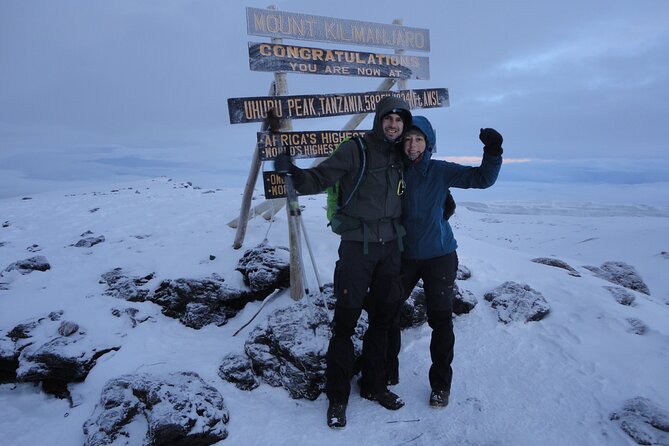
- Full summit day schedule: midnight ascent, sunrise at Stella Point, then continued push to Uhuru Peak.
- Emergency readiness: an oxygen tank is included for emergencies.
- Food and service coverage: three meals daily during the climb, with crew handling cooking and camp setup.
Machame Route on Kilimanjaro: The 7-Day Scenic Bet From Moshi
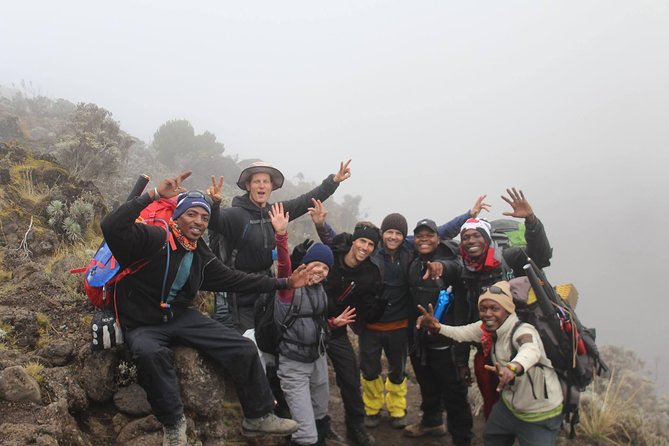
The Machame Route earns its reputation the way good routes do: it’s beautiful, and it’s structured. You start at Machame gate, then climb through rain forest, transition into heath and moorlands, and push into alpine desert conditions as altitude ramps up. By the time you’re near the summit, you’re in cold, windy, high-altitude terrain where every hour feels like it costs something.
Machame is also referred to as the Whiskey route. The name alone can be fun, but the bigger point is this: Machame is widely used, which usually means experienced guides and well-run logistics from the start of the trek. This 7-day length reflects that popularity and helps many hikers pace better than shorter itineraries.
You’re also doing a route that mixes “big climbs” with “smart stops.” That matters because Kilimanjaro isn’t just about legs. It’s about timing: altitude exposure, rest periods, and where you sleep between days.
You can also read our reviews of more tours and experiences in Moshi.
Price and Logistics: What $2,890 Really Buys You
This trek costs $2,890 per person, which is a lot until you break it down the way the trip is actually priced: you’re paying for access, infrastructure, and a full team—not just guiding.
What’s included that protects your budget:
- Park entry, camping, forest, and rescue fees (with 18% VAT on tour fees and services)
- Fair wages for crew as approved by Kilimanjaro Park Authority and related associations
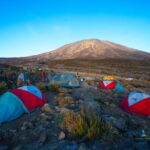
- Camping setup: sleeping tent, dining tent, foam mattress (1.5 inches thick), and table/chairs
- Professional crew: experienced mountain guides, cooks, and porters
- 1 night before and 1 night after in hotel bed-and-breakfast in Moshi
- Transfers to and from mountain gates
- Round-trip airport transfers to Kilimanjaro International Airport (JRO)
- Portable flush toilet plus toilet tent
- Oxygen tank in case of emergency
- Meals during the climb: three meals a day on mountain (breakfast, lunch, dinner)
What you’ll likely still pay for:
- Tips for guides, porters, and cook
- Personal gear like a sleeping bag (listed as $40), duffle bag ($35), hiking boots ($40), walking sticks ($10), and similar items
- Hotel meals and drinks in Moshi outside the included bed-and-breakfast
- Your own travel documents and travel insurance (not listed as included)
- International or domestic flights
My take on value: if you compare the “all-in” parts—fees, crew, meals, and camp gear—this price doesn’t look like you’re paying extra for nothing. You’re paying to remove a big chunk of uncertainty: who handles the permits, who carries gear, who cooks, and who can respond fast if something goes wrong.
Day-by-Day Machame Route: Rain Forest to Uhuru Peak
You’ll feel the mountain’s mood swing day to day. Each day has a clear goal, a set altitude for sleeping, and a habitat change that makes the hike mentally easier because you always know what you’re working toward.
Day 1: Moshi to Machame Gate, Into Rain Forest to Machame Camp
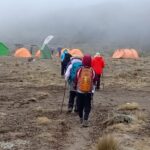
You drive from Moshi to Machame gate after breakfast—about 1 hour. After registration, you hike 11 km / 7 miles for roughly 5 to 7 hours through dense rain forest to Machame Camp at 2,833 m / 9,350 ft.
Why this day matters:
- You’re walking long enough to get warm and settled, but still in a forest environment where conditions are usually more forgiving.
- Camp altitude is a solid starting point for the climb.
What to watch for:
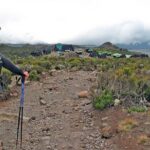
- The trail is in rain forest and can feel damp and humid. Trekking poles help on uneven ground.
Day 2: Rain Forest Out, Heath and Moorlands to Shira Cave Camp
After breakfast you hike 5 km / 3 miles for 4 to 6 hours. You leave the glades of rain forest and climb into heath, then continue along an ascending path into the Shira Plateau. The route moves through heather and open moorlands and crosses a large river gorge before reaching Shira Cave Camp.
Why you’ll like this day:
- The habitat shift is dramatic: greener to open, airy hiking.
- You’re building altitude steadily.
Potential drawback:
- Open moorlands can mean wind. Layers matter.
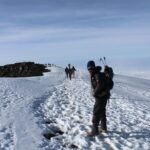
Day 3: Lava Tower Altitude Work, Then Senecio Forest Down to Barranco Camp
This is one of the most important “strategy” days. After breakfast you head southeast toward Lava Tower at 4,603 m / 15,190 ft. Then, after lunch, you descend to Barranco Camp at 3,953 m / 13,044 ft.
The plan includes:
- Lava Tower to Barranco Camp: 3 km / 2 miles, about 2 to 3 hours
- Total day time: about 4 to 5 hours
- Habitat: alpine desert and Senecio Forest during descent
The smart part:
- The itinerary notes that you start and end the day at similar elevation range, but you still spend time at higher altitude on the way up. That time is valuable for acclimatization.
What to watch for:
- Lava Tower territory can feel stark and exposed. Even if you’re not summiting, this is where cold can sneak up.
Day 4: Barranco Wall Up, Karanga Valley Down to Karanga Camp
You start by descending into the base of the Great Barranco Wall, then climb the steep, nearly 900 ft cliff. It’s non-technical, but the steepness is the story. After reaching the top, you cross hills and valleys, then descend sharply into Karanga Valley to Karanga River, which is listed as the last water point. You continue up to Karanga Camp for lunch and later do a shorter acclimatization walk.
This day’s time and distance:
- 5 km / 3 miles, 4 to 5 hours
Why this day can feel great:
- It’s a confidence builder. The terrain is tough, but it’s clear and focused.
- The afternoon acclimatization walk helps you get your rhythm without exhausting you.
What to plan:
- Treat the “last water point” info seriously. Don’t wait until the end of the day to think about hydration.
Day 5: Barafu Hut and the Southern Circuit Finish Feeling
From Karanga Camp you continue past a junction that connects with the Mweka Trail, then keep climbing through rocky sections to Barafu Hut. The itinerary notes that at this point you’ve completed the Southern Circuit and you’ll have summit views from multiple angles.
This day:
- 4 km / 2 miles, 4 to 5 hours
- Habitat: alpine desert
- Arrive, rest, and prepare for the summit with early dinner
You should know:
- When weather is clear, you can see Mawenzi and Kibo. Even without a full-summit view, that moment shifts your mindset from hiking to mission mode.
Potential drawback:
- Your body may feel “loaded” with fatigue by this stage. The best move is to follow your guide’s pace and save energy for the midnight push.
Day 6: Midnight Summit Push to Stella Point, Uhuru Peak, Then Down to Mweka Camp
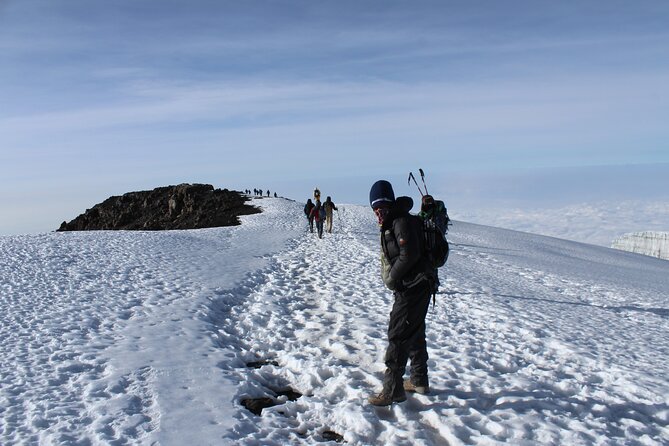
This is the big one. You begin the summit climb at midnight, and the itinerary calls it the most mentally and physically challenging portion of the trek. You’ll spend hours in wind and cold while ascending in darkness, with short breaks.
Key landmarks:
- Arrive at Stella Point (18,900 ft) at sunrise
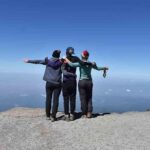
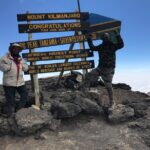
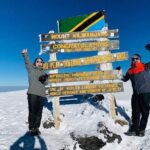
- Continue to Uhuru Peak (5895 m / 19,341 ft)
Timing and duration:
- The itinerary lists about 8 hours total for the summit day
- Then you descend to Mweka Camp (3100 m / 10,065 ft)
How you’ll likely feel:
- The cold is a mental fight even when you’re physically okay.
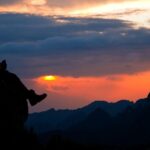
- The sunrise at Stella Point is usually the emotional payoff point—after hours of quiet effort.
What matters for success:
- Keeping steady and not sprinting the early hours.
- Wearing what you need for cold and wind, because the plan depends on you being comfortable enough to move.
Day 7: Final Descent to Mweka Gate and Summit Certificate
After breakfast you hike down for about 3 hours to Mweka Gate. You sign out to the park authority, collect your summit certificates, and then a vehicle transfers you back to your hotel in Moshi.
This day:
- 10 km / 6 miles, about 3 to 4 hours
- Habitat: rain forest
Why this day is special:
- It’s when the mountain turns from fight to release. Your legs will be tired, but the path is a relief compared to the high, cold days.
Your Summit Team and Camps: The Comfort Details That Matter
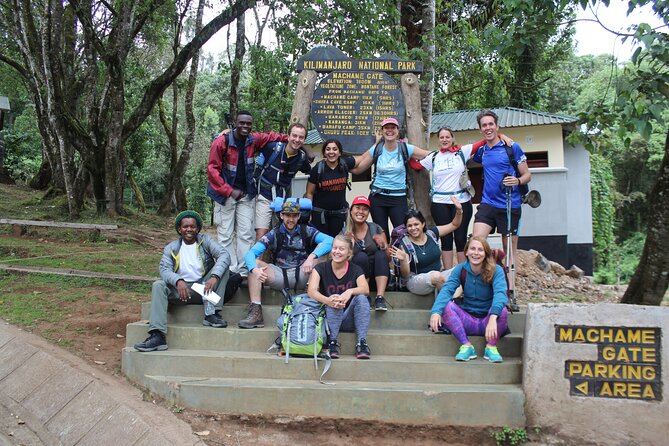
Kilimanjaro isn’t only a physical event. It’s also a “can you rest well enough” test. This tour pays attention to the camp setup.
On mountain, you get:
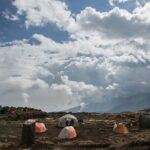
- Tents and dining tent
- Foam mattress (listed as 1.5 inches thick)
- Table and chairs
- Lanterns in the mess tent
- A portable flush toilet with a toilet tent
Those items sound small until you’re cold and tired. Better camp routine means you spend less energy trying to improvise comfort.
Food also gets handled for you with three meals a day during the climb, plus breakfast/lodging before and after the trek in Moshi. Multiple clients praise the way the team handles meal service and the overall care in camp life. You’ll likely feel that as steady camp rhythm: food appears, dishes get handled, and you get to focus on sleep.
Who might be on your team:
Kilitwende Adventures is praised for strong guide and crew experiences that include names like Jerry, Joseph, Sadhi, Nate, John, and Robert/Bobby in different climbs. You can’t bank on a specific name showing up on your dates, but the recurring theme is clear: people who have done this many times know how to keep you moving and calm.
Also, the tour includes an oxygen tank for emergencies. That’s not a guarantee of summit success, but it’s a meaningful safety detail in the package.
Getting There From Moshi: Start Time, Gate Transfers, and the Clean Exit
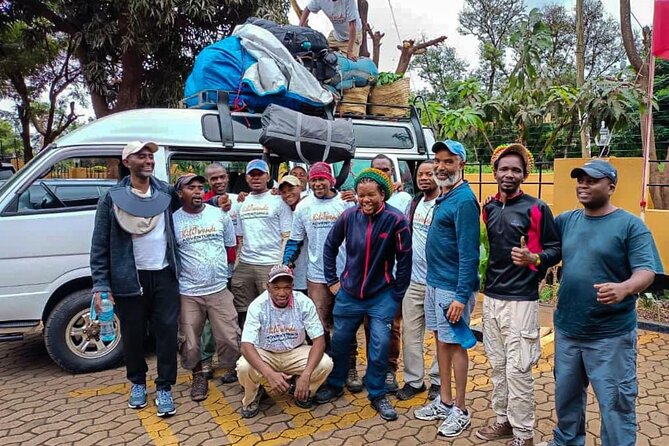
This trek starts at 8:30 am. You’re also offered pickup, and you’ll get airport transfers between JRO and Moshi as part of the package.
On Day 1, you drive about 1 hour from the hotel in Moshi to Machame gate after breakfast. On the last day, a vehicle waits at Mweka gate and transfers you back to your hotel.
Two practical tips:
- Plan to treat travel days as part of the trek prep. You’re not just flying in for a hike; you’re also shifting your body into mountain mode.
- Because the trek depends on weather, have a little flexibility around Moshi and keep extra time for possible changes.
Who This Machame Trek Fits Best (and Who Should Be Cautious)
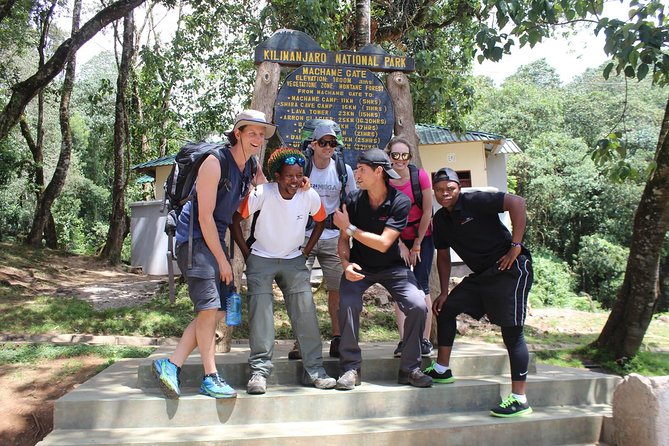
This plan says it’s for travelers with moderate physical fitness. That’s a helpful baseline because you’re not doing a technical climb, but you are doing repeated altitude hikes, long days (several 4–7 hour hikes), and one summit night push that lasts many hours.
You’ll be a good match if:
- You can handle steady uphill walking for multiple days
- You accept that cold and wind are part of the summit process
- You’re comfortable following a guide’s pacing and acclimatization plan
You might want to think twice if:
- You hate early morning or midnight starts
- You don’t tolerate cold well at high altitude
- You can’t shift schedules if weather causes changes
Also, this is listed as a private tour/activity, so only your group participates. That can feel calmer than joining a big mixed crowd, but the route is still shared in the wider sense of being on the same mountain trail network.
Should You Book the Kilimanjaro 7-Day Machame Route?
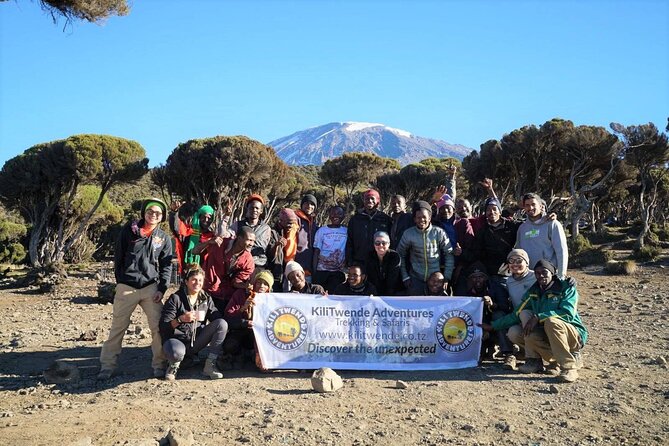
If you want the Kilimanjaro experience that’s known for scenery and a realistic 7-day pace, I think the Machame route is a strong pick. The itinerary includes acclimatization logic (especially around Lava Tower), and the package removes a lot of common friction points: park fees, camping costs, meals, tents, camp comfort, transfers, and even emergency oxygen.
Book it if:
- You want a popular, well-used route with multiple habitat changes
- You prefer a guided structure with camp and meal support
- You’re ready for the midnight summit reality and can take the cold seriously
Hold off if:
- Your schedule can’t bend at all if weather forces a change
- You’re not prepared for the physical grind of days that are longer than they look on paper
- You don’t want to handle personal gear costs like sleeping bag and boots
FAQ
How long is the Kilimanjaro trek on the Machame Route?
The trek is scheduled for 7 days (approximately).
Where does the trek start and end?
It starts at Machame gate and ends at Mweka gate.
Is pickup from Moshi included?
Pickup is offered, and the itinerary includes transfers to and from the mountain gates. It also includes transfers between the hotel in Moshi and the gates.
What time does the trek start?
The start time is 8:30 am.
What’s included in the price?
Included items include park entry fees and camping/forest/rescue fees, a sleeping tent and dining tent setup, foam mattresses, professional guides/cooks/porters, hotel accommodation (1 night before and 1 night after), gate transfers, airport transfers, a portable flush toilet setup, an oxygen tank for emergencies, and three meals a day during the climb.
What is not included?
Not included: tips for guides/porters/cook, personal gear and equipment such as sleeping bag and boots, meals and drinks at your hotel in Moshi outside the included stay, international and domestic flights, and personal travel documents like visa and insurance.
Does the trek include meals during the climb?
Yes. It includes breakfast, lunch, and dinner during the climb (three meals a day).
Do you get oxygen for emergencies?
Yes. An oxygen tank is included in case of emergency.
What sleeping gear might I need to bring or hire?
A sleeping bag is not included, but it is listed as available for hire for $40. A duffle bag ($35), hiking boots ($40), and walking sticks ($10) are also listed as not included but available as equipment.
What happens if weather is poor?
This experience requires good weather. If it’s canceled due to poor weather, you’ll be offered a different date or a full refund. Free cancellation is available up to 24 hours in advance for a full refund.