REVIEW · MOSHI
6-Day Rongai Route Trek in Mount Kilimanjaro
Book on Viator →Operated by PINNACLE ADVENTURES & SAFARIS LTD. · Bookable on Viator
Kilimanjaro can be quieter than you expect. This 6-day Rongai Route climbs from the north, near the Kenyan border, with a gradual rhythm, low crowds, and chances to spot wildlife early on.
What I like most is the people and the plan. Groups I’ve seen praise Tuma for keeping things safe and calm, and guide Issa for the kind of summit-day push that helps you keep moving when you feel slow; you also get emergency support via emergency oxygen, plus a basic first aid kit. One real consideration: the summit night starts around midnight, and Day 5 can stretch to a brutal long day.
In This Review
- Key things to know before you go
- Rongai Route: a quieter Kilimanjaro approach from the north
- Day 1 and Day 2: Nale Moru farms to Kikelelwa Caves and first Kibo views
- Day 3 and Day 4: Mawenzi Tarn Hut, grassy climbs, and the saddle’s lunar desert
- Day 5 Uhuru Peak at 5,895m: midnight torchlight and sunrise over Mawenzi
- Day 6 descent through forest to Marangu Gate and back to Moshi
- Camps, food, and comfort: what the included setup actually means
- Price and value for $2,353: what’s covered, what costs extra
- Who should choose this Rongai plan (and who should think twice)
- Should you book this 6-Day Rongai trek with Pinnacle Adventures?
- FAQ
- How long is the Rongai Route trek and what’s the daily hiking like?
- Where do you start and where do you end?
- Is pickup included?
- What’s included in the price?
- Do I need to bring my own trekking gear?
- Is a portable toilet provided?
- What is the cancellation policy?
Key things to know before you go
- North-side access near Kenya for a wilder feel and fewer people on the trail.
- Gradual ascent profile (similar to Marangu) that’s steady rather than up-and-down.
- Big-view moments at Kikelelwa Caves and again from the crater rim.
- Acclimatization built in with an afternoon walk on Day 3.
- Included camping setup (tents, chairs, tables, sleeping mattress) plus daily washing water.
- Midnight summit start so you can catch sunrise from near Gilman’s Point.
Rongai Route: a quieter Kilimanjaro approach from the north
The Rongai approach is the odd one out in the best way. While many Kilimanjaro routes feel crowded, Rongai comes at the mountain from the north, close to the Kenyan border, which helps keep the early days calmer and more remote. That matters because Kilimanjaro is already a mental game; you don’t need the trail to feel like a highway.
Rongai also has an ascent profile similar to Marangu: the climb is generally gradual and steady. That style can be a big deal for your comfort and pacing, especially if you want something that feels more controlled than the sharper profiles. And because the route begins near the Kenyan plains, you get wide-open views early in the trek, with the weather often behaving a bit differently on this side of the mountain.
You’ll start the day with registration at Kilimanjaro National Park via Rongai Gate, then transfer by vehicle toward Nale Moru around 1,950 meters. It’s not just logistics—it’s your first taste of the region, shifting from settled farmland into mountain forest.
You can also read our reviews of more tours and experiences in Moshi.
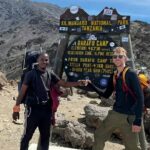
Day 1 and Day 2: Nale Moru farms to Kikelelwa Caves and first Kibo views
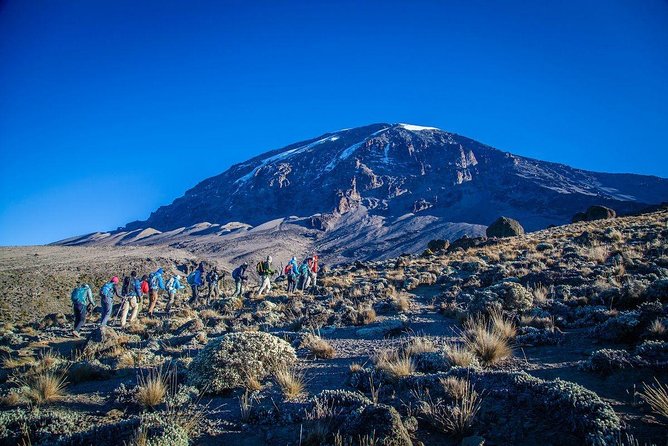
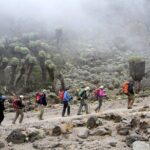
Day 1 is a gentle on-ramp that mixes scenery and altitude awareness. After breakfast, your head guide collects you and you ride to the park gate, then continue by vehicle to Nale Moru near 1,950m. Your walk is roughly 3 to 4 hours and starts on paths cutting through maize and potato fields, then climbs into pine forest. As the day progresses, you rise toward the edge of the moorland zone, and the views over the Kenyan plains can be the payoff you notice right away.
The practical tip for Day 1 is simple: expect wet conditions in the rainforest. You don’t want to be stuck with damp clothes all afternoon, so waterproofs are worth packing even if the morning looks bright.
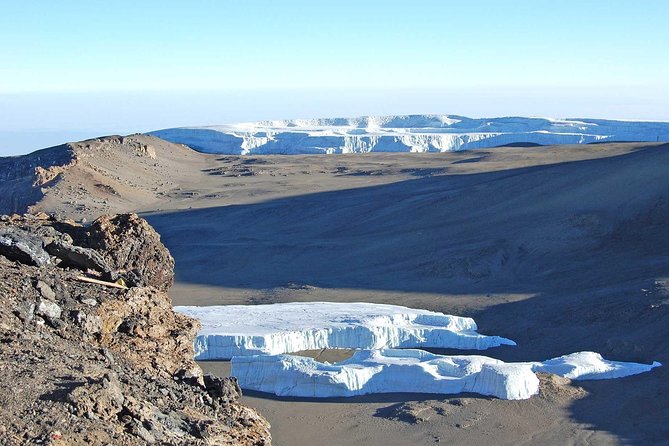
Day 2 shifts you into the crater-world lead-up. You’ll trek around 5 to 6 hours from camp to the Kikelelwa Caves, with a steady ascent up to Second Cave at 3,450 meters. When the weather cooperates, you get superb views of Kibo—the summit peak—and the eastern ice fields from the crater rim area.
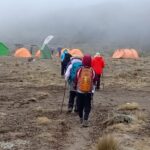
Tonight’s camp is near the caves at about 3,800 meters. It’s a good day for your motivation because the views tend to feel close and real, not like a far-off fantasy. You also get a more exact sense of what you’ll be reaching later.
Day 3 and Day 4: Mawenzi Tarn Hut, grassy climbs, and the saddle’s lunar desert
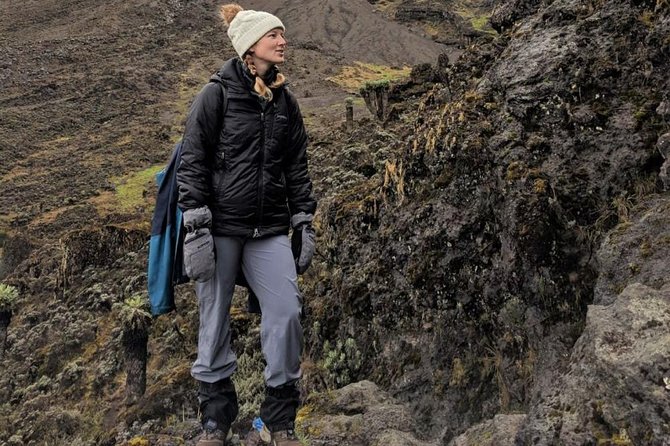
Day 3 is shorter, but don’t let the time fool you. Expect about 3 to 4 hours with some steeper sections after you leave camp. The trail climbs up grassy slopes, and as you gain altitude you leave one vegetation zone behind and step into a more rugged, high-mountain feel. That change alone makes the day feel like you’ve truly entered the upper mountain environment.
You’ll end the day at Mawenzi Tarn Hut at 4,330 meters. Then you get an afternoon acclimatization walk to roughly 4,500 meters. This isn’t “extra hiking” for fun. It’s a smart tool: you’re practicing breathing at a higher elevation without sleeping at that height yet.
Day 4 is a mood shift. You walk about 4 to 5 hours across the saddle between Mawenzi and Kibo, sometimes described as a lunar desert. It’s one of those stretches where the ground and sky feel very stark—less forest drama, more big-altitude reality. You’ll spend the night at Kibo Hut around 4,700 meters, with an early dinner to help you conserve energy for the summit night coming on Day 5.
Day 5 Uhuru Peak at 5,895m: midnight torchlight and sunrise over Mawenzi
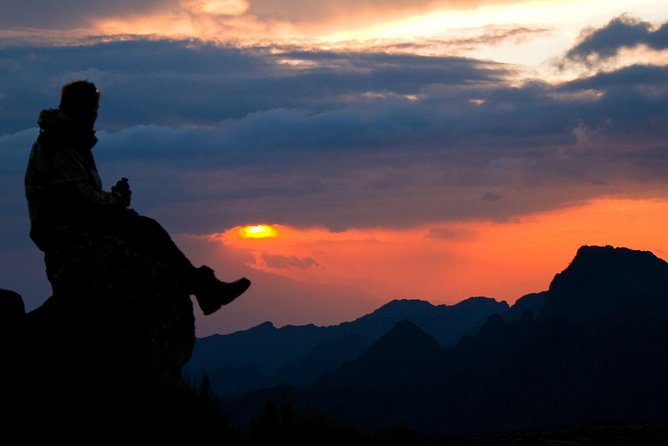
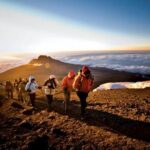
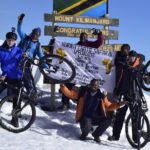
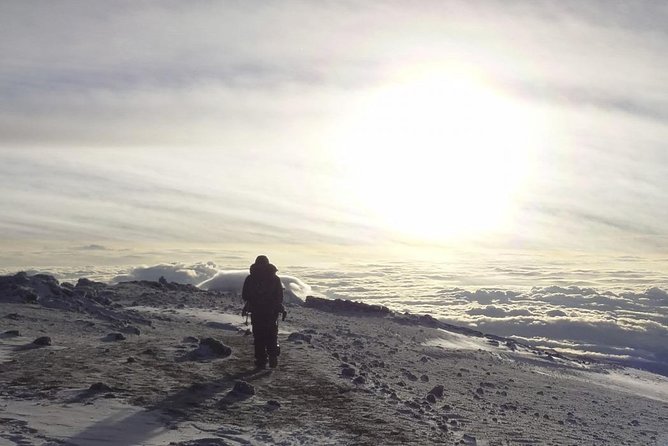
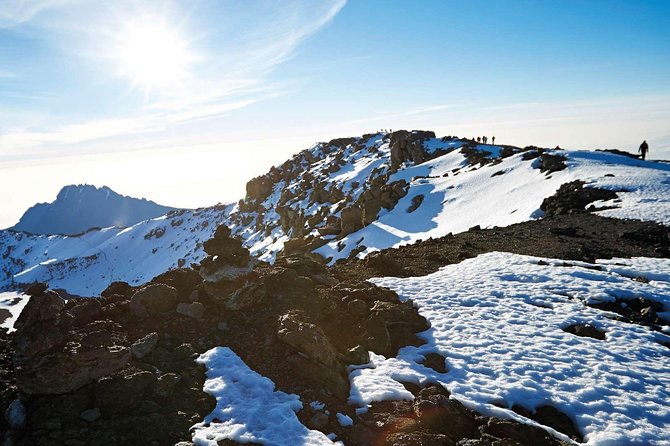
This is the day you remember for the rest of your life—also the day you need to respect. You’ll be woken early, around midnight, for a hot drink and snack, then start trekking slowly by torchlight. The goal early on is to reach the crater rim at Gilman’s Point around 5,685 meters.
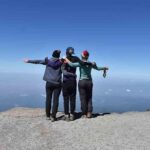
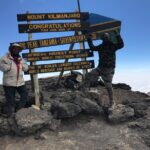
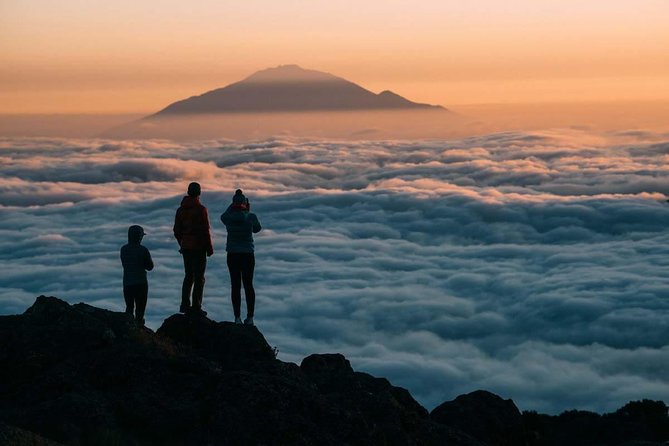
From Gilman’s Point, you rest briefly and enjoy the sunrise over Mawenzi peak, assuming clouds don’t swallow the view. Then you continue onward to Uhuru Peak at 5,895 meters, the roof of Africa. Even if you’re fit, this part is usually slow. The win is steady movement, not speed.
After the summit, you descend to Kibo Hut at about 4,700 meters for rest and brunch. Then you keep going down to Horombo Hut around 3,720 meters. Depending on conditions, the whole day can run from about 10 to 16 hours, with the ascent relatively short in distance but high in effort.
So here’s the key consideration: your success and comfort depend on pacing and patience. This itinerary builds in the right start time and a cautious climb style (very slow by torchlight), but you still need to show up ready to spend a long day moving when it’s dark and cold.
Day 6 descent through forest to Marangu Gate and back to Moshi
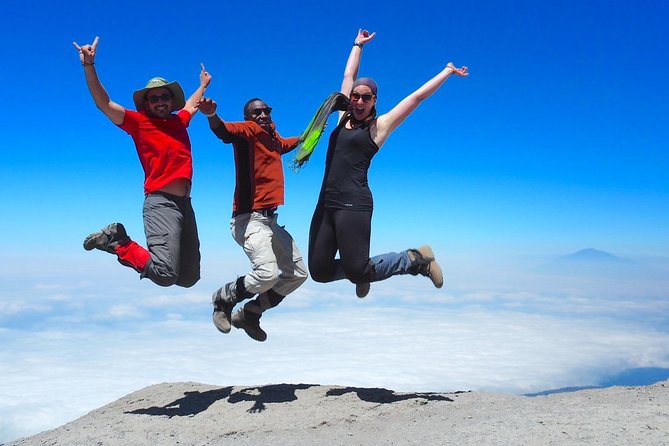
Day 6 feels like a reward. You’ll descend for about 5 to 7 hours down to Marangu Park Gate around 1,700 meters, where you sign out of the mountain. The walk takes you through lush forest on good paths, which is a relief after the more exposed upper terrain.
The distance can be around 20 km (about 12.5 miles), and you’ll typically walk around 5 hours before finishing. You’ll then be picked up by driver and transferred back to your hotel in Moshi or Arusha.
This is also the day where you appreciate why ending via forest matters: it turns the final phase into a smoother transition back toward normal footing and normal air.
Camps, food, and comfort: what the included setup actually means
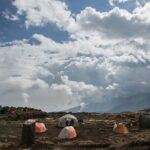
One of the biggest quality-of-life benefits here is that you’re not arriving with a tent-and-chair puzzle. The trek includes camping equipment like tents, camp chairs, camp tables, and sleeping mattress. That reduces stress at the start and helps you focus on acclimatization instead of setup.
Food support is also included throughout. You get breakfast on 5 mornings, and meals are scheduled with dinner each night where stated, plus lunches. There’s also fresh water provided for drinking and hot water for a wash daily, which makes a bigger difference than you’d think—especially on multi-day treks where you’ll be tired and dusty.
Two practical “bring it or plan for it” notes:
- A portable toilet is not included, but it’s listed as optional yet highly recommended. I treat that as a sanity saver on longer mountain days.
- You should bring personal medicine and water purifying tablets, since those aren’t included.
And yes, expect an emergency safety net. The trip includes emergency oxygen for use in emergencies only (not as summit aid) plus a basic first aid kit. That doesn’t remove risk, but it does reduce uncertainty.
Price and value for $2,353: what’s covered, what costs extra
At $2,353 per person for a 6-day trek, you’re paying for more than “walking and a guide.” You’re buying a whole support system: qualified mountain guide(s), assistant guides, porters, and a cook team, plus their wages. You’re also covered for park-related costs, since all fees and taxes are included.
You’ll also get return transfers between the Kilimanjaro airport and Moshi, and again from Moshi back to the airport. That’s not a small detail. If you’re short on time, missing a transfer can wreck your schedule fast, and it’s nice to have that handled.
The camping gear, daily drinking water, hot water for washing, and planned meal structure all count toward the value too. When you add it up, the price starts to make sense as a fully packaged mountain logistics service, not just a ticket to walk up a volcano.
What you should budget separately:
- Flights and visas
- Travel and health insurance
- Personal trekking gear (you can rent gear from stores in Moshi)
- Portable toilet (optional but recommended)
- Personal medicine and water purifying tablets
- Any meals and drinks not explicitly specified as included
Group discounts are mentioned, and the experience is set up as private for your group, not a mixed random crowd. That can be a plus if you want a more consistent pace and less waiting.
Who should choose this Rongai plan (and who should think twice)
This route is often chosen by people who want a more forgiving climb style. Rongai is described as one of the easier routes on Kilimanjaro, with a gradual, steady ascent and lower crowd levels. If you’re the type who enjoys wildlife and big skies early on, the first days near the Kenyan side can be especially interesting.
It also suits people who like structure: there’s a planned acclimatization walk on Day 3, and the itinerary uses an early summit start with torchlight pacing. And because the trek ends through forest and returns you to Moshi or Arusha, you get a clean finish instead of another complicated travel day.
The main reason to think twice is Day 5. Even though the ascent distance from Gilman’s Point to Uhuru Peak isn’t huge, the time demands can be intense—plus you’ll start around midnight. If you know you struggle with long, repetitive climbs at altitude, you’ll want to be honest with yourself about that.
Should you book this 6-Day Rongai trek with Pinnacle Adventures?
If you want a Kilimanjaro climb that feels more remote, with a steadier ascent and lower crowds, this is a strong choice. I also like that the trip is structured with real support: camping gear, hot washing water, meals, and emergency oxygen, plus a guide team known for safety focus and summit motivation.
Book it if you’re ready for the long summit-day reality and you plan your effort around slow, consistent pacing. Pass if midnight starts and very long days will stress you more than the views excite you.
FAQ
How long is the Rongai Route trek and what’s the daily hiking like?
The trek runs about 6 days. Daily walking ranges from roughly 3 to 7 hours on most days, while Day 5 (the summit day) can take around 10 to 16 hours overall due to the long ascent and descent timing.
Where do you start and where do you end?
The experience starts in Moshi, Tanzania, where you’re picked up for the drive to Kilimanjaro National Park. It ends back at the meeting point, and on the final day you descend to Marangu Park Gate before being transferred back to your hotel in Moshi or Arusha.
Is pickup included?
Yes, pickup is offered. You’ll be collected after breakfast on Day 1 and then transported as part of the trek logistics.
What’s included in the price?
Included items cover meals listed in the itinerary, all fees and taxes, return airport transfers between Kilimanjaro airport and Moshi, emergency oxygen and a basic first aid kit, and the services of qualified guides, assistant guides, porters, and the cook team. Camping equipment and daily drinking water plus hot water for washing are also included.
Do I need to bring my own trekking gear?
Personal trekking gear is not included. You can rent gear from equipment stores in Moshi, and you’ll also want to bring personal medicine and water purifying tablets.
Is a portable toilet provided?
A portable toilet is optional but highly recommended, which means it isn’t listed as included.
What is the cancellation policy?
You can cancel up to 3 days in advance of the experience for a full refund. If you cancel less than 3 full days before the start time, the amount paid will not be refunded.