REVIEW · MOSHI
6 Days Kilimanjaro Trekking – Machame Route
Book on Viator →Operated by Afrishare Trekking and Safaris · Bookable on Viator
Kilimanjaro is a big climb, and this Machame trek keeps it focused. What I like most is the tight, experience-driven pace with professional guides and porters, plus the hands-on support that makes summit day feel more like a plan than a gamble. You also get the comfort of hotel pickup and drop-off, so your first day starts with less hassle. One thing to factor in: the schedule is demanding, and the route can feel rough on tired legs, especially during the early summit hours.
Over six days you’ll move through different altitude zones—rain forest to moorland to high-alpine lunar scenery—so the mountain constantly changes. I also appreciate the way the climb works with acclimatization stops, rather than treating altitude like a speed bump. The possible drawback is weather and trail conditions: it operates in all weather, and the descent down to Mweka can be wet and muddy, so you’ll want the right gear.
In This Review
- Quick hits for the Machame climb
- Moshi Makes the Climb Feel Doable
- The Route in Plain Terms: Why 6 Days Can Work
- Day-by-Day: Machame Hut to Shira Camps
- Machame (first day on the move)
- Machame Kusini (rain forest out, ridge and gorge in)
- Shira to the Lava Tower: The Mountain’s “Menu” Changes
- Why the Arrow Glacier and Barranco Hut matter
- Barranco to Barafu: Karanga Valley at 4200 m
- The “South Circuit” payoff
- Midnight to Stella Point: The Summit Push Toward Uhuru Peak
- What makes this leg so mentally hard
- Descent to Mweka Gate and Certificates: When Mud Shows Up
- How to make descent easier on your body
- Guides, Porters, and Food: The Real Value Add
- Meals that matter at altitude
- Pickup, Private Tour Feel, and Mobile Ticket: Small Logistics, Big Relief
- Price and Value: Does $1,715 Make Sense?
- What You Should Pack for Mud, Cold, and Scree
- Who Should Choose This Machame Trek?
- Should You Book This 6-Day Machame Plan?
- FAQ
- Where does this tour start?
- How long is the trek?
- What’s included in the price?
- What isn’t included?
- Do I need to arrange a vegetarian meal?
- Is the tour private?
- What time does the summit day start?
- What should I wear for the hike?
- Is cancellation refundable?
Quick hits for the Machame climb
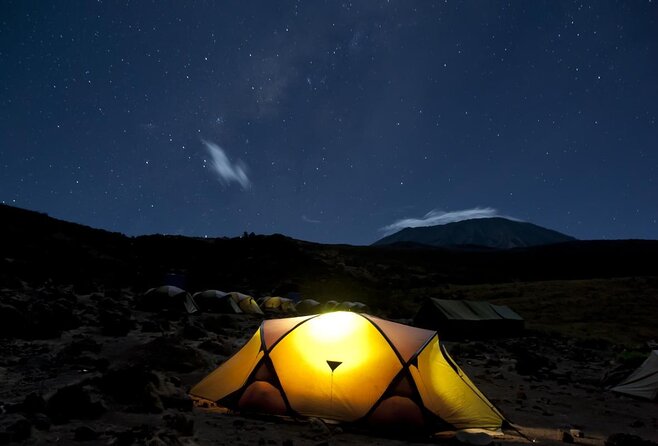
- Pro guide + porter support every day, with pacing adjusted to your ability
- Machame–Shira–Barranco–Barafu route that builds acclimatization before the summit push
- Lava Tower (Shark’s Tooth) and glacier viewpoints along the way
- Stella Point sunrise window around Stella Point (5685 m), weather permitting
- Mweka Gate certificates after the descent, with a final drive back to Moshi/Arusha
Moshi Makes the Climb Feel Doable
You start in Moshi, Tanzania, and that matters. Moshi is the usual launchpad for Kilimanjaro treks because it’s close to the mountain entry points and it’s easier to organize pre-trek nights, gear checks, and meeting logistics without stress.
This tour offers hotel pickup and drop-off, which is a small thing that pays off. The trek itself is the hard part; you don’t want day-one chaos, missed transfers, or last-minute sorting when you’d rather rest and eat.
And since the trek is a private tour/activity, it’s built around your group rather than a busy shuffle with strangers. That usually means less time waiting and more attention on how everyone is doing.
You can also read our reviews of more tours and experiences in Moshi.
The Route in Plain Terms: Why 6 Days Can Work
The Machame route is known for scenic variety and a realistic climb profile. In simple terms, you go high in steps, sleep at altitude, and give your body a chance to adjust before you go for the top.
For this specific plan, expect 5 nights of accommodation on route. The days are structured so you’re not just hiking upward nonstop. You’ll do long-ish walks, then spend the night at huts/camps that set up the next day’s elevation goals.
That said, a Machame summit attempt on a 6-day schedule is still tough. If your fitness is only just moderate, or if you get headaches or nausea easily at altitude, you’ll want to lean into the slow pacing and listen to your guide. This kind of climb is won with consistency, not bravado.
Day-by-Day: Machame Hut to Shira Camps
The early part of the climb sets the tone. You leave Moshi and drive toward the gate, passing coffee and banana plantations along the way. It’s a calm first look at what locals grow here, and it gives you a sense of the land beyond the mountain.
Machame (first day on the move)
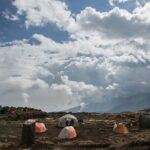
After entering the area, you reach Machame hut for dinner and your first overnight. You’ll likely want to sleep early, because the climb the next day is when your body starts to notice altitude changes.
This first day is less about “suffering” and more about getting your boots, pack, and breathing rhythm locked in. If you treat it like a warm-up instead of a workout, you’ll feel better later.
Machame Kusini (rain forest out, ridge and gorge in)
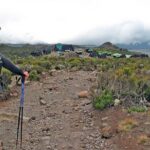
After breakfast, the route starts leaving the rain forest world behind. You’ll ascend on a path that takes you across a heather-covered ridgeline and into a river gorge area. The day typically ends after a steady walk where you arrive for rest, dinner, and an overnight at the Shira campsite.
What’s special here is the transition. You go from darker forest greens into open, higher terrain where the air feels sharper and the sky seems bigger. That change is one reason Machame is popular: the scenery keeps you awake and moving.
One practical note: the rocky ridges and gorge routes can feel uneven underfoot. Good footwear and trekking poles help a lot.
Shira to the Lava Tower: The Mountain’s “Menu” Changes
This is where the route starts pointing you toward the high, dramatic Kilimanjaro zones.
From the Shira Plateau, you continue up and across ridges, passing junction points that guide you east toward the Kibo area. Then your direction turns south east toward a standout feature: the Lava Tower, nicknamed the Shark’s Tooth.
Right after that, you’ll reach the area by the Arrow Glacier at about 4876 m (15,997 ft). Then the day turns into a descent toward Barranco Hut at about 3860 m (12,664 ft).
Why the Arrow Glacier and Barranco Hut matter
Even though you end this day lower than where you started, this stage is important for acclimatization. You’re teaching your body how to handle altitude while still giving it a chance to reset on sleep elevation.
Barranco is also psychologically useful. You’ve put in the effort toward high points, and now you’re in camp mode. That helps you save energy for the next ridge climbs and eventually summit day.
Dinner and overnight at Barranco Hut set you up for the big “connect the valleys” day that comes next.
Barranco to Barafu: Karanga Valley at 4200 m
After breakfast, you leave Barranco behind and climb a steep route up the Barranco Wall. You’ll move through the Karanga Valley, with lunch around 4200 m (13,779 ft), then continue toward the junction connecting with the Mweka Trail. From there you head up to Barafu Hut.
This day is about that classic Machame switch: less gentle strolling, more sustained climbing. It can feel like you’re repeatedly going uphill at a time when the air already feels thin. That’s why pacing matters so much.
The “South Circuit” payoff
You’ve completed the south circuit by the time you reach Barafu. One of the best rewards of that is the way views of Kibo and Mawenzi show up from different angles. It’s not just the summit you’re chasing now; it’s the whole high-mountain picture building in layers as you gain altitude.
At Barafu, you rest, eat, and prepare for summit day. This is where your guide’s plan and your group’s discipline really show. You want to eat what you can, hydrate, and avoid burning energy on unnecessary chatting or quick “let me just push” moves.
Midnight to Stella Point: The Summit Push Toward Uhuru Peak
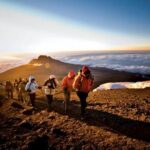
This is the part most people remember forever. You start very early—between midnight and 2:00 a.m.—and you hike toward the summit route between the Rebmann and Ratzel glaciers.
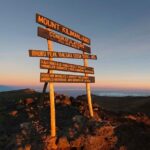
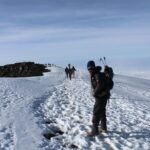
From there, you ascend through heavy scree toward Stella Point on the crater rim at about 5685 m (18,652 ft). Stella Point is often where weather decides the day: if conditions are clear, you get that famous sunrise moment—short rest first, then the sky show.
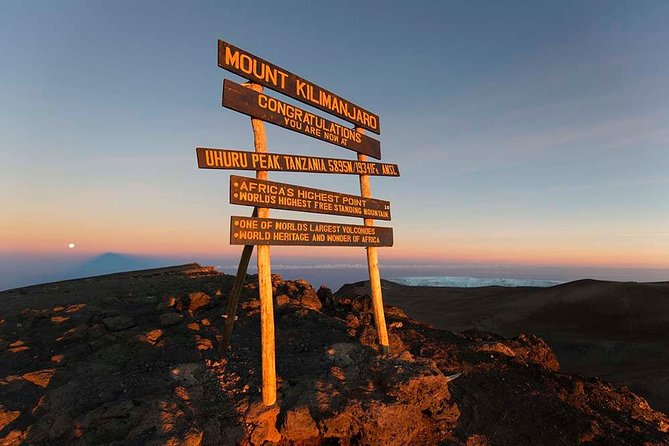
After Stella Point, you continue on the final stretch of about 1 hour up to Uhuru Peak, the highest point on Kilimanjaro.
What makes this leg so mentally hard
The summit push isn’t just physically difficult; it’s mentally demanding because the terrain is uneven and the effort is constant. Heavy scree can slow everyone down, even strong hikers. If your breathing gets frantic, it’s easy to burn energy fast.
That’s why your guide’s pacing approach matters. In this tour style, guides are known for adjusting pace to the group’s abilities, which helps you keep moving without overheating your lungs.
Descent to Mweka Gate and Certificates: When Mud Shows Up
After breakfast following summit, you head down to the Mweka Park Gate to receive your summit certificates. Lower down, conditions can turn wet and muddy, and the trail may feel slippery after all that altitude work above.
Then you continue about another hour to Mweka Village. A vehicle meets you there to drive you back to your hotel in Moshi or Arusha, or to help with airport drop-off.
How to make descent easier on your body
Descending is often harder on knees than people expect. This is where gaiters and trekking poles can make a real difference. For clothing, the plan suggests shorts and t-shirts for warmer periods, while keeping rain gear and warmer layers handy for colder, higher sections and sudden weather shifts.
Celebration is part of it, but take a few minutes before that victory lap to reset your legs. You earned it.
Guides, Porters, and Food: The Real Value Add
You can buy a trek for the mountain, but the experience is won by people. The strongest parts of this tour experience are the human ones: the guide team, the porter team, and the chef’s ability to keep meals varied even under hard conditions.
From the guide names shared in traveler stories, you may work with people like Peter, Alex, Habibu, Kijaji, Adam, and you’ll likely feel the difference in communication and pacing. The common theme is support: being on time, helping with the climb rhythm, and staying helpful when you’re tired.
Meals that matter at altitude
Altitude shrinks your appetite and makes every calorie count. A chef like Daniel is highlighted for cooking with enough variety to keep you eating when conditions are tough.
Even if you’re not a big eater on mountains, you’ll want consistent meals and warm drinks. That’s part of why this style of guided service feels worth paying for.
Pickup, Private Tour Feel, and Mobile Ticket: Small Logistics, Big Relief
The experience includes private tour service and hotel pickup and drop-off. It’s not glamorous, but it reduces the real-world friction that can distract you from the trek.
You’ll also have mobile ticket support and quick confirmation after booking. The meeting point is the Kilimanjaro Airport / Kilimanjaro National Park Tanzania area, and operations run across the full day window listed.
In plain terms: this is the kind of operator that aims to remove the “where do we go now” questions so you spend your energy on altitude.
Price and Value: Does $1,715 Make Sense?
At $1,715 per person, you’re not buying a bargain. You are buying capacity: guides, porters, accommodation, park-related costs, and included meals at least for lunch.
Here’s what your money covers, based on the inclusions:
- 5 nights accommodation
- All fees and taxes
- Lunch
- Professional guide
- Porter
- Hotel pickup and drop-off
- Private tour
Not included:
- Alcoholic drinks
- Tipping for the driver
And you should also plan to tip your guides and porters at the end, since that’s standard and mentioned in the experience notes.
So the value question isn’t just the price. It’s whether you want a team that handles the logistics and supports pacing, food, and daily transitions. For a mountain like Kilimanjaro, that support can be the difference between finishing strong and suffering longer than necessary.
What You Should Pack for Mud, Cold, and Scree
This trek operates in all weather conditions, so you should assume you’ll see mixed conditions: dry stretches up high, wind exposure near the summit, and mud on the descent.
The plan specifically suggests:
- Gaiters and trekking poles
- Shorts and t-shirts for warmer periods
- Rain gear and warmer clothing kept handy
If you’re planning your gear list, the goal is simple: stay dry when it rains, stay warm when the air turns cold, and protect your feet for scree and uneven steps. If you skimp here, the mountain will remind you.
Who Should Choose This Machame Trek?
This works best if you:
- Have moderate physical fitness
- Want a guided trek with strong support and pacing
- Prefer the private group style over a large, mixed crowd
- Care about acclimatization structure and not just speed
If you’re chasing the summit but you also want the climb to feel organized—sleeping at the right camps, hitting key landmarks like Lava Tower and Stella Point sunrise—this route and operator setup fits.
If you’re unusually sensitive to altitude, or you’re dealing with medical limitations not addressed in the notes, you should get medical advice before committing. Kilimanjaro is not the place for guessing.
Should You Book This 6-Day Machame Plan?
I’d book it if you want a serious Kilimanjaro experience with pro guides, porter support, and clear pacing, and you’re willing to do the work early in the morning on summit day. The included structure—accommodation, fees/taxes, lunch, pickup, and private service—helps you focus on the climb instead of running logistics in your head.
I’d pause if you know you struggle with early starts, heavy scree footing, or if you’re worried about muddy descents. This trek won’t pretend those parts are easy.
If you can handle a demanding schedule and you pack for weather and terrain, this is a very solid way to take on Kilimanjaro’s Machame route.
FAQ
Where does this tour start?
The meeting point is listed as Kilimanjaro Airport / Kilimanjaro National Park Tanzania, with pickup and drop-off included.
How long is the trek?
It’s listed as 6 days approximately, covering multiple overnight stops from Machame area through to Mweka Gate and village descent.
What’s included in the price?
Included: 5 nights accommodation, all fees and taxes, lunch, professional guide, porter, hotel pickup and drop-off, and a private tour/activity.
What isn’t included?
Alcoholic drinks are not included, and tipping for the driver is not included.
Do I need to arrange a vegetarian meal?
A vegetarian option is available. You should advise dietary requirements at the time of booking.
Is the tour private?
Yes. It’s described as a private tour/activity, meaning only your group participates.
What time does the summit day start?
The plan says you start very early, between midnight and 2:00 a.m., for the summit attempt.
What should I wear for the hike?
The guidance suggests shorts and t-shirts for much of the climb, but to keep rain gear and warmer clothing handy. Gaiters and trekking poles are recommended for the descent.
Is cancellation refundable?
Free cancellation is available. You can cancel up to 24 hours in advance for a full refund, and changes within 24 hours aren’t accepted.