REVIEW · BANYUWANGI
Banyuwangi: Ijen Crater Bluefire and Sunrise Guided Trek
Book on GetYourGuide →Operated by JAVA SUNRISE · Bookable on GetYourGuide
A Blue Fire glow in the dark is a rare thing to chase. This Banyuwangi trek to Kawah Ijen mixes a tough nighttime walk with a very specific payoff: watching the crater ignite with eerie blue light.
What I like most is the way the experience is built around timing, not wandering. The guides push for the moment when you can realistically see the Blue Fire, then shift focus to sunrise from the crater rim.
One thing to consider: this is strenuous, and the crater descent can feel intense if you’re not comfortable with steep, uneven steps or heights, even with a guide. **
In This Review
- Key things to know before your Ijen Blue Fire trek
- Why Kawah Ijen’s Blue Fire is a bucket-list-style rarity
- Banyuwangi pickup, transport, and what your early briefing should cover
- Midnight trekking: the uphill hike you should mentally prepare for
- Reaching the crater: how Blue Fire viewing actually works
- Sunrise over Kawah Ijen: turquoise crater lake and real early light
- The return hike and what to expect when your legs start talking back
- Price and value: what $25 really covers in Banyuwangi
- Safety realities and the eligibility rules you should take seriously
- Should you book this Banyuwangi Ijen Blue Fire trek?
- FAQ
- How long is the Ijen Crater Blue Fire and Sunrise guided trek?
- What time does the tour start?
- Is hotel pickup in Banyuwangi included?
- What safety equipment do you get for the sulfur gas?
- Is an entrance ticket included?
- Do I need a health certificate to join?
- Who is this tour not suitable for?
- What do you see during the experience?
- What should I bring, and what should I avoid?
- Can I cancel and get a full refund?
Key things to know before your Ijen Blue Fire trek
- Midnight start and strict timing: you’re moving in the dark to reach the right spot for the flames.
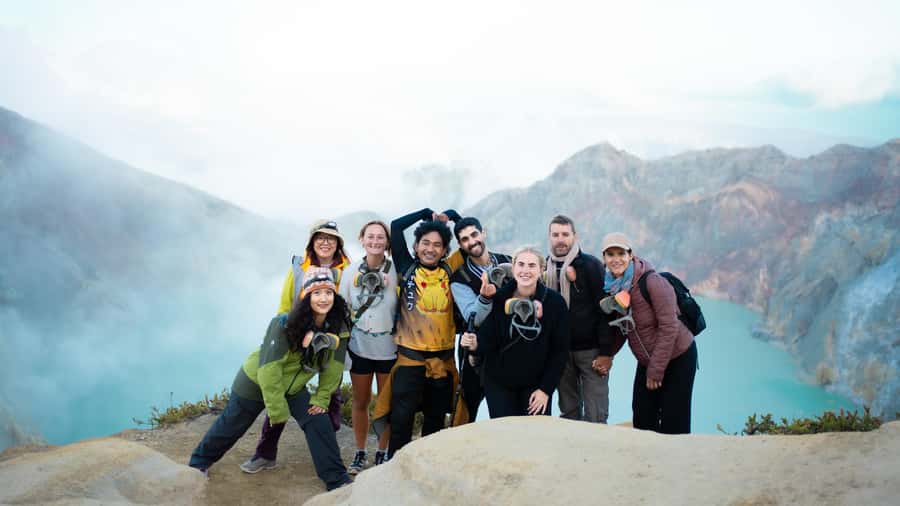
- Headlamp + gas mask included: sulfur gas is part of the reality here, so you’ll be kitted up before you go.
- English and Malay guide support: many guides bring energy and humor to keep spirits up during the hike.
- Sunrise view is the second big hit: the first light turns the crater lake into bright turquoise.
- You’ll see working sulfur miners: it’s not a staged photo set; it’s a real job happening below.
- Not for everyone physically or medically: it’s not suitable for children under 12, pregnant women, or people with respiratory issues.
Why Kawah Ijen’s Blue Fire is a bucket-list-style rarity
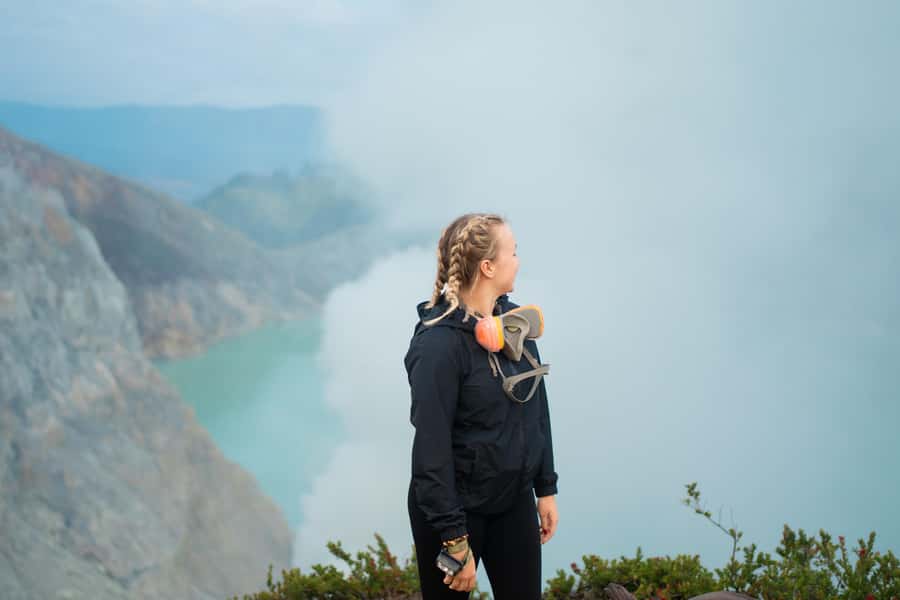
Kawah Ijen is famous for Blue Fire—an uncommon natural glow that only appears in very limited places worldwide. Here, the goal is simple: get you to the crater area at the right moment so you can see the flames against the night sky.
The experience feels almost cinematic because of the contrast. You’re walking in cool darkness with headlamps cutting through dust and steam, then the crater opens up below you and the scene changes. Blue Fire looks different from normal fire; it’s pale, ghostly, and it doesn’t behave like the orange you expect. That’s exactly why the timing matters so much.
And then the trek doesn’t just stop at the blue glow. As sunrise comes in, the crater lake shifts in color, and the surrounding view starts to snap into focus. The first rays of sunlight catching the crater lake’s turquoise water gives the whole place a second identity—night magic turning into early-day clarity.
You can also read our reviews of more tours and experiences in Banyuwangi.
Banyuwangi pickup, transport, and what your early briefing should cover
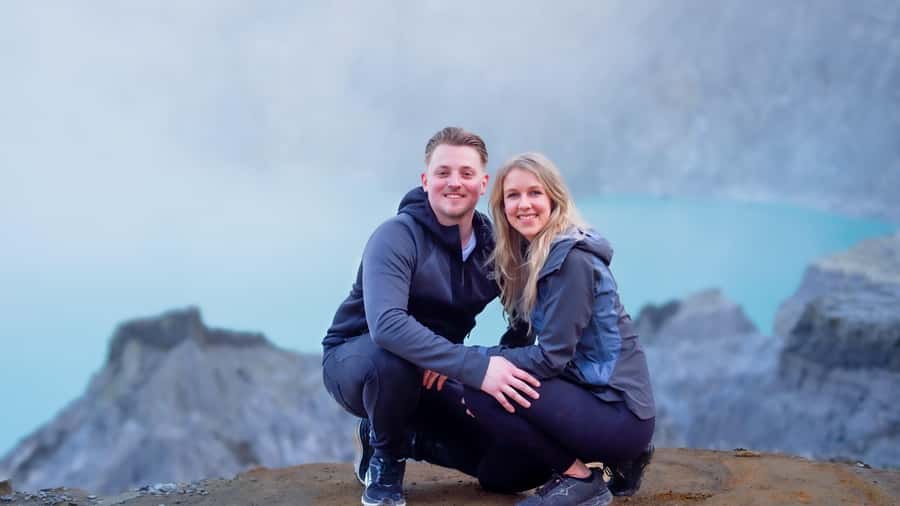
This tour runs as a combined group package, starting with hotel pickup in Banyuwangi. You’ll drive to the Ijen starting area, and the tour includes the practical stuff that makes a long night more manageable: round-trip transportation, an entrance ticket, mineral water, and the safety basics.
Before you start hiking, you’ll get a briefing and the safety equipment that matters for Ijen. That means a headlamp for the dark and a gas mask because sulfur gas can be present near the crater. You’ll also be carrying first-aid support and there’s a portable oxygen tank included with the group.
Guide language is English and Malay, which helps a lot if you want to understand what to do when visibility drops or the footing gets tricky. I also like that the guides are described as experienced and they actively manage the group pace so people see the Blue Fire in time.
One practical tip: be ready for a very early night rhythm. Even if the pickup feels routine, you’ll spend hours moving, waiting, and moving again. The better you treat the start like an appointment, the easier the whole morning feels.
Midnight trekking: the uphill hike you should mentally prepare for
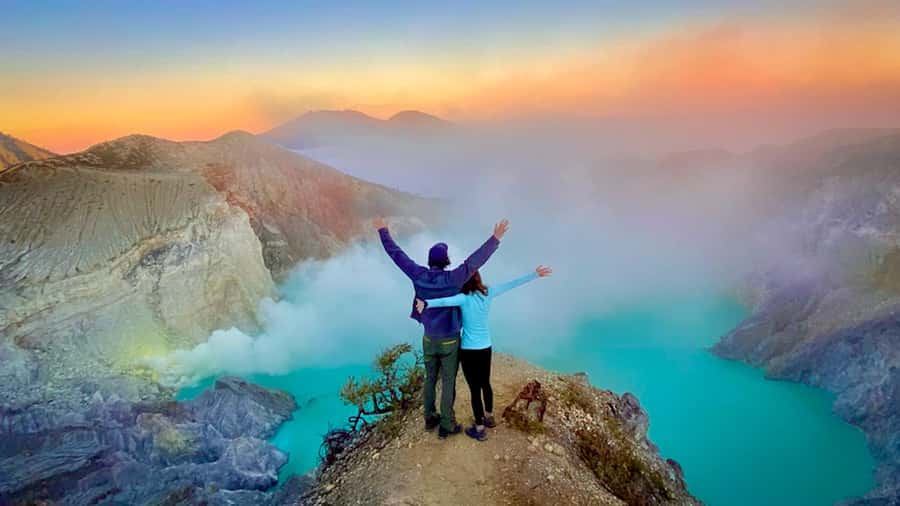
The walk to Ijen is described as strenuous, and that matches what you should expect from a steep crater approach. You’ll start at night, then climb toward the crater rim while the air stays cool and dark.
Here’s the key mindset I’d use: don’t think of it as a casual hike. It’s a mission hike. You’ll be in a long line of people with headlamps, stepping over uneven ground, and stopping when the guide needs the group to regroup.
From what I’ve seen in guidance styles, the good guides move people along quickly to reach the Blue Fire in time. Several named guides—like Suleiman, Sulliman, Soufian, and Sule—are praised for keeping energy up with humor and for checking in on participants. That matters because if you’re tired, self-checks fade. A guide who watches the group keeps more people steady and safer.
Also: if you’re nervous about steep sections, don’t ignore that feeling. This is specifically the kind of trek where people with a fear of heights can struggle, especially during the descent into the crater area and back out again.
Reaching the crater: how Blue Fire viewing actually works
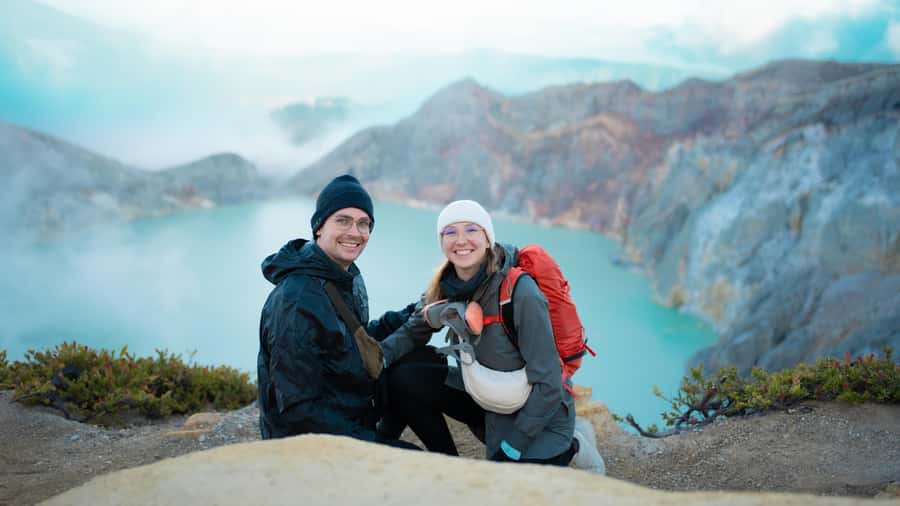
Once you arrive at the crater area, the goal becomes very specific: find the spot, control your movement, and wait for the Blue Fire. Blue Fire is described as rare and only seen in a limited number of places worldwide, which is why guides push for timing rather than lingering.
When it happens, you’ll see the blue glow against the dark sky. It’s not subtle. The guide will help you position yourself and keep you aware of safety, including the sulfur gas environment. You’ll also be wearing a gas mask, and you should get used to working with that first, not later.
A nice bonus is how guides help with the experience beyond the biology of it. Several accounts point to guides being good at getting people photos of the flames. That’s genuinely useful: the lighting at night can trick your camera settings, and the “where do I stand” question matters when there are other hikers, steam, and low light.
The Blue Fire moment doesn’t last like a fireworks show. So when your guide asks the group to move or hold position, treat it like a schedule. That’s the difference between leaving with a clear memory and leaving thinking you missed the main event.
Sunrise over Kawah Ijen: turquoise crater lake and real early light
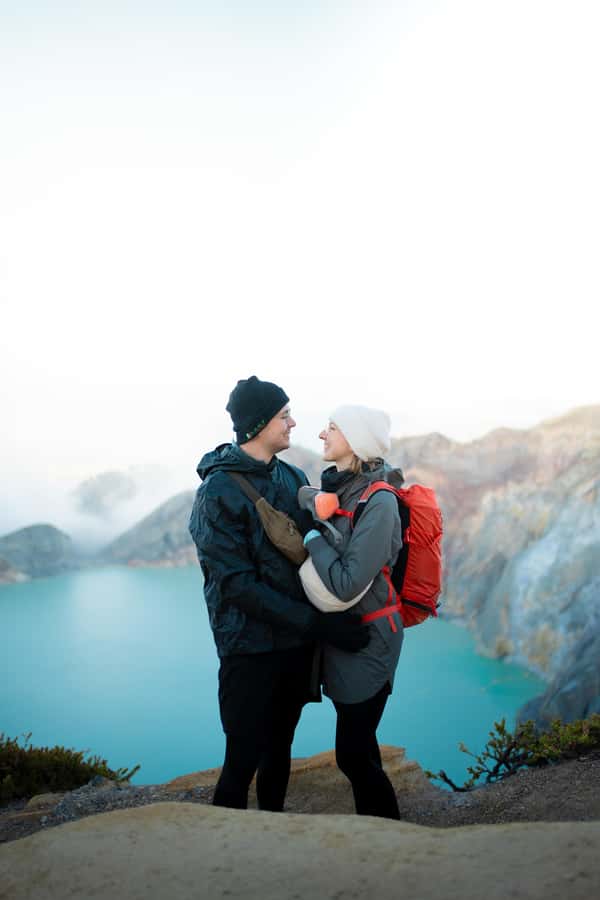
After the Blue Fire viewing, you’ll shift into the sunrise phase. The trek schedule is designed so you’re at the top of Kawah Ijen for sunrise, not just passing through during the transition.
When the first rays of sunlight hit, the crater lake becomes the star. The water is described as turquoise when illuminated by sunrise light, and the visual payoff is immediate. Suddenly the crater looks less like a dark void and more like a place with depth, color, and texture.
This sunrise segment is also where the miners become part of the story. You’ll observe traditional sulfur miners working in the area. That’s one of the most authentic parts of the whole morning because it’s human work happening in a world shaped by geology, not a performance for visitors.
A useful mindset here: don’t rush the sunrise. Let your eyes adjust. The color change is gradual, and the view rewards patience. If you spend 10 minutes staring instead of checking your phone, you’ll likely appreciate what you’re seeing more.
The return hike and what to expect when your legs start talking back
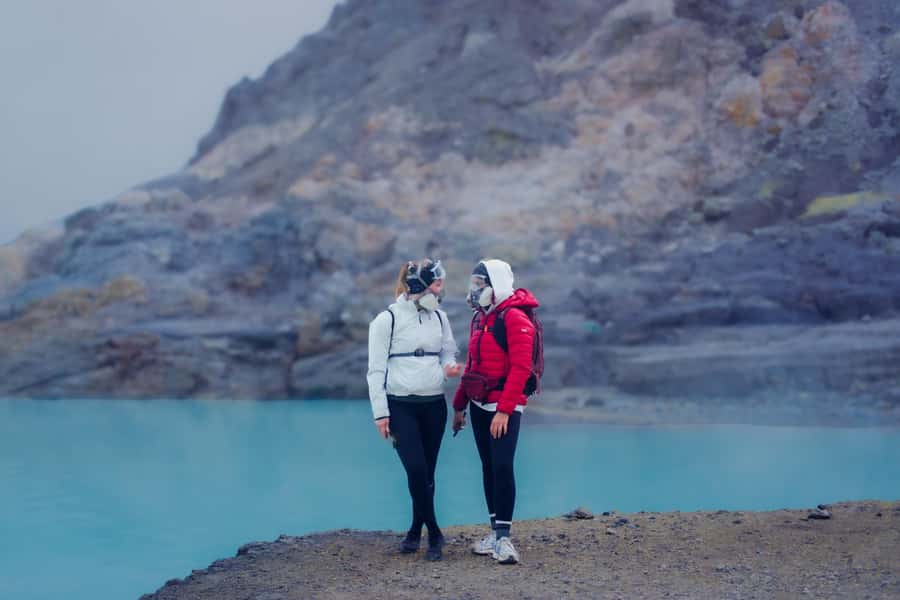
After the sunrise and crater viewing, you’ll begin the descent back to the starting point. This is where many people feel the full day catch up. The descent can be hard on knees and hips, and the ground can be slippery or uneven.
The best part is that the views continue during the descent. Even when you’re tired, you’re still seeing more of the surrounding terrain in daylight than you could in the dark. It’s a changing perspective—night experience turning into morning clarity—and it helps justify the effort.
Guides are typically helpful during the return, but there’s one practical reality with combined group treks: different walking styles can cause small separation within the group. If that happens, it’s usually manageable, but it’s worth planning for regrouping and waiting.
Here’s my practical advice: keep track of your gas mask and headlamp responsibility. One account notes the guide didn’t ask for the mask and headlamp back, and the next-day driver had to retrieve items from the hotel. Even if that’s not the norm, it’s smart to set a reminder for yourself and keep gear organized from the start.
When you finish, you’ll have time to rest and refresh at the starting point, with the option to buy snacks or drinks from local vendors.
Price and value: what $25 really covers in Banyuwangi
At about $25 per person, this can feel like a bargain for what’s included—especially in a place where getting to Ijen takes real time and logistics. The big value is not just the guide. It’s the full package of practical costs: round-trip transport, the Ijen entrance ticket, and safety support.
You’re also covered with insurance and safety equipment: gas mask, headlamp, first aid, and a portable oxygen tank. Those details matter because the “cool adventure” version of this trek isn’t the full picture; sulfur gas and difficult terrain are part of the environment, so that equipment isn’t decoration.
So the question isn’t whether the Blue Fire is worth money. It’s whether the logistics and safety reduce stress for you. In this case, the price looks strong because the tour handles the driving, timing coordination, and safety fundamentals.
The only real trade-off is that it’s a combined group hike. You might not get a perfectly custom pace, and you’re sharing the viewing with other hikers. Still, if your main goal is the Blue Fire + sunrise + miners in one morning, the value is clear.
Safety realities and the eligibility rules you should take seriously
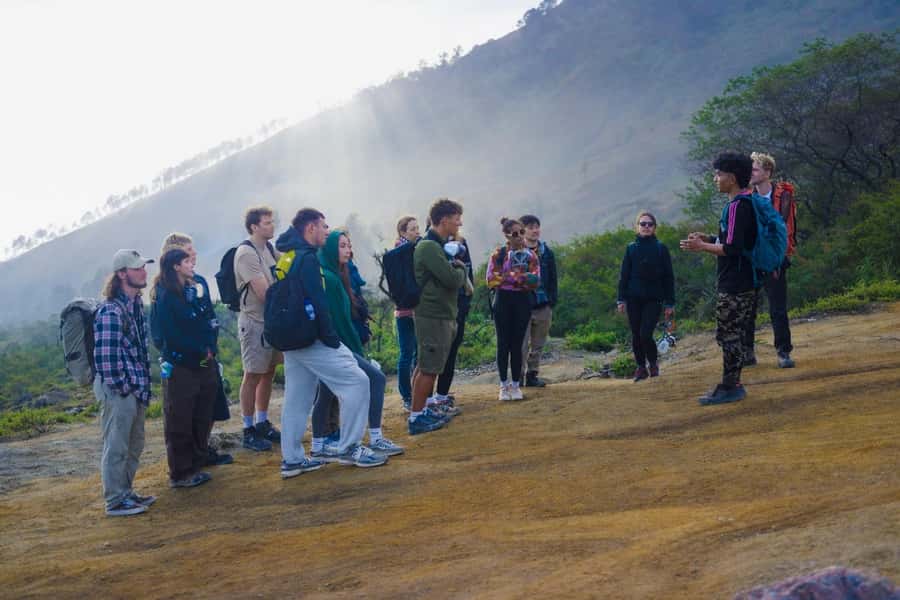
Ijen comes with real conditions, not just a cool story. Sulfur gas is explicitly part of the environment near the crater, and the tour provides gas masks and headlamps for a reason. A guide briefing should set expectations, and you should follow instructions immediately, especially around breathing and movement.
Health requirements are part of the rules here. A valid health certificate is required, and there’s even mention of a medical statement as something to bring. There’s also a note that Ijen can close—specifically, it’s closed every Friday in the first week—and Mount Ijen reopened on 8 September 2024 after earthquake-related closure due to tremors and toxic gas.
Also note the hard “not for you” list: children under 12, pregnant women, and people with respiratory issues should not join. If you have asthma, chronic breathing problems, or you’ve been advised to avoid high-gas environments, don’t try to “tough it out.”
One more rule is simple but important: jewelry isn’t allowed. That’s likely about safety and comfort while wearing masks and moving through rough terrain. If you have accessories, leave them behind.
Should you book this Banyuwangi Ijen Blue Fire trek?
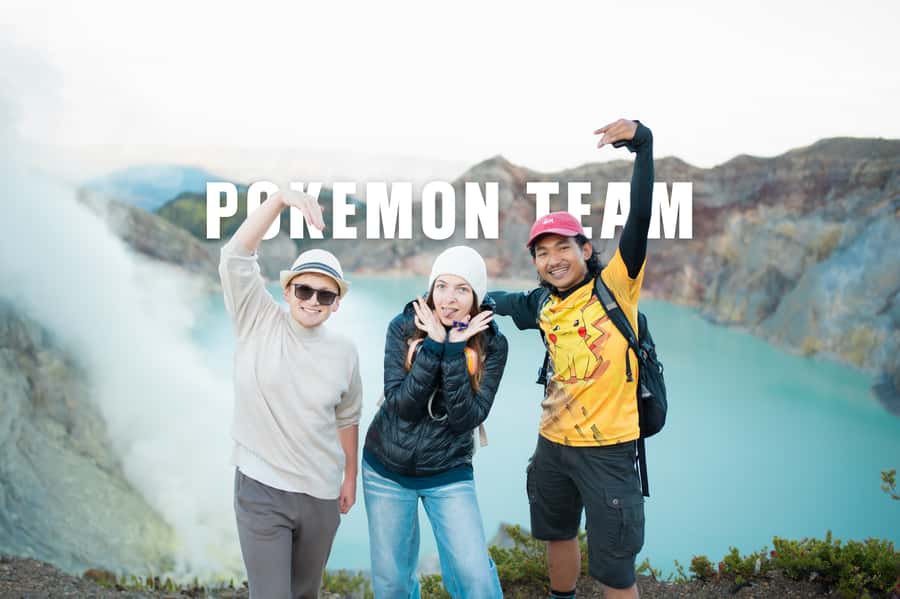
If your top goal is seeing Blue Fire and then watching sunrise transform the crater lake into turquoise while you observe traditional sulfur miners at work, this tour hits those goals in one long, focused day. The guides’ energy, humor, and attention to safety—names like Suleiman, Sulliman, Soufian, and Sule—are repeatedly highlighted, and that matters when you’re walking in the dark.
Book it if you:
- can handle a strenuous hike and steep steps
- want a guided, timed experience rather than experimenting on your own
- can use provided safety gear comfortably
Skip it if you:
- don’t feel good about steep descents or heights
- have respiratory issues or are pregnant
- can’t meet the required health certificate rule
If you’re the kind of traveler who loves specific, high-impact nature moments with real-world safety controls, this is a strong pick.
FAQ
How long is the Ijen Crater Blue Fire and Sunrise guided trek?
The duration is 9 hours.
What time does the tour start?
Starting times vary, and you’ll need to check availability to see the exact start time. The trek is described as a midnight hike to reach the crater.
Is hotel pickup in Banyuwangi included?
Yes. Round-trip transport from Banyuwangi to Kawah Ijen is included, and pickup is included from your hotel. You should wait in the hotel lobby.
What safety equipment do you get for the sulfur gas?
You’ll be equipped with a headlamp and a gas mask for safety due to sulfur gas near the crater. First aid and a portable oxygen tank are also included.
Is an entrance ticket included?
Yes. The Kawah Ijen entrance ticket is included.
Do I need a health certificate to join?
Yes. A valid health certificate is required.
Who is this tour not suitable for?
It’s not suitable for children under 12, pregnant women, and people with respiratory issues.
What do you see during the experience?
You’ll see the rare Blue Fire phenomenon at Ijen, then sunrise from the top of Kawah Ijen. You’ll also see the crater lake’s turquoise waters as sunrise light arrives and observe traditional sulfur miners at work.
What should I bring, and what should I avoid?
Bring a camera, snacks, and your passport (copy accepted), plus a medical statement. Jewelry is not allowed.
Can I cancel and get a full refund?
Yes. Free cancellation is available up to 24 hours in advance for a full refund.