REVIEW · MOSHI
6 Days Mount Kilimanjaro Trek Marangu Route
Book on Viator →Operated by Intrepid Explorer Tanzania · Bookable on Viator
Kilimanjaro has a way of changing your brain. This 6-day Marangu Route trek from Moshi mixes rainforest walking, hut sleep (dorm style), and a classic midnight summit push. I like that the route is known for being the “easiest” option on the mountain, and I also like how the plan builds in a real acclimatization window rather than rushing you. One consideration: even on the easier route, summiting isn’t guaranteed, and 5 days is often too tight, so you should go in expecting a hard, cold, slow day.
This itinerary leans into what makes Marangu practical: you sleep in huts, meals are organized, and the logistics feel handled. You also get emergency oxygen (strictly for emergencies, not summit aid) and daily water for drinking plus hot water for washing. My only real caution is the long summit day—it’s a monster, and you’ll need to pace yourself mentally as much as physically.
In This Review
- Key Highlights You’ll Feel on the Mountain
- Marangu Route, the Coca-Cola Path from Moshi
- Price and Value: What’s Actually Included for $2,350
- Day 1: Marangu Gate to Mandara Hut Through Rainforest
- Day 2: Mandara Hut to Horombo Hut and the First Real Altitude Wall
- Day 3: Horombo Acclimatization with Mawenzi Ridge or Zebra Rock
- Day 4: Horombo to Kibo Hut via Saddle and Last Water
- Day 5: Midnight to Uhuru Peak with Hans Meyer Cave and Gillman’s Point
- Day 6: Descent Back to Marangu Gate and a Finish in Moshi
- Huts, Water, and the Comfort Stuff That Makes a Difference
- The Local Team: Guides, Porters, Cook, and Safety Focus
- Who This Trek Fits Best (and Who Might Rethink)
- Should You Book This 6-Day Kilimanjaro Marangu Trek?
- FAQ
- How long is the Kilimanjaro trek on this itinerary?
- What route does this trek follow on Kilimanjaro?
- Where do I sleep during the climb?
- Is there an emergency oxygen supply included?
- Will I be summiting Uhuru Peak on this trek?
- What meals and water are included?
- Do I get transfers to and from Moshi?
- Can I rent trekking gear instead of bringing everything?
- What fitness level do I need?
- Is free cancellation available?
Key Highlights You’ll Feel on the Mountain
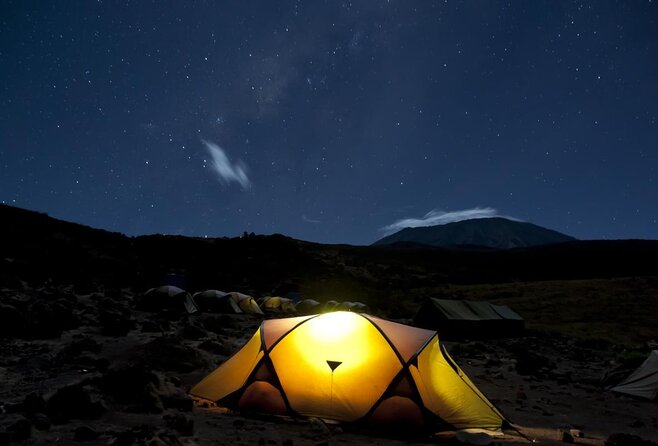
- Dormitory-style hut sleeping on Marangu, with a more controlled feel than tent camping
- A built-in acclimatization day at Horombo (Mawenzi Ridge or Zebra Rock) to improve your odds
- Midnight ascent to Uhuru Peak, with sunrise from the crater rim area at Gillman’s Point
- Real altitude landmarks on the route: Hans Meyer Cave (5220m), Gillman’s Point (5681m), Uhuru Peak (5895m)
- Warm meals and frequent support: guides, assistant guides, porters, cook, plus emergency oxygen
- Moshi logistics handled, including collection from your lodge on day 1 and transfer back after you finish
Marangu Route, the Coca-Cola Path from Moshi
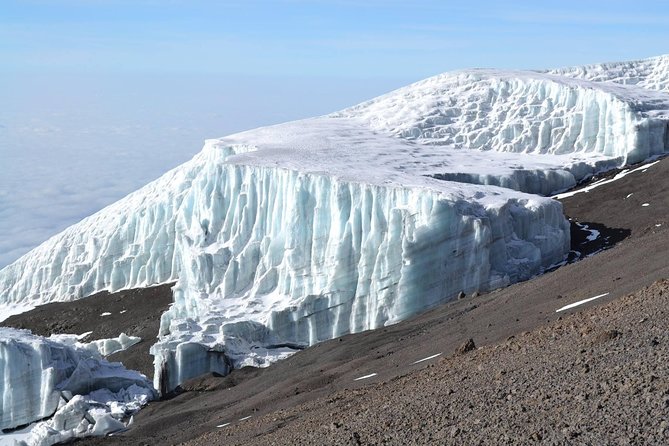
Marangu is often nicknamed the Coca-Cola route, and it has a reason people keep repeating. It’s the oldest established route on Kilimanjaro, and it’s the one most hikers describe as the most straightforward to follow. It approaches Kilimanjaro from the southeast, and the trail structure tends to be easier to manage day-to-day.
The big practical advantage is that Marangu is one of the few routes that offers sleeping huts. Instead of sleeping in tents night after night, you’re using hut-style accommodation in dormitory layout. That doesn’t mean it’s a luxury vacation up there, but it does mean less “gear juggling” when you’re tired and cold.
If you’re choosing Marangu specifically, you’re probably also choosing predictability. The itinerary is built around classic Kilimanjaro stages: rainforest start, then heath and moor zones, then the drier alpine world leading to Kibo and the summit crater.
You can also read our reviews of more tours and experiences in Moshi.
Price and Value: What’s Actually Included for $2,350
At $2,350 per person, Kilimanjaro isn’t a budget trip. But what you’re buying here is more than “a guide walking next to you.” The included package covers the expensive moving parts that can otherwise surprise you later.
Here’s what makes the price feel more like a full service trek:
- All park fees and taxes are included
- Return transfers between Moshi and Kilimanjaro airport are included
- Hotel the night before and after the climb, with dinner and breakfast
- A full support team: qualified mountain guide, assistant guides, porters, and cook (and their wages)
- Emergency oxygen is included for emergencies only (not as summit support)
- Meals and water are handled: multiple breakfasts and dinners, plus hot water for washing daily
When you see it written like that, the value logic is simple: you’re paying for safety, organization, food, and a staff that carries a huge chunk of the logistical load.
Day 1: Marangu Gate to Mandara Hut Through Rainforest
Day 1 starts with pickup from your lodge in Moshi, then paperwork at the Marangu gate. Once you’re set, you move into dense rainforest. This is the day where you’ll feel the “Kilimanjaro world” shift from normal life to something ancient and green.
The plan covers about 8.3 km (5.2 mi) in roughly 5 hours to reach Mandara Hut. Along the way, you may catch sight of primates, and you’ll likely notice how thick the vegetation gets. That’s a nice mental start because you’re not immediately fighting altitude shock.
After rest at the hut, your guide can take you toward Maundi Crater for a viewpoint toward the Kenyan interior. For many people, that short detour becomes a highlight because it’s a “wow” moment without the suffering tax that comes later in the trek.
Day 2: Mandara Hut to Horombo Hut and the First Real Altitude Wall
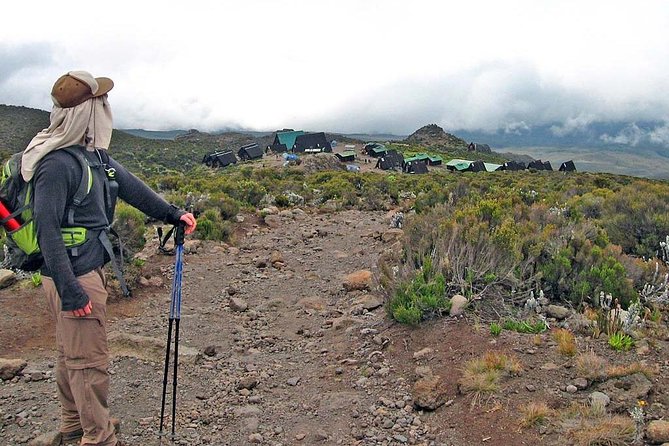
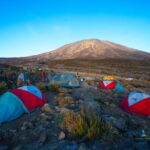
Day 2 is where Kilimanjaro starts to feel like Kilimanjaro. You leave Mandara Hut, climb through zones that transition from timberline to heath and moor, and eventually reach Horombo Hut at 3700m.
Expect a long day: about 12.5 km (7.8 mi) and around 9 hours. The schedule notes 4–6 hours before Horombo comes into sight, so you should plan on steady effort rather than quick strides. If you go too fast, altitude will remind you.
From Horombo, you get strong views over Mawenzi, Kibo, and the Masai steppe. That matters because it helps you “see” the mountain you’re working toward, not just the next bend in the trail.
One realistic note: the higher you go, the colder your sleep and your mood can get. On Day 2, your job is to protect your energy for the long summit day later.
Day 3: Horombo Acclimatization with Mawenzi Ridge or Zebra Rock
This is the day you’ll be glad is included. The 6-day version doesn’t rush you. Instead, you stay at Horombo for acclimatization, using hiking time to help your body adjust to higher altitude.
Your hike goes toward Mawenzi Ridge or Zebra Rock, then you return to Horombo for lunch, rest, dinner, and overnight. The time listed is about 4 hours, so this isn’t a “go grind the mountain” day. It’s a controlled adjustment.
Why this day matters: when people talk about success on Kilimanjaro, acclimatization is usually the boring answer that actually works. Even the itinerary itself recommends adding this kind of extra day because the minimum timeline has a lower chance of reaching the top.
This is also a good day to slow your breathing, sip water steadily, and treat your body like it’s doing training, not sightseeing.
Day 4: Horombo to Kibo Hut via Saddle and Last Water
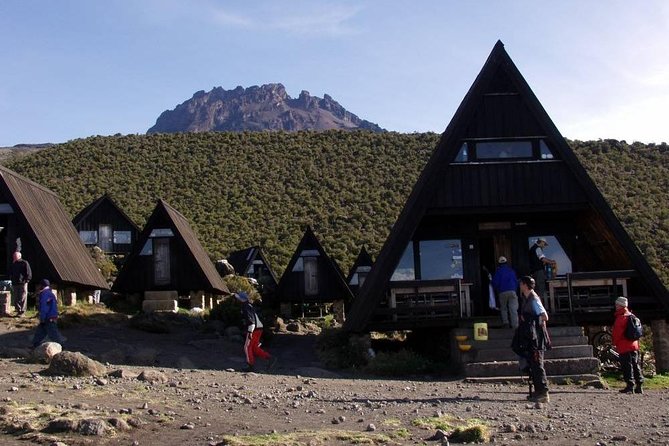
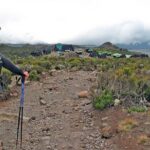
Day 4 is long and tough. The route covers 9.5 km (5.9 mi) in roughly 7 hours to Kibo Hut. The trail is described as well-built, but that doesn’t make it easy—altitude does the heavy lifting.
The key features of the day are:
- The Last Water point
- The saddle, a near-vegetation plateau joining the summit region of Kibo with Mawenzi
That combination is important. The Last Water point signals you’re entering a zone where you’ll need to manage what you’ve got. It’s not about panic. It’s about planning your pace and staying calm while conditions get harsher.
At Kibo Hut, the schedule points to an early evening meal and an early night because the night will be short. That’s exactly what you want: you’re preparing for the summit push, not trying to stay awake and “enjoy the view.”
Day 5: Midnight to Uhuru Peak with Hans Meyer Cave and Gillman’s Point
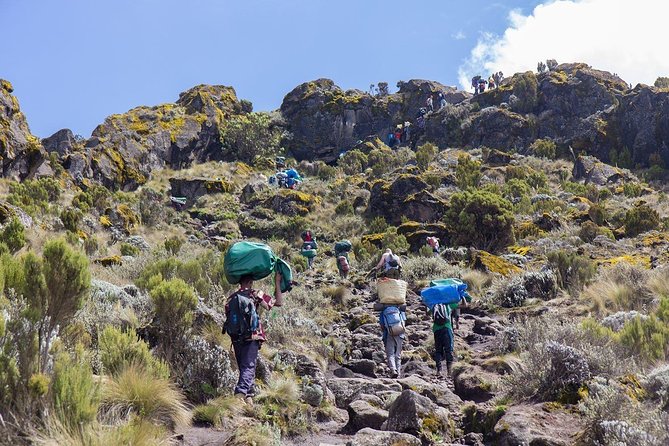
This is the big day: Uhuru Peak, reached after a midnight final ascent. The plan lists 12–15 hours total and about 22 km (13.7 mi) of effort, but the mileage can be misleading. What really matters is the time on the move and the cold.
The climb begins around midnight and slowly rises. You pass Hans Meyer Cave at 5220m, and you’ll likely feel how the air gets thinner as you go. Mentally, this day can feel like it has one long sentence: walk, breathe, repeat.
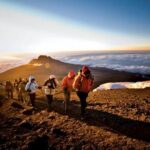
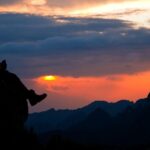
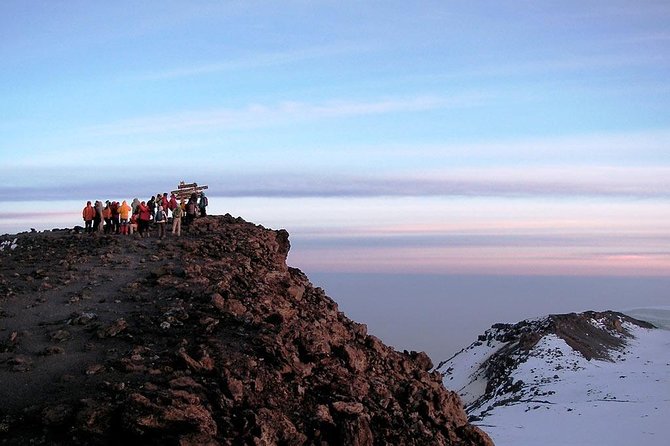
Around sunrise, you reach Gillman’s Point (5681m), described as the crater rim. This is where the sun starts warming the land, and that change can be a huge psychological boost when everything else is frozen and quiet.
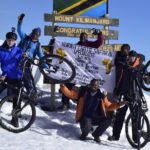
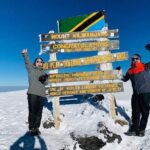
After a further 1–2 hours, you reach Uhuru Peak at 5895m. Then you descend back toward Kibo Hut, where a warm meal is waiting, followed by a 1–2 hour break before continuing down to Horombo Hut.
A small but real tip: the way you feel at sunrise matters more than the way you felt at midnight. Keep your pace conservative early, because you still have hours to go.
Day 6: Descent Back to Marangu Gate and a Finish in Moshi
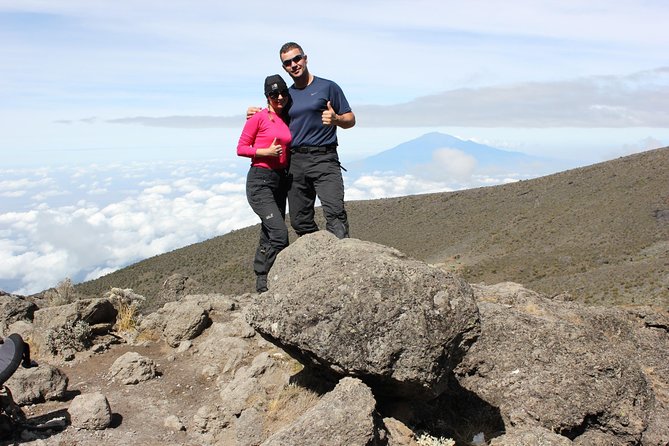
Day 6 focuses on getting you down safely and smoothly. The route passes through heath and moor zone toward Mandara Hut (2700m) for warm lunch, then continues into tropical rainforest again.
It’s about 20.8 km (12.9 mi) total in roughly 8 hours, with the itinerary describing around 6 hours trekking before you’re back at the Kilimanjaro National Park Gate (1860m). After goodbye to your mountain guides, you transfer back to your hotel in Moshi.
This day is where your legs will talk back. You might feel sore, wobbly, or both. The good news is that the itinerary is designed as an intentional descent day, not a last-minute cram.
Then comes the part you’ll appreciate: a warm shower and a real chance to celebrate. You’ll be surprised how “normal” food tastes after days of trekking.
Huts, Water, and the Comfort Stuff That Makes a Difference
Marangu’s hut system is the reason many people choose this route. Sleeping in dormitory-style huts means you’ll likely share space with other hikers in the hut setup. It’s not private, and it’s not silent, but it is structured.
Here’s the practical comfort layer this plan includes:
- Fresh drinking water each day
- Hot water for washing daily
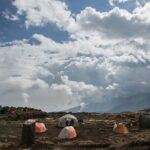
- Camping equipment included (tents, camp chairs, tables, and sleeping mattress items are listed in the package)
That “camp gear” line can feel confusing if you’re expecting only huts, but it suggests you’re not on your own for the basic setup tools used by the team during the trek. Either way, the day-to-day experience depends most on the hut sleep and the support staff.
Also, a quick note on cleanliness and recovery: hot water for washing matters more than you think when you’re chilled to the bone.
The Local Team: Guides, Porters, Cook, and Safety Focus
On Kilimanjaro, your success isn’t just about your legs. It’s about the team that keeps things running—food timing, pacing guidance, and trouble prevention.
This trek includes a qualified mountain guide plus assistant guides, porters, and a cook with wages covered. That means you’re not relying on someone to improvise meals or scramble for basic needs halfway up the mountain.
In Moshi, the operation is associated with local leadership including Wence Tarimo, and that local presence shows up in how people describe the whole experience: organized starts, smooth transfers, and support that feels personal rather than mechanical.
Safety-wise, the package explicitly includes emergency oxygen for emergencies only. That detail matters. Oxygen isn’t a summit cheat. It’s there for situations when you need urgent help.
Who This Trek Fits Best (and Who Might Rethink)
This Marangu itinerary fits hikers who want:
- A structured route with hut sleeping
- An itinerary that includes acclimatization time instead of shaving every day
- A trek where meals, water, and core logistics are handled
The trip is aimed at people with moderate physical fitness. That doesn’t mean it’s easy. It means the plan is designed for realistic success with the right effort and a steady pace.
If you hate cold, long summit days, or sharing sleeping space, you might struggle here. Also, if you’re chasing maximum summit odds, remember that route length is only one piece. Weather and your acclimatization response matter too.
Should You Book This 6-Day Kilimanjaro Marangu Trek?
I’d book this trek if you want the Kilimanjaro experience with less uncertainty on the logistics and more emphasis on staying comfortable enough to keep moving. The combination of hut sleeping, included meals and water, organized support staff, and an actual acclimatization day is the kind of planning that helps you show up for the summit day with energy left.
I would pause if you’re looking for a “short and easy” climb. Even with Marangu being the easier route on the mountain, you still get a long ascent to Uhuru Peak, cold nights, and a summit day that can run 12–15 hours.
If your goal is to climb smart—not just climb fast—this is a solid match for a serious first Kilimanjaro attempt.
FAQ
How long is the Kilimanjaro trek on this itinerary?
The trek runs for about 6 days. The day-by-day stages list total trekking times ranging from about 5 hours on Day 1 to 12–15 hours on the Uhuru Peak summit day.
What route does this trek follow on Kilimanjaro?
It follows the Marangu route, often called the Coca-Cola route, approaching from the southeast. Marangu is known for hut-style sleeping and for being one of the easier established routes.
Where do I sleep during the climb?
Marangu provides sleeping huts in dormitory-style accommodations. The included items also list camping equipment and a sleeping mattress, but the route’s stated accommodation style is hut-based.
Is there an emergency oxygen supply included?
Yes. The package includes emergency oxygen for emergencies only, and it’s not provided as summit aid.
Will I be summiting Uhuru Peak on this trek?
Yes. The plan describes the summit stage to Uhuru Peak (5895m) on Day 5, starting your final ascent around midnight.
What meals and water are included?
The package includes breakfasts and dinners and lunch on the specified days (breakfast 5, dinner 5, lunch 6). It also includes fresh drinking water daily and hot water for washing daily.
Do I get transfers to and from Moshi?
Yes. There are return transfers between Kilimanjaro airport and Moshi, and Moshi back to the airport. You’re also picked up from your lodge in Moshi on the first day and transferred back to your hotel after the trek.
Can I rent trekking gear instead of bringing everything?
Some personal trekking gear can be rented from the equipment store in Tanzania. Personal hiking/trekking gear is listed as not included, though rentals are possible.
What fitness level do I need?
The experience is described as suitable for people with a moderate physical fitness level.
Is free cancellation available?
Yes. Free cancellation is available up to 24 hours in advance for a full refund. If you cancel less than 24 hours before the start time, the amount paid is not refunded.