REVIEW · MOSHI
Mt Kilimanjaro Trek, 6 Days – Umbwe Route
Book on Viator →Operated by Intrepid Explorer Tanzania · Bookable on Viator
Climb straight into the hard part of Kilimanjaro. The Umbwe Route is the least used path on the mountain, and it stays steep and direct instead of easing you into altitude. I like the focus on real logistics (hotel nights, transfers, meals, camping gear) and the way the route still gives you a clear summit-day rhythm. The big drawback: Umbwe is also the most difficult route, with little time to acclimatize and a low success rate if you’re not strongly prepared.
If you’re looking for a remote, challenging trek with strong on-the-ground support, this one fits well. The private-group setup also matters here: you’re not stuck negotiating pace or comfort with strangers while your body is busy adapting to altitude.
In This Review
- Key things to know before you pick Umbwe
- Umbwe Route: the least crowded climb that asks the most of you
- Moshi to Umbwe Gate: timing, transfers, and staying in the right place
- Day 1: rainforest start and the early elevation jump to 2,850m
- Day 2: open moorland slog to Barranco Camp (and the air thins fast)
- Day 3: Barranco Wall ridge work and the junction with Mweka
- Day 4: up to Barafu Camp and the “South Circuit” setup
- Day 5: midnight-to-sunrise summit push via Stella Point
- Day 6: Mweka descent, certificates, and getting your legs back
- What you’re really paying for: the $2,260 value check
- Crew support and the human side of staying on track
- Gear and readiness: what to bring so Umbwe doesn’t win
- Should you book the Umbwe 6-day Kilimanjaro trek?
- FAQ
- How many days is the Umbwe Route trek?
- Where does the trek start and how do you get there?
- What’s included in the price?
- Is a portable toilet provided?
- What gear do I need to bring?
- What if I need to cancel?
Key things to know before you pick Umbwe
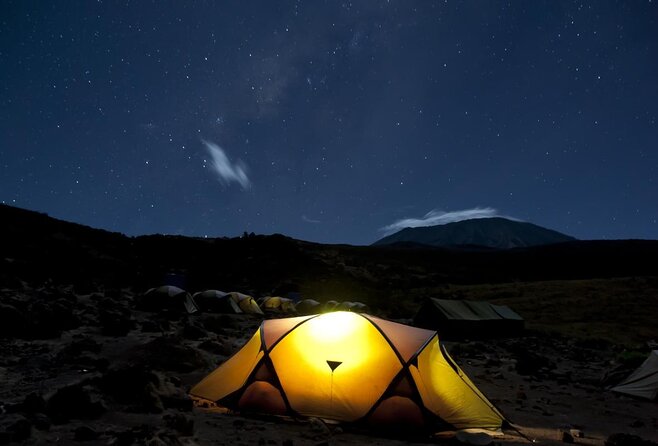
- Umbwe is steep and constant: fewer gentle moments, more time spent working uphill.
- Low-crowd by design: you’ll likely feel the mountain as a place, not a conveyor belt.
- Solid support package: guides, assistant guides, porters, cook, and emergency procedures are built in.
- A summit-night grind with a payoff: Stella Point sunrise is the mental highlight.
- Descent uses Mweka: once you’re done climbing, you’ll spend your last day hiking through potentially wet, muddy lower trails.
Umbwe Route: the least crowded climb that asks the most of you
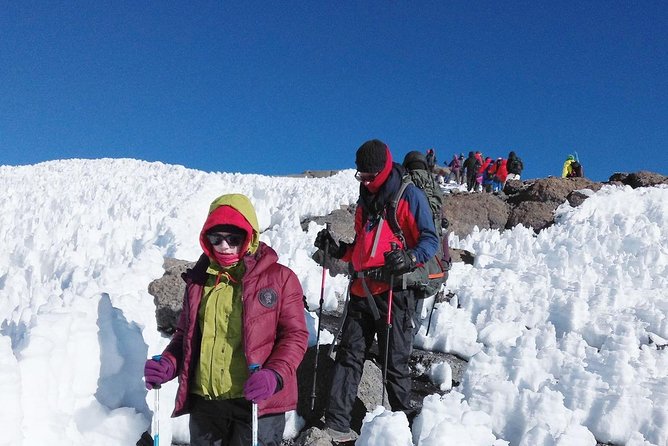
Umbwe is popular for one thing: it isn’t popular. That means fewer people on the trail, and you get the kind of solitude that can make a tough climb feel more personal and less like a busy hike.
But the trade-off is real. Umbwe is a steep, constant, straight climb to the top, and the ascent profile doesn’t give you much time to adjust to altitude. In plain terms: your body doesn’t get many chances to settle in at higher elevations before the schedule pushes you upward again. This is why the success rate is described as very low on this route.
So I’d frame Umbwe like this:
- If you’re already comfortable trekking uphill for hours, you’ll probably handle the terrain.
- If you also have strong confidence in altitude—either from prior experience or from very solid physical readiness—you’re the kind of traveler Umbwe tends to work for.
- If you want a slower, more gradual acclimatization arc, you’ll likely feel the pressure faster than you’d like.
And yes, 6 days is the minimum on paper. The plan notes that 7 days is recommended. That extra day can be the difference between feeling “surviving” and feeling “managing” altitude. If you’re on the fence, that recommendation is worth listening to.
You can also read our reviews of more tours and experiences in Moshi.
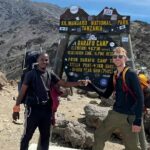
Moshi to Umbwe Gate: timing, transfers, and staying in the right place
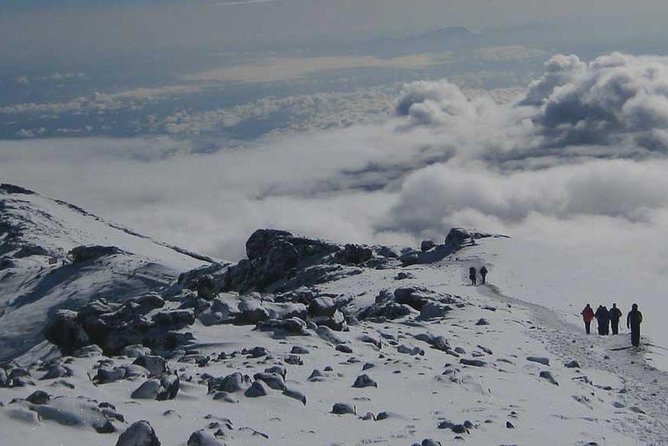
This trip is based out of Moshi, Tanzania, and it includes return transfers between the airport area and Moshi (and back). Pickup is offered, so you’re not left figuring out ground transport when you arrive tired from flights.
You’ll also have a hotel the night before the climb and another after. That’s a small detail that pays off. After a long international day, you want sleep, dinner, and a normal shower before you start hiking at elevation. Then, after your final descent, you want the same kind of comfort—especially because the last day can be muddy.
From Moshi, you’ll drive to the Umbwe Gate (about 1 hour). Then you start climbing the rainforest trail. It’s a clean first step: you begin on foot without a complicated staging process.
Day 1: rainforest start and the early elevation jump to 2,850m
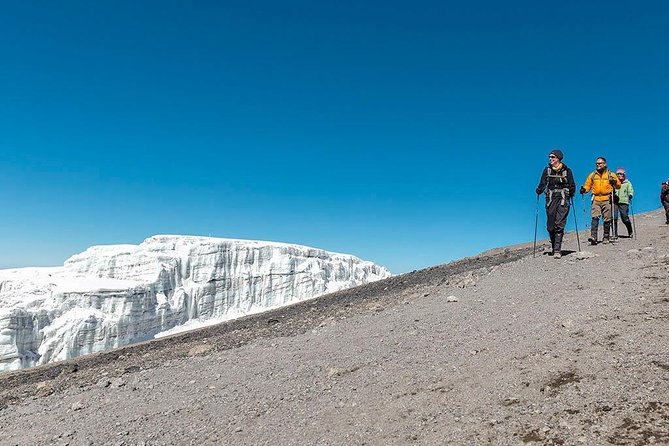
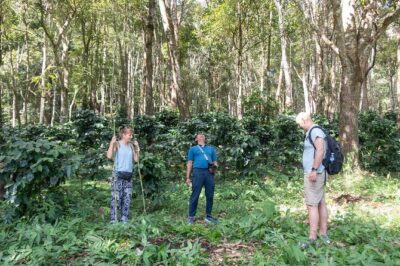
Day 1 climbs from about 1,660m to 2,850m over roughly 11km and 5–6 hours. The trek begins after you reach Umbwe Gate, and it goes through rain forest with a packed lunch on route.
What I like about this start is that it gives you structure right away. You’re not wandering; you know the time window, the work level, and the planned elevation gain. The downside is the altitude starts moving quickly. Even on the first day, you’re climbing to a level where you might feel it if you’re sensitive.
Practical tip: take the first day seriously, even if you feel fine. On Umbwe, the schedule later becomes punishing. Day 1 is where you set your pace habits—slow, steady, water-focused—so you don’t “spend” your energy too early.
Day 2: open moorland slog to Barranco Camp (and the air thins fast)
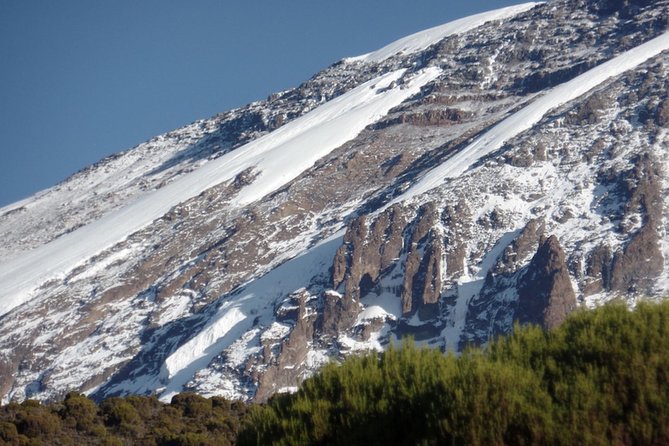
Day 2 runs from 2,850m to 4,000m, about 6km with 4–5 hours of trekking. You leave the rain forest glades behind and move onto open moorland, hiking uphill toward Barranco Camp.
This is where Umbwe starts to feel like Umbwe: fewer soft transitions, more direct climbing. Because this day climbs high relatively fast, you’ll want to keep your effort controlled. Fast walking feels good for the first hour—until your breathing tells on you later.
The camp here matters too. Barranco Camp is your main altitude staging point before the steep ridge work that comes next. If you’re tired on arrival, don’t try to “push through” dinner. Eat what you can, hydrate steadily, and prioritize rest.
Day 3: Barranco Wall ridge work and the junction with Mweka
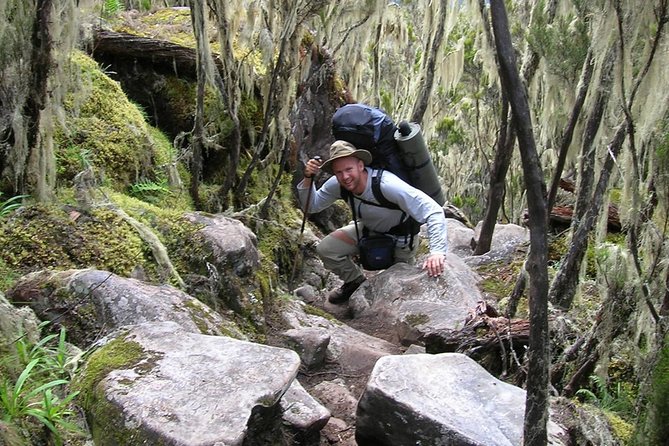
Day 3 climbs from about 4,000m to 4,050m over 5km for around 3–4 hours. That short distance can trick people. Even though it’s not a huge elevation gain, the day includes a steep ridge up the Barranco Wall, continuing toward the Karanga Valley junction where it connects with the Mweka Trail.
This is one of Umbwe’s psychological tests. You can feel like you’re doing less “climbing math” on paper, then the terrain punishes your legs anyway. Ridge walking at altitude is more taxing than it looks on a map.
Why this junction matters: it links routes and sets you up for the next phase of the climb, which ultimately leads toward Barafu and summit planning. It’s the point where the trip becomes more focused on “get ready for the night climb” than “we’re still warming up.”
Day 4: up to Barafu Camp and the “South Circuit” setup
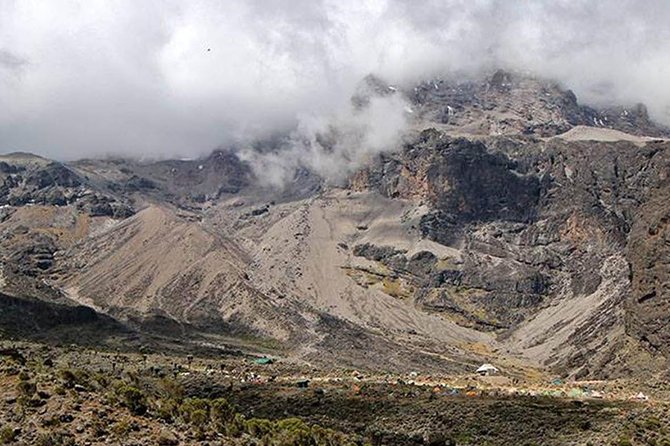
On Day 4, you go from about 4,050m to 4,700m over 4km in around 3–4 hours, continuing to Barafu Camp. This is where you’ve completed the South Circuit, with views of the summit from multiple angles.
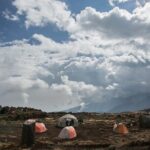
Even if the weather changes (and it often does on Kilimanjaro), this camp stop is about preparing. You’ll make camp, rest, enjoy dinner, and get ready for the summit day that starts later at night.
What I like here is the timing logic. Barafu sets you up for a summit attempt that doesn’t waste daylight. It’s efficient. It’s also demanding—because once you’re in that “summit mode,” sleep becomes hard to force, and your body will feel every emotion from excitement to dread.
Practical call: if you’re the type who gets tense in the dark, bring a calm mindset strategy. You won’t be alone with your thoughts for long—your guide’s pacing plan and your own breath control will carry you.
Day 5: midnight-to-sunrise summit push via Stella Point
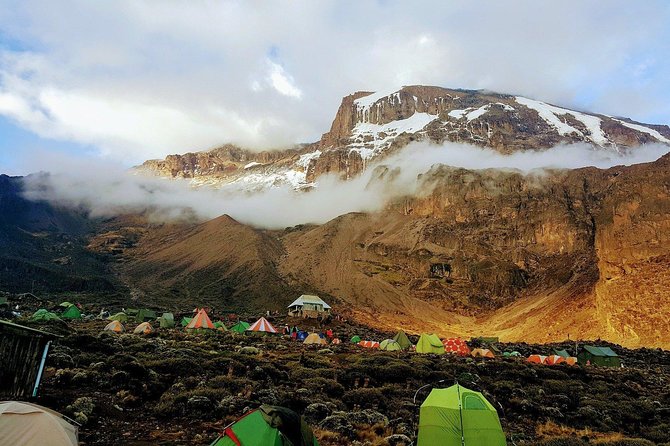
Day 5 is the centerpiece—and the most difficult part—for the body and for the mind. You move from about 4,700m up to 5,895m, and then you descend down to about 3,090m. The itinerary lists about 5km uphill (in distance terms) but up to 14 hours total for the day.
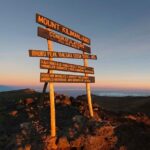
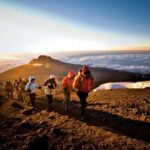
The climb begins very early, between midnight and 2am, heading between the Rebmann and Ratzel glaciers. You ascend through heavy scree toward Stella Point on the crater rim. Stella Point is a short rest stop, and it’s where you’re rewarded with one of the most famous moments on Kilimanjaro: an early sunrise.
From Stella Point, the plan describes that you may encounter snow all the way on the 1-hour ascent to the summit. Then you’re on Uhurread—ending the summit segment—before turning back.
Here’s the practical reality: this part is mentally and physically challenging. It’s not just steep. It’s cold, it’s dark, and it’s a steady grind where you can’t “hike hard” your way out of altitude. The best strategy is disciplined pacing and staying with your guide’s rhythm.
And because Umbwe is direct and demanding, this is where route confidence becomes non-negotiable. If you’re still feeling strong on Day 5, it usually means the earlier days worked for you. If you’re not, the day becomes a survival exercise rather than a celebration.
Day 6: Mweka descent, certificates, and getting your legs back
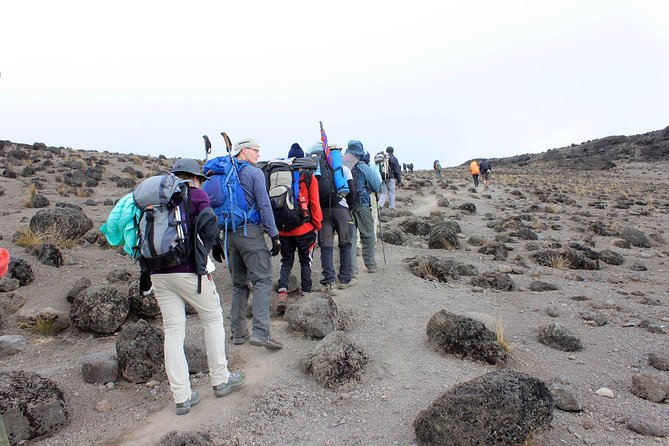
Day 6 descends from about 3,090m to 1,680m, around 10km with 3–4 hours hiking. You continue down the Mweka Trail to the Mweka Park Gate for summit certificates, then continue about another hour to Mweka Village, where a vehicle meets you and drives you back to Moshi (about 30 minutes).
This final day is often where people underestimate the weather. The plan notes that lower elevations can be wet and muddy. That means you’ll want gear that improves traction and saves your knees.
The practical advice included is straightforward:
- Gaiters and trekking poles help.
- Shorts and t-shirts might be enough for lower temps, but keep rain gear and warmer clothing accessible.
Also, the certificates moment isn’t just paperwork. It’s the closure point where you shift from survival mode to a relaxed, “we did it” mood.
What you’re really paying for: the $2,260 value check
At $2,260 per person, this trek isn’t a bargain. The question is: does it cover what most people would spend separately?
In your favor, the package includes a lot that normally costs extra:
- All fees and taxes
- Return transfers (airport ↔ Moshi)
- Hotel the night before and the night after
- Meals during the climb (breakfasts, lunches, dinners as listed)
- Qualified crew: mountain guide, assistant guides, porters, and cook
- Camping equipment (tents, camp chairs/tables, sleeping mattress)
- Fresh water daily for drinking and “worm water” for washing up
- Emergency oxygen for emergencies only
- Basic first aid kit for emergencies only
So the value comes from two things: you’re buying logistics and you’re buying safety infrastructure. Umbwe is a hard route, and that crew capacity matters more than on gentler itineraries. It’s also a private tour/activity, meaning it’s only your group. For some travelers, that peace of mind is worth real money.
Where costs can bite: personal items, snacks, and supplemental gear. The plan specifically notes that personal hiking gear isn’t included (though some gear can be rented), and it also says a portable toilet is optional but highly recommended. If you’re considering Umbwe, don’t treat that last one lightly.
Crew support and the human side of staying on track
One theme from the experience feedback is that the guiding team took care of people end-to-end. The support isn’t just “lead the line and point at the summit.” It’s about managing effort, keeping you safe, and making the mountain day feel livable.
It also sounds like the operator behind the scenes—Wence is named in feedback—can tailor the tour to preferences, and that kind of flexibility can matter when you’re dealing with fatigue and altitude.
The cook aspect is another small but important detail. You’re up in the cold and working hard. Food is fuel, but it’s also morale. When the chef is organized enough to serve special night meals, that’s not fluff—it can help you sleep and recover.
Gear and readiness: what to bring so Umbwe doesn’t win
The trip includes camping equipment and water. What it doesn’t include is your personal hiking gear. The operator says you can rent some gear from their equipment store in Tanzania, but you should still expect to carry or manage the basics yourself.
Based on what’s explicitly mentioned in the plan:
- Bring what you need for wet, muddy lower trails on Day 6 (gaiters and poles are recommended)
- Plan for cold and moisture—have rain gear and warmer clothing handy even if lower temps feel tolerable
- Consider a portable toilet (optional but highly recommended)
- Plan for personal items not included: snacks and personal medicine
Fitness and confidence are also part of readiness. The trek calls for strong physical fitness, and it’s clear the route is aimed at people experienced with altitude. Umbwe is for hikers who can trek consistently over steep slopes and who won’t let the punishing schedule derail acclimatization.
A smart way to think about it: Umbwe doesn’t just test your legs. It tests your planning, your pacing, and your ability to slow down when your instincts want to speed up.
Should you book the Umbwe 6-day Kilimanjaro trek?
Book it if:
- You want a steep, low-crowd, remote route rather than a more gradual experience.
- You’re physically ready for consistent uphill effort and you can maintain a steady pace for hours.
- You have altitude experience or a strong reason to believe you’ll acclimatize well on a direct schedule.
- You value a full support setup: guides, porters, cook, camping gear, water, hotels, and transfers.
Skip it (or upgrade your timing) if:
- You’re hoping for a more forgiving acclimatization profile. The plan itself flags that Umbwe doesn’t give much adjustment time and that success rates are low.
- You don’t feel confident on steep terrain for long stretches.
- You can’t commit to the reality that Day 5 is a long summit-night grind.
If you’re a fit, altitude-aware trekker who wants the mountain to feel quieter and tougher, this is a very logical choice. If you’re not fully there yet, consider routes with a more gradual climb—or at least think hard about whether you should aim for the recommended longer duration.
FAQ
How many days is the Umbwe Route trek?
It’s listed as 6 days (approx.), with the note that 7 days is recommended for this route’s acclimatization needs.
Where does the trek start and how do you get there?
The start is at Umbwe Gate. Moshi pickup is offered, and the plan includes an about 1-hour drive from Moshi to Umbwe Gate.
What’s included in the price?
Included are all fees and taxes, return transfers between the airport and Moshi, hotel the night before and after, meals during the trek, qualified guides/porters/cook, camping equipment, fresh water for drinking and washing, and emergency oxygen for emergencies only.
Is a portable toilet provided?
A portable toilet is not included, but it is optional but highly recommended.
What gear do I need to bring?
Personal hiking/trekking gear is not included (though some gear can be rented). The plan specifically recommends gaiters and trekking poles for the potentially wet and muddy Day 6 descent.
What if I need to cancel?
There is free cancellation up to 24 hours in advance for a full refund. If you cancel less than 24 hours before the start time, the amount paid isn’t refunded.