REVIEW · MOSHI
5 Days Kilimanjaro Trekking – Marangu Route
Book on Viator →Operated by Afrishare Trekking and Safaris · Bookable on Viator
Coca-Cola ease doesn’t mean easy. This 5-day Kilimanjaro climb via the Marangu route brings you from rain forest to high moorlands, then delivers the midnight push to Uhuru Peak. I especially liked the calm, careful team vibe I saw with guides such as Alex and Godfrey, and the fact you get a real acclimatization day at Horombo that helps you pace the altitude. One thing to keep in mind: the summit night starts around midnight to 2am, so sleep and energy management matter as much as motivation.
What makes this route feel smart is its straightforward rhythm. You’re supported with a professional guide, hut-style accommodation for four nights, and hotel pickup/drop-off from Moshi, so you’re not wrestling with logistics while your legs are already doing math with elevation. Still, this is a 5895 m mountain day—your body has to handle cold, steep scree, and thinner air, even on the “easier” path.
If you’re weighing fit and value, the $1,460 per person price is best when you want a guided, private experience with fees and taxes handled and you don’t want to spend your trip figuring out how it all connects. If you’re hoping for a casual walk, you should rethink expectations.
In This Review
- Key things I’d watch for on this Marangu climb
- Moshi pickup and the Marangu route mindset
- Mandara Hut to Horombo Hut: rainforest fades, moorland starts
- Horombo acclimatization day: the day that boosts summit odds
- Midnight summit push: Gilman’s Point to Uhuru Peak
- Descent days: moorland to forest and the Marangu gate finish
- What you’re paying for: $1,460 value in a private Marangu trek
- The human touch: guides, food, and the kind of support you feel
- Gear and behavior tips that match this route
- Who this Marangu trek suits best (and who should rethink)
- Should you book this 5 Days Kilimanjaro Marangu Trek from Moshi?
- FAQ
- What route is this Kilimanjaro trek?
- Where does the trek start?
- How long is the trek?
- Is this tour private?
- What are the main altitude stops during the trek?
- Does the itinerary include an acclimatization day?
- What is included in the price?
- Are vegetarian meals available?
- Are alcoholic drinks included?
Key things I’d watch for on this Marangu climb
- Private tour pacing with a professional guide for your group only, not a mixed scramble
- A full acclimatization day at Horombo, with options like Zebra Rocks and Mawenzi Tarn
- Midnight-to-dawn summit timing, with a steep scree climb toward Gilman’s Point
- Hut stays (Marangu style) plus meals that keep you fueled for altitude days
- Careful descent planning, including moorland-to-forest legs and muddy lower trails
Moshi pickup and the Marangu route mindset
This trek is based in Moshi, and you can be picked up from either the airport or your accommodation early in the morning. That matters because Kilimanjaro days start fast. The goal is to have you at the starting gate with time to settle in before altitude work begins.
Marangu is often nicknamed the Coca-Cola route because it’s seen as the more straightforward option among Kilimanjaro routes. Here’s what that really means for you: the itinerary follows a logical step-up pattern—Mandara Hut up to Horombo Hut, a meaningful rest/acclimatization block, then the summit push. You still get the full height drama. It’s just organized in a way that tends to reduce unnecessary suffering compared to routes with more extreme ups and downs.
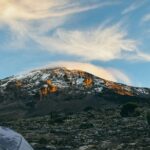
You’ll also notice the tour frames Kilimanjaro in terms of its volcanic centers: Shira, Kibo, and Mawenzi. You’ll be aiming for Kibo’s summit region, then ending back down into the lush lower slopes. If you like understanding what you’re walking across, this route gives you a clear story from rainforest edges through open moorland.
You can also read our reviews of more tours and experiences in Moshi.
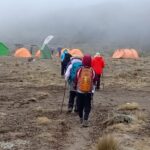
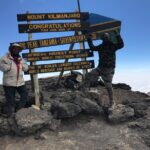
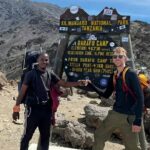
Mandara Hut to Horombo Hut: rainforest fades, moorland starts
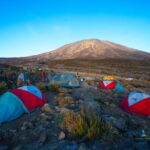
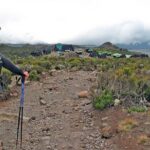
Your first trekking day climbs from Mandara Hut to Horombo Hut (around 3700 m). Expect a 3–4 hour trek, and expect scenery changes to hit you quickly. You leave the rainforest glades after about 15 minutes, then the trail transitions into ascending open moorlands.
This is a great day to keep your pace honest. You might start feeling the effects of altitude here, but it’s usually not the worst day. It’s more about learning how your breathing reacts and how your body handles steady climbing. If you’ve ever tried to “power through” the first day on altitude trips, this leg is a good place to practice restraint.
The views help too. You can look for Mawenzi and the summit area of Kibo from this zone. And if you enjoy small wins in big landscapes, watch for plant life like giant senecio and lobelias—they’re a signature part of Kilimanjaro’s high-elevation world.
Possible drawback: even on the easier route, your body can feel altitude sooner than you expect. If you’re prone to getting breathless or headache-prone at elevation, take this day seriously. Slow down early and stay hydrated.
Horombo acclimatization day: the day that boosts summit odds
The next day is an important one, even though the itinerary calls it optional in the sense that it starts and ends at Horombo. In real life, this is the day that often makes or breaks your summit chances because it’s built for altitude adaptation.
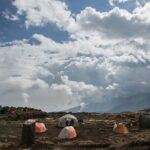
You can simply rest at the camp, which is a legitimate plan. Or you can take a day trek to Zebra Rocks (4200 m) and up toward Mawenzi Tarn Hut (around 4300 m), then return to Horombo for the overnight. That pattern—go a bit higher, then sleep lower—is a classic altitude strategy because it gives your body a chance to adjust without burning your legs.
What I like about this structure is that you get choices. If you feel good, you can stretch your legs and enjoy the views. If you don’t, you still have a full acclimatization day built into the schedule. That’s better than pushing onward with no pause.
Practical tip: if you feel off, choose the rest option without guilt. A summit attempt is a multi-day equation. The mountain doesn’t care about willpower if your body can’t recover overnight.
Midnight summit push: Gilman’s Point to Uhuru Peak
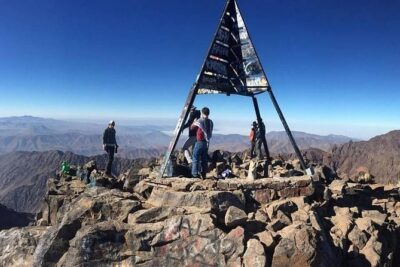
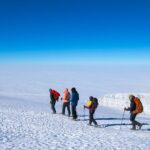
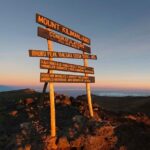
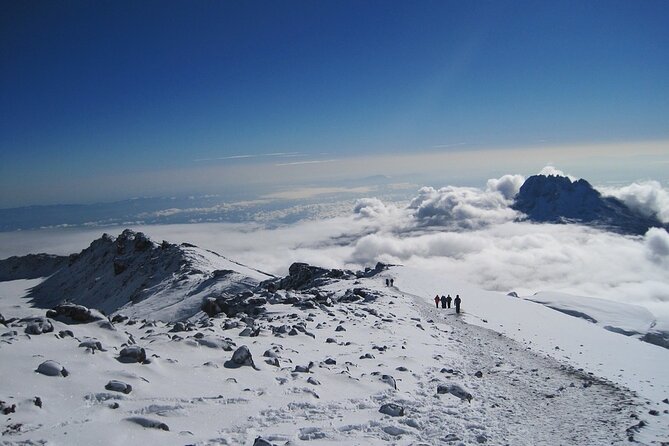
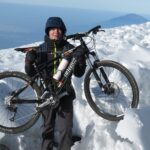
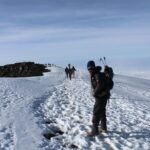
This is the big day: you start the climb very early, usually between midnight and 2am. The itinerary describes a steep, heavy scree or even snow climb up to Gilman’s Point on the crater rim, at about 5861 m (roughly 4–5 hours). Then you continue on to Uhuru Peak (5895 m), about 1–2 hours more.
If you’ve never done a summit push, here’s what surprises many people: it’s not just steep—it’s relentless. Your footing can feel uncertain on scree, and the cold can hit hard at that altitude. Even if you’re used to hiking, your body works differently at night and at extreme elevation.
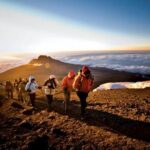
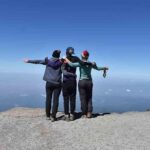
This is also where the views become hard to describe. The itinerary emphasizes “unbelievable views at every turn,” and that tracks with how crater-rim terrain changes what you can see. You’ll also get a chance to get your picture taken at the summit—a simple moment that still feels like a real milestone.
After Uhuru Peak, you descend. You’ll stop for lunch and rest at Kibo, then continue back toward Horombo for dinner and overnight, usually 3–4 hours of descent on that leg.
Possible drawback: this day is physically and mentally demanding, and you should plan your summit success around preparation and pacing, not speed. The midnight start means you’ll rely on the support team’s rhythm and your own ability to keep moving steadily in cold, difficult terrain.
Descent days: moorland to forest and the Marangu gate finish
On day five, you start with a steady descent. First, you head down to Mandara Hut at around 2700 m, then you continue descending through moorland and into lush forest on a good path to the National Park gate at Marangu (about 1830 m).
This part matters because it’s where legs finally get a chance to feel more normal—until mud reminds you you’re still in the Kilimanjaro world. The itinerary warns that at lower elevations it can be wet and muddy, and that gaiters and trekking poles will help. It’s practical advice: boots without protection can end up soaked, and poles can save your knees on slippery ground.
Clothing expectations are also laid out pretty clearly:
- Shorts and t-shirts may be plenty
- Keep rain gear and warmer clothing handy
Even if you feel like you’ll only deal with heat, remember: the summit day is cold, and the weather can swing. Dressing in layers is a smart way to avoid wasting energy on being too hot or too cold.
When you reach the gate, there’s a car waiting for you. You get hot lunch, then you drive back to Moshi or Arusha for your overnight or airport drop-off if you’re flying out the same day.
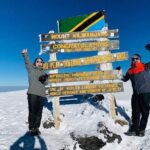
What you’re paying for: $1,460 value in a private Marangu trek
Let’s be honest: Kilimanjaro trips can swing wildly in price depending on route, support staff, and what’s included. Here, the headline number is $1,460 per person for about 5 days. The value comes from what’s bundled:
Included:
- 4 nights accommodation
- All fees and taxes
- Lunch
- Professional guide
- Hotel pickup and drop-off
- Private tour
Not included:
- Alcoholic drinks
- Souvenir photos
So what does that mean for your budget mindset? You’re not paying extra for the core “do the mountain” items. You’re paying for a guided climb with logistics handled, which is exactly what you want when your schedule is tight and your body is already under stress.
Also, the climb is private. That’s not just comfort—it can mean less waiting, more direct pacing, and a smoother flow through hut areas and summit timing. You’re not sharing the “how slow do we go?” question with strangers.
One note: the tour says it’s a private activity and only your group participates. That’s a big deal if you want consistency and a steady team pace.
The human touch: guides, food, and the kind of support you feel
You’ll feel support most on the toughest day. The summit push is where guides matter because you need someone who understands that steady wins.
From the experiences I’ve read, guides such as Alex and Godfrey were praised for being patient and caring, and there’s mention of a great team including the chef and porters. That’s meaningful. On Kilimanjaro, the food and recovery side isn’t optional. Good meals help you keep your energy up when cold and altitude make everything harder.
The itinerary also clearly includes lunch during the experience and includes accommodation for four nights, which helps avoid the common “I’m hungry and cranky at altitude” problem. And since this tour offers a vegetarian option if you request it, you can plan your meals ahead rather than hoping kitchens can improvise.
Gear and behavior tips that match this route
This trek is run “in all weather conditions,” so you’re dressing for change, not just for one forecast. The itinerary explicitly calls out mud and rain gear near the lower elevations, plus warmer layers for cold summit conditions.
Here’s what I’d treat as non-negotiable for this specific plan:
- Trekking poles to reduce knee strain on scree and muddy descents
- Gaiters to keep wet mud from soaking your boots
- Rain gear (even if it’s sunny at Moshi)
- Warm layers for the summit night cold
- Water plan + slow pace on the first altitude day (Horombo helps, but you still need control)
Behavior-wise, follow the itinerary rhythm: steady climb on the early day, real rest on Horombo, then patience on summit night. The summit works because you keep moving without spending your reserves on ego.
Who this Marangu trek suits best (and who should rethink)
This experience is described as requiring moderate physical fitness. So it fits a lot of walkers—especially if you’re comfortable with steep stretches, cold starts, and altitude exposure. The itinerary also uses a hut-based route style, which is often easier logistically than tent-based systems.
This trek is a good fit if:
- You want a guided, private climb with pickup/drop-off
- You like the idea of an acclimatization day before the summit push
- You want a route that’s often considered more straightforward among Kilimanjaro options
Consider rethinking if:
- You struggle with very early starts or you’ve had altitude issues in the past
- You’re looking for a purely comfortable walk with minimal discomfort
- You’re unprepared for cold and scree on the summit night climb
The mountain doesn’t negotiate. But a good schedule and a good guide can make it safer and more pleasant.
Should you book this 5 Days Kilimanjaro Marangu Trek from Moshi?
I’d book it if you want a practical Kilimanjaro plan with clear pacing: Mandara up to Horombo, a real acclimatization day, then the summit push to Uhuru Peak, followed by a structured descent back to the Marangu gate. The combination of private guidance, accommodation, and “all fees and taxes” included is the kind of value that keeps stress low—exactly what you want when altitude is the main problem.
If you’re on the fence, do this quick check:
- Are you willing to start the summit climb in the middle of the night?
- Do you have the gear to handle mud, rain, and cold?
- Can you manage moderate fitness with steady hiking pace rather than speed?
If you answered yes to those, this Marangu route experience from Moshi is a strong, sensible choice—one that aims for the summit while giving you the schedule support that helps your body cope.
FAQ
What route is this Kilimanjaro trek?
This is a 5-day trek to the summit of Kilimanjaro via the Marangu route, often called the Coca Cola route.
Where does the trek start?
The trek is based in Moshi, Tanzania, with pickup offered from your accommodation or from the airport to the starting gate in the early morning.
How long is the trek?
It’s scheduled for 5 days, with the summit day happening very early in the morning (midnight to 2am start time).
Is this tour private?
Yes. It’s described as a private tour/activity, so only your group participates.
What are the main altitude stops during the trek?
You climb from Mandara Hut to Horombo Hut (about 3700 m), then spend an acclimatization day at Horombo. The summit climb goes up to Gilman’s Point (5861 m) and then Uhuru Peak (5895 m). You descend back down through Kibo and return toward Mandara Hut and the Marangu gate (about 1830 m).
Does the itinerary include an acclimatization day?
Yes. There is an acclimatization day at Horombo Hut, with the option to rest or trek to Zebra Rocks (4200 m) and Mawenzi Tarn Hut (4300 m), then return to Horombo.
What is included in the price?
Included are 4 nights accommodation, all fees and taxes, lunch, a professional guide, and hotel pickup and drop-off. The tour is also listed as private.
Are vegetarian meals available?
Yes. A vegetarian option is available, and you should advise the provider at booking if you need it.
Are alcoholic drinks included?
No. Alcoholic drinks are not included and are available to purchase.