REVIEW · KATHMANDU
20 Days Annapurna Circuit Trek
Book on Viator →Operated by The Great Adventure Treks & Expedition - Private Day Tours · Bookable on Viator
One pass, huge views, real Nepal. The 20-day Annapurna Circuit ties together temple-city days, mountain village life, and a dramatic change from subtropical jungle to high-altitude desert, all with a target over 5,416m at Thorong La Pass.
What I like most is the built-in rhythm: you’re not just walking up and hoping for the best, you’re moving through places like Pisang and Manang where altitude makes you slow down and pay attention. You also get guided structure with a licensed guide and a porter system, so your energy goes toward the trek, not logistics.
One consideration: the trek includes serious walking days and altitude, plus key sight entry fees in Kathmandu are not included, so budget a little extra before you go.
Key things I’d bet you’ll notice on this trek
- Kathmandu culture first, then trail: Pashupatinath, Boudhanath, and Kathmandu Durbar Square set the stage before the mountains.
- Ecosystems change fast: you’ll go from farm terraces and forest walking to drier, harsher high-altitude terrain.
- Manang acclimatization day: a full day in Manang helps you adjust before the big crossing.
- Early start for Thorong La: the schedule is designed to get you over the pass before cold wind ramps up.
- Long, meaningful descent to Muktinath: you transition from the pass world down into a sacred village at about 3,800m.
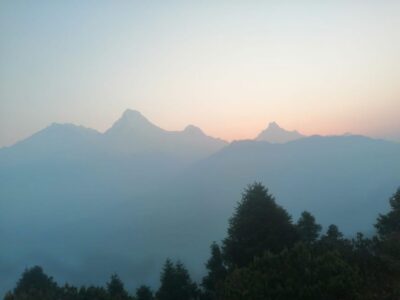
- A classic finish with Poon Hill: if weather cooperates, you get a sunrise viewpoint over a wide set of Himalayan ranges.
In This Review
- Why the Annapurna Circuit feels like multiple trips in one
- Kathmandu warm-up: temples, stupa eyes, and Durbar Square details
- The ride to the trailhead matters more than you think
- From Dharapani to Chame: gorge paths, farm terraces, and cooling air
- Pisang and Manang: the day-by-day view upgrade and a real acclimatization pause
- Yak Kharka to Ledar: building toward the big crossing
- Thorong La Pass day: early start, wind risk, and the Muktinath landing
- Muktinath to Marpha: the Kaligandaki river valley and tea-house pacing
- Lete and Tukuche views: river-following walking with a big payoff
- Tatopani and forests: the vegetation swing you can feel in your body
- Ghorepani and Poon Hill: sunrise if the weather plays nice
- Pokhara leisure day and the return to Kathmandu
- Price and Logistics: what $1,200 covers (and what you still need to plan for)
- Who should book this Annapurna Circuit trek (and who should slow down first)
- Should you book Great Adventure Treks for the 20-day circuit?
- FAQ
- What’s the main highlight of this trek?
- How long is the trek?
- Does the tour include airport transfers?
- Are meals included?
- Do I need a porter?
- Are Kathmandu temple entry fees included?
- What’s not included in the overall price?
Why the Annapurna Circuit feels like multiple trips in one
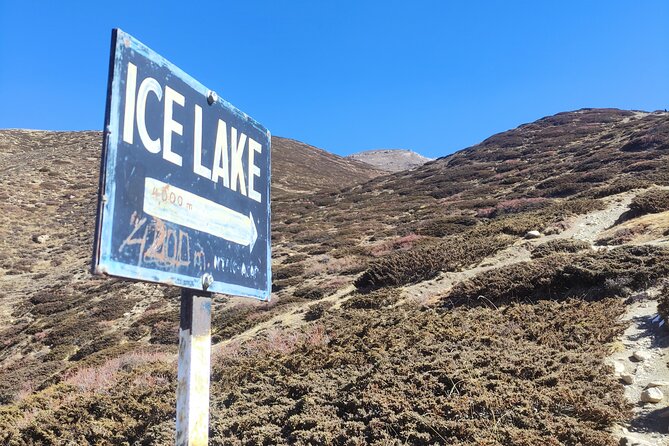
The Annapurna Circuit is famous because it doesn’t just offer mountain scenery. It strings together a whole chain of Nepal you can physically feel under your feet: steep gorge paths and terraced fields, then forests that cool as you climb, then windswept high terrain where the air thins and the vegetation changes again.
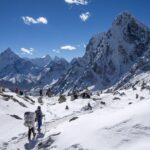
What you’re really signing up for is the transition. Over a route that’s roughly 160–230 km in total, you’ll watch the environment evolve as altitude climbs. That’s part of why this trek stands out as more than a single viewpoint hike. You’ll see snow-capped peaks, deep valleys, and human communities that keep adapting to the mountain’s rules.
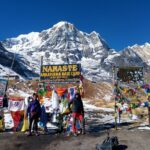
And yes, there’s the headline moment: crossing Thorong La Pass at 5,416m. It’s the kind of day that turns “we’re trekking” into “we actually did something hard.” The schedule specifically emphasizes starting early so you can reach the top before cold wind starts to blow.
Kathmandu warm-up: temples, stupa eyes, and Durbar Square details
Most people think the real trip starts when the road leaves Kathmandu. I get that. But the Kathmandu days are useful, not just decorative.
You get airport pickup and then a Kathmandu sightseeing day by car. The big stops are three of the city’s most important places:
- Pashupatinath Temple on the Bagmati River: this is the world’s best-known Hindu pilgrimage site, with huge annual visitor numbers and strong Shiva associations. It’s active, not staged.
- Boudhanath Stupa: a calm counterpoint to the bustle, with the huge stupa’s presence and the Buddhist focus that makes the area feel different right away.
- Kathmandu Durbar Square: this is where past royal power and temple architecture meet in a dense cluster of sights.
Practical note: you should plan for entry fees here because Pashupatinath, Boudhanath, and Kathmandu Durbar Square tickets are not included in the package pricing. That’s not a reason to skip them; it just means you don’t want to show up thinking everything is covered.
You can also read our reviews of more tours and experiences in Kathmandu.
The ride to the trailhead matters more than you think
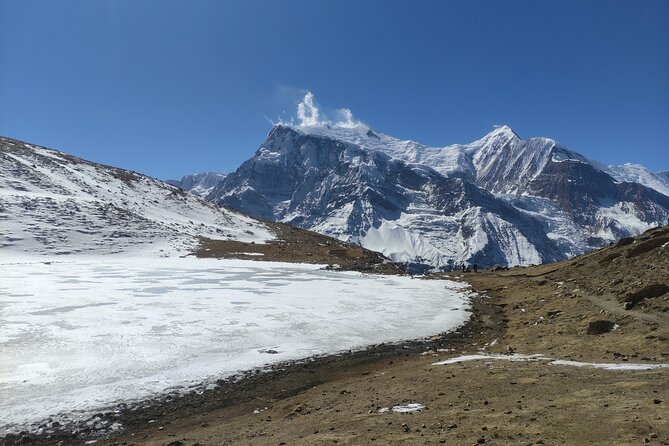
After an early breakfast, you travel out of Kathmandu toward Pokhara highway connections, then onward to the trekking start area. The itinerary is built around a combination of a regular bus and a shared jeep, which matters because it affects how you pace your body.
You’ll sleep in Syange after a long travel day. If you’re the type who hates arriving exhausted, this is where you can build a plan:
- treat the travel day as part of the trek
- drink water regularly
- keep your pack light and organized, because you’ll keep using it
This kind of start also sets expectations. You’re not landing into a ready-made hiking resort. You’re moving into rural Nepal, day by day, and the early logistics help you avoid the feeling of being dropped into chaos.
From Dharapani to Chame: gorge paths, farm terraces, and cooling air
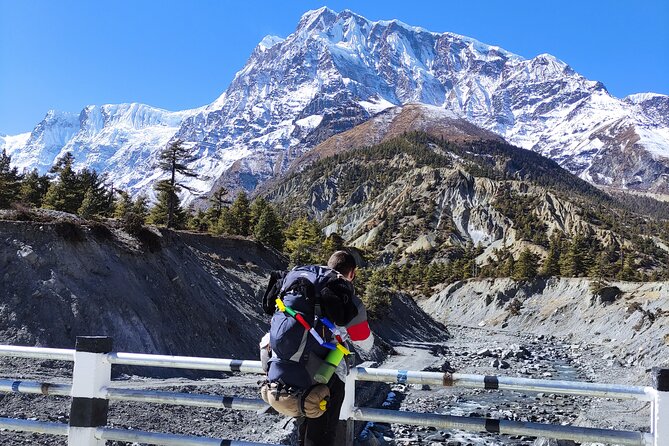
Your first real walking day starts after getting to the Besisahar area, and then the route begins with scenery that mixes river gorges, waterfalls, and snow-capped peaks in the distance. The trail is described as steep for a half hour at the start, which is important: don’t assume the first day is gentle just because it’s “early.”
You’ll see lush farm terraces before the trail continues. That matters because it gives you a warm-up that’s still beautiful and varied. You aren’t just grinding switchbacks without reward.
Then you trek toward Chame, passing through forests as the air cools and the vegetation shifts. Chame is one of the first places where the mountain feels more “trekking town” than “village day-trip.” If you’re bringing gear for the long haul, this is the day you’ll likely appreciate having your layers ready. Higher altitude isn’t automatic warm-weather comfort, and Nepal climbs fast.
Pisang and Manang: the day-by-day view upgrade and a real acclimatization pause
From Chame, you head to Pisang, gaining to about 3,200m. The trail work here is steady, with typical trek pacing around 5–6 hours. You’ll also start following river routes, which can make the walk feel less monotonous because the terrain and views keep shifting.
Then the big phase is Manang.
You reach Manang after the Pisang-to-Manang climb, and from there the itinerary gives you something very valuable: a full acclimatization day. This is not wasted time. It’s there because the pass crossing later in the trek is no joke.
Manang is described as a village with about 500 flat-roofed houses, set amid spectacular Himalayan scenery. Even if the weather is gray, a rest day gives your breathing and sleep time to catch up with the altitude gains you’ve already made. In practical terms, this is how you reduce the chance of rushing uphill and feeling it later on the hard days.
Yak Kharka to Ledar: building toward the big crossing
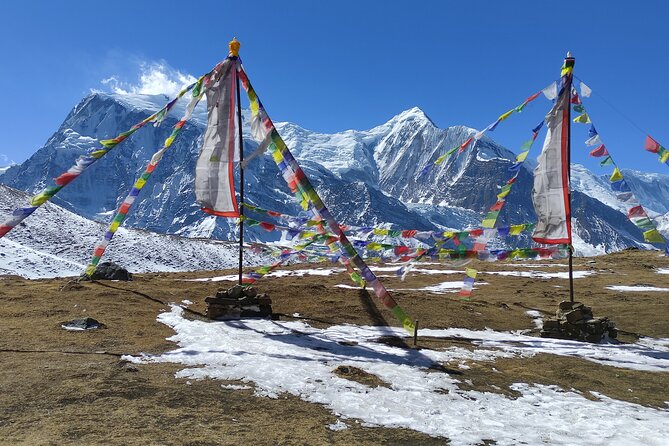
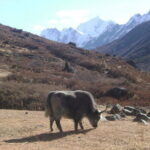
After Manang, you move to Yak Kharka, with a slower climb that still gives you broad views of peaks like Annapurna II, Gangapurna, Tilicho, and Chuli. Then the route trends more barren as you go higher, which is exactly what you should expect as you approach the upper zones.
From there you continue to the last settlement of Ledar via Thorong High Camp viewpoint territory. The day is described as a slow climb, winding up with grand views of Annapurna II, Gangapurna, Tilache, and a close-up feel of Chuli. This is one of those “you’ll feel tired, but the scenery keeps you moving” sections.
A tip that stays practical: if you’re trying to make the pass day easier, keep your last nights calm. Don’t treat the approach days like they’re for pushing speed. The goal is to arrive ready for the pass, not just arrive at a higher altitude.
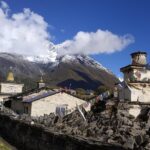
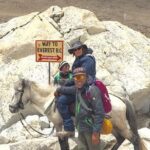
Thorong La Pass day: early start, wind risk, and the Muktinath landing
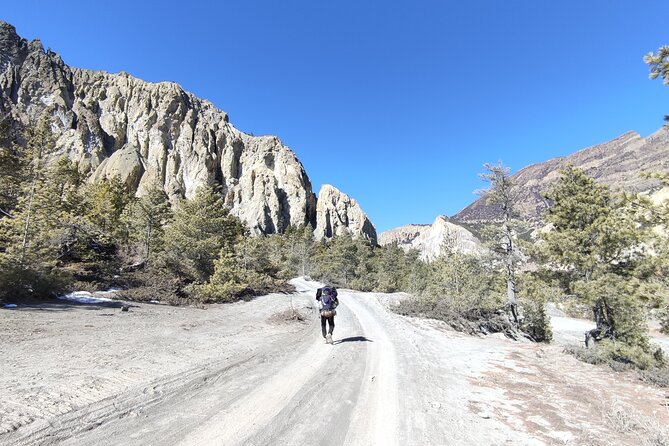
Thorong La Pass day is scheduled to begin early after breakfast so you can reach the top before the cold wind starts to blow. That early timing isn’t a bonus. It’s a safety-and-comfort choice embedded in the itinerary.
You start with strenuous climbing along a steep route for the beginning stretch. As you climb, the pass becomes the moment the trek revolves around: you’re committing to altitude, effort, and a very clear payoff when you get there.
Then comes the descent to Muktinath, around 3,800m. The guide structure here is important because the itinerary calls out this descent as the longest day in terms of trekking. Your body may feel like it wants to sit down, but your legs will keep working downhill. That’s normal. You just want to avoid getting sloppy with foot placement when you’re tired.
Muktinath itself brings a different kind of reward than views alone. The sacred village feeling is part of why this segment works so well: you’re moving from pass achievement to a spiritual place that gives the whole trek deeper meaning.
Muktinath to Marpha: the Kaligandaki river valley and tea-house pacing
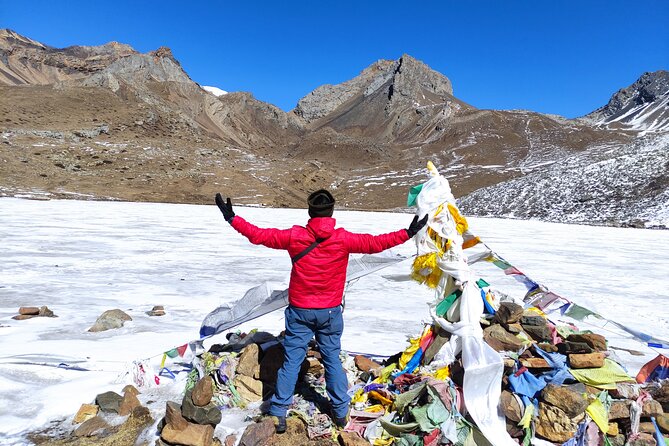
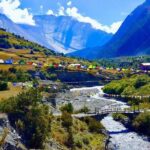
After Muktinath, your route descends about 1,200m to the Kaligandaki river valley floor. That drop helps you shift from the high-altitude intensity into a more human-scale walking rhythm.
Along the way you stop at Ekale Bhatti, described as a lonely teahouse. That kind of stop is small, but it’s also what makes long treks feel real. You’re not just passing through towns; you’re experiencing the in-between.
Then you reach Marpha. Marpha is in a river valley setting and feels like a reset point after the high crossing day. If you’re managing energy well, this is where the trek starts to feel more like travel and less like survival.
Lete and Tukuche views: river-following walking with a big payoff
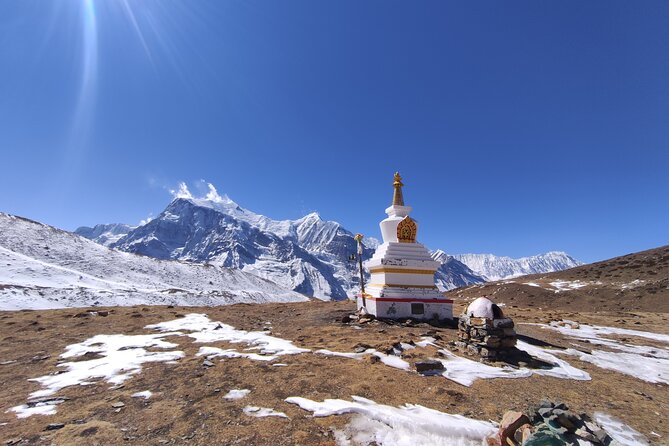
From Marpha you follow the Kali Gandaki downstream toward Tukuche village, passing through Lete. The route timing is described around 5–6 hours. This section is framed as enjoyable, which matters because it’s often when your muscles start to adapt to the trek’s rhythm.
From the description, you’ll get spectacular views of Dhaulagiri and Tukuche peak. That’s the sort of reward you want after hard days. It keeps you motivated without forcing you into another all-out climb.
These middle sections also tend to be where you notice how trekking towns run: tea-house schedules, the flow of other hikers, and the simple routine of eating, resting, and getting ready for the next day. It’s not flashy, but it keeps you moving steadily.
Tatopani and forests: the vegetation swing you can feel in your body
Then the trek makes a dramatic switch in vegetation: from dry, arid high-desert conditions into pine and conifer forest. You’ll also be moving between big peaks, with fir and forest walking that tends to feel cooler and more sheltered than earlier zones.
You reach Tatopani after about 6 hours. The name means hot water, but the description you have here focuses mainly on the vegetation change, not on a specific soak. Either way, the practical value is that forest walking can make the day feel more forgiving than the open, wind-exposed sections.
After Tatopani you head to Ghorepani, around 2,860m, a trek of about 6–7 hours. The itinerary highlights a suspension bridge over the Kali Gandaki river. Those bridges are often where the views spike and where you feel how deep the valley really is.
Ghorepani and Poon Hill: sunrise if the weather plays nice
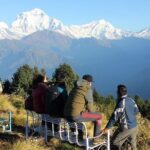
This is a classic finishing move: a short hike toward Poon Hill for sunrise. The schedule says you do it for about 1 hour, and only if the weather permits. If it works, you’ll get a wide panorama view spanning ranges like Dhaulagiri, Annapurna, and Mt. Manaslu range.
Even if sunrise clouds don’t cooperate, the reason this matters is the timing: it’s a morning that turns the trek into a memory instead of a schedule. Then, after returning and continuing, you walk to the Pokhara area through rural farm villages and near cascading waterfalls, reaching Pokhara after about 7 hours.
You’ll likely appreciate the shift from ridge-and-pass exertion into a lakeside town atmosphere.
Pokhara leisure day and the return to Kathmandu
You get a second Pokhara day set aside for leisure. If you want a break that still feels like Nepal, Pokhara gives you options:
- Phewa Lake
- Begnas Lake
- Rupa Lake
Then you drive back to Kathmandu. The bus route is described as scenic, passing along Trisuli and Marsyangdi River, with a possible view of the hills.
This finish is part of the value of booking a structured trek: you don’t spend your last day wondering how to get back. You also don’t end your trip abruptly. You get a real wind-down.
Price and Logistics: what $1,200 covers (and what you still need to plan for)
At $1,200 per person for ~20 days, the price is best understood as paying for:
- Private tour setup (only your group participates)
- airport pickup and drop
- Kathmandu sightseeing by car
- transport to the trail area (including Kathmandu to Besisahar by regular bus and Besisahar to Syange by sharing jeep)
- a government-licensed trekking guide
- a porter (not just a “maybe,” but a system: 2 guests share 1 porter, max 25kg)
- core permits: Annapurna Conservation Area Project Permit (ACAP) and TIMS card
- meals on the trek (breakfast and dinner counts plus lunch counts)
- your included transfers out at the end
Two practical extras that deserve attention:
1) You’ll still need money for drinks. Soft and hard drinks are not included.
2) You may need to pay temple entry fees in Kathmandu. Those are listed as not included for Pashupatinath Temple, Boudhanath Stupa, and Kathmandu Durbar Square.
Also note what’s not included: visa, international flights, personal expenses, tips for staff, and rescue/evacuation costs, plus any special accommodation beyond what’s arranged.
If you’re comparing value to a cheaper trek offer, the question to ask isn’t just cost per day. It’s whether your permits, guide/porter setup, and key logistics are included. Here, those major pieces are covered, which usually keeps your days smoother.
Who should book this Annapurna Circuit trek (and who should slow down first)
This tour fits best if you have moderate physical fitness and you’re comfortable with a high-altitude trek that includes steep sections and a serious pass crossing.
You’ll enjoy it most if you like:
- steady day-to-day trekking with built-in rhythm
- cultural stops that aren’t just quick photo breaks
- team support via a guide and porter system
- the reward feeling of reaching landmarks like Thorong La and then dropping into places like Muktinath
You should think twice if:
- long trekking days feel like a deal-breaker (the pass descent day is described as the longest trekking day)
- you’re not prepared for extra local costs like Kathmandu temple entry fees and drinks
- you struggle with altitude planning (that acclimatization day in Manang is there for a reason)
Should you book Great Adventure Treks for the 20-day circuit?
If you want a trek that’s structured, supported, and focused on the big Annapurna story arc, I’d lean yes. The biggest reasons are practical: the acclimatization built in at Manang, the early pass-start design, and the fact that you’re paying for a licensed guide plus porter support rather than piecing it together yourself.
The only reason I’d hesitate is if you hate budgeting for extra add-ons like drinks and Kathmandu entrance fees. If that’s manageable for you, this is a strong way to do the Annapurna Circuit without turning your trip into a logistics puzzle.
FAQ
What’s the main highlight of this trek?
The big highlight is crossing Thorong La Pass at 5,416 meters, plus the long journey through diverse terrain around the Annapurna massif.
How long is the trek?
The experience runs about 20 days.
Does the tour include airport transfers?
Yes. There’s airport pickup and drop included, with representatives handling your transfer back to the international airport at the end.
Are meals included?
Breakfast and dinner are included during the trek, and lunch is also included for trekking days (the package lists 18 breakfasts, 15 lunches, and 15 dinners).
Do I need a porter?
Yes, you’ll have a porter. The plan is 2 guests per porter, with a porter carrying up to 25 kg.
Are Kathmandu temple entry fees included?
No. Entry fees for Pashupatinath Temple, Boudhanath Stupa, and Kathmandu Durbar Square are listed as not included.
What’s not included in the overall price?
The package does not include visa and international flight ticket, drinks, personal expenses, tips for staff, rescue and evacuation costs, and any special accommodation.