REVIEW · KATHMANDU
Adventurous Annapurna Base Camp Trekking
Book on Viator →Operated by Adventure Thirdpole · Bookable on Viator
Life-changing views, then real village days. This classic Annapurna route brings you to Annapurna Base Camp and pairs big mountain moments with Gurung culture. It’s also built around smart pacing: you get a sunrise hit at Poon Hill, then settle into the rhythm of the valley and ridge trails.
I like how the trip is structured so you’re never just dropped into the wilderness. From your welcome dinner in Kathmandu to the hot springs stop later on, it feels organized without feeling scripted. The one drawback is straightforward: the trek needs moderate fitness, and you’ll be hiking long days at altitude with lodging that’s basic by design.
In This Review
- Highlights I’d actually plan around
- Why Annapurna Base Camp feels like a front-row ticket
- Price and logistics: what $1,650 includes (and what it doesn’t)
- Kathmandu and Pokhara: the warm-up that keeps you from feeling rushed
- The trail begins in Ulleri: permits, steps, and the forest mood
- Poon Hill sunrise: the torchlight morning that pays back
- Chhomrong and Ghandruk: Gurung villages with a real trail rhythm
- Base Camp day: what you’ll focus on when the clouds cooperate
- The return: Khuldighar sheep farm and Jhinu hot springs
- Guides and crew: why names matter on a trek
- What to pack for Annapurna Base Camp (and what you must supply)
- Who this trek suits best
- Should you book Adventure Thirdpole for this ABC trek?
- FAQ
- Where is the meeting point for this trek?
- Is pickup included?
- What permits are included for the trek?
- Are meals included during the trekking days?
- Do I get a porter?
- Do I need travel insurance?
- What trekking gear is not included?
- How long is the trip?
- What happens if weather is bad?
- Is this tour private?
Highlights I’d actually plan around
- Annapurna Base Camp in the natural amphitheater: The views are the point, with multiple peaks closing in around you
- Poon Hill at dawn (torchlight start): A classic sunrise set-up that doesn’t rely on luck alone
- Gurung villages like Chhomrong and Ghandruk: You’ll see mountain life up close, not just pass through
- Modi River “soundtrack” days: The trail follows the river through deep gorge terrain, so walking feels focused
- Jhinu hot springs return day: A proper reward after steep descents
Why Annapurna Base Camp feels like a front-row ticket
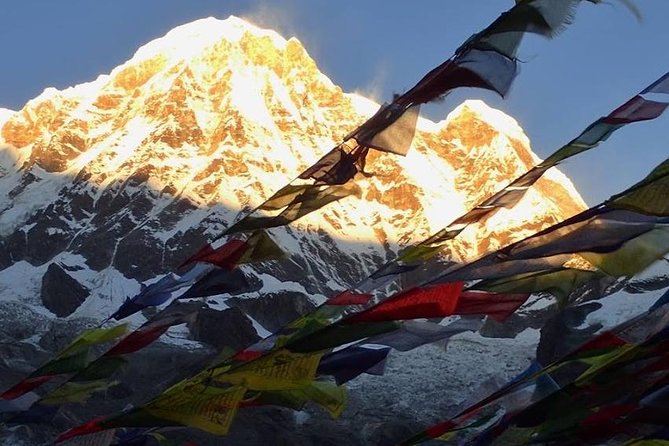
If you like your mountain scenery big and immediate, Annapurna Base Camp is made for you. This route doesn’t just put you near famous peaks. It aims to give you that rare “I’m surrounded” feeling inside the Annapurna Sanctuary—described as a natural amphitheater—where the Himalayas spread out in a wide view.
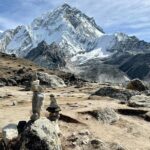
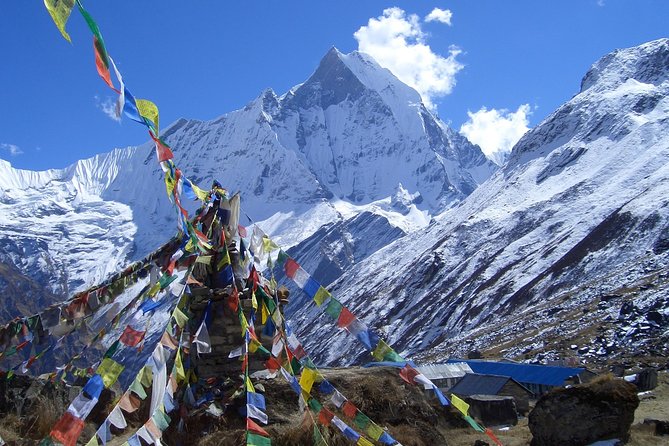
You’ll be in view of the Annapurna massif at close range. The itinerary is explicit about seeing Annapurna I (8091m) from base camp, and it also calls out views across to Machapuchare/Fishtail (6997m). It even spells out that you’ll get a 360-degree angle while spending time in the base camp area, with key peaks repeatedly named as you move through the trek. That matters, because it turns the trek from a “we’ll see something” plan into a “here are the targets” plan.
On top of that, you don’t spend the whole time above the tree line. You pass through forested stretches (with rhododendron and oak mentioned), then come down into village terrain where life carries on—mostly Gurung settlements and small lodges that keep the rhythm of the days human-sized.
Possible catch: base-camp days depend on weather and visibility. If clouds roll in, the scenery can soften fast. This isn’t a trip where you can shrug and assume everything will be crystal-clear.
You can also read our reviews of more tours and experiences in Kathmandu.
Price and logistics: what $1,650 includes (and what it doesn’t)
For about 14 days at $1,650 per person, this trek can feel like good value if you want a guided, permission-backed, low-stress setup. The included items are the heart of the cost: a professional guide, one porter for every two persons, key permits (TIMS and ACAP), and land transfers connecting Kathmandu to Pokhara and the trailhead area back again.
You also get accommodation in Kathmandu and Pokhara, plus a mix of meals that’s clearly stated as included (breakfast, lunch, dinner for multiple days). That reduces the “surprise budgeting” effect, which matters on treks where you’re tired and hungry and the next decision is always expensive.
Where you should plan for extra money: personal items like drinks, plus travel insurance (explicitly mandatory), and gear that isn’t included. The tour also notes that sleeping bag and down jacket are not provided—so if you don’t already own them, you’ll need to rent or buy. Tips aren’t included either, which is common for Nepal trekking, but you should still set aside something reasonable.
The other logistics piece I like: pickup is offered, and the tour uses a mobile ticket, which tends to reduce admin headaches. And it’s private, meaning you’re not squeezed into someone else’s group pace.
Kathmandu and Pokhara: the warm-up that keeps you from feeling rushed
You start in Kathmandu with airport pickup and a welcome dinner. That first evening isn’t just a formality; it helps you meet your trekking crew and get your questions answered before you’re dealing with stairs, altitude, and a packed day schedule.
Day two is a focused Kathmandu Valley day with four world heritage sites: Pashupatinath Temple, Kathmandu Durbar Square, Swayambhunath (Monkey Temple), and Bouddhanath. It’s a smart pairing with trekking, because it gives you culture and context without overstuffing your schedule. You’re not trying to cram museums at high energy. You’re getting orientation and atmosphere.
Then you head to Pokhara by bus, with a scenic drive passing alongside the Trisuli and Marshyangdi rivers. Once you reach Pokhara, you check into a hotel and go onto Fewa Lake for boating plus a short walk around the area. This is the kind of “reset day” that helps your body adjust before the first real climb.
A small detail that’s actually useful: your day 3 guide meets you early at the tourist bus station. That keeps the logistics tight and reduces the risk of delays eating your trekking prep time.
The trail begins in Ulleri: permits, steps, and the forest mood
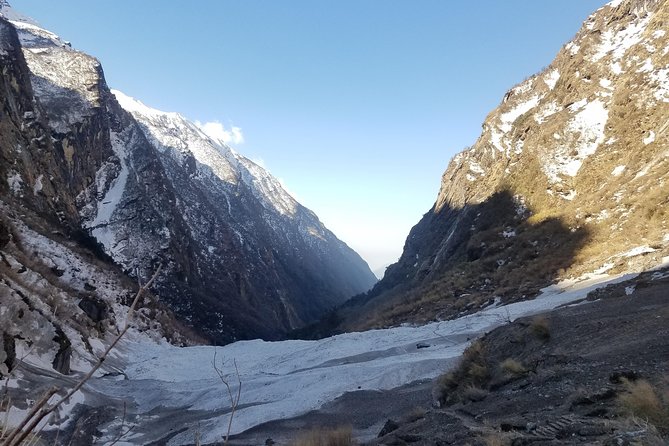
After breakfast, you drive to Nayapul and start trekking. There’s a named permit check at Birthanthi, so you know what to expect at the beginning. Then the route moves through scenery with waterfalls and forest before you start crossing rivers and stepping into the first big hillside work.
Day 4 includes crossing the Modi Khola and moving toward Thikhe Dhunga and Ulleri. Then comes one of the classic trek shocks: climbing almost 3,000 steps up Ulleri hill to reach the lodge. If your legs aren’t used to long stair days, this is the moment you feel it most. Still, it’s early enough in the trek that you’re building strength rather than paying for fatigue later.
Day 5 continues uphill gradually, and the itinerary calls out views from the top of the Ulleri area—specifically Annapurna South and Hiun Chuli. You’ll trek through dense rhododendron and oak forests, then reach Ghorepani, where you take a short final push to a ridge viewpoint for panoramic range views.
This part of the trek is where you get the “I’m actually going into the mountains” feeling. The forest cover also makes early altitude feel less exposed, which helps if you’re sensitive to open-air sun and wind.
Poon Hill sunrise: the torchlight morning that pays back
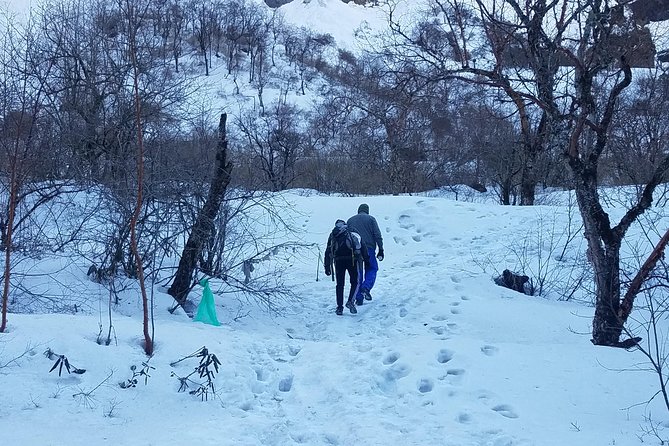
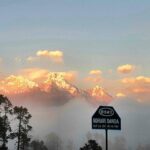
Day 6 is built around Poon Hill at 3210m. The itinerary makes the timing clear: you’ll get a wake-up call, hike in the dark with torch light, reach Poon Hill after about 45 minutes, and spend around half an hour for sunrise views before heading back for breakfast.
That torchlight detail matters. It means you’re not stumbling around guessing when sunrise will hit. Your schedule is doing the heavy lifting. And since this is a sunrise spot, the payoff is less “maybe we’ll see peaks” and more “you’re there when light hits.”
After that, you switch from dawn drama to steady trekking. You head toward Tadapani (2650m) via Deurali and Banthanti. The route notes you might see monkeys and birds along the way, which is exactly the kind of distraction you want after a steep, early morning.
Tadapani also functions as a viewpoint stop. The itinerary specifically calls out close views of Annapurna South, Hiun Chuli, and Fishtail. It’s a nice bridge between the ridge panorama and the more intense base camp goal later.
Chhomrong and Ghandruk: Gurung villages with a real trail rhythm
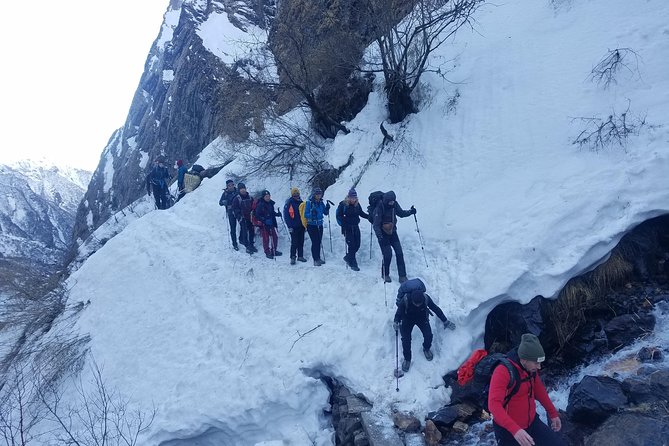
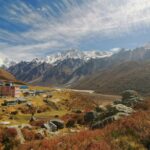
Day 7 moves through a downhill-to-village pattern. You go downhill for about two hours, cross a stream, then gradually climb toward the Gurung settlement of Gurjung before reaching Chhomrong. Chhomrong is described as a bigger hub for the Gurung community, and that’s where the trek starts to feel more like mountain village life than a hiking corridor.
The meals inclusion here is a plus: the day lists breakfast, lunch, and dinner included, which is practical when you’re tired and altitude makes decision-making harder.
Day 8 shifts the walking feel. You head toward Ghandruk via Bamboo and Dovan, and the itinerary calls out a deep gorge route along the banks of the Modi river. Hearing the river noise while hiking is more than poetic—constant sound can actually help you keep a steady pace and not overthink each step.
This day also mentions possible wildlife sightings, including monkeys and Himalayan goats. When you’re in a gorge, animals often appear suddenly near trails, so stay alert but don’t rush. The valley terrain rewards patient walking.
Ghandruk is the kind of place where you can grab a cup of something warm, watch locals moving through their day, and remember you’re not just “doing peaks.” You’re living in their mountain geography for a bit.
Base Camp day: what you’ll focus on when the clouds cooperate
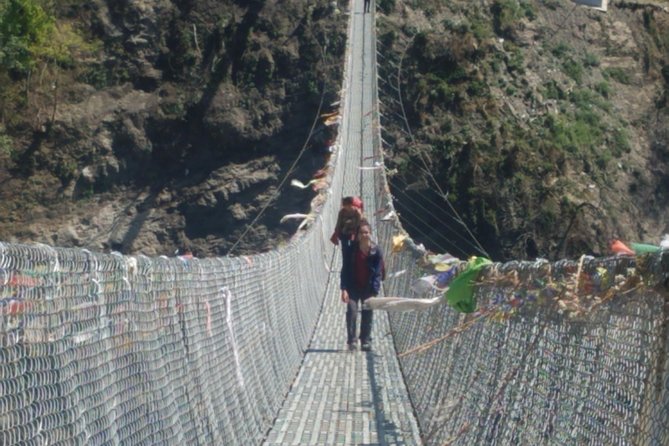
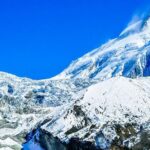
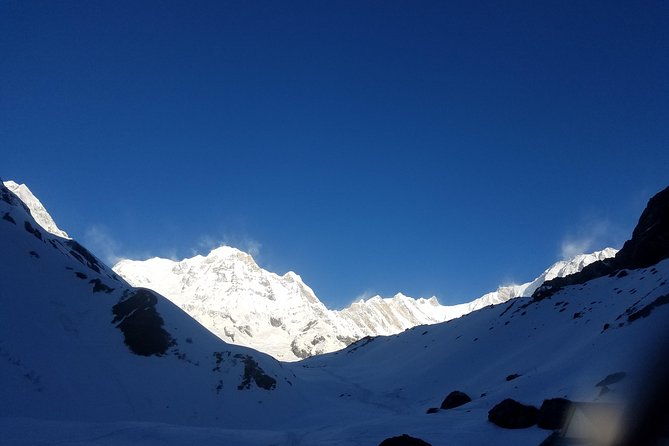
Day 9 is the main goal: trek toward Annapurna Base Camp and arrive surrounded by snow-capped mountains. The itinerary highlights an afternoon moment where your guide takes you for a close view of the Annapurna glacier, with named peaks visible: Annapurna I, Annapurna South, Hiun Chuli, Fishtail, and Annapurna III.
Here’s how I’d plan your mindset for this day: treat base camp as a sensory checkpoint, not a photo-only stop. If visibility is good, you’ll feel that “wow” immediately. If it’s patchy, you can still enjoy the setting—stone, snow, wind, and the sense that you’re at the foot of a world-scale wall of mountains.
Day 10 is the flip side: you wake early for sunrise views, then trek downhill back toward Bamboo, losing almost 2,000 meters in 6–7 hours. That descent is no joke, but it’s also where your legs learn mountain walking the real way: slow steps, controlled knees, and attention to footing.
If you’re a first-time trekker, keep this day in mind when you’re thinking about fitness. Climbing is tough, but controlled descending is its own skill. This itinerary gives you a clear descending workload before you reach the hot springs later.
The return: Khuldighar sheep farm and Jhinu hot springs
Day 11 begins with a short climb toward Khuldighar, noted as an experimental sheep farm. From there, the trail pattern changes again: gradual up first, then flat and downhill to Sinuwa, followed by an uphill push back toward Chhomrong and then a very steep descent for about one hour to Jhinu.
Jhinu is your reset point. Bags get dropped so you can take a bath in the hot springs, described as descending to the Modi Khola river. If you’ve ever finished a hike and felt like your legs belonged to someone else, hot springs can be the kind of moment you’ll remember longer than the summit photo.
Day 12 is the final trekking stretch. You leave Jhinu, descend, cross the river, follow the flatter route to Birethanti, and then return to Nayapul where a vehicle drives you back to Pokhara. The schedule includes a happy hour after you check into your hotel, which feels like a small celebration that still makes practical sense: you’re tired, you’re done, and you want something easy.
Guides and crew: why names matter on a trek
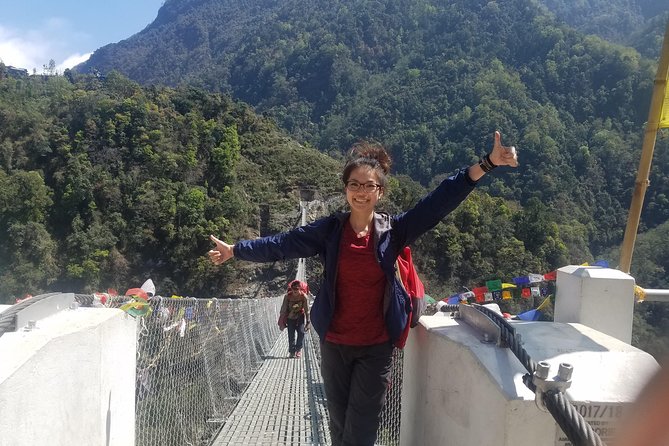
The reviews’ theme is consistent: the team is reliable and responsive, and that changes how safe a trek feels. The itinerary includes a professional guide, and based on the names mentioned in feedback, people often remember Raj, plus other team members like Deepak, Mahila, and Ram.
One reason this matters: high mountain trekking isn’t only about your legs. It’s about decisions when weather shifts, when timing needs adjustment, and when you’re hungry or cold. When the guide team stays on top of planning, you spend more time walking toward the view and less time worrying about what happens next.
There’s also porter support: one porter for every two persons. That’s a meaningful load-balancer. You still hike, but you’re not carrying as much fatigue into the high points. When you’re rotating through lodge days and repeated climbs/descents, that can be the difference between enjoying the trek and just surviving it.
What to pack for Annapurna Base Camp (and what you must supply)
The trip does not include a sleeping bag or down jacket, so you’ll need to bring your own or rent them before you start. That’s not a small detail. On lodge treks, nights can get cold, and even if the daytime hiking feels manageable, temperatures at higher elevations can surprise you.
You should also plan for personal items like water habits and warm layers, plus extra snacks if you know you get hungry between meal times. Meals are included in multiple parts of the itinerary, but meals not specified aren’t covered, so it’s smart to expect small additional purchases.
One gear note from the itinerary that affects planning: the torchlight sunrise approach at Poon Hill implies you’ll be moving in low light. Make sure you have what you need for your own comfort and safety.
Who this trek suits best
This is a trek for people with moderate physical fitness who want a guided, culturally rich route. It’s not marketed as an ultra-technical mountaineering job. Still, you should expect long walking days, river crossings, stair climbing (including the near-3,000-step Ulleri push), and at least one steep descending day before hot springs.
If you like structured goals—Poon Hill sunrise, named village stops, and a base camp day with explicit mountain views—this fits your style. If you want a totally easy stroll with no altitude discomfort, you may find this more demanding than expected.
Also, because the route includes Kathmandu sightseeing and Pokhara downtime, it works well if you want the trek to be part of a bigger Nepal story instead of just a hike-between-beds.
Should you book Adventure Thirdpole for this ABC trek?
Yes—if you want a classic Annapurna Base Camp itinerary with the right balance of organization and freedom to enjoy the places. The guide + porter ratio, included permits (TIMS and ACAP), and the Kathmandu/Pokhara setup all lower the friction that can make treks feel stressful.
I’d say book especially if you care about seeing the mountains with a plan: Poon Hill sunrise is scheduled, base camp is the clear end goal, and the return includes a satisfying mix of steep trails and hot springs. And if weather shifts, the operator is set up to handle the realities of trekking in Nepal—by offering a different date or refund if the whole experience is canceled due to poor weather.
I wouldn’t book if you’re not ready for cold nights, steep descents, or if you’re not willing to arrange your own insurance and trekking cold-weather gear.
FAQ
Where is the meeting point for this trek?
The meeting point is Kathmandu Guest House, Saathgumti-16, Kathmandu 44600, Nepal. The activity also ends back at the meeting point.
Is pickup included?
Yes, pickup is offered.
What permits are included for the trek?
The trek includes both TIMS and the Annapurna Conservation Area Permit (ACAP).
Are meals included during the trekking days?
Meals are partially included: the itinerary specifies lunch, dinner, and breakfast for multiple days. Meals that are not specified in the itinerary are not included.
Do I get a porter?
Yes. The package includes one porter for every two persons.
Do I need travel insurance?
Yes. Travel insurance is not included, but it’s listed as a mandatory condition of booking.
What trekking gear is not included?
Sleeping bag and down jacket are not included.
How long is the trip?
It’s listed as 14 days approximately.
What happens if weather is bad?
The experience requires good weather. If it’s canceled due to poor weather, you’ll be offered a different date or a full refund.
Is this tour private?
Yes. It’s a private tour/activity, and only your group participates.