REVIEW · MOMBASA
4 Days Mount Kenya Trekking
Book on Viator →Operated by Rupia Adventure · Bookable on Viator
Point Lenana starts before sunrise. This 4-day Mount Kenya trek via the Sirimon route feels special because you get a guide for safety and you don’t have to micromanage logistics, with mountain camp nights, meals, and transfers handled. I also like the small group size (max 3), which keeps the pace steady and the vibe calm. The main catch: mountain camps are very cold at night, so you’ll need proper warm gear.
You’ll hike through montane forest that slowly changes character, then into moorland and heather-country on the way up. If you’re physically fit and comfortable walking uphill for hours at a time, you’ll enjoy a classic Mt. Kenya climb that ends with big summit views.
In This Review
- Key things to know before you go
- Mt. Kenya and Point Lenana in 4 days: what the challenge feels like
- Sirimon route from Nairobi: the hiking progression you’ll actually notice
- Day 1: Nairobi to Nanyuki, Sirimon Gate (2,440m), and Old Moses Camp (3,300m)
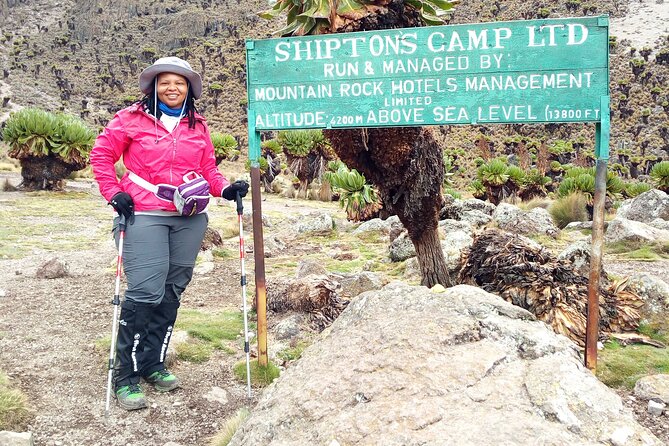
- Day 2: Ontulili River, moorland contouring, Mackinders Valley, and Shipton Camp (4,200m)
- Day 3: 3am start, stony quarry climb, Point Lenana at ~6am, then back to Old Moses
- Day 4: rainforest descent, 2 hours down, and back to Nairobi
- Your guide, cook, and porters: why the support changes the whole trek
- Price and value: what $800 buys on this 4-day Point Lenana itinerary
- Packing for cold camps and long, steep days
- Who should book this trek, and who should think twice
- Should you book Rupia Adventure for Mount Kenya Point Lenana?
- FAQ
- FAQ
- How many days is the Mount Kenya trek to Point Lenana?
- Where does the trek start and what time?
- What route does the trek use?
- How high do you climb?
- What’s included in the price?
- Is this a small-group trek?
- Are there cold nights at the camps?
- What happens if weather cancels the trek?
- What is the cancellation policy?
Key things to know before you go
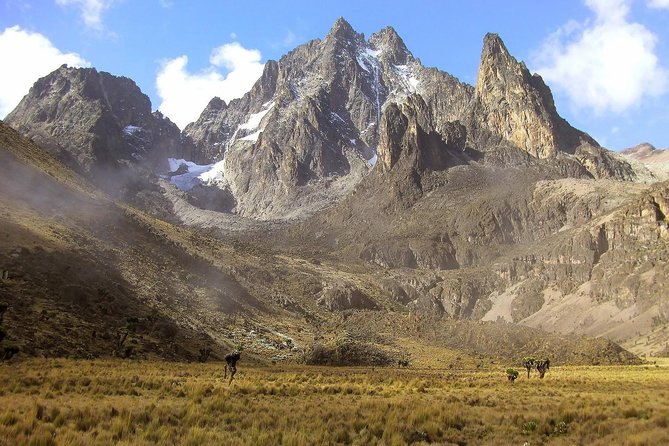
- Point Lenana is the goal (4,895m / 16,059 ft), one of Mt. Kenya’s three summits.
- Small group with a guide (max 3 travelers) makes the trip feel organized and less stressful.
- Sirimon route progression: forest → heath land → moorland → summit day.
- Day 3 starts around 3am, with a steep, stony section before sunrise.
- Three nights at mountain camps plus meals and transfers are included, so you’re not doing trip math all day.
Mt. Kenya and Point Lenana in 4 days: what the challenge feels like

This is a serious trek, but it’s not a technical climb. The challenge is time + altitude + footwork. You’re working from about 2,440m at Sirimon Gate up to 4,895m on Point Lenana, with camp nights at Old Moses Camp (3,300m) and Shipton Camp (4,200m). That means you’ll get some acclimatization, but you’ll still feel the altitude on the higher walking.
What makes this route work for a lot of fit walkers is the pacing. Day 1 is mostly about getting your legs used to the gradient and settling in at Old Moses Camp. Day 2 pushes higher and gives you panoramic views as you approach the main peaks. Day 3 is the summit push, timed for sunrise, and it’s shorter in duration but steeper in effort. Day 4 is a reward day, walking back down through rainforest to connect with transport.
If you’re the type who likes clear structure, you’ll appreciate that the trip is built around set camps and set hiking blocks. If you prefer total flexibility and custom routes, this may feel a little “planned,” but on a mountain like Mt. Kenya, that planning is exactly what keeps things comfortable and safe.
Sirimon route from Nairobi: the hiking progression you’ll actually notice
The Sirimon route is popular for a reason: it changes as you climb. You start in forest, and after several hours the vegetation gives way to heath land. As you get higher, you move into moorland and valley views that show you the peaks you’re aiming for. Even without chasing wildlife, the plant zones alone keep your eyes busy.
The hiking also comes with water and crossing points that break the day into sections. On Day 2, you cross the Ontulili River and later continue via Moorland, crossing Liki North as you work your way toward Mackinders Valley. Those “small milestones” help on summit training because you’re not thinking only about the next steep stretch.
Also, the trek is specifically described as passing areas dotted with glaciers as you climb. That doesn’t mean you’ll be walking on ice (this trek is route-focused, not technical gear-focused), but it does hint that the upper zones are high-altitude and exposed. You should expect colder air and more dramatic mountain light as the trek progresses.
Day 1: Nairobi to Nanyuki, Sirimon Gate (2,440m), and Old Moses Camp (3,300m)
Day 1 starts early. You’ll meet at 7:00am, then leave Nairobi around 7:30am for Nanyuki, with about a 4-hour drive for lunch. This is not just a transfer day. It’s also a practical reset: you get food on board, you settle into the schedule, and you start your climb feeling less rushed.
After lunch, you continue to Sirimon Gate, about 1 hour away, reaching roughly 2,440m. From there, the hike begins through forest. After about 3 hours, the track becomes heath land—this is one of those transitions you’ll feel in your body and see with your eyes. Forest walking tends to feel more shaded and forgiving underfoot. Heath land can feel more open, with different footing and often colder air.
Around 3½ hours from the gate, the route veers right toward Old Moses Camp at 3,300m for dinner and overnight. This is a good first-camp altitude. It’s high enough to start acclimatizing, but not so high that you’re exhausted before you even reach the main “work” of the trek.
Practical tip: your first day is also when you learn your rhythm. Many people do better by keeping an even pace rather than trying to “bank” distance early. You want to arrive at Old Moses Camp tired in a good way, not wrecked.
Day 2: Ontulili River, moorland contouring, Mackinders Valley, and Shipton Camp (4,200m)
Day 2 starts after breakfast at Old Moses Camp. You’ll follow the track uphill and make a key move: after about one hour from Old Moses Camp, the route forking left at a junction. Then you cross the Ontulili River. After that you go right, contouring through moorland and continuing uphill.
This day has a “steady effort” feel rather than a “one big push” feel. You’ll cross Liki North, continue upward, and reach Mackinders Valley, where there are panoramic views toward the main peaks. Those views matter. They turn your climb into something you can picture. It’s easier to commit to Day 3 when you can already see the terrain and angles that your morning summit hike will connect.
You end the day at Shipton Camp (4,200m) for dinner and overnight. From a planning perspective, this camp altitude is important. It’s a stepping stone that helps your body get used to thinner air before the summit hour. It’s also where you’ll feel the cold more strongly at night, so pack layers for evenings, not only for hiking.
Day 3: 3am start, stony quarry climb, Point Lenana at ~6am, then back to Old Moses
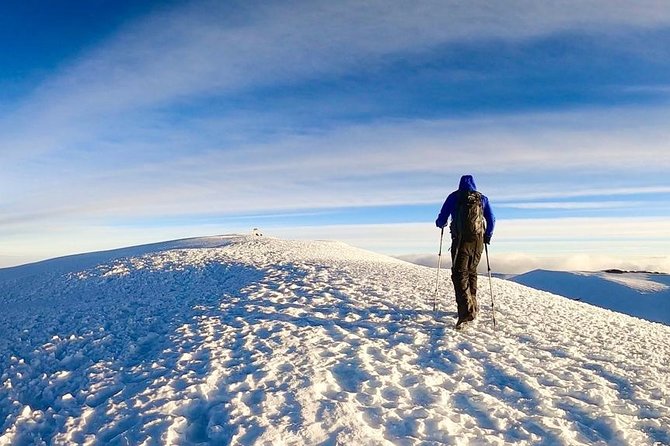
This is the day most people remember. You leave around 3am for the summit push. The schedule builds toward arriving at Point Lenana around 6am, which lines up with sunrise timing.
The early walking includes a steep, stony quarry section that cuts through a cliff area. Along the way, you pass a visible clearing and head toward the lower Hall Tarns area. This isn’t long in clock time (about 3 hours to reach Lenana), but it can feel intense because of the steepness and rocky footing. A steady pace beats heroic bursts on this kind of uphill.
When you arrive around 6am, you’ll have time for sunrise after reaching the top. Then you descend to Shipton Camp in about 2 hours, have breakfast there, and continue down for about 4 more hours to Old Moses Camp for dinner and overnight.
That second descent after breakfast is where mental stamina really matters. You’re tired, the altitude still lingers, and your legs are learning how to stop rather than only how to climb. The good news is that your route is structured: you know how long you’ll hike before the Day 4 transport connection.
Since your start is so early, a practical mindset helps: plan to move carefully on dark or low-light sections, and keep your footing focused. You’ll likely be tired, and that’s when slips happen.
Day 4: rainforest descent, 2 hours down, and back to Nairobi
Day 4 is the “come down to Earth” day. After breakfast at Old Moses Camp, you walk down through rainforest for about 2 hours to connect with your transport vehicle back to Nairobi.
Even if Day 3 feels like the hardest day, Day 4 still matters for your enjoyment. A shorter hiking window means you can finish without feeling dragged. You’ll also notice the temperature shift. Rainforest descent usually feels warmer and more forgiving than higher, exposed zones.
From an energy perspective, it’s a smart wrap-up. You get the summit experience, then you’re not stuck hiking all afternoon on tired legs.
Your guide, cook, and porters: why the support changes the whole trek
The trip is guided, and the difference is very real on Mt. Kenya. A guide doesn’t just point the way. They manage pace, timing, and safety decisions when you’re dealing with altitude, early hours, and changing weather.
Rupia Adventure is the operator behind this program, and one guide named Michael stands out from past climbs for sharing information about Mt. Kenya and local names as you hike. That kind of storytelling isn’t fluff. It turns the trek into something you understand, not just something you suffer through.
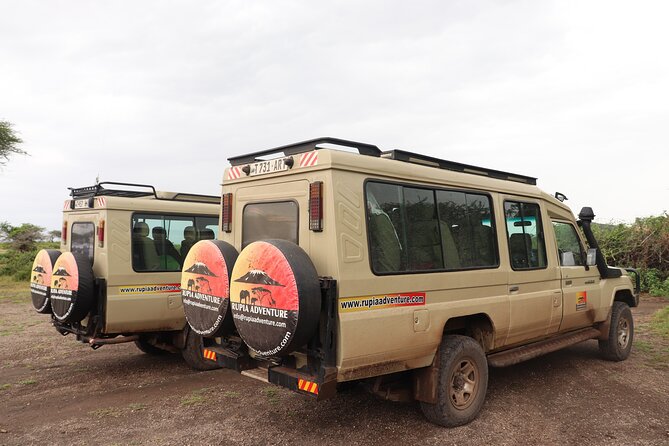
You also get a full camp team, including a cook and porters. In plain terms: that support means you can spend your energy hiking rather than worrying about camp setup or meal timing. It also helps keep the experience smooth for a small group of up to 3.
If you like traveling with people who handle details, you’ll probably find the whole experience less stressful than self-organizing a Mt. Kenya trek on your own.
Price and value: what $800 buys on this 4-day Point Lenana itinerary
At $800 per person, this isn’t a cheap “weekend hike.” But it’s also not just a guided walk with no extras. The trip includes pickup offered, mountain camp accommodation for three nights, meals, and hotel transfers. That bundle matters because in mountain trekking, your costs add up fast: transportation, food logistics, camp handling, and guide time.
This is also a small-group format (maximum of 3), which usually means you’re paying for attention and safer pacing rather than sharing resources with a big crowd. If you were trying to arrange parts of this independently, you’d likely spend more time negotiating than hiking.
Timing-wise, it’s commonly booked about 23 days in advance on average. That’s a clue to how many people aim for specific dates. If you have your heart set on a particular window, earlier planning gives you more flexibility.
Packing for cold camps and long, steep days
The hike includes overnight stays at mountain camps, and at least one earlier climb noted that the nights can be extremely cold. That’s not a minor detail. On Mt. Kenya, cold nights can affect your sleep, and poor sleep on summit day is a real drag.
So think in layers. Bring warm clothing you can wear at camp, not only what you’d use during active hiking. Also plan for cold air and cooler mornings around summit time, since Day 3 begins around 3am.
Since the trekking involves rocky sections and steep gradients, comfortable hiking footwear and socks that dry or stay warm matter too. Your footing is part of your safety plan.
If you’re unsure what “adequate” looks like, use the trip’s cold-camp warning as your baseline. Err on the warm side. Being too hot on a forest hike is easier to fix than being too cold at camp.
Who should book this trek, and who should think twice
This Mt. Kenya trek up to Point Lenana is best for you if you:
- are physically fit and comfortable walking uphill for hours
- want a guided, safety-first program rather than planning camp logistics yourself
- like a route with clear progression from forest to heath land to moorland
- enjoy an early sunrise summit moment and don’t mind starting before light
You might think twice if you:
- struggle with cold overnight conditions (because mountain camps are very cold)
- dislike steep, stony footing (Day 3 includes a steep quarry-style climb)
- want a longer on-mountain window beyond this set 4-day schedule
Also note: this trek targets Point Lenana as the summit goal. It isn’t described as climbing the other peaks on Mt. Kenya.
Should you book Rupia Adventure for Mount Kenya Point Lenana?
Book it if you want a well-structured Mt. Kenya experience with guiding, meals, camp stays, and transfers taken care of, plus a small group that helps the trek feel calm. The Sirimon route is a smart choice for fit hikers who want steady progress and summit views without needing technical climbing skills.
Hold off if cold nights or very early mornings will be a deal-breaker for you. This trek’s schedule and camp environment are part of the deal.
FAQ
FAQ
How many days is the Mount Kenya trek to Point Lenana?
The trek is 4 days (approximately).
Where does the trek start and what time?
You meet at 7:00am, and the plan leaves Nairobi at about 7:30am on Day 1.
What route does the trek use?
It follows the Sirimon route, starting through forest and heath land, then moving through moorland and valley areas.
How high do you climb?
The summit goal is Point Lenana at 16,059 feet (4,895 meters).
What’s included in the price?
The price includes pickup offered, hotel transfers, mountain camp accommodation for three nights, and meals.
Is this a small-group trek?
Yes. It has a maximum of 3 travelers.
Are there cold nights at the camps?
Yes. The camp nights can be very cold, so you should bring gear suited for cold conditions.
What happens if weather cancels the trek?
This experience requires good weather. If it’s canceled due to poor weather, you’ll be offered a different date or a full refund.
What is the cancellation policy?
You can cancel up to 24 hours in advance for a full refund. If you cancel within 24 hours of the start time, the amount paid isn’t refunded.