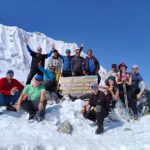
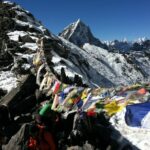
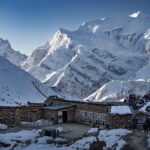
Six days, one giant sunrise. This Ghorepani–Poon Hill trek is all about Poon Hill sunrise and getting a true Annapurna-feels trip without committing to a long trek. I love the modern lodge setup, including heating in the dining room, and I also like having a local government licensed English-speaking guide managing the small, important details. One catch: you start early and the mountain show depends on clear skies.
You’ll drive from Kathmandu to Pokhara, settle in, then hike through rhododendron forest and classic Gurung villages. The route is built for a wide range of walkers, and it stays mostly in easy-to-moderate trekking territory for the Annapurna region. Still, you’ll be on stone steps and steep bits, so comfy shoes and a steady pace matter.
By Day 4 you’ll be over Deurali Pass (3090m) and chasing views again, which is great for photos and morale. But it also means you should take the altitude seriously even on a short trip—slow down, drink water, and don’t sprint the steps.
In This Review
- Key things to know before you go
- Why Poon Hill still hits hard in just 6 days
- Your day-by-day route: what each section feels like
- Day 1: Kathmandu to Pokhara, then lakeside downtime
- Day 2: Nayapul to Ulleri via suspension bridge and steep stone stairs
- Day 3: Rhododendron steps to Ghorepani through Gurung villages
- Day 4: Poon Hill before sunrise, then Deurali Pass to Tadapani
- Day 5: Ghorepani region to Ghandruk, then down to Kyumi and back to Pokhara
- Day 6: Pokhara back to Kathmandu by private van
- What you get with your lodging and meals (and what to watch)
- Guides, organization, and why small changes matter
- Price and value: how $590 stacks up for Annapurna lodges
- Timing, weather, and how to handle the sunrise gamble
- Pace and difficulty: who this fits best
- What to pack (based on what’s included and what isn’t)
- Should you book this 6-day Ghorepani Poon Hill trek?
- FAQ
- What time does the trek start?
- How long is the Ghorepani Poon Hill trek?
- Where do I meet and where do I end up?
- What’s included in the price?
- Do I need travel insurance?
- Do I need to bring trekking gear?
- Is the trek private?
Key things to know before you go
- The two-view payoff: Poon Hill before sunrise, then more big-mountain views later toward Tadapani via Deurali Pass.
- Comfort where you’ll notice it: lodges with heating in the dining room, plus included sleeping bag and down jacket for colder nights.
- Guides named, not generic: the operator’s team includes guides like Shiva, Prakash, and Navaraji, with owner Shree often helping coordinate from Kathmandu.
- A family-friendly style route: short days, village scenery, and a pace that suits many ages (as long as you can handle steps).
- Value comes from what’s included: guide, permits, transfers, meals, and key cold-weather gear are part of the package.
- Weather affects the sunrise plan: the experience requires good weather, and cloudy mornings can happen.
Why Poon Hill still hits hard in just 6 days
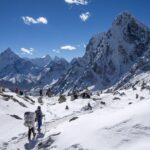
Poon Hill is famous for a reason. Even if you’ve seen plenty of Himalaya photos, watching the light roll across the Annapurna range feels different when the peaks are right in front of you. On this trek, you get that moment early on, when the air is crisp and the mountains look sharp.
What I like about this version is that it’s not only about one sunrise. You also get extended mountain panoramas around Ghorepani, then another strong view-focused day as you head toward Tadapani over Deurali Pass (3090m). That structure makes the trek feel rewarding even if you’re not able to handle a multi-week trek.
It’s also very practical for planning. You’re not dealing with complicated camping or heavy cooking gear. Instead, you stay in lodges/guesthouses along the way, with meals included and a guide to keep the route simple and clear.
You can also read our reviews of more tours and experiences in Kathmandu.
Your day-by-day route: what each section feels like
This is a classic Annapurna foothills rhythm: drive in, hike through village life and forest, then come back down with a final lake-city unwind.
Day 1: Kathmandu to Pokhara, then lakeside downtime
You’ll start in Kathmandu at 6:15 am, then head toward Pokhara by road. The drive is part of the experience here: you pass green countryside, villages, and river valleys before reaching Pokhara, often described as the City of Lakes.
Once you arrive, you have time to enjoy the Lakeside area and get your bearings. This matters because the next day starts trekking, and you’ll want a calm evening to rest, organize your bag, and sleep well.
Day 2: Nayapul to Ulleri via suspension bridge and steep stone stairs
After a short drive to Nayapul, your trek begins with a crossing of the suspension bridge over Modi Khola. That first bridge moment is a nice mental switch: you’re officially in the walking part of Nepal now.
From there, you climb steep stone stairs toward Ulleri. This section is where you’ll notice the effort. It’s not a technical climb, but it’s real uphill work.
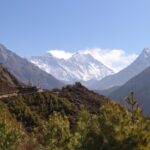
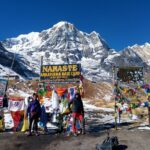
When you reach Ulleri, the payoff is views of Annapurna South (7219m), Hiunchuli (6441m), and other peaks. It’s a great place to pause, catch your breath, and soak in the scale—because after a few more days, the scenery becomes a constant companion.
Day 3: Rhododendron steps to Ghorepani through Gurung villages
Leaving Ulleri, you walk through rhododendron forest on carefully placed stone steps. Even when the trail is busy, this part tends to feel scenic and rhythmic—step, pause, look up, repeat.
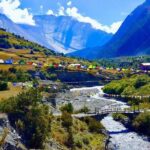
You’ll pass through Banthanti and Nangge Thanti, village stops by the bank of Bhurungdi Khola. This is the human side of the trek: houses, path life, and everyday mountain living, not just scenery from a viewpoint.
By the end of the day, you reach the Gurung village of Ghorepani. Ghorepani is your base for the next morning’s big moment, so Day 3 is mostly about arriving rested enough to wake up early.
Day 4: Poon Hill before sunrise, then Deurali Pass to Tadapani
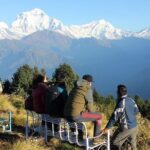
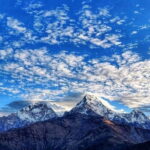
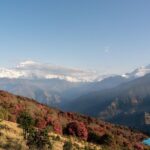
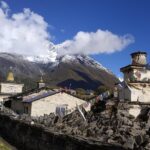
Before sunrise, you hike up to Poon Hill for sunrise and panoramic views. You’re looking for the light effects on the mountains—Annapurna and Dhaulagiri massifs, plus Machhapuchhre (6993m) and Patal Hiunchuli (6441m) among others.
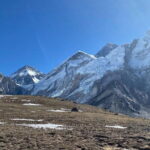
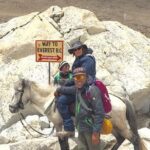
Then you head back down to Ghorepani and continue onward to Tadapani via Deurali Pass (3090m). Tadapani is another viewpoint-heavy stop, with strong views again of Annapurna South and Machhapuchhre, plus valleys opening around you.
The two mountain days back-to-back are great for people who hate the feeling of a trek being over too quickly. The drawback is that Day 4 is a long day: sunrise hiking plus trekking onward means you’ll want an early bedtime.
Day 5: Ghorepani region to Ghandruk, then down to Kyumi and back to Pokhara
You walk through rhododendron forest again, heading toward Ghandruk. Ghandruk is a larger, well-known village, and the style of the village makes it a good cultural break in the middle of the route.
After lunch in Ghandruk, you descend on stone staircases to Kyumi and then take a bus to Pokhara. This is a smart touch: it saves your legs from one more all-down trek day, and it lets you enjoy your final evening.
That night, you can hang around Pokhara’s pubs and restaurants. After days of trekking meals and mountain air, a warm shower and a normal menu feels like a reward.
Day 6: Pokhara back to Kathmandu by private van
On the final morning, you leave Pokhara and head back to Kathmandu on a private van. You’ll feel the change immediately: less hiking focus, more city noise.
You’ll be dropped at your hotel. Then you can stroll around Kathmandu at your own pace, grab a last meal, and decide what part of the Annapurna region you want to see next.
What you get with your lodging and meals (and what to watch)
The trek uses “best available” lodges and guesthouses, mainly with twin sharing during the trek. That’s a common setup on short lodge treks because it helps keep things smooth and affordable.
Two practical comfort notes stand out in your favor:
- Meals are included (breakfast 5, lunch 4, dinner 3), so you’re not hunting for food along the way.
- Lodges have a good heating system in the dining room, which you’ll appreciate during cold mornings and evenings.
You also receive a down jacket and sleeping bag, plus a duffel/kit bag. The important detail: those items need to be returned after the trek. That means you should treat them like part of your equipment plan, not like gear you can keep.
What’s not included:
- Alcohol and drinks (hot and cold)
- Laundry
- Tips for trekking staff
- Any personal trekking equipment you might need
My advice: if you’re someone who runs cold, pack a small layer strategy even if the jacket is provided. Small comforts can make mornings easier when you’re leaving before sunrise.
Guides, organization, and why small changes matter
The big difference between a smooth trek and a stressful one is usually not the view. It’s timing, route decisions, and how fast your team adapts when something goes off-script.
This trip includes a local government licensed English-speaking guide during the trek. In practice, that means you’re less likely to get stuck figuring things out on your own at trail junctions, and you can focus on walking and breathing.
The guide quality is also reflected in the names people associate with the experience. Shiva appears in multiple accounts as an excellent, organized guide, and the team’s owner Shree is described as helpful in Kathmandu. Prakash is also mentioned as an especially kind and knowledgeable guide. And in one case, Navaraji adjusted the trekking plan after someone became sick, then helped them find a better viewpoint experience from the guesthouse area.
Even if you’re not sick, that kind of flexibility is valuable. Weather, energy levels, and trail conditions can change fast at short notice, and having someone adjust without making you feel rushed makes a real difference.
Price and value: how $590 stacks up for Annapurna lodges
At $590 per person, the best way to judge value is what’s included—not the headline number.
Here’s what you’re paying for beyond basic lodging:
- Accommodation at lodges/guesthouses (mostly twin sharing)
- A licensed English-speaking guide
- Trek entry permits and fees
- A complete cold-weather support package: down jacket, sleeping bag, and duffel/kit bag (returned after)
- First aid medical kits
- Surface transfers from and back to Kathmandu
- Meals: breakfast 5, lunch 4, dinner 3
That combination matters because lodge treks can get expensive fast once you add guiding, permits, and cold-weather gear rentals or purchases. This package also saves you from assembling a mini kit before you arrive.
Could you do it cheaper by going fully independent? Maybe. But short treks like this get easier when someone already handles the schedule, permits, and the day-to-day decisions.
So if you want the Annapurna highlights with less friction, this price looks fair for what you’re getting.
Timing, weather, and how to handle the sunrise gamble
This experience requires good weather. If it’s canceled due to poor weather, you’ll be offered a different date or a full refund. That’s reassuring because sunrise treks are a bit of a gamble.
Here’s the reality you should plan for: even when conditions are good in the region, cloud cover can still soften sunrise views. That doesn’t mean you lose the trek. The walking, village life, and later mountain panoramas still make the trip worth it.
What you can control:
- Be ready for early starts. The schedule begins at 6:15 am, and Poon Hill is a before-sunrise hike.
- Keep your expectations flexible. If it’s cloudy at the hill, the next viewpoint day still gives you “big peaks in front of you” energy.
- Dress in layers. Even with lodge heating, mornings and nighttime can feel cold quickly.
Pace and difficulty: who this fits best
The overview frames this as an easy trek for the Annapurna region, suited to a range of ages. That tracks with the short duration and lodge support.
Still, this is not a flat walk:
- Day 2 has steep stone stairs to Ulleri.
- There are stone steps throughout, including forest sections.
- Day 4 includes a pass crossing (Deurali Pass at 3090m).
- Day 5 includes a descent of stone staircases to Kyumi.
So I’d recommend it if:
- You can hike several hours a day and handle stairs.
- You want mountain views without multi-day camping.
- You’re traveling with kids, older folks, or a mixed group and want a route that stays manageable.
I’d think twice if:
- You have major knee issues with step descents.
- You want a truly gentle walk with minimal uphill/downhill.
What to pack (based on what’s included and what isn’t)
You’ll receive a down jacket and sleeping bag, plus a duffel/kit bag. That covers your cold-weather basics for sleeping and key moments outdoors.
You still need personal items for day-to-day comfort, like shoes and other trekking essentials. Since the package says personal trekking equipment isn’t included, you should plan your own basics rather than counting on the operator for everything.
Practical packing mindset:
- Bring good footwear for stone steps.
- Layer up for pre-sunrise cold.
- Bring a small day bag you can manage on stairs.
- Expect extra cold protection to matter more on early starts than on midday.
Should you book this 6-day Ghorepani Poon Hill trek?
If your goal is Annapurna-region wow in a short time, I think this is a smart booking. You get the classic Poon Hill sunrise, plus a second big viewing day and a lodge-based route with included guide support and meals. The modern lodge setup with heated dining areas is also a strong quality-of-life factor, especially if you’re sensitive to cold.
Book it if you:
- Want a family-friendly style trek pace
- Prefer comfort and organization over DIY complexity
- Care about a strong sunrise-view experience, but still want multiple chances at mountain scenery
Skip it or choose a different plan if you:
- Can’t handle steep stairs and repeated step walking
- Hate early mornings and long trekking days
- Are traveling with tight schedules where weather-related changes would cause stress
For many people, this trek hits the sweet spot: enough hiking to feel real, enough comfort to keep you smiling, and enough mountain moments to make the whole trip feel like time well spent.
FAQ
What time does the trek start?
The experience starts at 6:15 am in Kathmandu.
How long is the Ghorepani Poon Hill trek?
It runs for 6 days (approx.).
Where do I meet and where do I end up?
You start in Kathmandu 44600, Nepal, and the activity ends back at the meeting point.
What’s included in the price?
Accommodation during the trek (mainly twin sharing), a local government licensed English-speaking guide, trek entry permits and fees, down jacket, sleeping bag and duffel/kit bag (returned after), first aid medical kits, surface transfers from and to Kathmandu, and meals (breakfast 5, lunch 4, dinner 3).
Do I need travel insurance?
Yes. Travel insurance is compulsory.
Do I need to bring trekking gear?
Personal trekking equipment is not included, but you do receive a down jacket, sleeping bag, and duffel/kit bag for the trek.
Is the trek private?
Yes. It’s a private tour/activity, and only your group participates.