REVIEW · KATHMANDU
Annapurna Base Camp Trek
Book on Viator →Operated by Oriental Journeys · Bookable on Viator
Annapurna Base Camp has real edge-of-the-world pull. This is a classic Annapurna Sanctuary trek in a clockwise direction, with teahouse nights and big day-to-day scenery shifts from waterfalls and terraced villages to rhododendron forest. I like that you’ll go with an English-speaking guide from Oriental Journeys, and past trekkers highlighted guide care from people like Aneel, especially around staying safe.
The second thing I really like is the built-in recovery and culture at the end: a full day Kathmandu Valley UNESCO tour with an English-speaking guide. The main drawback to plan for is straightforward: altitude. The route climbs to Annapurna Base Camp at 4,130m, and the trail can be slippery, so you need to take the pace seriously and come prepared.
In This Review
- Key highlights worth knowing
- Annapurna Base Camp: why this trek keeps earning top rankings
- Day 1 and Day 2: Kathmandu, Thame lodging, then Pokhara to start at Ulleri
- Ulleri to Chhomrung: terraced villages, Gurung hospitality, and first big views
- Quick tip for this early phase
- Chhomrung to Bamboo: suspension bridge photos and the stone-step reality
- Bamboo to Deurali: damp bamboo forest, river views, and Hinku Cave
- Deurali to Annapurna Base Camp (via Machhapuchhre Base Camp): the high point, not just the final destination
- Annapurna Base Camp to Bamboo: retracing your steps and enjoying the view twice
- Bamboo to Jhinu Danda: ups and downs, Chhomrung Khola, and hot springs as a reward
- Day 9 and Day 10: Siwai to Pokhara, then Kathmandu for UNESCO recovery
- Day 11: Kathmandu Valley UNESCO sites with an English-speaking guide
- Day 12: farewell and the packing checklist that keeps you comfortable
- Price and value: what $1,440 includes, and what you’ll need to budget
- Guide quality and the small things that make it feel easy
- Who should book this trek, and who should skip it
- Should you book this Annapurna Base Camp trek?
- FAQ
- How long is the Annapurna Base Camp trek in this package?
- Where does the trek start and what direction is it walked?
- Does the route include Poon Hill?
- What is the highest altitude on this trek?
- Are domestic flights included?
- Are meals included during the trek?
- Is a porter included?
- Is a hot shower included during the trek?
- Which Kathmandu sites are visited on the tour?
- Is this trek accessible for wheelchair users?
Key highlights worth knowing
- Clockwise Annapurna Sanctuary route from Nayapul through Tikhedhunga, Ghorepani, Tadapani, Chhomrung, Deurali, and up to Base Camp
- Poon Hill viewpoint chance without turning the trip into a separate mission
- Machhapuchhre Base Camp detour for extra Himalayan payoff on the climb to 4,130m
- Teahouse trekking with lodge nights at Ulleri/Fat Ghandruk, Chhomrong, Bamboo, Deurali, and Annapurna Base Camp
- Jhinu Danda hot springs as a practical reward after a long day of ups and downs
Annapurna Base Camp: why this trek keeps earning top rankings
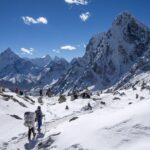
This trek’s appeal is simple: you walk into the heart of the mountains. The Annapurna Base Camp area is often described as a sanctuary bowl of river basins, deep gorges, and glacier valleys, and your route steadily tightens around the peaks.
You also get real variety in a relatively compact 10–12 day trek. One day can feel like stone steps and suspension bridges; another feels like cold bamboo and riverbed walking; and then you hit the high country with wide mountain views and thinner air. Even the direction matters here: this trip goes clockwise, which changes how the valleys and ridgelines frame the scenery.
I also like that the trip is paired with a Kathmandu cultural day, not just a “drop you in the hills and pray” approach. By the time you finish trekking, you’ll have earned temples, stupas, and slow walking through the UNESCO sites.
You can also read our reviews of more tours and experiences in Kathmandu.
Day 1 and Day 2: Kathmandu, Thame lodging, then Pokhara to start at Ulleri
Your start is all about avoiding lost time. After landing at Tribhuvan International Airport (1,300m), a representative from Oriental Journeys meets you and takes you to your hotel in Thame, plus a briefing and an intro with your guide.
Then the next day shifts you from city to trail. You’ll be picked up from your hotel, driven to the domestic airport in Kathmandu, fly to Pokhara (about 30 minutes), and then transfer by private vehicle to Nayapul. From Nayapul you take a local vehicle up to Ulleri, about an hour, and that’s where the trek actually begins.
The value of this setup is that you’re not spending your first day fighting transit logistics. The pace still starts early, though. The itinerary’s meeting start time is listed as 7:00 am, so treat the beginning as a real commitment, not a casual start.
Ulleri to Chhomrung: terraced villages, Gurung hospitality, and first big views
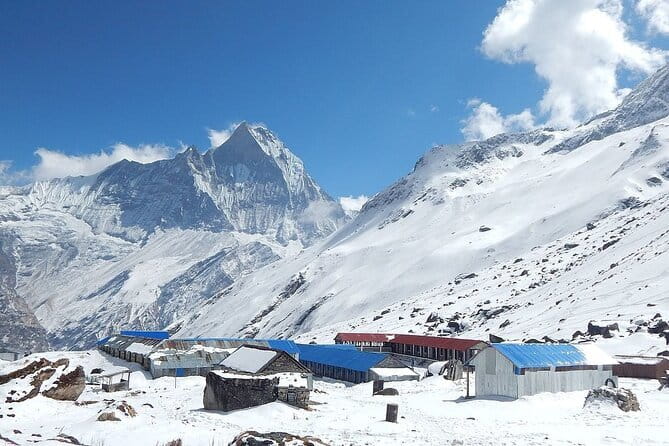
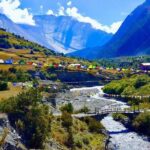
Once your feet are moving, the trek turns into a steady climb through village life. After Ulleri, the route reaches Fat Ghandruk, and then you continue toward Chhomrung.
What makes this stretch work is the combination of culture and hiking rhythm. The route runs through areas associated with the Gurung community, and the on-trail feel is personal: villagers, terraced farmlands, and places where you’re not just looking at scenery—you’re interacting with daily life. You get that in particular because you’re lodging at teahouses, not camping.
Chhomrung is a great psychological milestone. It’s where you start feeling like you’re actually inside the Annapurna region, with taller walls of terrain and more serious mountain presence.
Quick tip for this early phase
If you’re tempted to “power up” early, don’t. In high-altitude treks, the win is finishing feeling human, not just reaching a destination.
Chhomrung to Bamboo: suspension bridge photos and the stone-step reality
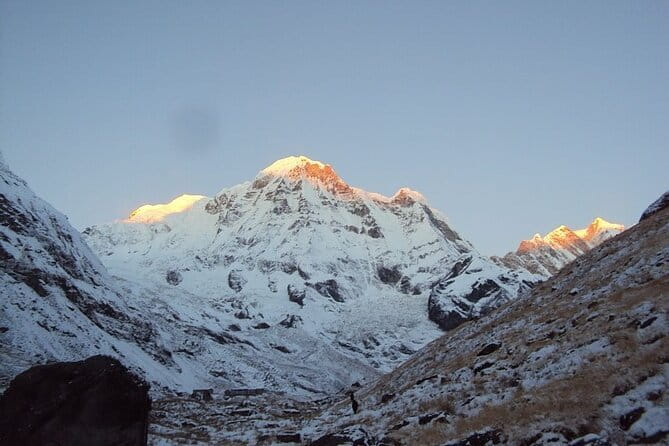
After breakfast, you drop out of Chhomrung via 2500 stone steps. Yes, that’s a lot. The good news is you get a strong payoff early: you cross the Chhomrung Khola on a swaying suspension bridge and you’ll have clear moments for photos.
After that, the day becomes a mix of downhill and renewed effort. Near Sinuwa the trail turns uphill again, and you pass through forest before reaching Kuldihar. Then it’s an easier downhill walk to Bamboo, where you spend the night.
Why this part matters: it teaches your body how the trail changes throughout the day. Some sections will feel like legs-down, gravity-forward hiking. Others will remind you that even a “scenic day” can include real climbs.
Also, the trail here can be slick. The itinerary notes the classical route’s slipperiness, and you should pack accordingly (good tread on boots and careful foot placement).
Bamboo to Deurali: damp bamboo forest, river views, and Hinku Cave
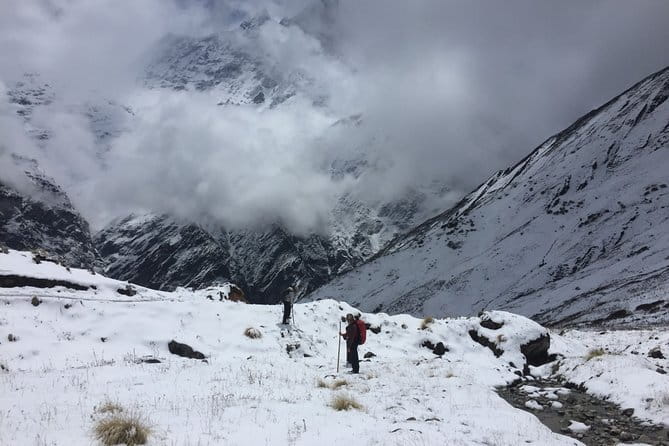
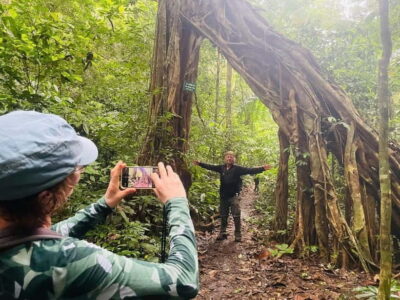
This is one of the days that can surprise you. You start with damp and cold bamboo forest walking, and it can feel visually quiet compared to the brighter village sections. But then the day opens into some of the trek’s best scenery moments.
You’ll get views connected to the glacial river, and the trail passes closer to the river before climbing again toward Deurali. There’s also an option to visit Hinku Cave on the way.
Overnight in Deurali matters because it’s part of your gradual altitude adjustment. You’re still climbing toward the highest point of the trek, but the itinerary builds in stops instead of going straight upward like a video game speedrun.
If you hate cold in the afternoon, plan around it. Bamboo forest can chill you fast, especially when clouds roll in.
Deurali to Annapurna Base Camp (via Machhapuchhre Base Camp): the high point, not just the final destination
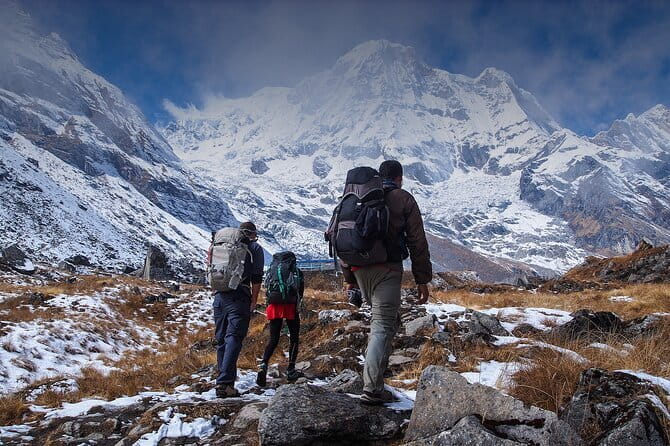
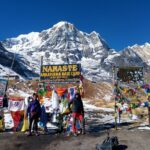
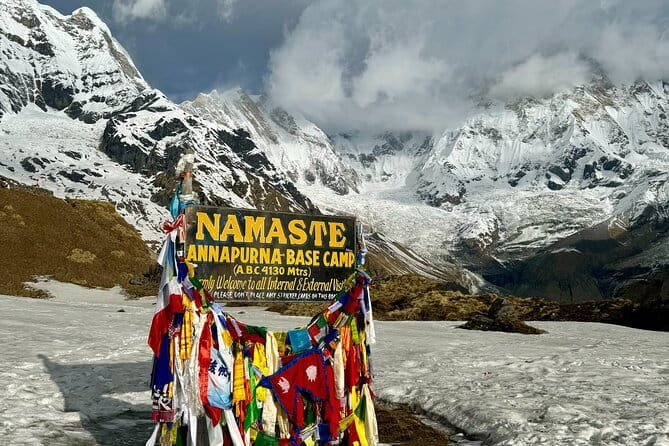
Now you get the day you came for. From Deurali you reach Annapurna Base Camp (4,130m) after a 5–6 hour push, traveling via Machhapuchhre Base Camp (around 3,700m). That route includes sections with a climb through a river bed and steep trail walking along the mountain side.
This is also one of the days where you’ll really feel the altitude. Even if you’re fit, the air will be thin, and your hiking will slow naturally.
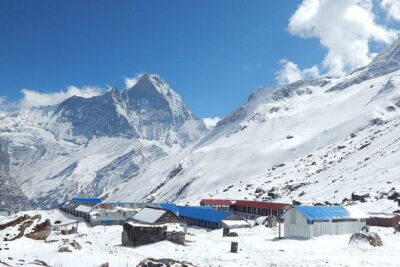
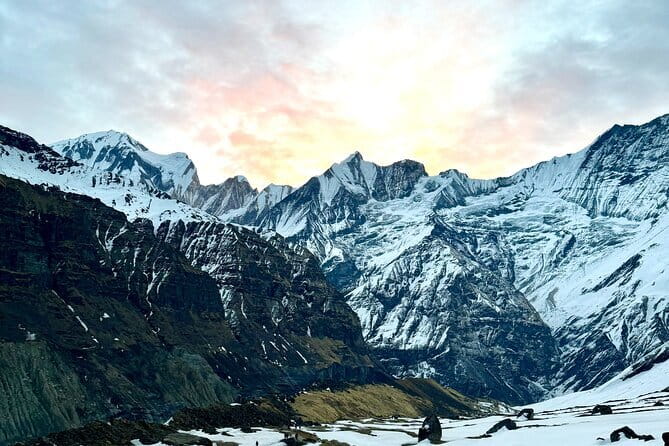
The reward is the mountain presence. The itinerary specifically calls out views of Machhapuchhre plus peaks like Hiunchuli, Annapurna South, Annapurna I, Annapurna III, Gandharvachuli, and Gangapurna. That’s a lot of named context packed into one day, which is useful when you’re trying to understand what you’re actually seeing.
Overnight at Annapurna Base Camp gives you another key advantage: you don’t rush the moment. You get time to settle in, then later take morning photos when the mountains are often clearer (conditions vary, but you have the chance).
Annapurna Base Camp to Bamboo: retracing your steps and enjoying the view twice
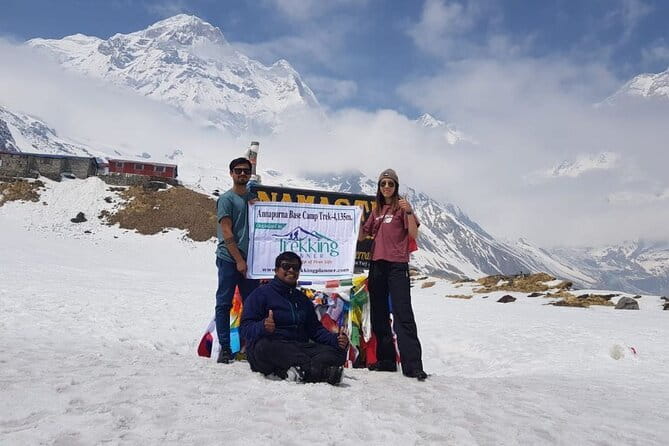
The next morning is built for photos and a slow start. After a morning at Base Camp, you retrace the same way back from Annapurna to Bamboo, with an easy downhill walk.
Going back can feel like a letdown on paper, but in practice it helps you process what you just reached. Your legs might feel better than you expect, and the landscapes you saw while climbing look different when you’re moving downhill and noticing details instead of fighting incline.
You’ll also get a calmer day before the final trekking push to Jhinu Danda. If you’re managing energy, this is the point in the trip where you can breathe easier.
Bamboo to Jhinu Danda: ups and downs, Chhomrung Khola, and hot springs as a reward
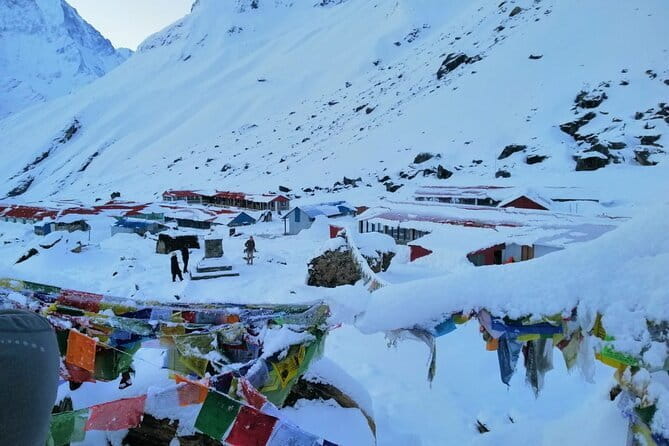
This is a full-day “movement” day. You trek from Bamboo to Kuldighar (uphill), then down to Chhomrung Khola, then up again to Chhomrung. From there you descend to Jhinu Danda.
It’s a lot of micro-variation: climb, drop, climb, drop. That’s tiring, but it’s also how this trek stays interesting instead of turning into one long grind.
After checking in at the lodge, you get the relaxing payoff. You walk down a few minutes to enjoy hot spring bath time. The package notes that hot spring is part of the day, and it’s a great contrast to cold air and long hours on rocky steps.
Day 9 and Day 10: Siwai to Pokhara, then Kathmandu for UNESCO recovery
From Jhinu Danda you head down to Siwai and catch a vehicle to Pokhara. Then the plan moves you back to Kathmandu after breakfast.
You have two options noted: flying back with additional time in Kathmandu if you return by air, or driving back in about 5–6 hours if you go by road. Either way, this is your transition out of trekking mode and into city walking mode.
Value here: you don’t just end the trek and disappear. You’re given a structured day to get your bearings, rest properly, and prepare for a full Kathmandu cultural day.
Day 11: Kathmandu Valley UNESCO sites with an English-speaking guide
Your sightseeing program starts at 9:00 am. You’ll join a full day tour of UNESCO-listed World Heritage sites in Kathmandu Valley, led by an English-speaking tour guide from Oriental Journeys.
The stops listed are:
- Pashupatinath
- Boudhanath
- Swayambhu
- Kathmandu Durbar Square
I like this mix because it covers multiple sides of the Kathmandu experience. You’re looking at major religious architecture, iconic stupa imagery, and the historic center of the city, all in one organized day.
Even better, it’s timed as a recovery tool. After days of trekking, you’ll appreciate shorter bursts of walking, benches when you need them, and a guide who can explain what you’re looking at without you having to read everything yourself.
Day 12: farewell and the packing checklist that keeps you comfortable
Final day is straightforward: farewell and departure from Tribhuvan International Airport in Kathmandu.
Before you go, focus on the gear list that’s provided for this trek. The packing guidance includes warm layers like a down jacket, sleeping bag, full sleeves, warm hat, sunglasses, gloves, warm socks, trekking boots, and thermal undergarments. It also calls out a fleece jacket, a water bottle, a day bag, a Goretex jacket, sun/cold creams, and a head light.
One small, practical note: your trek includes cold bamboo forest, cold high country, and big elevation changes. If you’re even slightly on the cold side, bring layers you can actually control.
Also, if you’re carrying a lot of personal stuff, remember that hot shower during trek is not listed as included, and phone charging and similar comforts might not be a given. Plan to be okay with “basic” on the trail, then enjoy Kathmandu properly.
Price and value: what $1,440 includes, and what you’ll need to budget
At $1,440 per person, this trek isn’t “cheap,” but it’s also not just a ticket to a mountain route. You’re paying for real structure: airport pickup and drop, lodge accommodations during the trek, and 2 nights in Kathmandu on bed and breakfast.
You also get key trekking elements included:
- an English-speaking guide
- Annapurna Conservation Area fees
- TIMS card (Trekker’s information Management System)
- guide salary and insurance during the trek
- first aid kit support (noted as compulsory from the agency above 6 pax)
- accommodation as per the itinerary
Meals are partially included: dinner (4), breakfast (7), and lunch (2). At the same time, the trip notes that full board with three meals per day during the trek (including tea or coffee) is not included. That means you should expect some meals and drinks to be paid separately, especially teas and coffees.
What’s not included, and matters for value:
- domestic flights
- trekking equipment and personal expenses
- porters are listed under not included, with a recommended porter ratio of 1 porter for two guests carrying up to 30kg max
- hot shower during trek
- entrance fees to temples/monasteries
- tips/gratuities
- emergency rescue and travel insurance, and trip cancellation coverage
My take: the money mostly buys organization, safety support basics, and access fees—not a luxury hotel experience. If you want a smooth route with a guiding hand, this price can make sense. If you’re the type who hates any extra costs for meals, drinks, and porters, you’ll want to read the included vs not included list carefully.
Guide quality and the small things that make it feel easy
The reviews you’re working with give a clear pattern: the human side is a big part of why this trek gets top ratings. People specifically praised guide care and experience, including mention of Aneel, plus the director support team named Machhindra and Radhika in responses.
That kind of continuity matters because Annapurna isn’t just about walking. It’s about decisions: when to push, when to rest, what to watch for on slippery sections, and how to keep the group moving with minimal stress.
This is also listed as a private tour/activity where only your group participates, plus group discounts. That combination usually means you get a more tailored feel compared to huge mixed groups, even though you’re still on shared teahouse trails.
Who should book this trek, and who should skip it
This package is a moderate grade trek. That doesn’t mean it’s easy. It means the route is built for people who can hike through uneven terrain and handle long days, including stone steps, suspension bridges, forests, and big altitude swings.
It’s not recommended for:
- wheelchair users
- pregnant women
- people with back problems
- people with heart complaints or other serious medical conditions
If you fit the moderate fitness target, this can be a good match because the itinerary has a clear rhythm: gradual climb, key altitude days, then a structured return and recovery in Kathmandu.
Should you book this Annapurna Base Camp trek?
Book it if you want:
- a classic route to Annapurna Base Camp with a Machhapuchhre viewpoint stop
- lodge-based trekking (not camping chaos)
- an organized Kathmandu finish with UNESCO sites
- an English-speaking guide and solid support structure
Think twice if:
- you’re sensitive to altitude and haven’t done any acclimatization-style hiking before
- cold and damp conditions will drain you quickly
- you don’t want to manage extra costs for drinks, some meals, and possibly a porter
If you’re ready for a real mountain week with a good support team and a satisfying end in Kathmandu, this is the kind of trek that stays on your mind long after your boots come off.
FAQ
How long is the Annapurna Base Camp trek in this package?
The trek is listed as 12 days approximately.
Where does the trek start and what direction is it walked?
It starts from Nayapul and the walking direction is clockwise.
Does the route include Poon Hill?
Yes, the trail also takes you to the popular Poon Hill.
What is the highest altitude on this trek?
Annapurna Base Camp is listed at 4,130m (13,545ft), and Machhapuchhre Base Camp is listed at about 3,700m (12,135ft).
Are domestic flights included?
Domestic flights are not included.
Are meals included during the trek?
Some meals are included: dinners (4), breakfasts (7), and lunches (2). Three meals per day during the trek, including tea or coffee, are not included.
Is a porter included?
A porter is listed under what’s not included, with a recommended ratio of 1 porter for two guests and up to 30kg maximum.
Is a hot shower included during the trek?
Hot showers during the trek are not included.
Which Kathmandu sites are visited on the tour?
The package lists Pashupatinath, Boudhanath, Swayambhu, and Kathmandu Durbar Square.
Is this trek accessible for wheelchair users?
No, the destination and trail are not accessible for wheelchair users.