REVIEW · KATHMANDU
Everest Base Camp Trek with Helicopter Return from Gorakshep to Lukla
Book on Viator →Operated by Ace the Himalaya · Bookable on Viator
One mountain, two very different ways back down. The headline is the helicopter return from Gorakshep to Lukla, a fast way to skip the toughest descent. I also like that the plan builds in acclimatization days (Namche and Nangkartshang Peak) so you’re not just racing upward. The main drawback to weigh is that helicopter flying depends on conditions, so expect date changes or a refund if weather shuts it down.
This trek also feels well organized for a once-in-a-lifetime itinerary: you get airport transfers, Kathmandu hotel nights, a licensed English-speaking guide, and a porter system (one porter for every two guests). You’ll hike classic Khumbu scenery—Dudh Koshi suspension bridges, monastery stops, and the glacier approach to Base Camp—without having to manage the logistics yourself. The trade-off is that the route still demands real effort at altitude, and you’ll want a moderate fitness base before you go.
In This Review
- Key highlights you’ll feel fast
- Why the helicopter return changes the Everest Base Camp trek
- Kathmandu to Lukla: setting up your trek without chaos
- Phakding to Namche: suspension bridges, prayer flags, and the first real acclimation
- Everest Viewpoint and Tengboche: views for your brain, altitude for your body
- Dingboche, Pangboche, and Nangkartshang Peak: the acclimation days that actually pay off
- Lobuche and the Khumbu Glacier approach: where the trek shifts from scenery to seriousness
- Kala Pattar: the hardest rewarding day (and why you’ll probably remember it most)
- Lukla and the return to Kathmandu: flights, final mountains, and a different kind of relief
- Price and logistics: does $3,000 feel fair here?
- The Ace the Himalaya team: why guides and porters matter on EBC
- What you’ll likely feel on the trail: pacing, altitude, and mental stamina
- Who should book this trek, and who should pause
- Should you book Everest Base Camp with helicopter return from Gorakshep?
- FAQ
- How long is the Everest Base Camp trek with helicopter return?
- What is unique about this itinerary?
- What flights are included?
- What permits are included?
- Is travel insurance included?
- What’s the group size and start time?
Key highlights you’ll feel fast
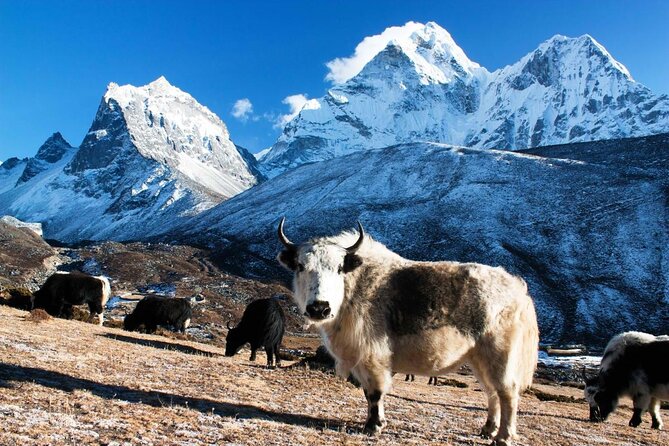
- Helicopter from Gorakshep to Lukla saves major time and stress after the hardest hiking days
- Acclimatization built in via Everest Viewpoint and a climb to Nangkartshang Peak
- Licensed English-speaking guide + porter support with a 1:2 porter ratio
- Everest National Park permits + TIMS handled for you
- Meals and water support (filtered trail water and included trek dining)
Why the helicopter return changes the Everest Base Camp trek
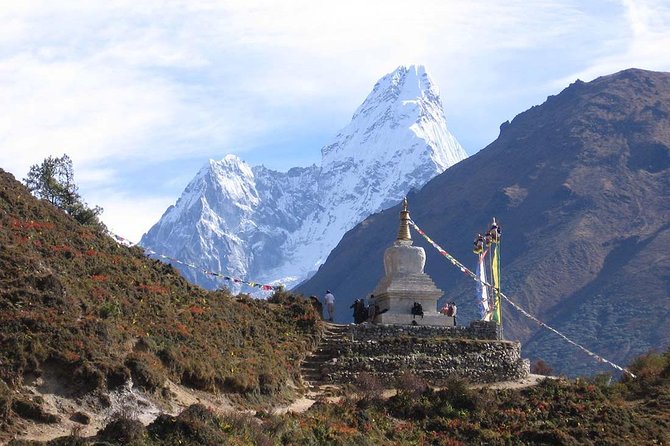
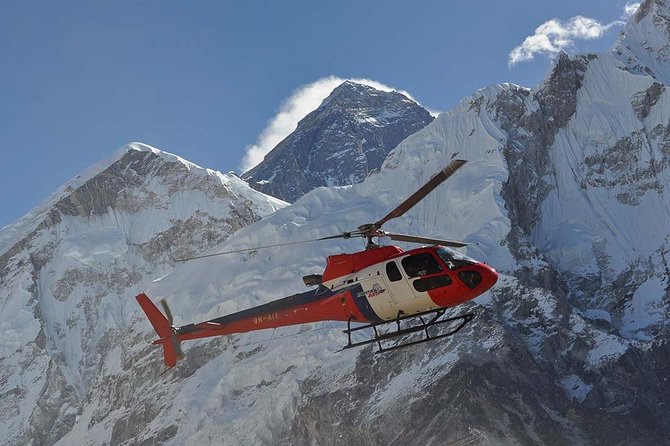
Everest Base Camp is famous for effort. The trail asks for patience, steady walking, and days where your legs feel the altitude more than the slope. What makes this version stand out is that you still do the emotional payoff—Base Camp at 5,365 m and Kala Pattar at 5,555 m—then you get a helicopter ride to break the cycle of step-by-step descent.
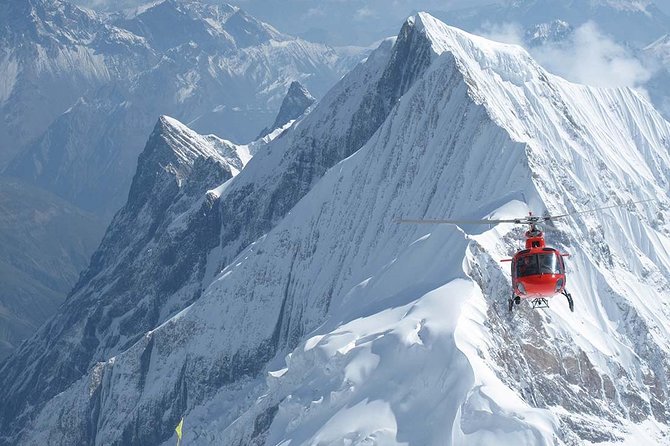
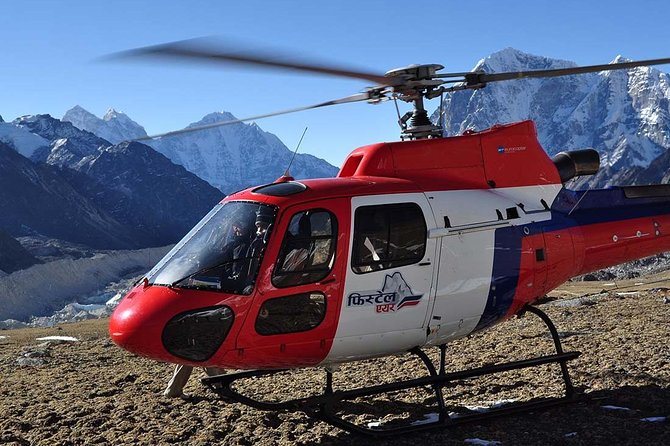
That 20-minute flight from Gorakshep to Lukla is the practical difference between finishing as a tired zombie and finishing with your day still usable. You get back to Lukla for the flight onward, which keeps the whole schedule tighter and reduces the number of “hard days stacked back-to-back” at the end.
One more thing: the trip is only as smooth as its weather. The program explicitly requires good flying weather for the heli portion. If it can’t fly, the operator offers a different date or a full refund, so don’t treat the helicopter as a guarantee you can build plans around.
You can also read our reviews of more tours and experiences in Kathmandu.
Kathmandu to Lukla: setting up your trek without chaos
You start in Kathmandu with an official greeting at Tribhuvan International Airport and a private vehicle transfer to your hotel. That matters because the morning travel day is usually when groups feel most scattered—people hunting for SIM cards, scrambling for cash, or trying to find the meeting point. Here, you get a pre-trip meeting and you’ll meet your guide before heading out.
Day 2 is a major turning point: you fly from Kathmandu to Lukla, a short but memorable flight (about 35 minutes), arriving at 2,804 m. This matters more than it sounds. Lukla is where you stop thinking like a city visitor and start thinking like a trekker—layering up for thin air, hydrating consistently, and walking slowly enough to let your breathing catch up.
The first night stop is Phakding, which is a good “gear-check” day. The goal isn’t to crush yourself; it’s to get the rhythm: pack organization, how you drink on the trail, and how your body reacts to altitude that you can feel but can’t fully explain.
If you’re doing this in a group, I like that the maximum group size is 14 travelers. You’re not swallowed by a huge crowd, and you still get the safety and motivation of company.
Phakding to Namche: suspension bridges, prayer flags, and the first real acclimation
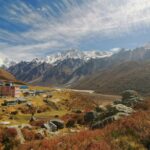
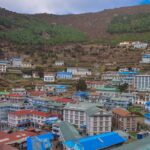
From Phakding to Namche Bazaar is about a 6-hour hike along the Dudh Koshi corridor. You’ll cross multiple suspension bridges, many hung with prayer flags. This is the kind of day where the scenery doesn’t just look good in photos—it breaks the monotony of long walking.
Namche is where altitude starts to get serious. The program gives you time to settle and adjust in the days that follow, and that’s the part you should protect. In other words: don’t “feel fine” and then decide you can ignore your breathing or push ahead too fast.
A big practical win here is that the trek rhythm is broken into understandable phases:
- walk upward steadily
- then pause for acclimatization
- then move again
That’s how you avoid the classic mistake of treating Everest like a straight-line hike.
Everest Viewpoint and Tengboche: views for your brain, altitude for your body
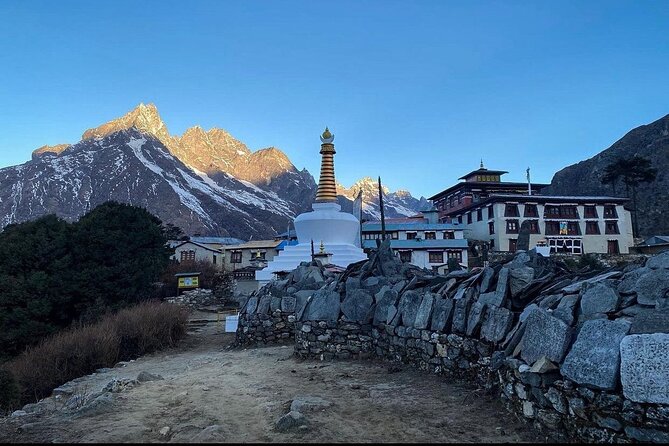
Day 4 includes a day around Everest Viewpoint and short hiking near Namche to help with acclimatization and thinning air. The altitude lesson you should take from this is simple: your job isn’t to win the trek; it’s to help your body adapt. You’ll also get rewarding Himalayan views, including sunrise-style panoramas if conditions cooperate.
Day 5 brings you to Tengboche, reaching 3,860 m by the time you arrive. Tengboche is known for its monastery atmosphere, and inside you’ll find a calmer rhythm than the hectic streets of Kathmandu. Monastery stops can feel like a break on paper, but in a mountain itinerary they work as mental reset points—quiet time while your body is doing hard work.
Drawback to consider: days like this can feel long, even when the walking is “only” several hours. Your legs are learning how to function at altitude, and your pace will probably be slower than you expect. If you tend to rush, you’ll want to set a firm rule: short steps, steady breath, and don’t chase other walkers up the hill.
Dingboche, Pangboche, and Nangkartshang Peak: the acclimation days that actually pay off
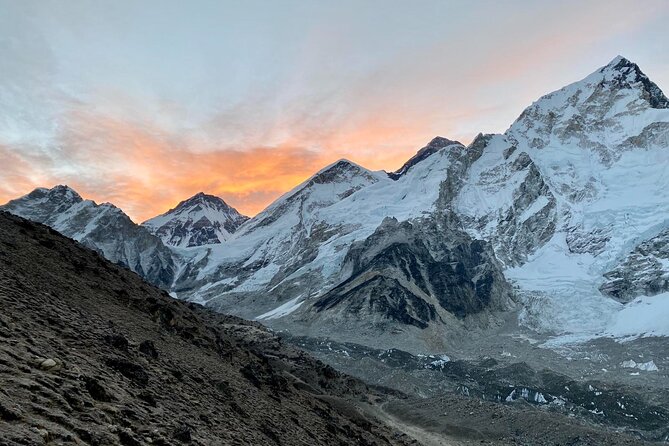
From Tengboche to Dingboche is a multi-part day. The route drops toward Debuche, crosses another suspension bridge over the Imja Khola, and climbs past Pangboche, including lots of mani stones. This is one of those segments where you’ll feel the day’s effort in your lungs, not just your calves.
Then comes the key acclimatization day on Day 7: instead of going straight for Everest Base Camp, you hike to Nangkartshang Peak just above Dingboche. The purpose is explicit—adjusting to altitude—while still getting a big viewpoint payoff.
Why this matters for you: acclimatization isn’t a “nice to have.” It’s the difference between having a tough day later and having several tough days in a row. A guide who pushes you too hard early can ruin the last half of the trek. This plan tries to do the opposite.
I also like that this trek uses an oxymeter in the first-aid kit. It’s not magic, but it gives you concrete info. Combined with your guide’s decisions, it helps you avoid the “I feel okay” false confidence that can creep in at altitude.
Lobuche and the Khumbu Glacier approach: where the trek shifts from scenery to seriousness
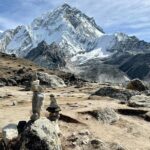
Day 8 takes you along the lateral moraine of the Khumbu Glacier and past stone memorials for climbers who perished on nearby summits. This is sobering. It also puts the entire Everest story into perspective as something bigger than a bucket list checklist.
Then you keep climbing toward Lobuche, staying in the zone where altitude fatigue becomes more noticeable. Don’t plan to feel energetic here. Plan to move steadily, drink water, and keep your pack weight reasonable.
Day 9 is the big one: Everest Base Camp itself at 5,365 m. The hike is described as big and difficult, along the glacier and up to Base Camp without mountaineering equipment. This is where you should expect the hardest “slow grind” feeling: your effort doesn’t speed things up much, and your body asks you to work in smaller bursts.
Practical note: the trek includes Katadyn Pocket Water Filter for filtered trail water. That helps you avoid the dehydration trap, which is especially risky at higher altitude.
Kala Pattar: the hardest rewarding day (and why you’ll probably remember it most)
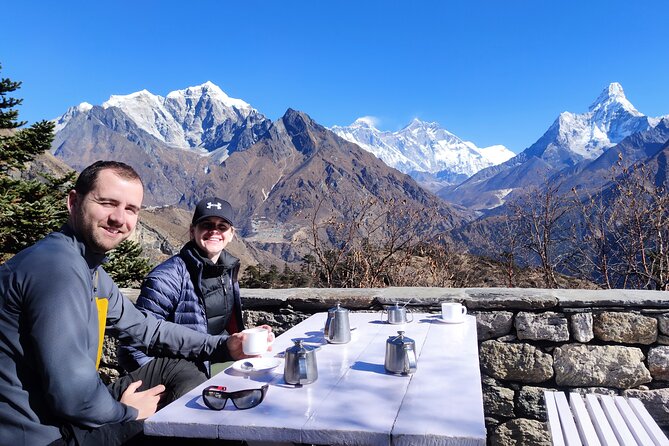
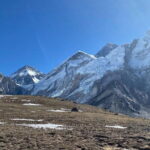
Day 10 targets Kala Pattar, climbing to 5,555 m. It’s framed as one of the most difficult days of the trek, and that fits what you’ll likely feel: more breath control, more time spent adjusting your pace, and a stronger need to keep your mind calm.
The payoff is the view—this is the day where you’ll see Everest in a way that feels more real than any website screenshot. The climb is demanding, but the reward is exactly why people come here.
One drawback to watch for: Kala Pattar can be weather-sensitive. Cloud cover or poor visibility can reduce the wow factor. If you get a clear window, treat it like gold and don’t waste your energy on unnecessary detours.
Lukla and the return to Kathmandu: flights, final mountains, and a different kind of relief
After Base Camp and Kala Pattar, Day 11 is about finishing the trek and getting back to air travel comfort. You enjoy the last glimpses of the mountains, then take the 35-minute scenic flight back (the route is described from Lukla to Kathmandu).
At this point, your body may feel oddly empty. You’ve spent days following a route and counting altitude gains. When the trail stops, you’ll want a little time to decompress before jumping into normal life.
Day 12 ends with transfer to Tribhuvan International Airport, your last connection out of Nepal.
Price and logistics: does $3,000 feel fair here?
At $3,000 per person for roughly 12 days, this trek isn’t cheap. But this isn’t a bare-bones “go hike and good luck” package either.
Here’s where your money goes, based on what’s included:
- Airport transfers in Kathmandu (pick up and drop by private tourist vehicle)
- Three-star hotel twin sharing in Kathmandu for 2 nights (breakfast included)
- Trek support: licensed English-speaking guide, plus porters (one porter for every two guests)
- Airfare: Kathmandu–Lukla–Kathmandu
- Shared helicopter ride: Gorakshep to Lukla
- Everest National Park permits + TIMS
- All standard trek meals (breakfast, lunch, dinner) and a farewell dinner
- First-aid kit with oxymeter
- Water filtering on the trail and seasonal fruits
- A duffel/kit bag, trekking map, and sun hat
What’s not included, and you’ll want to budget for:
- Travel insurance that covers emergency rescue and evacuation
- Nepal visa
- International airfare
- Meals in Kathmandu (lunch and dinner)
- Alcohol and other personal items
- Tips for staff and driver (tipping is expected)
- Personal trekking equipment
So the value comes down to this: you’re paying for altitude expertise plus time-saving transport. The helicopter portion alone is the kind of cost that can make similar treks drastically more expensive if you try to add it yourself. Also, having the trekking meals and filtered water handled reduces “planning stress,” which matters when you’re operating with limited energy.
The Ace the Himalaya team: why guides and porters matter on EBC
This trek includes a first-aid trained, local Ace the Himalaya licensed English-speaking trekking guide. That’s not a throwaway line. On high-altitude treks, the guide’s job is pace, safety decisions, and knowing when to push and when to back off.
Names I’ve seen associated with this operator in past groups include guides like Raj, Ram, Madan, and Maddy, with porters such as Bishal, Jot, Sher, Jit, Ser, Girija, and Pesal. You shouldn’t assume you’ll get any one of those people, but it’s a useful signal: the operation assigns real staff who handle trekking logistics and morale, not just paperwork.
A porter ratio of one porter for every two guests also affects your experience in a tangible way. If you carry less, you can keep more energy for acclimatization days and the big push to Base Camp.
What you’ll likely feel on the trail: pacing, altitude, and mental stamina
This itinerary is designed around altitude. You’ll spend time adjusting at Namche, then again with a viewpoint day at Everest Viewpoint, then another acclimatization push on Nangkartshang Peak. That gives you multiple chances to learn how your body reacts.
Still, you should expect the physical work to be real:
- long hiking days (like the glacier route to Base Camp)
- high altitude pressure changes
- slower pace than you’re used to
My practical advice: go with the plan you’re given, not the plan you wish you could do. If you feel tempted to rush, remember that the trek’s schedule already accounts for how the body adapts.
Also keep an eye on hydration and breathing. The program supports you with filtered water and medical supplies like an oxymeter, but you still have to do the basics on your own.
Who should book this trek, and who should pause
This is a great fit if you want:
- classic Everest Base Camp hiking
- the big summit-day views at Kala Pattar
- reduced end-of-trek strain thanks to helicopter return
- a package that handles permits, flights, meals, and water support
It may not be the right choice if:
- you’re expecting a casual hike with little discomfort
- you’re not comfortable with weather-driven changes for the helicopter
- you don’t plan for altitude effort even with acclimatization days
If you have a history of altitude illness, ask your doctor first. The included oxymeter is helpful, but it’s not a substitute for medical guidance.
Should you book Everest Base Camp with helicopter return from Gorakshep?
If you’re willing to do the hiking, and you want your reward to be real (Base Camp plus Kala Pattar), this is one of the most sensible ways to experience Everest without treating the descent as a second job. The helicopter is the big reason to consider it, especially if you’d rather preserve energy for the later days and the flights home.
For me, the decision comes down to two questions:
1) Do you want to commit to the altitude hike, even though it’s designed with acclimatization days?
2) Are you okay with helicopter flying being weather-dependent, with a plan for alternate dates or a refund?
If the answer is yes, this itinerary offers strong value at $3,000, because so much is included—guides, permits, meals, flights, and the helicopter return.
FAQ
How long is the Everest Base Camp trek with helicopter return?
The trek is about 12 days (approx.), from arrival in Kathmandu through the flight back and departure from Tribhuvan International Airport.
What is unique about this itinerary?
The unique part is the shared helicopter ride from Gorakshep to Lukla (about 20 minutes), after reaching the highest hiking points.
What flights are included?
You have airfare from Kathmandu–Lukla–Kathmandu. The itinerary also includes the scenic flight time for each leg described during the trek.
What permits are included?
The package includes Everest National Park permits and TIMS permit for trekking.
Is travel insurance included?
No. Travel insurance that covers emergency rescue and evacuation is not included.
What’s the group size and start time?
The group has a maximum of 14 travelers, and the experience has a start time of 8:00 am.