REVIEW · KATHMANDU
Everest Base Camp Trek
Book on Viator →Operated by Travel Pinto · Bookable on Viator
Everest feels close, but logistics matter. This Everest Base Camp trek stands out because you get day by day support from a licensed English-speaking trekking guide, yet you still have freedom to run the rest of your Nepal days your way. I love that the trip handles the big-moving pieces like private transfers and trail basics. The main consideration: altitude is real, and you’ll also face very cold conditions at higher elevations.
Kathmandu to Khumbu can feel overwhelming, so I like that this package keeps the group tight (up to 14) and the support practical. In the feedback I’ve seen around this operator, guides such as Dave, Devendra, Suraj, Mohan, and Uddhav are repeatedly praised for being present and responsive, not just passing through. Expect porters too (one porter for every two clients for 11 days), which makes a huge difference when you’re climbing and trying to save energy.
You’ll start with a real pre-trip meeting in Kathmandu where you’ll go through your trek leader, paperwork, and what to bring. That meeting is also where you should ask questions—especially if you’re arriving after 4 pm—because the trek starts with early mornings and a fast rhythm on the trail.
In This Review
- Key things to know before you go
- Why this Everest Base Camp trek feels well-run
- Kathmandu warm-up: the pre-trek meeting you shouldn’t rush
- Lukla flights via Manthali when traffic hits
- Phakding to Namche Bazaar: river crossings and your first real altitude test
- Namche acclimatization day: viewpoints plus Sherpa Museum time
- Tengboche Gompa: monastery beauty and a prayer ceremony moment
- Dingboche and the acclimatization hike that keeps you safe
- Lobuche and the Khumbu Glacier approach
- Everest Base Camp at 5,365 m: the moment you came for
- Kala Patthar: the hardest day that pays off
- Descending back to Namche and the final Lukla flight
- Value check: what $1,600 covers on the ground
- Best for who (and a caution for who)
- Should you book this Everest Base Camp trek?
- FAQ
- How long is the Everest Base Camp trek?
- What’s included in the price?
- Do I need travel insurance?
- Are flights always from Kathmandu to Lukla?
- Will I have a porter?
- What is the cancellation refund timeline?
Key things to know before you go
- Lukla flights may route via Manthali from Ramechhap during heavy congestion seasons
- Acclimatization is built into the route with a full day in Namche and a rest-style day near Dingboche
- Sherpa culture isn’t an afterthought (Syangboche viewpoints, Sherpa Museum, and Tengboche Gompa)
- Everest Base Camp is the goal at 5,365 m, with Lobuche memorial stops along the way
- Kala Patthar is the big viewpoint day for a commanding Everest panorama
- Filtered water and included meal structure help you stay consistent on trail
Why this Everest Base Camp trek feels well-run
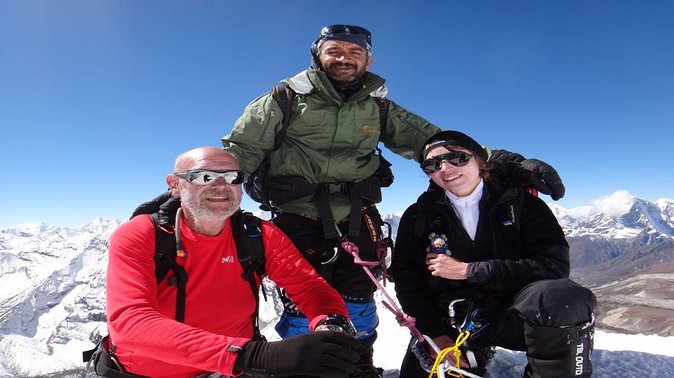
This trek hits a nice balance: it’s not a bare-bones DIY slog, but it’s also not locked into some rigid, feel-like-a-tour-bus setup. You’ll move with a guide who understands pacing, altitude timing, and when to push versus when to slow down. That matters on Everest Base Camp, where a bad day can snowball fast if you overdo it.
The other thing I appreciate is how the package is structured for your sanity. You get transfers, key permits, a guide who shows up with a plan, and on-trail support like staff arrangements and emergency evacuation planning. That’s the kind of foundation that lets you focus on what you actually came for: the views, the villages, and the steady climb toward the roof of the world.
And yes, it’s still a challenging trek. You should be prepared for cold mornings, big altitude gains, and long days on mountain steps. But if you like having a solid safety net while still making your own choices, this fits.
You can also read our reviews of more tours and experiences in Kathmandu.
Kathmandu warm-up: the pre-trek meeting you shouldn’t rush
Your trek begins in Kathmandu with a representative waiting for you at Tribhuvan International Airport (Travel Pinto signboard outside the terminal). From there, you’ll transfer to your Kathmandu hotel in a private tourist vehicle.
Before you hit the mountains, you’ll have a pre-trip meeting where you:
- meet your trek leader/guide
- confirm details and sign required trip forms and a non-liability disclaimer
- clear any due balance
- bring passport materials plus three copies of passport-size photos
- bring a readable copy of your travel insurance policy
This part sounds administrative because it is. But it’s also where you get clarity fast—so you’re not guessing about what to carry, what to expect, or what to ask once you’re already trekking. Arriving after 4 pm typically shifts the meeting to a briefing with your guide, so make sure you use that time to ask your questions.
One more practical perk: the support team in Kathmandu can help you organize add-ons and time extensions. If you want Chitwan jungle, river rafting, more Kathmandu sightseeing, or even mountain biking later, you won’t have to build everything from scratch.
Lukla flights via Manthali when traffic hits
The trek’s engine is the flight to the Everest region. Early on, you’ll head from Kathmandu to either Lukla—or, during peak congestion seasons (March, April, May, October, November), the flights may be shifted to Manthali Airport in Ramechhap district because Kathmandu airport gets clogged.
From the Manthali option, you still get a scenic jump to Tenzing and Hillary Airport at Lukla (2,804 m). On arrival, your guide briefs you and introduces porters before you start trekking.
The first trekking day’s vibe is gentle, which is exactly what you want when you’re switching from city air to mountain rhythm. You land, you descend toward the Dudh Kosi River, and you join the main trail heading to Phakding (2,610 m). Walking here is described as easy, and you’ll cross suspension bridges with prayer flags—great for photos, but also useful as a warm-up for the trail’s footing and pacing.
Phakding to Namche Bazaar: river crossings and your first real altitude test
After Lukla, your route gradually turns into the classic Khumbu corridor. You’ll follow the Dudh Koshi River and cross suspension bridges many times. These bridges are part scenic postcard, part practical training: steady pace, watch your footing, and keep moving even when the wind pushes back.
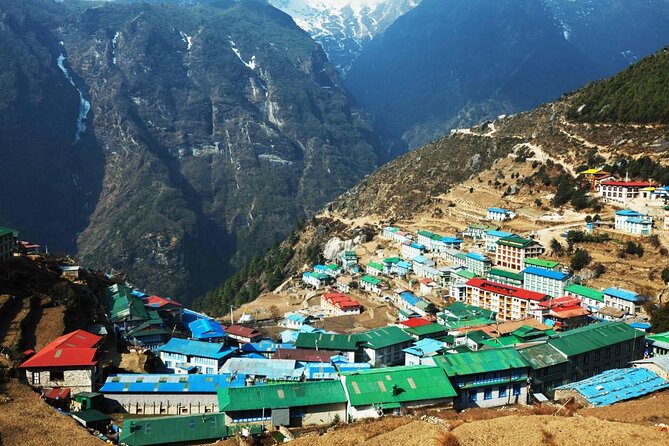
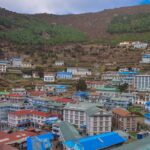
You’ll pass through small villages like Ghat and keep climbing toward Namche Bazaar, which sits above Chaunrikharka at about 2,713 m. The trail has a steep climb component as you enter Sagarmartha National Park. You’ll know you’ve hit the Namche zone because the town feels busy—restaurants, lodges, shops, money exchange services, internet cafes, and bakeries.
Namche is also the biggest Sherpa settlement along the Everest trail, so it’s where you start feeling how the local culture anchors everything. This is why day one climbing into Namche is not just about altitude. It’s about grounding your expectations in how people live at these heights.
Namche acclimatization day: viewpoints plus Sherpa Museum time
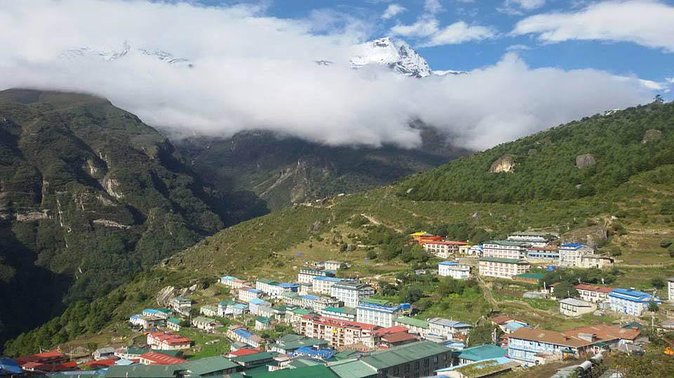
You’ll spend a day in Namche Bazaar to acclimatize and adjust to thinner air. Instead of trekking harder, you’ll hike a short distance to the Sherpa Museum, then go up toward Syangboche Airport and the Everest View Hotel.
From this higher vantage point, you’ll get big panoramic Himalaya views when the weather cooperates. You’ll also get a better sense of what’s ahead—because Everest Base Camp isn’t just a dot on a map. It’s a whole region with ridgelines, valleys, and long approaches that make time feel different.
The Sherpa Museum stop is more than a quick photo stop. It’s a direct reminder that the Khumbu experience is built on local traditions, not only summit ambition. If you enjoy understanding culture, this is one of the more meaningful pauses.
Tengboche Gompa: monastery beauty and a prayer ceremony moment
After Namche, the trek continues along glacial waters of the Dudh Koshi with strong mountain views. You climb until you reach Tengboche (about 3,860 m). This is the day where the route shifts from “valley trekking” into a more dramatic mountain-temple atmosphere.
Tengboche is home to a gompa (monastery) with ornate wall hangings, a huge Buddha sculpture, and instruments and robes used by lamas. Your group may observe a prayer ceremony in the evening or morning depending on the day’s trekking schedule.
A quick realism check: at this altitude, even a beautiful place can feel chilly. If you’re the type who runs warm, you might still get chilled inside the monastery. Layering matters—because you’ll be standing, watching, and taking in the moment.
Dingboche and the acclimatization hike that keeps you safe
From Tengboche you drop toward Debuche, cross another suspension bridge over the Imja Khola, and climb through Pangboche before reaching Dingboche. Dingboche sits in a classic high-valley position with views toward peaks like Lhotse, Island Peak, and Ama Dablam.
The route takes its time here by design, because altitude is sneaky. The plan includes an acclimatization day in Dingboche where you do not trek forward toward Everest Base Camp. Instead, you hike to Nangkartshang peak above Dingboche. If the weather is clear, you can get excellent views of Ama Dablam from the summit area back down.
This is the kind of day that makes the whole trek smoother later. You’ll still hike. You’ll just do it with a mission: help your body adapt instead of burning yourself out.
Lobuche and the Khumbu Glacier approach
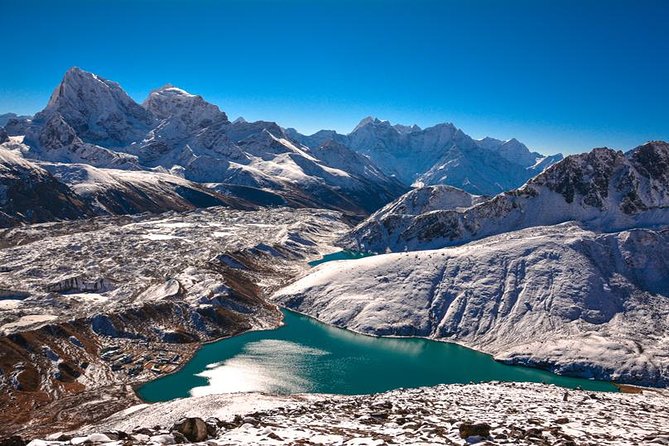
The trek pushes onward to Lobuche, a village near the foot of Lobuche peak. Today’s walking follows the lateral moraine of the Khumbu Glacier. This means you’re moving alongside a massive landscape of ice and rock—not just a simple trail with views, but a real edge-of-the-world feeling.
Along the way, you’ll pass by stone memorials for climbers who perished on nearby summits. It’s a sober moment in a trek that can otherwise feel like a dream. Don’t rush through it. These stops make the Everest story feel human and close.
Altitude can bring breathing problems on days like this. That’s not a scare tactic—it’s just how the air works at these elevations. Your guide’s pacing here is a big deal. If you feel breathless, it’s usually not the time to prove toughness. It’s the time to slow down and conserve energy.
Everest Base Camp at 5,365 m: the moment you came for
The big push comes with the day walk along the Khumbu Glacier up to Everest Base Camp at 5,365 m. This is the closest you can get to Mt. Everest without mountaineering equipment. If you’re expecting a quick hike to a final postcard, adjust your mindset: this is a serious high-altitude trek day.
The views are the reward, and the Khumbu Icefall view from Base Camp is described as spectacular—plus, depending on season, you might see expedition teams getting ready for summit attempts.
After reaching Base Camp, the plan is to return to Gorak Shep for the night. That means you’ll switch from “goal reached” to “protect your energy” pretty quickly. If you’re prone to adrenaline spikes, remember: you still have Kala Patthar and a descent coming.
Kala Patthar: the hardest day that pays off
Kala Patthar is often the day people remember most clearly. It’s challenging, but you get one of the best mountain panoramas you can experience on this trek. You’ll climb Mt. Kala Patthar at about 5,555 m, then descend back to Gorak Shep.
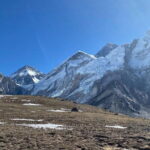
From Kala Patthar, the view is described as magnificent: Everest towers directly ahead, and other major giants like Nuptse, Pumori, Chagatse, and Lhotse appear around you. Even when clouds roll in, the sense of scale can still hit hard.
A small but smart detail: the plan includes a quick descent and then hot breakfast, before you trek back down toward Pheriche. Hot breakfast sounds simple until you’re cold and tired—then it becomes morale in liquid and steam form.
Descending back to Namche and the final Lukla flight
After Kala Patthar, you’ll leave the high mountain zone behind. The descent goes through Pangboche and Tengboche before continuing down to Namche Bazaar. You arrive back in Namche in the afternoon, which gives you a short reset.
Then comes the final trekking day: you return to Lukla where the trek began. The afternoon is free, so you can wander, relax, and enjoy a hot shower. In the evening, the plan is to celebrate as a group with drinks and dancing with your trek-mates.
Finally, you fly back to Kathmandu. The flight is about 35 minutes from Lukla (and the return is typically same-route logistics as the outbound). Back in Kathmandu, you’ll transfer to your starting hotel and later head to Tribhuvan International Airport for departure.
If you want to extend Nepal afterward, the support team can help set up options like Chitwan, rafting, Kathmandu shopping, or mountain biking.
Value check: what $1,600 covers on the ground
At $1,600 per person for a roughly 14-day trek, the biggest question is what you’re buying besides the right to say you saw Everest. Here’s the practical value you’re paying for:
You’re paying for staffing and risk management. You get a professional guide (government licensed, English-speaking, and first-aid trained) plus porter service for 11 days (one porter for every two clients). That ratio matters because it affects how hard your bag feels on steep climbs.
You’re paying for real trail essentials. Filtered water is included with a Katadyn Pocket Water Filter, plus seasonal fruits during the trek. And the trek includes standard meals (breakfast, lunch, dinner) on the days listed for the trek portion. That takes cost and decision fatigue out of daily life at altitude.
You’re paying for permits and entry fees. Everest/Sagarmatha National Park entry permit and a rural municipality fee are included. This is one of those things people underestimate until they’re stuck in admin delays.
You’re paying for Kathmandu comfort at the start. You get 2 nights of 3-star twin-share accommodation in Kathmandu with breakfast. At the beginning, this matters because you want a safe bed and a chance to sleep before altitude starts tugging at you.
There are costs you should expect outside the package. Lunch and dinner in Kathmandu aren’t included, alcohol and soft drinks aren’t included, and you’ll need travel insurance that covers emergency high-altitude rescue and evacuation. Tipping for the guide and porter is expected too. You also bring your own personal trekking equipment.
The overall value feels strongest if you want a structured, supported Everest trek without building every detail yourself.
Best for who (and a caution for who)
This style of trek is best for you if:
- you have moderate physical fitness and can commit to steady daily hiking
- you want a licensed guide to help manage pacing and altitude
- you like having core logistics handled but still enjoy freedom to extend your Nepal time
- you’re traveling with others and would benefit from a group setting (max 14 people)
It may be a poor fit if:
- you can’t handle cold weather and early mornings at altitude (rooms can be very cold, and conditions can turn fast)
- you’re not willing to plan for altitude risk and accept that you might need an acclimatization schedule that slows you down
The good news: the plan includes acclimatization days in Namche and Dingboche, plus a tough but rewarding viewpoint day at Kala Patthar. You’re not rushing straight from sea-level enthusiasm to Base Camp heroics.
Should you book this Everest Base Camp trek?
If you want Everest Base Camp with guardrails, this is a solid choice. You get the big support pieces—licensed guide, porter help, permits, filtered water, and emergency planning—while keeping the trek experience grounded in how people actually hike the Khumbu.
I’d book if you can commit to the physical side and you’re comfortable handling cold, thin air, and a few demanding climb days. I’d hesitate if you’re only looking for an easy walk or you’re not ready to buy travel insurance for high-altitude evacuation.
Overall: this trek feels like a smart mix of confidence and control—exactly what you want when altitude is doing the hard part.
FAQ
How long is the Everest Base Camp trek?
The trek runs about 14 days (approx.), including flights and transfers.
What’s included in the price?
Included are a professional licensed trekking guide, private airport/hotel transfers in Kathmandu, Kathmandu lodging (3-star twin-share for 2 nights with breakfast), trek lodging in guesthouses (with attached toilets in Lukla, Phakding, and Namche as listed), porter service for 11 days, permits and fees, air fare for Kathmandu–Lukla–Kathmandu, meals on the trek, filtered water with a Katadyn Pocket filter, and emergency medical evacuation arrangements and first-aid support.
Do I need travel insurance?
Yes. Travel insurance covering emergency high-altitude rescue and evacuation is not included, and you’ll also be asked to bring a readable copy of your insurance policy to the pre-trip meeting.
Are flights always from Kathmandu to Lukla?
Not always. During peak trekking season, flights to and from Kathmandu can be shifted to Manthali Airport in Ramechhap due to congestion, then you fly from there to Lukla.
Will I have a porter?
Yes. Porter service is included for 11 days, with a ratio of 1 porter for 2 clients.
What is the cancellation refund timeline?
You can cancel up to 6 days in advance for a full refund. Cancel 2–6 full days before for a 50% refund. If you cancel less than 2 days before, the amount paid isn’t refunded.