REVIEW · KATHMANDU
Annapurna Base Camp Trek
Book on Viator →Operated by Ace the Himalaya · Bookable on Viator
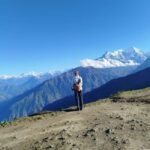
A 4,130 m finish is a doable bucket list. This Annapurna Base Camp trek also rolls in the Annapurna Sanctuary feeling, with Poon Hill sunrise as your early big payoff and a steady hike through real hill villages. Along the way, you’re staring up at Annapurna peaks day after day instead of just snapping a quick photo and moving on.
I especially like how the route mixes big moments with smart pacing: you climb high early, then keep moving toward Deurali and Tadapani before arriving at Annapurna Base Camp at 4,130 m surrounded by towering ridges. I also love the “you show up and hike” approach—airport pickup, Kathmandu and Pokhara hotel nights, permits handled, and a licensed English-speaking guide with one porter for every two clients.
One possible drawback: the trekking is tough on legs, with steep downhills and lots of stairs, plus overnight guesthouses in twin-share or dorm-style rooms. If your fitness is only casual, you’ll feel it.
In This Review
- Quick hits you can plan around
- Kathmandu and Pokhara: where your trek actually starts
- From Nayapul to Tikhedhunga and Hille: the warm-up that still counts
- Ulleri, oak and rhododendron forests, and the first real ridge day
- Poon Hill sunrise at 3,210 m: the moment you plan the whole trip for
- Tadapani to Chhomrong: steep downhills, big village vibes, and rhododendron walls
- Chhomrong Khola to Khuldighar and the bamboo gorge feel
- Into the Annapurna Sanctuary: from Machhapuchhre Base Camp approach to ABC at 4,130 m
- The descent to Bamboo and the value of not rushing
- Jhinu Danda hot springs: the steep reward day
- Back to the living roads: Jhinu to Birethanti, then Pokhara and Phewa Lake
- Kathmandu and the farewell dinner with cultural performances
- Porters, guides, and included meals: what you’re really paying for
- Price and logistics: is $1,350 a fair deal?
- Training for the real work: altitude, stairs, and packing light
- Who should book this Annapurna Base Camp trek (and who should reconsider)
- Should you book Annapurna Base Camp with Ace the Himalaya?
- FAQ
- How long is the Annapurna Base Camp trek?
- Where does the trek start and end?
- What’s the total price for this trek?
- What transport is included?
- Are permits included?
- What accommodation should I expect?
- Will I have a guide and porter?
- Is Poon Hill included?
- Can Machhapuchhare be climbed?
- What happens if the weather is poor?
Quick hits you can plan around
- Poon Hill sunrise at 3,210 m: early hike, unobstructed views, then breakfast before you keep going
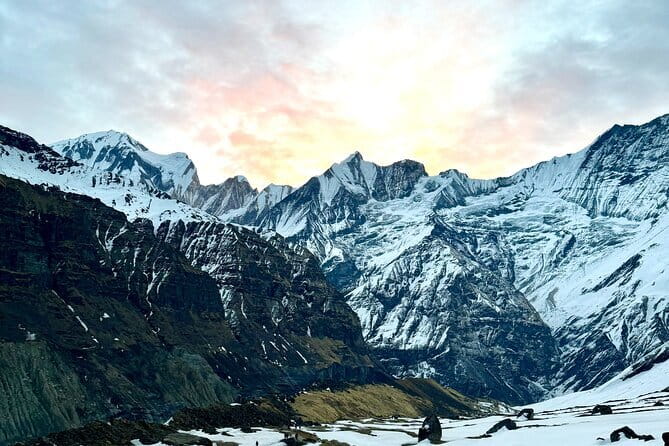
- Annapurna Sanctuary to ABC (4,130 m): the hike culminates with a classic bowl of peaks around you
- Jhinu Danda hot springs: a steep descent reward where bathing is the whole point
- Porters and guides built into the trek: licensed English-speaking guide plus 1 porter per two clients
- Handled permits and transport: airport transfers, tourist bus Kathmandu–Pokhara, and vehicle Pokhara–Nayapul
- Small-ish group size (max 15): easier to manage pace and logistics than bigger crowds
Kathmandu and Pokhara: where your trek actually starts
Most people think the trek begins on Day 3. In practice, it starts sooner, with your airport pickup in Kathmandu and a transfer to your hotel. On Day 1 (or sometimes Day 2), you’ll attend a pre-trip meeting at the company office. It’s the practical stuff: you bring your passport, three copies of passport-size photos, and a readable copy of your travel insurance policy, then you’ll clear any balance, sign the trip form, and confirm the non-liability disclaimer.
Here’s why that matters: it helps the guide line up your trekleader/guide and smooth out the paperwork tied to permits. It also sets expectations for what you’ll need to carry and how the itinerary flows.
Then comes Pokhara, usually the “reset” day. You get picked up from your Kathmandu hotel early (around 6:30 am), head to the bus station, and catch the tourist bus to Pokhara (around 7:30 am). Pokhara is smaller and less frantic than Kathmandu, and it’s framed by mountain views across Phewa Lake. It’s not just scenery; it’s where you get into the trekking rhythm—clean up your gear, confirm your pack weight, and sleep like you’re actually going to hike.
You can also read our reviews of more tours and experiences in Kathmandu.
From Nayapul to Tikhedhunga and Hille: the warm-up that still counts
Day 3 begins with a drive from Pokhara to Nayapul (about an hour). From there, the trail follows local life and river corridors. You start with a short walk along the banks of the Modi Khola, reach Birethanti (around 1,015 m), and then continue up the north bank of the Bhurungdi Khola.
This day is labeled relatively easy, and that’s true compared with what comes later. You still climb steadily to Hille (about 1,495 m) and then up to Tikhedhunga (about 1,570 m). The bigger point: you’re testing your legs. If you go out too fast, you’ll pay for it later on the steep stages.
If you’re used to flat walking at home, treat this as your reality check. The trek is continuous effort, and Nepal’s trails have a way of making every “short day” feel like it mattered.
Ulleri, oak and rhododendron forests, and the first real ridge day
Day 4 is where the Annapurna trek starts feeling like an Annapurna trek. You move toward Ulleri, reaching around 2,070 m, then you climb through oak and rhododendron forests toward Banthanti (about 2,250 m) and Nangethanti (around 2,460 m) before reaching Ghorepani (about 2,840 m).
This is one of the better days to appreciate the ecosystem idea behind the route. You’re moving through different vegetation bands, which also affects how the air feels and how the trail absorbs effort. Forest trails can be cooler underfoot, but they don’t necessarily feel gentler—especially when your knees start noticing how many times you’re stepping down and up.
Also, Ghorepani isn’t the final goal, but it’s a key staging point. You’re positioning yourself for the early climb to Poon Hill.
Poon Hill sunrise at 3,210 m: the moment you plan the whole trip for
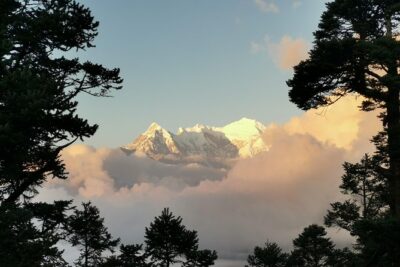
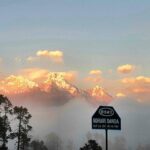
On Day 5 you start very early for the hour hike up to Poon Hill at about 3,210 m. This is the payoff viewpoint. The goal is sunrise over the high Himalayas, with a clear view when the weather plays along. If clouds roll in, you may not get that clean, dramatic light—but the trek is still worth it for the mountain geometry and the energy of being up there at dawn.
After about an hour, you return to Ghorepani for hot breakfast, then you keep trekking. From there you climb along ridges through pine and rhododendron forests toward Deurali (about 2,960 m), descend to Banthanti, and then turn off toward Tadapani.
What I like about this day is that it teaches you the Annapurna lesson: the best views often require early starts and careful pacing. You’re not sprinting to the top—you’re climbing steadily, then earning the horizon.
Tadapani to Chhomrong: steep downhills, big village vibes, and rhododendron walls
Day 6 begins with a steep downhill through rhododendron forests after leaving Tadapani. You pass through Gurjung (a Gurung village area) and then walk on to Chhomrong at around 2,140 m.
This is a classic “legs, meet gravity” day. Downhill walking is often worse than uphill because your quads take the hit. The trail easing after Gurjung helps, but don’t assume your body is fine just because the day looks simple on paper.
Chhomrong is also one of those places where you can feel the trekking economy: tea houses, basic comfort, and a sense that people live here year-round, not just seasonally. That’s the cultural side of the Annapurna Sanctuary theme—your trek isn’t a closed hiking bubble.
Chhomrong Khola to Khuldighar and the bamboo gorge feel
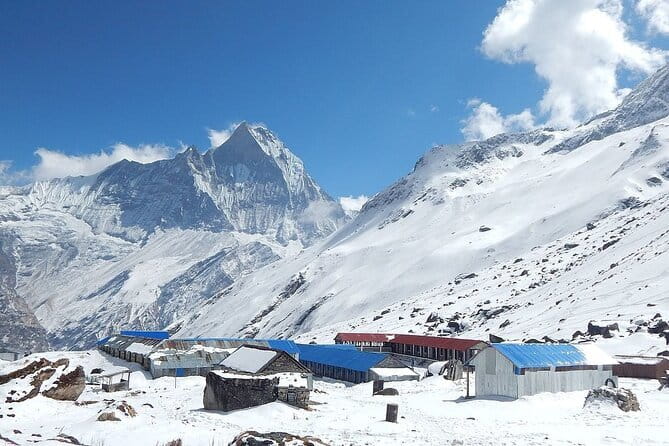
Day 7 drops you down to the Chomrong Khola, then you climb again to Khuldighar at around 2,380 m—where there used to be an ACAP check post. There’s a clearing in the forest, and then the route travels steeply down a rock bank before leveling out and running through bamboo at the bottom of the gorge.
The key detail here is the shift in terrain. Bamboo thickets and river-gorge paths can feel cool and shaded, but footing can get tricky when it’s wet or uneven. You’ll keep on the west side of the river and continue through bamboo and rhododendron forests toward the Himalayan Hotel.
If you’ve got sore knees, this is the kind of day that makes you grateful you trained a bit and packed trekking poles. The itinerary is manageable, but it doesn’t hide the effort.
Into the Annapurna Sanctuary: from Machhapuchhre Base Camp approach to ABC at 4,130 m
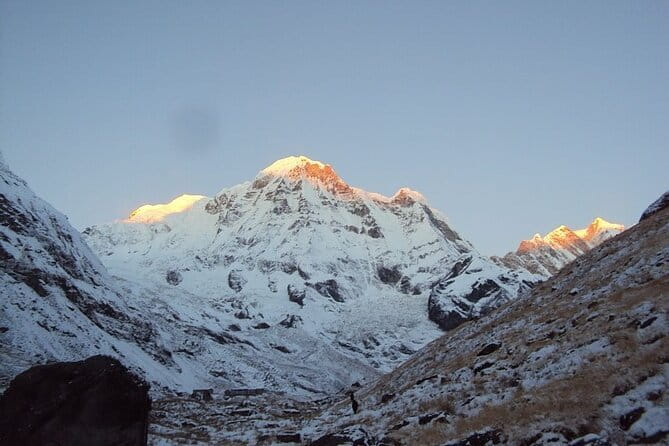
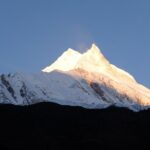
Day 8 is the emotional highlight. The trail climbs past Hinko Cave and Deurali, then heads toward the Machapuchare base area, known as Machhapuchhare Base Camp. Important note: it’s not a true base camp in the climbing sense because climbing Machhapuchhre is not permitted.
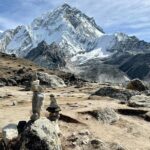
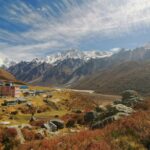
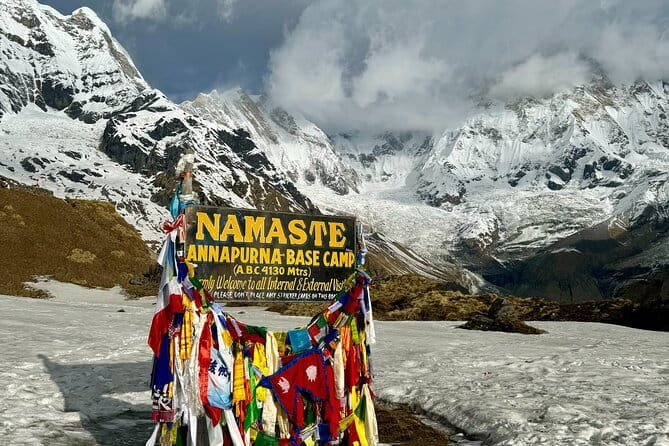
From there, you trek about two more hours into the Annapurna Sanctuary to reach Annapurna Base Camp at 4,130 m. When you arrive, you get those unobstructed views that people talk about for a reason: you’re surrounded by massive peaks—Annapurna I, Annapurna South, Machhapuchhre, and Hiunchuli—stacked like a wall.
This is also where the whole “depth and height” idea comes to life. You’re at altitude, your body feels it, and the scenery does not look like a distant postcard. It’s close, layered, and real.
The descent to Bamboo and the value of not rushing
Day 9 follows the trail down from the ABC area. It’s a drop of about 1,700 m toward Modi Khola, reaching Bamboo around 2,345 m, where there are a few teahouse/lodges for the night.
Descent days can feel easier than climbs, but they’re still work. Your knees will judge you. The benefit of the descent is also practical: it gives your body a chance to catch up after a high-altitude push.
If you’re thinking about pace, this is a good day to slow down a notch. You’ll save energy for the second half of the trek, including the hot springs stop.
Jhinu Danda hot springs: the steep reward day
Day 10 brings you back along the route toward Chhomrong. You pass Khuldighar again and even see an experimental sheep farm along the way. The trail continues through rhododendron and bamboo fields, then from Chhomrong you descend very steeply to Jhinu Danda.
Jhinu is known for natural hot springs, and the itinerary’s logic is smart: you don’t just walk all day and call it a victory. You cool down and recover in the one thing your legs will remember.
If you’ve got blisters or heavy fatigue, this is the day that can make the whole trek feel worth it in a physical way. You’re not doing a spa. You’re doing recovery with mountain water.
Back to the living roads: Jhinu to Birethanti, then Pokhara and Phewa Lake
Day 11 is a strong finish. You walk along the right side of Modi Khola for about 4.5 hours to Birethanti, then you reach Nayapul and drive about an hour back to Pokhara. That walking stretch is one of the more relaxing parts of the entire trek because it keeps you moving without the constant steepness.
After you check into the hotel, you head to Fewa Lake for a boating trip to Barahi Temple. This is a good change of pace: after days of stepping and hiking, you’re just sitting and letting the day catch up with you.
Kathmandu and the farewell dinner with cultural performances
Day 12 is travel back to Kathmandu in the morning. In the evening, you get a farewell dinner in a traditional Nepalese restaurant with cultural performances.
This matters more than people expect. Trekking isolates you. The performance dinner is one of the few times you get to see Nepalese culture in a concentrated, social setting—music, dance, and a shared sense of finishing together.
Porters, guides, and included meals: what you’re really paying for
The price is $1,350 per person for an itinerary of about 13 days, and the value depends on how much you’re relieved of decision-making.
Here’s what’s included that can add up fast if you DIY it:
- Airport transfers in Kathmandu
- Two nights in three-star hotels in Kathmandu and two nights in Pokhara
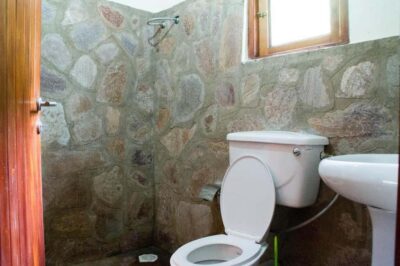
- Guesthouse accommodation for 8 nights on the trek, in twin-share or dorm rooms
- A licensed English-speaking trekking guide
- 1 porter for every two clients
- Permits for trekking
- Tourist bus between Kathmandu and Pokhara and a vehicle between Pokhara and Nayapul
- Free Ace the Himalaya duffel/kit bag and sun hat
- Government taxes, VAT, and official service charges
- Meals on trekking days: breakfast (12), lunch (9), dinner (9)
Meals and transport sound “basic,” but in a high-logistics trek, they’re exactly the difference between a relaxing trip and a constant scramble. Also, the guide and porter ratio means you’re not carrying everything. One review tip that I think you should take seriously: don’t overpack. You might be tempted to bring extra clothes, but porters have to carry the load, and that weight adds up fast.
On the guide side, I’ve seen names come up in this operation such as Ramesh Karki, Maddy, Raj, Ganesh, Shyam, and Resham. Assistant guides have included people like Mahesh and Bhawishya. Porters mentioned include Prakash, Bhagwan, Tenzing, Shantiraj, Ram Prasad, Tika Ram, and Lumbu Dai, among others. You won’t know your exact team until assigned, but the recurring theme is the same: strong support on the hard hours.
Price and logistics: is $1,350 a fair deal?
For $1,350, you’re paying for the whole machine: hotels, transport, permits, guide, porter support, and most meals. If you’ve ever tried to arrange ABC logistics yourself, you know how quickly time disappears into emails, permits, and last-minute staffing. This package turns that into a schedule you can follow.
What you should compare when judging value:
- You do get airport transfers, plus bus/vehicle segments between cities and trail entry points.
- You get permits included, and trekking permits are not something you want to guess about mid-trip.
- You get a guide in English and structured porter support.
- Meals are largely included during the trekking portion, but lunch and dinner in Kathmandu and Pokhara are not.
What’s not included is also important: travel insurance (especially for emergency high-altitude rescue), international airfare, the Nepal entry visa, alcoholic and other drinks, and personal trekking equipment. Tips for drivers and trekking staff are expected.
Bottom line: if you want a guided, organized ABC that feels like hiking with a support team—not project management—this price can feel fair.
Training for the real work: altitude, stairs, and packing light
The trek is listed for people with moderate fitness. That’s not a guarantee of an easy time. If you want to enjoy it, train for two things: stairs and steady uphill walking.
One tip I’d follow from past trekkers: plan to do a lot of stairs before you go. The trail has plenty of step climbing, and the days can start early. Your body adapts if you build the habit now.
For packing, keep it light. You’ll get a free duffel/kit bag and sun hat from the operator, but you still decide what goes into your daypack and what your porter carries. Don’t show up with a suitcase mindset. If you bring unnecessary extras, your load feels heavier than you expected.
Altitude is the other factor. You reach high points like Poon Hill (3,210 m), then head toward ABC at 4,130 m. You’re climbing and descending along the way, which helps, but you still need to manage your effort, hydrate, and take the slower rhythm seriously when you feel breathy.
Who should book this Annapurna Base Camp trek (and who should reconsider)
This trek fits you if:
- You want the classic ABC route with sunrise at Poon Hill
- You’re okay with basic guesthouses and shared rooms
- You like having logistics handled and want a guide/porter team
- You’re motivated by mountain views as the main event, not luxury comfort
You might reconsider if:
- You have very limited mobility for steep descents and repeated stairs
- You don’t want shared accommodations (twin-share or dorm rooms are part of the plan)
- You’re not comfortable relying on others for permits, transport, and meal planning
- You’re unprepared for the altitude and the long trekking days
Should you book Annapurna Base Camp with Ace the Himalaya?
Yes, if your goal is to reach Annapurna Base Camp with a clear itinerary, strong support, and minimal logistics stress. The included structure—airport transfers, hotels, permits, guide, porter ratio, and most meals—adds real value for a trek where you don’t want to be improvising at altitude.
I’d book it especially if you’re excited by the route’s peak moments: Poon Hill sunrise, the Annapurna Sanctuary approach, and the comfort-restorative payoff of Jhinu hot springs. The one caution is simple: treat the trek as real hiking, not a casual stroll. Train a bit for stairs, pack light, and plan to take it one careful step at a time.
FAQ
How long is the Annapurna Base Camp trek?
It runs about 13 days (approx.).
Where does the trek start and end?
The experience starts and ends back at Tribhuvan International Airport in Kathmandu.
What’s the total price for this trek?
The price is $1,350.00 per person.
What transport is included?
Airport transfers are included, plus a tourist bus between Kathmandu and Pokhara and a tourist vehicle between Pokhara and Nayapul.
Are permits included?
Yes. Permits for trekking are included.
What accommodation should I expect?
You’ll stay in three-star hotels in Kathmandu (2 nights) and Pokhara (2 nights). On the trek, you’ll use guesthouse accommodations for 8 nights in twin-share and dormitory rooms.
Will I have a guide and porter?
Yes. A licensed English-speaking trekking guide is included, and there is 1 porter for every two clients.
Is Poon Hill included?
Yes. You’ll hike to Poon Hill early in the morning for sunrise views.
Can Machhapuchhare be climbed?
Climbing Machhapuchhare is not permitted. You trek to the Machhapuchhare base camp area as part of the route.
What happens if the weather is poor?
This experience requires good weather. If it’s canceled due to poor weather, you’ll be offered a different date or a full refund.