REVIEW · POKHARA
Annapurna Base Camp 7 Days Trek from Pokhara
Book on Viator →Operated by Pokhara Adventure Nepal (PAN) · Bookable on Viator
Seven days of Himalayan payoffs.
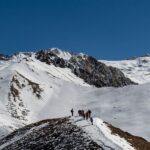
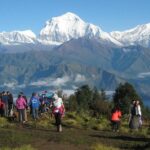
This Annapurna Base Camp trek from Pokhara mixes forest paths, Gurung villages, and big-ridge walking, with the final goal at Annapurna Base Camp (4,130m) for views of Annapurna South and Machhapuchare (Fishtail). I especially love the Ghandruk section for its classic Gurung culture and the mountain views that hit early, and I like how the route ramps up step-by-step so the air gets cooler as you go higher. One consideration: you’ll be hiking uphill at altitude, so moderate fitness and a steady pace matter more than speed.
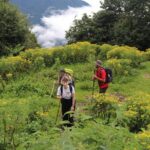
You’ll start with hotel pickup in Pokhara and use a sharing jeep/bus for transfers, which keeps logistics simple without turning the trek into a long day of sitting. I also like that you travel with an English-speaking trekking guide, and many groups highlight guides like Ram and Krishna for helping keep the day moving and explaining what you’re seeing. You sleep in guest houses along the way, which is basic but part of the charm and also a reminder that this is a hiking trip first.
In This Review
- Highlights You’ll Notice Quickly
- Why Annapurna Base Camp From Pokhara Makes Sense
- Day 1: Pokhara-to-Ghandruk and That First Big View
- Day 2: Ghandruk to Sinuwa With Chhomrong on the Route
- Day 3: Toward the Annapurna Sanctuary Through Bamboo and Rhododendron
- Day 4: Annapurna Sanctuary, Machhapuchare Base Camp, and the Push to 4,130m
- Day 5: Bamboo Descent and the Reward of a Real-Leg Break
- Day 6: Jhinu Danda Route Loop With Forest Trails and Chhomrong Ridge
- Day 7: Suspension Bridge, Samrung Khola, and Back to Pokhara
- Price and Value: Is $435 Fair for This 7-Day ABC Trek?
- What I’d Pack and Plan for (Without Overthinking It)
- Who This Trek Fits Best
- Should You Book This Annapurna Base Camp Trek?
- FAQ
- What is the duration and starting point for this Annapurna Base Camp trek?
- How much does the trek cost?
- What’s included in the price?
- What do I need to provide before the trek for permits?
- What fitness level is recommended?
- Can I get a refund if I cancel?
Highlights You’ll Notice Quickly
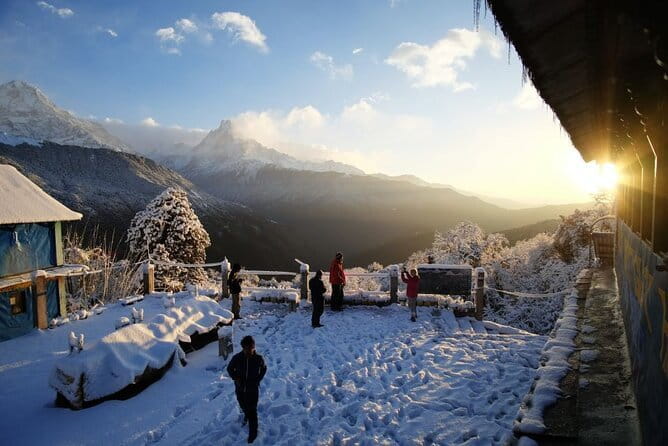
- Ghandruk Gurung village: iconic views plus real village life you can actually walk through
- Built-in acclimatization feel: the route gradually raises your altitude instead of jumping straight up
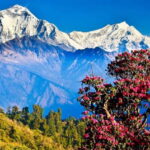
- Annapurna Sanctuary time: rhododendron and bamboo forests as you approach higher viewpoints
- Machhapuchare Base Camp area: a key altitude stop around 3,900m before the final push
- Return down with perspective: the downhill day to Bamboo gives your legs a break while keeping scenery rolling
- Finish in Pokhara Lakeside: short hike plus a jeep ride back through local towns
Why Annapurna Base Camp From Pokhara Makes Sense
Pokhara is a smart start because it’s close enough to get moving quickly, yet it gives you time to adjust mentally before the trail work begins. From there, you’ll transition from subtropical feel near the low valleys to alpine terrain as the trek rises.
This route is also a strong “variety day” trek. You don’t just grind on one kind of scenery. Expect terraces and village trails early, then rhododendron forests and bamboo sections as the air cools. That mix is part of why people remember ABC as a complete hiking experience, not only a single viewpoint.
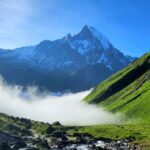
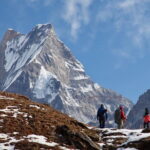
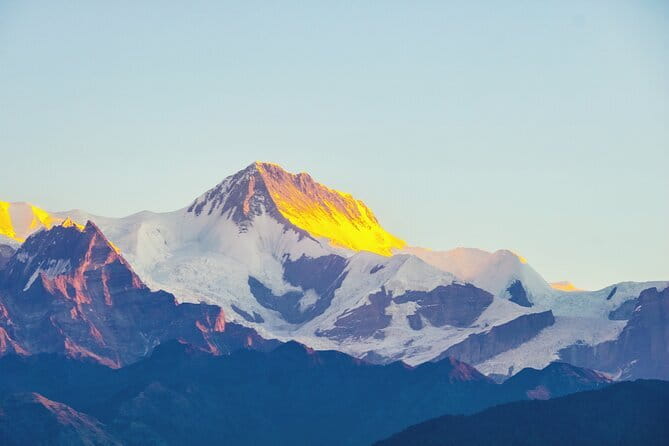
And yes, the big payoff is real: Annapurna Base Camp sits at 4,130m, at the base of the Annapurna massif. From that height, mountain shapes like Annapurna South, Hiunchuli, Machhapuchare (Fishtail), and other peaks around the sanctuary area become more than names.
You can also read our reviews of more tours and experiences in Pokhara.
Day 1: Pokhara-to-Ghandruk and That First Big View
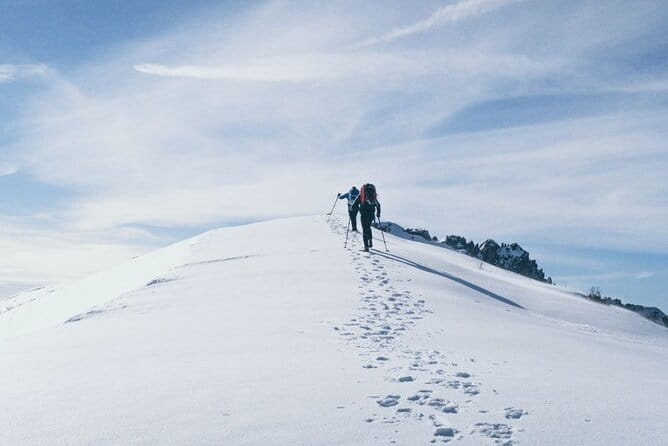
Day 1 starts with a drive from Pokhara through places like Nayapul and Birethati, plus a sharing jeep ride from the road’s unpaved sections. This is one of those practical Nepal details that affects your comfort level: you’re not on a smooth highway the whole time, so dress accordingly and keep a small day bag ready.
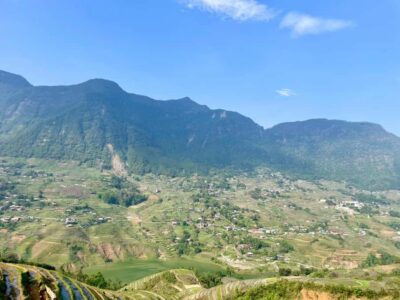
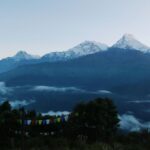
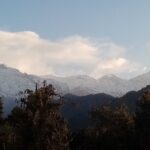
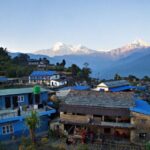
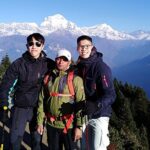
Your walking then takes you toward Ghandruk, one of the most iconic Gurung villages in the Annapurna region. It’s not just a place to sleep. You can explore the Gurung culture, customs, and daily lifestyle, and you’ll have a strong chance of mountain views while you’re there—especially Annapurna South, Hiunchuli, Machhapuchare, Gangapurna, and Annapurna III.
The trail also threads along the Modi River valley and passes through authentic villages and hillside paths. That valley feeling matters because it sets your expectations. The start isn’t all steep climbing. It’s scenic, human, and gradual enough to find your rhythm.
What to watch for: take it easy on the first day. Even when the hike feels comfortable, higher elevations later depend on how you pace early.
Day 2: Ghandruk to Sinuwa With Chhomrong on the Route
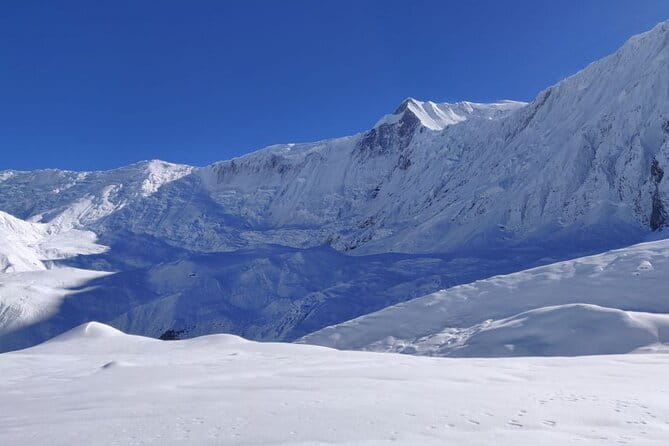
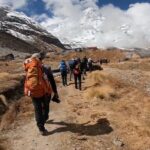
Day 2 heads toward Upper Sinuwa and the walking becomes more serious. The trail fluctuates, and the route is described as strenuous, with a full day hike time of about 7 hours (plus lunch and tea breaks). That’s a day where your legs need good steady effort, not hero mode.
Along the way, you pass through key terrain and villages: Kimrung Danda and Kimrung River, plus the Chhomrong village area. Chhomrong is an important junction point in the Annapurna region because it sits along ridgelines where views open and the path connects toward higher zones.
You’ll also notice changing vegetation as you climb. The Annapurna area is famous for rhododendron and forest sections, but on this day you’re transitioning through varied greenery and local scenery. You’re also still in Gurung country, so the cultural element doesn’t disappear once the mountains get bigger.
Practical tip: pack smart for a fluctuating day. You’ll likely deal with changing temperatures as you rise, so layers help more than a single heavy jacket.
Day 3: Toward the Annapurna Sanctuary Through Bamboo and Rhododendron
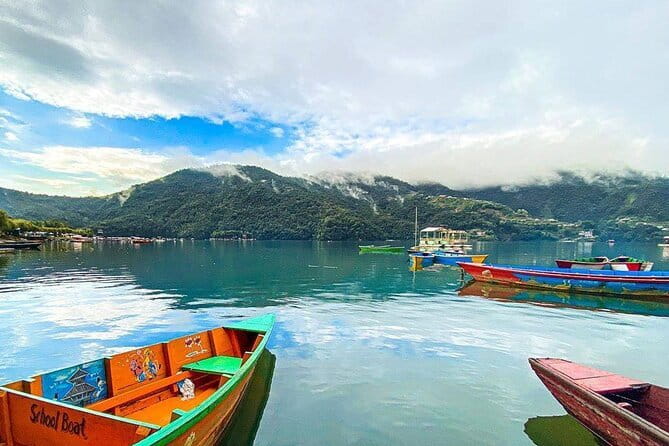
Day 3 is where the feel of the trek changes. You’ll move uphill toward the Annapurna Sanctuary, and the air gets cooler and fresher as altitude rises. The route is described as winding and daylong in pace, with about 7 hours of walking.
This is also a bamboo-and-rhododendron day. Passing places like Bamboo and Dovan along the route keeps you anchored: you’re not guessing where things lead, and you get repeated shifts in scenery as the forest takes over. The Eden Valley reference along the Modi River area fits this section well—water, forest, and long views into mountain valleys.
For me, this is one of the best “quiet moments” parts of ABC. The mountains are there, but the forest texture and the way the trail curves through it become the rhythm of the day. It’s a good time to slow down, look up, and not just count steps.
Consideration: on a forest day, you can still get tired. Mud, uneven footing, and frequent small climbs add up.
Day 4: Annapurna Sanctuary, Machhapuchare Base Camp, and the Push to 4,130m
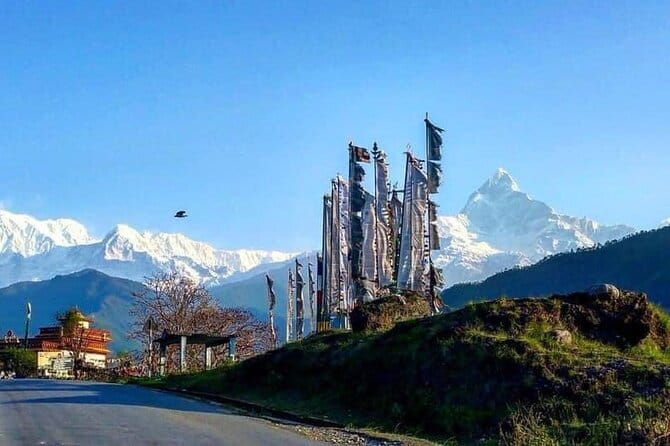
Day 4 is the big altitude day. You’ll climb from the higher sanctuary zone toward Annapurna Base Camp with a total of about 6 hours walking time.
First, you reach the Machhapuchare Base Camp area, located around 3,900m. That stop matters because it’s like a staging point. You’re higher than you’ve been, and you’re walking in a zone where your lungs feel the altitude changes.
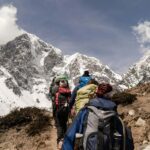
Then the day becomes a climb of about 730m to reach ABC at 4,130m. The path is described as gradually uphill as you enter deeper into the sanctuary. Along the way, you’ll have a pleasant stop at Machhapuchare Base Camp area before continuing to the base camp itself.
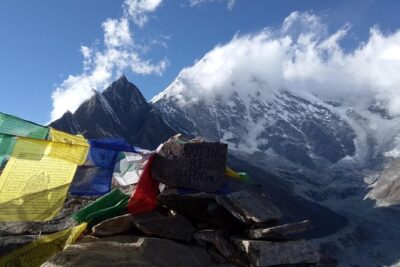
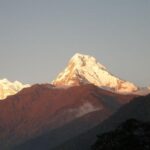
When you finally arrive, you’re standing at the base of the Annapurna massif, surrounded by peak silhouettes that look different from lower viewpoints. Annapurna I is highlighted in the route description, and you should expect dramatic mountain framing as the sanctuary walls do their thing.
About sunrise: one of the strongest positive notes from past trekkers is the presence of a good morning sunrise. Sunrise quality depends on weather, but if your body can handle an early start, it’s worth trying. Bring warm layers even if daytime looks mild.
Day 5: Bamboo Descent and the Reward of a Real-Leg Break
After spending time at base camp, you’ll start coming down to Bamboo for the night. The day is described as decent but requires care on the descent. It’s usually easier to walk downhill than uphill, but wrong footing and slippery trail sections can make the day feel tougher than you expect.
The return route is via Deurali, Himalaya, and Dovan. This matters because it keeps you moving through multiple familiar nodes from the earlier higher climb phase. In other words, you’re not just walking down blind. You’re retracing part of what you already saw, which makes the day feel like progress instead of retreat.
The walk is also described as a gradual, winding descent through serene forest and back toward tree lines. That gradual element helps your body cool down and reset for the remaining days.
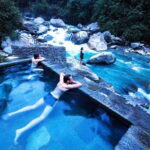
A small detail worth calling out: the route notes a warm hot shower at Baboo. You won’t turn into a spa person in the mountains, but after a couple of nights, a warm rinse can feel like a full-day highlight.
Day 6: Jhinu Danda Route Loop With Forest Trails and Chhomrong Ridge
Day 6 brings a mixed profile: short steep sections, then downhill through forest, then a ridge-top moment around Chhomrong. The day is about 6 hours of walking, and the itinerary includes lunch around Chhomrong village.
You’ll start with a short steep up to KhuldiGhar, then descend within the forest toward a lonely spot called Sinuwa-Danda. From there, you continue down to Chomrong Khola and cross a bridge section. After that, you climb briefly to reach Chomrong village for lunch.
Then comes another short up to the top of the Chomrong ridge. This ridge segment is useful because it gives you a different angle on the valleys you’ve been walking through. Finally, the trail becomes downhill to Jhinu-Danda for the night.
Why this day matters: it’s a transition day. You’re not pushing toward ABC again, but you’re not strolling either. It’s the hike that connects the sanctuary experience to the return to Pokhara.
Day 7: Suspension Bridge, Samrung Khola, and Back to Pokhara
Day 7 is the finish line. Your walking time is about 5 hours and it ends with getting back to Pokhara.
The route notes a short downhill and a crossing of a long suspension bridge to reach Samrung Khola. That bridge section is often where people remember the trek’s variety: you’ve been on trails and village paths, and now you’re on a higher-tension crossing point. It’s also a good moment to look around and realize how far you’ve walked.
After Samrung Khola, you catch a local jeep for a drive of about 4 hours back to Pokhara. The drive passes through Kimrung village, Syauli Bazaar, Birethati Nayapul, Kande, and Naudanda. It’s not a straight shot, but it’s a familiar style of Nepal transfer: you’ll see roadside life and local towns, not just pass-through highways.
Once you’re back, the tour ends at Pokhara Lakeside, where you can finally stretch out, eat something truly easy, and plan your next day in the city.
Price and Value: Is $435 Fair for This 7-Day ABC Trek?
At $435 per person for a 7-day trek, this sits in a practical middle zone for ABC. What makes it feel like value is what’s included.
The price covers hotel pickup and drop-off, plus round-trip transfer by sharing bus/jeep. It also includes the trekking permit and TIMS card, an English-speaking guide, and guest house accommodation. The trek is also described as a private tour/activity, meaning you’re not getting mixed into random groups on the hike itself.
You still pay separately for personal expenses, and the listing includes a line about gratitude, which usually means tipping practices. If you’re someone who likes to budget cleanly, plan a reasonable amount for drinks, snacks, hot showers where available, and any extra costs on trail.
My take: the big “hidden value” here is permits + guide + transport being handled. Those three pieces usually cost time and money if you organize them yourself.
What I’d Pack and Plan for (Without Overthinking It)
You’ll be walking in forest, forest-to-alpine transitions, and higher cold air near the sanctuary. Even if the forecast looks mild, altitude can change how fast you warm up and how quickly you cool down.
Stick to layers you can adjust. Your body will work hard on climbs, but your temperature can drop quickly in early morning or at stops like Machhapuchare Base Camp area.
Also plan your days around the pace you want. The itinerary lists long walking times (often around 6–7 hours on several days). That means your “breaks” are part of the hiking schedule, not separate from it.
If you’re sensitive to altitude, you’ll want a calm head. Don’t try to make the trail a race. The route itself takes you step-by-step, but how you walk still affects how you feel.
Who This Trek Fits Best
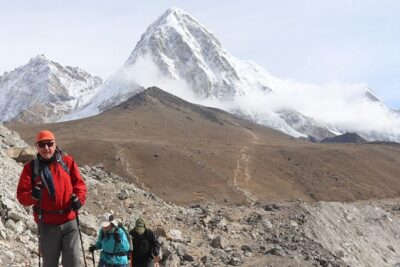
This itinerary is for people with moderate fitness who want a full Annapurna Base Camp experience with village culture, forest walking, and a real altitude payoff. If you like a clear structure—drive, walk, guest house, repeat—this style works well.
It’s also not a good choice for wheelchair users, since it’s described as hiking on trekking trails. The best fit is someone who enjoys being outside most of the day and can handle uneven paths.
Families sometimes do ABC, but only if everyone is comfortable with strenuous stretches and altitude. This is also a good pick for couples or small groups who want the guide attention and private feel without giving up shared transport.
Should You Book This Annapurna Base Camp Trek?
Book it if you want a well-structured ABC route from Pokhara that mixes culture and scenery, and you care about having an English-speaking guide to help with the day-to-day flow. The combination of Ghandruk village time, the sanctuary approach through bamboo/rhododendron, and the 4,130m finish is exactly what most people come for.
Don’t book it if you need a low-effort trek or if you’re not comfortable with altitude and long days of walking. This isn’t a gentle stroll, even though the route gradually builds.
If you’re on the fence, ask yourself one question: can you commit to a steady pace for a week? If yes, this trek is the kind of trip that leaves you with more than photos—it leaves you with the feeling of walking inside the Annapurna massif.
FAQ
What is the duration and starting point for this Annapurna Base Camp trek?
The trek runs for about 7 days and starts from Pokhara in Nepal, with hotel pickup included.
How much does the trek cost?
The price is $435.00 per person.
What’s included in the price?
It includes hotel pickup and drop-off, round-trip transfers by sharing bus/jeep, trekking permit and TIMS card, an English speaking trekking guide, guest house accommodation, and a private tour/activity for your group.
What do I need to provide before the trek for permits?
You need to send a passport copy and a passport size photo before the trek so the trekking permit can be made for you.
What fitness level is recommended?
Travelers should have moderate physical fitness level, since this is hiking with long walking days.
Can I get a refund if I cancel?
Yes. Free cancellation is available up to 24 hours in advance for a full refund. If you cancel less than 24 hours before the start time, the amount paid is not refunded.