REVIEW · KATHMANDU
16 Day Private Manaslu Circuit Trek from Kathmandu
Book on Viator →Operated by Himalaya Guide Nepal · Bookable on Viator
The Manaslu circuit feels like a secret rim. This private 16-day trek from Kathmandu mixes on-the-ground logistics with real mountain time, plus official permits and gear so you can focus on walking and acclimatizing. You also get a proper Kathmandu start in and around World Heritage areas before the Himalayas take over.
I especially like that the plan includes a licensed guide (with insurance, lodging, and food handled) and a first-aid kit that even includes an oximeter. The second thing I like is practical value: lodge accommodation during the trek, and all your breakfasts, lunches, and dinners for 14 days, plus down jacket and sleeping bag to cut what you need to carry or rent.
One drawback to consider: even though this is private, parts of the overland travel are done by public bus and public jeep, so you’ll still feel some bumps on the road before and after the hiking.
In This Review
- Key Highlights Worth Your Time
- Kathmandu First: Heritage time plus Thamel reality
- Overland Jump-In: From Kathmandu to Sotikhola via Gorkha
- Jagat Checkpoint Day and the start of real circuit trekking
- Namrung and Manaslu first views: the moment it starts feeling big
- Samagaun: the “settle in” village with Birendra Lake connections
- Larkya Bhanjyang and the Larkya Pass day: where time matters
- Tilche rhododendron jungle walk: a calmer finish before the drive
- Price and Value Check: what $1,135 usually covers here
- Logistics That Shape Your Experience: private group, public roads
- Guides and the “thought of everything” factor
- What to Pack When Down Gear Is Included
- Who This Manaslu Circuit Trek Fits Best (and who should rethink)
- Final Call: Should you book?
- FAQ
- What is the meeting point for the trek?
- Does the package include accommodation in Kathmandu?
- Are meals included during the trek?
- What trekking gear is included?
- Are permits included?
- Do I need travel insurance?
Key Highlights Worth Your Time
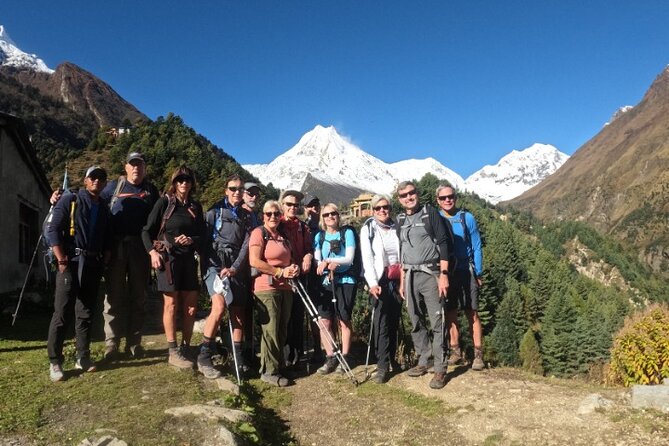
- Licensed guiding plus oximeter support: a safety-minded setup that helps you respond early if altitude symptoms show up.
- Down jacket and sleeping bag included: you travel lighter, and you’re less stuck hunting rentals in Kathmandu.
- Serious day structure for acclimatization: short “breather” walking days around Manaslu to help your body adjust.
- Larkya Pass day is the real test: expect a long push (about 9 hours) with meaningful payoff views.
- Samagaun for Manaslu and Birendra Lake views: you build toward big moments rather than rushing past them.
- A welcome Kathmandu warm-up: a Thamel day plus heritage sightseeing before the trek starts.
Kathmandu First: Heritage time plus Thamel reality
Day 1 is your Kathmandu orientation: you’ll start in and around the city center with a chance to see World Heritage sites and get a feel for local rhythm. Day 2 then lands you in Thamel, the tour hub where you’ll see trekkers, gear shops, cafés, and paperwork happening in real time.
Why this matters: Manaslu is not just a hike. It’s also permits, weather timing, and getting your body ready for altitude. A day in Kathmandu first lets you sort small things like cash, chargers, and last-minute questions without feeling rushed.
The trade-off: Kathmandu isn’t your quiet getaway. If you’re sensitive to traffic and crowds, you’ll want to plan restful mornings and choose slower paced heritage visits instead of racing around.
You can also read our reviews of more tours and experiences in Kathmandu.
Overland Jump-In: From Kathmandu to Sotikhola via Gorkha
On Day 3, you’ll drive roughly 6–7 hours from Kathmandu toward Sotikhola, via Gorkha. Day 4 keeps things moving: another stretch of walking (about 6 hours) in the early trekking phase.
I like how this opener handles two truths at once: you need time to get into trekking country, and you also don’t want to start with a brutal first day at altitude. The early days act like a runway. They get you into a steady hiking rhythm before the circuit proper starts calling for longer passes and bigger climbs.
Road comfort note: because this is a mix of driving and then walking, it helps to arrive with a flexible mindset. Bring a dry layer for the vehicle ride and plan to treat the first day’s soreness as part of the deal, not as a sign to panic.
Jagat Checkpoint Day and the start of real circuit trekking
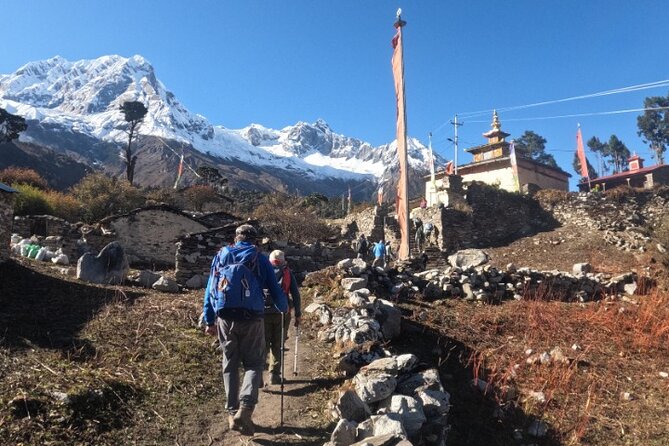
Day 5 brings you to Jagat and the first trekking checkpoint (with the relevant permit step handled as part of the trek setup). The day is about 6 hours of walking.
Then Day 6 is a shift in scenery and effort: you’ll reach Mount Manaslu area through about 7 hours of jungle walk, with permits included in the overall package. This is one of those segments where the trek stops feeling like a route on paper and starts feeling like Nepal: villages, trails, and a lot of uphill effort that rarely looks dramatic until you’re on it.
A small practical advantage here: a licensed guide plus an included gear setup reduces decision fatigue. Instead of worrying what you can skip, you can focus on pace, hydration, and the simple routine of trekking days.
Namrung and Manaslu first views: the moment it starts feeling big
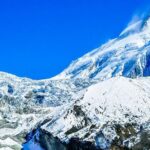
Day 7 lands you in Namrung, about 7 hours walking, where you get that “wow, I’m really in it” village feel. Day 8 is about 6 hours and explicitly includes your first view moments of Mount Manaslu.
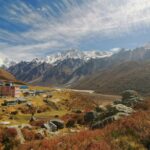
This is when many trekkers start adjusting their expectations. Manaslu isn’t only about one spectacular photo day. It’s about repeated mountain glimpses that show up as you climb, crest, and descend. You’ll see more sky, more range, and a clearer sense of where you are on the circuit.
How to enjoy it: on days like this, I’d treat the views as a reward for consistency, not a distraction. Take the short stops, soak in the sightlines, then keep moving so you still have energy for later.
Samagaun: the “settle in” village with Birendra Lake connections
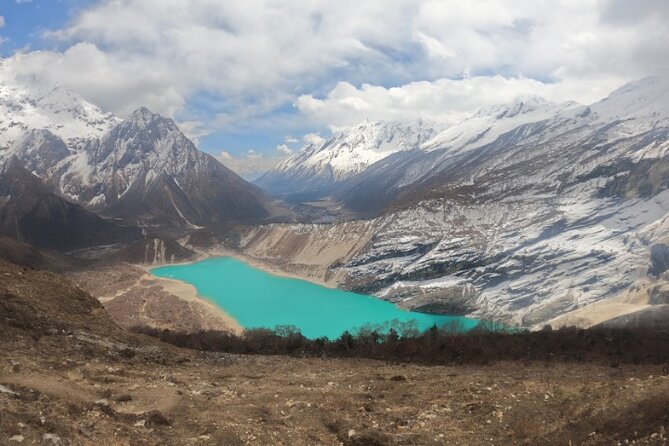
Day 9 to Samagaun is about 4 hours and focuses on a big payoff: it’s one of the best places for trekkers to see Mt. Manaslu from where you’re staying, plus access to Birendra Lake viewpoints. Day 10 is a shorter hiking day (about 4 hours) that can include Mount Manaslu Base Camp area, plus Phungen monastery and Birendra Lake.
This is a key design of the itinerary: you don’t keep grinding every day. You move into a village zone that supports acclimatization, then do structured excursions that help your body adjust while still giving you meaningful walking.
Day 11 and Day 12 continue with short walking days (about 4 hours each) around Manaslu. That’s not filler. Those are the days that make the harder pass day safer, because you’re giving your altitude adaptation time to catch up.
Larkya Bhanjyang and the Larkya Pass day: where time matters
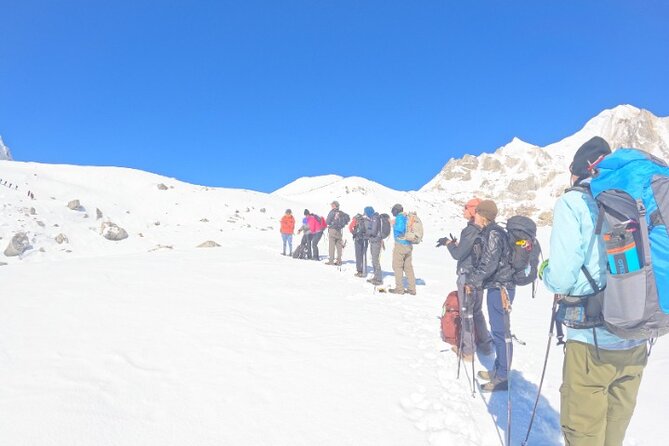
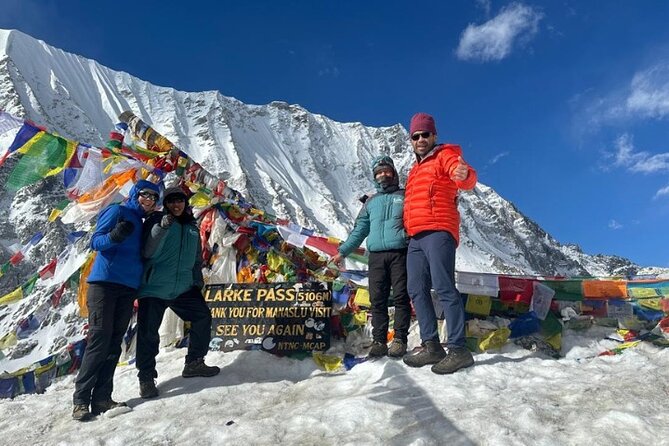
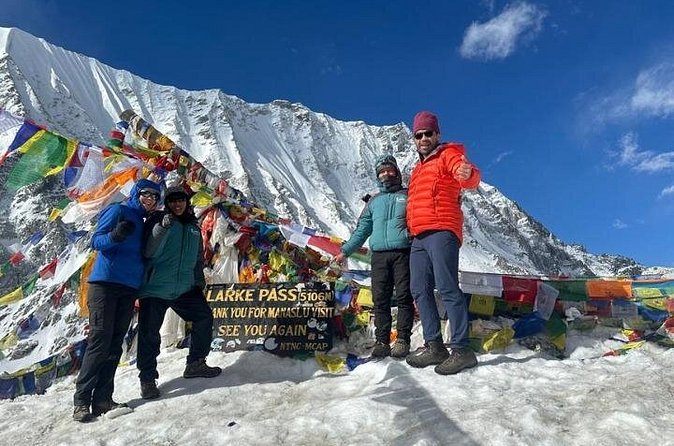
Day 13 is your pass day to Larkya Bhanjyang (about 9 hours). This is the day that usually separates easy days from the ones you remember for a long time.
Even without overhyping it, a 9-hour day on a high route is a planning challenge: you’ll want to set a steady pace, start early if weather allows, and avoid treating every uphill moment like an emergency. Your guide and the pace strategy matter here, and it’s one reason I like itineraries that include short acclimatization days before the pass.
One more practical point: cold conditions can feel sharper at higher elevations. If you’ve already got the provided down jacket and sleeping bag, you’ll be in a better place for comfort even when the weather turns.
Tilche rhododendron jungle walk: a calmer finish before the drive
Day 14 moves you to Tilche with about 7 hours walking, described as a rhododendron jungle walk to Tilche Gurung Village. This is a good “let your legs think again” segment. It’s still trekking, but the energy shifts from pass-day strain toward village-country walking.
Then Day 15 is a transition day: about 1 hour walk and then a 4–5 hour drive to Besisahar. Day 16 finishes back in Kathmandu with another long drive (about 6–7 hours) by public bus, ending at the meeting point.
This end phase is where people sometimes get worn out. You’re not only hiking anymore; you’re also riding. If you’re sensitive to fatigue, plan to keep your post-trek Kathmandu schedule light, ideally with time for food, showers (with whatever water approach you prefer), and a real sit-down sleep.
Price and Value Check: what $1,135 usually covers here
At $1,135 per person, this package is priced like a mid-range private trekking service in Nepal. The main question isn’t only the number. It’s what you’re spared from doing.
Here’s what you get that matters day-to-day:
- Permits handled: MCAP permit, Manaslu restricted area permit, and ACAP are included, which means you’re not stuck chasing paperwork mid-trip.
- Guide team included: a license holder guide with salary, equipment, insurance, lodging, and food all built in.
- Trek meals included: 14 breakfasts, 14 lunches, and 14 dinners. This is big for budget predictability.
- Lodge accommodation included during the trek: you’re not budgeting bed-and-breakfast costs for each night on-route.
- Gear included: down jacket and sleeping bag are provided, plus a trekking duffle bag if you need it.
- Support items included: first aid medical box including oximeter, plus some dry and fresh fruits along the trek.
- A farewell dinner and a Nepali food night, plus a small token of love.
What you should budget separately:
- Kathmandu accommodation before/after the trek is not included.
- Travel insurance is not included, and it matters for trekking risk management.
- Drinks like soda, mineral water, beer, and similar items aren’t included.
- Personal expenses like laundry, battery charging, and extra helper services are on you.
- Tips are expected.
My take: the price looks fair if you value less hassle and more certainty. If you already own proper cold-weather gear and you’re comfortable managing permits and logistics yourself, the savings might not feel huge. But for most people, reducing uncertainty on a restricted-area trek is exactly what you’re paying for.
Logistics That Shape Your Experience: private group, public roads
This is described as a private tour/activity where only your group participates. That matters for decisions on pace, rest breaks, and how your guide responds to weather or physical limits.
But you should also know it uses public transport for certain transfers:
- Kathmandu to Sotikhola by public bus
- Dharapani to Besisahar by public jeep
- public bus back to Kathmandu
- airport pickup and hotel drop in Kathmandu
So you get the benefits of private guiding while still using shared road transport to keep things practical and cost-conscious. If you hate unpredictability, aim for patience on driving days and don’t schedule tight meetings right before or after the trek.
Guides and the “thought of everything” factor
The strongest recurring theme from guide praise is not only friendliness. It’s practical attention. Names that come up in this company’s orbit include Dinesh, Prabin, Binod, Kumar, Bashu, Saurab, Chandra, and Salman.
What that usually means for you: you’ll get help with day-to-day trekking decisions like where to stop for rest, how to choose rooms with good comfort, and how to handle the small surprises that show up in the Himalayas (weather timing, trail conditions, and basic needs).
You still remain responsible for your own pace and safety, but the difference is whether your guide is organized. With this setup, you can expect a guide who handles documents, permits, and on-route coordination while you focus on walking and acclimatizing.
What to Pack When Down Gear Is Included
Because a down jacket and sleeping bag are included, you can travel lighter than many treks that rely on rentals. Still, you’ll want to bring the things that aren’t usually provided:
- layers for trekking (base + mid + shell)
- trekking socks you trust
- warm hat and gloves suited to cold mornings
- a daypack for water, snacks, and layers
- toiletries and anything personal for hygiene
- power bank and charging plan for base areas
Also, don’t forget the basic reality: you’ll be outdoors for days. Even with provided gear, your comfort depends on how well your personal system matches the conditions.
If you’re planning to rent nothing and carry everything, confirm what’s included for your specific departure. The package says down jacket and sleeping bag are provided, and a duffle is available if you need it, but it’s still smart to check sizing and condition before you head out.
Who This Manaslu Circuit Trek Fits Best (and who should rethink)
This trek is best for you if:
- you have moderate physical fitness
- you want a private group experience but still prefer practical, cost-aware transport on transfers
- you value a plan that includes permits, meals, lodge stays, and gear, so you don’t manage too many moving parts
You might rethink if:
- you’re extremely sensitive to long driving days (there are several)
- you need a fully private charter-style transfer from door to door every day (this uses public bus/jeep segments)
- you’re not able to do a 9-hour pass day after acclimatization
If it’s your first big trek in Nepal, this itinerary structure can feel reassuring because it builds in shorter walking days before the pass.
Final Call: Should you book?
I’d book this if your priority is a well-run private trek with permits and key support handled, plus meals and lodge accommodation already included. At $1,135, the value stands out most when you’d otherwise spend time and energy managing paperwork, arranging gear, and guessing at daily costs.
Don’t book if you want a ultra-light, rental-free, stress-free schedule with zero public transport. You’ll trade some comfort on driving days for the benefit of an organized route and solid on-mountain support.
If you’re ready for a real circuit with a serious pass day and big Manaslu moments, this is a strong, practical choice.
FAQ
What is the meeting point for the trek?
The trek starts at Tribhuvan International Airport, Ring Rd, Kathmandu, Nepal, and the activity ends back at the meeting point.
Does the package include accommodation in Kathmandu?
No. Accommodation in Kathmandu is not included, though there is a drop at your hotel in Kathmandu.
Are meals included during the trek?
Yes. The package includes 14 breakfasts, 14 lunches, and 14 dinners during the trek.
What trekking gear is included?
Down jacket and sleeping bag are included, and there is also a trekking duffle bag available if you need it.
Are permits included?
Yes. Legal documents included are MCAP permit, Manaslu restricted area permit, and ACAP.
Do I need travel insurance?
Travel insurance is not included, so you should arrange it separately for the trek period.