REVIEW · KATHMANDU
Upper Mustang Classic Trek with Local guide
Book on Viator →Operated by Himalayan Wander Walkers · Bookable on Viator
Upper Mustang is a different world. This 15-night private guided trek from Kathmandu is set up for real remote-country travel, with the logistics handled and your time focused on shrines, monasteries, and cave visits in the rain shadow of Dhaulagiri and Annapurna.
I like two things a lot: most of your planning is taken care of (transfers, domestic flights, permits, and tea-house lodging during the Mustang trek), and you get cultural moments built into the route, like an early-morning visit to Thukchen monastery for monk chanting and timing around the Tiji festival.
One consideration before you fall in love with the idea: the Upper Mustang special permit is not included and is listed as USD 500 per person for 10 days, so your total budget needs to include that.
In This Review
- Key highlights and what they mean for you
- Upper Mustang feels like a Buddhist time capsule
- Kathmandu classics that put religion (and art) in the right frame
- Kathmandu to Pokhara: the long drive that helps your head catch up
- Lupra and a Bon monastery: a quieter start in Mustang country
- Chhuksang into Samar: getting your legs ready for a remote route
- Trekking days in Upper Mustang: tea houses, pace control, and “rain shadow” expectations
- Thukchen monastery at 6 am, yak herds, then Tiji festival energy
- Yara village, the Kali Gandaki, and Luri Gompa
- Charang monastery visit, then Jomsom to keep the trip efficient
- Jomsom to Pokhara flight, Pokhara city time, then back to Kathmandu
- Price and logistics: $2,500 can be a good deal, if you budget the permit
- Local guide energy: why names you hear keep showing up
- Who this trek is perfect for (and who should think twice)
- Should you book this Upper Mustang Classic Trek?
- FAQ
- How long is the Upper Mustang Classic Trek?
- Is this a private tour?
- What meals and accommodations are included?
- What permits are included, and is there an extra permit fee?
- Are domestic flights included?
- What physical fitness level do I need?
- Are guides and porters included?
- Is there free cancellation?
- Do I need travel insurance?
Key highlights and what they mean for you
- Private guide and porter so you can match the day to your pace instead of the group pace
- Tea house accommodation in Mustang plus breakfast, lunch, and dinner arranged on the trek portion
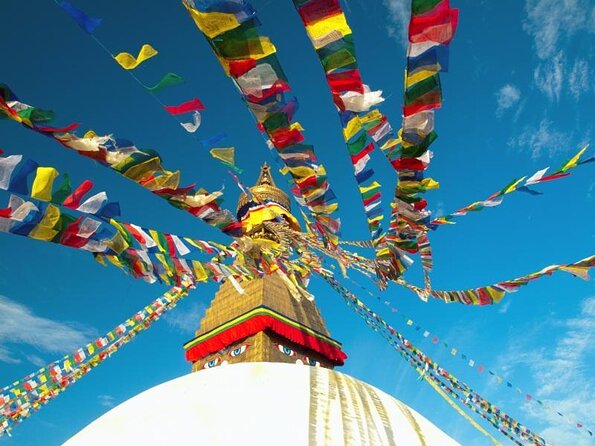
- Kathmandu classics first: Boudhanath Stupa, Patan Durbar Square, and Swayambhunath to set the religious context
- Spiritual timing with early monk chanting at Thukchen monastery and Tiji festival viewing
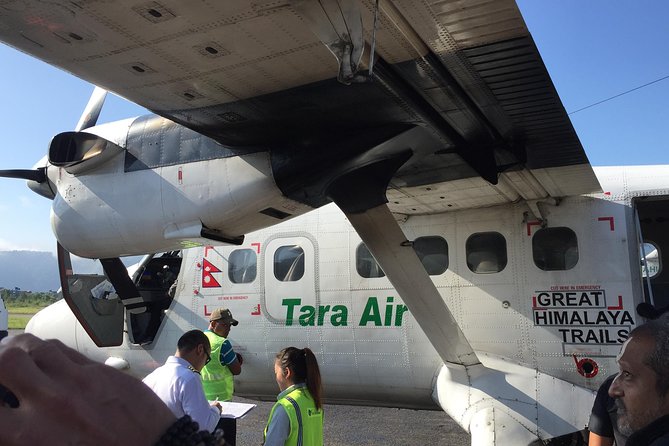
- Jomsom–Pokhara flight to save real trekking energy and simplify travel over rough terrain
Upper Mustang feels like a Buddhist time capsule
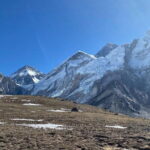
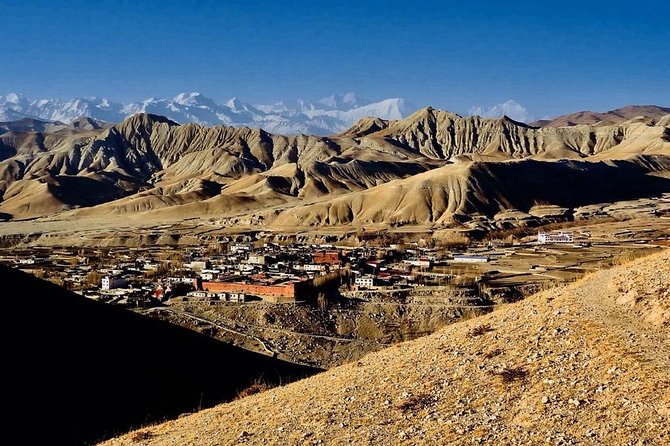
Upper Mustang is often described as a hidden Buddhist kingdom, and that reputation fits what this trek sets out to do. You’ll spend days moving through a landscape of monasteries, temples, shrines, and cave-style spiritual sites while staying in the high-altitude air that sits in the rain shadow of the big surrounding peaks.
Because this is private, you can go at a pace that makes sense for your body. That matters in Mustang, where walking days can feel long even when the route is well planned.
You can also read our reviews of more tours and experiences in Kathmandu.
Kathmandu classics that put religion (and art) in the right frame
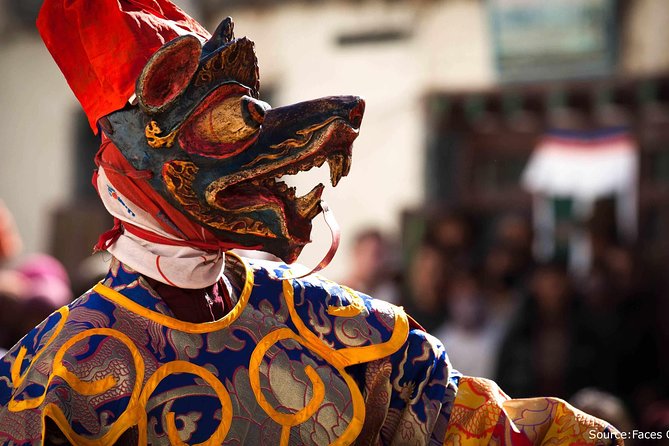
Before you head into the remote region, you start with a strong Kathmandu cultural warm-up—three very different but closely connected Buddhist/Hindu sites.
Boudhanath Stupa is your first stop. It’s described as the largest stupa in Nepal, with a white dome and golden details around key parts like the harmika, plus mani-wheel elements around it. You’ll see pilgrims from Nepal’s Himalayan regions and Tibetan communities making circumambulation, and it’s a reminder that faith here is lived in shared public space, not locked behind museum glass.
Then you go to Patan Durbar Square, where the focus is craft: fine wood and metal work in palace struts, windows, and doors, plus courtyards that show off typical Nepalese design. The Patan museum inside the complex is included, and that’s a practical bonus if you want to understand how things are made—especially the metal statue process, not just the finished objects.
Finally, Swayambhunath rounds out the day. The site has a long stairway from the eastern side that’s said to be 365 steps, associated with King Pratap Malla, and the hilltop viewpoint gives you Kathmandu valley context before you leave the city.
This day also sets you up well logistically: you get tickets for the major stops, and you’re not scrambling to figure out transit across town while your trip is just beginning.
Kathmandu to Pokhara: the long drive that helps your head catch up
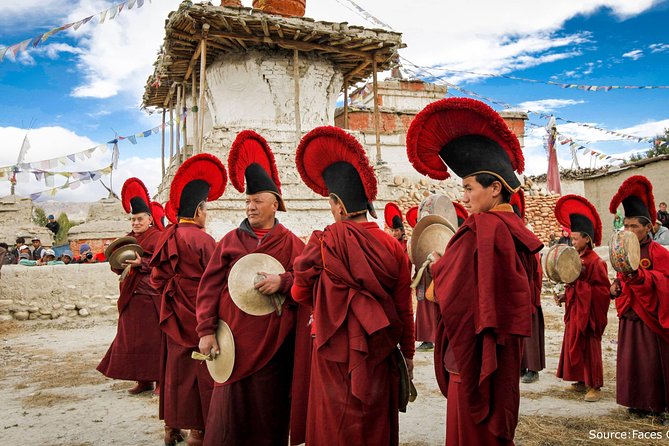
On day 2 you travel by tourist bus to Pokhara, a ride listed at about 6–7 hours. You’re not just changing cities—you’re shifting from Kathmandu’s dense energy into a calmer launch point where you’ll rest before the Mustang movement begins.
This is the day to do the unglamorous stuff well: sleep, hydration, and double-checking your trekking kit. A lot of trekking trouble starts before the first real trail step, and a smooth Pokhara transition helps.
Lupra and a Bon monastery: a quieter start in Mustang country
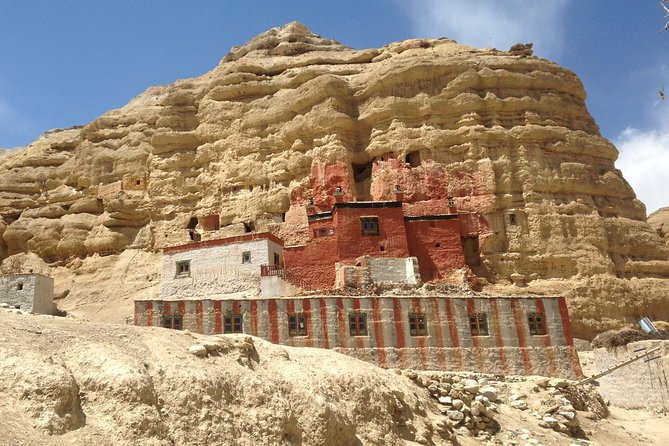
On day 3 you visit Lupra village and then Bon Monastery. This is a meaningful opening because it signals that your trek is not only about one religious thread. Bon traditions are part of the broader high Himalayan spiritual world, and having that contrast early makes the rest of the gompas and monasteries you’ll see later feel more connected.
You also get a shorter, focused day (listed at 4 hours for the local visit), which gives you time to adjust to the travel rhythm before the longer trekking days kick in.
Chhuksang into Samar: getting your legs ready for a remote route
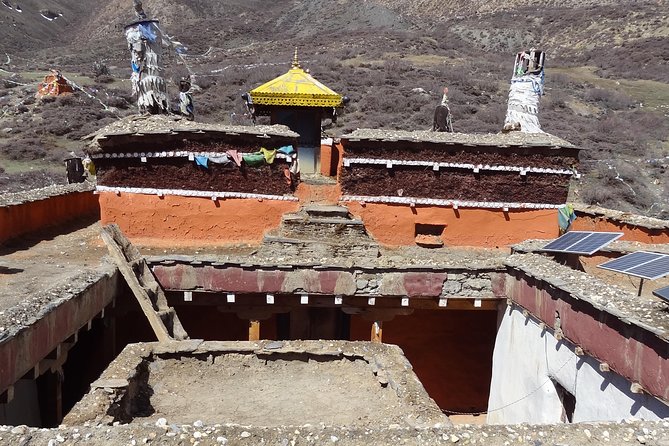
Day 4 starts with a drive to Chhuksang village, then you begin trekking to Samar, routed via chele and Gyakar Village. The schedule lists the day at about 6 hours, mixing travel and walking.
For you, this is the important role of a first trek day: it should get you moving without turning the trip into a survival test. A guided approach also means your guide can steer you toward the best walking rhythm depending on weather and group stamina.
Trekking days in Upper Mustang: tea houses, pace control, and “rain shadow” expectations
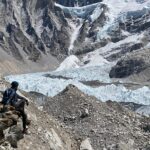
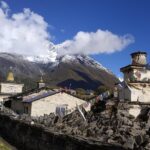
The middle of the trek is built around consecutive Mustang trekking days (days 5–8), with accommodation in tea houses during the Mustang trekking portion. Even without a long list of named stops on those specific days, the structure is what matters: you’re moving between villages and spiritual sites while getting a predictable place to sleep and eat.
Here’s what I’d take from that setup: tea houses make the trip more realistic and more flexible. You’re not hunting for lodging each night, and since you’re on a private tour you’re more likely to get route adjustments if your body needs a slower day.
Also, the trek is designed for the rain shadows of Dhaulagiri and Annapurna, which helps explain why the region can feel so dry and dramatic. Still, high country can be cold, and evenings at tea houses can test your clothing choices. Plan for layers and treat warmth as part of your trekking strategy, not an afterthought.
Thukchen monastery at 6 am, yak herds, then Tiji festival energy
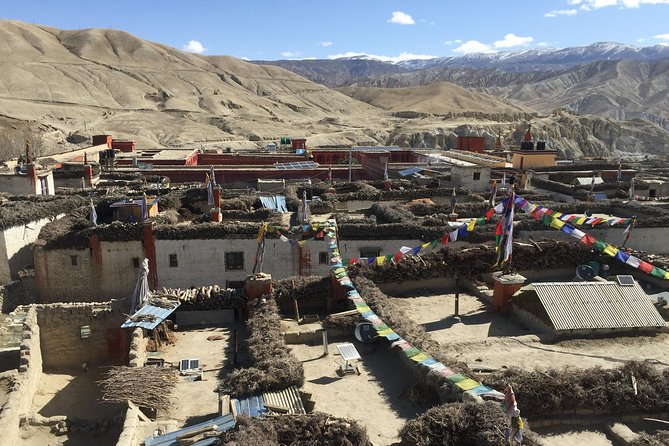
Day 9 is one of the most memorable “why this trek” days in the schedule. Around 6 am, you go to Thukchen monastery to see monks chant in the morning. After that you have breakfast, then you travel by short drive to a yak nomadic area, where you can observe the yak herd activity before returning to a hotel for lunch.
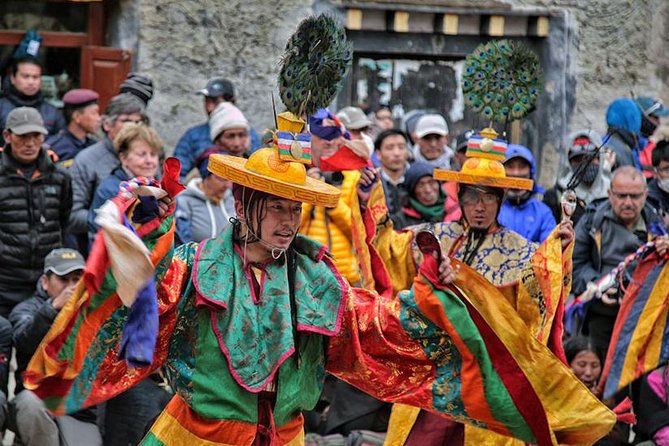
Then the day ends with time around the Tiji festival, specifically noted as the last day you’ll watch. Tiji is repeatedly described as extraordinary in the trek’s orbit, and the timing here matters because it means the festival isn’t tacked on at the end as a separate activity. It’s part of the emotional arc: you start the day in prayer, then see animals and daily life, and finish in festival atmosphere.
A good local guide makes this kind of day land. In past trips organized by Himalayan Wander Walkers, guides such as Norbu (from the Upper Mustang area) have been praised for connecting the dots—caves, gompas, monasteries, and that early yak moment—so you’re not just passing sights.
Yara village, the Kali Gandaki, and Luri Gompa
On day 10, you drive to Yara village in eastern Upper Mustang. The route is described with fantastic scenery and the Kali Gandaki River, and you’ll drive near the river to reach Yara.
After lunch, the day includes a visit to Luri Gompa. This is where the trek shifts from “travel and walk” into “slow down and observe.” Gompas reward curiosity: you’re looking at how religious life is organized, not just taking a photo.
Charang monastery visit, then Jomsom to keep the trip efficient
Day 11 starts with breakfast in Yara, then you continue by drive to Charang village for a monastery visit. After that, you drive on to Jomsom.
This is one of the smarter logistics choices built into the trip: you’re positioning yourself for the later flight back to Pokhara. Walking is great, but the world of Upper Mustang is also about respecting time and energy.
When your guide can adapt the schedule to how your group feels, it can make the difference between arriving tired and arriving ready to enjoy the finish. Private service is helpful here.
Jomsom to Pokhara flight, Pokhara city time, then back to Kathmandu
Day 12 uses an early morning flight from Jomsom to Pokhara, then breakfast in Pokhara followed by a city tour. The flight is a major value piece because it saves you from extra long ground travel after trekking days.
Day 13 brings you back toward Kathmandu by tourist bus, listed at about 7 hours.
The itinerary description you’re working from also shows extra buffer/transfer days around Pokhara (days 14–16 are listed but not fully detailed). In practice, that kind of structure usually exists to absorb weather delays and keep your schedule humane after a remote trek. You’ll feel the benefit more than you’ll notice it upfront.
Price and logistics: $2,500 can be a good deal, if you budget the permit
At $2,500 per person, this is not a budget trek. But it’s also not priced like a barebones adventure where you’re stuck organizing permits, transport, and guides on the fly.
Here’s what’s included, based on the package details:
- Private transportation
- Domestic flights
- Trekking guide and porter
- ACAP Permit
- Tea house accommodation during the Mustang trek
- Meals: breakfast 16 times, plus lunch and dinner 11 times (as listed)
Also included are a Kathmandu tour and pickup options, and there’s mention of a mobile ticket.
What’s not included can change your real total:
- Travel insurance
- Everything not listed in the included section
- Most importantly, the Special Permit USD 500 per person for 10 days in Upper Mustang
So your true planning should treat that USD 500 permit as part of the cost of entry into the region. Once you include that, the price starts to feel more balanced against what you’re getting: a local guide, porter support, a structured food plan, and the air/ground routing handled for you.
Weather is another practical point. The trip notes that if cancellation happens due to poor weather, you’ll be given an alternative date on 2020 or a full refund. Even with that safety net, you should still assume small delays can happen when flights and mountain conditions are involved.
Local guide energy: why names you hear keep showing up
This trek’s reputation is strongly tied to guide quality. In prior groups, Dawa has been described as responsive before arrival and helpful with packing questions. Norbu has been praised specifically for local knowledge and for making the long day structure feel purposeful, including caves, gompas, and the yak herd visit.
Other guides like Babu have also been mentioned as top class, adapting the plan as the group traveled. That flexibility matters on a multi-day trek where weather, fatigue, and festival timing can all shift the feel of the route.
If you want your trip to feel like a story you understand—not just a route you complete—this is the kind of private local-guided setup that makes it happen.
Who this trek is perfect for (and who should think twice)
This trek fits best if you want a private, guided experience that takes pressure off your daily logistics. It’s especially appealing for people who like spiritual sites and don’t want to spend vacation time building transport plans, hunting permits, or searching for last-minute lodging.
It also fits folks with moderate physical fitness, since the program is built around multiple trekking days plus travel segments. Minimum age is listed as 18.
You should think twice if your budget can’t absorb the special permit, or if you dislike the reality of early starts and cold evenings that come with tea-house trekking. Mustang rewards preparation.
Should you book this Upper Mustang Classic Trek?
I’d book it if you want Upper Mustang in a way that’s emotionally rich and logistically light. The mix of Kathmandu’s major Buddhist sites, a guided Mustang trek with tea-house comfort, and special days like Thukchen monastery at 6 am plus Tiji festival viewing makes this more than a checklist trek.
I’d hesitate if the idea of extra permit fees is a dealbreaker for you, or if you prefer fully independent travel where you’re in complete control of every day. With remote regions, the right kind of planning is often the difference between a trip you enjoy and a trip you manage.
If you do book, treat your paperwork and budget as step one: your passport has to be current, and you should account for the special permit up front. That’s the fastest path to a calm, confident trek.
FAQ
How long is the Upper Mustang Classic Trek?
The trip is listed as 16 days (approximately), described as a 15-night guided trek from Kathmandu to Upper Mustang.
Is this a private tour?
Yes. It’s a private tour/activity, and only your group will participate.
What meals and accommodations are included?
Tea house accommodation is included during the Mustang trekking portion. Meals included are breakfast 16 times, plus lunch 11 times and dinner 11 times.
What permits are included, and is there an extra permit fee?
The package includes an ACAP Permit. It also notes a Special Permit USD 500 per person for 10 days in Upper Mustang, which is not included.
Are domestic flights included?
Yes. Domestic flights are included, and the plan specifically references flights between Pokhara and Jomsom.
What physical fitness level do I need?
The tour states that travelers should have a moderate physical fitness level.
Are guides and porters included?
Yes. The package includes a trekking guide and porter.
Is there free cancellation?
Free cancellation is available. You can cancel up to 24 hours in advance for a full refund.
Do I need travel insurance?
No—travel insurance is listed as not included.