REVIEW · KATHMANDU
Private 12-Day Manaslu Circuit Trekking in Kathmandu
Book on Viator →Operated by Nepal Alternative Treks & Expeditions Pvt. Ltd. · Bookable on Viator
Larkya La is the point of no return. This private Manaslu Circuit packs Gurung community culture and serious high-mountain scenery into one logical route, and I especially like the way the itinerary mixes forest days with barren-altitude days. I also like that you get one guide plus porters and practical trail support like a trek map, oxygen meter, and water purification. One thing to keep in mind: this route includes long driving days and a genuinely cold, snowy pass day, so you’ll want solid fitness and good gear.
The trek’s also built around real cultural transitions. You’ll start in greener river valleys, pass through Magar villages, then move into Tibetan-style stone houses and mani walls as the landscape gets drier and the air thinner. You’ll get standout viewpoints of the Manaslu, Annapurna, Ganesh, and Ganesh Himal ranges—plus the kind of pass views that make you stop talking and just stare.
Finally, a quick reality check on comfort: the best stuff here is the trail and the people, not big-luxury lodges. Expect simple teahouse stays, and remember that hot shower and hot drinks are not included in the price.
In This Review
- Key highlights you’ll feel on this trek
- Why the Manaslu Circuit feels different: Gurung villages and the climb into Tibet-style country
- Price and logistics: what $960 covers (and what you should double-check)
- Getting from Kathmandu to the trek start: the Prithvi Highway drive to Machhakhola
- Days 2–3: river trails, sal forest, and Tatopani hot springs
- Days 4–6: suspension bridges, Magar villages, and the shift toward Tibetan-style Lho and Sama Gaon
- Day 7 rest day: Sama Gaon village time and Pung Gyan Gompa
- Days 8–9: Samdo’s barren feel and Dharmashala’s westward mountain views
- Larkya La Pass: the big climb day to Bimthang, with snowy terrain and long views
- Final days: Dharapani descent and the jeep-and-bus return to Kathmandu
- Lodges, meals, and staying sane on simple mountain comforts
- Staff support and the value of a private group
- A practical altitude and health game plan for this route
- Should you book the Private 12-Day Manaslu Circuit Trek?
- FAQ
- What time and where does the trek start in Kathmandu?
- What permits and support are included in the trek price?
- Are meals included during the trek?
- What’s the main high-altitude challenge on the itinerary?
- Is travel insurance included?
- Can I cancel for free, and what happens if weather is bad?
Key highlights you’ll feel on this trek
- Private group setup: only your group participates, with a dedicated guide and porters.
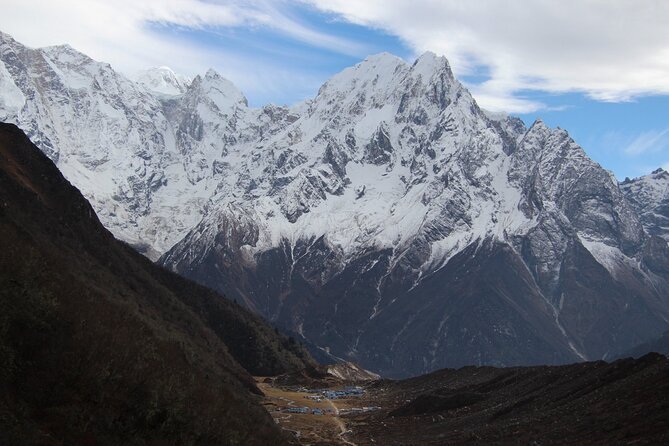
- Larkya La Pass crossing: a high, snowy day with panoramic views over multiple peaks.
- Cultural shift in days: Gurung and Magar village life, then Tibetan-style mani walls and prayer flags.
- Sama Gaon rest plus Pung Gyan Gompa: acclimatization day that still gives you a payoff.
- Trail support items: oxygen meter, water purification, first aid, and a trek map are included.
- Emergency evacuation assistance: you’re not just left to hope for the best at high altitude.
Why the Manaslu Circuit feels different: Gurung villages and the climb into Tibet-style country
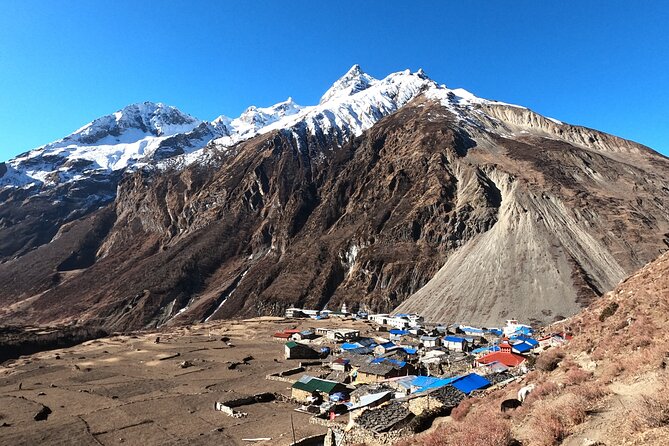
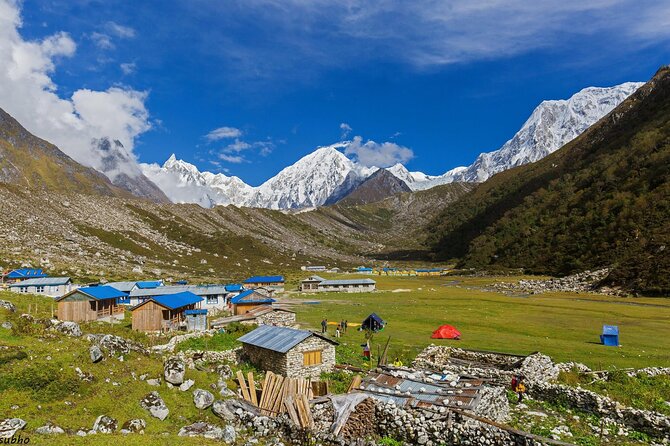
The Manaslu Circuit is a trek where the culture changes as fast as the altitude. I like that you’re not only chasing views; you’re moving through village life—first along the Budhi Gandaki River through forested stretches, then through communities like the Magar villages, and later into areas with Tibetan-style stone houses and mani walls.
This cultural “step change” matters because it changes how the trek feels day to day. The early days are about rivers, terraced farms, and greenery. Later, the air gets dry, the terrain gets rougher, and the prayers and stonework feel more central to the scenery. That shift lines up perfectly with the high point of the route, the Larkya La Pass, where you’re surrounded by big peaks and big skies.
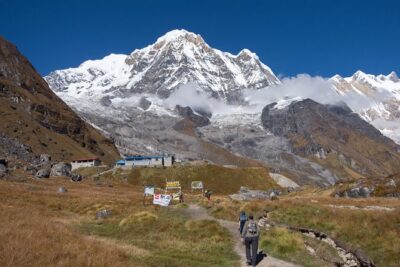
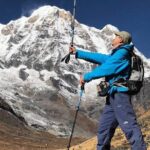
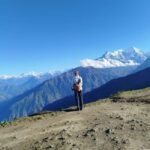
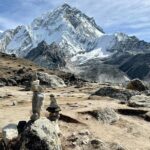
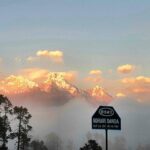
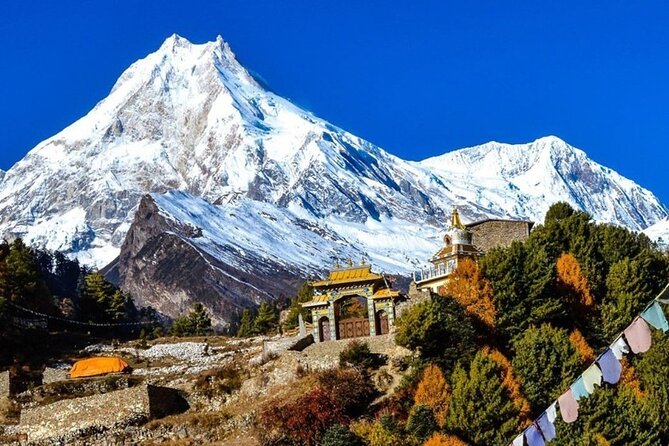
And yes, the mountain panorama is a major part of it. You’ll see Manaslu repeatedly—especially around Lho and Sama Gaon—and you’ll also get sightlines toward Annapurna-adjacent ranges and Ganesh Himal country.
You can also read our reviews of more tours and experiences in Kathmandu.
Price and logistics: what $960 covers (and what you should double-check)
At $960 per person, this is one of those trekking deals that looks good on paper because a lot is bundled. The package includes:
- Lodge/hotel accommodation in Kathmandu and during the trek (with a note below)
- Permits and local fees, including Manaslu Special permit plus MCAP/ACAP/local entry fees
- A professional guide and porters (and their expenses)
- Overland transportation (bus/jeep segments)
- A trek map, oxygen meter, first aid, and water purification
- Public liability insurance
- Assistance for emergency rescue evacuation
- Government tax and service charge
- Meals: breakfast (12), lunch (12), dinner (11)
Here’s the practical snag: the details include hotel accommodation in Kathmandu under the included list, but the not-included list also says hotel accommodation in Kathmandu is not included. So you should clarify this before you go. Don’t assume either way based on one line—ask the operator to confirm what you’re getting in Kathmandu.
Also, hot showers and hot drinks aren’t included. That’s normal for most treks, but it matters for daily budgeting and comfort. Travel insurance is not included either, and for a trek with a high pass, I think that’s a must-have.
Getting from Kathmandu to the trek start: the Prithvi Highway drive to Machhakhola
Your day starts early at the meeting point in Kathmandu: Nepal Alternative Treks & Expeditions, Post Box 8169, House 8169, Raniban Marg 136/205, Nagarjun, Kathmandu. Start time is 7:15 am, and pickup is offered.
Day 1 is mostly a long drive along the Prithvi Highway. You’ll head through Dhading Bensi, roll up toward Gola Bhanjyang, slope down toward Ankhu Khola, and reach Arughat where you cross the Budhi Gandaki River before continuing on to Sotikhola and Machhakhola. The driving time is about 10 hours, so it’s not the day to plan on stretching much—think of it as getting into position.
What makes this day worth it is the payoff: roadside villages, rivers, terraced farms, and Mount Manaslu/Ganesh views showing up enough times that you start mentally preparing for what’s coming.
Days 2–3: river trails, sal forest, and Tatopani hot springs
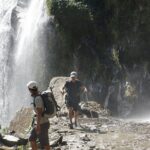
Day 2 takes you from your first overnight in Machhakhola to Jagat (about 7 hours). You start by walking along the Budhi Gandaki River, then climb through dense sal forest. The trail leads you to Tatopani, which is known for natural hot water springs. If you want a warm reset for tired legs, this is your moment.
After that hot spring stop, you keep moving again along the riverbanks to reach Jagat. This day is a good “trail calibration” day: you learn the rhythm of climbing, the feel of the path, and how your breathing changes as altitude rises.
Day 3 is about 8 hours and centers on the village transitions and forest character as you trek toward Deng. After permits are approved, the trail keeps you alongside the Budhi Gandaki, moving through tropical forests and passing through villages like Bhatti Khola and Philim. There’s also a bamboo forest section over the river, which sounds straightforward until you’re walking it with cold river air in the background.
One practical note: if you’re the kind of hiker who wants to watch wildlife, this part of the Manaslu region is described as habitat for rare wildlife. You can’t count on sightings, but you can count on a wilder-feeling forest.
Days 4–6: suspension bridges, Magar villages, and the shift toward Tibetan-style Lho and Sama Gaon
On Day 4 you move from Deng to Namrung in about 5 hours. You cross a suspension bridge early, then keep going on uneven terrain toward Bihi Phedi and Ghap. The route mentions that the Ghap area is prone to dry landslides, so your best move is to stay alert and follow your guide’s timing. In high season, you’ll sometimes see patches of loose ground that look normal—until you step wrong.
After the landslide-prone zone, you pass several Magar villages and arrive in Namrung. This is a good day for cultural immersion: smaller community life sits right beside your hiking route, not off on some separate side-trip.
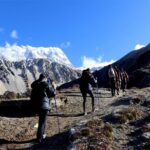
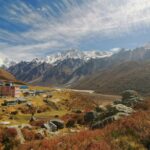
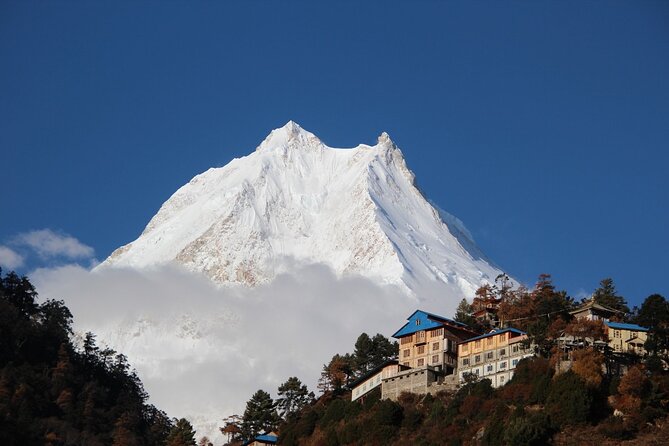
Day 5 (about 4 hours) is where the trek’s identity changes again. You head from Namrung to Lho and steadily shift into Tibetan cultured areas. You’ll walk past mani walls and stone houses, and the mountain views open up, including Mount Manaslu (listed as 8163m here). The feeling is less jungle-green and more rock-and-prayer.
Day 6 is a harder working day: about 5 hours trekking from Lho to Sama Gaon. You move through pine and rhododendron forests, and the view of Manaslu stays in your sightline in a way that keeps motivation high. The day is described as challenging because you’re gaining altitude; in other words, it’s not a “just walk and talk” day.
Day 7 rest day: Sama Gaon village time and Pung Gyan Gompa
Day 7 is one of the smartest parts of this itinerary. You stay in Sama Gaon for rest and acclimatization. You explore the village, interact with local people, and you can try local foods in the evening.
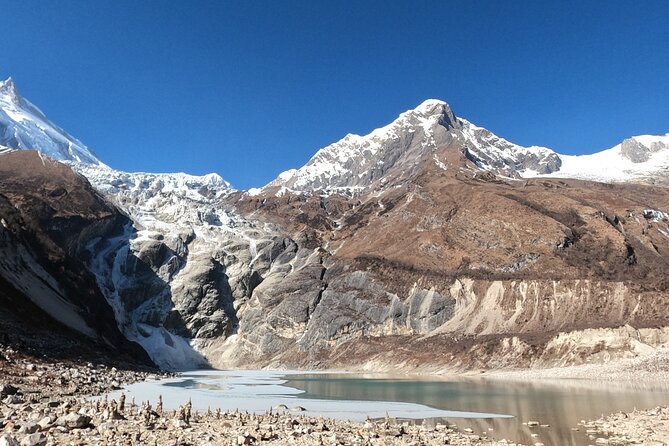
Then comes the payoff hike: you walk to Pung Gyan Gompa. You get views of Manaslu and surrounding mountains, but the bigger benefit is physiological. Taking the time here helps your body handle what comes next—especially when you hit the barren, colder stretches and then the pass day.
Days 8–9: Samdo’s barren feel and Dharmashala’s westward mountain views
Day 8 is about 4 hours from Sama Gaon to Samdo. The trail starts in pine forest, but gradually gets sparser. Vegetation disappears and the ground feels harsher and more barren as you move forward. You’ll walk a remote stretch along the banks of a reduced Budhi Gandaki River, with Mount Manaslu still keeping you company.
This day is where you’ll likely notice how you sleep, how you drink water, and how your appetite changes as altitude climbs. It’s not about pushing hard; it’s about moving steadily in thinner air.
Day 9 is about 5 hours from Samdo to Dharmashala. You trek west with views toward Naike and Pangbuche peaks, cross another suspension bridge, and then handle rocky, uneven trail. The route includes views of the Himal Chuli range on the way to Dharmashala.
In practical terms, Day 9 is your bridge between “warm forest memory” and “real high-mountain commitment.” It’s not the pass day, but it sets your expectations for Day 10.
Larkya La Pass: the big climb day to Bimthang, with snowy terrain and long views
Day 10 is the marquee day and also the one you should respect. You trek for about 8 hours, and the route includes ascending to Larkya La Pass described here at 5160m (the overall summary also mentions 5106m). Because those numbers differ in the information you’ll receive, I’d treat them as a rounding issue and confirm the exact figure with your guide or at the starting check-in.
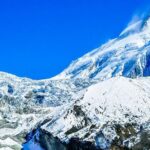
From the pass top, you’re looking at multiple peak groups listed as Larkya, Mansiri, Cheo, and the Himlung Himal range. Then you descend toward Bimthang with panoramic views that keep coming as the valley opens.
This is also the day where cold can hit fast, especially if you start climbing late or pause too long. You’ll want a pace that keeps you warm without exhausting you. The “win” isn’t sprinting; it’s getting to the pass day feeling in control and then walking down safely.
Final days: Dharapani descent and the jeep-and-bus return to Kathmandu
Day 11 is 7 hours from Bimthang to Dharapani. The route shifts back into comfort compared with the previous days: you descend through pine and rhododendron forests. Mountain views remain in the mix, but the terrain is described as more manageable than the last few days, which matters after a big pass day.
Day 12 is travel wrap-up. After breakfast in Dharapani, you take a jeep to Besisahar (about 4 hours). Then you board a bus to Kathmandu along the Prithvi Highway. The drive from Besisahar is about 3 hours to join the highway, plus another 4 hours alongside the Trishuli River, and then you’re transferred to your Kathmandu hotel.
This long final travel day is also a good reason to plan a calm evening in Kathmandu after you arrive.
Lodges, meals, and staying sane on simple mountain comforts
This trek runs on lodge life. You’ll have lodge accommodation during the trek, and meals are structured with breakfast, lunch, and dinner included. Hot shower and hot water are not included, and table drinks like tea and coffee are also not included, so budget a little for those small daily extras.
If you’re the type who worries about food quality on treks, stick to what’s predictable: eat on schedule, drink enough water, and keep portions steady rather than trying to “catch up” at once. The itinerary includes water purification, which is a meaningful help for staying healthy.
The included oxygen meter is a thoughtful inclusion. You won’t need it the whole time, but having it available adds a layer of seriousness to how the trek handles altitude risk.
Staff support and the value of a private group
This is a private trek with only your group. That matters because it changes the hiking day into something more personal. You’re not guessing whether your pace matches a random group; your guide can adjust timing and regroup you when needed.
The staffing approach is also clear: one professional guide plus porters, and porter expenses are covered. The company’s communications in past client feedback name guides like Laxman, Sanjay, Nauser, Kumar, and support staff like Brian, with Tej associated with leadership. Those names show up with consistent praise for professionalism and help during tough moments.
One particularly important example from past experiences: one trek participant didn’t finish due to needing helicopter rescue, and the feedback credited strong assistance from the team. You don’t plan on emergencies, but it’s reassuring to see the operator takes emergency evacuation support seriously.
A practical altitude and health game plan for this route
Even with a rest day in Sama Gaon and steady pacing, this route includes big altitude work. Day 10 is the key threat: the snowy pass day at around 5160m. Earlier days also include higher trail sections and one day flagged for landslide-prone terrain.
So here’s the practical approach I’d use:
- Start the day early and keep a steady pace. Save hero speed for after the pass.
- Don’t treat the rest day as optional. It’s part of how the trek manages altitude.
- Carry a warm layer even when the morning feels mild. Cold can arrive on the pass.
- Take advantage of the included oxygen meter if your guide recommends it.
Also, remember that travel insurance isn’t included. For a high-pass itinerary, I’d make sure your policy covers trekking and emergency evacuation.
Should you book the Private 12-Day Manaslu Circuit Trek?
Book this trek if you want a mountain itinerary that balances culture and altitude, with a clear route through Gurung and Magar areas and then into Tibetan-style villages. The included permits, guide and porter support, and practical trail tools like oxygen meter and water purification add real value for $960.
Don’t book it if you’re looking for the easiest walking week or warm, comfortable lodge life. Day 4 includes a potentially landslide-prone section around Ghap, and Day 10 is a cold, snowy pass day. If you’re not comfortable with that, pick a lower-altitude route.
One last decision tip: before you pay, confirm the Kathmandu hotel situation and what’s included for your specific dates. That’s the only part of the details that looks inconsistent. Everything else is pretty direct: you’re coming for Manaslu views, village culture, and the Larkya La Pass day.
FAQ
What time and where does the trek start in Kathmandu?
The meeting point is Nepal Alternative Treks & Expeditions, Post Box 8169, Raniban Marg 136/205, Nagarjun, Kathmandu. Start time is 7:15 am, and pickup is offered.
What permits and support are included in the trek price?
The package includes MCAP, ACAP, Local Entry fee, and Manaslu Special permit. You also get a professional guide, porters (and their expenses), a trek map, oxygen meter, first aid, and water purification.
Are meals included during the trek?
Yes. The trip includes breakfast (12), lunch (12), and dinner (11).
What’s the main high-altitude challenge on the itinerary?
The big challenge is crossing Larkya La Pass, listed at around 5106m in the overview and 5160m in the itinerary, on Day 10. The pass day is described as one of the most challenging and exciting days, with rough and snowy trails.
Is travel insurance included?
No. Travel insurance is not included.
Can I cancel for free, and what happens if weather is bad?
You can cancel up to 24 hours in advance for a full refund. If the experience is canceled due to poor weather, you’ll be offered a different date or a full refund.