REVIEW · MOSHI
Machame Route 7-Day Private Kilimanjaro Trek
Book on Viator →Operated by Bush Lion Trekking and Tours · Bookable on Viator
Climbing Kili starts in the rainforest. This 7-day Machame Route from Moshi strings together rainforest, moorland, rocky alpine desert, and big summit views, with an itinerary built around altitude adjustment rather than rushing.
What I like most is the human side: the guides and porters work as a real team, and clear support matters when your body feels off. I’ve also noticed that people like Jackson and the crew by name, including guides such as Innocent, Kenny, Shafii, Emmanuel, William, Issa, and Martin—so you’re not just getting a generic checklist.
One consideration: the last push is intense. You start the summit attempt around midnight, and Day 6 can stretch into a long 12–15 hour day, with steep sections and loose ground.
In This Review
- Key Things That Make This Machame Trek Worth Your Time
- Machame Route: Why This 7-Day Plan Hits the Sweet Spot
- Moshi Start and the Pre-Trek Setup You’ll Be Glad You Have
- Day 1: Into Kilimanjaro National Park, Rainforest to Machame Camp
- Day 2: Steeper Climb and Big Views to Shira Camp
- Day 3: Lava Tower for Acclimatization, Then Down to Barranco
- Day 4: Barranco Wall to Karanga Camp
- Day 5: Barafu Camp, Short but Steep, Then Early Prep for Summit Night
- Day 6: Midnight Summit to Uhuru Peak, Then the Long Descent
- Day 7: Rainforest Finish at Mweka Gate and Your Summit Certificate
- Price and Value: What $2,209 Buys You on the Mountain
- Who This Trek Fits Best (and Who Should Reconsider)
- Practical Tips to Make Your Machame Trek Easier
- Should You Book This 7-Day Private Machame Trek?
- FAQ
- How long is the Machame 7-day trek?
- Where does the trek start and end?
- Is this trek private?
- What’s included in the price?
- What is not included?
- What fitness level do I need?
- Can I cancel for a refund?
Key Things That Make This Machame Trek Worth Your Time
- Machame pacing for acclimatization, not just mileage
- Rainforest-to-alpine scenery shifts that keep each day feeling different
- Expert guides and porters plus safety gear on the mountain
- Camping support included, from tents to sleeping mats and a portable toilet
- Uhuru Peak summit day structure, with an early rest plan before midnight
- Summit certificate and a final walk out through the rainforest
Machame Route: Why This 7-Day Plan Hits the Sweet Spot
The Machame Route is one of Kilimanjaro’s best-known trails for a reason. It gives you a mix of ecosystems across the climb, and it doesn’t just toss you higher and higher without breathing room. On a mountain where altitude can mess with you fast, that pacing is the difference between feeling like you’re managing the climb and feeling like you’re surviving it.
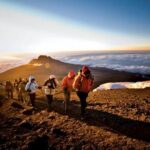
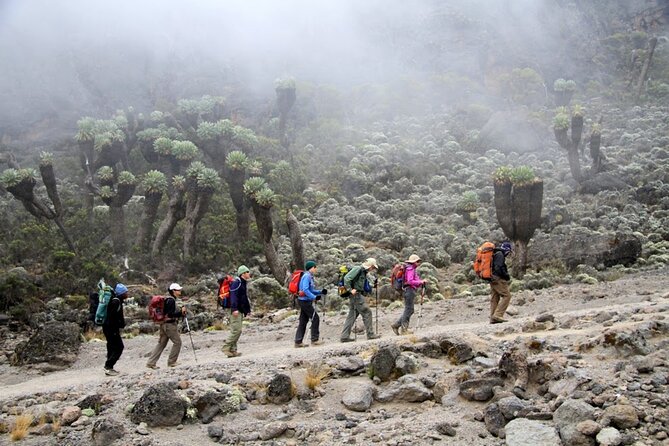
You’ll also get that classic Kilimanjaro feeling of contrast. You’ll begin with thick forest, then shift into open moorland with long sightlines and standout views, then climb through colder, harsher terrain toward the rocky high camps. Finally, you’ll reach the ice-and-summit zone. Even if the trek is physically demanding, the changing terrain helps keep your mind engaged.
This trek is also set up as private, meaning it’s just your group. That matters for comfort and communication—especially at altitude when you want instructions repeated clearly and at the right time.
You can also read our reviews of more tours and experiences in Moshi.
Moshi Start and the Pre-Trek Setup You’ll Be Glad You Have
You base out of Moshi, and the plan includes transportation to and from the Kilimanjaro trailhead as well as airport transfers to and from Kilimanjaro International Airport. It also includes a pre-climb briefing and orientation, plus two nights of accommodation: one night before the trek and one night after. That removes a lot of stress from the day you arrive, because you’re not scrambling to line up logistics while you’re already thinking about your body and the weather.
There’s also a mobile ticket feature listed, which usually means smoother access and less fuss when you’re meeting up. You’ll want that kind of clarity when the mountain schedule gets tight.
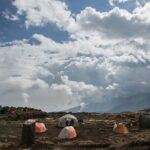
And because this trek is camping-based, the “set” matters. You don’t just get a route. You get camping equipment (tents, sleeping bags, sleeping mats) and a portable toilet. That sounds practical because it is. It also means you can travel lighter than you would if you had to source everything yourself.
Day 1: Into Kilimanjaro National Park, Rainforest to Machame Camp
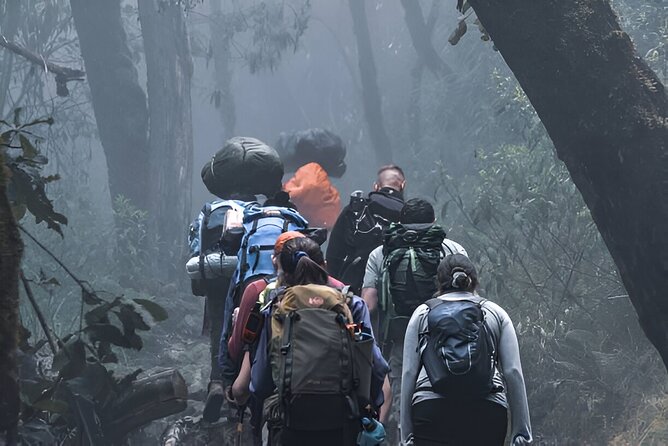
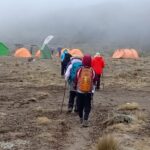
Day 1 starts with a drive from Moshi to Machame Gate in Kilimanjaro National Park. After sign-in and a briefing, you walk into thick rainforest. This is the part of the trek that feels like a living tunnel of green—cooler air, plenty of shade, and a steady uphill grind that helps you settle into the rhythm.
Expect about 5–7 hours of hiking (around 11 km / 7 miles), then arrival at Machame Camp (3,010 m / 9,875 ft). That altitude jump is noticeable, but it’s still a manageable introduction day.
A practical point: Day 1 sets your pace for the whole trip. If you start out too fast, you’ll feel it later. If you start steady, you’re more likely to sleep decently that first night, which is huge before the real altitude work begins.
Day 2: Steeper Climb and Big Views to Shira Camp
On Day 2, the trail gets steeper as the rainforest gives way to the moorland zone. The scenery changes fast here. You trade close forest cover for more open air and wide views, including sightlines toward Mount Meru and the Shira Plateau area.
You’ll hike roughly 4–6 hours and cover about 5 km / 3 miles, reaching Shira Camp (3,840 m / 12,600 ft). Even though the distance is shorter than Day 1, the altitude makes every step feel like it weighs more.
This day is valuable because it teaches your body the new normal. You’re not just climbing—you’re learning how to move efficiently when breathing becomes the main job. If you’re the type who wants to “push through,” this is where you’ll benefit from staying controlled and letting the day come to you.
Day 3: Lava Tower for Acclimatization, Then Down to Barranco
Day 3 is a key altitude day, and it’s one of the smartest parts of this itinerary. You climb up toward Lava Tower (4,630 m / 15,190 ft), stop for lunch, and rest. Then you go down to Barranco Camp (3,960 m / 13,000 ft).
Total distance is about 10 km / 6 miles, usually taking 6–8 hours. The “up, then down” pattern is classic acclimatization logic: you gain height to stimulate adaptation, and then you descend enough to improve how your body handles the next days.
This is also where you’ll appreciate the guide’s role. Your leaders help you keep your pace consistent, and they’ll watch for warning signs so you can adjust early rather than late. It’s not glamorous work, but it’s what keeps summit attempts safer.
Day 4: Barranco Wall to Karanga Camp
Day 4 brings the famous Barranco Wall. It’s steep, but you don’t need special climbing skills. Once you reach the top of the wall, you’re rewarded with open views over the surrounding terrain before you continue toward the next camp.
After the wall, the trail follows through a drier, open area to Karanga Camp (4,035 m / 13,250 ft). Expect about 5 km / 3 miles and roughly 4–5 hours.
If you’re worried about the steep bits: the wall is one of the days where having experienced guides makes a real difference. Steep doesn’t always mean technical, but it does mean your footwork and breathing need focus. You’ll do better with slow steps and short rests than with big efforts.
Day 5: Barafu Camp, Short but Steep, Then Early Prep for Summit Night
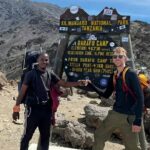
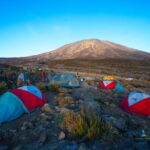
Day 5 is the “gear up” day. The hike to Barafu Camp (4,640 m / 15,220 ft) is shorter in distance—about 4 km / 2.5 miles—but it climbs steeply through rocky high terrain known for its alpine-desert feel. Plan around 4–5 hours.
When you arrive, you’ll have an early dinner and then rest. This is not the day to stay restless. You’re preparing for a midnight summit start, and you’ll want energy and calm in your body.
This is where I’d call out something practical about value: this trek includes safety equipment like oxygen tanks and first aid kits. You hope you won’t need them, but knowing they exist helps you stay focused on the climb instead of fear.
Day 6: Midnight Summit to Uhuru Peak, Then the Long Descent
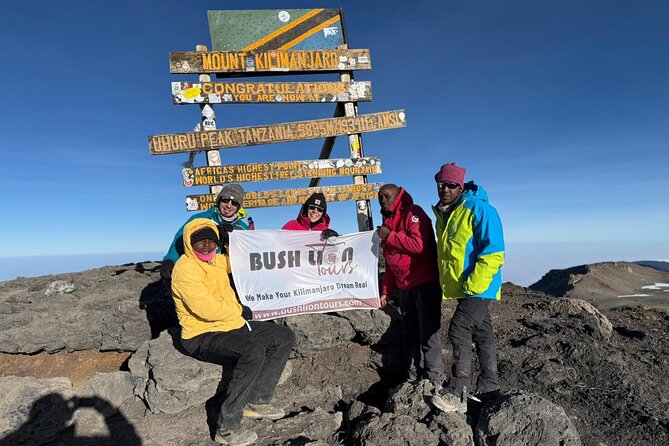
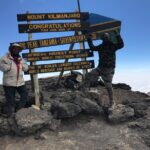
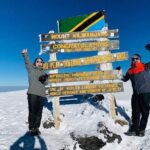
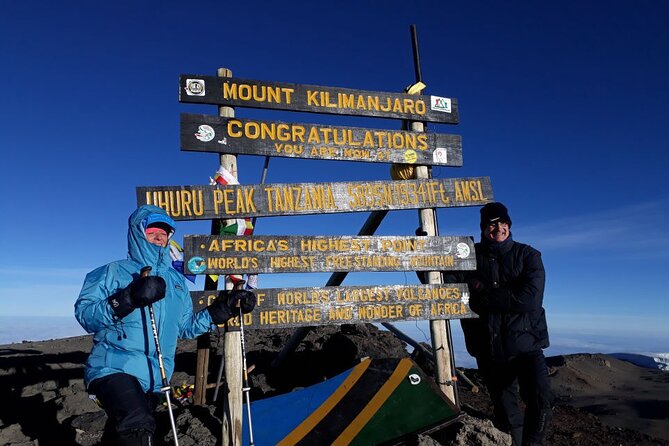
Day 6 is the big one. You start the summit attempt around midnight for a climb to Uhuru Peak (5,895 m / 19,341 ft), then descend back to camp and continue toward Mweka Camp (3,110 m / 10,200 ft).
Total walking time is roughly 7–8 hours to reach the summit, and the full day can run 12–15 hours once you include breaks and the descent. The ground can be loose and steep, which is why this day is physically demanding even for strong hikers.
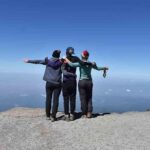
After you reach Uhuru Peak, you get time to celebrate your achievement. Then the priorities shift fast: drink, move carefully, keep your footing, and protect your energy on the way down.
Also, pay attention to what “down” means at altitude. People often think descending is easier, but at high altitude the legs still burn and balance can suffer. Long hours plus loose ground means you want to trust your guide’s pace and move like your goal is stability, not speed.
Day 7: Rainforest Finish at Mweka Gate and Your Summit Certificate
Day 7 is a release. You hike down through the rainforest to Mweka Gate, typically 3–4 hours and about 10 km / 6 miles. It’s green, alive with activity, and the kind of walking that feels like you’re coming back to oxygen and normal gravity.
At Mweka Gate, you’ll receive your summit certificate. After that, you drive back to Moshi so you can rest and process what you just did.
This final day also matters psychologically. You’re not stuck in “one more camp, one more climb” mode. You get a real finish line, and that makes the summit feel even more complete.
Price and Value: What $2,209 Buys You on the Mountain
At $2,209 per person, this trek isn’t cheap. But it also isn’t just a guide leading you up a trail. The price covers a lot of the expensive, hard-to-replicate parts of a Kilimanjaro expedition.
Included items worth real money and real convenience:
- Park fees and permits
- Experienced guides and porters
- Meals (breakfast, lunch, dinner) during the climb
- Clean drinking water
- Camping equipment like tents, sleeping bags, sleeping mats, and a portable toilet
- Safety equipment such as oxygen tanks and first aid kits
- Transportation to and from the trailhead
- Airport transfers
- Two nights of accommodation (one before, one after)
- Summit certificate
- Pre-climb briefing and orientation
What you pay extra for (and should plan for):
- Air tickets to Tanzania
- Travel insurance (medical, evacuation, trip cancellation)
- Personal gear (boots, clothing, backpack, and so on)
- Tips for guides, porters, and staff
- Extra hotel meals before or after the trek
My take on the value: you’re paying for risk management, camp support, and altitude pacing, not just “time on a mountain.” If you’re comparing options, look beyond the headline price. Count what’s included like permits, meals, tents, and safety supplies. Those pieces add up quickly when you price them separately.
Who This Trek Fits Best (and Who Should Reconsider)
This climb is listed for people with moderate physical fitness. That usually means you should be able to hike uphill for hours, stay steady at altitude, and follow pace guidance. If you can handle long days and steep sections, you’ll likely do well on Machame’s structure.
It also suits couples and families who want a private setup with clear leadership. In the experiences I gathered from the team’s past trips, the group has supported different travelers, including a father traveling with his 13-year-old son, and families finishing the trek through rough weather conditions.
Reconsider if you:
- Know you struggle with very long days (Day 6 can run 12–15 hours)
- Don’t want to commit to early nights and midnight starts
- Are hoping for a gentle, leisurely walk
Practical Tips to Make Your Machame Trek Easier
Since personal gear isn’t included, plan for the basics before you arrive in Moshi. Bring sturdy hiking boots, moisture-wicking layers, and a backpack you can manage for multi-hour hikes. Also pack for cold nights at high altitude; even with camping equipment provided, you’ll still need the right clothing.
Focus on pacing. Days like Day 3 (up to Lava Tower, then down to Barranco) and Day 6 (summit and long descent) reward patience. If your breathing spikes, slow down. If you feel dizzy, tell your guide early. This is one of those trips where the “small signals” are the ones that help keep you safe.
Finally, take sleep seriously. The trek includes dinner and rest before your midnight summit start, but you can help it along by keeping your routine calm and avoiding late-night fuss.
Should You Book This 7-Day Private Machame Trek?
Yes—if you want a Kilimanjaro route with real altitude logic, strong support, and camping that’s handled for you. I’d book it if you like the idea of moving through multiple ecosystems, getting big views along the way, and finishing with a clear certificate moment at Mweka Gate.
I wouldn’t book it if you’re looking for a light hiking vacation or if you’re uncomfortable with the idea of a demanding summit-night schedule starting around midnight. The Machame plan is built for hikers who can commit to pace and endurance.
If you want to climb Kilimanjaro with structured acclimatization and a team that people trust by name, this is a solid choice for your plan.
FAQ
How long is the Machame 7-day trek?
The trek is listed as 7 days, with each day’s hiking time and distances varying by camp.
Where does the trek start and end?
You start from Moshi and drive to Machame Gate on the first hiking day, and you finish with a hike to Mweka Gate on the last day, then drive back to Moshi.
Is this trek private?
Yes. It’s described as a private tour/activity where only your group participates.
What’s included in the price?
The package includes airport transfers, pre-climb briefing and orientation, transportation to and from the trailhead, park fees and permits, experienced guides and porters, meals during the climb, clean drinking water, tent accommodation, camping equipment, safety equipment, and the Kilimanjaro summit certificate, plus two nights of accommodation (one before and one after).
What is not included?
Air tickets, travel insurance, personal gear, tips for guides and porters and other staff, and additional accommodation and meals before or after the climb are not included.
What fitness level do I need?
The experience is described as suitable for people with moderate physical fitness.
Can I cancel for a refund?
Free cancellation is available up to 24 hours in advance for a full refund. If it’s canceled due to poor weather, you’ll be offered a different date or a full refund.