REVIEW · KATHMANDU
10 Days Annapurna Base Camp Trek from Kathmandu
Book on Viator →Operated by Couch Adventure Nepal (CAN) · Bookable on Viator
Annapurna starts with an early-morning plan. Pickup at 6:30am pulls you out of Kathmandu and onto a tourist bus route that gets you moving fast, then you settle into Pokhara before the trail work begins.
What makes this feel different is how the days are paced: you get a real transition from city to lakeside to Himalayan footpaths, without scrambling for logistics.
I especially like two things: the English-speaking trekking guide support during the trek, and the straightforward “base-to-trail” transfers that keep the trip organized. In the mountain towns, the trekking rhythm feels steady—villages, bridges, staircases, forests—then the big payoff at Annapurna Base Camp.
One thing to consider up front: meals and drinks aren’t included, so you’ll want to budget for food during the hike.
In This Review
- Quick highlights you’ll feel in real life
- Entering the rhythm: Kathmandu to Pokhara without the stress
- Pokhara Lakeside: your reset day before the mountains
- Day-by-day trail feel: from Ghandruk to Chhomrong
- Thousands of stairs, a suspension bridge, and the Modi River corridor
- Deurali to the sanctuary build-up
- Machhapuchhre Base Camp: where the views start driving the day
- Sunrise at Annapurna Base Camp and the 360-degree mountain moment
- Jhinu Danda hot springs option and closing the loop
- Returning to Kathmandu: the end is in the route, too
- Price and value: what $586.67 really buys you
- Guides, support, and the small things that matter on a trek
- Who should book this Annapurna Base Camp trek—and who should think twice
- Should you book Couch Adventure Nepal’s 10-day ABC trek?
- FAQ
- What time does the Kathmandu pickup start?
- How do you get from Kathmandu to Pokhara?
- Where are you staying in Pokhara during the trek?
- What trekking permit documents are included?
- Is there a guide, and will they speak English?
- Are meals included in the price?
- Is this a private trip or shared group?
Quick highlights you’ll feel in real life
- 6:30am Kathmandu pickup paired with a direct tourist bus run to Pokhara to cut down hassle
- Pokhara Lakeside hotel in a walkable area near Fewa Lake, so you can decompress before trekking
- Guides like Prakash and Bisham show up in the experience through friendly, helpful on-trail support
- Machhapuchhre Base Camp and Annapurna Base Camp are both in the schedule, not just one peak moment
- Sunrise at Base Camp with a color-changing peak view before you head back down
- Private trip for your group plus permits (TIMS + trekking permit) handled as part of the package
Entering the rhythm: Kathmandu to Pokhara without the stress
The trip begins with a very specific start time: you’re picked up from your Kathmandu hotel at 6:30am. That early departure matters because it sets the tone for the whole trek—no half-day wandering, no waiting around. You’ll drive to the bus station and hop on the tourist bus toward Pokhara.
The Kathmandu-to-Pokhara leg is listed as about 7 hours. It’s a long day, but it’s also the point where you shift gears: the city noise fades, and you start thinking in “route and timing,” not just “destination.” One practical bonus: if you ask for a sofa seat on the bus, the operator has shown flexibility in handling requests like that.
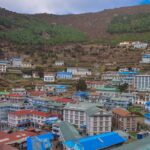
When you reach Pokhara, you’re not thrown into the wilderness immediately. Instead, you transfer to a hotel in the Lakeside area, with Fewa Lake within a short walk. That’s a smart move for Annapurna Base Camp treks, because the hike is coming soon and your feet (and sleep) will matter more than souvenir shopping.
You can also read our reviews of more tours and experiences in Kathmandu.
Pokhara Lakeside: your reset day before the mountains
Pokhara Lakeside is where you make the transition from travel mode to trekking mode. Your plan includes a transfer into the Lakeside area, and the hotel sits close enough to walk to Fewa Lake.
This is a simple detail, but it helps you feel less rushed. You’ll likely have time to eat, hydrate, and enjoy a calmer evening before the first proper trekking day. And because you’re only carrying trekking responsibilities once the trek begins, your mind stays clear for the physical work ahead.
Also worth noting: the package includes a 2-star level accommodation in Pokhara. It’s not luxury, but it’s a “sleep and recharge” type of stay that fits a trekking itinerary. You’re paying for a trek with real altitude days—so you shouldn’t expect a hotel resort experience.
Day-by-day trail feel: from Ghandruk to Chhomrong
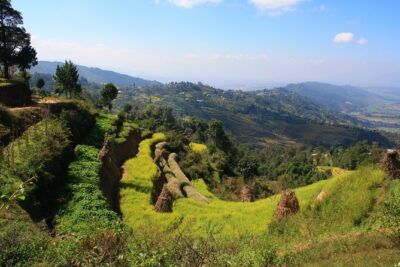
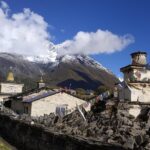
On trekking day one after Pokhara, you’ll head toward Ghandruk (Ghandrung Village). This part is built around an actual community feel: Ghandruk is known as a typical Gurung village, and the route uses a stone-paved trekking track. The day is listed around 6 hours.
What I like about starting here is that you get culture and atmosphere early, not just “walk, walk, walk.” Stone paths mean the footing is often more defined than you might expect on the first day. You’ll also be moving through a place where village life shapes the trail, so it feels grounded.
The next day shifts to Chhomrong, via an uphill-to-downhill pattern. You start with a climb toward Kimrung hill, then descend to Kimrung Khola through a forested trekking trail. After exploring village settlement areas along the river bend, you work uphill again toward Chere Hill.
That’s another good early lesson: the Annapurna region isn’t one long grind. It’s a repeated pattern of ups and downs—exactly the kind of pacing you want before thicker air and colder nights.
Thousands of stairs, a suspension bridge, and the Modi River corridor
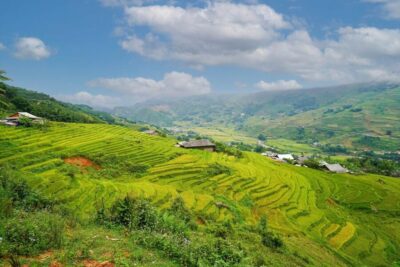
From Chhomrong you head through the Annapurna region, and the day’s description gives you a clear sense of what you’re signing up for: thousands of stone staircases, a suspension bridge, and a descent toward the Chomrung river before you climb again.
This section runs about 6 hours, and it has a lot of “texture” in the walking:
- stone stair work that slows your speed (in a good way if you’re smart with pacing)
- forest trails that break up the monotony
- a move toward Sinwa Village and then on to Bamboo
- arrival near Doban on the Modi River bank
Doban on the Modi River corridor is one of those places where the trail starts to feel more Himalayan and less village-road. You’ll likely notice changes in building style, trail atmosphere, and the feeling that the mountains are getting closer day by day.
If you’re prone to rushing, this is the day to slow down. Staircases reward steady effort. Push too hard and you’ll pay for it later when the route asks for more climbing.
Deurali to the sanctuary build-up
The next trekking day focuses on getting you up toward Deurali, listed around 5 hours. This isn’t described as a “single dramatic moment” day—it’s more of a bridge between the villages and the sanctuary zone.
I like this kind of day for one big reason: it helps your body adjust. By the time you’re approaching Annapurna Sanctuary country, you want your rhythm already set. If you go too fast on early days, you tend to show it later with fatigue you can’t fully sleep off.
Expect mountain trail walking with views along the way, and enough effort to keep your legs working without feeling like every hour is a fight.
Machhapuchhre Base Camp: where the views start driving the day
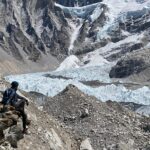
Then comes one of the key itinerary moments: trekking to Machhapuchhre Base Camp, with the option of spending time in the base camp area to take in a wide set of peaks.
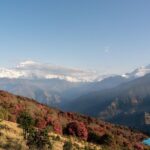
The schedule lists the Machhapuchhre Base Camp day at about 5 hours total, and it emphasizes views of Mt. Hiunchuli, Annapurna South, Annapurna I, Annapurna III, Gandharvachuli, and Gangapurna. After that, you’ll start another uphill climb to Annapurna Base Camp described as about 2 hours.
This is a “split-feeling” day. First you’re climbing into Machhapuchhre Base Camp with that sense of a threshold—then you move again toward Annapurna Base Camp, which is the destination most people came for.
The practical takeaway: don’t treat this like a casual hike day. Even if you’re fit, plan to move with intention and save a little energy for that last push.
Sunrise at Annapurna Base Camp and the 360-degree mountain moment
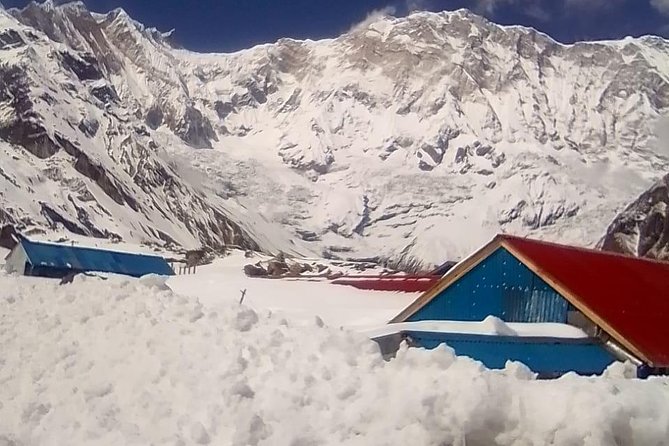
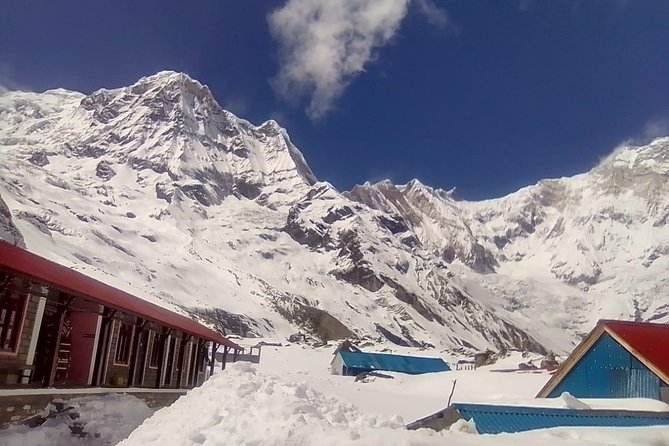
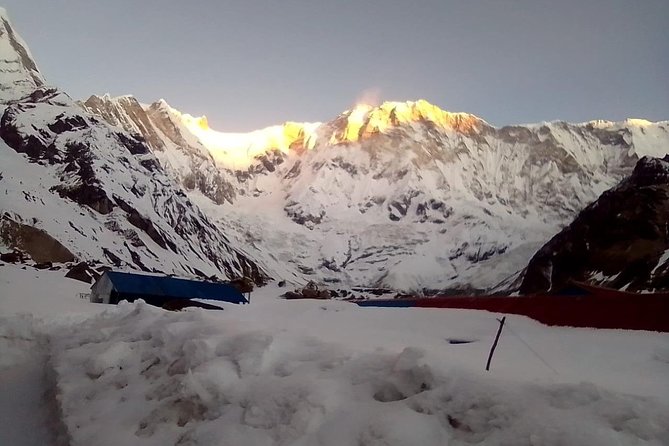
The next morning is set for sunrise from Base Camp. The description points out the color shift of the peaks from white to orange—exactly the kind of light change that makes the early start feel worth it.
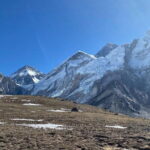
From Annapurna Base Camp, you’re expected to see a 360-degree view, including Annapurna South, Himchuli, Annapurna I, Gangapurna, and Machhapuchre (Fishtail) among others.
Then you head back down to Bamboo, listed at about 6 hours.
Two things matter here:
1) sunrise needs you mentally ready, because you’ll likely be awake earlier than you’re used to
2) the descent is work—good for your acclimation in a practical sense, but still hard on knees if you overstride
This is where a good guide earns their pay. With support from an English-speaking trekking guide (including people like Prakash or Bisham in past groups), you get help keeping your pace and timing right without making it feel rigid.
Jhinu Danda hot springs option and closing the loop
After Bamboo, the trek continues toward Jhinu Danda. The plan includes hiking to Chomrung, then further down to Jhinu Danda. The description mentions that if you’re attentive, you can visit hot spring areas about 15 minutes from the village.
That’s a nice “reward stop” tucked into the schedule. It’s also a reminder that your body needs downtime as much as it needs movement. Even a short soak—if you choose to do it—can make the last days feel more bearable.
This day runs around 6 hours.
The following day brings you to Naya Pul, with a trek down listed at about 6 hours, and then you’re transferred by private car from Nayapul back to Pokhara in about 1 hour 10 minutes. You finish with a final short transfer to your Pokhara Lakeside hotel area, described as about 10 minutes.
Returning to Kathmandu: the end is in the route, too
The final day is about moving back to Kathmandu. You’ll transfer to the bus station and take the tourist bus drive back, listed as about 7 hours.
This last transfer day is long, but it’s also clean: once you’re off-trail, the trip becomes predictable. It helps you close the loop without scrambling for additional transport plans.
Price and value: what $586.67 really buys you
At $586.67 per person for a roughly 10-day trek, the value comes from how the package stacks practical costs:
- Hotel pickup and drop-off in Kathmandu
- tourist bus Kathmandu–Pokhara–Kathmandu
- 2-star hotel accommodation in Pokhara
- basic guest house accommodation during the trek
- private car transfer for Pokhara–Nayapul–Pokhara
- trekking permit and TIMS included
- an English-speaking trekking guide
- a private trip setup for your group
What’s not included is also important: meals and drinks. Many people budget for this separately once they see how trekking days work in practice—especially at higher elevations where options can be fewer.
So ask yourself what you’re really buying with this price. You’re paying for the whole “framework”: transportation, permits, guide support, and lodging types that match a mountain itinerary. If you want to focus your energy on hiking and not on paperwork, this package is built for that.
Guides, support, and the small things that matter on a trek
The experience credits an English-speaking guide, and in real-world terms, that means you’re not stuck decoding trail logic alone. People in past groups have highlighted guide friendliness and practical help, including guide Prakash and guide Bisham.
That support can look small on paper—keeping you on schedule, answering questions, helping you manage pacing. But on a multi-day trek, “small” support becomes big confidence. You’re also less likely to feel lost when the trail pattern changes between village days, forest days, and base camp days.
One more detail that signals organization: accommodation and vehicle arrangements have been described as perfect by people who took this route with their group. That lines up with a trek that includes multiple transfers and doesn’t leave you guessing how you’ll get between Kathmandu, Pokhara, and the trailheads.
Who should book this Annapurna Base Camp trek—and who should think twice
This is a strong fit if:
- you want a classic Annapurna Base Camp experience that includes Machhapuchhre Base Camp and sunrise at Base Camp
- you prefer organized transfers (tourist bus plus private car segments)
- you like the idea of staying in guest houses during the trek rather than expecting hotel comfort every night
- you’re traveling with a group and want a private trip feel
You might think twice if:
- you don’t want to handle budgeting for meals and drinks during the trek
- you’re not comfortable with moderate physical demands, since the schedule includes multiple 5–6 hour trekking days plus steep descents and stair-heavy sections
Should you book Couch Adventure Nepal’s 10-day ABC trek?
I’d book this if your priority is a well-structured Annapurna Base Camp trek with guides, permits, and transport handled, and if you’re okay planning for meals along the way. The route’s rhythm—villages like Ghandruk and Chhomrong, then the sanctuary approach, then Machhapuchhre Base Camp and Annapurna Base Camp plus sunrise—hits the highlights many people dream about.
I’d pass or look for a different option if you need meals included, or if you want a lighter day schedule. This trek is built for real trekking days, not a gentle sightseeing stroll.
If you do book, send a clear message about your bus seat preferences early (like sofa seating) and get your group expectations aligned. That kind of communication makes a good trek smoother.
FAQ
What time does the Kathmandu pickup start?
The meeting start time is 6:30am, with pickup from your hotel in Kathmandu and then transfer to the bus station.
How do you get from Kathmandu to Pokhara?
You take a tourist bus from Kathmandu to Pokhara, which is listed as about 7 hours.
Where are you staying in Pokhara during the trek?
You’re provided 2-star level accommodation in the Lakeside area of Pokhara, with Fewa Lake within walkable distance.
What trekking permit documents are included?
The package includes the trekking permit and TIMS.
Is there a guide, and will they speak English?
Yes. It includes an English-speaking trekking guide during the trek.
Are meals included in the price?
No. All meals and drinks are not included and are available on purchase.
Is this a private trip or shared group?
This is listed as a private trip/activity, meaning only your group participates.