REVIEW · KATHMANDU
Khopra Ridge Trek
Book on Viator →Operated by Top of The World Treks Pvt.Ltd · Bookable on Viator
One view alone makes this trek worth your time. Khopra Ridge is a newer path in the Annapurna region, and it trades polished “tourist trail” comfort for basic home-stay nights and closer contact with daily life. You start in Kathmandu, fly to Pokhara, and finish back in the city after time to relax by Fewa Lake.
What I like most is the mix of mountains and real villages. You walk through rhododendron and oak forests, you pass buffalo pastures, and you spend two nights near Kopra Ridge for sunrise-style viewpoints. I also like that the trip is run by Top of the World Treks with guides like Biru Tamang and Bhoj Tamang showing up in recent feedback as steady, caring leads.
One consideration: this isn’t built for comfort-first trekkers. Lodges are very basic and the rhythm can feel less structured than the more developed Annapurna routes, so you’ll want patience and a flexible mindset.
In This Review
- Why Khopra Ridge Feels Different From Other Annapurna Treks
- Kathmandu Warm-Up: Thamel to Swayambhunath, Then Get Trek-Ready
- Flight to Pokhara and the Village Introduction at Ghandruk (1940m)
- Rhododendron Ascent and Tadapani Sunset Views (2300m)
- Leaving the Sanctuary Trail: Dobato and the Shift to a Less-Touristed Feel
- Mulde View Point, Dhaulagiri Country, and the Suspension-Bridge Moment
- The Climb to Kopra Ridge (3870m): Views That Come With Effort
- Khayer Lake Day (4827m): A Long Walk Worth the Squeeze
- Descend to Paudwar: Steep Sections, Forest Switching, and Village Life
- Tatopani Hot Springs (1190m): Fields, Suspension Bridge, and Soaking Time
- Pokhara Travel Day and Museum Time: A Break That Doesn’t Feel Like Wasted Time
- Fewa Lake and the World Peace Stupa: Your Scenic Reset in Pokhara
- Back to Kathmandu and Durbar Square: Finishing With a City Dose
- Where the Value Really Comes From (Price, Meals, and Comfort Tradeoffs)
- Who This Trek Suits Best (And Who Might Prefer Something Else)
- Practical Tips to Make Your Khopra Ridge Trek Feel Easier
- Should You Book Khopra Ridge Trek?
- FAQ
- How long is the Khopra Ridge trek?
- Where does the trek start and how does it end?
- Is pickup included?
- Is this a group tour or private?
- How fit do I need to be?
- What are the accommodations like on the trek?
- Are meals included?
- What are some key highlights during the trip?
- Are there any weather or timing requirements?
- What’s the cancellation window?
Why Khopra Ridge Feels Different From Other Annapurna Treks
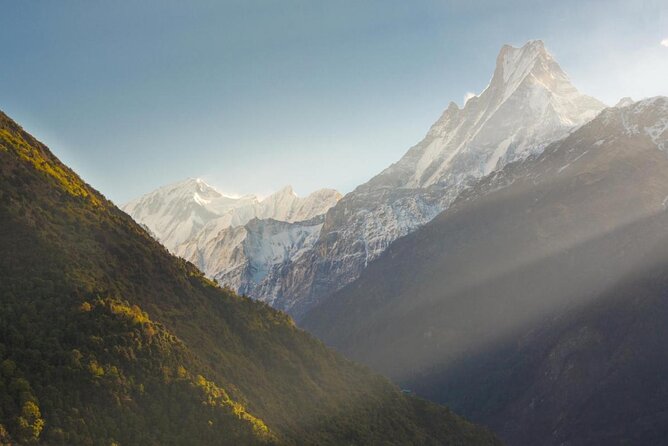
- A less-developed route: You’re on a newer trail where nights are more home-stay than hotel-calm.
- Two nights at Khopra/Khopra Ridge area: More time to chase views than rushing through.
- A high hike day to Khayer Lake: The 4827m lake and temple are a big payoff for effort.
- Wildlife and bird spotting chances: The route moves through forests and open areas where sightings are possible.
- Pokhara reset time: You’re not trekking the whole 14 days; you get real downtime on Fewa Lake.
Kathmandu Warm-Up: Thamel to Swayambhunath, Then Get Trek-Ready
Your trip starts in Thamel, the tourist neighborhood in Kathmandu. After pickup and a roughly 45-minute drive into the center, you get the usual practical reset: tea, shower, and a low-pressure dinner before an early night. This is a good setup if you want your first day to be about settling in rather than juggling plans.
Day 2 is built for orientation. You visit Swayambhunath, the Buddhist stupa and monastery that’s been around for centuries. From there, you get wide valley views and the kind of small moments that make Kathmandu feel like Kathmandu, including the famous monkeys. It also helps you mentally shift from city life into a trek mindset, because once you see the hills and valleys around the bowl of Kathmandu, the Himalaya feels less distant.
You also use the afternoon to prepare: packing checks, kit organization, and the chance to do your final shopping in Thamel. Practical tip: if you’re missing anything small but vital—warm layers, a good headlamp, blister help—this is the day to solve it while you’re still in a place where you can find options.
You can also read our reviews of more tours and experiences in Kathmandu.
Flight to Pokhara and the Village Introduction at Ghandruk (1940m)
On Day 3, you trade altitude-free time for the real thing with a flight to Pokhara. The flight takes about 45 minutes, and it’s paired with private transport to Nayapul before you start walking. This matters because the quicker transfer reduces the number of “travel fatigue” hours sitting on buses.
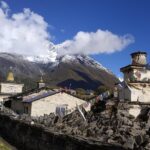
You begin trekking and walk to Ghandruk at about 1940m. It’s a classic entry point into the Annapurna region’s village world, and you’ll notice the Gurung culture right away. Ghandruk is also a helpful acclimatization pause: you get movement, fresh air, and views, but you’re not thrown into the steepest climb on day one.
From here, you’re not just collecting mileage—you’re learning how the trail feels in real conditions: rocky footpaths, changing forest edges, and the way weather can shift through the day. Expect a gradual build in effort and a gradual build in scenery.
Rhododendron Ascent and Tadapani Sunset Views (2300m)
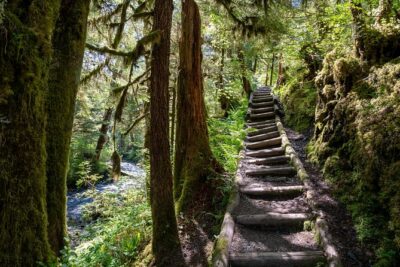
Day 4 pushes you into the mountain ranges with a walk through rhododendron forest. This section is where the route starts to feel like the Annapurna story many people came for: lush-looking forest paths, birds, and occasional monkeys along the trail.
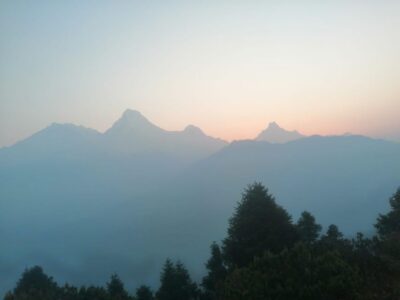
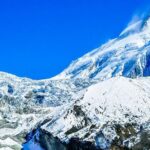
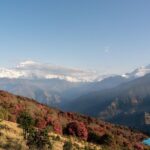
As you climb, you gain views of multiple peaks in the wider Annapurna world: Annapurna II, Annapurna III, Annapurna IV, Annapurna South, Machhapuchhre, and Lamjung Himal. You sleep in Tadapani at about 2300m, and the town’s elevation makes it a good place for sunrise and sunset watching.
The best way to use a day like this is simple: don’t race. Keep your pace steady and save your energy for the later summit-ish days. A slow rhythm here buys you better light later when the mountains start showing off.
Leaving the Sanctuary Trail: Dobato and the Shift to a Less-Touristed Feel
Day 5 is a pivot day. You leave the more famous Annapurna sanctuary area and head onto a less-travelled path, which is exactly where the Khopra Ridge experience earns its reputation.
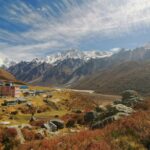
You move through thick rhododendron, then come up above tree line into areas that open into buffalo pastures. That transition is part of the charm: first it’s green and shaded, then it becomes more exposed and panoramic. You stop for lunch at Dobato around 3400m.
If you like your treks to feel “alive” instead of “managed,” this is the kind of day you’ll remember. Home-stay-style nights here can be basic, but that’s also why you feel close to the setting and not insulated from it.
Mulde View Point, Dhaulagiri Country, and the Suspension-Bridge Moment
Day 6 starts early with a hike to Mulde view point. The goal is clear: panoramic views across the Annapurna range and over toward the Dhaulagiri range. After the photo time and the standing-still breath catch, you head back down for breakfast, then continue trekking toward Upper Chistibung (around 3000m).
This day includes a mix of descending through forest and pasture before reaching an area like Deaurili / Lower Chistibung where you cross a suspension bridge. Bridges like this can be short, but they change the feel of a trail fast—one moment you’re in forest rhythm, the next you’re crossing a gap and seeing how high the valleys really are.
The day continues with a more gradual ascent through forest. Takeaway: this is a good day for steady effort because it doesn’t rely on one “hard push” to be memorable. The scenery arrives in pieces.
The Climb to Kopra Ridge (3870m): Views That Come With Effort
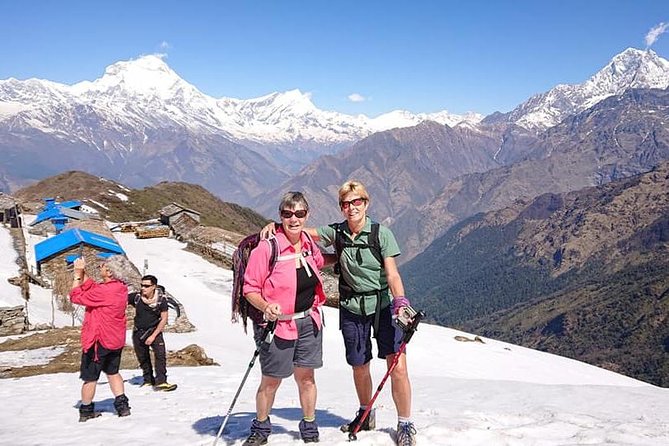
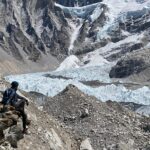
Day 7 moves you toward your big viewpoint. You climb steadily above tree line, and the area has a chance for wildlife sightings—specifically mountain thar and Danfe pheasant. You also get practical slow-climb pacing: you go slowly enough that you can rest when needed and take photos without feeling rushed.
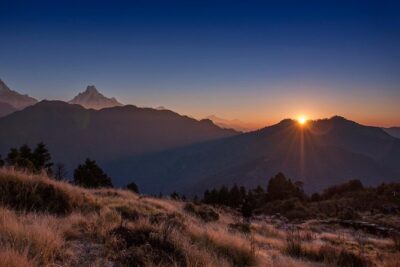
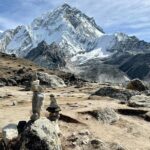
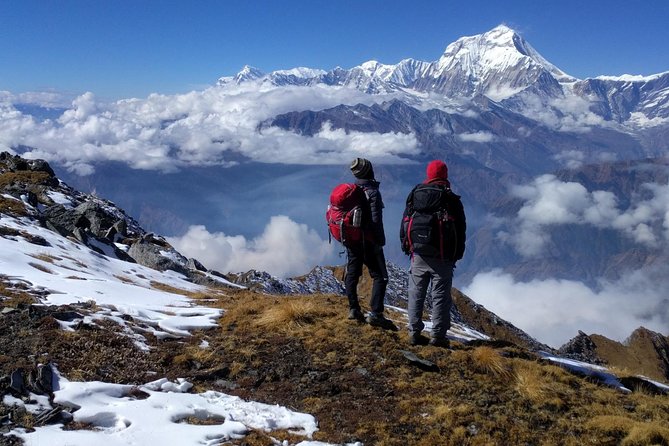
Your home for the night is Kopra Ridge at about 3870m. The views from here are the headline: Annapurna South is close (about 6km away), and you can see Fang and Nilgiri to the north, with Dhaulagiri to the west.
This is the day where you’ll feel the altitude most. Practical move: keep moving, take frequent breaks, and drink water even when you don’t feel thirsty. The goal is to avoid getting “winded and stubborn” at the same time.
Khayer Lake Day (4827m): A Long Walk Worth the Squeeze
Day 8 is your bonus challenge. You stay near Khopra for a second night, then set out on a long hike up to Khayer Lake and temple at about 4827m.
This is described as a long walk, but also as one where the views make the effort feel justified. If you’re the type of trekker who enjoys being on your feet for hours and doesn’t need entertainment beyond mountain light and the sound of your own footsteps, you’ll love this day.
Keep your expectations realistic. At this elevation, the hike is as much about managing breathing as it is about reaching the destination. Go slow, keep warm, and don’t underestimate how quickly the cold can arrive near the top.
Descend to Paudwar: Steep Sections, Forest Switching, and Village Life
Day 9 is about shifting down. You start with a hillside descent that includes some steep sections and open ground passing through buffalo pastures. Later you re-enter thick oak and rhododendron forest, and that forest-to-open-ground-to-forest rhythm is one of the reasons the route stays interesting instead of monotonous.
You end the day in Paudwar. This is a good night to re-balance. Trek days can wear you down in quiet ways—especially in your knees from long descents—so treat the evening as recovery time, not just another dinner.
Tatopani Hot Springs (1190m): Fields, Suspension Bridge, and Soaking Time
Day 10 takes you down through fields until you reach a small river and a water mill area, and then you cross another suspension bridge. After that, you move toward Hillkharka, then continue down to Tatopani at about 1190m.
Tatopani’s payoff is simple: hot springs. After days at altitude, a warm soak can feel like a reset button. It’s also one of the easiest nights on the itinerary emotionally, because you’re not pushing for a view—your reward is comfort and relaxation.
If you want to make this day even better, pack a small towel and water bottle you’ll actually use. It sounds basic, but these are the small items that make recovery smooth.
Pokhara Travel Day and Museum Time: A Break That Doesn’t Feel Like Wasted Time
Day 11 is a travel-and-recharge day. From Tatopani you take a local bus to Beni, then taxi on to Pokhara. Once you arrive, you still have time for the Pokhara museum.
This is the kind of stop that works well after trekking. It helps you connect the dots between what you just walked through and the broader culture around you. Even if museums aren’t your thing, you’ll likely appreciate the indoor break and the chance to refuel mentally.
Fewa Lake and the World Peace Stupa: Your Scenic Reset in Pokhara
Day 12 is your main Pokhara day. You spend time together in Pokhara, take boats across the lake, then walk up to the World Peace Stupa, which gives views of Pokhara and the mountains.
You also have an optional chance to visit the Mountaineering Museum, depending on the group’s interest. Then you finish the day in Pokhara—meaning dinner is a choice again, not a survival task.
This is where I think this trek earns extra value. Many routes dump you back into a transit schedule. Here, you get downtime that feels earned.
Back to Kathmandu and Durbar Square: Finishing With a City Dose
Day 13 brings you back to Kathmandu after an early start. You head to the tourist bus park, take the drive back, and then check into your hotel. The rest of the day is free for shopping and rest.
Day 14 is essentially your buffer day to finish strong. There’s an additional block of time around Kathmandu Durbar Square, and the tour notes that extra days can be arranged at your own cost.
This matters because trekking can leave you tired longer than you expect. Having a final day for a slower pace keeps you from turning the trip into a full-time sprint right at the end.
Where the Value Really Comes From (Price, Meals, and Comfort Tradeoffs)
At $1,461.49 per person, the big question is what you’re buying besides the views. For me, the value comes from three things:
First, your trek is supported end to end: pickup, private transportation segments, and a clear flow between Kathmandu, Pokhara, and the trekking route. That reduces the mental load you’d otherwise carry when stitching together flights, buses, and lodge bookings.
Second, the trip says all meals on trek are included. That can be a meaningful savings, and more importantly it stabilizes your daily routine. When meals are planned, you spend less time hunting for food and more time resting and hiking.
Third, you’re paying for a route that isn’t just a “highlight walk.” You get the extra time near Kopra Ridge, the Khayer Lake effort, and the switch between forest, pasture, and settlement days. That mix is what turns a trek into a memory, not just a hike.
Now for the honest side: lodge comfort is basic, and it’s very much a home-stay style experience. If you want plush bedding and predictable comforts, you may feel friction. If you want authentic contact with the setting and you’re ready for simple nights, you’ll likely feel the opposite: relief that you’re not in a theme-park.
Who This Trek Suits Best (And Who Might Prefer Something Else)
This is a strong match if you:
- Want major mountain views in the Annapurna region without following only the busiest trails
- Enjoy villages and forests as much as the final viewpoint
- Prefer a guided structure but still want a real-world, less-polished feel
- Can handle moderate fitness needs and expect a multi-day rhythm
You might look at other options if you:
- Need consistent “hotel-level” comfort every night
- Hate long uphill days, especially at altitude like the Khayer Lake hike
- Want a trip that is more heavily developed and standardized
Practical Tips to Make Your Khopra Ridge Trek Feel Easier
- Pack warm layers for mornings and ridge time. Higher elevations shift fast toward cold.
- Go slow early. The climb above tree line is where pace becomes breathing control.
- Bring blister support. Descent days can be tough on feet, even when you feel strong.
- Treat hot springs as recovery, not extra tourism. After Tatopani, you’ll feel the difference the next day.
- Plan to enjoy Thamel and Pokhara without rushing. Your “break days” matter as much as your trekking days.
Should You Book Khopra Ridge Trek?
I’d book this trek if you want a more local-feeling Annapurna experience with serious scenery and time to breathe afterward in Pokhara. The Kopra Ridge viewpoint days plus the Khayer Lake hike give you two big “effort-to-reward” moments, and the overall itinerary gives you enough city and lake time to feel refreshed instead of constantly exhausted.
I’d hesitate if comfort-first matters more than authenticity. This is basic, home-stay style trekking. If that fits your expectations, you’ll get far more than a checkbox trek—you’ll get a route that feels like Nepal, not just scenery.
FAQ
How long is the Khopra Ridge trek?
The itinerary is listed as approximately 14 days, including time in Kathmandu and Pokhara along with trekking.
Where does the trek start and how does it end?
It starts in Kathmandu and includes a flight to Pokhara and trekking through the Annapurna region, then it finishes back in Kathmandu.
Is pickup included?
Yes, pickup is offered.
Is this a group tour or private?
It’s a private tour/activity, meaning only your group participates.
How fit do I need to be?
The tour is for travelers with moderate physical fitness.
What are the accommodations like on the trek?
Lodges and tea houses are described as very basic, and the trek is more home-stay style than highly developed.
Are meals included?
Meals on the trek are included in the price.
What are some key highlights during the trip?
You visit Swayambhunath in Kathmandu, trek through rhododendron forests and village areas, spend time around Kopra Ridge and Khayer Lake, visit Tatopani hot springs, and in Pokhara you boat across the lake to the World Peace Stupa.
Are there any weather or timing requirements?
The experience requires good weather. If it’s canceled due to poor weather, you’ll be offered a different date or a full refund.
What’s the cancellation window?
Free cancellation is available. You can cancel up to 24 hours in advance for a full refund, and cancellations within 24 hours aren’t refunded.