REVIEW · KATHMANDU
Kanchenjunga Circuit Trek 19 Days
Book on Viator →Operated by Nepal Nirvana Trails · Bookable on Viator
Kanchenjunga feels like a side door into Nepal.
What makes this trek especially interesting is the less-crowded trail (it’s newer than most famous routes) and the chance to view the mountain from multiple angles by reaching both base-camp areas. I also like the “real trek, not just a bus ride” pacing, with long walks through forest, villages, rivers, and high passes. One thing to consider up front: you’ll spend time in long jeep drives to and from the trailheads, and that’s not everyone’s idea of fun.
The company approach also sounds practical. You’ll travel with a licensed guide and first-aid support, plus a porter setup of 1 porter per 2 trekkers, and Kathmandu includes a 3-star hotel stay for 3 nights with breakfast. Still, plan for basic tea-house food and limited creature comforts in the mountains—expect “fuel,” not gourmet.
In This Review
- Key highlights worth caring about
- Why the Kanchenjunga Circuit feels quieter than the big treks
- Nineteen days on your feet: what the daily effort really looks like
- Kathmandu setup: Thamel, permits, and getting oriented
- Flights to Bhadrapur and the long jeep start toward Taplejung
- Day 4 to Day 7: Sekathum, Amjilosha, Gyabla, and Ghunsa
- Khambachen: acclimatization with glacier viewpoints and lake time
- Lhonak and the North Base Camp approach (Pang Pema)
- The return to Ghunsa, then Sele Le and the remote pass feeling
- Crossing big passes: Sinion La, Mirgin La, and Sinelapche Bhanjyang
- Yalung Glacier day: views of Rathong and Kabru
- The descent through rhododendron forests to Tortong
- Day 17 to Day 18: Yamphudin, Kabeli Khola, and back toward Kanyam
- Ending in the tea cultivation area and flying back to Kathmandu
- Price and logistics: is $2,000 good value here?
- Food and tea houses: basic on purpose, so plan smart
- Fitness and safety: who this trek suits best
- The guide factor: real support can make or break days
- Should you book this Kanchenjunga Circuit trek?
- FAQ
- What’s included in the Kanchenjunga Circuit Trek package?
- What’s not included?
- Where do I meet the group, and how does the trip end?
- Is there airport pickup?
- How big is the group?
- Are tea-house stays part of the plan?
- Will I need to arrange permits?
- Can I get a full refund if I cancel early enough?
Key highlights worth caring about
- A quieter route by design: This circuit is newly established compared with other big-name treks, so the trail tends to feel calmer.
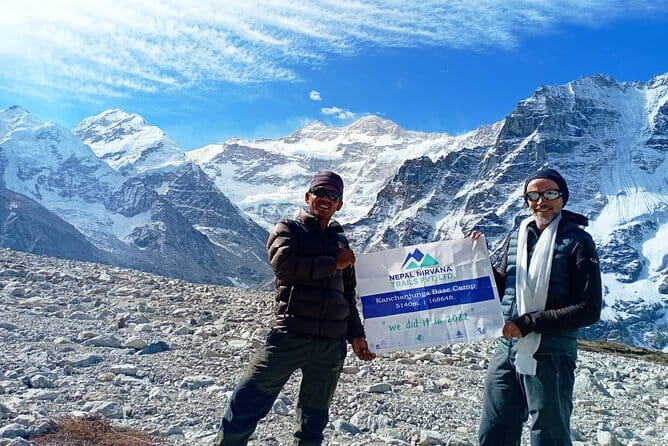
- North Base Camp angle (Pang Pema): The big push heads gradually over moraines to Kanchenjunga’s North Base Camp area.
- Acclimatization built into the days: You get a breather at Ghunsa/Khambachen with short hikes to nearby glaciers, viewpoints, and lakes.
- High passes with named summits: Sinion La (4440m), Mirgin La (4480m), and Sinelapche Bhanjyang (4645m) are part of the route.
- Flights and private jeeps reduce hassle: Internal flights Kathmandu–Bhadrapur plus private 4×4 transport to key starting segments.
- Small group size: Maximum of 8 travelers, which usually makes the logistics smoother and the vibe more personal.
Why the Kanchenjunga Circuit feels quieter than the big treks
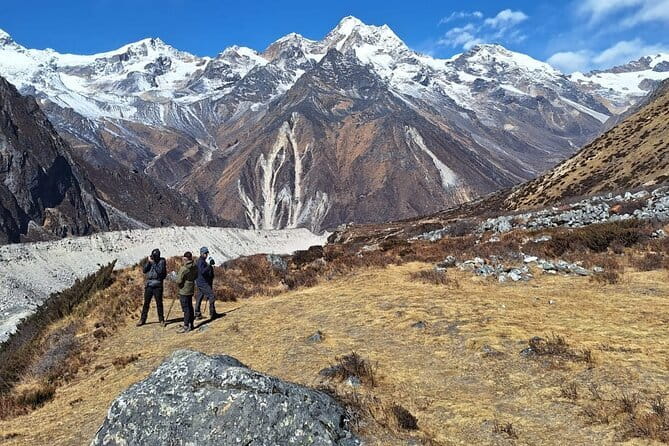
If you’ve done the classic Nepal circuits before, you know the tradeoff: famous routes can come with big crowds and a more “shared rhythm.” This trek leans the other way. Because the Kanchenjunga circuit is newer and villages along the way are still growing, the overall trail experience tends to feel more remote and slower-moving—even in peak season.
That quiet matters more than it sounds. When the mountains are big and your days are long, the mind needs space. Here you spend long stretches moving through jungle woodland, pine forest, river valleys, and small settlements that don’t revolve around tourism. That’s when you start noticing real local life: the way bridges cross glacial rivers, the rhythm of tea houses, and the quiet work of people living at altitude.
The flip side: a quieter route also means you’ll get less infrastructure than on the best-developed trails. Tea houses are included, but the food is described as basic, so you’ll want to travel with the right expectations (and a flexible stomach).
You can also read our reviews of more tours and experiences in Kathmandu.
Nineteen days on your feet: what the daily effort really looks like
This is a full-on mountain trek, not a walk-through sightseeing package. The itinerary is structured around sustained trekking days with periodic breaks that help you adjust to altitude.
Here’s the practical rhythm you’ll feel:
- Early on, you build legs through river valleys and forest trails.
- Mid-trek, you rest at Ghunsa and Khambachen to help your body acclimatize.
- Later, you handle longer elevation gains over high passes, including several pass crossings listed with elevations around the mid- to mid-4000m range.
If you’re the type who wants to “arrive and conquer one summit,” this trek will feel different. You’re moving through a landscape of altitude changes rather than chasing a single peak. The reward is that you keep earning bigger views—sometimes gradually, sometimes all at once.
Kathmandu setup: Thamel, permits, and getting oriented
You start in Kathmandu, based out of the Thamel area. If you tell them your arrival details, an airport representative meets you at Tribhuvan International Airport and transfers you to your hotel. After that, there’s a day to settle in and prep for the permits.
One detail I like in the plan: the team management meets you around 9 am to take your original passport for permit preparation, then returns your passport later. That removes a lot of stress from your travel week. You’re not trying to figure out where to go and what form needs what stamp—your ground team handles the paperwork.
You get three nights in Kathmandu in a 3-star hotel with breakfast. That’s a real value point because internal flight schedules and permit processing can be tight. It also gives you time to do the boring but important stuff: re-check boots, test your socks, and make sure you actually have enough layers for early morning cold.
Flights to Bhadrapur and the long jeep start toward Taplejung
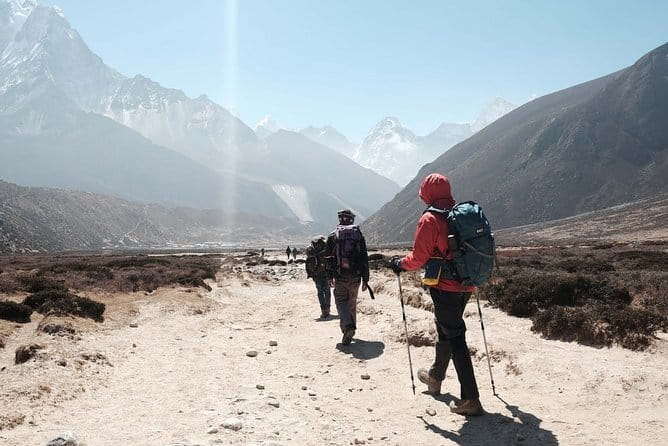
The trekking start isn’t just a step onto a trail. You’ll fly from Kathmandu to Bhadrapur (about 45 to 50 minutes), then move by local jeep through the region. This includes riding via the Mechi Highway and then heading toward key starting points for the trekking days.
Why do you care? Because these drives shape your energy budget. After flying and riding, your first trekking days are still in “work mode.” That’s why it helps to start your trip feeling rested, not jet-lagged and underpacked.
The plan includes private jeep transport for major trailhead transfers, including segments between Bhadrapur and Taplejung/Sekathum, and later from Yamphudin back toward Kanyam and the airport. So you’re not piecing together local transport while tired. You do still ride a lot, but at least it’s organized and private.
Day 4 to Day 7: Sekathum, Amjilosha, Gyabla, and Ghunsa
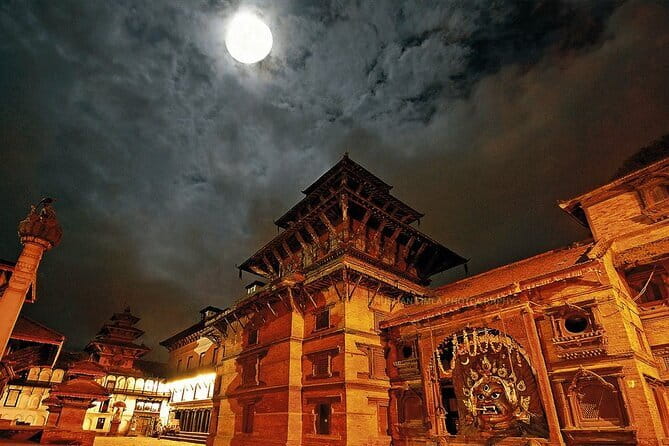
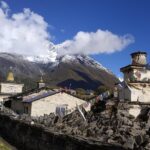
Once the trek begins, the scenery shifts quickly from road-adjacent to properly wild. After breakfast in the Sekathum area, you start the hike toward Amjilosha, following the Ghunsa Khola and crossing bridges along the way. That river-valley start is a good warm-up because it helps you settle into trekking before the higher, steeper sections.
From there, you push toward Gyabla (also called Kyapra). One interesting point in the route description is how the trail goes through dense forest and is described as having stretches with no human settlement. Those empty-feeling sections can be beautiful, but they also make pacing important. You’ll want to keep your energy steady rather than rushing just to “get to the next village.”
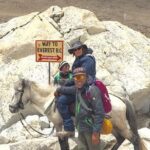
Then you reach Ghunsa, a common acclimatization stop on this route. The trail through woodland leads toward the Phale village area before continuing into Ghunsa. If you’ve ever felt the altitude hit you by surprise, Ghunsa is where you often start noticing your body learning the new height.
Khambachen: acclimatization with glacier viewpoints and lake time
After Ghunsa, you head to Khambachen, walking through an open pine forest. The route description highlights the chance of seeing blue sheep and snow leopard. Real talk: don’t plan your mood around wildlife sightings. But it does underline what kind of terrain you’re in—high-altitude habitat where animals exist if you’re paying attention.
Khambachen also includes a rest day. That’s not idle time. The plan describes a short hike to nearby glaciers, viewpoints, and lakes to help your body adjust. That’s exactly what you want: movement without the full stress of a major trekking push.
There’s also a practical warning baked into the route notes: some areas are landslide-prone. That’s a reminder to keep your footing careful on the days you’re climbing or walking on disturbed ground. In these places, steady steps beat speed.
Lhonak and the North Base Camp approach (Pang Pema)
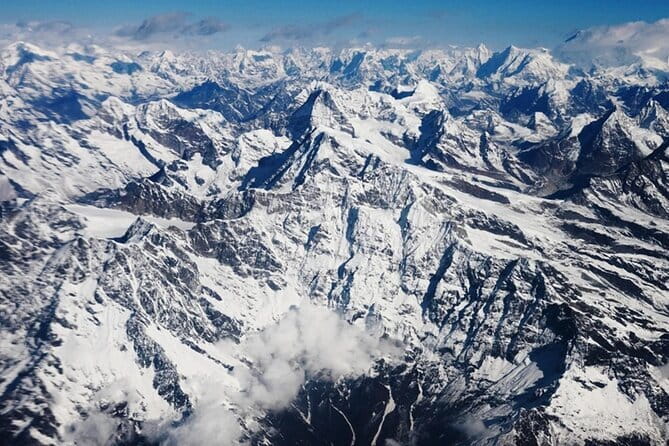
From Khambachen, you move toward Lhonak along the Kanchenjunga glacier trail area. This section is described as meeting other trekkers on the main trekking season route, which suggests the foot traffic is still far from the classic busy trails. The main feeling here is “closer to the mountain,” with your body working harder because you’re getting higher.
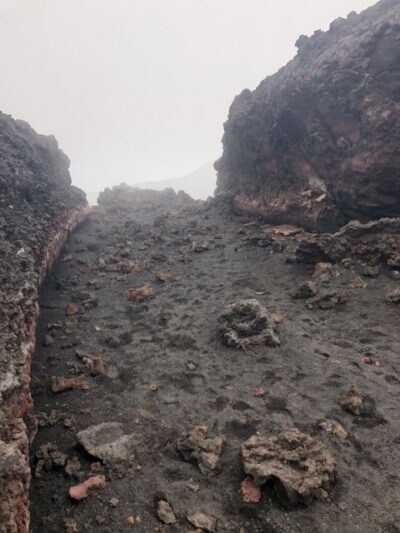
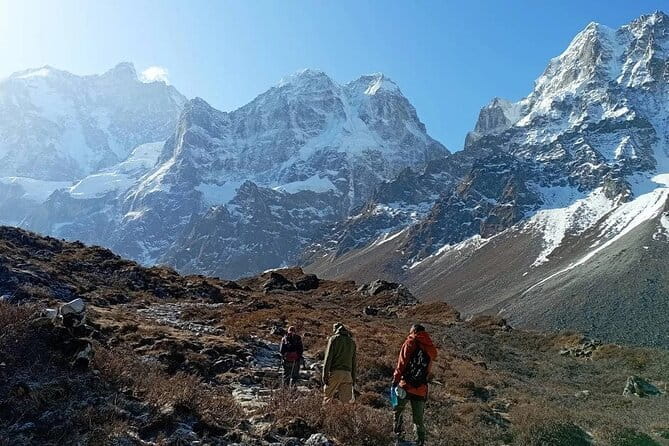
Then comes the big milestone: the day hike to Kanchenjunga Base Camp, also referred to as the North Base Camp area, known as Pang Pema. The route description notes a gradual climb along moraines to reach the base camp. Walking on moraines can feel physically different than forest paths—more uneven, more gritty, and sometimes more exposed to wind.
This is where you get that multi-angle sense of Kanchenjunga. Even without perfect weather, the North Base Camp approach usually gives you a “this is real” mountain moment. It helps that you’re not rushing to the top. You’re building toward it with days of gradual altitude exposure.
The return to Ghunsa, then Sele Le and the remote pass feeling
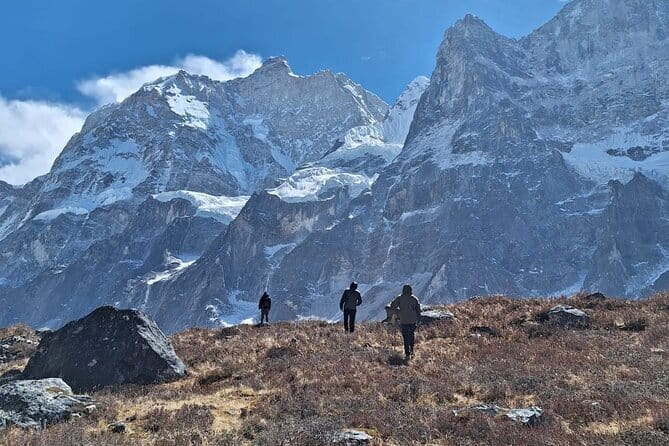
After the North Base Camp day, you retrace back toward Ghunsa. That back-and-forth is not just repetition—it’s a recovery tool. Your legs are tired, your appetite changes at altitude, and your body appreciates the slower rhythm back down.
Then the route continues to Sele Le, leaving the trail toward Gyabla behind. The plan notes the chance of seeing snow leopards, plus isolated settlements and a few teahouses. This is one of those “less infrastructure” moments where you’ll feel how much the route depends on seasonal staffing and community life.
If you like the idea of trekking that still feels like trekking—rather than a guided queue—this is the part where the days start to feel truly remote.
Crossing big passes: Sinion La, Mirgin La, and Sinelapche Bhanjyang
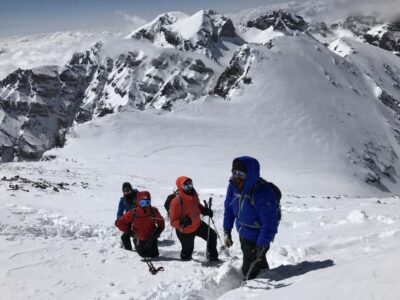
Leaving Sele Le, you tackle high-altitude passes, including Sinion La (4440m), Mirgin La (4480m), and Sinelapche Bhanjyang (4645m). Pass days are the hardest kind of day: you’re often working on tired legs, and wind and cold can make everything feel longer.
The route description points to spectacular panoramas here. I take that as practical advice: bring the layers you actually need for wind, not the layers you hope you’ll need. Also, take photos when you can, but don’t stop walking too long when conditions look harsh. In the high passes, your body cares more about motion and warmth than your camera roll.
These pass crossings are also where you’ll feel the value of the guide team. A licensed guide and first-aid-trained support staff matters most when trail conditions change—especially in areas described as landslide-prone earlier and when the route becomes more exposed.
Yalung Glacier day: views of Rathong and Kabru
After the passes, you move toward Yalung Glacier. This day is described as heading higher early, getting closer to vistas, and passing the Yalung area with views of Rathong (6682m) and Kabru (7412m). That’s a big jump in mountain context. You start seeing Kanchenjunga as part of a wider skyline, not just a single star.
Glacier-adjacent sections tend to be cold and slow, even when the walking isn’t technically difficult. So plan to cover ground patiently. If you try to force pace, you can end up more exhausted than you need to be.
The descent through rhododendron forests to Tortong
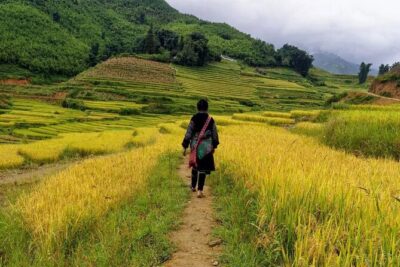
On the next segment, the trek begins downhill and ends around Tortong, passing through Simbuwa Khola with en route villages and rhododendron forests. The route notes specifically mention tranquility and rhododendron forest walking, which tells you the emotional temperature drops: the air may still be cold, but you’re not “fighting altitude” in quite the same way.
Descent days can trick you. People think they’re easier, then their knees remind them that downhill is still hard work. You’ll want trekking poles if you use them, and you’ll want to keep steps short when the trail is uneven.
Day 17 to Day 18: Yamphudin, Kabeli Khola, and back toward Kanyam
From Tortong, you continue descending to the Amji Khola area. The route includes passing Lasiya/Lamite Bhanjyang (3415m) and Dhupi Bhanjyang (2665m), then reaching Yamphudin.
Then comes a more “village-to-river-to-ride” feeling day. After breakfast in Yamphudin, you explore landscapes along the Kabeli Khola pathway, leaving mountain villages behind. The plan then shifts to a drive toward Kanyam.
This day matters because it’s the transition back to comfort. You’ve been in high terrain, and now you’re moving toward roads and vehicles again. It’s also a reminder to pack your post-trek items carefully. You’ll likely be tired by the time you reach Kanyam.
Ending in the tea cultivation area and flying back to Kathmandu
Your final day includes breakfast, then some exploring around a green tea cultivation area, followed by a 2–3 hour drive to Bhadrapur. Then you catch the flight back to Kathmandu (about 45 to 50 minutes), arriving late afternoon or evening, depending on schedule.
That tea-cultivation stop is a nice palate cleanser. After glaciers, passes, and moraine walks, it’s grounding to see agricultural life down the slope—something familiar, human, and still tied to the local climate. You’ll likely appreciate the gentle change of pace before you hit the city again.
Price and logistics: is $2,000 good value here?
At $2,000 per person for 19 days, the value depends on what you’d otherwise pay on your own.
This package includes a lot of the expensive friction points:
- trekking permits (described as all necessary permits)
- a 3-star Kathmandu hotel for 3 nights with breakfast
- tea-house accommodations during the trek
- guide and porter support, including first-aid trained staff
- private jeep transfers for key road segments
- internal flights Kathmandu–Bhadrapur and back
- meals: breakfast (18), lunch (17), dinner (16)
What you’ll pay separately:
- your Nepal entry visa and international flights
- travel and health insurance that covers emergency evacuation/rescue
- personal expenses (snacks, drinks, Wi-Fi, battery charging, hot showers, and so on)
- tips for your guide and porter (appreciated)
So the real question is: do you want to handle permits, domestic flights, and the guide/porter system yourself? If not, this price starts to look more reasonable than it first appears. You’re paying for coordination in a remote region where doing it solo would mean extra risk and stress.
Food and tea houses: basic on purpose, so plan smart
The trek includes tea-house accommodations and a large share of meals, which is a comfort. Still, the route notes are clear: the food in the mountains is very basic. That doesn’t mean you’ll starve—just that meals are simple and not always varied.
The advice given is practical: opt for veg foods available while you’re in the trek. That’s smart for stomach stability, especially when you’re tired, at altitude, and not always sure what went into the preparation.
Also, because you’ll have limited access to things like charging and hot showers (not included and not guaranteed), pack to live simply. Bring a power strategy (small battery, quick-charge habits), and keep wet wipes and hand sanitizer high on your priority list.
Fitness and safety: who this trek suits best
This is listed for people with strong physical fitness. That’s not marketing copy. You’re walking long days across rivers, forests, and high passes near the 4400m+ range, with a base-camp push and a pass-heavy segment later.
This trek is a great fit if:
- you like remote walking and don’t need constant village infrastructure
- you want a quieter Kanchenjunga experience compared with the busiest routes
- you’re okay with basic food and simple tea-house life
- you want small-group trekking (max 8) with real support (licensed guide + porter ratio)
You might want to think twice if:
- you hate long jeep drives and want minimal road time
- you’re not comfortable handling altitude changes over many days
- you expect hot showers and lots of creature comforts in mountain towns
One more note: the route mentions landslide-prone areas and steep terrain. That means good footwear and careful footing are non-negotiable.
The guide factor: real support can make or break days
This kind of trek lives or dies on the quality of your mountain team. The operator’s reviews spotlight guides such as Raj and Jangbu, with praise for being hardworking, knowledgeable about the region, and caring day to day. Another guide named Abinta is also mentioned positively for culture and trail help.
You might not get the same person as the last group, but it’s a good sign that the company builds around experienced local guides and support staff—not just a random escort. It also matches the trek plan itself: licensed guide, first-aid trained support, and a first aid kit with basic medication.
Should you book this Kanchenjunga Circuit trek?
If you want a Kanchenjunga trek that feels calmer than the big-name routes, this is an easy yes to consider. I especially like the combination of base-camp ambition and built-in acclimatization days, plus the fact that internal flights and major jeep transfers are handled.
Book it if you’re ready for real mountain conditions, basic tea-house food, and a lot of walking. Don’t book it if you’re looking for a relaxed hike with lots of amenities and zero road time. This is a purposeful expedition—and that’s exactly why it’s worth your attention.
FAQ
What’s included in the Kanchenjunga Circuit Trek package?
The package includes trekking permits, a 3-star hotel in Kathmandu for 3 nights with breakfast, tea-house accommodations during the trek, a government licensed guide and porter support (1 porter between 2 trekkers), private jeep transfers for key segments, internal flights Kathmandu–Bhadrapur and Bhadrapur–Kathmandu, a first aid kit with basic medication, and most meals (breakfast, lunch, dinner across the trek days).
What’s not included?
International flight tickets and the Nepal entry visa are not included. Travel and health insurance that covers emergency rescues and evacuations is not included, along with personal expenses such as snacks, beer/coke/juice, Wi-Fi, battery charging, and hot showers (if available). Tips for the guide and porter are also not included, though they’re appreciated.
Where do I meet the group, and how does the trip end?
You start at Nepal Nirvana Trails in Kathmandu (Thamel area). The trek ends in Kathmandu as well, and you’ll be dropped off at your hotel.
Is there airport pickup?
Yes. An airport representative is arranged to receive you at Tribhuwan International Airport and transfer you to your booked hotel in Kathmandu.
How big is the group?
The trek is listed with a maximum of 8 travelers, which usually keeps the experience more manageable and less crowded.
Are tea-house stays part of the plan?
Yes. Tea-house accommodations during the trek are included, and the itinerary also uses meals provided at those stops.
Will I need to arrange permits?
No. The tour includes all necessary trekking permits.
Can I get a full refund if I cancel early enough?
Yes. The policy is free cancellation, and you can cancel up to 24 hours in advance for a full refund. If you cancel less than 24 hours before the experience starts, the amount paid is not refunded.