REVIEW · KATHMANDU
Ghorepani – Poon Hill Trek – 5 DAYS
Book on Viator →Operated by Alpine Club of Himalaya · Bookable on Viator
Sunrise over the Himalaya hits fast. This 5-day Ghorepani–Poon Hill trek is built around one big moment: climbing up for Poon Hill dawn with the Annapurna and Dhaulagiri giants spread across the skyline. I also really like that the trip handles the practical stuff for you, including permits and daily meals along the way, so you can focus on the walking. The main trade-off is comfort: tea houses mean shared bathroom nights, and hot shower plus Wi-Fi are not part of the deal.
The trail itself is a fun mix. You start with bridges and river crossings, then you work up through Magar villages, rhododendron and oak forests, and classic stair climbing (yes, the “more than 3300 steps” day is real in spirit). One of the guides used by this operator, Ding, has been described as patient and caring, which matters when you’re tired and altitude is making everything feel like it takes longer.
By the end, you’ll feel like you earned those views. And if you’re the type who likes a well-run trip without micromanaging your day, this one fits.
In This Review
- Key things I’d pay attention to
- Why the Ghorepani–Poon Hill Trek still earns its reputation
- Day 1 in Kathmandu: set your bearings and start easy
- Day 2: Kathmandu to Pokhara, plus Seti River, caves, and Phewa Lake
- Day 3: suspension bridge crossings, Ulleri stairs, and Magar villages
- Day 4: Poon Hill panorama at dawn and the downhill ridge work
- Day 5: last-range looks, then flight back to Kathmandu
- Meals and tea houses: what’s included, what isn’t, and how to plan your comfort
- Permits and cards: ACAP and TIMS are not optional extras
- The gear you get (and what you must return)
- How hard is it, really? Stairs, bridges, and a realistic walking rhythm
- Who should book this Poon Hill trek (and who might not love it)
- Price and logistics: does $999 make sense for what you get?
- Should you book this Ghorepani–Poon Hill Trek?
- FAQ
- How long is the Ghorepani – Poon Hill trek?
- Does the tour include transport in Kathmandu?
- Are meals included during the trek?
- What kind of accommodation do I get on the trek?
- Do I need permits for this trek?
- Are flights included?
- Is a guide and porter provided?
- What trekking gear is included?
- Is hot shower, hot water, or Wi-Fi included?
- Can I cancel for a full refund?
Key things I’d pay attention to
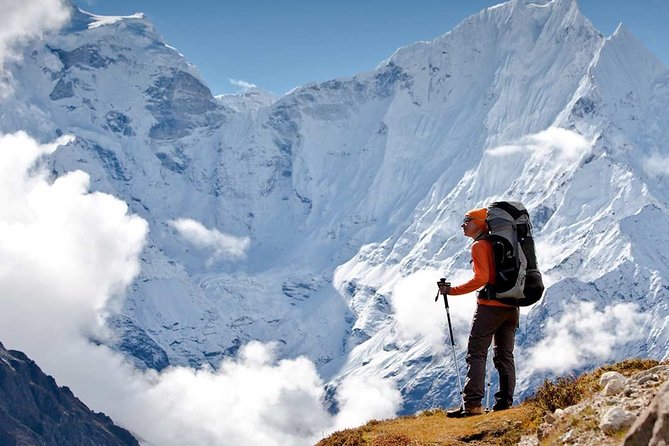
- Poon Hill sunrise is the star, with a panorama that ranges from Dhaulagiri to Annapurna and across to Machhapuchhre
- Permits and TIMS/ACAP are included, so you’re not scrambling at the start of your trek
- Teahouse nights are shared-bathroom, and hot shower plus Wi-Fi aren’t included
- Magar village culture and old-school trail work show up every day, especially the stair-heavy segment to Ulleri
- You get real support: an English-speaking trekking guide and a porter (2 trekkers per porter)
Why the Ghorepani–Poon Hill Trek still earns its reputation
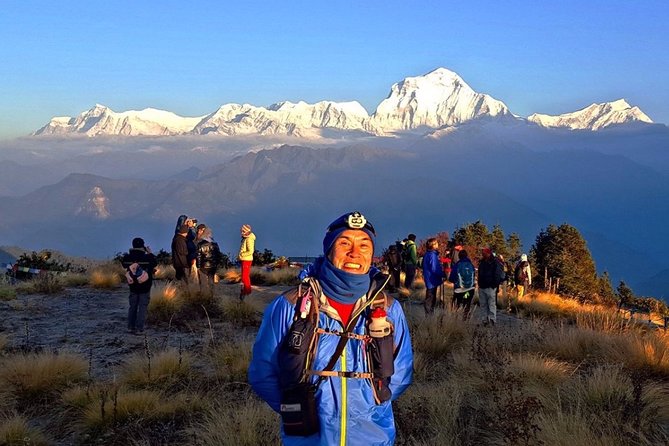
This trek is short enough to feel doable, but it still gives you the full Annapurna experience: a ridge-and-valley walk, village stays in simple tea houses, and that classic Himalayan viewpoint payoff. It’s not about technical climbing. It’s about steady effort plus timing, because the sunrise window at Poon Hill is where the magic happens.
The best part is how the route is paced. You don’t just march all day. You get broken-up sections with bridges, forest stretches, and village stops that make the day feel human-sized. And since you’re traveling with an English-speaking guide, you’re not translating every sign and guessing what matters most.
You can also read our reviews of more tours and experiences in Kathmandu.
Day 1 in Kathmandu: set your bearings and start easy
You land in Kathmandu and get a warm welcome from the operator’s representative. After check-in at your hotel, the rest of the day is yours for an easy walk around town, and you’ll have a welcome dinner in the evening.
This first day is valuable even if you don’t feel like a “city person.” Kathmandu is the staging ground for everything else, and it’s nice not to turn your arrival day into a logistics day. The hotel is included for one night with breakfast, and pick-up and drop-off happen in a private car or van.
If you’re the type who wants to get your questions answered quickly, this is also where the operator’s support style shows up. Sujan, one of the people tied to planning and coordination, has been credited for being responsive and helpful before and during trips.
Day 2: Kathmandu to Pokhara, plus Seti River, caves, and Phewa Lake
Day 2 starts with a morning breakfast and then a short flight from Kathmandu to Pokhara. Once you’re there, you visit a deep, narrow gorge along the roaring Seti River, then continue to Davi’s Falls and the Gupteswar Cave and Bat Cave.
In the evening, you slow the pace down at Phewa Lake with a relaxed time on the water. This is a smart design choice: you get a little sightseeing energy without turning it into a full workout day.
Later, after breakfast, you drive about 41 km (25 miles) to Nayapul, where your trek officially begins. The trail starts with a descent from Nayapul down toward a bridge over a small stream, leading to Birethanti, which is described as a large and prosperous village.
Day 3: suspension bridge crossings, Ulleri stairs, and Magar villages
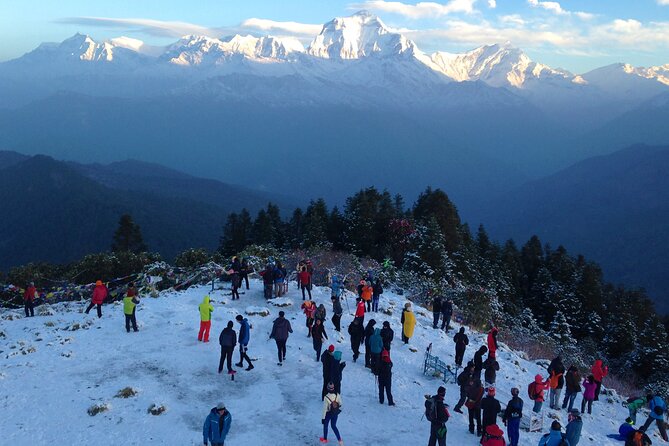
This is the long-feeling day, but it’s also one of the most classic. Your trek takes about 4–6 hours and begins with crossing the Tikhedhunga Khola on a suspension bridge. Then you drop and cross the Bhurungdi Khola on a large bridge at 1520 m.
The big challenge is the climb on stone staircases. The trail is said to have more than 3300 steps, and they continue in the direction of Ulleri (2080 m), a Magar village. After that, the walking becomes gentler as you pass cultivated fields and pastures.
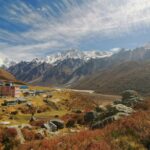
From there, you move into deep forests and reach Banthanti. The trail passes oak and rhododendron forests, with two clear streams along the way. The final part is another climb to Nangathanti (2460 m), and about an hour later you reach Ghorepani.
I like this day because it’s not just effort. It’s variety: bridges, stairs, forest shades, and village life. You’ll feel the change in scenery more than once, which keeps your brain from getting stuck on “how far is left.”
Day 4: Poon Hill panorama at dawn and the downhill ridge work
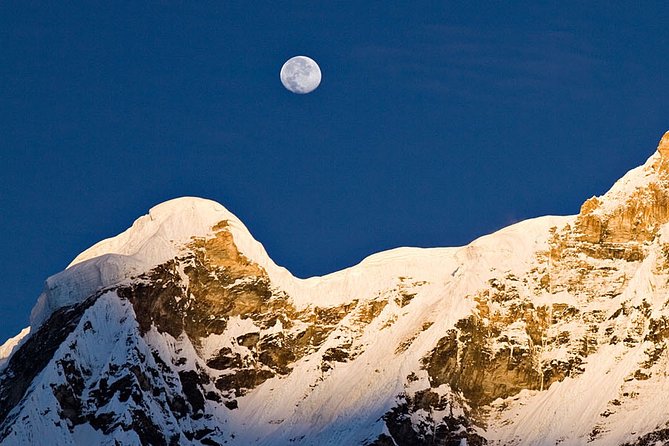
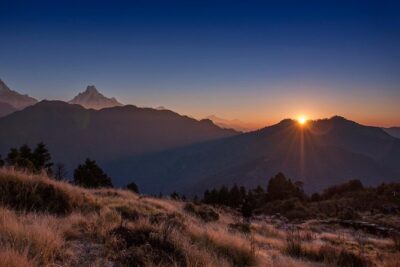
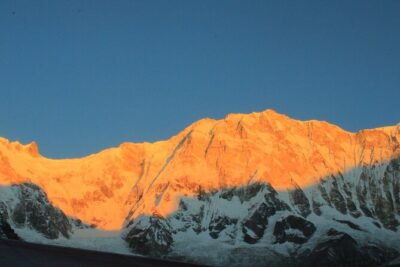
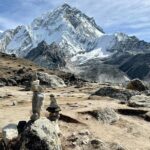
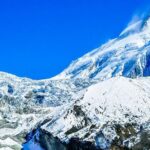
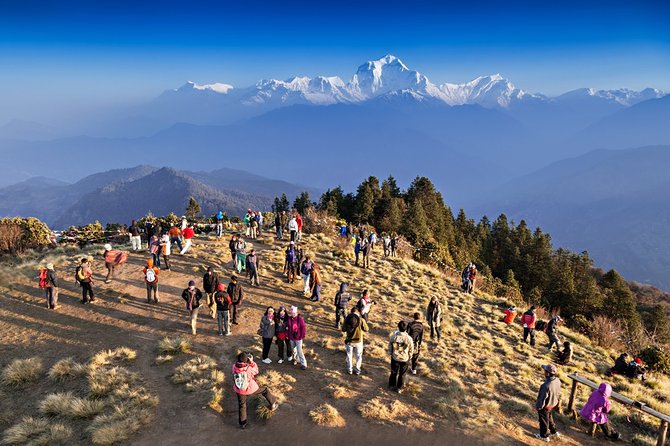
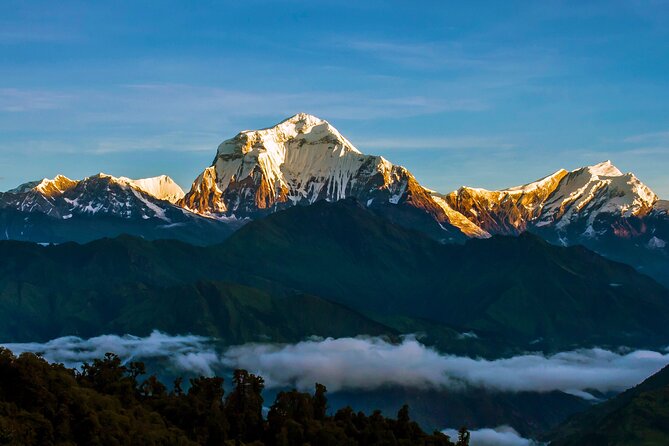
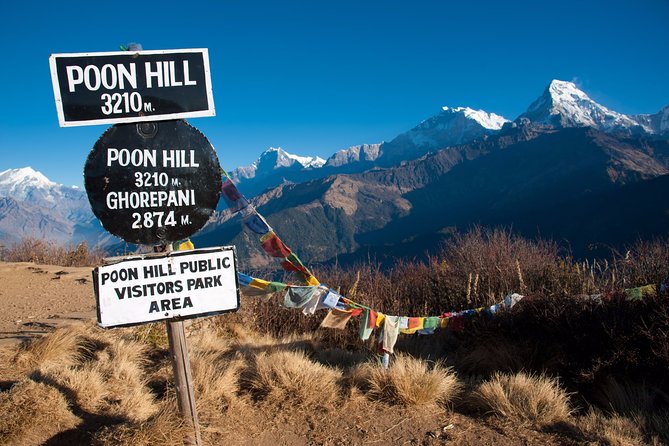
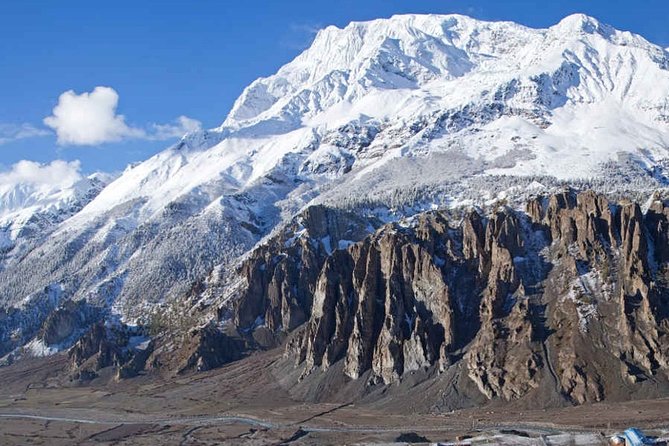
Day 4 is your payoff day. After about an hour of climbing in the morning, you reach Poon Hill, a viewpoint known for wide Himalayan panoramas. On a clear day, the view stretches from Dhaulagiri to Annapurna to Machhapuchhre, with peaks listed including Dhaulagiri I (8167 m), Tukuche (6920 m), Nilgiri (6940 m), Annapurna South, Annapurna I (8091 m), Hiunchuli (6441 m), Tarke Kang (7193 m), and Machhapuchhre.
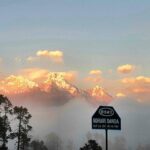
This is why the trek works for beginners too. Even if you don’t love a long slog, you get a serious reward for a relatively short trip. Sunrise is the main storyline here, because the snow-capped summits light up as the day starts.
After viewing time, you continue on the main trail. It drops on a staircase first, then you traverse above the river on a stone paved trail. You cross a stream at Chane (1690 m), walk onward to Kimche (1640 m), and follow the ridge downhill until you join the Modi Khola at Syauli bazaar (1140 m).
The best part of the later segment is that the walking becomes flat. You follow the river valley through a lovely section (the exact walk pattern isn’t listed beyond that), which gives your legs a chance to recover before the final travel day.
Day 5: last-range looks, then flight back to Kathmandu
Day 5 is built around closure. You take a last memorable look at the Annapurna ranges, then you fly back to Kathmandu.
If you want to extend the trip, the operator offers add-ons like game drives at national parks, rafting, mountain biking, and tours in Tibet, India, or Bhutan. Even if you don’t add anything, that return flight makes the whole trek feel time-efficient.
The big advantage of this route length is psychological. Five days is long enough to feel the mountains, but short enough that you’re not stuck in recovery for weeks. You go home still thinking about the views rather than thinking about your sore knees.
Meals and tea houses: what’s included, what isn’t, and how to plan your comfort
During the trek, meals are handled for you: breakfast, lunch, dinner, and tea or coffee each time. Tea-house stays are included for three nights, and the important detail is that bathrooms are shared.
That’s the normal trade on classic tea house treks, but it’s worth planning for. Bring what you need for basic comfort, because hot shower and hot water are not included. Mineral water, Wi-Fi, and laundry aren’t included either.
This matters for value. At $999 per person, the price isn’t only paying for scenery. It covers guide and porter support, meals along the trek, permits, and even the included domestic flights between Kathmandu and Pokhara plus the return to Kathmandu.
Permits and cards: ACAP and TIMS are not optional extras
One of the least fun parts of trekking can be paperwork. Here, the national park permit and TIMS card are included for the Annapurna area, and you’re expected to show them at the ACAP check post near the start of the route.
You’ll also need to carry your trekking essentials, but having permits managed reduces risk. It means fewer last-minute mistakes, and fewer moments where you’re standing around hoping someone finds the right document.
The gear you get (and what you must return)
The operator provides a down jacket and a sleeping bag for you to use during the trek. After the trek completion, you return this gear to the office.
You’ll also receive an ACH kitbag and a T-shirt. These aren’t the main reason to pick this trek, but they do add practical value if you’re traveling from abroad and don’t already have cold-weather essentials.
How hard is it, really? Stairs, bridges, and a realistic walking rhythm
The itinerary includes a trekking day of about 4–6 hours on Day 3, and the route includes a known heavy-stair climb on the way to Ulleri. That’s the physical heart of the trek.
You also get two suspension bridge crossings on Day 3 and a larger bridge at Bhurungdi Khola. If you don’t like heights, remember you don’t have to scramble on anything technical, but you should still expect the sensation of a suspension bridge.
The good news is that the trek’s days are structured so you’re not doing everything at once. Your hardest day (stair-heavy Day 3) comes before the Poon Hill sunrise, and Day 4 becomes more manageable later with flat walking after reaching Syauli bazaar.
Who should book this Poon Hill trek (and who might not love it)
This trip is a good fit if you want the Annapurna viewpoints without a long multi-week commitment. It also suits beginners because the walking is challenging but not described as technical, and you have an experienced guide and porter support.
It might be less ideal if you strongly prefer private-bathroom lodging or you expect hot showers and Wi-Fi at every stop. The tea-house setup includes shared bathrooms and excludes hot shower and Wi-Fi.
If you’re traveling solo, this can still work well because the operator supports coordination around the trek schedule. A solo traveler in the operator’s orbit shared that Sujan answered questions and stayed flexible with the plan, including changing hotel timing before the trek.
Price and logistics: does $999 make sense for what you get?
For $999 per person, you’re not only buying a viewpoint. You’re buying a stack of included services: airport/hotel pick up and drop in a private vehicle, one night in Kathmandu with breakfast, tea houses for three nights, an English-speaking guide and a porter, and all trek meals (breakfast, lunch, dinner, plus tea or coffee).
On top of that, the price includes the Annapurna permits (National Park permit and TIMS), domestic flights from Kathmandu to Pokhara and back, and the return of provided trekking gear to the office at the end. You also get both welcome and farewell meals and breakfast while in Kathmandu.
If you were doing this independently, these are the items that usually expand your budget and your stress level. Here, they’re grouped into one plan, which is a big part of the value equation.
Should you book this Ghorepani–Poon Hill Trek?
Yes, if you want a short trek that delivers the Annapurna panorama, including a sunrise viewpoint at Poon Hill, with support that keeps logistics from eating your energy. I’d especially recommend it if you like being guided on trail days and you’re okay with the tea house basics.
Hold off if shared-bathroom nights and the lack of hot shower and Wi-Fi would bother you more than the views would satisfy you. Also, be honest with yourself about stair-heavy walking, because Day 3’s climb toward Ulleri is the kind of effort that defines the trip.
If you’re a first-time trekker, this route is built to feel approachable while still giving you a real taste of the Himalaya.
FAQ
How long is the Ghorepani – Poon Hill trek?
The trek is about 5 days in total (approx.).
Does the tour include transport in Kathmandu?
Yes. Airport and hotel pick up and drop-off are included by private car or van.
Are meals included during the trek?
Yes. Breakfast, lunch, and dinner are included during the trek, plus tea or coffee each time.
What kind of accommodation do I get on the trek?
You stay in tea houses for 3 nights. The tour notes that bathroom use is shared.
Do I need permits for this trek?
Yes. National Park Permit and TIMS are included for the Annapurna area, and you’ll show your documents at the ACAP check post.
Are flights included?
Yes. Flights from Kathmandu to Pokhara and return to Kathmandu are included, along with domestic flight departure taxes.
Is a guide and porter provided?
Yes. The tour includes an experienced English-speaking trekking guide and a porter. The ratio is stated as 2 trekkers to 1 porter.
What trekking gear is included?
A down jacket and sleeping bag are provided for use during the trek, and they need to be returned after the trek.
Is hot shower, hot water, or Wi-Fi included?
No. Hot shower, hot water, and Wi-Fi are listed as not included.
Can I cancel for a full refund?
Yes. You can cancel up to 24 hours in advance for a full refund. If you cancel less than 24 hours before the start time, you do not get a refund.