REVIEW · KATHMANDU
Everest Base Camp Trek – 14 Days
Book on Viator →Operated by Nepal Trek Adventure and Expedition P.Ltd · Bookable on Viator
Altitude is the whole point here. I like how this 14-day Everest Base Camp trek strings together Namche Bazaar and real altitude acclimatization so you get more than just a straight-line climb. I also like the Sherpa-focused pacing: you’re walking through working villages, monasteries, and trading towns, not just passing through scenery.
The big consideration is simple: this trek runs on high altitude and weather. The Kathmandu–Lukla flights start early, and the overall experience requires good weather, so build flexibility into your mind (and your plans).
In This Review
- Key things to notice before you go
- Everest Base Camp, in plain terms: what this 14 days is really like
- Price and logistics: how $1,800 turns into real value
- From Kathmandu to Lukla: the flight that starts the adventure
- Phakding and Namche Bazaar: where the trek teaches you pacing
- Tengboche to Dingboche: monasteries, rhododendrons, and high-country rhythm
- Dingboche rest day and Chhukung Ri: choosing your altitude lesson
- Lobuche: the tree-line ends and your senses sharpen
- Gorakshep and Everest Base Camp: the glacier walk and the emotional hit
- Kala Patthar at 5,545 m: your best Everest view comes with work
- Back to Namche and Lukla: easier walking, emotional decompression
- Who runs this trek matters: the service pattern I like seeing
- Packing and fitness: what moderate means on the Everest route
- Should you book this Everest Base Camp trek?
- FAQ
- What city does this trek start in?
- What is the main route for transportation to the trekking area?
- Are permits included?
- Is a porter included for luggage?
- What kind of guide do you get?
- What meals are included during the trek?
- Do I need travel insurance?
Key things to notice before you go
- Lukla at 2,804 m sets the tone fast, then day two starts with a downhill stretch before the climb
- Two true acclimatization moments: Namche-area time and a Dingboche rest day built for altitude adjustment
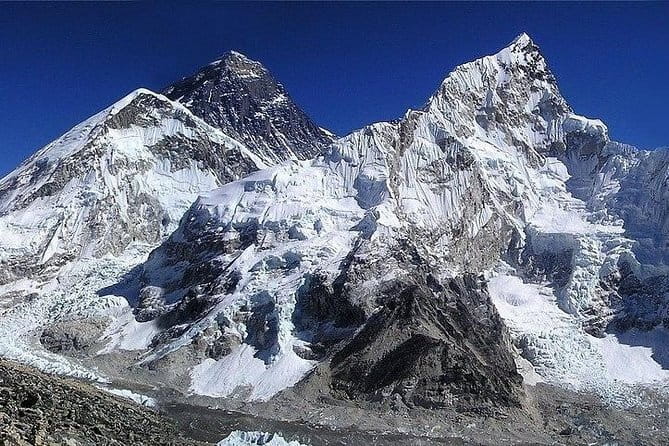
- Kala Patthar (5,545 m) is the payoff viewpoint that’s designed for big, close views of Everest and neighbors
- Khumbu Glacier time near Gorakshep is a rare “moon-like ice” experience, not just a background backdrop
- English-speaking guide + strong porter support (one porter for two people) helps you keep the hike manageable
- Sagarmatha National Park is the endpoint zone, with the trail crossing into protected high-country
Everest Base Camp, in plain terms: what this 14 days is really like
An Everest Base Camp trek is part hiking, part altitude education. Some days feel busy and others feel slow, but the rhythm stays similar: walk, eat, sleep high, repeat. Your body learns the new thin air in stages, and the itinerary is built around that idea.
What you’re getting for your money is not just a route on a map. The package bundles the big “must-haves” that often add cost and headaches on your own: permits, the Kathmandu–Lukla–Kathmandu flights, a guide with 10+ years of experience, and porter help to carry your luggage.
For your trip planning, the biggest benefit is clarity. You’re not juggling logistics between villages. You arrive in Kathmandu, then move into the Khumbu with a structured flow that covers both the travel days and the walking days.
You can also read our reviews of more tours and experiences in Kathmandu.
Price and logistics: how $1,800 turns into real value
The price is $1,800 per person. Here’s the value logic that matters for most people: this includes the expensive moving parts, then sells you the on-the-ground team.
Included items that often cost extra when booked separately:
- Permits plus the Kathmandu–Lukla–Kathmandu flights
- 2 nights in Kathmandu in a 3-star hotel or similar
- An English-speaking trekking guide (10+ years)
- Meals while trekking: 12 breakfasts, 10 lunches, 10 dinners
- A porter setup for luggage (sharing one porter for two guests)
- Hotel pickup offered as part of the Kathmandu handling
Not included, but you should plan for it:
- Tips for guide and porter (expected)
- Travel insurance that covers both medical and emergency evacuation
- Any extra expenses not listed as included
So the honest takeaway is this: if you’d otherwise pay for guide, permits, internal flights, and daily logistics, the package price is usually easier to swallow. If you’re the type who loves independent travel and already has everything lined up, it may feel like you’re paying for convenience. But on Everest routes, convenience often buys you time, safety margin, and less stress.
From Kathmandu to Lukla: the flight that starts the adventure
Your trip begins at Tribhuvan International Airport in Kathmandu, with a start time listed as 6:15 am. You’ll meet a representative holding a Nepal Trek Adventure sign, then get transferred to your hotel.
Day two jumps quickly into the Himalaya. You take a scenic flight from Kathmandu (Tribhuvan International Airport) to Tenzing-Hillary Airport in Lukla at 2,804 m. On arrival, your guide handles a briefing and introduces your porters—this matters because porter coordination is one of those “invisible” things that can make the whole trek feel smooth or not.
Then you start walking from the Lukla area. The route drops you toward the Dudh Kosi River, then you connect to the main trail heading toward Namche Bazaar. The terrain starts fairly manageable, with an easy walking feel mentioned for day two, which is exactly what you want after a flight.
Practical note: plan for cold mornings and wind around Lukla. Even before you’re deep into the trek, the temperature can surprise you.
Phakding and Namche Bazaar: where the trek teaches you pacing
After day two, you reach Phakding (2,610 m). This stage is a buffer. You’re moving downhill and along the river system, then you’re positioning yourself for the bigger climb later.
Day three focuses on trail variety. You walk through forests, along traditional villages with plowed fields, and through yak pastures. As you approach the entrance to Sagarmatha National Park, the scenery shifts from “local valleys” to “high-altitude corridor.” The guide is with you throughout, so you’re not guessing where the trail splits or how to pace yourself.
Namche Bazaar is the turning point. It’s described as the biggest Sherpa village in the Khumbu region and the launchpad for many expeditions and treks. This is also your practical resupply moment: you can buy small essentials like chocolate if you forgot them back in Kathmandu. That sounds silly until you’re 4,000+ meters up and suddenly appreciate the little comfort items.
Day four is an acclimatization day in the Namche area, not a “free day” that’s wasted. You can hike around or visit Sir Edmund Hillary’s school in Khumjung. Either way, the value is your body catching up to the altitude before you go higher.
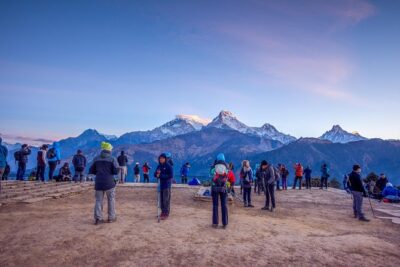
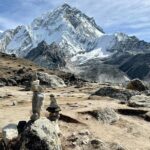
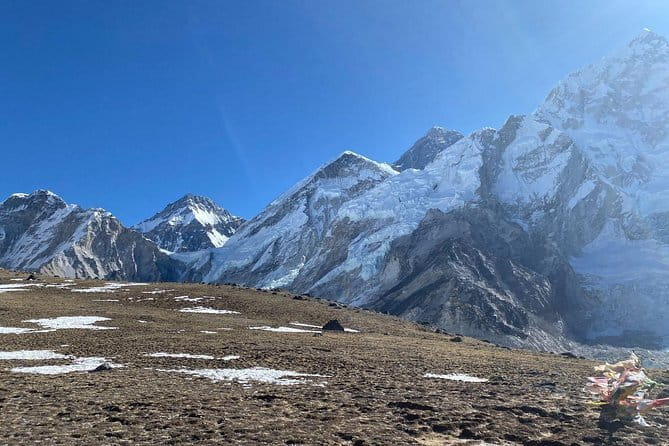
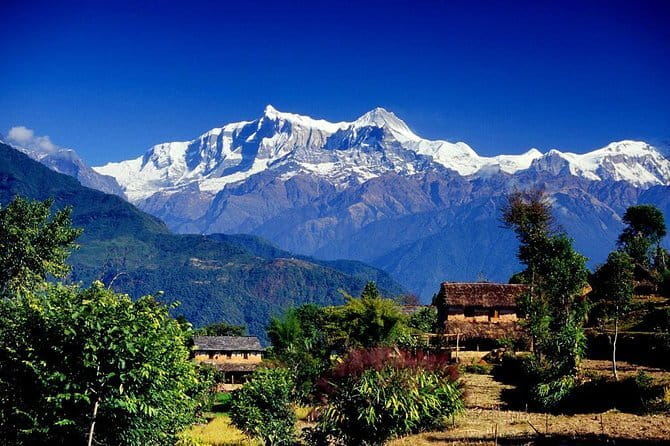
And yes, the views are part of the training. You’re given a sense of the giant peaks around you—Kwangde, Thamserku, Kangtega, Nuptse, Lhotse, Ama Dablam, and of course Everest—so the hike feels purposeful, not just painful.
Tengboche to Dingboche: monasteries, rhododendrons, and high-country rhythm
Leaving Namche on day five, you move toward Tengboche, climbing slowly. The route is described as sometimes close to steep slopes, so this is where careful footing matters. You’ll stop for lunch around 3,680 m, and there’s a cultural stop mentioned related to Lama Sange Dorje’s birthplace.
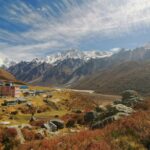
Tengboche is where the trek gains a “spiritual postcard” feel. You’re walking through forests, pine trees, and colored rhododendrons, with waterfalls and a classic Khumbu calm. If you like photography, this is one of your kinder days because the trail is scenic and your pace is steady.
Day six pushes higher to Dingboche (4,410 m). The itinerary describes two route styles: the lower path is suggested for the trek overall, then an upper path can be used with stops like Gopma (120 m above the lower settlement). The key change is the shift into a more alpine environment. After Pangboche, you cross an alpine meadow above the tree line and reach Orsho, where trails split—then Dingboche comes into view.
Dingboche gives you wide mountain views, including Ama Dablam and the Imja River. It’s also a “comfort in high altitude” kind of village, with mentions of places like Moonlight Lodge, an internet café, and even a billiards hall. That’s not why you come to Everest—but after days of trekking, it’s nice to know there’s enough infrastructure to keep life normal.
Dingboche rest day and Chhukung Ri: choosing your altitude lesson
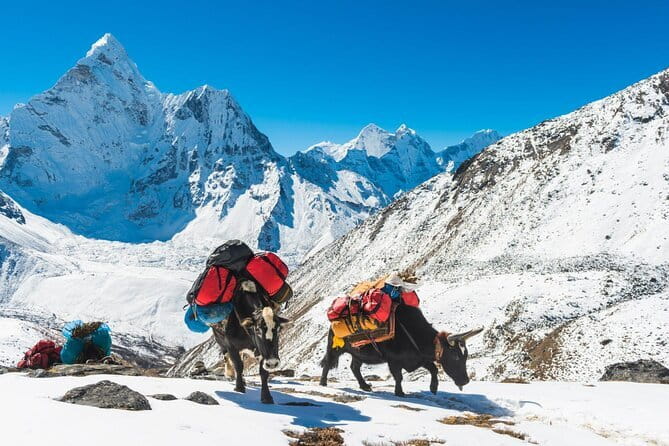
Day seven is the second big acclimatization moment. You can climb Chhukung Ri (5,550 m) for views of Makalu, Ama Dablam, and Baruntse, or you can hike around Chhukung village (4,730 m).
This day is valuable because it gives you choice. If you’re feeling good, you can go higher. If you’re not, you still get a useful walk without pushing too hard. That flexibility is the difference between “I survived altitude” and “I learned how to handle altitude.”
Lunch is open at the hotels in Chhukung, then you return to Dingboche.
Lobuche: the tree-line ends and your senses sharpen
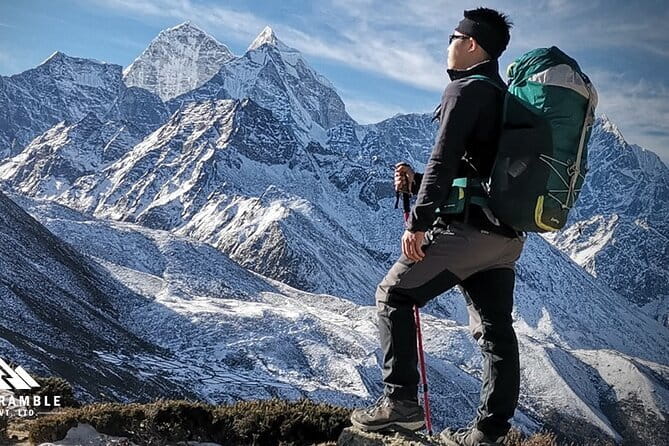
Day eight takes you to Lobuche (4,910 m). The route goes between wide valleys and includes a start at Dughla, plus yak fields near Dusa. This is also where the environment changes hard: you’re above the tree line, with snow-covered paths and fewer living features around you.
The day’s description notes that the paths become empty and snow-covered—no green hills, mostly slopes with snow. This is one of those moments where you’ll feel the trek shift from “village trekking” to “glacier-neighbor trekking.”
Lobuche also has fewer settlements compared to the earlier villages. You’ll see tea houses and tall peaks nearby, but it’s not the same dense village feeling as Namche or Dingboche. For many hikers, that’s a mental relief: less distraction, more focus on the next steps.
Gorakshep and Everest Base Camp: the glacier walk and the emotional hit
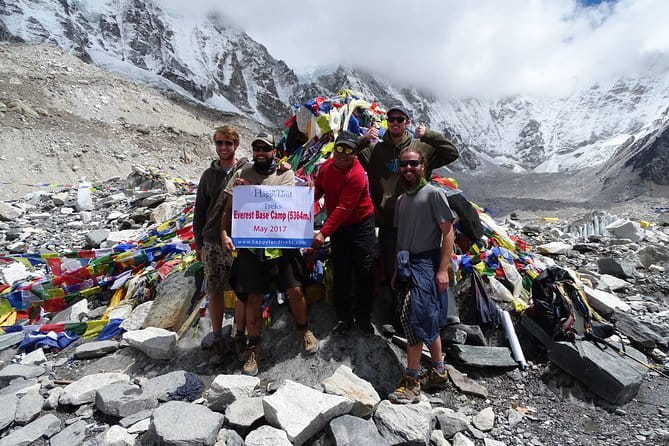
Day nine is a long-feeling day that’s broken into pieces. You hike from Lobuche to Gorakshep in about 2 to 3 hours. From there, you’re heading toward Everest Base Camp, described as where mountaineers start their journey to the top.
A major highlight here is the Khumbu Glacier, described as the world’s tallest glacier at about 4900 m. It’s said to be about 12 km long and moon-like in shape. You’ll have time to explore ice formations and small water pools.
Then comes the moment many people plan for: standing at Everest Base Camp. The itinerary describes it in simple terms—there aren’t enough words for what it feels like to be at the base of the world’s tallest mountain. You’re not meant to be there for long; you’re meant to arrive, take it in, and head back down to Gorakshep.
If you’re a “photos first” person, don’t rush. Give yourself a few minutes to just look around from where you stand, because this is where your brain finally catches up to the altitude numbers.
Kala Patthar at 5,545 m: your best Everest view comes with work
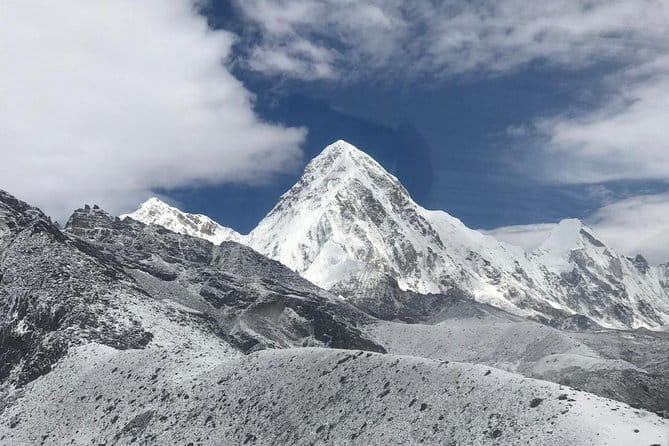
Day ten targets Kalapatthar (5,545 m), described as the highest point of this Everest Base Camp trek. You’ll walk toward the viewpoint, then you’ll have close views of Mt. Everest, Ama Dablam, and Pumori.
This day is about effort-to-reward. You’re higher than you’ve been for most of the trek, and the route makes you earn the views. It’s also a better moment for photos than many lower stops, because it’s positioned for mountain-and-glacier framing.
There’s also a cultural/medical stop mentioned: you can visit the H.M.A.R. hospital, built in 1975, or a nearby village at 4,371 m. Even if you’re not chasing that kind of stop, it’s a reminder that this region isn’t just mountains and trekking; it’s real community needs.
Back to Namche and Lukla: easier walking, emotional decompression
Day eleven brings the return. The trail is described as easier to walk, with plenty of brief stops for views. You move through Orsho, Somare, Pangboche, and Tengboche before reaching Namche.
That’s the pattern of the descent: the trek reverses, but you notice more because you’ve already climbed once. You recognize where you were challenged, and you understand why the guide pushed you to pace.
Day twelve brings you back to Lukla, described as the last day in the Everest area. You also get more group time here. The itinerary points out that it’s a chance to talk about the trek as a group and reflect on what each person did to make it happen. There’s mention of freedom in the afternoon, then a more social evening with drinks and dancing.
Day thirteen is the final flight: Lukla back to Kathmandu, a scenic 35-minute flight, then transfer back to the hotel. Day fourteen ends at Tribhuvan International Airport with a representative to get you out on your departure.
Who runs this trek matters: the service pattern I like seeing
This kind of trek lives or dies on coordination: porters, meals, permits, timing, and how you handle small problems before they become big ones. In the past, people have highlighted strong planning and ongoing engagement from the top—names like Binod Sapkota show up as a director who stays involved, and Sujan Nepal, TB, Shiva, Dipak, and Tribhuvan are mentioned as guides who did more than recite routes.
What I take from that pattern is simple: you want an operator that checks the details. You also want someone who can explain altitude and route choices clearly. Since this package includes an English-speaking guide with 10+ years of experience, you’re not stuck with a “kind person with no system.” The guide’s job is to keep you moving with safety and sense.
Also, the porter setup is a big deal: carrying luggage for two guests shared with one porter means you’re hiking with a lighter personal load. That’s not only comfort. It’s also a practical altitude strategy.
Packing and fitness: what moderate means on the Everest route
The tour calls for moderate physical fitness, which is realistic. But moderate here still means you’ll be walking at altitude and dealing with cold mornings and low air pressure.
Based on how the itinerary climbs and includes high points like Kala Patthar, you’ll do best if you’ve prepared your legs and your breathing. I’d focus on:
- Consistent hiking before you go
- Packing light enough that you can handle day-to-day walking without fighting your gear
- Expecting cold and wind, especially at higher stops
You don’t need to be a mountaineer. You do need to be comfortable with long days and the mental shift of going from village life to high, open, snow-covered terrain.
Should you book this Everest Base Camp trek?
Book it if you want a guided, structured Everest Base Camp experience where the big logistics are handled and the itinerary includes real acclimatization time. You’ll likely love the combination of Sherpa villages like Namche Bazaar, the high-country stepping stones to Dingboche and Lobuche, and the payoff viewpoints of Kala Patthar.
Don’t book it if you hate altitude uncertainty or you’re set on a rigid schedule regardless of weather. This trek requires good weather, and the early Lukla flight is part of that equation.
If you’re choosing between “cheap and chaotic” and “clear and supported,” this is the kind of package that leans toward the supported side. At $1,800, the value is strongest when you factor in permits, internal flights, guide expertise, and meals—not just the walk itself.
FAQ
What city does this trek start in?
It starts in Kathmandu, Nepal.
What is the main route for transportation to the trekking area?
You fly from Kathmandu to Lukla, then at the end you fly back from Lukla to Kathmandu (Kathmandu–Lukla–Kathmandu is included).
Are permits included?
Yes. All permits are included.
Is a porter included for luggage?
Yes. A trekking porter is included for carrying your luggage, with the setup listed as 2 guests sharing 1 porter.
What kind of guide do you get?
You get an English-speaking trekking guide with 10+ years of experience.
What meals are included during the trek?
Meals included are 12 breakfasts, 10 lunches, and 10 dinners.
Do I need travel insurance?
Yes. Travel insurance must be covered for both medical needs and emergency evacuation, and it is not listed as included.