REVIEW · KATHMANDU
Everest Base Camp & Gokyo Ri Trek
Book on Viator →Operated by Explore Himalaya Travel and Adventure · Bookable on Viator
Everest isn’t a place you just visit. It’s a high-voltage trek that strings Gokyo Ri panoramas to Everest Base Camp via Sherpa villages and big-mountain viewpoints. I really like how this route gives you time to acclimatize while still stacking the wow moments—especially the morning climb to Gokyo Ri and the later push to Kala Patthar.
One possible drawback to plan for: this is not just pretty trails. You have at least one truly serious day on Cho La Pass, and you’ll also be sleeping in basic lodge rooms (standard rooms with non attached bathrooms) at altitude.
In This Review
- What I like, what you should weigh
- Key points before you go
- Flying into the Khumbu: Kathmandu to Lukla and Namche’s altitude start
- Namche rest day and the Sherpa towns of Thame and Khumjung
- Dudh Koshi to Gokyo Lakes: the route that slows your thoughts down
- Gokyo Ri sunrise climb: why that 360-degree promise is worth it
- Cho La Pass day: the toughest mix of steep trail and icy rock
- Lobuche and Kala Patthar: the Everest-region finale with big-view payoff
- Coming down toward Tengboche, Namche, and Lukla’s farewell mood
- Price and logistics: what $2,800 buys (and what you still pay yourself)
- The kind of trekker this suits (and who should reconsider)
- Should you book this Everest Base Camp & Gokyo Ri trek?
- FAQ
- How long is the Everest Base Camp & Gokyo Ri trek?
- Where does the tour start in Nepal?
- What flights are included in the price?
- What kind of accommodation do you get during the trek?
- Are meals included while trekking?
- What about guides, porters, and permits?
- How big are the groups?
- What are the main costs not included?
- Is this trek only for very advanced hikers?
What I like, what you should weigh
If you like treks that mix culture with altitude big-league scenery, this one fits. I also like that the pacing includes a rest/acclimatization rhythm in Namche and the Sherpa heartlands (Thame, Khumjung) before you move higher.
Your consideration is simple: your body has to handle elevation and long walking days, and your mind has to stay calm when the trail turns steep and icy on the pass day.
Key points before you go
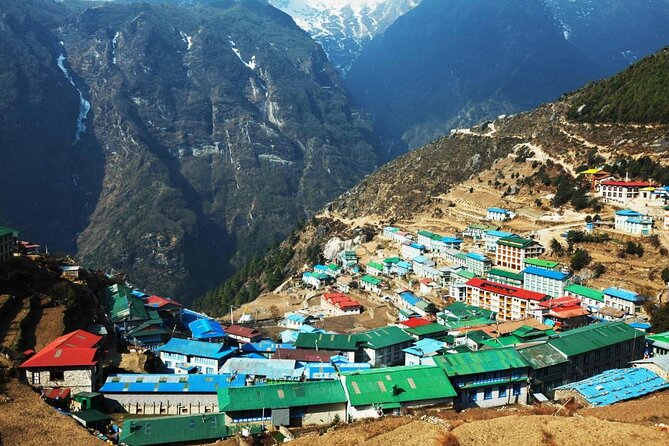
- Two big viewpoint hits: Gokyo Ri for sunrise-style panoramas, then Kala Patthar later for classic Everest-region views.
- Culture isn’t an add-on: Namche’s market energy, Thame’s gompa setting, and Khumjung’s Hillary-era Khunde Hospital visit.
- A tough technical day: Cho La Pass includes glacier traverse risk factors—steep, icy, and crevasse country.
- Real lodge trekking feel: tea houses and local lodges keep things simple, even when the air is thin.
- Logistics are largely handled: Lukla flights, permits, English-speaking local guide, and porters are included, plus Kathmandu sightseeing.
- Support shows up in the details: feedback on this operator highlights strong coordination and guides who stay on top of safety and day-to-day needs.
You can also read our reviews of more tours and experiences in Kathmandu.
Flying into the Khumbu: Kathmandu to Lukla and Namche’s altitude start
The trip begins with a scenic flight into Kathmandu on a clear day. Then you’re met at Tribhuvan International Airport and escorted to your hotel—an underrated quality-of-life thing in a country where logistics can be its own adventure.
Next comes the short flight from Kathmandu to Lukla (a cliff-hugging airport) where the real trek world starts. This jump matters because it saves you days of lower-altitude hiking and gets you into the Everest region quickly. After meeting the crew, you walk up the Dudh Koshi Valley on a well-marked trail to Phakding. Expect lodge-style nights and a steady ramp in altitude, helped by the fact that the route keeps you moving but not racing.
Day 3 is your first taste of Khumbu rhythm: suspension bridges, the Sagarmatha National Park entrance area, and then the steep climb toward Namche Bazaar. If the weather is clear, it’s also your first chance to see Mt Everest. Namche is the main trading town here, and it has a busy Saturday market where locals, lowland traders, and yak caravans all cross paths. It’s not just a “stop”—it helps you understand the living network that supports this trekking route.
Why this works: you’re in altitude country early, but you’re also stepping into the local “hub” where your guide can point out what you’re seeing and how the area functions.
Namche rest day and the Sherpa towns of Thame and Khumjung
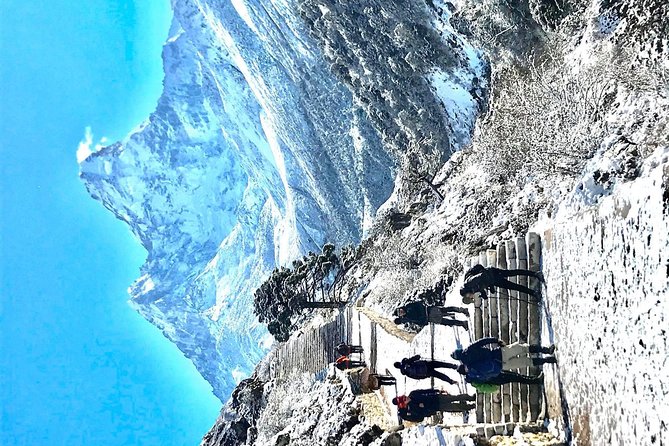
After you reach Namche, you get a day to rest and acclimatize. I like this built-in pause because the Khumbu punishes impatience. You’re surrounded by giant peaks, with tea shops and lodges, but the real value is time to adjust and keep your breathing calm.
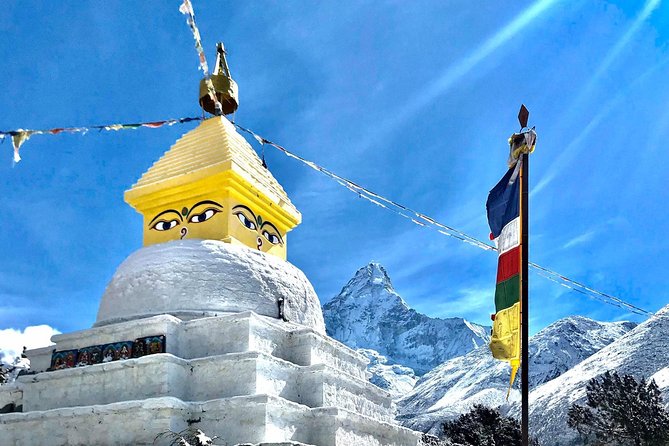
When you head west toward Thame and Khumjung, the trail shifts in feel. You pass prayer flags and mani stones, which makes the spiritual landscape obvious in a way photos can’t capture. The Bhote Koshi Valley is part of the route too, and this used to be a popular trading line into Tibet—so the area has a long history of movement and exchange.
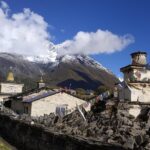
In Thame, you’re also near Thame Gompa, tied to the Mani Rimdu festival in spring. Khumjung is another key stop: the route takes you to Khunde Hospital, set up by Sir Edmund Hillary, and you get excellent views of Thamserku, Kantega, and Ama Dablam from the camping area. It’s a good day for understanding why the Sherpa community matters so much to mountaineering logistics and local resilience.
Then comes the higher ridge theme near Khumbila (5734m), described as the patron deity home for the Khumbu region. It’s easy to treat this as “just scenery,” but if you take a moment to notice how trails, chortens, and local beliefs line up, the trek feels more grounded.
Potential drawback here: these are still walking days. Even when the route is “culture-focused,” you’re at altitude, so you’ll want to keep effort steady rather than hiking on adrenaline.
Dudh Koshi to Gokyo Lakes: the route that slows your thoughts down
After Khumjung, the trek turns into a quieter, more alpine-feeling journey up the Dudh Koshi Valley. You move through villages and seasonal herders’ settlements (described as yersas), where grazing happens in summer. This is one of those details that makes the landscape feel lived in, not staged.
From Dole you climb through rhododendron and birch forest, and as you go higher, the forests thin into scrub and juniper. You’ll also start getting strong views of big neighbors like Cho Oyu on the way to Machhermo.
Then you reach Gokyo via the lakes route. This is where the trek’s personality shifts. Instead of simply climbing toward Everest, you’re stepping into a system of icy glaciers and turquoise lakes:
- You walk scenic sections to Pangka, then descend slightly along melting river lines near Ngozumpa Glacier.
- You climb into the lake valley, passing the holy lakes and eventually reaching the settlement of Gokyo by the third lake (Dudh Pokhari, or Milk Lake), where reflections are part of the magic.
What you should expect: your days feel longer as altitude rises, but the views give you mental breaks. If you’re someone who needs constant payoff to stay motivated, the Gokyo lakes section does that job.
Gokyo Ri sunrise climb: why that 360-degree promise is worth it
The Gokyo Ri day is scheduled around first light. You leave camp early and follow a steep hillside path upward. As you climb, Everest, Lhotse, and Makalu slowly appear in the frame.
The view from Gokyo Ri is described as one of the finest in the Everest region—a 360-degree panorama of snow-capped peaks. People often compare it favorably to Kala Patthar, and even if you don’t treat comparisons as gospel, the structure of the day makes sense: sunrise-style timing, clear sightlines, and a steep climb that feels “earned.”
Afterward, there’s a later walk down toward Na, at the foot of the Ngozumpa Glacier. That matters because you’re not just doing the summit and collapsing. You still have walking to settle your body before the next trekking block.
Practical advice: start fast mentally, not physically. The early part feels easier if you set a steady pace from the beginning.
Cho La Pass day: the toughest mix of steep trail and icy rock
If there’s a day that separates comfortable high-altitude trekking from serious high-altitude trekking, it’s the Cho La Pass crossing day.
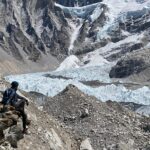
You’re moving from Thagnak/Thangnag toward Zonglha and then into the technical passage. The pass itself isn’t described as the only problem—the bigger issue is that it involves a glacier traverse on the eastern side. The route is steep, and the rocks can be glazed by ice, which makes footing slippery.
You even pass through some crevasses before reaching Dzongla. This is the day you’ll want to listen closely to your guide about spacing, steps, and how to handle slower or faster hikers. It’s also the day where trekking poles, careful foot placement, and calm decision-making matter more than speed.
If you’re considering this trip, be honest with yourself. This isn’t a “photos at any cost” day. It’s a “go slow and stay safe” day.
Lobuche and Kala Patthar: the Everest-region finale with big-view payoff
After Dzongla, the route continues toward Lobuche. You pass teahouses at Duglha and climb higher onto the terminal moraine of the Khumbu glacier. There are also stone monuments built in memory of Sherpas who have died on mountaineering expeditions to Mt Everest. It’s a stark reminder that this region is real, not just dramatic.
Then you get classic sunset potential on Nuptse from Lobuche—one more reason the days here feel like they’re paced for light changes.
The next morning requires an early start to reach Gorak Shep, and then you’re going to Kala Patthar (5554m). The path is forced to rise to cross a tributary glacier, which helps explain why this viewpoint is tough even when the distance isn’t huge.
From Kala Patthar, you’re set up for some of the best Everest-region viewpoints. After the climb, you trek back to Gorak Shep.
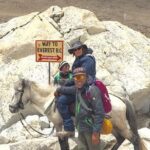
Finally, you add an excursion to Everest Base Camp. This is described as a trek past ice pinnacles and crevasses of the Khumbu Glacier. On the return, there’s an option to take a higher route for a view of the Khumbu icefall and the South Col route, then you continue back toward Pheriche.
What makes this sequence great: you’re not doing Base Camp once and calling it a day. You get structured viewpoint climbs (Kala Patthar), then a closer look at Base Camp terrain. It gives you perspective.
Coming down toward Tengboche, Namche, and Lukla’s farewell mood
The descent starts with a day toward Tengboche, with a walk downhill and crossing the Dudh Koshi bridge. The route then goes onward toward Kyanjuma, described as the junction connecting Gokyo Valley, Khumjung village, and Namche Bazaar. That’s a good “big picture” day because it ties together the different branches you used earlier.
You’re also walking through rhododendron forest where wildlife like pheasants, griffons, musk deer, and wild goat are possible (based on what’s noted in the route description). You don’t go to Nepal for guaranteed animal sightings, but this kind of habitat detail is a nice reminder to slow down once in a while.
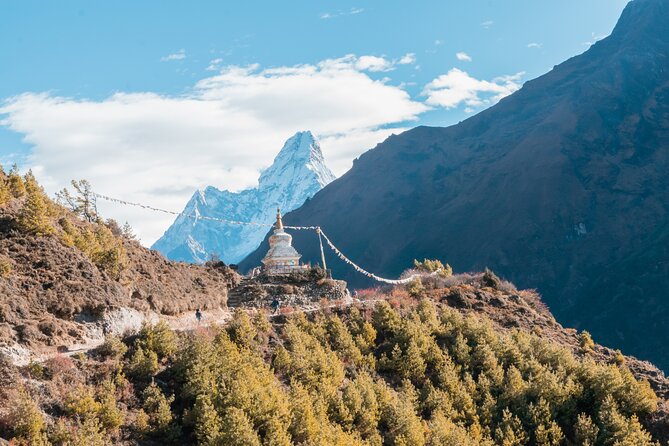
Later, the route drops through hillside forests blanketed with rhododendron and juniper. The Dudh Koshi gorge gets steeper visually as you descend rapidly through pine forests. From Sansa, you get views of Ama Dablam, Thamserku, and Nuptse. Then you arrive back at Namche Bazaar and later return to Lukla.
The final evening in the mountains includes a farewell vibe—an opportunity for a party with Sherpa guides and porters, chang (local beer), and some dancing. Even if you’re tired, it’s a nice way to mark the end before flights back to Kathmandu.
Price and logistics: what $2,800 buys (and what you still pay yourself)
At $2,800 per person for about 21 days, the value depends on what you’d otherwise need to organize yourself.
This price includes a lot of the core infrastructure:
- Kathmandu/Lukla/Kathmandu airfare
- Accommodation during the trek in local lodges/tea houses (standard rooms, non attached bathrooms) plus included meals across the trek
- An English-speaking local expert guide
- Porters with a stated ratio of 2 members to 1 porter
- Trek permits
- Airport transfers in a private vehicle and Kathmandu sightseeing
- Equipment clothing for porter and staff, plus insurance for those staff and porters
- A mobile ticket approach and pickup offered
What’s not included is also clearly spelled out:
- International flights and any other airfares
- Tips for guide/porters/drivers
- Emergency evacuation or costs tied to road blocks
- Personal extras like drinks, snacks, hot showers, and internet during the trek
- Your own medical costs and insurance
How I’d think about value: if you want a setup where your flight timing to Lukla, permits, and daily guide/porter coverage are handled, this price is less shocking. If you’re trying to self-organize everything independently, you’d have to replace these services, not just “add” them.
The kind of trekker this suits (and who should reconsider)
This trek is built for people with moderate physical fitness. The route includes long walking days and altitude pressure, and the Cho La Pass crossing is explicitly described as one of the toughest days because of steep terrain and icy glacier traverse conditions.
This fits you if:
- You want a blend of Everest-region icons plus Gokyo’s alpine lakes.
- You’re okay with lodge life and basic rooms at altitude.
- You listen well and can keep a steady pace when the trail gets technical.
You might pause and ask harder questions before booking if:
- You’re uncomfortable with the idea of icy, steep pass terrain and glacier traverses.
- You need a fully cushy comfort level (hot showers and extra comfort items aren’t part of the included package).
Should you book this Everest Base Camp & Gokyo Ri trek?
If your goal is to see Everest-region drama from multiple angles—Gokyo Ri panoramas, Kala Patthar viewpoint time, and an Everest Base Camp excursion—this itinerary matches that ambition. It also includes the practical supports that make these treks feel manageable: guides, permits, porters, and the Kathmandu/Lukla flight backbone.
The main reason to hesitate is the Cho La Pass day. If you’re physically ready and mentally calm on technical terrain, you’re likely to have the kind of trek that sticks with you for years. If that technical challenge scares you more than it excites you, pick a less complicated route or talk to your guide team before committing.
FAQ
How long is the Everest Base Camp & Gokyo Ri trek?
The duration is listed as 21 days (approx.).
Where does the tour start in Nepal?
It starts at Tribhuvan Airport, Kathmandu, Nepal, with a stated start time of 12:15 am.
What flights are included in the price?
The included flights are Kathmandu to Lukla and back to Kathmandu. International flights are not included.
What kind of accommodation do you get during the trek?
You stay in local lodge/tea house rooms with standard rooms and non attached bathrooms. In Kathmandu, you get 3 nights’ accommodation in twin sharing with breakfast only.
Are meals included while trekking?
Yes. The package includes breakfast, lunch, and dinner during the trek (with counts shown in the included section). Personal drinks and snacks are not included.
What about guides, porters, and permits?
You get an English-speaking local expert guide, porters (with a stated ratio of 2 members to 1 porter), and permits during the trek.
How big are the groups?
This trek has a maximum of 100 travelers.
What are the main costs not included?
Tips, emergency evacuation/road block-related costs, personal expenses (like drinks, snacks, hot showers, and internet), and your medical expenses/insurance are not included.
Is this trek only for very advanced hikers?
It’s described as suitable for people with moderate physical fitness level, but it does include a particularly tough day on Cho La Pass with steep and icy glacier traverse conditions.