REVIEW · KATHMANDU
Annapurna Circuit Trek
Book on Viator →Operated by Outfitter Nepal · Bookable on Viator
A circuit trek with real mountain grit. What makes this one stand out is that you’re not just thrown on a trail: you get tight logistics from Kathmandu, a structured acclimatization day in Manang, and a proper Kathmandu and Pokhara sightseeing setup before and after the walking. I love the small-group feel (up to 10 travelers) plus a guide team that stays focused on safety and pace. One possible drawback: you’re still dealing with high altitude and knee-pounding descents, so you’ll want to be honest with your fitness level and pack warmer layers than you think you need.
The early pieces also matter. You start with a Kathmandu-to-trailhead travel day using bus and local jeeps, then shift quickly into river valleys, suspension bridges, pine and oak forests, and villages where prayer flags show up everywhere. Along the way, you get plenty of scenery, but you also learn how daily life works in places like Bagarchhap, Timang, and Muktinath.
For value, I think the $994 per person can make sense because so much is already handled: lodge/tea house sleeping, a trained guide, ground transportation tied to specific stages, taxes, and the main trekking meals. Still, not everything is included—city meals and drinks are on you—so budget for that if you like to eat well outside the mountains.
In This Review
- Key Things That Make This Trek Worth Your Time
- Kathmandu Logistics That Actually Reduce Stress
- Day 1 to Chamje: From Road Noise to River Valley Quiet
- First Trek Days: River Crossings, Big Switchbacks, and Prayer Flags
- Manang Days: Forests, Apple Orchards, and a Planned Acclimatization Break
- Yak Kharka to Thorung Phedi: Short Days That Still Feel Hard
- Thorung La (5416m) Day: Early Start, Big Views, and a Long Descent
- Muktinath to Tatopani: Prayer, Then a Jeep Ride Along Kali Gandaki
- Ghorepani: Villages, Rhododendron, and a Different Kind of Mountain Morning
- Pokhara Finish: Poon Hill Sunrise and a Downhill Walk Back to Normal Life
- Kathmandu UNESCO Day and the Cultural Warm-Up
- Price and Value: What $994 Covers and What You Still Need to Plan For
- Guides, Safety Mindset, and Why the Team Names Matter
- Packing and Porter Rules That Affect Your Comfort
- Who Should Book This Trek (and Who Should Pause)
- Should You Book This Annapurna Circuit Trek?
- FAQ
- FAQ
- How early do we start on the first day?
- Are airport or hotel pickups included?
- What kind of accommodation do you use on the trek?
- What meals are included, and what is not?
- Is a porter included?
- How many people are in the group?
Key Things That Make This Trek Worth Your Time
- Small group size (max 10 travelers) keeps the pace calmer and the guide-to-walker attention higher.
- Manang acclimatization structure gives you a real rest day, not just a breather between long days.
- Thorung La day starts early with dramatic pass views and a long descent to Muktinath.
- Kathmandu UNESCO sightseeing day adds a cultural warm-up before trekking.
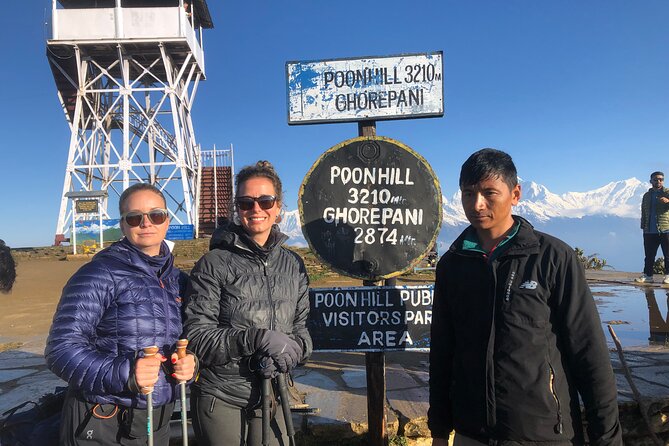
- Poon Hill sunrise in Pokhara gives you a big-bang peak-view moment before you finish.
- Porter support lets you hike with a day pack while your main luggage is carried.
Kathmandu Logistics That Actually Reduce Stress
The trip starts in Kathmandu with a pickup offered from your hotel (and airport pickup is also mentioned). The main meeting point time is 6:15 am, and on day one you’re moving by early morning—around 7 am you’re picked up and driven to the bus terminal.
That first transport day isn’t glamorous, but it’s smart. You take a bus toward Besisahar and then switch to a local jeep up to Chamje, your first overnight stop. The road route follows the Kathmandu–Pokhara Highway until Dumre, then things get more exciting as you travel alongside the Marshyangdi River. For me, this is a win because it gets you to the trekking start without wasting a full day doing stop-and-go planning.
If you’re the type who hates surprises, this is the whole point. You know when you’ll be picked up, how you’ll get to the next stage, and that the trek guide handles logistics once you’re on trail.
You can also read our reviews of more tours and experiences in Kathmandu.
Day 1 to Chamje: From Road Noise to River Valley Quiet
Chamje is where the trek starts to feel remote. You’re already off the tourist loop at this stage, and the first day’s feel is mostly about transition: travel, settle in, and get your body ready for hiking.
What’s nice here is that you’re sleeping in a lodge/tea house setup from the start. That matters because Annapurna-style trekking can be hard enough without wondering if you’ll find a bed, dinner, or a hot drink at night. You’re also not doing a “surprise jungle hike” after travel fatigue—the first real walking comes the following day.
First Trek Days: River Crossings, Big Switchbacks, and Prayer Flags
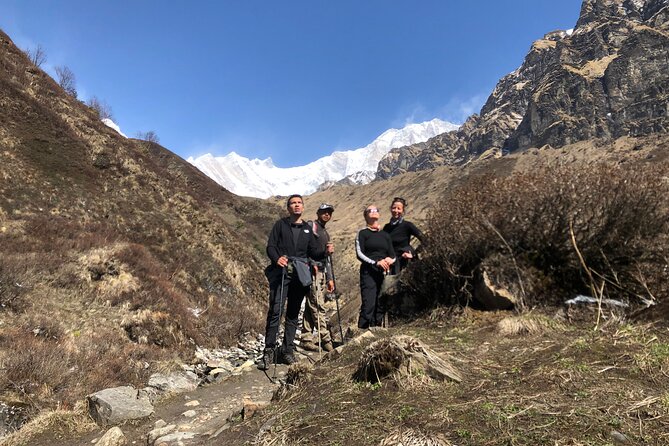
From Chamje you start down toward the river, cross a suspension bridge, then climb toward Sattale (1550m). The trail is described as steep enough that one slip feels like it could send you into the valley—so take your time, keep your footing habits sharp, and don’t treat this like a casual stroll.
Then the path opens into the Tal plain (1700m) before the valley narrows again. In several places, the trail is high and winding, even hewn from rock itself. That’s a good thing for you: you get a sense that this route has been used for a long time, and it’s not wandering wilderness with uncertain directions.
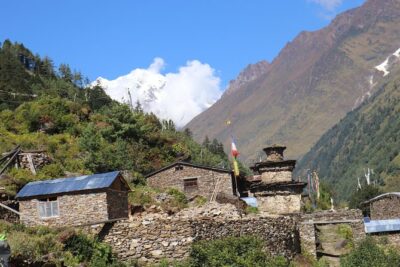
By day three you’re heading toward Chame. You move through areas where the Marsyangdi River veers left and Annapurna II starts to show up in the distance. A highlight here is Bagarchhap, a Bhote village known for prayer flags around a Buddhist monastery. You’re hiking through scenery, yes—but these small cultural markers are part of why this trek feels like Nepal rather than just photos.
The Chame day also brings forests into the mix—pine and oak—and that helps break up the intensity. You’ll pass through places like Danaque (2210m) and Timang, then settle into Chame for lodge night.
Manang Days: Forests, Apple Orchards, and a Planned Acclimatization Break
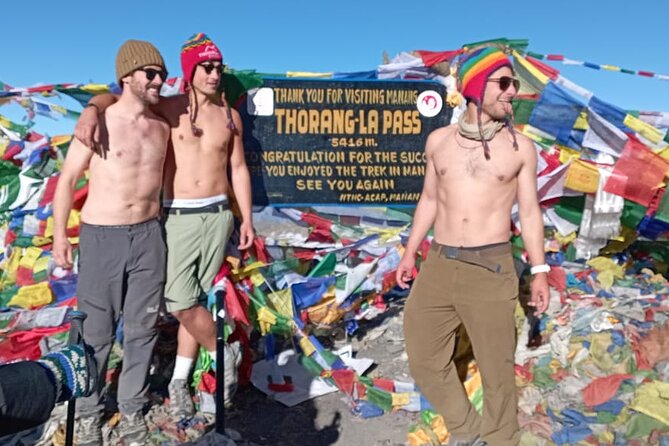
Manang is your turning point. You’ll start day four seeing Lamjung Himal in morning sun, then trek through an apple orchard before moving into fir and pine forest. You’ll climb into rocky areas where the opposite bank can become cliff-like, then follow paths that feel exposed along steep valley sides. It’s not just pretty; it’s a reminder to stay focused on footing.
By day five you’re looking for broader views of the Manang valley and Tilicho Peak, and the trail is still active—climbs to ridges, then down past Manang’s airstrip at Humde (3320m). You’re also getting visual “layers” of the Annapurna range: Annapurna III and Annapurna IV show up as you move through Sabje Khola Valley, then you cross a wooden bridge and reach smaller village areas like Mungji, with cultivated fields and sights toward Braga.
Then comes the best kind of day: the official rest and acclimatization day in Manang. This is one reason I’d call this trek thoughtfully paced. Instead of stacking more altitude immediately, you get optional walks like:
- crossing the river to see the tremendous icefall,
- climbing high above the village for an Annapurna range panorama,
- visiting an HRA aid post (an educational stop),
- and checking out Ganagapurna Glacier Lake.
Even if you don’t do all of that, the fact that you can choose tells you the route is meant for real humans, not just robots chasing checkmarks.
Yak Kharka to Thorung Phedi: Short Days That Still Feel Hard
After Manang, the trek continues with less oxygen and more effort. On the day to Yak Kharka, the trail ascends gently through Gunsang (3960m). You’ll see panoramic views all day, and it can feel deceptively short—until your lungs remind you that altitude is real.
By the next day, you head toward Thorung Phedi. You descend to the headwaters of the Marsyangdi and cross via a covered wooden bridge. After a short climb on the right bank, you follow a narrow trail across an unstable spree slope before descending to your lodge for the night.
That “unstable slope” detail is practical. It’s not a reason to panic; it’s a reason to slow down, keep your pack stable, and avoid rushing when your balance feels less dependable.
Thorung La (5416m) Day: Early Start, Big Views, and a Long Descent
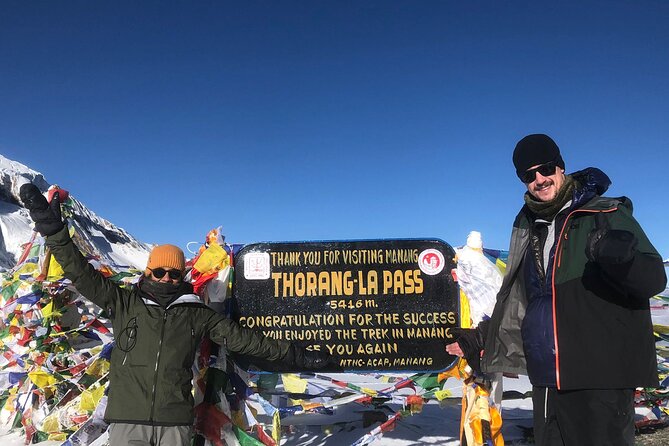
This is the day people remember: crossing Thorung La at 5416m. You start very early, and the trail becomes steep right after leaving camp. Since the route has been used by locals for hundreds of years, it’s well-defined, which helps you trust the trail.
After around four hours of steady climbing, you reach the pass area with a chorten and prayer flags. The views are described as dramatic: snow-covered mountains above, the head of the Kali Gandaki valley below, and the brown and purple hills of Mustang spread out ahead.
Then you drop to Muktinath. It’s a knee-pounding descent of about 1600m. The trade-off is the view payoff, including Dhaulagiri. When people say this trek is intense, this day is usually the reason why.
Muktinath to Tatopani: Prayer, Then a Jeep Ride Along Kali Gandaki
After the pass, day ten is a reset. In the morning you head toward Muktinath to pray for yourself and your friends and family. Breakfast comes back at your lodge afterward—important because after a hard trek day, food timing can make a big difference.
Then you swap hiking for transport: a jeep ride from Muktinath to Tatopani along the Kali Gandaki River. Tatopani is where your trip starts turning from high pass drama into a more relaxed rhythm, even if you still keep moving next day.
Ghorepani: Villages, Rhododendron, and a Different Kind of Mountain Morning
The trek toward Ghorepani starts with flatter sections, then transitions into a steep climb for at least an hour. You pass through villages with different caste communities and land use, and you’re also told about how many locals serve in the Gorkha Regiment and Indian Regiment.
The trail continues with gentler climbs to Ghorepani, passing through places like Phalate and Chitre. Rhododendron forests show up here, and you might spot wildlife such as monkeys and different birds. This is a good contrast to the earlier days: you’re still gaining and losing altitude, but the vibe feels more like forest trail trekking than exposed high-valley travel.
Overnight at a lodge keeps it consistent. No surprises, just get some sleep and prepare for the finale.
Pokhara Finish: Poon Hill Sunrise and a Downhill Walk Back to Normal Life
Your final day is built around sunrise at Poon Hill (3232m). You go early for the view over a wide list of Himalayan peaks, including Dhaulagiri, Annapurna I, Machhapuchhre, Annapurna South, Annapurna III and IV, and more. This is the moment you’ll remember even if you’ve already taken a hundred photos.
After the sunrise, you return for breakfast, then continue with a gradual descent through rhododendron and oak toward the end of the trekking segment before reaching Pokhara. There’s also a stop at Banthanti, where you can pause for hot and cold drinks.
This is also where the trip’s other big value shows up: your time doesn’t end at a lodge in the mountains. You get a clean handoff into city life.
Kathmandu UNESCO Day and the Cultural Warm-Up
Before trekking begins, the plan includes a full day in Kathmandu covering UNESCO-listed attractions. That’s not just a nice-to-have; it’s practical. It helps you understand what you’re looking at once you start passing through villages. You’re seeing people, religion, and daily rhythms up close, and the cultural context makes it easier to connect.
If you like your trips to have both feet in the real world—peaks and people—this blend is strong.
Price and Value: What $994 Covers and What You Still Need to Plan For
At $994 per person for roughly 12 days, you’re paying for a lot of built-in structure:
- lodge/tea house accommodation during the trek,
- all government taxes, VAT, and service charges,
- an experienced guide,
- transportation between trekking stages (including Kathmandu to Chamje, Muktinath to Tatopani, and Hile to Pokhara by local bus),
- guide food, drinks, accommodation, insurance,
- and core trekking meals (breakfast and lunch are listed, plus dinner for 11 days).
What’s not included is also clear: alcoholic and non-alcoholic drinks, dessert, and meals in the cities (Kathmandu and Pokhara). International airfare and the Nepal entry visa fee are also not included. You’ll need a travel insurance policy, and tips for your guide and porter are not covered.
For me, the “value” comes down to this: if you hate logistics and want the trip to run like a machine, this package is designed for that. If you prefer total freedom to DIY everything, you might feel boxed in.
Guides, Safety Mindset, and Why the Team Names Matter
The trekking guide work is not a small detail here. The reviews include examples of respected leaders such as Balaram Khadka (also called Bala/Balarama), Amar, Ram, Jito, Kammal, Indra, Kapil, Rabi, Jitu, and Hom—plus porters like Buddhi, Vimsan, Razan, Suman, and others.
You can also see the same theme: guides focus on keeping you safe, organized, and moving at a workable pace. For you, that usually translates into fewer wrong turns, better timing for breaks, and more confidence when the terrain gets serious—like on the Thorung La ascent or the unstable slope day before Thorung Phedi.
Also worth knowing: the guide team is designed around group size, and the maximum group size is 10 travelers. That smaller number helps on questions, pace adjustments, and making sure nobody gets left behind.
Packing and Porter Rules That Affect Your Comfort
This trek is set up so you carry a day pack and let porters handle your main luggage. The porter plan is described as one porter for each 2 trekkers, with a carry limit of about 20kg total per porter (10kg from each trekkers).
For your day pack, the practical list is basically: water bottle, camera, sunscreen, spare jacket, and what you need between tea-house stops. On top of that, a trek bag for main luggage is ideal, and there’s mention of a small lockable bag for travel clothes that you can leave in Kathmandu or Pokhara free of charge.
One detail I’d treat seriously: weight allowance for Nepal’s domestic airlines is listed as 15kg including your hand bag if you fly to Pokhara or back. Excess weight is charged at USD 1 or more, so check that before you head to the airport.
Who Should Book This Trek (and Who Should Pause)
This trek is built for most travelers in the sense that it’s offered with lodge stays, a guide, and porter support. But the route includes serious altitude points and long effort days—especially the Thorung La crossing at 5416m and the heavy descent to Muktinath.
So this is a great fit if you want:
- a classic Annapurna experience with clear support,
- a planned acclimatization break in Manang,
- and big peak-view days like Poon Hill sunrise.
You should pause if you’re worried about altitude or you’re not comfortable with steep terrain. Even with a guide and structure, the mountains don’t change for convenience.
Should You Book This Annapurna Circuit Trek?
If your idea of a perfect trip is: get your logistics handled, hike with a trained team, sleep in lodges, and still feel that you’re out in the real Nepal mountains—then yes, this one is worth strong consideration. The combination of Manang acclimatization, the Thorung La day payoff, and the Poon Hill sunrise finish gives you both challenge and reward in a way that feels organized.
But if you’re expecting a gentle “all-levels” walk the entire time, you’ll need to recalibrate. This route has steep moments, long days, and a pass crossing that demands respect.
FAQ
FAQ
How early do we start on the first day?
The meeting point time listed is 6:15 am. On day one, you’re picked up from your hotel at around 7 AM and driven to the bus terminal.
Are airport or hotel pickups included?
Yes. The tour includes pickup offered from hotels and also mentions airport pickup as part of the included transportation.
What kind of accommodation do you use on the trek?
You stay in lodges/tea houses during the trek, with all accommodations included.
What meals are included, and what is not?
Breakfast and lunch are listed as included during the trek, and dinner is included for 11 days. Meals while you are in Kathmandu and Pokhara are not included, and drinks and dessert are also not included.
Is a porter included?
Porters are described as being provided at a ratio of one porter for each 2 trekkers, carrying about 20kg total per porter. There is also a note that if you need a porter it costs 20 USD per day, so it’s best to confirm how that applies to your specific booking.
How many people are in the group?
The group maximum is listed as 10 travelers. Confirmation is subject to availability and you receive it within 48 hours of booking.
If you want, tell me your month of travel and your hiking experience level, and I’ll suggest whether the timing and pace match what you’re aiming for.