REVIEW · KATHMANDU
Annapurna Circuit Trek
Book on Viator →Operated by Ace the Himalaya · Bookable on Viator
Few walks hit harder than the Thorong La day.
This 22-day Annapurna Circuit wraps serious altitude with real Nepalese culture, from Pashupatinath and Boudhanath to Pokhara’s caves and the Tibetan refugee camp. I like that it is small-group (up to 15) and run with a licensed English-speaking guide plus a porter for every two clients. One drawback to plan for: the trek is weather-dependent, and the Thorong La crossing starts around 4am with strong wind and snow risk.
What I also like is how the route is built for pacing and recovery, especially the Manang acclimatization day and the hot-springs reset at Tatopani. You get guided logistics most of the way—transport between trail sections, guesthouses, permits, sightseeing—so you spend your energy on walking and breathing. The tradeoff is you still need solid fitness and common-sense altitude habits, plus you’ll pay extra for travel insurance and personal trekking items.
In This Review
- Key Things I’d Bet You’ll Care About
- Annapurna Circuit as a Nepal Crash Course
- Kathmandu Sightseeing Days 1–2: Temples Plus a Quick Cultural Jolt
- Getting to the Trail: Kathmandu to Besisahar and Syange (Day 3)
- Marsyangdi River to Chame: River Walks, Waterfalls, and First Big Peaks (Days 4–6)
- Upper Pisang and Ngawal: Views Get Serious (Days 7–8)
- Manang and Acclimatization: Do This Like You Mean It (Days 9–10)
- Yak Kharka and Thorong Phedi: The Altitude Climb Begins (Days 11–12)
- Thorong La Pass (Day 13): Early Start, Real Risk, Big Reward
- Kali Gandaki and Jomsom to Tatopani: Desert Feel, Then Hot Springs (Days 14–16)
- Ghorepani to Poon Hill: A Sunrise Mission with Worthwhile Payoff (Days 17–18)
- Pokhara Finish: Caves, Falls, River Gorge, and a Cultural Community (Days 19–20)
- Back to Kathmandu and the Farewell Dinner (Day 21–22)
- Price and Logistics: What $2,240 Covers and Why It Matters
- What the Included Trek Gear Really Changes
- Who This Trek Suits Best
- Should You Book Ace the Himalaya’s Annapurna Circuit?
- FAQ
- How large is the group?
- What trek gear is provided?
- Are meals included?
- Do you include permits and sightseeing fees?
- What day is most weather-dependent?
- What if I cancel or the weather is poor?
Key Things I’d Bet You’ll Care About
- A guided circuit with a tight group size (max 15), so days feel organized instead of chaotic.
- Manang acclimatization is built in, including a walk to Gangapurna Glacier Lake and a monastery visit.
- Thorong La pass is the main weather gamble, and the schedule is set to reduce risk from later storms.
- Tatopani hot springs are a real recovery tool, not just a scenic stop.
- Gear help is included: a down jacket and sleeping bag are provided for the trek (returned afterward).
- Cultural add-ons in Kathmandu and Pokhara keep the trip from feeling like only checkpoints and viewpoints.
Annapurna Circuit as a Nepal Crash Course
This itinerary is not just about ticking off a famous pass. You get a full Nepal introduction: Hindu and Buddhist sights in Kathmandu, the mountain rhythm of tea houses and villages, then a finish in Pokhara with caves, waterfalls, river gorges, and community craft culture.
I like the balance of mountain days and softer town time. Kathmandu brings you temple-scale moments like Pashupatinath and Boudhanath, then the trek pushes you into mountain-specific reality: river valleys, forest trails, and altitude climbs where the air starts doing the hard work.
Your most important consideration is stamina. You should come in with moderate physical fitness and the patience for long walking days and early mornings, especially once you’re near 4,000m and above.
You can also read our reviews of more tours and experiences in Kathmandu.
Kathmandu Sightseeing Days 1–2: Temples Plus a Quick Cultural Jolt
Day 1 starts with an airport representative meeting you at Tribhuvan International Airport. You’ll be transferred to a hotel in Kathmandu in a private tourist vehicle, and you’ll likely get a pre-trek meeting in the office on Day 1 or Day 2.
That meeting matters more than it sounds. Bring your passport, three copies of passport-size photos, and a readable copy of your travel insurance policy, even though full high-altitude rescue coverage is not included. You’ll also settle any remaining balance and sign trip paperwork plus a non-liability disclaimer.
Day 2 is a focused culture loop:
- Pashupatinath Temple across the Bagmati River: you cannot go inside (it’s strictly for Hindus), but you’ll watch temple activity from the eastern bank.
- Boudhanath Stupa: pilgrims circle the stupa and spin prayer wheels.
- Bhaktapur Durbar Square: you’ll see the royal residential quarter and iconic pagoda-style temples like Nyatapola and the Palace of 55 Windows.
This is a good setup for the trek. After this, you’re not just going to mountains—you understand why people build temples, festivals, and pilgrimages into their geography.
Getting to the Trail: Kathmandu to Besisahar and Syange (Day 3)
Day 3 is travel, not training. You’ll take a public bus from Kathmandu to Besisahar (about 6 hours), then a shared 4WD to Syange (about 2 hours).
This transition is worth paying attention to because it shapes your first day on foot. By the time you reach the Syange area, you’ve already spent hours in transit, so the next day’s gradual walking along the Marsyangdi River is a welcome on-ramp.
Marsyangdi River to Chame: River Walks, Waterfalls, and First Big Peaks (Days 4–6)
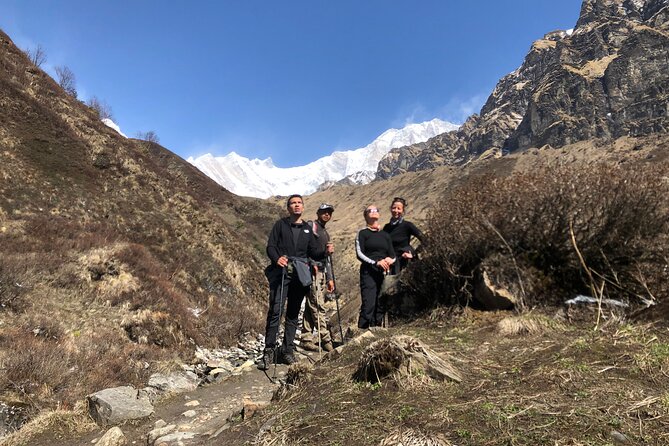
From Tal to Danakyu to Chame, you’re basically learning the Annapurna Circuit walking style: follow a river, climb gently, stop often for views and village life.
- Day 4 (Tal): you’ll walk gradually following the Marsyangdi River with slight ascents and waterfalls along the way.
- Day 5 (Danakyu): you leave the river behind and continue through countryside and older villages, with chances to photograph Annapurna II and Pisang Peak.
- Day 6 (Chame): an easier day by trek standards, with about 4 hours of walking to reach Chame, the Manang headquarters. Chame usually feels more “settled” with more facilities than earlier stops.
If you like your trekking photos to have human scale—houses, terraces, trails hugging valleys—this stretch delivers.
Upper Pisang and Ngawal: Views Get Serious (Days 7–8)
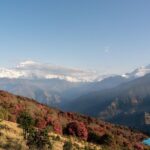
These days shift from village charm to mountain drama. The trail moves through dense forest and meadows, and it starts presenting bigger rock faces and sharper peak angles.
- Day 7 (Upper Pisang): a 6-hour walk through forest and along the Marsyangdi River, with panoramic meadows and mountains. You’ll also see a distinctive rock face, described as Paungda Dada, curved like a bowl.
- Day 8 (Ngawal): you wake early to catch sunrise rays on Annapurna II. The route to Ngawal is about 400m higher than a lower option, giving you better chances at high-altitude flora and fauna, plus gorges and close views.
This is also where your body starts asking you to slow down a bit. The mornings can be cold, and your breathing may feel different, even if the altitude isn’t yet at Thorong La levels.
Manang and Acclimatization: Do This Like You Mean It (Days 9–10)
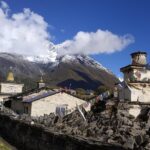
Manang is one of the most important parts of the trip, even though you are not climbing over a pass that day. You’ll reach Manang around Day 9 after about 6 hours walking through hills, jungle, and wetlands, with stupas and a lama school along the way.
Then comes the acclimatization day (Day 10). You’ll do walks and sightseeing around the village, including:
- a monastery visit
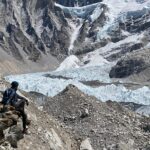
- a walk to Gangapurna Glacier Lake
- then you return to accommodation in Manang for that night
Here’s why this matters for you: Thorong La is coming. The better you respect this acclimatization block, the smoother the later days usually feel.
Yak Kharka and Thorong Phedi: The Altitude Climb Begins (Days 11–12)
Day 11 moves you upward steadily toward Yak Kharka (around 4,000m). You’ll ascend about 500m, crossing Tenki Manang and leaving the Marsyangdi Valley, then following the Jarsang Khola Valley. Expect fewer yaks and thinner vegetation as altitude increases.
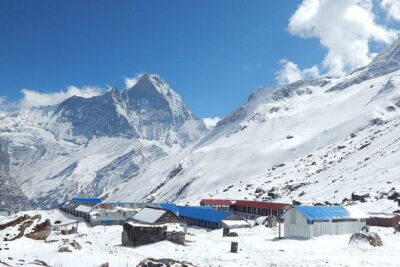
Day 12 brings you to Thorong Phedi, with a pattern you’ll see again near passes: climb, then manage breathing, then climb again. You’ll ascend for about two hours, descend to cross a river around 4,310m, then climb up to Thorong Phedi at about 4,450m, where guesthouses are built for travelers.
This is the day where you’ll feel the “logistics” side of trekking. You’ll want to keep clothing accessible, drink water regularly, and sleep as well as you can, since the next day starts very early.
Thorong La Pass (Day 13): Early Start, Real Risk, Big Reward
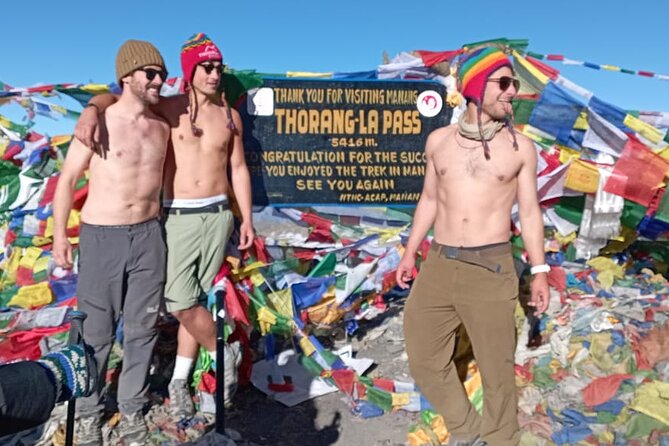
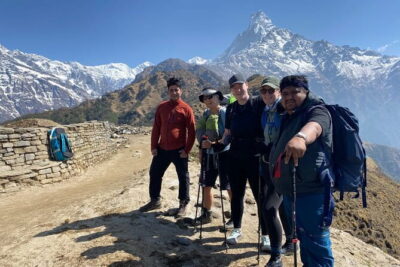
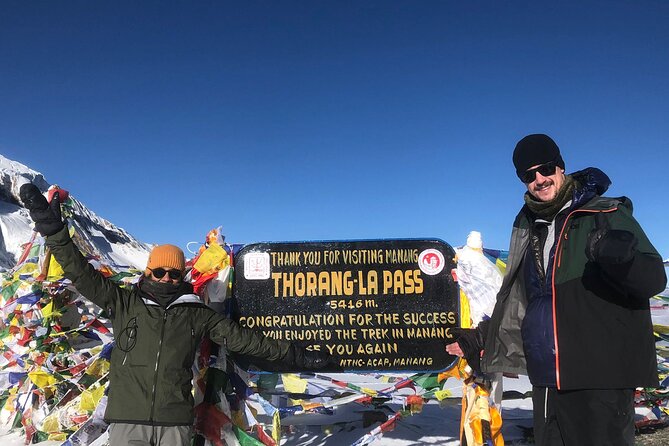
Day 13 is the classic Annapurna Circuit moment. You start before sunrise—around 4am—aiming to reach Thorong La Pass by about 9–10am. The itinerary calls out the main risk: strong winds at the pass, and problems caused by altitude and snow.
The ascent is described as steep but fairly easy to follow on the regular route. You’ll climb toward the pass marked by chortens and prayer flags, and the reward is stunning views from the top. After that, you still walk another stretch—about 4 hours—to Muktinath, a holy town.
This is also where guides and pace make a difference. In past trips, guests have praised guides such as Ganesh Khanal, Nimesh, Madan, Ram, and Janu (Janardthan) for keeping people safe and helping them acclimatize for Thorong La.
If you get cold easily, plan your layers carefully. If you overexert early, you’ll pay for it later. The pass is not a place for heroics; it’s a place for good pacing.
Kali Gandaki and Jomsom to Tatopani: Desert Feel, Then Hot Springs (Days 14–16)
After Thorong La, the environment changes. Day 14 reaches Jomsom, and the land is described as dry and desert-like. You’ll trek along the Kali Gandaki River bank, descending more, with closer views of stupas and traditional houses linked to Mustang civilization.
Day 15 brings you to Tatopani, famous for hot springs. On the way, you’ll encounter Kopchepani, described as the world’s deepest gorge. The point of Tatopani is recovery: you’ll spend the day relaxing so your legs can unclench after altitude and steep descents.
Day 16 continues Tatopani with another full hot-springs day: shower, dip in the natural hot springs, and enjoy local food. This isn’t just “nice.” It’s a physical reset before you climb again toward Ghorepani.
Ghorepani to Poon Hill: A Sunrise Mission with Worthwhile Payoff (Days 17–18)
Day 17 is a bigger walking day. It takes about 7 hours from Tatopani to Ghorepani, with a climb of roughly 1,620m. From Ghorepani, you can view Annapurna South, Himchuli, and Tukuche Himal, and you’ll pass Magar and Gurung villages.
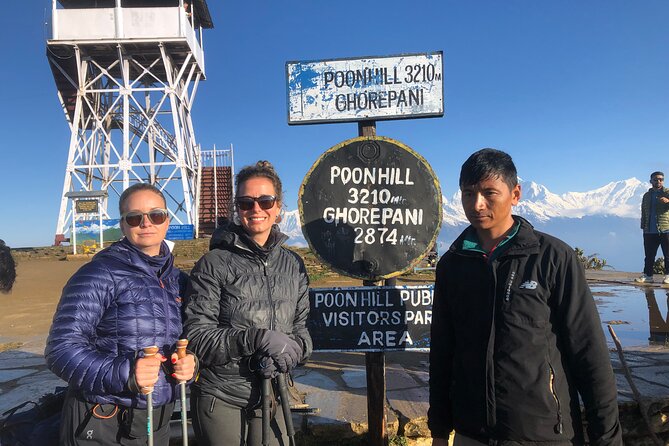
Day 18 is your early viewpoint play. You’ll start with about an hour hike to Poon Hill at 3,210m for sunrise views, weather permitting. After about an hour up there, you return to Ghorepani for a hot breakfast, then trek down toward Tikhedhunga (Tikhedhunga) through ridges and rhododendron forests.
If you want sunrise, you need to accept that weather can cancel the magic. But even without perfect skies, this section still gives you great mountain angles before the trek turns into a descent toward lower elevations.
Pokhara Finish: Caves, Falls, River Gorge, and a Cultural Community (Days 19–20)
Day 19 brings you to Pokhara. After light trekking you reach Nayapul (1,010m), then drive about an hour to the lakeside city.
Day 20 is a packed sightseeing day. You’ll visit:
- Shree Bindhyabasini Temple in the old bazaar area, dedicated to Goddess Bhagwati
- Devi’s Fall (locally Patale Chhango), where water drops into a deep gorge
- Gupteshwor Mahadev Cave, almost 3km long with some crawl sections and a Hindu symbol connected to Lord Shiva
- Seti River Gorge, carved by the Seti Gandaki River
- Tibetan Refugee Camp (Tashi Ling), known for woolen carpet and handicraft production
This is a nice way to end. You go from altitude breathing to street-level Nepal, with tangible places where faith and work both shape daily life.
Back to Kathmandu and the Farewell Dinner (Day 21–22)
Day 21 is your return drive to Kathmandu in the morning. In the evening, there’s a farewell dinner at a traditional Nepalese restaurant with cultural performances.
Day 22 ends at Tribhuvan International Airport. An airport representative drops you at the airport for your departure.
I like this pacing. You don’t feel rushed the last day, and you get one final “social” moment after long days of walking.
Price and Logistics: What $2,240 Covers and Why It Matters
At $2,240 per person for roughly 22 days, this trek is not cheap. But a big part of the cost is baked into the plan: transfers, permits, a licensed guide, accommodation, and even trek sleep systems.
Here’s what you do get included:
- Airport transfers and in-country transport (public bus, shared 4WD legs, tourist vehicle from Nayapul to Pokhara, tourist bus back to Kathmandu)
- Kathmandu (3 nights) and Pokhara (2 nights) in a three-star hotel, twin-share/double rooms
- Trek accommodation in guesthouses for 16 nights in twin-share and dormitory rooms
- Licensed English-speaking trekking guide
- One porter for two clients
- ACAP and TIMS permits
- Down jacket and sleeping bag for the trek (returned afterward)
- Most meals: breakfast 21 times, lunch 16 times, dinner 17 times
- Sightseeing entrance fees in Kathmandu and Pokhara, plus government taxes and service charges
What is not included is the stuff you should not skip:
- travel insurance that covers emergency high-altitude rescue and evacuation
- international flights and Nepal entry visa
- tips for trekking staff and driver
- personal trekking equipment
- alcoholic and non-alcoholic drinks
So the value depends on you. If you want to show up and let the plan handle the moving parts, this price starts to make sense fast. If you already have gear, love planning, and can DIY permits and logistics, you might compare options. But for most people, the included support turns a big trip into a manageable one.
What the Included Trek Gear Really Changes
You’ll get a down jacket and sleeping bag, which matters more than it sounds. High-altitude nights can be cold, and having proper warmth reduces the risk of arriving tired because you are uncomfortable.
You still need personal layers and trekking items, but your comfort setup for the coldest part of the route is partly handled. Also, having a porter for every two clients means you can pack smarter—carry the essentials, let the heavy stuff go.
Who This Trek Suits Best
This works best for you if:
- you want a guided, small-group circuit with transport and permits handled
- you are willing to walk long days and handle early starts
- you want a trip that includes both big mountain effort and structured cultural sightseeing
It may not be ideal if you hate schedules or dislike the idea of weather risk, since Thorong La depends on conditions and the provider notes the experience requires good weather.
Should You Book Ace the Himalaya’s Annapurna Circuit?
If your priority is a well-run trek with real support and you want your logistics handled, I’d book it. The combination of Manang acclimatization, hot springs recovery at Tatopani, and a guided approach through Thorong La makes this one of the more balanced ways to do the circuit.
I’d think twice if you’re not ready for altitude reality, especially cold and wind around the pass. Also, if you do not plan for high-altitude rescue insurance and tips, budget those early so there are no surprises later.
If you want, tell me your travel month and fitness level. I can help you sanity-check whether this pacing and altitude profile fits you.
FAQ
How large is the group?
The tour has a maximum of 15 travelers.
What trek gear is provided?
The tour includes a down jacket and a sleeping bag for the trek, which you return afterward. Personal trekking equipment is not included.
Are meals included?
Yes. The tour includes breakfast 21 times, lunch 16 times, and dinner 17 times. Lunch and dinner in Kathmandu and Pokhara are not included.
Do you include permits and sightseeing fees?
Yes. The trek includes ACAP and TIMS permits, and Kathmandu and Pokhara sightseeing entrance fees are included.
What day is most weather-dependent?
Thorong La Pass day is the main one to watch, since the trek starts before sunrise and strong winds and snow can create problems at altitude.
What if I cancel or the weather is poor?
You can cancel up to 3 days in advance for a full refund. If the experience is canceled due to poor weather, you’ll be offered a different date or a full refund.