REVIEW · KATHMANDU
Annapurna Base Camp Trek
Book on Viator →Operated by Mountain Kick Private Limited · Bookable on Viator
Annapurna Base Camp sounds almost mythical, then it becomes real on your boots. This 14-day trek threads hilltop villages, forests, and dramatic gorges on the way up to Annapurna’s 13,550-foot finish—a place locals describe as home of the gods. You also get the Kathmandu and Pokhara setup days, so the adventure starts feeling organized, not chaotic.
I especially like the way the route is paced: most days sit in the lower Himalayas, then you build to the harder altitude pushes. I also like the local government-licensed guides and the fact that porters and support staff are included, so you’re spending energy on hiking, not hauling everything yourself.
One drawback to plan for: even with a gradual arc, you’ll still do hours of climbing over 10,000 feet, and your legs will feel it. If you’re not used to steep days, you’ll want to take training and pacing seriously.
In This Review
- Key Highlights You’ll Feel Immediately
- The Sacred Feeling of Annapurna Base Camp (And Why It Matters)
- Price and Logistics: What $1,300 Buys You (and What It Doesn’t)
- Kathmandu + Pokhara First: Your Buffer Days Before the Trail
- Day-by-Day Trek Breakdown: From Tikhedhunga to Base Camp
- Day 4: Pokhara to Nayapool, then Tikhedhunga
- Day 5: Tikhedhunga to Ghorepani (and the altitude climb feeling)
- Day 6: Hike to Poon Hill (10,535 feet), then down to Tadhapani
- Day 7: Tadhapani to Chomrong
- Day 8: Chomrong to Himalaya Hotel (9,678 feet)
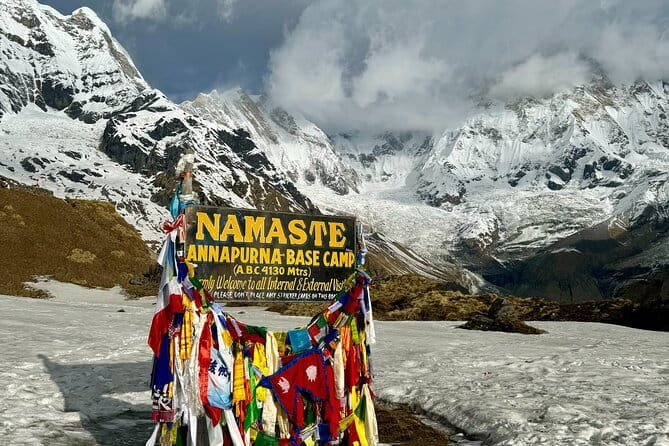
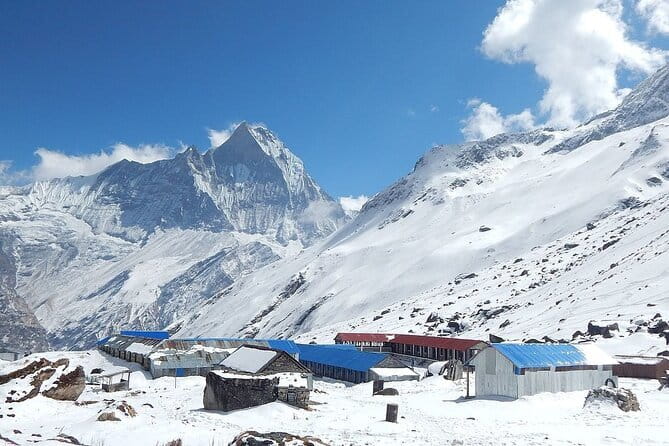
- Day 9: Himalaya Hotel to Annapurna Base Camp (13,550 feet)
- Day 10: Base Camp area to Bamboo (7,695 feet)
- Day 11: Bamboo to Jhinu Hot Spring (5,840 feet)
- Day 12: Jhinu Hot Spring back to Nayapool, then Pokhara
- Day 13: Drive to Kathmandu + farewell dinner
- Day 14: Final departure
- How Hard Is This Trek, Really? Altitude vs. Grit
- The Guide + Porter Team: The Difference Between Stress and Flow
- Equipment and What to Do if You Forget Something
- Food, Guesthouses, and the “View Every Day” Effect
- Who This Trek Fits Best
- Should You Book This Annapurna Base Camp Trek?
- FAQ
- How long is the Annapurna Base Camp trek?
- What altitude does the route reach?
- Is the trek difficult?
- What is the start time for the tour?
- Is pickup included?
- What lodging is included?
- Are guides and porters included?
- Do I need travel insurance?
- Is trekking equipment included?
Key Highlights You’ll Feel Immediately
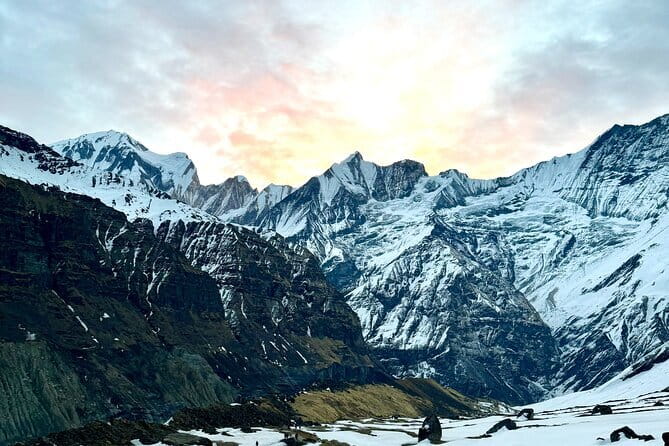
- Poon Hill day: an early hike that sets you up for big mountain views around 10,535 feet
- A divine-feeling arrival: reaching Annapurna Base Camp at 13,550 feet, where locals connect the site to spiritual meaning
- Guide-led flexibility: people highlight how your preferences can shape the day-to-day flow
- Porter support built in: one porter per pair of hikers, plus local support staff
- A recovery stop on the way back: Jhinu Hot Spring days give you a different kind of mountain payoff
- Kathmandu-to-trek transition: a pre-meeting in Kathmandu and structured hotel stays before you start hiking
The Sacred Feeling of Annapurna Base Camp (And Why It Matters)
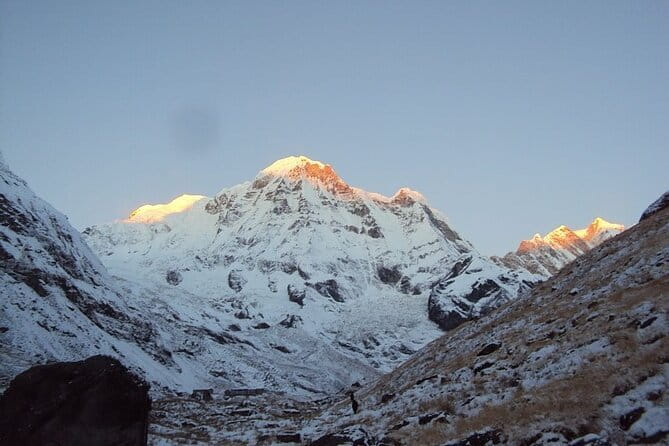
There’s a reason Annapurna Base Camp gets talked about like more than a “check the box” destination. Locals call the area the home of the gods, and once you’re up at camp level, the setting changes your mood fast. It’s still a tough mountain environment, but it feels less like a random wilderness and more like a spiritual endpoint.
For you, that matters because it affects how you experience the climb. When a place carries real meaning for the people who live around it, the trek becomes more than scenery. You’ll likely notice small details more—how villages greet you, how the trail bends around terrain that locals know well, and how the Annapurna massif dominates your sense of direction.
And you’re not just walking up to one spot. You’re trekking along the foot of the Annapurna massif and repeatedly moving through different village zones—so the “arrival feeling” comes after many days of real rhythm, not just a quick ascent.
You can also read our reviews of more tours and experiences in Kathmandu.
Price and Logistics: What $1,300 Buys You (and What It Doesn’t)
At $1,300 per person, the value is strongest if you care about structure and real support. What’s included covers several expensive pain points:
- Kathmandu hotel time: a three-star hotel with breakfast on a twin-share basis
- Trek stays: guesthouses during the trek, also twin-sharing
- People support: local government-licensed guides, plus porters and local support staff
- Practical transport pieces: drives and tourist bus transfers between key towns
If you’ve ever organized a trek yourself, you know the costs add up fast—guides, permits, coordination, and carrying the right gear. This package bundles those pieces into one plan, so you can focus on hiking and enjoying the villages.
What’s not included is also clear and important for your budget planning:
- Travel insurance (mandatory, and you must arrange it before you arrive)
- International airfare
- Nepal visa fees
- Trekking equipment (you bring it, or buy/rent in Kathmandu)
So the smarter way to look at the price is this: you’re paying to take most of the logistics and carrying burden off your plate.
Kathmandu + Pokhara First: Your Buffer Days Before the Trail
The trip is built to help you land on your feet. Day 1 is arrival and an overnight hotel stay in Kathmandu. Day 2 adds sightseeing around the Kathmandu Valley and a pre-trip meeting. That meeting is more than a formality. It’s where you get your expectations aligned before you drive toward the trekking start.
Day 3 is the drive from Kathmandu to Pokhara by tourist bus. You’re moving from about 3,000 feet in the city up into a mountain-travel mindset—close enough to feel the altitude story, far enough that you still get an adjustment day.
Day 12 to 13 also mirrors this idea: after you finish hiking, you return to Nayapool, then head back to Pokhara for sightseeing, and finally drive to Kathmandu for a farewell dinner and your last night.
That matters because altitude trips are often won by timing. These extra town blocks act like a cushion when legs are tired and schedules get real-life messy.
Day-by-Day Trek Breakdown: From Tikhedhunga to Base Camp
Day 4: Pokhara to Nayapool, then Tikhedhunga
You drive to Nayapool (around 3,477 feet) and start trekking to Tikhedhunga (about 5,060 feet). This is a “wake up your legs” day. The terrain is a step up from city comfort, but it’s not a sudden wall. You’re building the habit of walking steadily, not sprinting to impress your watch.
Overnight at a guesthouse sets you up for a morning rhythm.
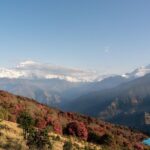
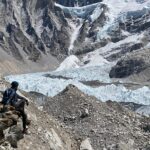
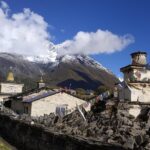
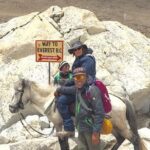
Day 5: Tikhedhunga to Ghorepani (and the altitude climb feeling)
Day 5 takes you up to Ghorepani at about 9,416 feet. This is where you start to feel altitude more than on day 4. You’re still not at the hardest elevations yet, but your body will notice thinner air and longer climbs.
Ghorepani is also where many treks begin to feel like a classic Himalayan pattern: early mornings, gradual rises, and lodge stops that turn into social hubs.
Day 6: Hike to Poon Hill (10,535 feet), then down to Tadhapani
This day is all about payoff. You hike to Poon Hill (around 10,535 feet), then trek to Tadhapani (about 8,628 feet).
Why it’s worth it: Poon Hill is one of the best ways to experience the mountains without jumping straight to the extreme end of the trek. It gives you a view “moment” that helps you mentally accept what’s coming next—especially if you’re feeling cautious about Base Camp altitude.
Overnight at a guesthouse keeps your routine consistent.
Day 7: Tadhapani to Chomrong
Chomrong at 7,120 feet brings your altitude down a bit, which is smart. After a big rise day, you get partial recovery while still hiking through village areas. This is also a good day to pay attention to your pacing. The trail will ask for steady effort, and your goal is to keep your legs working efficiently, not just getting you to the next room.
Day 8: Chomrong to Himalaya Hotel (9,678 feet)
Now the trek starts pushing altitude again. Himalaya Hotel sits at roughly 9,678 feet. You’re climbing back upward, and this kind of back-and-forth is common in the region for good reason: it helps build adaptation while keeping the trek doable for people with moderate fitness.
Overnight at a guesthouse.
Day 9: Himalaya Hotel to Annapurna Base Camp (13,550 feet)
This is the big day—trek to 13,550 feet. Expect a longer, more demanding push. The thin air is real, and the trail asks for patience. It’s not just the elevation number; it’s how long you spend working with pressure in your legs and lungs.
Then you sleep at a guesthouse at/near camp level. That nighttime in the Himalayas usually feels colder and more intense than lower elevations, so plan to bundle up properly and keep your energy for morning.
Day 10: Base Camp area to Bamboo (7,695 feet)
After a peak day, you descend to Bamboo at about 7,695 feet. Descents can feel easier, but they still beat up knees if you rush. Walk like your goal is control, not speed. This is a great day to focus on safe footwork.
Day 11: Bamboo to Jhinu Hot Spring (5,840 feet)
Jhinu Hot Spring is your emotional and physical reset. You drop to about 5,840 feet, and then the hot springs add a different kind of mountain satisfaction. A soak won’t erase fatigue, but it can make a huge difference in how your body feels for the final walking days.
Day 12: Jhinu Hot Spring back to Nayapool, then Pokhara
You hike to Nayapool (around 3,477 feet), then drive to Pokhara. This is a transition day: from mountain rhythm to town life. It’s also a good chance to eat well and hydrate without “trek logic” in your head.
Overnight in a hotel in Pokhara with sightseeing time.
Day 13: Drive to Kathmandu + farewell dinner
You drive back to Kathmandu and share a farewell dinner. After days of guesthouses and trekking food routines, a proper sit-down meal feels like a victory lap.
Overnight at a Kathmandu hotel.
Day 14: Final departure
Final departure day. If you can, give yourself a little slack before your flights. The plan notes that schedules can shift due to delays or natural hazards, so buffer time helps.
How Hard Is This Trek, Really? Altitude vs. Grit
The trip is described as a lower-Himalayas focus with tough moments. That sounds like marketing—until you look at the altitude pattern.
You start around 4,600 feet at Kathmandu, but the route repeatedly climbs higher, including days that crest above 10,000 feet. The most challenging part for most people isn’t just the altitude number. It’s “hours on end” of climbing once you’re already tired from earlier days.
Here’s what to take seriously:
- Plan for leg fatigue after long uphill segments
- Pace slower than you think on the ascent days; it helps your body work efficiently
- Expect pressure in your legs even if you’re fit
On the flip side, the itinerary does give you recovery via lower-altitude overnights and descents—like the Chomrong and Bamboo days. That structure is how this trek stays within reach for hikers with moderate fitness.
If you’re someone who trains a bit, walks stairs, and understands that “slow and steady” is a strategy, you’ll likely find this trip doable and rewarding.
The Guide + Porter Team: The Difference Between Stress and Flow
One of the most praised aspects is the human support. People talk about guides who are both skilled and patient, and about teams who handle issues smoothly if something goes off-plan.
In the reviews tied to this trek, the names that come up are Kumar (often referenced as Kumar Thapa) and Jeevan. What I’d take from that, as practical advice for you, is that your guide’s job isn’t only navigation. It’s pacing, morale, and making sure the day fits the group.
You’ll also have porter support: one porter for each pair of travelers/hikers, plus local support staff. That means you don’t have to haul everything yourself, which makes a big difference on longer climbing days. You can keep your load reasonable so you don’t turn each uphill stretch into a battle.
Also note this: your guide can often build flexibility into the schedule based on preferences. That flexibility is especially useful if someone in your group is moving slower, or if weather is working differently than expected.
Equipment and What to Do if You Forget Something
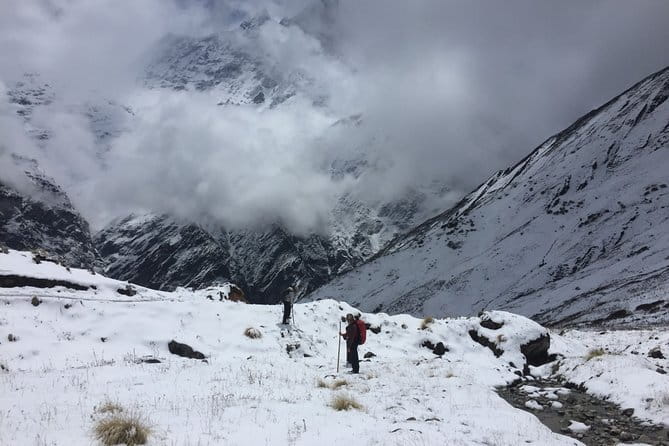
Trekking equipment isn’t included. You’re expected to bring everything yourself. If you forget something, you can purchase or rent items in Kathmandu for a small fee.
Practical take: don’t treat this as a last-minute task. In trekking country, small missing items can become big problems once you’re on the trail and guesthouses are the only option for overnight. Make sure you pack for cold nights at higher altitude and for wet or windy conditions, since you’ll be at elevation where weather can change fast.
If you want to minimize risk, do your gear check at home before you leave and then again the day you arrive in Kathmandu.
Food, Guesthouses, and the “View Every Day” Effect
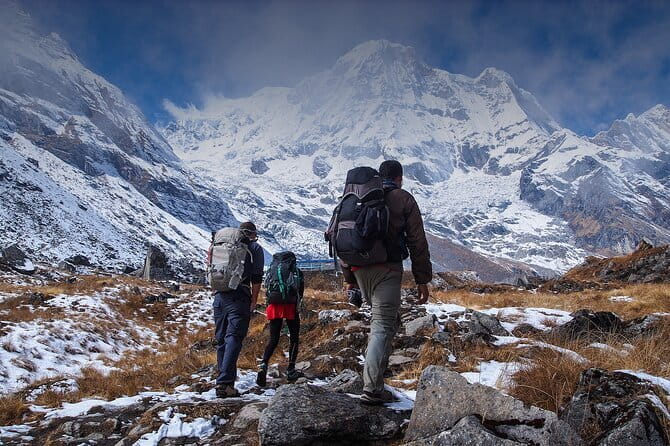
Food and lodging quality can make or break a trek. The information you’re given here is straightforward: Kathmandu is a three-star hotel, and the trek uses guesthouses.
From the reviews, a recurring theme is that people felt the accommodations and food were excellent, with stays often offering amazing views. That sounds simple, but it’s a real part of the experience. When you’re hiking hard, a good meal and a good room help you recover enough to enjoy the next day instead of merely surviving it.
You’ll also be trekking in a private setup—so your group size is your group. Reviews mention groups ranging across ages, and the team handled it with planning and support. If you want a trek experience that fits your pace and not a one-size-fits-all crowd schedule, this format can help.
Who This Trek Fits Best
This is a strong pick if:
- You have moderate physical fitness and can handle steep hiking for hours
- You want a guided trek with licensed support and porter help
- You like village walking as much as you like mountain views
- You prefer structured logistics over DIY planning
It may feel like too much if:
- You’re new to steep multi-day hikes and haven’t built up walking stamina
- You don’t plan for altitude (even if the route is designed with recovery days)
Should You Book This Annapurna Base Camp Trek?
I think you should book if you want the classic Annapurna Base Camp experience with real support baked in: licensed guides, porter help, guesthouse stays, and a paced itinerary that reaches 13,550 feet without pretending the climb is easy.
Skip it only if you’re unwilling to commit to the hardest parts—especially the long climbs and the altitude pressure when you’re above 10,000 feet. If you’re good with slow pacing, packing smart, and treating this like a mountain training journey as much as a vacation, this plan is a solid value and a meaningful route.
FAQ
How long is the Annapurna Base Camp trek?
The trek is scheduled for about 14 days.
What altitude does the route reach?
Annapurna Base Camp is at about 13,550 feet, and the trip starts around 4,600 feet at Kathmandu.
Is the trek difficult?
Most days focus on the lower Himalayas, but you will still climb over 10,000 feet on some days and hike for hours, which can pressure your legs.
What is the start time for the tour?
The start time is 7:45 am.
Is pickup included?
Pickup is offered.
What lodging is included?
You’ll stay at a three-star hotel in Kathmandu on a twin-sharing basis with breakfast, and you’ll use guesthouses during the trek, also on a twin-sharing basis.
Are guides and porters included?
Yes. The tour includes local government-licensed guides, porters (one per pair of hikers), and local support staff.
Do I need travel insurance?
Yes. Travel insurance is compulsory and you must arrange it before arriving, since it cannot be taken in Nepal.
Is trekking equipment included?
No. Trekking equipment is not included, but if you forget something you can buy or rent items in Kathmandu for a small fee.