REVIEW · KATHMANDU
Annapurna Base Camp Trek
Book on Viator →Operated by Red Carpet Journey · Bookable on Viator
ABC rewards slow steps with big-mountain views. This 12-day trek from Kathmandu and Pokhara hikes you into the Annapurna region, with Annapurna Base Camp as the payoff and a 360-degree panorama from the top. You also get a proper start with airport transfer and a pre-trek orientation so you know what to expect before boots hit trail.
I especially like the village-to-village texture, with stops such as Ghandruk and Chhomrong, where Gurung culture is part of the hike, not a sidebar. There’s also a real sense of community on the way—tea houses, friendly faces, and that steady rhythm of walking, resting, eating, and doing it again.
One thing to plan for: this is not a flat walk in the park. Day 7 is the most strenuous stretch, pushing up toward Machhapuchre Base Camp and then onward to ABC, so pacing and cold-weather preparation matter.
In This Review
- Key Highlights You’ll Feel Quickly
- Entering The Annapurna Trail From Kathmandu and Pokhara
- Trek Day By Day: Forests, Villages, Bamboo, and The Steps Between
- What You’re Really Paying For: $810 and the Value Mix
- Lodges, Meals, and How to Think About Comfort Up the Mountain
- The ABC Finish: Why This View Hits So Hard
- Guides, Names, and What to Expect From Your Support Team
- Weather, Cold Nights, and Packing Priorities That Matter
- Who Should Book This Trek (and Who Might Hesitate)
- Should You Book the Annapurna Base Camp Trek?
- FAQ
- FAQ
- What is included in the $810 package?
- Do I need trekking permits for this Annapurna Base Camp trip?
- Is airport and hotel pickup included?
- How do you get from Kathmandu to Pokhara?
- What kind of accommodation do you use on the trek?
- Are meals covered while trekking?
- Who provides guide and porter support?
- Is the trek strenuous at any point?
- Is there time for hot springs on this route?
- What happens if the trip is canceled due to weather or if I cancel myself?
Key Highlights You’ll Feel Quickly
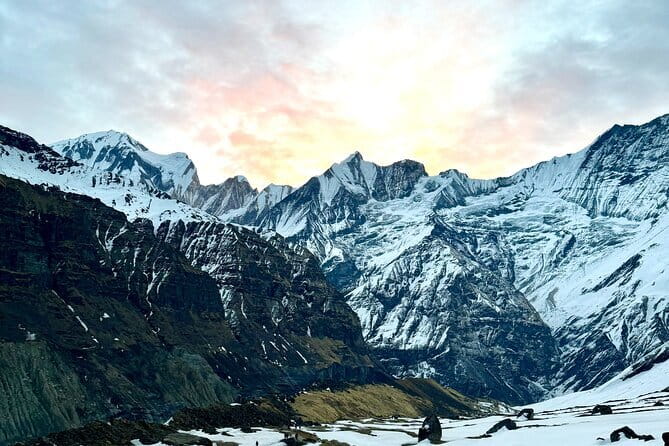
- Annapurna Base Camp’s 360° payoff: big views at the end of a serious effort
- Gurung village days: culture stops built into the trekking route
- Cold bamboo and big river valleys: changing scenery as you gain altitude
- Himalayan Hotel and Hinku Cave route flavor: iconic waypoints that trekkers recognize
- Jhinu Danda hot springs: a real recovery option after long steps
- Government-certified English-speaking guide plus shared porter: less logistics stress on trail
Entering The Annapurna Trail From Kathmandu and Pokhara
Your trip begins in Kathmandu with an airport arrival pickup and a hotel drop-off. In the evening, your trek leader holds a pre-trip orientation and briefing around 7 pm. It’s the best moment to ask practical questions, like how cold you should expect at night, what to pack on day hikes, and how you’ll handle gear with a porter.
Next comes Pokhara, the lakeside base that makes the trek feel less like a shock and more like a ramp-up. You’ll check in, then spend time around Fewa Lake, including a boat ride and a visit to Tal Barahi Temple. If the weather cooperates, you might see peaks like Annapurna’s range and Dhaulagiri in the north—early mountain-glimpse fuel for the days ahead.
You can also read our reviews of more tours and experiences in Kathmandu.
Trek Day By Day: Forests, Villages, Bamboo, and The Steps Between
What I like about this route is how it mixes “walkers’ landscapes” (literal mountain scenery) with human-scale stops. You’re not just moving through elevations—you’re moving through communities, ecosystems, and trail moods.
Day 1: Kathmandu orientation and rest
After you land, you get private car transfers and an orientation session in your hotel. This matters because Annapurna Base Camp is a timing-and-conditioning trek. Knowing how your days will be paced helps you avoid wasting energy on the first evening.
Day 2: Pokhara lakeside reset
You’ll drive to Pokhara and spend the day exploring at your own pace after checking in. I like that you get time for a boat on Fewa Lake and for an easy evening on the lakeside, because you’ll earn your appetite for lodge food later.
Day 3: Nayapul to Ghandruk via forests and steep bits
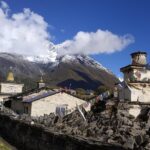
The trek officially begins at Nayapul, and from there it’s dense forests with some steep terrain as you work toward Ghandruk. If time permits, you can explore Ghandruk and visit the Gurung Museum. This is one of those days where you feel the rhythm: climb, breathe, slow down, then suddenly you’re surrounded by village life instead of just trees.
Day 4: Chhomrong area and the rhythm of descents and ascents
You start early, reach Kimrung Danda, descend to Kimrung Khola, then climb again after crossing Kimrung Khola to Chere Danda. From there it becomes a gentle walk into Chhomrong. Chhomrong sits at the base of the Annapurna massif, so you often feel like you’re walking toward something huge rather than just through a valley.
Day 5: The big step day into Bamboo
This is a transition day that includes a major descent—about 2,500 steps—then a steep climb to Sinuwa. The route passes through forest, continues to Kuldihar, and then drops you into Bamboo with easier downhill walking. I’d treat this day as your “legs get used to it” lesson, because step count and thigh burn are part of ABC reality.
Day 6: Bamboo to Deurali through cold bamboo and signature waypoints
Today runs through dense, cold, damp bamboo forest. After steep ascents, you reach the Himalayan Hotel, which many trekkers recognize as an iconic landmark. From there you’ll pass views of a glacial river below, climb into Hinku Cave, and then continue with a gentle ascent to Deurali. If you like “trail personality,” this is it: bamboo hush, cave atmosphere, and river canyon views.
Day 7: The strenuous push to Machhapuchre Base Camp and ABC
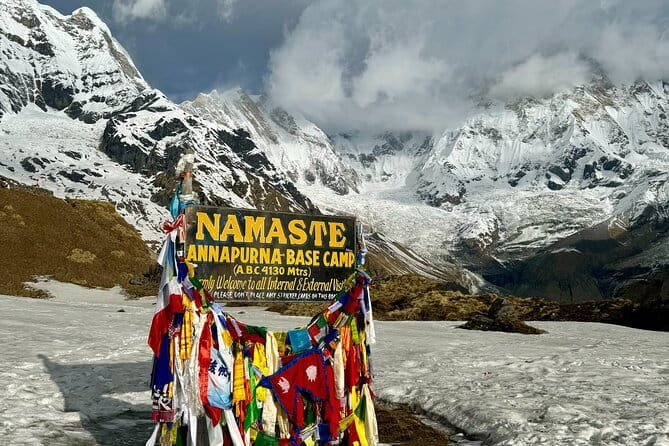
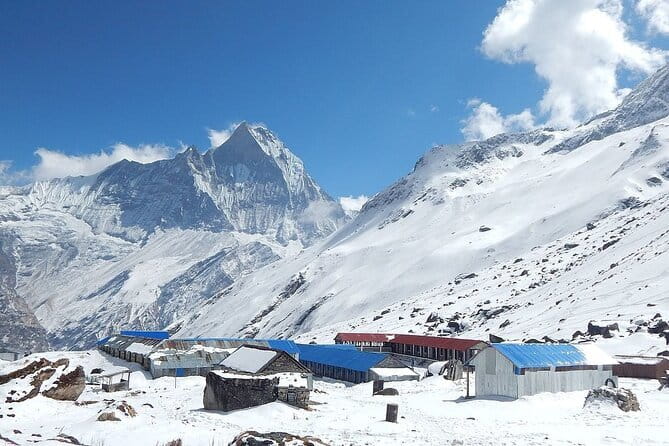
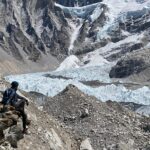
This is the most strenuous day, and it’s also where your effort turns into a clear endpoint. You trek early to Bagar, then hike to Machhapuchre Base Camp (MBC). After leaving MBC behind, you continue to Annapurna Base Camp through wider trails and sparse vegetation in the sanctuary area. When you arrive, the 360 panorama is the whole point—expect a feeling of standing inside a map of peaks.
A practical note: start slowly, especially during the toughest segments. Even when your guide sets a pace, you can still control your breath. If you sprint early, you’ll pay for it later on the final hours.
Day 8: Bamboo again, with downhill relief
You retrace your route back to Bamboo, with the trek described as primarily downhill and relatively easy. I love days like this because you can focus on enjoying the scenery rather than grinding. Still, downhill can be hard on knees—so take it as “easy effort, careful steps.”
Day 9: Chhomrong stairs, Jhinu Danda, and hot springs
You trek uphill to Kuldighar, descend to Chhomrong Khola, then climb back to Chhomrong with another big stair push (again, about 2,500 steps). From there you descend to Jhinu Danda, where a 20-minute walk takes you to popular natural hot springs. This is the trek’s built-in recovery feature, and it’s especially nice if your legs feel a bit mad.
Day 10: Jhinu to Nayapul and drive back to Pokhara
You hike downhill from Jhinu to Nayapul, then drive back to Pokhara and transfer to your hotel. This is your mental shift day: you’re moving from “trail mode” to “rest mode,” and having a comfortable evening matters.
Day 11: Back to Kathmandu and Thamel time
You’ll drive back to Kathmandu early and then have time to explore Thamel for souvenirs and Nepali handmade products. This is a good day to do a final gear check—anything you missed, anything you bought that needs packing.
Day 12: Airport drop-off
A representative drops you at the airport about 3 hours before your flight. It’s a clean ending to a trek that tends to make time feel slower and then suddenly move fast.
What You’re Really Paying For: $810 and the Value Mix
At $810 per person for an approximately 12-day trip, you’re not just paying for “a guide and scenery.” You’re paying for the structure that makes ABC doable for people with moderate fitness, including logistics and support.
Here’s how the value typically shows up in your day-to-day:
- Lodges/tea houses for 8 nights in trekking areas, with meals included (breakfast, lunch, dinner on trekking days)
- Standard tourist hotel rooms in Kathmandu and Pokhara for 2 nights on a bed-and-breakfast basis
- Permits and entry fees included
- Private car transfers for airport and hotel moves, plus a Kathmandu–Pokhara–Kathmandu tourist bus for the long legs
- Professional government-certified English-speaking trekking guide and a shared porter (1 porter to 2 trekkers)
- A duffel bag included, which helps with organization while porters handle the weight
To me, the biggest value lever is the combination of food + lodging + permits + staffing. Once you’re on the trail, you don’t want to think about where the next meal comes from or how to sort gear. You want to think about breathing, drinking water, and enjoying each day’s change in scenery.
What’s not included matters too:
- Your travel insurance must cover helicopter rescue in an emergency
- Tips for guide and porter aren’t included
- Personal extras like drinks and laundry are on you
Lodges, Meals, and How to Think About Comfort Up the Mountain
Tea houses and trekking lodges are part of the experience here. You get breakfast, lunch, and dinner during the trek, which means fewer “hunting for food” moments. That matters because the trail demands steady energy. Also, dinner is often where you relax, trade small stories, and reset for the next day.
From the feedback I’ve seen, people often remember the nights as much as the views. There’s a lot of camaraderie built in—shared challenges, warm meals after cold air, and conversations around the tea house that make the trek feel more social than solitary. Even solo hikers tend to describe the peace of walking, plus the kindness of people you meet along the way.
The ABC Finish: Why This View Hits So Hard
You earn ABC by walking through multiple environments: forested segments, Gurung villages, bamboo stretches, then the open sanctuary feeling as you close in on the base camp area. By the time you reach Annapurna Base Camp, you’re not just arriving at a single destination—you’re arriving after a chain of effort and adaptation.
The route also gives you a “layered reward”:
- You build up toward higher zones with recognizable waypoints like the Himalayan Hotel and Hinku Cave area
- On Day 7, you get a double hit by going up toward Machhapuchre Base Camp before finishing at ABC
- At ABC itself, the 360 panorama is the signature moment
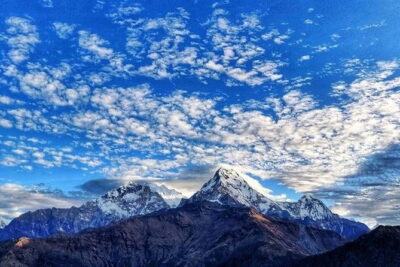
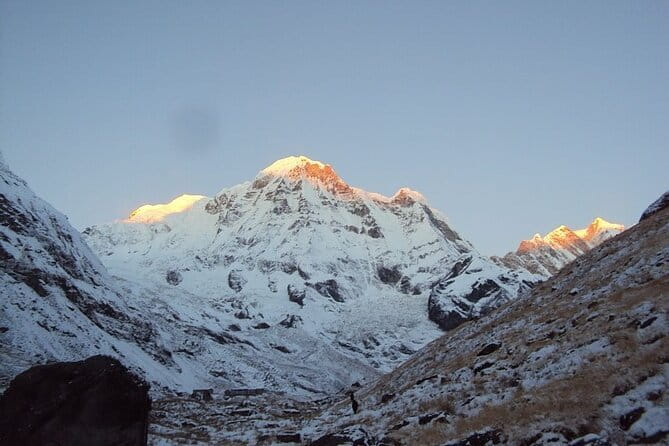
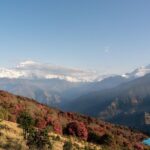
If you care about sunrise-type vibes, this is the right region to chase clear skies. The trek is weather-driven in that sense—when the sky clears, the mountains can look sharp and dramatic.
Guides, Names, and What to Expect From Your Support Team
Your trek includes a professional, government-certified English-speaking trekking guide, plus a porter shared between two trekkers. I appreciate this setup because it keeps decision-making simple and protects you from the common beginner mistake: carrying too much. If your pack is heavy, your pace suffers. Having a porter lets you focus on the trail.
In terms of personal service, some past participants specifically thanked Khem and Shree for making the process smooth and responsive. Even if you don’t get those exact names, you can still use the same approach: ask questions during the briefing, confirm daily timing expectations, and be honest about how your body feels.
Weather, Cold Nights, and Packing Priorities That Matter
This trek requires good weather, and chilly conditions are part of the deal. Plan for cold nights and cool mornings, especially as you climb. Your briefing is a good moment to ask what conditions the team typically sees in the season you’re going, since day-to-day weather is real here.
For packing, keep it practical:
- Bring a warm layer for evenings at higher elevations
- Expect rain or damp conditions in forested and bamboo portions (the route includes cold, damp bamboo forest on Day 6)
- Organize clothing so you can add/remove layers without turning your backpack into a puzzle
Also, don’t ignore the physical side. The trip states moderate physical fitness is needed. That’s honest. The trek is challenging, with steep sections, long stair days, and a strenuous Day 7.
Who Should Book This Trek (and Who Might Hesitate)
This Annapurna Base Camp trek is a strong fit if you want:
- A classic Himalaya experience with a clear endpoint at Annapurna Base Camp
- Village culture through Ghandruk and Chhomrong
- Lodge-based trekking where meals and lodging are handled
- A supported trek with a guide and shared porter
You might hesitate if you:
- Want a totally easy hike with no strenuous day (Day 7 is labeled the hardest)
- Have knee issues and don’t feel comfortable with repeated big stair descents and climbs
- Are unwilling to handle cold weather and the fact that good views depend on conditions
Should You Book the Annapurna Base Camp Trek?
If you want one of Nepal’s most famous mountain goals without having to micro-manage logistics, I’d say this package makes sense. You get a structured start in Kathmandu, a lakeside reset in Pokhara, lodge stays with meals, and the key ingredients for ABC: forest-to-village variety plus a serious climb that ends with a 360-degree panorama.
My simple decision rule: if you can handle long walking days and you’re okay with cold, you’ll love it. If you want zero strain, pick an easier trek—or be very upfront with your guide about your limits from day one.
FAQ
FAQ
What is included in the $810 package?
The price includes standard hotel stays in Kathmandu and Pokhara on a bed-and-breakfast plan, trekking lodge/tea house stays for the trekking portion, daily breakfast lunch and dinner during the trek, permits and entry fees, a government-certified English-speaking trekking guide, a shared porter (1 porter to 2 trekkers), transfers, and a farewell dinner in Kathmandu. A duffel bag is also included.
Do I need trekking permits for this Annapurna Base Camp trip?
Yes. Trekking permits and entry fees are included in the package.
Is airport and hotel pickup included?
Yes. The trip includes private car transfers for airport and hotel movements in Kathmandu (and also transfers related to Pokhara).
How do you get from Kathmandu to Pokhara?
You travel long distance on a tourist bus between Kathmandu and Pokhara, then you transfer by car on arrival.
What kind of accommodation do you use on the trek?
You stay in trekking lodges and tea houses during the Annapurna trekking areas.
Are meals covered while trekking?
Yes. Breakfast, lunch, and dinner are included daily during the trek. Hotels in Kathmandu and Pokhara are also included on a bed-and-breakfast basis.
Who provides guide and porter support?
You’ll have a professional, government-certified, English-speaking trekking guide during the trek. A porter is included on a shared basis of 1 porter to 2 trekkers.
Is the trek strenuous at any point?
Yes. Day 7 is described as the most strenuous day, including hiking up toward Machhapuchre Base Camp and then continuing to Annapurna Base Camp.
Is there time for hot springs on this route?
Yes. After trekking to Jhinu Danda, there is a short walk to the region’s popular natural hot springs.
What happens if the trip is canceled due to weather or if I cancel myself?
The experience requires good weather. If canceled due to poor weather, you’ll be offered a different date or a full refund. There is free cancellation up to 24 hours in advance for a full refund.